❌

Normal view

Denisovans in southwestern China reveal their ancient subsistence strategies

9 September 2026 at 18:03

The Denisovans, the enigmatic archaic human relatives first identified from a finger bone and a handful of teeth in a Siberian cave, have long been known almost exclusively through their DNA. Now, a landmark study published in Nature has pulled back the curtain on how these ancient hominins actually lived — what they ate, how they hunted, what tools they made, and the environments they braved — through an extraordinary assemblage of fossils and artefacts from Bianfu Cave in Yunnan Province, southwestern China. The findings paint the most detailed portrait to date of Denisovan biology, behaviour and ecology in eastern Asia, and suggest that these vanished people left a deep genetic and cultural imprint on later populations across Southeast Asia and Oceania.

The research team, led by Qingfeng Ruan, Hua Li and Song Xing and their colleagues, conducted a comprehensive analysis of hominin fossils and the associated archaeological remains recovered from Bianfu Cave. The hominin fossils themselves date to roughly 167,000 to 134,000 years ago, placing them firmly in the Middle Pleistocene. But the cultural sequence preserved in the cave’s sediments is far longer, stretching from approximately 190,000 years ago to about 70,000 years ago. That span — some 120,000 years of continuous or near-continuous occupation — makes Bianfu Cave one of the longest cultural records that can most parsimoniously be attributed to Denisovans anywhere in the world.

The Denisovan identity of the fossils was established through two independent and technically demanding lines of evidence. The first involved analysis of the enamel–dentine junction, the internal boundary between the enamel cap and the underlying dentine of the teeth. This three-dimensional morphological interface acts something like a fingerprint of evolutionary relationships, revealing diagnostic traits of the tooth’s internal architecture that are invisible from the outside but characteristic of particular hominin lineages. The second line of evidence came from palaeoproteomics, the recovery and identification of ancient proteins preserved within fossilized tissues. Because proteins are far more abundant and durable than DNA, they can survive in warm, humid environments like those of southern China, where genetic material degrades rapidly. Sequencing these ancient proteins allowed the researchers to place the Bianfu hominins on the Denisovan branch of the human family tree with confidence.

The fossil collection itself is remarkable. It includes four teeth that substantially expand the known range of dental variation within the Denisovan lineage — a critical contribution, since Denisovans were previously represented by a very small number of dental specimens, making it difficult to gauge how variable their teeth could be. The new fossils also include two cranial fragments and a radius, a forearm bone, providing rare glimpses of Denisovan skull and postcranial anatomy that were previously almost entirely unknown. Together, these remains transform Denisovans from a genome and a scatter of isolated teeth into a population with recognizable skeletal biology.

Beyond the fossils, the archaeological record from Bianfu Cave offers something equally precious: a window into Denisovan daily life. The researchers reconstructed the ancient environment using faunal remains and pollen preserved in the cave deposits. These records indicate that across Marine Isotope Stages 6 through 4 — a period encompassing major glacial–interglacial climatic swings between roughly 190,000 and 57,000 years ago — the landscape around the cave was dominated by coniferous forest or a mosaic of forest and steppe. This was a cool, variable environment that Denisovans exploited successfully across tens of thousands of years, demonstrating a resilience to climatic change that adds to growing evidence of their adaptability, from the high altitudes of the Tibetan Plateau to the subtropical latitudes of mainland Southeast Asia.

The subsistence evidence is particularly striking. Analysis of the animal bones from the cave shows that its inhabitants practised specialized hunting focused on medium- to large-bodied prey. This was not opportunistic scavenging but a sustained, targeted hunting strategy — one that would have required knowledge of animal behaviour, coordinated effort and effective weaponry. Specialized big-game hunting of this kind has often been associated with modern humans and late Neanderthals in western Eurasia, so finding it in a Denisovan context more than 150,000 years ago dramatically narrows the perceived behavioural gap between these archaic lineages and our own species.

Yet the technological strategy documented at Bianfu Cave is, at first glance, surprisingly simple. The stone tool assemblage is characterized by expedient core reduction and tool production — that is, the inhabitants struck flakes from cores as needed, used them, and discarded them, rather than investing in carefully shaped, curated tools that were carried, maintained and resharpened over time. Alongside this, the Denisovans of Bianfu Cave made pervasive use of unmodified bones, employing skeletal elements of their prey directly as tools without altering them beforehand.

Taken together, the researchers interpret this pattern as an adaptive system that prioritized the exploitation of what they call object affordance — the inherent functional possibilities already present in a raw material or object — over intensive tool manufacture. A suitably shaped bone fragment could serve as a hammer, a digging implement or a scraping tool with little or no modification; a sharp flake struck from a convenient core could cut and butcher without further refinement. In the rich, resource-diverse environments of subtropical southwestern China, where raw materials and animal resources were plentiful, such a flexible, low-investment strategy may have been not a sign of simplicity but a highly efficient way of life. It suggests that Denisovans measured success not by the sophistication of their toolkit but by how skilfully they read and exploited the opportunities their landscape provided.

This behavioural portrait gains added significance when set against the wider geography of Denisovan presence. Over the past decade and a half, Denisovans have been documented across a staggering range: from the original genomic discoveries in the Altai Mountains of Siberia, first reported in 2010, to the mandible from the Tibetan Plateau described in 2019, Denisovan DNA recovered from sediments at Baishiya Karst Cave in 2020, a molar from the Annamite Chain of northern Laos announced in 2022, a male Denisovan mandible from Pleistocene Taiwan reported in 2025, and proteomic identification of the 146,000-year-old Harbin cranium, also in 2025. Bianfu Cave now anchors this story firmly in southwestern China, a region long suspected to have been a Denisovan heartland and a critical corridor for hominin movements between mainland Asia and Southeast Asia.

The study’s authors argue that the region’s Denisovans point to a substantial genetic and cultural legacy in later human populations. Modern populations in Southeast Asia and Oceania carry the highest known proportions of Denisovan ancestry anywhere in the world — a legacy of interbreeding that occurred as modern humans moved through and beyond island Southeast Asia. The new evidence from Bianfu Cave suggests that the ways of life practised by Denisovans in this region — their hunting strategies, their flexible technological approaches, their hard-won knowledge of tropical and subtropical environments — may have been part of the inheritance, alongside their genes, that helped later human populations thrive as they spread across the diverse and challenging landscapes of Asia and the Pacific.

For palaeoanthropologists, the significance of the Bianfu Cave discoveries is difficult to overstate. Denisovans have been the least anatomically documented of all known hominin groups — a lineage defined first by DNA and only slowly fleshed out with fragmentary fossils. The new teeth, cranial fragments and radius from Yunnan, combined with an unmatched 120,000-year archaeological sequence, mean that researchers can finally study Denisovans not just as a genome or a set of molecular signatures but as a living, adapting population: hunters of large game, makers and users of expedient tools, and inhabitants of conifer forests that swung between glacial cold and interglacial warmth. As analysis of the Bianfu material continues, it promises to reshape our understanding of how archaic humans lived in eastern Asia and how deeply their story is woven into our own.

Subject of Research: Denisovan fossils and archaeological remains from Bianfu Cave, Yunnan Province, southwestern China, revealing Denisovan biology, technology, subsistence strategies and palaeoecology

Article Title: Denisovans from southwestern China and their subsistence strategies

Article References: Ruan, Q., Li, H., Xing, S., Zhao, K., Liu, J., Zanolli, C., Doyon, L., Delpiano, D., Peresani, M., d’Errico, F., Demeter, F., Hublin, J.-J., Xiao, P., Wang, Y., Jia, Z., Yang, Q., Fu, Q., Sun, Q., Zhao, Y., … Chen, F. (2026). Denisovans from southwestern China and their subsistence strategies. Nature. https://doi.org/10.1038/s41586-026-10997-4

Image Credits: AI Generated

DOI: 10.1038/s41586-026-10997-4

Keywords: Denisovans, Bianfu Cave, Yunnan, palaeoproteomics, enamel–dentine junction, Middle Pleistocene, subsistence strategies, expedient tool use, object affordance, specialized hunting, Marine Isotope Stages, Southeast Asia ancestry

Locking-enabled multimodal soliton microcombs achieve day-scale stability for precision metrology

9 September 2026 at 17:57

Optical frequency combs have transformed the way scientists measure light and time, earning the Nobel Prize in Physics in 2005 and underpinning technologies ranging from atomic clocks to exoplanet detection. Yet the miniature on-chip versions of these combs, known as soliton microcombs, have long suffered from a frustrating paradox: the most stable and useful operating regimes have also been the most fragile and difficult to sustain. A newly published study in Light: Science & Applications reports a significant advance toward resolving this tension. Researchers led by J. Tang, J. Yang and E. Yan describe a multimodal locking-enabled soliton microcomb that combines robust, self-starting operation with an exceptionally low repetition rate on the scale of a day of stable measurement time, opening a path toward practical high-precision metrology systems that can run unattended for extended periods.

At the heart of the advance is a technique the authors call multimodal locking, a scheme that stabilizes not just a single resonance of the optical microresonator but multiple modes simultaneously, locking the comb dynamics to a regime in which dissipative Kerr solitons can form and persist without delicate manual tuning. In conventional microcomb systems, soliton formation typically requires a precise and rapid traversal of a “chaotic” modulation instability regime, a step that is notoriously sensitive to thermal transients in the resonator chip. Laser frequency must be swept with exquisite control while the soliton’s own heat dissipation shifts the resonator’s resonances, creating a feedback loop that can destroy the soliton state within microseconds. The multimodal locking approach circumvents this fragility by engaging several mode families of the resonator at once, so that the interplay among them pins the comb to a stable soliton state even as environmental and thermal conditions fluctuate.

The significance of achieving a low repetition rate in the same device cannot be overstated. A frequency comb’s repetition rate is the spacing between its individual comb teeth, and for many applications, coarser spacing is a decisive advantage. In laser ranging and distance metrology, for example, the ambiguity range of an interferometric measurement is set by the inverse of the comb’s free spectral range. Microcombs, generated in whispering-gallery-mode or ring resonators only a few millimeters across, usually exhibit repetition rates of tens to hundreds of gigahertz, which severely limits the unambiguous measurement range available to a comb-tooth-resolved distance measurement. By engineering a low-repetition-rate soliton state, the research team extends this ambiguity range dramatically, making the microcomb directly useful for absolute distance measurement, multi-wavelength interferometry and coherent communications, where each comb line must be spectrally resolvable and addressable.

Achieving both low repetition rate and robust soliton generation in a single microresonator is a formidable engineering challenge. Low repetition rates demand large resonator diameters, which in turn produce dense spectra of resonances and increased susceptibility to mode crossings with higher-order transverse and polarization mode families. Such crossings historically destabilize soliton formation, causing comb states to collapse or preventing single-soliton operation altogether. The multimodal locking strategy turns this liability into an asset: rather than engineering mode crossings away, the researchers harness the coupling among mode families to lock the comb dynamics into a favorable basin of attraction. The result is a soliton microcomb whose low repetition rate is preserved over day-scale timeframes, a duration that places the device among the most operationally stable microcomb demonstrations reported to date.

Day-scale stability matters because it transforms the microcomb from a laboratory demonstration into an instrument. Many high-precision experiments, from astronomical spectrograph calibration to the accumulation of statistical confidence in atomic spectroscopy, require comb sources that remain locked and stable across many hours or even days of continuous operation. Conventional fiber-laser-based frequency combs achieve this, but at the cost of table-top size, high power consumption and substantial maintenance overhead. Microcombs promised to shrink the technology onto a photonic chip, yet until now their operational fragility has confined most demonstrations to short observation windows. The robust low-repetition-rate soliton microcomb described in the new work demonstrates that chip-scale frequency combs can, with appropriate locking architecture, sustain the kind of long-duration, hands-off operation that real metrology campaigns demand.

The physics underlying soliton microcombs rests on the Kerr nonlinearity of the resonator material, typically silicon nitride, magnesium fluoride or fused silica. When continuous-wave pump light resonantly builds up inside the ring, the Kerr effect produces a four-wave-mixing process that seeds sidebands spaced by the resonator’s free spectral range. Under the right conditions of pump detuning and intracavity power, these sidebands evolve into a coherent train of ultrashort optical pulses, dissipative Kerr solitons, that circulate around the resonator and emit a broadband comb spectrum with tooth spacing equal to the repetition rate. The comb’s output frequencies are determined by two radio-frequency quantities, the pump laser frequency and the repetition rate, which is why the combs can serve as rulers for measuring optical frequencies against a reference. Any drift in either quantity propagates directly into measurement error, and the multimodal locking mechanism suppresses precisely this drift by anchoring the comb’s underlying mode structure to the resonator’s intrinsic stability.

Applications for such a device span an unusually broad swath of science and engineering. In high-precision laser ranging, low-repetition-rate combs with tooth spacings in the low-gigahertz or even megahertz regime allow interferometric distance measurements over ranges of meters to kilometers without the need for auxiliary synthetic-wavelength techniques. In astronomical spectroscopy, comb calibration sources with well-controlled line spacing enable the detection of Earth-like exoplanets through radial velocity shifts measured in centimeters per second. In telecommunications, low-repetition-rate combs align naturally with standard channel grids used in wavelength-division multiplexed fiber networks, making them attractive as multi-carrier sources. In spectroscopy, dual-comb techniques benefit from repetition rates that are low enough to permit resolution of closely spaced molecular absorption features. A microcomb that is simultaneously robust, low-repetition-rate and day-scale stable therefore functions as a versatile enabling component across these domains rather than a single-purpose device.

The demonstration also speaks to a broader trend in photonics: the migration from delicate, expert-operated laboratory setups to self-contained, self-stabilizing systems. The self-starting character implied by multimodal locking is particularly important for this transition. A comb that requires a skilled operator to initiate soliton formation, sweeping the laser with practiced timing past the chaotic regime, cannot be deployed in an observatory dome, on a satellite platform or inside an industrial instrument. A comb that engages its soliton state reliably on demand and then holds it through thermal cycling, laser drift and mechanical perturbation removes the last practical barrier to integration. The authors’ demonstration of day-scale continuous operation is, in effect, a stress test passed by a technology that researchers have been attempting to harden for more than a decade.

The implications extend to metrology standards and timing as well. Optical atomic clocks, which now achieve fractional frequency uncertainties below one part in 10^18, rely on frequency combs to divide down their optical oscillations to countable microwave rates. Miniaturizing the comb stage of such clocks is a prerequisite for portable optical timekeeping, which would benefit navigation in GPS-denied environments, geodesy that monitors sea level and crustal motion with millimeter precision, and fundamental physics tests that track the constancy of natural constants over months and years. A robust chip-scale soliton microcomb with day-scale stability contributes a key subsystem to this vision, and the multimodal locking principle may generalize to other resonator platforms, materials and spectral regions, including the mid-infrared where molecular fingerprinting awaits compact comb sources.

Looking forward, the study suggests several directions that the photonics community is likely to pursue. Combining multimodal locking with on-chip pump lasers and integrated electronics would complete the transformation toward fully self-contained comb modules with no free-space optics. Extending the approach to lower repetition rates still, into the megahertz regime where fiber-laser combs operate, would bring microcombs into direct competition with their bulkier predecessors for the most demanding ranging and spectroscopy tasks. Improvements in resonator fabrication, reducing mode-volume disorder and engineering dispersion with greater precision, will further expand the parameter space in which robust soliton states can be locked. The present work demonstrates that the fragility once considered intrinsic to soliton microcombs is not a fundamental limit but an engineering problem, and one that can be solved by embracing, rather than avoiding, the multimodal structure of real optical resonators.

The research, published in Light: Science & Applications, marks a milestone in the maturation of microcomb technology. By uniting three properties that had previously been achieved only separately, self-starting robustness, low repetition rate and day-scale operational stability, the work delivers a soliton microcomb genuinely suited to high-precision metrology. As the demand for compact frequency references accelerates across navigation, astronomy, communications and fundamental science, the multimodal locking strategy reported by Tang, Yang, Yan and colleagues offers a clear and technically grounded route from chip-scale optical chaos to dependable, precision measurement light.

Subject of Research: A robust, self-starting low-repetition-rate soliton microcomb enabled by multimodal locking for day-scale-stable, high-precision metrology applications.

Article Title: Multimodal locking-enabled robust and day-scale low-repetition-rate soliton microcomb for high-precision metrology

Article References: Tang, J., Yang, J., Yan, E., Huang, G., Yin, K., Tian, D., Lei, X., Huang, J., Yang, M., Ding, H., Yan, S., Wei, K., Zhu, L., Wang, G., & Jiang, T. (2026). Multimodal locking-enabled robust and day-scale low-repetition-rate soliton microcomb for high-precision metrology. Light: Science & Applications, 15(1), Article 370. https://doi.org/10.1038/s41377-026-02460-w

Image Credits: AI Generated

DOI: 10.1038/s41377-026-02460-w

Keywords: soliton microcomb, multimodal locking, low repetition rate, frequency comb, high-precision metrology, laser ranging, day-scale stability, dissipative Kerr solitons, chip-scale photonics, optical frequency reference, self-starting comb, Light Science & Applications

Rapid Wildfire Structure Risk Assessment Helps Fire-Adapted Communities

9 September 2026 at 17:27

Wildfire scientists have unveiled a new rapid risk-assessment tool that shows substantial wildfire danger to homes and buildings in three major Arctic communities, revealing that between 14% and 26% of structures in Anchorage, Fairbanks, and Whitehorse face high or very high risk from approaching flames. The study, led by Jennifer I. Schmidt of the University of Alaska Anchorage together with Robert H. Ziel, Monika P. Calef, Anna Varvak, and Julio C. Postigo, was published in the International Journal of Disaster Risk Science. Rather than relying on complex fire-behavior simulations that demand specialist analysts and expensive software, the approach combines datasets that most local governments already possess: building footprints, zoning maps, and readily available vegetation layers. The result is an updatable, affordable portrait of which buildings face the greatest threat and where mitigation dollars can do the most good.

The urgency behind the work is hard to overstate. Wildfire costs and damages in the United States alone are now estimated at between USD 394 billion and 893 billion annually, and the 2019 to 2020 Australian fire disasters cost nearly USD 100 billion. The Arctic, often imagined as too cold and wet to burn, is not immune: since 1980, wildfires have cost Alaska between USD 2 billion and 5 billion, with projections suggesting costs could rise 68% by the end of the century. Canadian suppression expenses are expected to climb by 60 to 110% relative to the 1980 to 2009 baseline. Meanwhile, structure loss from wildfire has doubled over the past two decades in the western United States, and western Canada has suffered major structure-loss events in four of the last eight fire seasons. Nearly half the global population now lives within the wildland-urban interface, the zone where people and forests meet or intermingle, making tools that translate fire science into actionable local maps increasingly vital.

The researchers’ central premise is conceptually simple but technically consequential: for a structure to be at high risk, a flammable hazard must exist nearby, within roughly 500 meters, and the surrounding landscape must exhibit high wildfire exposure. The method begins with a flammability hazard layer at 30-meter resolution, built from a modified version of NASA’s ABoVE Landcover dataset in which generic evergreen classes were refined to reflect locally flammable species such as black spruce, white spruce, lodgepole pine, and subalpine fir, each assigned hazard ratings from 0 to 100. Critically, the team treated structures themselves as fuel. Each building contributes three fuel units to the surrounding flammability score, a value chosen after systematic testing of one through ten fuel units; three proved optimal, nudging densely built environments up a hazard category without causing wholesale reclassification. Structure density was computed at 90-meter resolution, multiplied by three, and added to the vegetation-based hazard to produce an enhanced flammability hazard layer.

Wildfire exposure, the second pillar of the assessment, captures the potential for hazard to travel. It is calculated as the average flammability hazard within a 100-meter or 500-meter radius, representing the likelihood that fire can reach and burn a given location even if the local fuels themselves are sparse. Exposure values, also ranging from 0 to 100, are classified into five tiers from very low to extreme, and concentrated pockets of flammable vegetation drive scores upward. The third ingredient is structure vulnerability, produced by multiplying the enhanced flammability hazard by a structure importance factor derived from zoning data: residential buildings and critical infrastructure such as hospitals, schools, and nursing homes receive the highest weight, followed by commercial and other structures. Where zoning was unavailable, as on military installations like Joint Base Elmendorf-Richardson in Anchorage and Fort Wainwright and Eielson Air Force Base in Fairbanks, the team collaborated with base personnel or interpreted aerial imagery to classify neighborhoods. The final risk score synthesizes hazard, exposure, and vulnerability into six categories, from extremely low to very high.

The results paint a nuanced picture of Arctic fire danger. Fairbanks showed the greatest proportion of structures in the top two risk categories at 26%, followed by Whitehorse at 22% and Anchorage at 14%. Anchorage, paradoxically, had the highest share of buildings in the top vulnerability tiers, 42%, yet the lowest risk, a consequence of its large urban footprint where dense housing raises vulnerability but fragmented, less-flammable vegetation and abundant developed ground suppress exposure. Fairbanks and Whitehorse, with structures woven into spruce- and pine-dominated boreal landscapes, showed closer alignment between vulnerability and risk. Anchorage was also the only study area where more than 1% of cells jumped two or more flammability categories when buildings were counted as fuel, at 7%, reflecting its 27% share of structure area containing seven or more buildings per cell. The analysis also confirmed the primacy of exposure: when a structure’s wildfire exposure was extreme, at least 87% of such buildings landed in the highest risk category across all three communities.

A key innovation lies in how the team redrew the wildland-urban interface itself. Traditional WUI maps distinguish urban, interface, and intermix zones; the researchers added a fourth category, the transmission zone, marking areas roughly 2.4 kilometers beyond the WUI boundary where fire could move into a community and where fuel breaks might be sited. Within the 500-meter buffer around structures, urban areas were defined by exposure values of 20 or less, interface zones by 21 to 60, and intermix by values above 60, cross-referenced with Alaska and Yukon wildfire management designations that prioritize suppression from critical down to unplanned or wilderness levels. Fairbanks claimed the largest overall WUI footprint, and the transmission zone proved the largest category in every study area, spanning 23,347 square kilometers around Anchorage, 6,180 square kilometers around Fairbanks, and 665 square kilometers around Whitehorse. Across all sites, most structures fell within interface zones, 52 to 61%, followed by intermix at 20 to 35%. Thousands of buildings sit in the high-risk interface and intermix zones where mitigation should concentrate: 15,537 structures in Anchorage, 16,212 in Fairbanks, and 3,734 in Whitehorse.

The method faced its most demanding test against a real disaster. On 17 August 2019, during southcentral Alaska’s hottest and driest summer on record, the likely human-caused McKinley wildfire was driven by high winds across 13.3 square kilometers in three days, destroying 52 residential structures, 84 outbuildings, and three commercial buildings, affecting 1,028 properties and forcing roughly 350 to 400 people to evacuate. By comparing pre-fire aerial imagery from 2017 with post-fire imagery from 2020 at 0.3-meter resolution and linking vanished buildings to the Matanuska-Susitna Borough structure database, the team identified exactly which structures burned. The verdict was statistically compelling: burned structures had significantly higher wildfire exposure than those that survived, and the proportion of burned structures with exposure values above 60 was significantly larger than among unburned ones. Structure risk scores above 60 were also significantly associated with burning. Notably, the test held even under conditions so extreme that normally resistant, low-flammability fuels were igniting.

The study’s design was shaped by sustained community engagement. Through workshops in 2019, 2021, and 2023, along with 15 to 20 meetings organized by Anchorage community councils and landowner associations and public events ranging from wildfire awareness days to Arbor Day, residents and agency staff reshaped everything from color schemes to model parameters. One consequential example: Anchorage residents and fire managers insisted that the maps reflect the spruce beetle outbreak first detected in 2016 and peaking around 2020, which killed and removed many spruce trees. The team responded with rules derived from aerial detection surveys, reclassifying white spruce cells in areas of beetle intensity of 11% or greater to mixed forest, and shifting mixed forest cells to open shrub, while a succession model updated vegetation on areas burned within the last 30 years. This iterative dialogue ensured outputs that both wildfire practitioners and the general public can interpret, a prerequisite the authors see as central to building fire-adapted communities.

The practical implications for planning are direct. Because mitigation funding is often tied to officially designated WUI areas, the ability to rapidly recalculate boundaries from updated building layers expands funding opportunities and keeps pace with community growth. The framework also points to different interventions in different zones: structures in intermix areas, surrounded by vegetation, benefit most from fuel treatments, while those in interface zones, where flammable vegetation is scarcer, are better served by home hardening measures such as fire-resistant roofs, siding, decks, screens, and unburnable buffers. Given that wildfire activity tends to occur where exposure exceeds 60, the authors recommend concentrating resources on the top two risk categories. Where national products like wildfirerisk.org rely on generalized fuel layers that can overestimate unburnable area in WUI zones and are updated too slowly for annually burning landscapes, this approach trades complexity for transparency, using local data that governments already collect. The underlying wildfire exposure toolbox is publicly available on GitHub, and the team argues that empowered residents, equipped with accurate, current, neighborhood-scale information, are crucial to reducing wildfire risk, particularly where communities may prefer action without government intervention.

Subject of Research: Rapid assessment of wildfire risk to structures and wildland-urban interface delineation in Arctic communities using local vegetation, building footprint, and zoning data.

Article Title: Fueling Fire-Adapted Communities Through a Rapid Wildfire Structure Risk Assessment

Article References: Schmidt, J. I., Ziel, R. H., Calef, M. P., Varvak, A., & Postigo, J. C. (2026). Fueling Fire-Adapted Communities Through a Rapid Wildfire Structure Risk Assessment. International Journal of Disaster Risk Science, 17(2), 351-362. https://doi.org/10.1007/s13753-026-00716-y

Image Credits: AI Generated

DOI: 10.1007/s13753-026-00716-y

Keywords: Arctic, Wildfire, Risk assessment, Wildland-urban interface, WUI, Mitigation planning, Structures, Fire-adapted communities, Wildfire exposure, Flammability hazard, Alaska, Yukon

Lithium-6 buildup may fingerprint lithium-ion battery degradation

9 September 2026 at 17:00
The service life of lithium-ion batteries is limited by complex aging processes, the causes of which are often difficult to distinguish from one another. Researchers at the Federal Institute for Materials Research and Testing (BAM) have now shown that the distribution of two lithium isotopes within cells acts like a fingerprint directly linked to degradation processes. This correlation opens new possibilities for better understanding aging mechanisms and optimizing batteries in a more targeted manner.

What Happens When You Flush a Toilet? Scientists Reveal What Reaches the Air

9 September 2026 at 16:46

Flushing a toilet may send more into the air than most people realize. A new review has found that toilet flushing can produce tiny airborne particles, including some that may contain microorganisms, and these particles can sometimes rise high enough to reach the breathing zone of adults. Researchers from Flinders University examined previous studies to […]

The post What Happens When You Flush a Toilet? Scientists Reveal What Reaches the Air appeared first on Knowridge Science Report.

Eggshell-Inspired Aluminum Shield Could Protect Spacecraft from High-Speed Debris

9 September 2026 at 16:44

Scientists have designed a lightweight aluminum material inspired by eggshells that could one day help protect spacecraft from fast-moving pieces of space debris. Nearly one million pieces of debris larger than 1 centimeter are believed to be orbiting near Earth. These fragments can travel at extremely high speeds, so even a relatively small object can […]

The post Eggshell-Inspired Aluminum Shield Could Protect Spacecraft from High-Speed Debris appeared first on Knowridge Science Report.

Classic sitcom ‘Friends’ helps grad student endure 104 brain scans

9 September 2026 at 15:08

The science of getting Z’s has progressed rapidly in recent years. A growing body of research links poor sleep to increased risk of cognitive decline, a higher likelihood of Alzheimer’s disease, and even greater chances of developing heart problems. At the same time, wearables, like smart rings and watches, are transforming the way everyday people view sleep, turning their resting hours into rich datasets to pore over, sometimes to unhealthy obsessive levels. 

What’s still less understood, is how the subtle, everyday fluctuations in sleep quality that come from simply living a normal life can alter brain chemistry. People don’t live in controlled lab settings, and even the most avid bio-optimizer still has nights where quality sleep takes a backseat. Actually understanding how someone’s day-to-day sleep patterns affect their brain chemistry would require putting them in an MRI machine and collecting data over and over again, over long stretches of time to get a more holistic view. 

That’s exactly what Auburn University electrical and computer engineering graduate student Joshita Majumdar signed up for. Over 76 weeks, Majumdar slipped into the university’s 7-Tesla MRI scanner 104 times. That’s a level of commitment that would make even a stalwart Zen meditator fidget with frustrated boredom. Thankfully, Majumdar had a special companion to accompany her during the loud, cramped, 90-minute sessions: the hit television sitcom Friends.

a woman wearing blue scrubs sits outside of an MRI machiene
Over 76 weeks, Joshita Majumdar went into Auburn University’s  7-Tesla MRI scanner 104 times. Image: Joshita Majumdar/Auburn University.

Majumdar recalls how a screen in the machine would cycle through four 10-minute videos of the staple from the 90’s and early 2000’s, each made up of several different scenes clipped together. The idea was twofold. Majumdar needed something playing during the sessions that would keep her from getting bored, and Friends just happens to be her self-described “guilty pleasure.” It was also one of the first shows she connected with as an international student adjusting to her early days in the United States, so some scenes strike particularly nostalgic, emotional notes. And like any great sitcom, Friends runs the gamut from numbing brain-rot to tear-jerking sentimentality. That’s potentially a great backdrop for a study analyzing changes in brain chemistry.  

“If you’re happy, you watch Friends. If you’re sad, you watch Friends,” Majumdar tells Popular Science. “So all times [are] a good time to watch Friends, right?”

Past studies have looked at the way sleep variability affects brain chemistry, but many of those involve intentionally depriving the subject of sleep. This longer-term approach takes a more subtle approach that should better reflect the nuances of everyday life. 

“This is a person living her life, going through normal ups and downs and we are seeing how brain chemistry responds to that,” Majumdar’s advisor and Auburn University Electrical and Computer Engineering Professor Gopikrishna Deshpande said.  “That’s what makes this dataset so powerful. It’s not artificial. It’s not forced. It’s real.”

The journey to 104 brain scans 

Majumdar grew up in Kolkata, West Bengal, India, and moved to the U.S. in 2016 to pursue a master’s degree in engineering at the University of Georgia, with an emphasis on mechanical engineering. Early on, she became interested in how different environmental factors affect brain function. And while she was busy pushing forward with her rigorous academic work, she also dealt with occasional homesickness, living in a new country thousands of miles away from friends and relatives. 

Around that same time, Majumdar says she started watching Friends to see what all the fuss was about. People around her seemed obsessed with the show, but she hadn’t seen it, and initially didn’t really understand the hype. Eventually, she went back to the show with fresh eyes and everything clicked. The sarcastic Chandler Bing (Matthew Perry) and affable actor Joey Tribbiani (Matt LeBlanc) are among her favorite characters.

“I gave it another try, and then I was like, oh no, this is fun,” Majumdar said. “And then it became a guilty pleasure.” 

When it came time to pick a test subject for this new, lengthy MRI study, Majumdar says Dr. Deshpande asked her if she’d be up for volunteering. Majumdar has some experience with MRI machines from past projects, enough to know that she wasn’t prohibitively claustrophobic or bothered by the machine’s loud industrial noises. Still, nothing she’d done before this could compare to the endurance and commitment it would take to see this through. The team decided not to commit to a set number of scans at the onset, and took it day by day to see how much the grad student could handle. 

“We said, like, ‘Okay, we’ll take one day at a time, one week at a time, and see how far we can pull it through,” Majumdar explained. 

Don’t sleep on Friends  

Majumdar was the one who pitched playing Friends episodes in the machine. She compiled four 10-minute videos, each made up of different scenes from various episodes. The material ran the gamut in tone, with the goal of eliciting a range of brain responses. One particularly strategic choice was to include clips of episodes aired around Thanksgiving. These fan-favorites tend lean heavily on themes of family, friendship, and camaraderie. Friends, in other words, was meant to roughly simulate the backdrop for Majumdar’s everyday life brain state. 

“In a task-based MRI, we are giving a particular stimulus, so we kind of have an idea what we are trying to activate in the brain,”  Majumdar said. “But in a naturalistic run, it’’s kind of like you’re putting yourself into a real-world situation.” 

a still image from an episode of the show friends. a woman with blonde hair stands next to a bench while a woman with a black hat and green shirt, woman with a blue new york giants sweatshirt, man with a red jersey, man with a blue sweatshirt, and man with a black sweatshirt and blue hat on backwards sit on a bench above fall leaves
“The One with the Football” (Season 3, Episode 9) is one of 10 Thanksgiving episodes of Friends. Pictured (left to right) Lisa Kudrow as Phoebe Buffay, Jennifer Aniston as Rachel Green, Courteney Cox Arquette as Monica Geller, Matt LeBlanc as Joey Tribbiani, David Schwimmer as Ross Geller, and Matthew Perry as Chandler Bing. The show ran from 1994 to 2004. Image: Gary Null/NBCU Photo Bank.

But that wasn’t all. Every session, the team would also play a roughly four-minute music video to the song “Love You Zindagi,” from the 2016 Bollywood film Dear Zindagi. Similar to the Thanksgiving episodes, this video was thoughtfully selected for its depiction of friends and family. It also helps remind Majumdar of home. 

“I have left my friends and family back in India,” Majumdar said. “So depending upon what my emotions are on that day, I used to really connect to it differently each day.”

Majumdar and her colleagues quickly settled into a routine for their MRI odyssey. She would come to the university’s neuroimaging center on Tuesdays and Thursdays, typically around 7:30 in the evening. She had the choice of that later time slot or first thing in the morning, but chose the former because she says she isn’t really a morning person. That choice came with some trade-offs, though. 

Early on, she discovered that eating a meal immediately before entering the machine made her feel dizzy. After one fraught experience, she made a point of giving herself a gap of 90 minutes to two hours after eating before going into the scanner. Coming in later at night, especially after a long day of PhD work, also meant she sometimes had to fight the urge to fall asleep. Even though she was stuck in the machine for 90 minutes at a time, the tests required that she keep her eyes open for the vast majority of it. That struggle is partly what makes subsequent findings all the more interesting. 

“Sometimes I was a little bit sleepy, but that’s part of it,” Majumdar said. “And that’s the thing that we wanted to bring out through this research: that you are in a very natural setting. You’re not in a kind of a forced experiment where you are either sleep-deprived or put under some conditions that might evoke a different brain response. We really wanted to look at the real-world condition where I’m just living my life, and in parallel I’m getting scanned and seeing how the brain chemistry responds to it.”

In addition to sitting in the MRI machine, Majumdar logged everything she ate and wore a sleep-tracking ring. With all of that data, the team was able to match each night’s sleep metrics with the next day’s scan and compare patterns over time. Though there’s still data being combed through, they’ve already found an important connection: across the 104 sessions collected over 76 weeks, nights with less deep sleep and more light sleep tended to be followed by higher glutamate levels the next day. Glutamate is an amino acid that acts as a kind of chemical messenger in the brain. In a previous university blog post, Majumdar compared this finding to the brain flushing out byproducts that build up during active, wakeful moments, allowing for a more restful night’s sleep.

“You wake up with a fresh mind,” she said. “But if that process is blocked, it’s going to hamper you the next day.”

Joshita Majumdar (right) a graduate student in the Department of Electrical and Computer Engineering, and Gopikrishna Deshpande (left), the Godbold Professor in the Department of Electrical and Computer Engineering, used equipment at the Auburn University Neuroimaging Center, including the 7-Tesla MRI scanner, to study glutamate levels in the brain. Image: Auburn University.

But is she sick of sipping coffee at Central Perk?

Majumdar’s work in this area has only just begun. Moving forward, she and her colleagues hope to bring on more study participants  to make the dataset even richer, though they’ll likely make adjustments so that each participant doesn’t have to go in for scans quite as often as she did. 

Eventually, she says she also hopes to use AI and other tools to try and extract the feelings and emotions experienced during those MRI sessions (and during certain Friends’ moments) to get a better sense of what’s happening in the brain when certain feelings are evoked. 

Miraculously, even after watching the show in a cramped, rumbling tube for 18 months, Majumdar says she still isn’t sick of Friends. When asked if she can still watch the silly sitcom without getting bored, Majumdar responds with an emphatic, 

“Yes, definitely.”

The post Classic sitcom ‘Friends’ helps grad student endure 104 brain scans appeared first on Popular Science.

MacVoices #26252: Live! – Tim Cook, John Ternus, and Apple’s Changing of the Guard

By: Chuck
9 September 2026 at 15:04
The MacVoices Live!  examines Apple’s transition from Tim Cook to John Ternus, weighing Cook’s legacy, Apple’s dramatic financial growth, Vision Pro, and criticism of his tenure. They consider what Ternus’ engineering background could mean for hardware and software, while discussing Phil Schiller, Eddie Cue, other executive changes, succession planning, and the importance of preserving institutional […]

💾

A 100-day 3D print recreates Blatten rock avalanche path for risk testing

9 September 2026 at 15:00
What happens when water, ice and more thunder down into a valley? Researchers from ETH Zurich and the WSL Institute for Snow and Avalanche Research SLF are investigating this using an accurate 3D model of the area around Blatten. The experiments aim to improve computer models and help more reliably assess risks to settlements and infrastructure.

Built-in quantum sensor detects bending stress in microscopic devices

9 September 2026 at 15:00
Microelectromechanical systems (MEMS) are tiny devices used in technologies such as microphones, accelerometers and biosensors. MEMS are highly useful but prone to physical stress that affects their performance, stability and reliability. Tracking this interference is important, but attaching a separate sensor to such a minuscule structure is no easy task.

Stronger home foundations needed to withstand climate change and cracking soils in Australia

9 September 2026 at 14:00
Drier climates are exacerbating an expensive problem for millions of Australians whose homes sit on expansive soils prone to shrinkage cracks, which have already cost insurance companies and individuals billions of dollars in repair costs. A new study by Adelaide University, using computer modeling and field observations, shows that homes are more vulnerable to damage than previously thought, and climate change is expected to worsen the problem in coming years.

New study identifies the impurity behind green hydrogen's power-cycling problem

9 September 2026 at 12:00
Researchers led by University of Oregon chemist Paul Kempler have identified dissolved iron impurities as the key factor controlling the degradation of alkaline water electrolyzers during power interruptions—a finding that could point toward a fix for one of green hydrogen's persistent engineering challenges. The paper will be published Sept. 9 in Chem Catalysis.

Miniature optical sensor achieves 25,000-fold higher airborne ultrasound responsivity per unit area

8 September 2026 at 20:40
A joint research team led by Professors Sangyoon Han and Jaesok Yu of the Department of Robotics and Mechatronics Engineering at DGIST has developed the world's first miniature optical ultrasonic sensor, thinner than a human hair, using semiconductor fabrication processes. The sensor can precisely detect megahertz (MHz)-range ultrasound transmitted through the air without directly contacting the target object and is expected to revolutionize nondestructive testing technologies for detecting internal defects in semiconductors and secondary batteries.

How the lowly egg could help protect future spacecraft

8 September 2026 at 16:00

The humble egg is often a symbol of fragility, but there is strength in numbers. According to, egg-based geometry may be sturdy enough to protect future generations of astronauts from the ever-growing threat of space debris.

Around one million pieces of junk larger than one centimeter currently orbit the Earth, thanks to decades of space travel, rocket launches, and satellite deployments. Each tiny trash bit travels at roughly 17,400 miles per hour, making them immensely dangerous for ongoing missions and exploration efforts. International agencies are now monitoring the existing space trash, while researchers test methods to clean up the problem. However,there is still a growing need to protect both people and property above everyone’s heads. And that’s where eggs come into play.

“A single eggshell breaks easily under local force, but the protection mechanism of the eggshell array is completely different,” Yuxin Wang, an engineer at Dalian University of Technology, explained in a statement.

As Wang and his colleagues demonstrate in a study published today in the Journal of Applied Physics, aluminum eggshell shaped designs arrayed together cooperatively deform in a way that distributes energy across a larger structure, making the overall surface a promising addition in reinforced shielding. These are even stronger when each “egg” in Wang’s prototypes were filled with water. Good ol’ H2O then dampened impact shock waves through the eggs.

A 3D image of the water-filled aluminum eggshell array metastructure shows the eggshell pattern on an aluminum plate. The second aluminum plate—which goes on top of the eggs—is excluded from the image to help visualize the geometry. Credit: Wang et al.

Engineers tested both 3D printed designs and ran computer simulations for standard aluminum plates, water-filled aluminum spheres placed between flat plates, and the novel eggshell arrays. The sandwiched spheres performed the best—reducing a projectile’s impact velocity by almost 65 percent, compared to 51 percent from just the plates. The most optimized iterations also included placing the egg models upright so that their narrowed end touches the top aluminum plate.

The team still needs to optimize the metamaterial’s filling and overall geometry, along the metal thickness and aspect ratios. That said, egg-ified shielding may one day be a common addition to vehicles and satellites destined for low Earth orbit.

“This work demonstrates that bionic, lightweight metastructures are a promising route for hypervelocity-impact protection,” said Wang.

The post How the lowly egg could help protect future spacecraft appeared first on Popular Science.

'Extreme' transistor can withstand heat of more than 1,000 degrees F — priming it for use in Venus-bound probes

6 September 2026 at 12:00

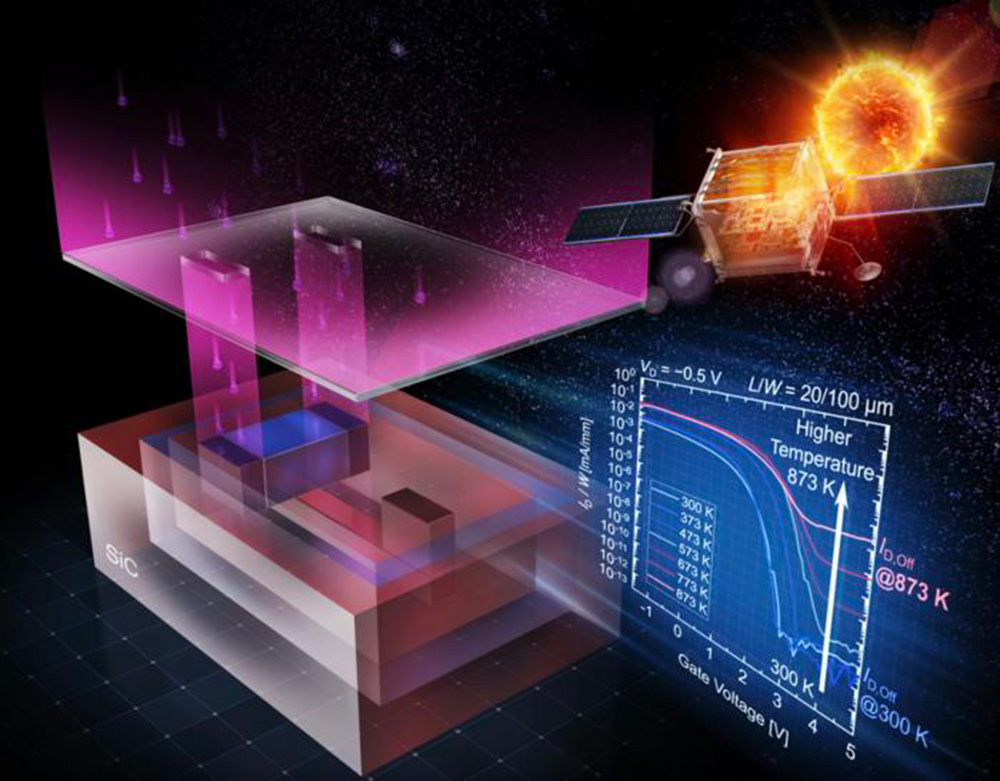
An illustration of a transistor with a labeled graph next to it with a glowing planet behind it.

The transistor was able to operate normally at temperatures ranging from room temperature to 1112 F (600 C). (Image credit: Science Graphics)

Scientists in Japan have built a new transistor that can withstand temperatures of 1,110 degrees Fahrenheit (600 degrees Celsius). Components this robust could one day be used in surface probes on Venus — where the thick carbon dioxide atmosphere can reach temperatures of 860 F (460 C).

Most modern tech, including instruments used for deep-space exploration, uses transistors to control the flow of current. But the new device is a type of junction field-effect transistor (JFET), where the strength of an electrical field changes the channel’s conductivity.

JFETs are typically used in specialist applications because they are more difficult to scale down than the more common metal-oxide-semiconductor field-effect transistors (MOSFETs), which are widely used in consumer smartphones and computers. But JFETs can offer lower noise levels because their operation does not rely on an oxide layer, which can introduce interference.

The researchers outlined how the new transistor works in a study published Aug. 17 in the journal APL Electronic Devices.

Can't take the heat

Since at least the start of the century, silicon carbide (SiC) JFETs have been considered a promising option for low-power integrated circuits heading for Venus due to the material's inherent ability to withstand high temperatures.

As the scientists pointed out in the new study: "Past landers have been limited to only a few hours by silicon-based electronics." Venera 13, a Soviet-era lander, holds the world record for the longest time survived on Venus by a spacecraft, at 2 hours, 7 minutes.

"Integrated circuits (ICs) fabricated with SiC are particularly attractive for extreme environments, such as deep-space exploration, geothermal drilling, and aerospace engine control, where conventional silicon-based ICs cannot operate reliably," the researchers added.

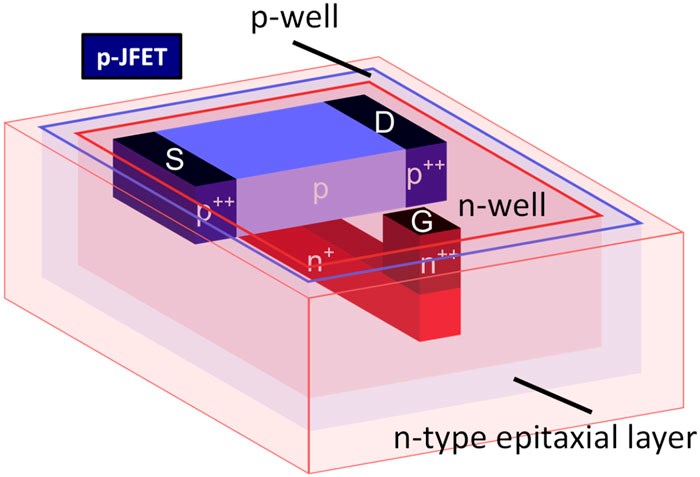
But recently developed SiC-JFETs have all met the same two problems: low controllability and large leakage currents. The former is linked to how the SiC substrate is doped with other atoms to alter its electrical properties, defining its gate (where the electrical field is created) and channel (where the current flows) regions.

An illustration of a series of rectangles with different labels and colors.

The team used dopants to create two semiconductor "wells" in the SiC around the transistor to avoid large leakage currents. (Image credit: Science Graphics)

In a material with a regular crystal structure, like SiC, some dopant atoms may penetrate deeper than expected. This doesn't matter under normal conditions, but when exposed to high temperatures, it causes variations in the field voltage required to open the channel and makes the transistor harder to control reliably. The scientists found that it can throw conventional JFET voltage thresholds off by over 2 volts.

Furthermore, at temperatures above 660 F (350 C), the SiC substrate can become less electrically resistive, allowing current to flow even when the transistor is switched off. This makes it harder for the JFET to control current properly, potentially causing incorrect signals and increased power consumption.

Even the highest-performing JFETs can only operate long-term at 930 F (500 C), but the Kyoto team had a theory as to why these challenges remained unresolved.

"We believe the lack of development is because the research community has been trying to apply silicon-era thinking to a fundamentally different material," said first author of the study Mitsuaki Kaneko, associate professor of engineering at Kyoto University, in a statement.

Turning the transistor on its head

The researchers designed their new SiC-JFET with these two challenges in mind. To improve controllability, they implemented a bottom-gate structure, where the gate is positioned underneath the SiC conducting channel.

Its gate region is heavily doped by design, so when dopant atoms in the channel penetrate deeper into the SiC, it doesn't change the overall doping profile of the channel-gate region, limiting its impact on the threshold voltage even at high temperatures.

The team also used dopants to create two semiconductor regions, or "wells", in the SiC around the JFET. The boundaries between the wells act as barriers to current flow, meaning that even when the SiC becomes more conductive at high temperatures, current cannot bypass the channel when the transistor is switched off.

A blue and brown planet in deep space.

A robust transistor could be used in surface probes on Venus, where the thick carbon dioxide atmosphere can reach 860 F (460 C). (Image credit: Science Graphics)

Researchers measured how well the new JFET could switch current on and off and how closely the actual threshold voltage matched the theoretical value, based on its thickness and level of doping. They recorded these metrics at temperatures ranging from room temperature to 1,110 F (600 C).

"The fabricated devices demonstrated stable, normal transistor operation at temperatures over 873 K [1,110°F], opening up possibilities for ultrahigh-temperature SiC devices," they wrote in the study. Furthermore, at about 750 F (400 C), the threshold-voltage error was found to be less than 0.1 V thanks to the bottom-gate design.

As well as surface probes on Venus, the transistor could be useful inside jet engines, the scientists said. Currently, components connected to gas turbines must be protected from extreme temperatures using thermal shielding, long wires and energy-intensive cooling systems, restricting engine design.

Before it can be launched into space or hooked up to a plane, the team still needs to test and optimise the transistor for practical use. This includes integrating it into more complex circuits, scaling it up to wafer-level and ensuring that the entire circuit package will withstand extreme temperatures and pressures.

Indeed, it may not be too lofty a goal. NASA demonstrated that integrated circuits with SiC-JFETs could withstand temperatures of 860 F (460 C) and 9.3 MPa of pressure for 60 days, and 930°F (500 C) in the air for over a year. Plus, in 2024, a team from the National Institute for Materials Science in Japan developed a MOSFET out of diamond that could operate above 570 F (300 C).

How small can a transistor get?

For decades, engineers have been working to create smaller and smaller transistors to fit ever-larger numbers of them onto computer chips, all in the name of greater processing power. Now, in the age of artificial intelligence (AI), that effort has turned into an all-out race.

So how small can a transistor actually get? And is smaller even still the goal?

To understand the answer, first you need to know what a transistor is.

"If you take a computer or your mobile phone and you were to pry it open, you will see that there is a printed circuit board," Suman Datta, a professor of electrical and computer engineering at Georgia Tech, told Live Science.

On that circuit board are small, rectangular objects called chips, and inside each chip is a tiny piece of silicon. "And in that silicon, if you zoom in like a million times … maybe, if you're lucky, you will start seeing these tiny switches or transistors sitting etched into that piece of silicon," Datta said.

Sign up for our newsletter

Life's Little Mysteries logo with a question mark in a magnifying glass

(Image credit: Marilyn Perkins / Future)

Sign up for our weekly Life's Little Mysteries newsletter to get the latest mysteries before they appear online.

Each transistor is effectively a switch that turns on and off in response to jolts of electricity pulsing 4 billion times per second. Modern devices contain billions of transistors, and each one turning on and off in a precise orchestration to move and store 1s and 0s powers everything from Google searches and AI data centers to the device you're using to read these words.

The smaller the transistors are, the more can fit on each chip and the greater the chip's speed and functionality. So how small have they gotten so far?

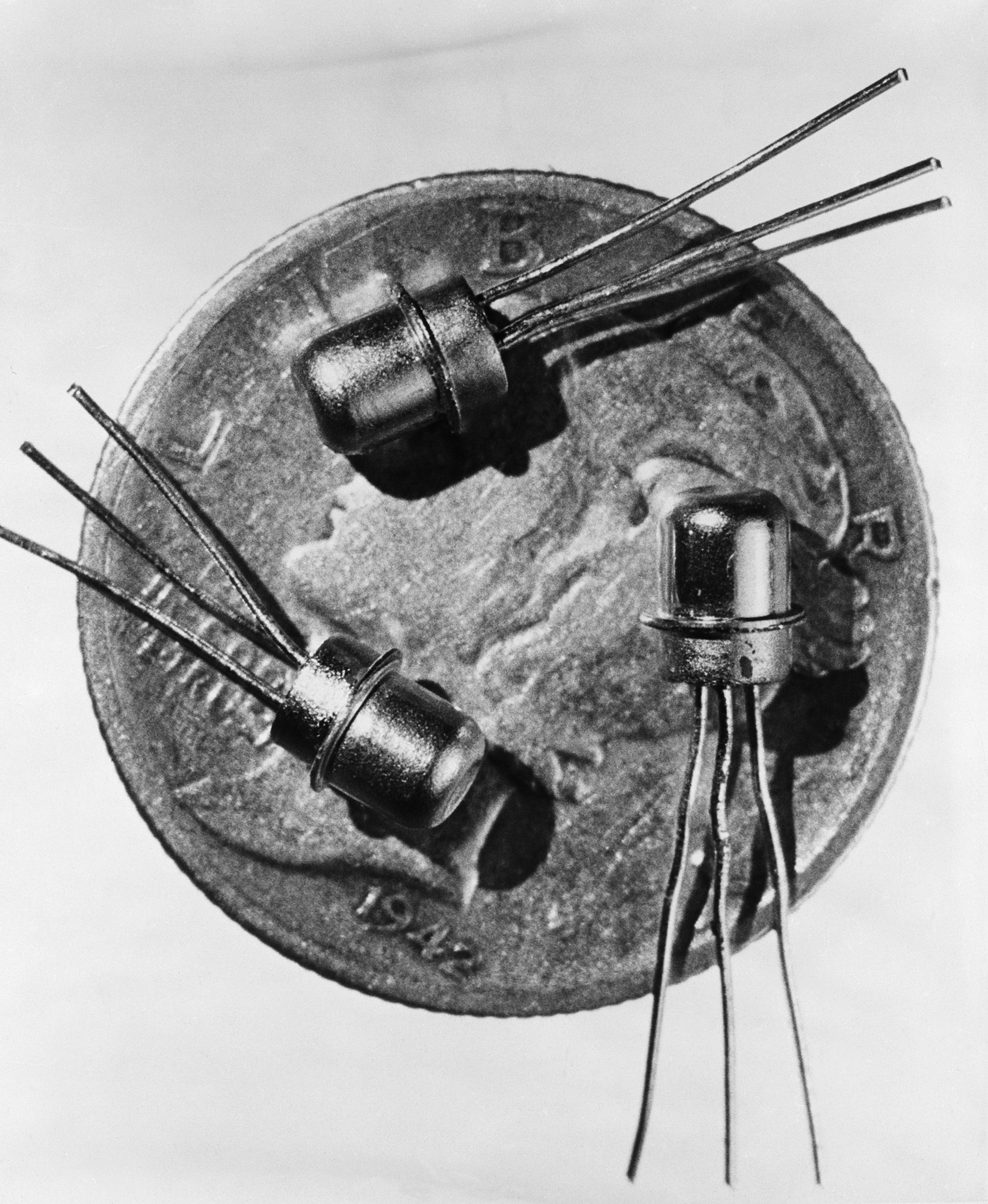
Three metal tubes with spikes coming off of them sit on a coin in a black and white photo

Transistors were once visible to to the naked eye, but have now been made orders of magnitude smaller than the width of a human hair. (Image credit: Bettmann via Getty Images)

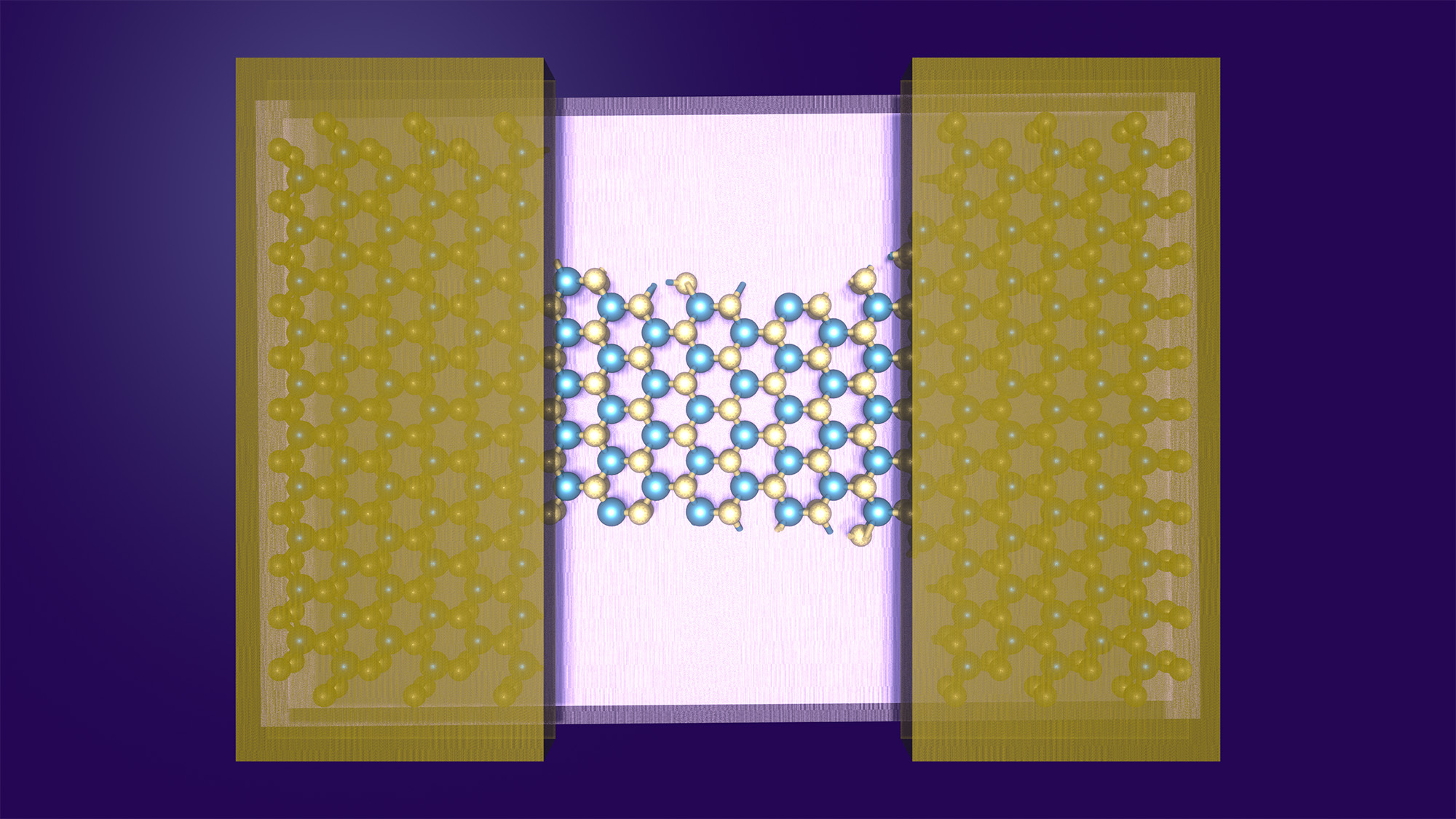
"Researchers have built proof-of-concept devices in which a single atom controls the flow of electrons, although the rest of the device is still much larger," Anton Persson, an assistant professor at Chalmers University of Technology in Sweden, and Tara Peña, an incoming assistant professor at UCLA, told Live Science via a jointly written email. That means the switching part of a transistor has been made at the smallest scale physically possible, even though a complete device that small doesn't exist yet. New materials and approaches could make these devices even smaller. In a study published in June in the journal Nature Nanotechnology, Persson, Peña and colleagues used two-dimensional semiconductors made of tungsten disulfide, among other materials, to shrink nanoribbon transistors down to a channel width of 25 nanometers ‪—‬ about 0.00025 the width of a human hair.

An illustration of two golden boxes connected by a pink box with molecules in between.

An illustration showing the small transistor made by Persson, Peña and their colleagues. (Image credit: Peña et al (2026). )

Two-dimensional semiconductors are electrically active materials that are only one or a few atoms thick, and because electrical current can be controlled more precisely in such a thin layer, they allow for smaller transistors than traditional silicon does.

Over the next decade, they still expect silicon transistors to shrink, but more slowly than they did in the past, they said. "To go considerably smaller, we may eventually need to move beyond silicon to atomically thin materials, such as the two-dimensional semiconductors we study."

A host of considerations

Size isn't the only consideration; cost is important, too. It's enormously expensive up front to design and build a new chip. "We are as R&D-intensive as drug companies that spend billions of dollars developing one drug," Datta said. "It's a very similar business model."

There are also manufacturing factors to consider. "The often much harder step is producing billions of those transistors reliably, at scale and at a price that makes sense commercially," Persson and Peña said. "Something that works once in a laboratory does not necessarily work in a factory."

Another consideration is energy efficiency. "If I'm adding more and more transistors onto that little piece of silicon, and at the individual transistor level, they don't become more energy efficient … then when I go from, let's say, 10 transistors to 20 transistors, my power budget has to be doubled, all things being equal," Datta said.

For example, the latest Nvidia data center GPUs consume 1.4 kilowatts of electricity, and Nvidia's upcoming release is estimated to consume nearly a kilowatt more than that. Half of that is given up as waste heat, Datta said.

"So it's not just smaller, faster, cheaper, but also more energy efficient," Datta said. "You have to work on all the four vectors."

Is smaller still the goal in the age of AI?

Still, there is a limit to the physical space available for additional transistors, which is why engineers are turning to 3D designs — think taller instead of smaller.

"Instead of only making each transistor smaller, the idea is increasingly to stack transistors on top of one another so that more of them fit within the same chip area," Persson and Peña said. "That way, we can still make our electronics considerably more powerful, even if each transistor shrinks only modestly."

The quest for faster, more efficient chips is only getting more urgent with the explosive growth of AI. But smaller transistors and more powerful chips aren't just important for AI data centers; they also mean smaller, potentially cheaper consumer electronics.

"People certainly notice the consequences of smaller transistors," Persson and Peña said. "They can use less power and allow more computing power to fit on the same chip. That can mean faster electronics, longer battery life and lower costs. Historically, that combination has enabled today's smartphones to outperform room-sized supercomputers from decades ago."

So how small can transistors get? "We will do everything to make it as small as possible as long as we can control the physics," Datta said. "And as long as we can, we will find a way to make the economics work."

John Ternus Begins His Apple CEO Era With a Discreet Public Profile

5 September 2026 at 14:47

John Ternus has entered one of the most visible positions in global business without trying to turn his first days into a personal media event. The new CEO arrived with a remarkably discreet public profile, a newly opened social presence and decades of work completed mostly behind Apple’s products.

His X account, @johnternus, appeared publicly on September 1, the day he officially succeeded Tim Cook. Its biography contained only the company logo and his new title. The first post was even shorter: “hello.”

The simplicity felt consistent with an executive who has spent most of his career explaining materials, engineering decisions and manufacturing improvements rather than building a public personality. It also created a sharp contrast with the scale of the position he now occupies.

Ternus can remain personally reserved, but the CEO role will repeatedly place him before customers, employees, investors, governments and developers. His first social post may have been quiet. The responsibilities arriving behind it are anything but.

John Ternus Arrives Without a Personal Media Machine

Ternus did not maintain a prominent public social account during his years leading hardware engineering. Most customers encountered him through carefully produced product presentations, occasional interviews or appearances focused on a particular device.

Even within those settings, his style remained technical and controlled. He usually spoke about engineering choices, durability, materials, performance and the work required to turn a design into a product that could be manufactured at enormous scale.

His new X account does not immediately change that character. Opening a channel is different from revealing a private life or becoming a daily commentator. The minimal introduction suggests a place for official communication rather than an invitation into every passing thought.

That would follow an established pattern for senior leadership. Tim Cook used his public account to acknowledge product launches, employees, social causes, environmental initiatives, community visits and major events. His posts rarely became extended personal debates.

Ternus may adopt a similar rhythm, although the account is too new to define its purpose. One word and a short biography cannot tell us how frequently he will post, which subjects he will address or whether he will write directly during moments of controversy.

The restrained opening still served one practical purpose. It established an authenticated public identity before unofficial profiles, impersonators and parody accounts could occupy the space around a newly appointed CEO.

A man with short dark hair and light stubble, rumored to be Apple Next CEO, smiles at the camera. He is wearing a black crew-neck shirt and is posed in front of a plain, light background.
John Ternus | Image Credit: Apple Inc.

A Career Built Behind the Hardware

The limited public profile should not be mistaken for limited influence inside the company.

Ternus joined the product design team in 2001 and became a vice president of hardware engineering in 2013. He entered the executive team as senior vice president in 2021, eventually overseeing engineering work across iPhone, iPad, Mac, AirPods and Apple Watch.

His official biography credits him with an instrumental role in the introduction of iPad and AirPods, along with work across multiple generations of the company’s largest product lines. It also connects his leadership to improvements in reliability, durability, materials, repairability and environmental performance.

This background gives Ternus a different starting point from a CEO recruited principally through finance, sales, software or public policy. He arrives from the part of the organization responsible for making difficult designs function consistently outside a laboratory.

Hardware engineering at this scale reaches far beyond choosing a processor or shaping an enclosure. It requires coordinating displays, batteries, cameras, radios, thermal systems, structural materials, manufacturing equipment, repair procedures and supplier capacity. A small change can affect production across millions of units.

That experience may explain part of his measured communication style. Engineering organizations reward details that survive testing. Public attention often rewards immediate confidence. Ternus has spent his career in an environment where confidence eventually meets a drop test, production line or repair bench.

His public appearances have often carried the same discipline. He tends to explain what a product team accomplished without placing himself at the center of the accomplishment.

The CEO Role Changes the Audience

Leading hardware engineering allowed Ternus to speak after a product decision had passed through years of development. As CEO, he will also need to speak while difficult questions remain unresolved.

Investors will expect him to explain spending, growth and long-term priorities. Governments will want answers about manufacturing, competition, privacy and platform control. Employees will look for direction as artificial intelligence, robotics, home technology, augmented reality and satellite communications create new opportunities across the company.

Customers will judge him through products, but they will also hear his response when a launch disappoints, a service fails or a policy creates frustration.

This is where a discreet profile can become either an advantage or a limitation.

A CEO who does not comment constantly preserves the weight of the moments when he chooses to speak. Fewer posts also reduce the chance that a hurried reaction becomes the story instead of the company’s work.

Silence becomes harder to maintain when people expect reassurance. Product defects, security incidents, employee concerns and political disputes can create situations in which a carefully prepared statement feels too distant. Ternus will have to decide when restraint protects the company and when it begins to look like avoidance.

Cook will remain involved as executive chairman and is expected to assist with areas including engagement with policymakers. That arrangement gives Ternus continuity during the transition without removing the need to develop his own public authority.

The distinction between their roles will become more visible with time. Cook can offer experience and institutional relationships, but employees and customers need to recognize which priorities belong to the new CEO.

A More Technical Public Voice Could Work

Ternus does not need to imitate Steve Jobs’ stage presence or Cook’s diplomatic style. A convincing public identity can grow from the expertise that brought him to the position.

The most natural version would be an engineering-minded CEO who explains trade-offs without turning every decision into a slogan. Product design is full of compromises involving battery life, weight, cost, durability, repairability and production capacity. Carefully explaining some of those decisions could make corporate communication more informative.

His 2024 commencement appearance at Penn Engineering offered a rare view outside a product presentation. Ternus returned to the university where he earned his mechanical engineering degree and addressed students as an experienced engineer rather than a celebrity executive.

That type of setting allows more personality to appear without requiring constant social posting. Longer interviews, engineering discussions, employee conversations and educational appearances may suit him better than trying to manufacture spontaneity several times a day.

A restrained profile could also reinforce collaboration. The products reaching customers are built by large teams, and Ternus has generally presented himself as a representative of that work. Maintaining that tone as CEO would keep attention on the organization rather than turning every announcement into a personal performance.

The difficulty will be preserving technical depth while discussing areas beyond hardware. Services, entertainment, artificial intelligence, software platforms and international policy cannot always be explained through materials and manufacturing. The CEO must connect them into one recognizable direction.

His First Major Appearances Will Define the Account

The opening “hello” gives Ternus room to decide how visible he wants to become.

Upcoming product events will offer an early test. A social account can distribute announcements and photographs, but the stage will reveal more: which subjects he chooses to introduce, how much technical detail he includes and whether he remains present throughout the presentation or delegates most of it to other executives.

Earnings calls will create a different test. Product videos are rehearsed around finished work; financial discussions require direct answers about demand, margins, investment and risks. His language in those conversations will begin shaping how investors understand the new administration.

Internal communication may prove equally influential even when the public sees only fragments. Employees will listen for signals about decision-making speed, tolerance for experimentation and the relationship between engineering ambition and commercial discipline.

The X account can support that work, but it cannot substitute for it. A polished stream of product announcements would tell customers what has shipped. Occasional direct messages during difficult moments would reveal more about how Ternus intends to lead.

For now, the empty space around his first post is part of the story. The next useful signal may not be how often John Ternus speaks, but which moment persuades this notably private engineer that the CEO should speak in his own voice.

Two men walk side by side on a gravel path surrounded by greenery, smiling and engaged in conversation. Both are casually dressed in long-sleeve shirts, jeans, and sneakers.
Image Credit: Apple Inc.


The post John Ternus Begins His Apple CEO Era With a Discreet Public Profile appeared first on AppleMagazine.

New fabric stays cooler than white cotton—and it’s purple

31 August 2026 at 18:08

With the dog days of summer nearing an end, many are counting down the days until they can give the darker clothes in their wardrobe a bit more love. Though plenty of people flout seasonal rules and wear all-black year-round, light-colored fabrics are typically the better choice during  hotter months because they reflect sunlight and can help keep us cool. This heat-reflecting logic is also partly responsible for the old decree, “don’t wear white after Labor Day!” But what if fashion choices weren’t dictated by the weather? A team of researchers from China and Australia believes they may have cracked that code, and it starts with a rich purple fabric.

The researchers, hailing from Zhengzhou University and Adelaide University, set out to create a dark-colored material that was also effective at keeping people cool. They created an entirely new fabric made of a purple metal-organic framework and zinc oxide nanoparticles. The metal-organic framework which absorbs green light from the sun and gives the purple color, while the zinc oxide nanoparticles which reflect sunlight and radiate heat away. 

The material performed exceptionally well during testing. It reflected an average of nearly 88 percent of sunlight and stayed up to 11 degrees Fahrenheit cooler than conventional purple cotton outdoors. It was notably even 7.6 degrees cooler than white cotton. In a world where deadly hot summers are becoming more common, research suggests materials like this could provide outdoor workers with some much-needed relief. 

“We have traditionally had to make a choice between cooling performance and appearance,” Adelaide University materials engineer Jun Ma and study co-author said in a statement. “Our research shows that we can have both. We can make a fabric that looks purple, but at the same time reflects most of the sun’s energy and releases heat very efficiently.”

The team published their findings in the journal Small. 

Why do light colors feel cool?

Generally speaking, lighter colors are better bets for staying cool because they reflect more sunlight. White or unpigmented materials are the best at beating heat, whereas dark black material will feel the hottest.  This same idea applies to building and construction materials as well. Purple, while obviously dark, is also a unique choice for the research because it strongly absorbs green light, which is one of the strongest parts of the solar spectrum. 

Caveats are in order, though. Color isn’t the only factor in staying cool. Clothing material and fit are just as important, if not more so. Loose, breathable garments like cotton or linen allow far more airflow than tighter clothing. That’s why Bedouin nomads in the North African desert can wear mostly all black without collapsing from heat exhaustion. Still, all else being equal, lighter colors make for a cooler experience.

Making a cooling, purple fabric 

To create the fabric, the team combined a purple ZIF-67 metal-organic framework with zinc oxide nanoparticles. Using electrospinning, they spun the mixture into purple thermoplastic polyurethane fibers, which were then woven into fabric. They then cut the material into two-inch squares and exposed them to direct sunlight on a sunny day in Zhengzhou, China, alongside control squares of standard white and purple cotton.

The revised material reflected an average of 87.6 percent of solar radiation. In terms of overall cooling, at least in these tests, it was a resounding success. After a full day baking in the sun, the fabric remained 7.6 degrees cooler than white cotton and 11.2 degrees cooler than traditional purple cotton. The fabric also  achieved these thermal gains without sacrificing practical performance, and  was flexible, stretch-resistant, and highly breathable, allowing moisture to evaporate effectively rather than trapping sweat. It also maintained both its rich color and cooling properties after 50 wash cycles. Furthermore, UV accelerated-aging tests (simulating roughly 108 days of intense sunlight exposure) showed that the  cooling performance did not degrade over time.

Using science to stay cool in a warming world 

It’s still early in the process, but the team believes their new approach could make darker-colored materials less off-putting during warmer weather. While that’s potentially great news for all the goths out there, the researchers emphasize far more practical applications as well. These refined fabrics could be used to make workwear for construction workers, farmers, and others who endure long hours baking in the sun. For outdoor laborers, even modest cooling relief can make a life-saving difference.

“The long-term opportunity is to move beyond the idea that cooling fabrics have to be white,” Adelaide University Chemical Engineer PhD candidate and paper co-author Yangzhe Hou said in a statement.

This summer’s heat has moved from unpleasantly hot to deadly in many parts of the world, and it’s likely a sign of more to come. Both the fashion industry and the general public are already adapting to this brutal new reality. A 2022 New York Times report noted a marked rise in sales of shorts and sandals alongside a sharp decline in fleece and heavy outerwear in recent years, a shift attributed in part to rising global temperatures. Similarly, recent efforts to normalize wearing shorts in office settings and the gradual removal of neckties reflect a workplace culture adjusting to a hotter climate.

The new purple fabric research also joins a now lengthy list of other attempts to apply science and technology to make clothing cooler. An assortment of (often more expensive) cool-tech clothing brands with names Coolcore and Iso-Chill have gained popularity, promising to beat the heat. Kontoor Brands, which owns blue-jean giant Wrangler, even made an Insta-Cool shirt that used phase-change material initially used by NASA astronauts to stay cool. 

The post New fabric stays cooler than white cotton—and it’s purple appeared first on Popular Science.

❌