❌

Normal view

Microsoft’s PostgreSQL alternative, HorizonDB: Worth the wait?

10 August 2026 at 17:02

Microsoft is betting that the integration of HorizonDB, the cloud-native PostgreSQL alternative it is developing, with Azure will attract more enterprise AI and agentic workloads to its cloud services.

Enterprises may not be willing to take that bet.

It’s been nine months since Microsoft unveiled HorizonDB, but the service remains in public preview with no announced general availability date. Why put AI projects on hold waiting for HorizonDB to arrive, when AWS, Google, Databricks, Snowflake, and others already have production-ready PostgreSQL services positioned for the same AI workloads that Microsoft says it is building HorizonDB to handle?

AWS has had the longest head start. Aurora PostgreSQL became generally available in 2017 and has since evolved from a cloud-native PostgreSQL database into an AI-ready service with vector search and integrations with Amazon Bedrock. Similarly, Google’s AlloyDB, which followed in 2022, now includes AlloyDB AI with vector search, embeddings and model interaction for generative AI and agentic applications.

Databricks and Snowflake, too, have their own platform-centric services in the form of Lakebase, which became generally available on AWS and Azure this year, and Snowflake Postgres, which was made generally available in February 2026.

As the latecomer, when Microsoft pitched HorizonDB at Ignite in November 2025 it talked up its new architectural approach to cloud-native PostgreSQL, built around disaggregated compute and storage and a database-as-log design. The hyperscaler also positioned native vector search and deep integration with Foundry and Fabric as key differentiators for AI-heavy workloads.

No reason to wait

Those architectural differences may not be compelling enough for CIOs to wait for HorizonDB to become generally available, though.

“Most enterprises with urgent needs will not wait. A long preview window creates uncertainty around SLAs, pricing, operational maturity, and roadmap confidence,” said David Linthicum, an independent cloud consultant.

And, said Stephanie Walter, practice lead of AI stack at Hyperframe Research, enterprises cannot build mission-critical production plans around an undefined GA date, regional footprint or support commitment.

Given the difficulty of unwinding a poor database choice, enterprises will approach unknown quantities with caution.

“Database platforms eventually become sticky control points. Once the database is connected to the rest of the application, analytics, AI, and governance stack, switching becomes a business transformation rather than just an infrastructure swap,” said Michael Ni, principal analyst at Constellation Research.

In the case of a cloud database, there’s also the unwelcome possibility of “huge egress fees” in case of change, said Bradley Shimmin, lead of the data and analytics practice at The Futurum Group.

All that uncertainty is likely to lead enterprises to restrict HorizonDB to experimental use cases for now, Shimmin added.

Performance anxiety

Analysts also questioned whether HorizonDB’s technical differences will show up in performance benchmarks.

Microsoft has said HorizonDB can deliver up to three times the throughput of open-source PostgreSQL, but makes no comparisons with rival offerings such as Aurora or AlloyDB that it will compete with, Walter said.

The bigger question, according to Igor Ikonnikov, advisory fellow at Info-Tech Research Group, is whether those performance advantages, still largely on paper, translate into a meaningful difference in production.

“A database with a better compute benchmark can still be more expensive once resilience and ecosystem costs are included,” Ikonnikov said.

The economics also point to another HorizonDB limitation, particularly for workloads that are not continuously running, said Advait Patel, senior site reliability engineer at Broadcom.

HorizonDB currently uses provisioned compute rather than a serverless, scale-to-zero model, meaning customers continue to incur compute charges while an instance is provisioned, even if its workload is intermittent or idle, Patel said.

There are developer considerations too.

HorizonDB’s PostgreSQL compatibility does not necessarily mean every existing PostgreSQL application will move cleanly as in its current form the database supports only an approved set of PostgreSQL extensions rather than arbitrary ones, Walter said.

Who should wait?

For enterprises already deeply invested in Microsoft’s Azure ecosystem, those limitations may not be enough to rule out waiting for HorizonDB, Patel said: The chance to integrate the database with AI services and the wider Microsoft stack may outweigh immediate availability, he added.

That calculus also reflects how enterprises typically make database decisions in the first place: not by comparing databases in isolation, but by weighing how well they fit into the broader technology stack, including the cloud platform they have standardized on, Ikonnikov said.

For Azure shops, the choice may therefore be less about moving an existing workload away from Aurora or AlloyDB and more about whether a new Azure workload should start on Azure Database for PostgreSQL today or wait for HorizonDB when it becomes available, he said.

That may be an open question for some enterprises, said Devin Pratt, research director at IDC. “Plenty of organizations are still mid-decision, not locked in,” he said.

Microsoft finally offers a timeframe

Microsoft still won’t say exactly when HorizonDB will launch, with Shireesh Thota, corporate vice president for Azure Databases at Microsoft, saying only, “General availability for Azure HorizonDB is currently targeted for the second half of 2026.”

That narrows it down to a period of a little over four months, including Microsoft’s FabCon and Ignite conferences — an eternity in AI.

Save nearly $350 on this 4TB Samsung 9910 Pro SSD with Gen 5 speeds right now —limited-time Woot sale delivers ultra-fast storage with speeds up to 14,800 MB/s

10 August 2026 at 11:18

If you need to buy new storage for your PC, you're going to pay extra. There's no way around that fact. The AI boom has forced prices up across the board. Without a time machine, the only way to score a good deal on a new SSD is to find a bargain that is hundreds of dollars cheaper than its current list price. Luckily, this 4TB Samsung 9910 Pro deal at Woot qualifies, knocking a huge $348 off compared to sister brand Amazon's rival discount price, making it $619.99 for a limited time only.

● Check out this deal at Woot

Before you grab your pitchforks, this is a good deal in context. Amazon owns Woot, so it's fair to use Amazon's own historic pricing as a benchmark here. That data shows this SSD, like the entire market, has seen a huge set of price increases since December. We've not seen this particular model close to this price since February. Prices have been unstoppable since then, too.

For your money, you're getting 4TB of fast storage from a known, trusted brand. Our Samsung 9910 Pro review, made before the market turmoil, shows this is a good all-rounder drive, with good power efficiency compared to its rivals. This is a PCIe 5.0 SSD, with speeds that vastly improve upon rival Gen 4 and 3 drives, and will be a huge step up over an older SATA SSD or traditional hard drive.

amazon prime required

This Samsung 9100 Pro SSD provides 4TB of PCIe 5.0 storage. It delivers impressive performance with up to 14,800 MB/s in sequential read and 13,400 MB/s in sequential write speeds. It comes with a heatsink, too.View Deal

Two things are important to point out on this SSD: speed and capacity. 4TB of storage is a sizable amount for a gaming or productivity rig. Once you've installed your operating system, you'll be left with terabytes of space for your files. If you're a gamer, that'll mean enough for several of the biggest AAA game installations, alongside plenty of indies, with enough room left spare.

Speed is arguably the bigger draw, though. The Samsung 9910 Pro is an NVMe M.2 SSD, running on PCIe 5.0 over four lanes, delivering sequential read and write speeds of 14,800 MB/s and 13,400 MB/s apiece. This isn't the fastest, but it's not a million miles away from faster rivals like the Corsair MP700 Pro XT, which leads our best SSD list for speed with speeds of 14, 900 MB/s and 14,700 MB/s for read and write.

9100 Pro 2TB
Tom's Hardware
9100 Pro 2TB
Tom's Hardware
9100 Pro 2TB
Tom's Hardware

Specs-wise, the 9100 Pro is built with a single-sided design that includes an SSD controller, a DRAM package, and two NAND flash packages. It's made with Samsung's 5nm Presto controller and is able to max out PCIe 5.0 over four lanes for best throughput. It's a TLC drive using Samsung's 236-layer V8 flash memory modules. This particular 4TB model comes with a heatsink, too, to help keep the drive cool during use.

The $619.99 sale price for this 4TB Samsung 9910 Pro is not ground-breaking or an all-time low. In the context of the current PC hardware market, however, it's a good price that knocks nearly $350 off compared to the same model on sale at Amazon. It's a Prime exclusive (Woot is owned by Amazon), so if you want it, you'll need to make sure you use a Woot account that's linked to your existing Amazon Prime account.

If you're looking for more savings, check out our Best PC Hardware deals for a range of products, or dive deeper into our specialized SSD and Storage Deals, Hard Drive Deals, Gaming Monitor Deals, Graphics Card Deals, Gaming Chair, Best Wi-Fi Routers, Best Motherboard, or CPU Deals pages.

You can also join the Tom's Hardware deals Discord for up-to-the-minute hardware deals.

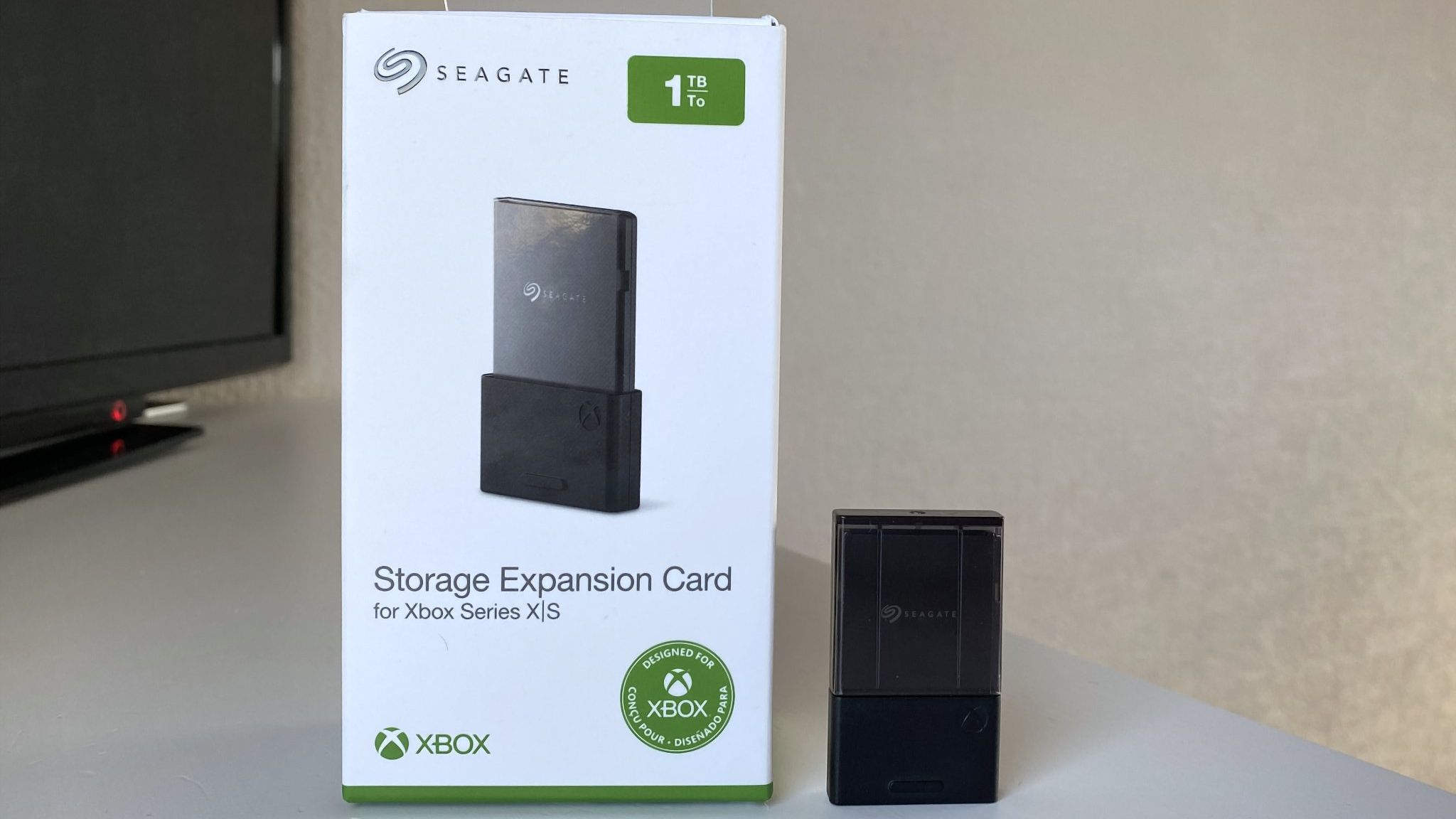
We warned you prices would skyrocket; now Seagate Xbox Expansion Cards are out of stock or over $300 — but these ones are still available

The Seagate Xbox Expansion Card is a must-have accessory for the Xbox Series X and Xbox Series S. It's a plug-and-play drive with quick enough speeds to play games right from the card.

But the Seagate Xbox Expansion Card is running out of stock. Scanning the web shows retail listings with warnings of low stock or a lack of stock at all. Other stores have the cards but at inflated prices. If you want to get a Seagate Xbox Expansion Card, you need to act quickly.

Below, I'll list all places I've found the card in stock. It's now difficult to find them at all, let alone at a good price.

This card allows you to expand the storage of your Xbox Series X or Xbox Series S. Stock is extremely limited.

1TB at GameStop for $199.99
2TB at Walmart for $299
2TB at GameStop for $299.99
2TB at Adorama for $349.99
1TB at Newegg for $362.01

Windows Central review:⭐⭐⭐⭐View Deal

Is it a good time to buy a Seagate Expansion Card?

Seagate Expansion Card

You can skip game file management and space issues with the Seagate Storage Expansion Card for Xbox. (Image credit: Windows Central)

Right now is a good time to buy a Seagate Xbox Expansion Card for three reasons. First, the card is below its launch price at certain retailers. Second, the card is running out of stock, so if you want one you need to act quickly. Third, games like GTA 6 and Call of Duty: Black Ops 7 will take up a lot of space, so you'll need more storage.

Gaming prices are out of control right now. RAM and storage seem to get more costly each month. There aren't signs of the market correcting any time soon, either.

The most pressing factor here is that stock of the Seagate Xbox Expansion Card is running out. Literally as I wrote this article, Best Buy marked the card as unavailable. Newegg and Amazon have the card in stock but at wildly inflated prices.

The only Seagate Xbox Expansion Cards I've found in stock are the ones listed above, including the 2TB model at Walmart. If you spot a model in stock, please flag it and I'll update this piece.

Click to join us on r/WindowsCentral

Join us on Reddit at r/WindowsCentral to share your insights and discuss our latest news, reviews, and more.

❌