Como parte de seus esforços para dar a pais um maior controle sobre o que seus filhos visualizam e com quem se comunicam em suas plataformas, a Metaestá expandindo alguns dos seus recursos de controle parental para o Threads.
A partir da semana que vem, pais e responsáveis nos Estados Unidos poderão usar a Central da Família da Meta para controlar como as crianças sob sua guarda usam o Threads — tal como já é possível no Instagram e no Facebook.
Divulgação/Meta
Quando a supervisão estiver ativada, pais poderão visualizar o tempo que as crianças e adolescentes gastam na plataforma, definir limites de tempo para o uso, gerenciar quem pode marcá-los em posts e preferências de conteúdo.
A Meta ainda destacou que continuará expandindo suas ferramentas de supervisão para tornar mais fácil a familiares encontrarem controles e apoiar a experiência de seus adolescentes nas suas diferentes plataformas.
Novidades para os Live Chats
Além dos recursos de controle parental, o Threads também está ganhando novidades especificamente para os Live Chats, bem como anunciou recursos que chegarão em breve às suas salas de bate-papo públicas.
Segundo o TechCrunch, a Meta está liberando a criação de Live Chats para todos os Community Champions (usuários ativos e influentes nas comunidades da plataforma) e um recurso que permite traduzir mensagens na conversa.
Anfitriões, por sua vez, agora contam com um maior destaque em suas mensagens, bem como podem convidar até três co-hosts para ajudá-los a conduzir uma conversa, além de agora poderem excluir mensagens para todos os participantes.
Para o futuro, a Meta prometeu novidades como suporte aos Live Chats na versão para desktop do Threads e às mensagens fixadas, que permitirão ao anfitrião deixar avisos ou informações importantes no topo de uma conversa.
O jornal divulgou dados da empresa de pesquisas Sensor Tower que apontam para o lançamento de cerca de 600 mil apps (um crescimento de 30%) na App Store no ano passado — justamente no ano em que os aplicativos criados com inteligência artificial começaram a se tornar cada vez mais populares.
É um crescimento relevante, mas a tendência é que o deste ano seja ainda maior. Só no primeiro semestre, foram publicados 560 mil novos apps. Com o ritmo de novos lançamentos mais que dobrando, pode-se dizer que trata-se do primeiro grande crescimento desde o boom dos primeiros anos da App Store.
Embora isso possa ser considerado vantajoso para a Apple, que recebe uma comissão por compras dentro de apps, muitos desses softwares sobrevivem exclusivamente com anúncios (o que não rende receita à Maçã) e uma boa parte está apenas “ocupando espaço”, sem um número relevante de downloads.
Os dados da Sensor Tower, inclusive, mostram que o crescimento na quantidade de downloads é bem mais modesto que o de novos apps. Ao longo de todo o ano passado, foram registrados 35,4 bilhões de downloads (+3%) na loja, enquanto no primeiro semestre deste ano esse número é de 17,6 bilhões (+2%).
Para a Apple, isso pode ser algo negativo, uma vez que todos os aplicativos hospedados na loja dependem de avaliação humana para serem liberados. Um alto número de novos apps pode dificultar esse processo de revisão ou até mesmo diminuir a qualidade dos softwares que são disponibilizados.
Scientists have discovered the building blocks of life inside a meteorite that smashed through a New Jersey home two years ago. The space rock contains amino acids, carbon compounds and other "prebiotic" molecules similar to what may have helped kick-start life on our planet, a new study shows.
Scientists on the study team — led by Peter Jenniskens, a meteor astronomer with affiliations at the SETI Institute and NASA's Ames Research Center — praised the homeowner in Hillsborough, N.J., for quickly preserving the meteorite after it fell through the roof on July 16, 2024, despite the adverse circumstances. His actions included using disposable gloves and aluminum foil to place pieces of the meteorite fragments into glass jars.
"I was at home at the time, heard a loud crash and found a hole in the ceiling of the master bedroom," the homeowner, who was not named, said in a statement from the SETI Institute. "I smelled a strong, sulfur-like odor and saw many black fragments, along with debris and black dust that covered my bed, carpet and surrounding areas."
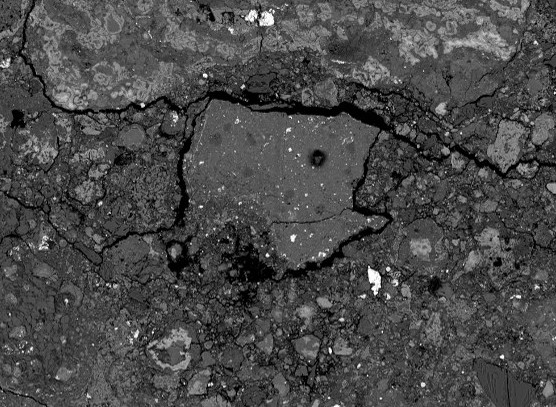
A close-up of the Hillsborough meteorite’s surface. (Image credit: SETI Institute)
Those meteorite pieces were precious, the scientists said, and likely came from an ancient solar system planet that wasn't fully formed. "A forensic study of the fragments revealed that they contained preserved bits from near the surface of a small primitive asteroid where it experienced concentrated salty fluids — a process not previously known from this type of protoplanet world," Jenniskens said in the statement.
The rock broke apart in midair, with observer reports stopping when the meteor reached 22 miles (35 kilometers) in altitude, although Newark Liberty International Airport briefly tracked pebbles falling from the sky with Doppler weather radar after that. Fragments from only one meteorite — called Hillsborough, after the town where it crashed through the New Jersey home — were recovered.
The American Meteor Society used its cameras in Northford, Connecticut, and Douglassville, Pennsylvania — along with a doorbell camera in Wayne, New Jersey — to figure out the meteor's origin, Mike Hankey, an operations manager at the American Meteor Society and co-author of the study, said in the statement. "The path traced back to low in the asteroid belt."
Hillsborough is the second stony meteorite of its type ever spotted in a fall. Later analysis showed that the meteorite is full of ancient brines or salt. Scientists classified the meteorite as a type of stony space rock called a carbonaceous chondrite.
Scientists will compare the salt minerals to samples of asteroids Ryugu and Bennu, both of which contain ingredients of life and are samples of another carbonaceous chondrite type that formed earlier than Hillsborough. This analysis could help scientists further trace the origins of life-friendly chemistry in the early solar system.
Up to 90% of Earth's population may be able to see the enormous "God of Chaos" asteroid Apophis zoom past our planet in less than three years, scientists say. The skyscraper-size space rock will come closer to us than some satellites, making it clearly visible to the naked eye during the "once-in-a-millennium" skywatching event.
This will be the first time humans have ever been able to predict a flyby of an asteroid visible to the naked eye, and it could be a once-in-a-lifetime experience for the up to 7.6 billion people who manage to see it, scientists said at the Apophis T-3 Years workshop, held June 18-19 at the University of Padua in Italy.
"Sighting Apophis as it passes by is a way of feeling a shared cosmic experience, realizing the smallness of Earth in the vastness of space," Richard Binzel, a planetary scientist and asteroid expert at MIT who helped organize the recent workshop and create new maps of the flyby, told Live Science in an email.
The asteroid, dubbed 99942 Apophis (or simply Apophis), is a peanut-shaped object that spans about 1,500 feet (450 meters) across at its widest point, or around as wide as the Empire State Building is tall, making it large enough to wipe out a city if it ever impacted our planet. Apophis likely originated from the solar system's main asteroid belt between Mars and Jupiter, but it now resides between the orbits of Venus and Earth, circling our home star roughly every 10.5 months. The name Apophis comes from Apep, the Egyptian serpent god of darkness and disorder, which has earned the space rock the nickname "God of Chaos."
On April 13, 2029, Apophis will make a superclose flyby of Earth, reaching a minimum distance of around 19,000 miles (30,600 kilometers) from our planet, according to The Planetary Society. That's much farther away than the International Space Station and the thousands of other spacecraft in low Earth orbit, but it's closer than several hundred satellites stationed in an elevated geosynchronous orbit. (Apophis poses no threat to these high-altitude satellites because they can easily be maneuvered away from its projected path.)
At the recent Apophis T-3 Years workshop, scientists shared new maps showing how many people will be within viewing range of the asteroid at each point of its seven-hour flyby of Earth. (Image credit: eclipseatlas.com)
Therefore, scientists are keen to monitor the flyby in great detail and will coordinate observations from telescopes around the world to understand the potentially hazardous asteroid better. Several spacecraft, including NASA's OSIRIS-APEX, will also attempt to fly past Apophis to study its structure and trajectory. The event is so significant that the United Nations has declared 2029 the International Year of Asteroid Awareness and Planetary Defence.
Researchers also hope the flyby will provide a unique opportunity to inspire the next generation of space scientists. "I hope people will find the Apophis flyby intriguing, as it is not anything fearful or frightening at all," Binzel said. "Who knows how many young people might find a spark of curiosity that leads them on a path to a career in space studies."
Who will see Apophis?
The new maps help break down who might be able to see Apophis throughout the roughly seven-hour period it passes by our planet. The asteroid will be visible only to people who are positioned within its path at twilight or night amid clear skies and limited light pollution.
Apophis will slowly move across the night sky through a set of well-known constellations, although its exact position will depend on where in the world you are. (Image credit: eclipseatlas.com)
At the start of the flyby, when Apophis is farthest from Earth, the asteroid could be visible to around 4.5 billion people across Australia and most of Asia. By the end of the flyby, when the space rock reaches its closest point to us, it might be visible to around 1.9 billion people in eastern South America, northern Africa and parts of Europe, according to the new maps.
Peak visibility will occur around halfway through the flyby, when Apophis might be seen by as many as 5.7 billion people across eastern Africa, Southern Europe, Australia, and all of Asia and the Middle East. At this point, astronomical observatories situated on Spain's Canary Islands will likely snap the best photos of the asteroid's flyby, according to Live Science's sister site Space.com.
North America is the only continent that will not get a clear view of Apophis.
For those who are lucky enough to see the passing space rock, the asteroid will appear as a "modest star passing slowly across the sky, much like a slow-moving satellite," Binzel said, and it will shine as brightly as the stars in the Big Dipper.
New NASA Earth Missions Gear Up to Start Science Flights
Satellite imagery captured wildfires burning hot enough to generate pyrocumulonimbus clouds north of Lake Superior in July 2026. NASA aircraft will help scientists study the powerful storms as they develop.
Credits: CSU/CIRA & NOAA
Landslides in Alaska. Air quality in Atlanta. Fire clouds out West. From the Arctic fringes to farm country, NASA’s newest class of suborbital Earth Venture missions is gearing up to deliver science that will benefit communities in the United States and beyond.
The six projects will mobilize hundreds of scientists and pilots from NASA, the U.S. Navy, universities, and other institutions over the next several years. While the investigations range across topics, a defining feature of suborbital missions is the use of sensors mounted on aircraft.
Airborne remote sensing serves as a bridge between ground-based instruments and satellites. Data collected via planes, helicopters, drones, and balloons can fill in gaps in computer models used by weather forecasters, city planners, and others.
When wildfires create their own weather
The first project to take wing this summer is Injected Smoke and PYRocumulonimbus Experiment (INSPYRE), led by the Naval Research Laboratory. From mission headquarters in Colorado, the team will chase one of the least understood forms of severe weather on Earth: towering “fire clouds” generated when extreme wildfires burn hot enough to brew their own thunderstorms.
Pyrocumulonimbus clouds crackle with lighting in imagery captured over Utah and Colorado by the GOES-18 satellite in early July 2026.
CSU/CIRA & NOAA
Smoky and crackling with lightning, these unique storms can create blind spots for aviators above and spark new blazes below. Measuring and mapping the dangerous storms as they develop in real-time will help scientists forecast them in the future. Several aircraft, including NASA’s high-altitude ER-2, flying out of Montana, will carry a large suite of instruments over wildfire-generated storm systems. Among them will be two state-of-the-art infrared wildfire trackers, which were developed at NASA’s Jet Propulsion Laboratory (JPL) in Southern California and will be flying as part of the agency’s FireSense program.
Testing the air over farmland, megacities
Agricultural emissions represent an important and understudied part of Earth’s land and atmosphere systems. The FarmFlux mission, which kicks off this year, will deploy more than a dozen sensors to measure ozone, methane, ammonia, particulates, and other pollutants rising from agricultural lands and animal farms stretching from the Midwest to California’s Central Valley. These emissions affect human health, global climate, and stratospheric ozone. The mission is led by NASA’s Goddard Space Flight Center in Greenbelt, Maryland, along with Colorado State University, and Boston University.
NASA’s 777 aircraft is gearing up to start science flights. Structural modifications – like enlarged cabin windows and instrument portals – have transformed the former passenger plane into a flying laboratory. It’s seen here at Langley Research Center in Hampton, Virginia, in April 2026.
NASA/Ryan Hill
Two North American cities with air quality concerns are Atlanta and Mexico City. But the causes differ, with weather and terrain playing a role. To explore these differences, the Hemispheric Airborne Measurements of Air Quality (HAMAQ) mission will investigate areas of poor air in the two capitals and test how satellite information can help forecasting and mitigation efforts. The team will deploy two aircraft at different altitudes: NASA’s P-3B will fly close to the surface, directly measuring fine particle and gaseous pollutants, while the recently acquired 777 science jet will soar high above, mapping pollution with remote sensors. NASA’s Langley Research Center in Hampton, Virginia, is leading the mission.
Fast-changing north
As the Arctic warms at least twice as fast as the rest of Earth, data collected today can help guide communities on the front lines of change.
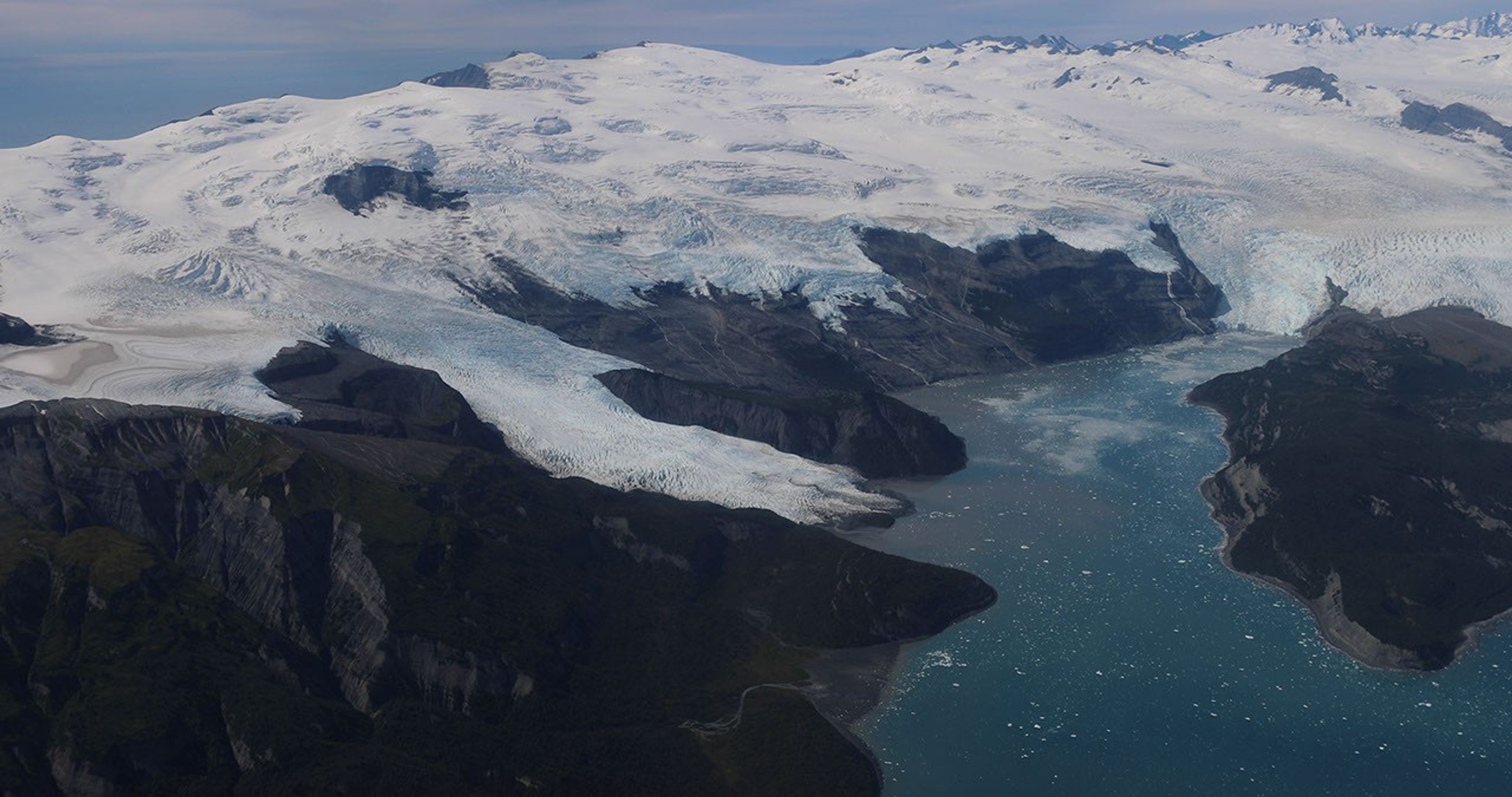
Alaska’s glaciers are losing ice and contributing to sea level rise. NASA is tracking the changes from land, air, and space.
NASA
The Snow4Flow campaign, led by the University of Arizona, seeks to measure and model how far and fast glaciers are retreating in the far north. Traversing remote icescapes across Alaska, the Yukon, Arctic Canada, Greenland, and Svalbard, Norway, they’ll sound both the near-surface and frozen depths of hundreds of glaciers while flying over in a modernized WWII-era aircraft outfitted with a scanning laser altimeter and two custom radars. Their observations, combined with satellite data and advanced models of snowfall and glacier flow, will advance our understanding of how glaciers behave in different regions of the Arctic. The mission seeks to uncover not just what these glaciers look like beneath the surface today, but the processes that will drive changes in the future.
As permafrost thaws, rivers on the doorstep of the Arctic become conveyor belts of carbon and sediment. NASA Goddard, and the City College of New York lead a multidisciplinary team studying how rivers, lagoons, and estuaries across Alaska’s North Slope interact with the Arctic Ocean. The project, called Frontlines of Rapidly Transforming Ecosystems (FORTE) will combine optical and radar measurements from satellites, planes, high-tech research vessels, drones, and underwater autonomous systems to track microscopic marine life, water flow, and chemistry. The team will collaborate with local and tribal communities to sustain observations over time and apply NASA assets to address emerging local needs and decision-making priorities.
Landslide triggers
When a slow-moving landslide in California suddenly collapsed and buried a section of coastal highway in 2017, scientists at NASA JPL wanted to know how precipitation swings played a role. JPL studies how water infiltrates and destabilizes hillslopes all over the world. The Landslide Change Characterization Experiment (LACCE) project will combine airborne synthetic aperture radar with land-based sensors to track how slopes in California are responding to a world of intensifying droughts and downpours. The project also takes aim at emerging landslide hazards in Alaska, where rapidly retreating glaciers are accelerating slope movements that have the potential to create mega-tsunamis.
This series of images shows the collapse of the Mud Creek landslide in May 2017 along the Big Sur coast in Central California, and the subsequent repairs to Highway 1, which was damaged during the event.
Andy Ritchie/USGS Pacific Coastal and Marine Science Center
NASA’s Earth Venture Suborbital program, designed to be nimble and high impact, was established following a recommendation by the National Research Council in 2007. In the decades since, teams have studied phenomena, including blizzards, coral reefs, and ocean whirlpools.

 Login