A team of researchers from the National and Kapodistrian University of Athens has discovered a completely new genus and species of subterranean freshwater snail in the Peloponnese region of southern Greece. The species, Cyllena hermes, is a small, unpigmented, eyeless aquatic snail fully adapted to life underground.
Due to artificial irrigation and rising temperatures, the concentration of salts (including sodium chloride, or "table salt") is increasing in soils worldwide. This is not only an environmental problem but also a challenge for agriculture. For example, increased salinity can disrupt the water balance of most plants (known as glycophytes) or even lead to their death, including crops.
Scientists have discovered that marsupial forelimbs (arms) develop much earlier before birth than previously thought, providing new insights into evolutionary innovation and biology.
To paleontologists like me, however, a fossil like "Gus" — excavated from the Hell Creek Formation in South Dakota over three years starting in 2021 by commercial collector Thomas Heitkamp and his team — is not a trophy or a work of art. It is an irreplaceable scientific archive. Fossils preserve evidence of evolution, extinction, growth, disease, injury and ancient ecosystems. They are finite, nonsubstitutable records of life’s history on Earth.
Science depends on independent verification of claims and healthy debate. Researchers must be able to revisit specimens, test earlier conclusions and ask new questions.
But once a scientifically important fossil enters a private collection, access for researchers is no longer guaranteed. Collectors typically sequester their fossils in their homes. Even when privately owned specimens are loaned to museums, the owners can change their minds, ending access at any time. This issue is especially of note when it comes to Tyrannosaurus rex; a 2025 study found that while there were 61 T. rex fossils in public trusts at that time, 71 were privately held.
That is why the Society of Vertebrate Paleontology, of which I'm a long-term member and president-elect, has long argued that scientifically significant vertebrate fossils belong in the public trust, curated in museums and universities that preserve them permanently, make them available for research and share them with the public.
Finding a fossil
Supporters of commercial fossil sales often argue that without sales to private collectors, specimens like "Gus" would remain buried or erode away. They’re right about one thing: Discovery matters. Many extraordinary fossils have been found by ranchers, hikers, amateur collectors and commercial excavators. Paleontology is accessible to everyone who has an eye for observing nature — you don't need to be an expert with academic credentials to make an important discovery.
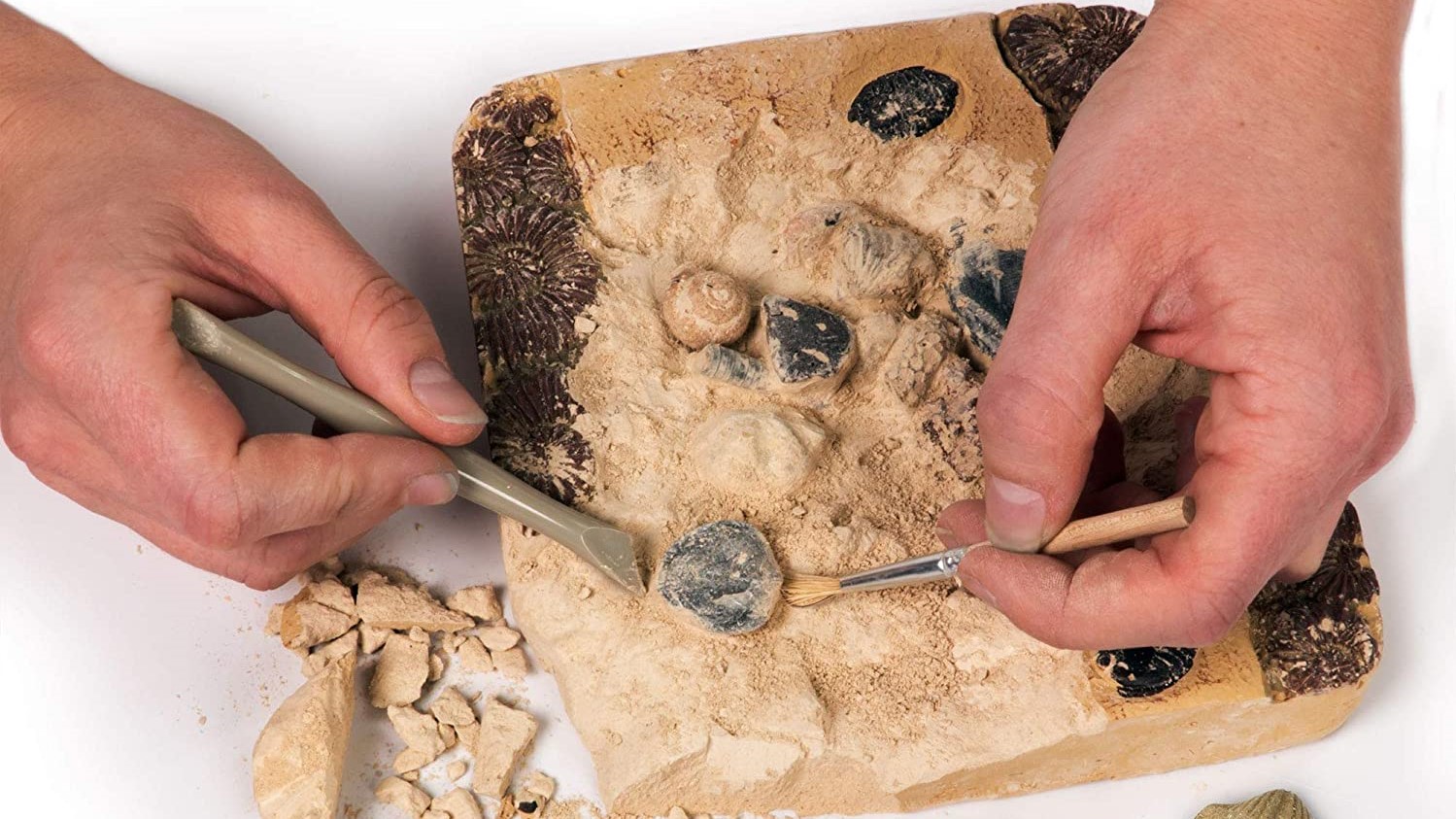
Fossil kits are sold on Amazon and other online retailers, encouraging curiosity in budding paleontologists. (Image credit: Amazon)
But discovery is only the beginning. A fossil's scientific value depends on careful documentation of where it was found, the rocks surrounding it, and the plants and animals preserved alongside it. Those details allow scientists to reconstruct ancient ecosystems, understand how an animal lived and died, and interpret how its remains became fossilized. When that contextual information is incomplete or lost, much of the fossil's scientific value is lost as well.
Yet even discovery, excavation and publication barely scratch the surface of a fossil's scientific importance. The greatest scientific value of a specimen often comes decades later, when researchers ask new questions and apply new technologies that earlier generations never imagined. A specimen that seems fully studied today may yield surprising new information tomorrow, but only if it is still available for study.
Delayed discoveries
Consider the iconic dinosaurs, including T. rex, Triceratops, Diplodocus and Stegosaurus, first collected more than a century ago. Early paleontologists could describe their shapes but had no way to dig deeper by peering inside the bones. Because those specimens were preserved in museum collections, later generations could revisit them with technologies that didn't exist when they were discovered.
Paleontologist Larry Witmer and his collaborators at Ohio University started using CT imaging 20 years ago to reconstruct the internal anatomy of historic dinosaur fossils without damaging them, based on how X-rays travel through specimens. Brain cavities, inner ears, air spaces, nerves and blood vessels became visible for the first time, revealing how dinosaurs balanced, heard, smelled and perceived their world.
More recently, molecular paleontologist Jasmina Wiemann and her collaborators have identified chemical traces preserved in fossil bone, eggshell and skin that reveal aspects of dinosaur biology unimaginable even a generation ago. Until now, paleontologists had no way to know details about metabolic rates and reproduction or the colors of skin, feathers and eggs.
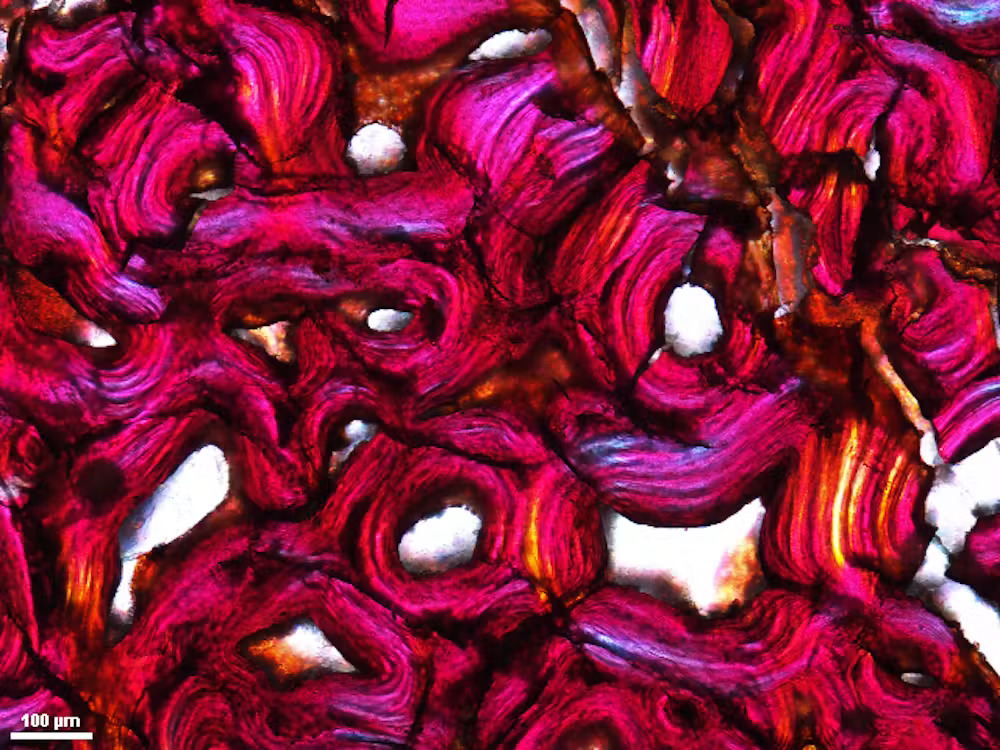
A thin section of a Diplodocus femur reveals the microscopic architecture of the bone, preserving a record of the animal's growth and life history. (Image credit: Kristina Curry Rogers)
In my own research I use microscopes to uncover the hidden stories preserved inside dinosaur bones and teeth. Thin sections of fossil bones reveal that dinosaurs grew more like mammals and birds than like oversized reptiles. Microscopic modifications to bones capture traces of ancient scavenging, and tiny signatures deep inside baby dinosaur bones indicate the moment of hatching.
None of these discoveries would have been possible if the original fossils had vanished into inaccessible private collections.
Shared natural heritage, on the auction block
Fossils are not static objects whose scientific value is exhausted once they are described. Their value grows as science advances, but only if future researchers can continue to examine the original specimens.
Of course, sometimes dinosaur fossils are rescued from obscurity through purchase and immediate deposition or donation to natural history museums. Some of the world's most important dinosaur fossils are accessible today because individuals, companies or organizations with the means to acquire extraordinary specimens recognized that they belong where scientists can continue to study them and where future generations can learn from them.
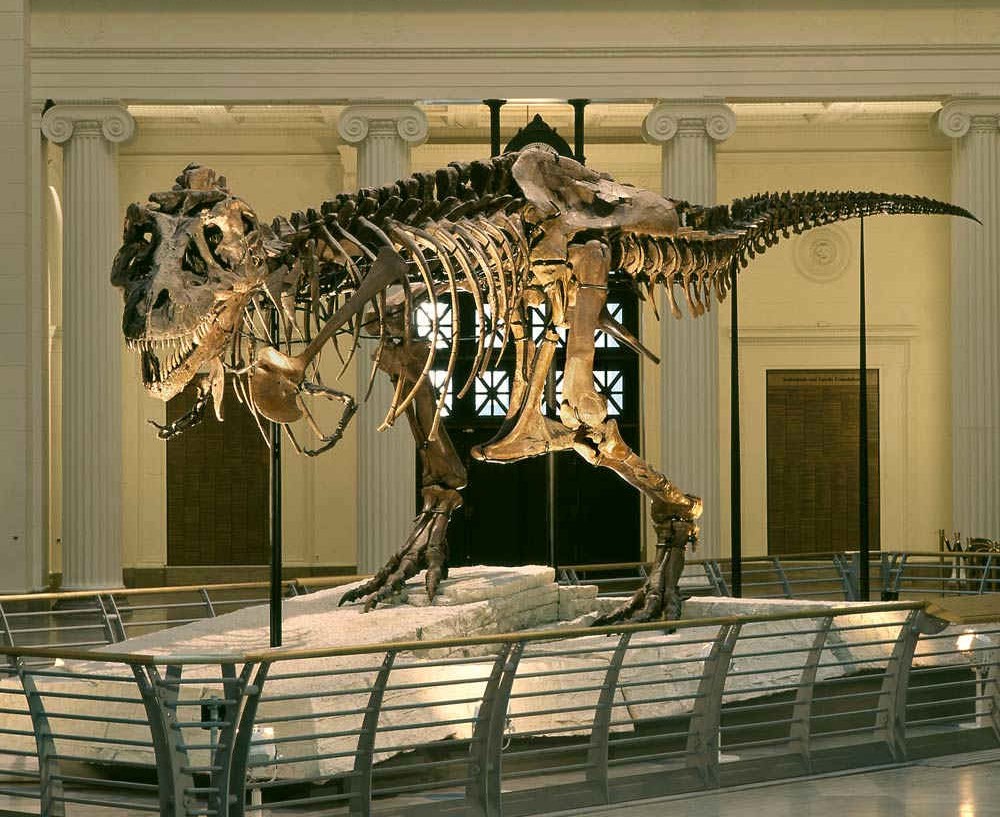
Schoolchildren were among the first to visit 'Sue' the T. rex once it was displayed at the Field Museum of Natural History in Chicago, Ill., thanks to funding from the California State University system, Walt Disney Parks and Resorts and McDonald's. (Image credit: copyright The Field Museum)
Purchasing a fossil in order to place it permanently in the public trust is fundamentally different from acquiring it as a private collectible: One expands access, the other leaves access uncertain.
Dinosaurs belong to our shared natural heritage. They inspire wonder because they connect all of us to a world unimaginably older than our own. For me, the question raised by auctions like the one on July 14 of "Gus" is not who can afford to own these relics of the past. It is whether future generations have the chance to study and learn from them.
Scientists hoped for years to make a machine that could emulate the movements of diving birds, such as puffins, and offer an affordable, unobtrusive way to monitor fragile marine ecosystems. A team of researchers at M.I.T. has been able to create such a waterproof winged robot, according to a study published July 9 in the journal Science.
Scientists have identified a new species of monkey that has orange lips and makes unique roars and snorting sounds. The distinctive monkey lives in a remote region of the Democratic Republic of the Congo (DRC).
It is only the fifth new monkey species to be identified in Africa in the past 75 years, and there might be more unknown monkey species in the region, scientists behind a new study suggested. Researchers named the newly identified species of monkey Colobus congoensis,after the region, and it is known by the common name "likweli" in the local Kilanga language.
"This is remarkable because it's not very common these days to find a new, never-before-documented primate species, let alone a relatively large species of monkey," said Joshua Linder, an anthropologist and president and co-founder of the The Forest Collective, a nonprofit that aims to conserve and restore tropical rainforests.
In 2008, conservationists in the dense rainforests ofLomami National Park, within the Congo Basin in the DRC, photographed an unidentified monkey, but it was partially obscured. Then, in 2018 a similar-looking animal was captured on camera, prompting study co-authorJunior Amboko, a Lomami National Park researcher and a Florida Atlantic University anthropologist, to set out to find the mysterious monkey.
To see what was already known, Amboko and his colleagues showed the pictures to people from 52 villages around the park.
"These people really know the fauna and flora in the forest," Amboko told Live Science. "In only eight villages, people knew the monkey — and these were hunters, who know the economic value of animals or how much food each animal can provide, but even they didn't know much."
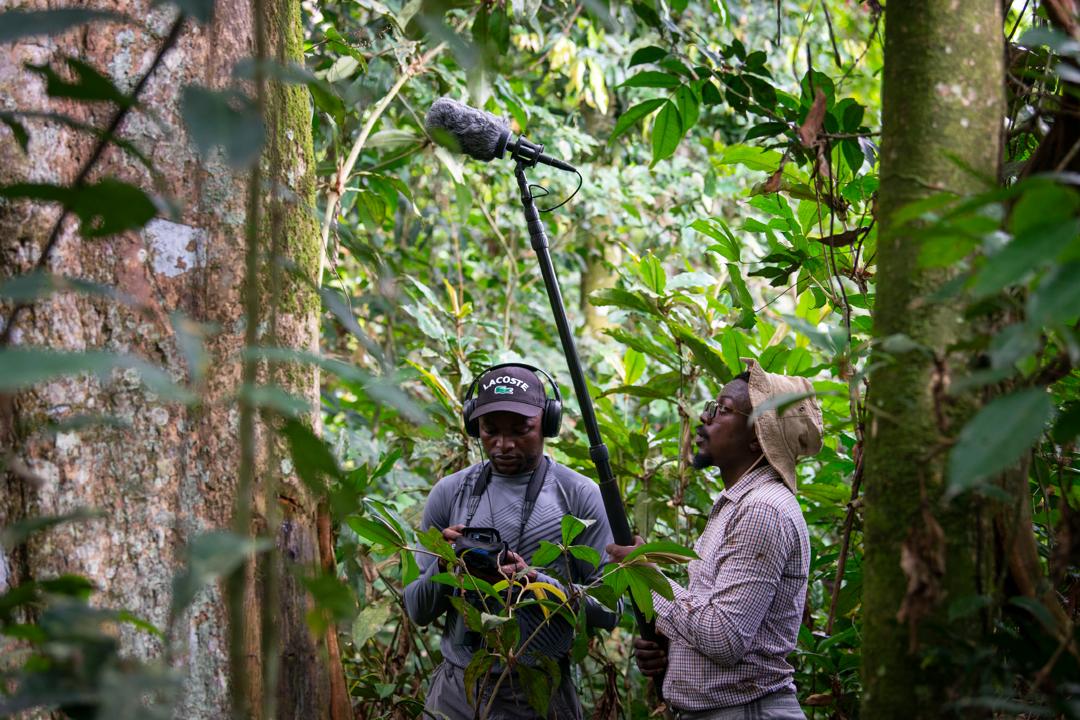
The researchers worked in the Lomami National Park, within the Congo Basin in the Democratic Republic of Congo. (Image credit: Daniel Rosengren, Frankfurt Zoological Society )
Hunters of the Balanga ethnic group called the monkey "likweli," although the meaning of this name isn't known. Some in the Mituku local communities called the species "kasaba nkoni," which Amboko said means "the branch shaker." This refers to the way colobus monkeys leap from branch to branch, Amboko said.
In their searches between 2018 and 2022, the researchers recorded 114 sightings of the species across an estimated range of about 660 square miles (1,700 square kilometers) naturally isolated between the Lomami and Lualaba rivers. They reported their findings July 15 in the journal PLOS One.
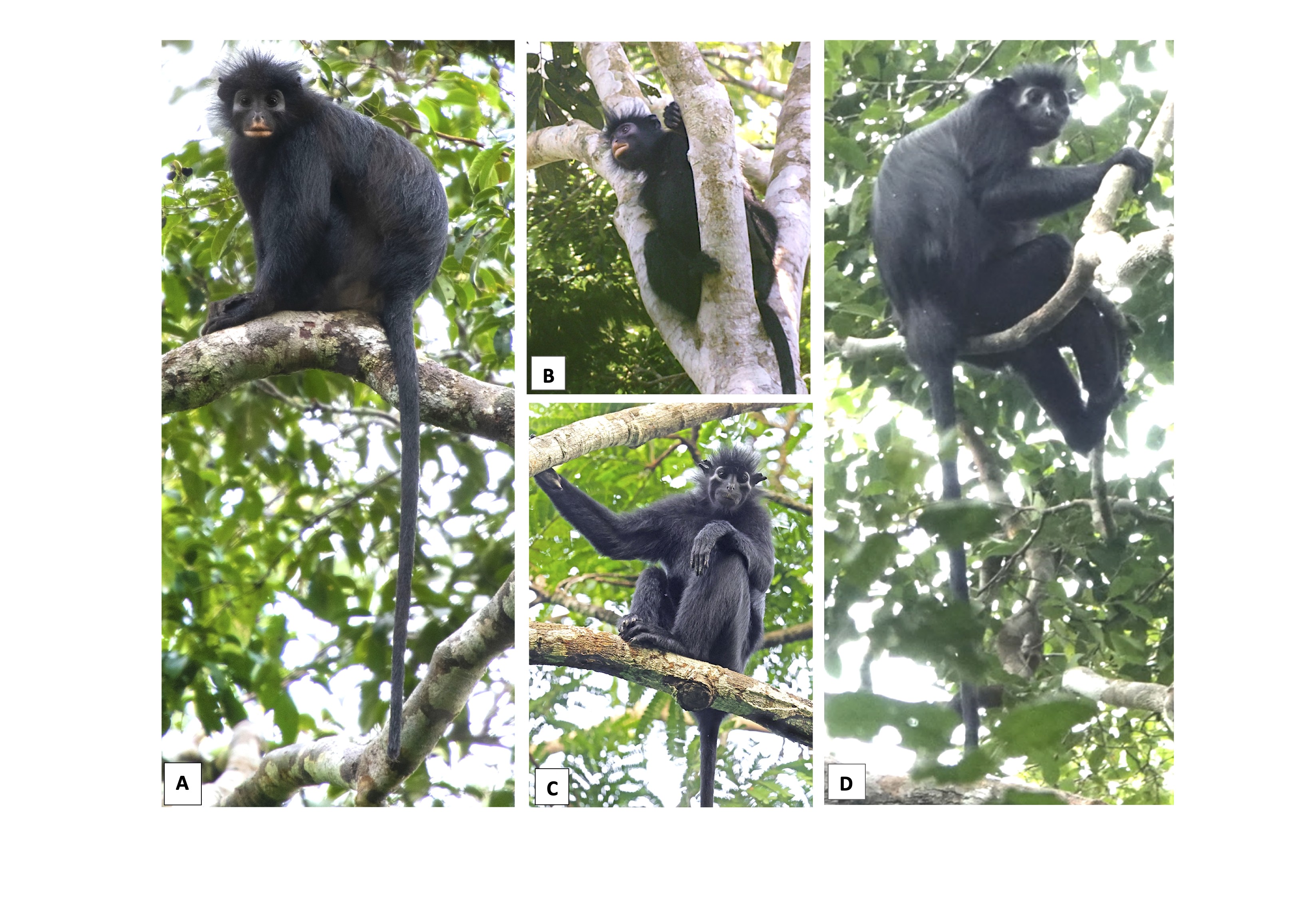
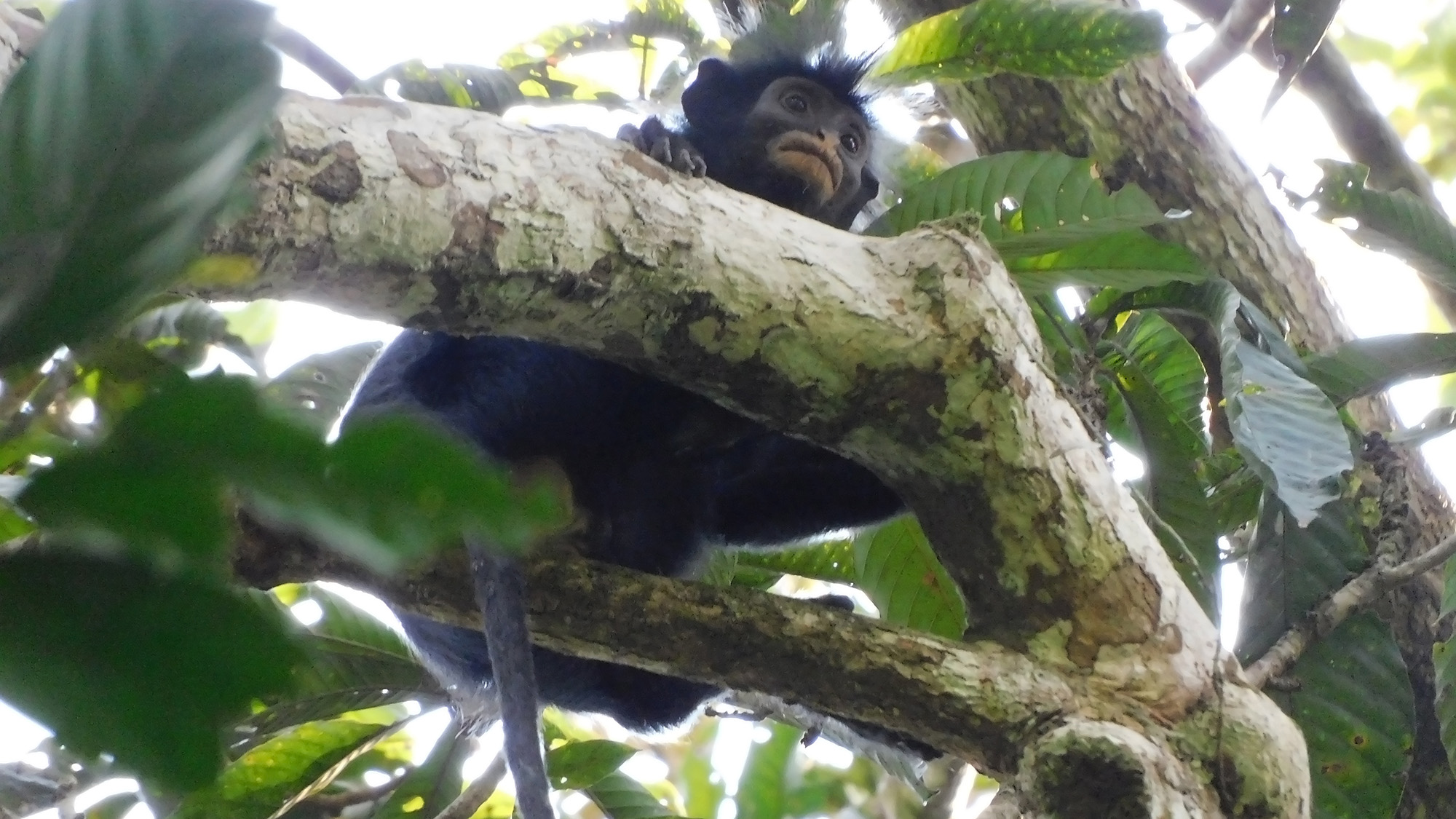
The monkeys, seen hanging out in groups of between one and 20 individuals, are mainly glossy black, but they have a conspicuous orange patch around the mouth and nose. Bare gray skin on their cheekbones makes it look as if they're wearing masks. They also have a patch of white fur around the anus.
"We're going with the face and the rump as the two distinctive traits," said study co-author Kate Detwiler, an anthropologist at Florida Atlantic University. "If you see the face, you see this unique bare skin that's orange cream. And then if you're coming from behind, you see this white patch."
DNA analysis confirmed C. congoensis was a previously unknown species. (Image credit: Daniel Rosengren, Frankfurt Zoological Society )
The monkeys, which weigh about 15 pounds (7 kilograms), also make deep, loud roars, punctuated by distinctive snorts. These unique vocalizations distinguish them from other colobus monkeys, Detwiler told Live Science.
By taking samples, and sequencing DNA, from monkeys killed by hunters and destined for the illegal bushmeat trade, and comparing the results with what’s in museum collections and datasets of genetics, skulls, teeth and pelts for other colobus monkeys, the team confirmed that C. congoensis was a previously unknown species.
"My lab got the tissue sample and did the genetics, and we were shocked by how divergent the key area of the mitochondrial genome was from other colobus monkeys," Detwiler said.
Researchers think the new species diverged up to 5.78 million years ago. (Image credit: Daniel Rosengren, Frankfurt Zoological Society )
The monkeys live in the same forest as the Angola colobus (Colobus angolensis), but their closest relatives are black colobus monkeys(Colobus satanas), which live around 750 miles (1,200 kilometers) to the west, in Cameroon, Gabon and Bioko Island.
"The fact that the results show that the closest living relative to this new species is the black colobus located 1200 km away in West Africa is equally remarkable," Linder, who was not involved in the new study, told Live Science via email.
Detwiler estimates that these close relatives diverged between 5.78 million and 3.44 million years ago — the longest known split between species within the Colobus genus. "The discovery is reshaping our understanding of African monkey evolution," she said.
Given the small geographic range, rare sightings and increasing habitat loss, the researchers recommend that C. congoensis be classified as endangered on theIUCN Red List.
The discovery also emphasizes the importance of Lomami National Park, where another previously undescribed monkey, the lesula (Cercopithecus lomamiensis), wasreported in 2012 by a team that included Detwiler.
The Congolian rainforest ranging across this part of Africa is the world's second-largest tropical forest, after the Amazon, and about 60% of it is in the DRC. "It is a paradise for biodiversity," Amboko said, adding that there might be more undescribed primate species there. "If we are able to discover two big new primate species, who knows how many other new mammals, fish, reptiles or plants there could be?"
What do you know about chimpanzees and great apes? Test your smarts with our primate quiz!
Scientists in Australia are deep-freezing koala eggs and sperm as a "genetic backup" to save the wild population from future extinction.
The backup could be used to create healthy koala embryos through artificial insemination and in vitro fertilization (IVF), the researchers said in a statement. When koalas (Phascolarctos cinereus) die, unique traits and diverse genes that may help them adapt to changing environments are lost, but the new project offers a way to store this valuable material, the team said.
"Losing genetic diversity can weaken future generations and decreases the ability of the species to adapt to challenges," Andres Gambini, a reproductive biologist at the University of Queensland who is involved in the project, said in the statement. "This project will create a safe and systematic way to rescue and preserve koala spermatozoa and eggs to support future conservation programs."
Australia is facing a paradox with its koalas. In some regions of Queensland and New South Wales, koala populations have crashed by as much as 80% since the late 1990s due to deforestation, bushfires, drought and disease. This prompted the Australian government to change koalas' conservation status in their eastern range from "vulnerable" to "endangered" in 2022.
Meanwhile, in parts of southern Australia, koalas are overabundant. However, the places where koalas are currently thriving may not be able to support a booming population much longer, because the animals are overbrowsing and killing the trees they need to survive, recent research suggests.
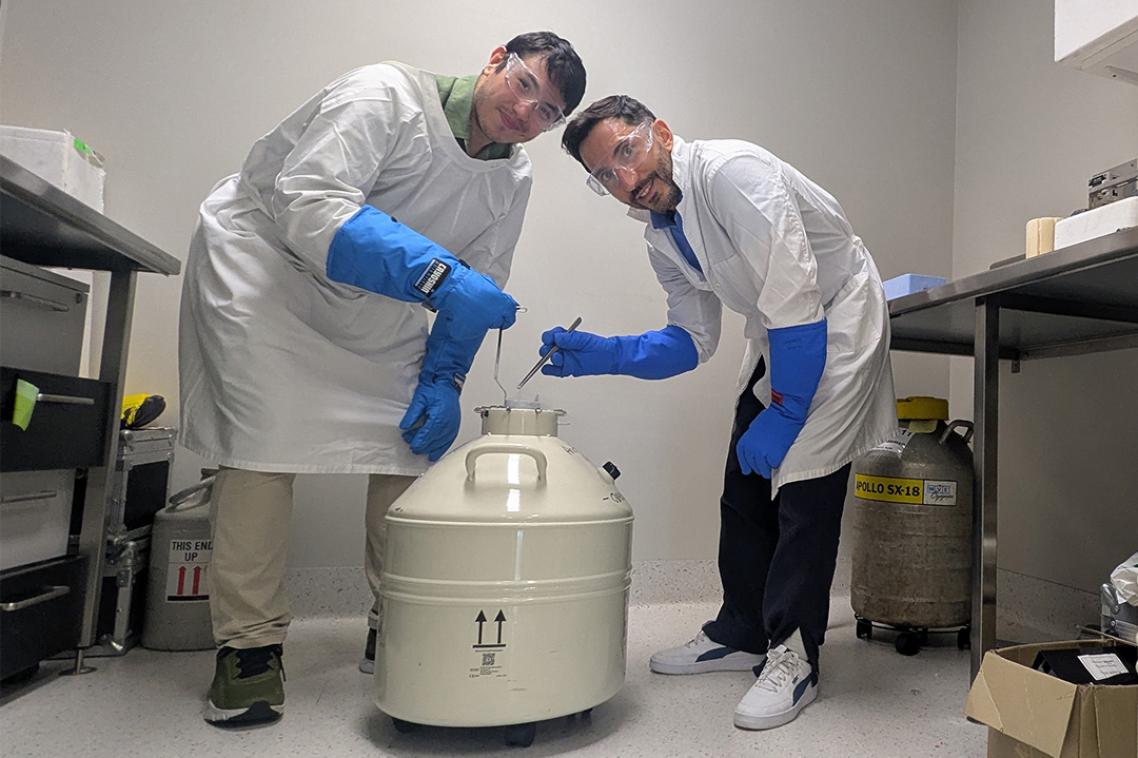
To protect against koalas' decline, the scientists will freeze koala reproductive cells in liquid nitrogen (LN2), which has a boiling point of minus 321 degrees Fahrenheit (minus 196 degrees Celsius). This method would enable the team to cryopreserve the cells for several decades until they are needed, said Vincent Lynch, an evolutionary developmental biologist and associate professor of biological sciences at the University at Buffalo in New York.
Every year, many koalas are admitted to wildlife hospitals because of illness or injury and sadly, not all of them survive.
Andres Gambini, reproductive biologist at the University of Queensland
"I've successfully woken cells up that were frozen in LN2 a couple of decades ago," Lynch, who is not involved in the koala project, told Live Science in an email.
The sperm and eggs will be supplied by wildlife hospitals that will harvest sex cells from dead koalas or koalas that can no longer breed due to disease or trauma, according to the statement.
"Every year, many koalas are admitted to wildlife hospitals because of illness or injury and sadly, not all of them survive," Gambini said.
The researchers will then test the cells for Chlamydia pecorum, a highly contagious and deadly form of chlamydia. In koalas, this infection causes painful urinary tract infections, gastrointestinal issues, and conjunctivitis, which can lead to blindness. It can also cause infertility in females. C. pecorum is one of the main contributors to koalas' decline in recent years, with infertility driving a sharp reduction in the number of koala joeys being born. In the worst-affected populations, situated mostly in Queensland and New South Wales, almost 90% of koalas are infected with chlamydia.
If the reproductive cells contain C. pecorum, "we have the technology now to remove the infection from the samples," Steve Johnston, an associate professor of animal reproduction and captive husbandry at the University of Queensland who works on the koala project, said in the statement.
Andres Gambini and doctoral student Patricio Dandy Palacios, who participated in the project, want to preserve koala sex cells in liquid nitrogen. (Image credit: The University of Queensland)
In 1998, Johnston was part of a research team at the University of Queensland that created the world's first koala joey born through artificial insemination. The new project also builds on a 2025 study, led by Gambini, that produced the first-ever IVF kangaroo embryos. (These did not result in live births; at the time, the scientists said that would take another decade.)
It's unclear how many sperm and egg cells the researchers plan on freezing, and it's hard to say how many cells they would need to ensure the survival of healthy koala populations, as the number of cells required is probably increasing with time, Lynch said. As koala populations shrink, genetic material is being lost at an accelerating pace, so the team will have to get more samples as time goes on to obtain the same amount of diversity.
The project does not replace more traditional conservation approaches — such as habitat protection, disease management and population monitoring — but researchers cannot afford to wait until populations are smaller and genetic diversity is harder to recover, Gambini said.
Although conservationists are concerned about the fast rate of koalas' decline, "there is a chance" that scientists can save the species through cryopreservation, Lynch said.
"I support multipronged approaches like this," he said. "By preserving the environment with traditional conservation we allow re-introductions because the species have somewhere to live."
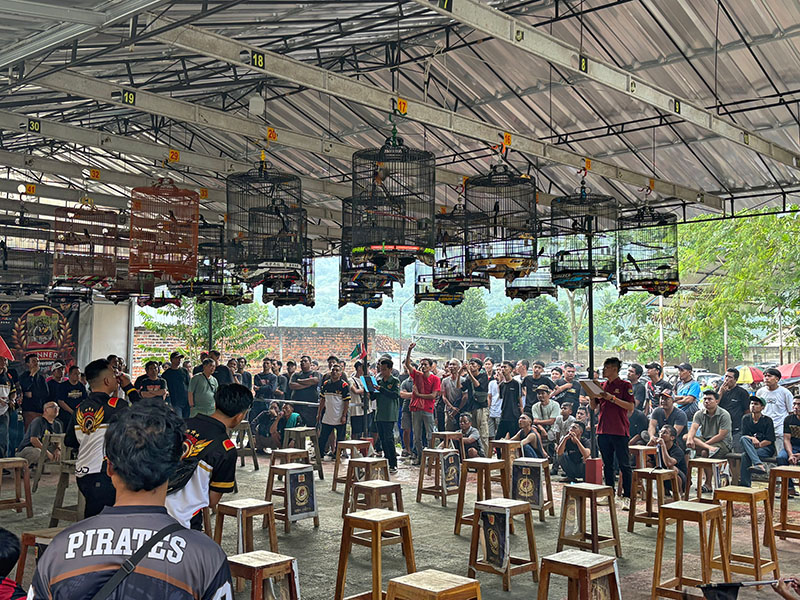
On a Sunday afternoon in April, the main minibus terminal in Sukabumi, Indonesia, looked sleepy from the outside. But in an open space round the back, hundreds of men were gathered. Amid chatter and cigarette smoke, the air buzzed with excitement, for one of the region's biggest bird-singing competitions was set to begin, and a motorbike was among the prizes.
As the day progressed, dozens of songbirds were brought out for their 10-minute rounds, from tiny garden sunbirds and grey-cheeked bulbuls to larger oriental magpie-robins and orange-headed thrushes. Then the emcee announced the main event — the singing contest among the highly popular, strikingly handsome white-rumped shamas — and a hush fell over the crowd.
The shamas' owners murmured final words of encouragement and stepped away from their cages. Judges swept in with clipboards, assessing each bird for its song, ability to hold a steady tune, volume and showmanship. Soon it was down to a final two birds ... and then "Baby White" was crowned the winner amid cheers from the crowd.
Indonesians have a long-standing culture of keeping birds as pets, and songbirds are especially popular, prized by collectors for their melodious singing and colorful plumage. "I keep songbirds as a hobby, to relieve stress and also gain a bit of money," explained Harry Gunawan, a 78-year-old businessman and owner of 39 shamas, including the multiple prizewinning Baby White, while waiting for his new motorbike.
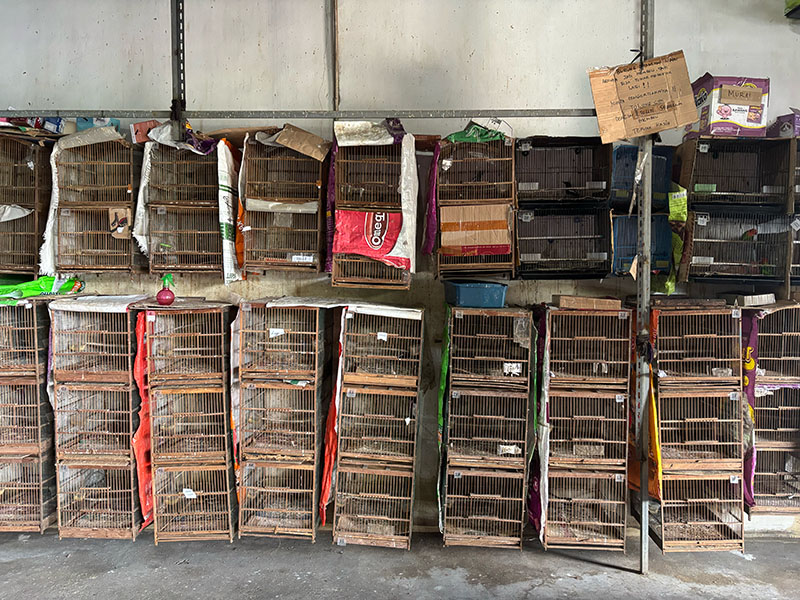
Gunawan's shamas are among an estimated 66 million to 84 million caged birds that are kept across Java, the island where 56 percent of Indonesia's population lives and one in three households owns birds. These include more than 3 million white-rumped shamas and 2 million oriental magpie-robins. Wild birds are believed to be better songsters; hence, many are trapped in forests then crammed into tiny crates, drainpipes and even plastic bottles, destined for pet markets in Jakarta, Surabaya and other big cities. Birds that survive the journey — estimates of mortality rates range from 30 to 80 percent — will spend the rest of their lives confined to cages.
Since the 1970s, songbird competitions have grown in popularity across Indonesia. With goats, motorcycles, watches and money (sometimes worth up to 10 years’ salary) up for grabs, the events are driving hordes of people to keep songbirds as pets. (Image credit: Sandy Ong/Knowable Magazine)
This birdkeeping hobby, paired with the growing popularity of singing competitions, has already driven some species to extinction and many species — also threatened with habitat loss — are on the brink, a phenomenon dubbed "theAsian songbird crisis."
"The silent forest is really happening," says Agung Nur Haq, who is in charge of conservation at the Wak Gatak Songbird Rescue and Rehabilitation Center near Pontianak, West Kalimantan.
Experts warn that action must be taken quickly, or the consequences may be dire and irreversible. If nothing is done and populations can't recuperate, says Alexander Lees, a conservation biologist at Manchester Metropolitan University in the United Kingdom, we may experience an "empty forest syndrome," whereby forests appear intact and lush but are devoid of animals.
Birds in demand
The illegal bird trade is thriving elsewhere in southeast Asia, including Vietnam, Thailand, Malaysia and Singapore. But "Indonesia's songbird trade is one of the world's most prolific," says Chris Shepherd, a wildlife trade expert at the Center for Biological Diversity in Canada. "It's terrifying."
The biodiversity-rich nation is home to about 1,800 bird species — more than double the number found in the United States. Of those, one in five have been spotted in pet markets, including protected, endangered and endemic species (ones found nowhere else). These include the endangered black-winged myna and the Javan green magpie, of which fewer than 250 and 100 wild individuals, respectively, remain.
"There may be more birds behind bars than left in the wild," wrote Lees in an overview of the songbird crisis in Current Biology.
Songbirds for sale at a pet shop in Pontianak city, in the Indonesian province of West Kalimantan. Many birds sold in the country's sprawling trade are trapped from forests and transported over long distances in dark, cramped conditions, winding up in shops such as this in big cities. Up to 80 percent of birds die in transit, and those that survive will likely spend the rest of their lives in cages. (Image credit: Sandy Ong/Knowable Magazine)
The fondness of Indonesians for caged birds stems from a centuries-old belief among the Javanese, the country's largest ethnic group, that a man is considered successful if he possesses five elements: a wife, a house, a vehicle, a ceremonial dagger and a bird. The bird symbolizes that he is in touch with his softer side, and can indulge in both work and leisure. In a 2025 study, researchers found that a bird's singing ability was the biggest driver of demand — after that, people preferred rare, endemic or unusual birds that flaunt one's status.
Singing competitions emerged in the 1970s as another reason to keep songbirds. These local or regional events are typically held monthly or weekly, involving up to 1,000 birds.
"The owners go home with, at the very least, tons of prestige, but more often lots of prize money, sometimes up to 10 years' salary," says acoustic biologist Benjamin Mirin, founder of the Creative Conservation Lab with Cornell University. Competitors also stand to win exclusive trophies, goats, motorcycles and even cars.
Mirin, who has been studying the songbird trade since 2018, says the events can be life-changing. "They're so popular and financially beneficial that they're accelerating the poaching of birds to the point where now the forests are falling silent."
Unfortunately, wild-caught birds are perceived to have better song quality and a wider singing repertoire than their captive-bred counterparts. As a result, competitions "have been driving the demand in certain species," says Serene Chng, a wildlife trade researcher at TRAFFIC, a nonprofit focused on reducing harmful and illegal trafficking of plants and animals.
An expert group formed by the International Union for Conservation of Nature has identified 52 species that are most impacted by trade in Asia. These include the straw-headed bulbul (known for its lovely duets) and the Bali starling (with its stark white plumage and electric-blue eye ring). Although Indonesian law forbids the capture and trade of more than 500 bird species, many of them songbirds, enforcement is weak, thanks to poor resources, corruption and other factors. Consequently, several species, including the Javan pied starling, are now locally extinct.
It's hard to predict what will happen to ecosystems if songbird species are wiped out en masse in Indonesia. Birds play important ecological roles: pollinating plants, dispersing seeds and helping with insect control. The Pacific island of Guam offers a cautionary tale: It lost nearly all of its songbirds after the brown tree snake, which preyed on the birds and their eggs, was accidentally introduced after World War II. Guam's forests shifted to what Lees has described as "a nightmarish alternative state as a spider-dominated ecosystem." It was, he says, "pretty catastrophic."
Indonesia is much larger and far less isolated, so "your starting conditions are not as bad," says Lees. "But if we don't recuperate some of those populations, then we can expect maybe similar sorts of downstream impacts."
A sanctuary
Government agencies have had some success in tracking down wild-captured birds but are reluctant to confiscate them because they lack a place to house them. This dilemma in West Kalimantan province, a hotspot for illegal bird trade activity, led to the establishment of the Wak Gatak sanctuary by the nonprofit group Planet Indonesia.
One of its key aims is to provide suitable facilities to encourage more frequent confiscations and rescues by authorities with Indonesia's natural resources and conservation agency, BKSDA, while ensuring the welfare of confiscated songbirds, says Abrar Ahmad, a technical advisor for terrestrial conservation at Wak Gatak.
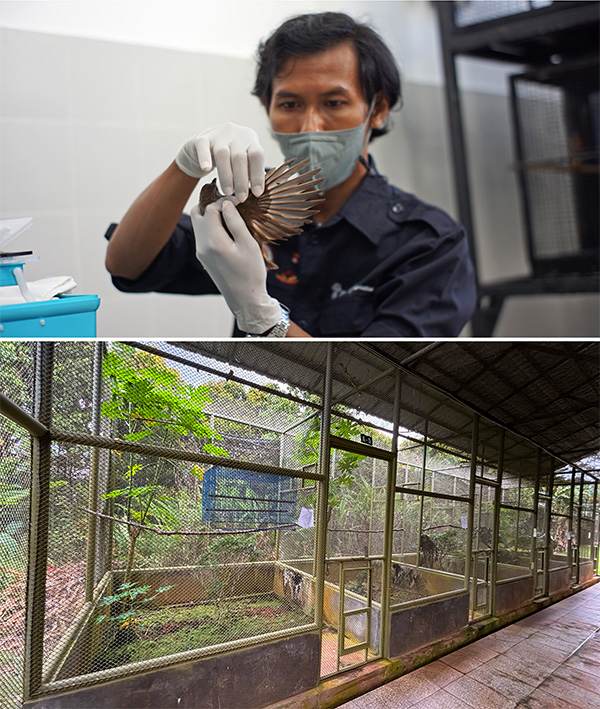
The center, which sits on a leafy plot near the city of Pontianak, is worlds apart from the dark, cramped conditions birds endure when smuggled aboard a truck or ship. On a morning in April, visitors turn off a sleepy road and drive past the gates down a short muddy track. Dragonflies flit lazily through tall grass and a smattering of coconut, banana and durian trees sway in the distance. The facilities are modest: a small office block with light-filled aviaries.
Animals often arrive at Wak Gatak in an alarming state: Malnourished, with missing feathers, many appear fatigued or withdrawn, says Happy Ferdiansyah, Wak Gatak's head veterinarian. Some birds have wounds on their upper beaks from gnawing on cage bars, while others — especially if they're more territorial — suffer leg fractures from fighting with other birds in close quarters.
"A lot of them, 70 to 80 percent, die within the first two weeks. Their condition is very poor," says Ferdiansyah.
To avoid causing the birds further stress, his team conducts only a visual inspection of the new arrivals. Those that are obviously ill are transferred to the on-site clinic for treatment. The rest are transferred to cages in quarantine.
The birds receive vitamins, nourishment (an assortment of fruits, insects, sugar syrup and so on), in addition to enjoying more space — one or two individuals typically share an oven-size cage. They remain in quarantine for at least 14 days, a critical time period when diseases such as avian influenza and Newcastle disease tend to manifest, says conservation director Haq. To test for these and other issues, Ferdiansyah and his fellow vets analyze blood and stool samples, in addition to carrying out rapid antigen tests.
Once their health has been given the all-clear, the birds are moved to rehabilitation aviaries on the opposite side of the premises. These enclosures are much more luxurious: bathroom-size, dotted with green plants, with generous views of the surroundings and sky.
Here, stimulation is key, as is getting the birds comfortable with flying again. "The aviaries have different perches and plants for the birds to hop around or to hide in the bush," says Ferdiansyah. "We also do food enrichment like giving them live insects or putting the food in different places."
Only some birds are fit for release. Those that appear habituated to people are not good candidates; they may continue to approach humans and might teach non-natural calls to wild birds or just fail to communicate with them. The center, for example, currently houses four locally endangered and protected common hill mynas — glossy black starlings with heavy orange bills that are renowned for their intelligence and mimicry. When I visited, the birds happily wolf-whistled, chuckled and offered the traditional Islamic greeting "As-salamu alaykum," among smatterings of Indonesian chatter. These mynas have been at Wak Gatak for nearly a year and will remain there for the foreseeable future.
But for birds that are suitable to release, the center works with BKSDA to identify possible sites. Ideally, these would be forest lands in good condition, with abundant food and water, minimal human activity and few natural predators like civets and snakes, says Ferdiansyah. A local community that's supportive of conservation is a plus — increasing positive outcomes, such as survival and reproduction, by 10 percent, according to a 2023 study that analyzed 305 wildlife restoration projects in 80 countries.
Once a site is determined and permits are secured, Ferdiansyah and his team transport the birds — as they did at the end of April, taking 130 birds to a nature reserve seven hours north of Pontianak. At such sites, the team carries out what’s known as a soft release, placing the birds in a large makeshift cage that allows them to acclimate to their new surroundings. After four to 10 days, the team opens the cage, allowing the birds to fly away when ready. Team members stay on for up to two weeks, tracking the birds to make sure they're settling in problem-free.
It's rough, sweaty work, says Ferdiansyah, but highly rewarding. The center has so far helped 348 songbirds return to the wild. The April release is their largest to date, and included some crimson sunbirds and greater green leafbirds, the latter of which is endangered. Another 705 birds were seized in December from a ship at the local port in Pontianak. Within hours, most of the birds had died. But 36 are still recovering at Wak Gatak and 22 have been rehabilitated and released.
Nearly 3,000 birds from 45 species have passed through the center's doors since it opened in 2022. It’s proof that such a rehabilitation facility — the only one in Indonesia for the foreseeable future — can make an impact.
But given how many songbirds are in peril, its work is a drop in the ocean.
To slow the crisis, experts say it must be fought on multiple fronts, but above all, at its root: demand. It requires "thinking about how we can shift attitudes and behaviors to reduce pressure on wild populations," says Lees, who explores such measures in a look at the state of the world’s birds in the 2022 Annual Review of Environment and Resources. In 2023, the Wak Gatak team carried out a campaign across some of the city's billboards, discouraging people from joining songbird competitions. And in the coming months, they'll host a series of behavior-change workshops in two towns close to forests where birds are commonly poached and competitions are growing in number.
Shifting the needle will not be easy. Indonesia's songbird hobbyist groups are powerful — in 2018, they successfully petitioned to have five species downlisted from the national list of protected birds. Plus, government officials often take part in competitions themselves. In 2018, for example, then-president Joko Widodo presided over the President's Cup, one of Indonesia's most prestigious songbird competitions, even entering his own white-rumped shama.
Yet change is possible: Ferdiansyah himself kept four songbirds as a kid because they "sounded very nice" and he thought he could make them happy. But when he entered veterinary college, he realized the error of his ways and set the birds free.
Disney’s Cinderella is not the only place you can hear mice “sing.” Some real-world rodents also serenade each other. And now, scientists know how. The mice inflate tiny, balloon-like sacs in their airways. This creates whistling tunes.
Making music this way may be unique in the animal kingdom.
The critters are known as Alston’s singing mice. Found in the forests of Mexico and Central America, they truly live up to their name. Both males and females communicate with trains of high-pitched notes. Remarkably, their songs are more complex than those of any other rodent.
In just a 10-second song, an Alston’s singing mouse belts out around 100 individual breaths and notes. The melody attracts mates and warns rival males to stay away, says Samantha Smith. The song’s speed and length make it far more “extreme” than other rodents’ calls, she adds. Smith is a biologist at the University of Lausanne. That’s in Switzerland.
Smith is part of a team that wanted to know how the vocal systems of Alston’s singing mice evolved to create melodies. They started by dissecting the larynges of deceased animals. This “voice box” is a part of their bodies that helps mice (and us) breathe, swallow and make sound.
Watch one Alston’s singing mouse serenade the sky with its complex song.
The researchers hooked each excised mouse voice box to a tube. Then, they pointed a microphone and camera toward its top. “A [voice box] is basically just a tube with a valve in it that can open and close,” explains Smith. To see how the voice box moved and produced sound, the team blew air through the tube.
Sometimes, the voice box produced sounds that ranged in the mouse’s natural pitch. But this happened only when a pouch on the inside of the voice box was inflated. When the researchers blocked this balloon with bits of wax or small metal balls, the voice box went silent. Cutting the sac had the same effect. The air sac, it seemed, is key to making the songs.
Other rodents have air sacs, but they don’t appear to use them to sing.
Smith and her teammates shared their findings May 6 in Proceedings of the Royal Society B.
A unique musical talent
Raffaela Lesch is impressed by the team’s experiment and its choice of species. She works at the University of Arkansas at Little Rock. As a bioacoustician, she studies how animals use sound to communicate.
“Working with [voice boxes] this small is not an easy task,” she says. But for Lesch, learning more about how rodents produce sound is exciting. They’re “such a diverse group with such fascinating social, behavioral and ecological adaptions,” she says.
It’s not yet clear how the sac generates its whistle. The sound could come from air vibrating at the sac’s entrance. That would be similar to the way opening a car’s sunroof can make noise as air rushes past the opening.
Another possibility is a bit like how flutes and organ pipes work. A sharp cartilage rim at the sac’s entrance may be deflecting air, producing the tone.
Inflatable sacs in airways have evolved multiple times. Primates, birds, reptiles, frogs and other animals have them. But in those cases, air sacs alter or amplify sound produced elsewhere in the respiratory tract. (That’s the system of organs that are involved in breathing.) The songs of the singing mice, on the other hand, are made by the sacs themselves.
“Our study expands our understanding of the ways in which [air sacs] can shape vocal communication,” Smith says. Studying different features of rodent air sacs may help reveal how these songs first evolved — no Disney magic needed.
The kraken — a giant, tentacled sea monster that dragged ships into the depths — is a creature of Norwegian myth. But millions of years ago, a similar, real-life animal roamed the oceans, a new study finds.
The new analysis of jaw fossils suggests that as dinosaurs ruled the land, whale-sized octopuses ruled the seas. These super-sized cephalopods would have been the largest marine animals of the Late Cretaceous Period. That’s from about 66 million to 100 million years ago.
Researchers reported their findings April 23 in Science.
It’s difficult to study fossil octopuses, notes Yasuhiro Iba. He’s a paleontologist at Hokkaido University. That’s in Sapporo, Japan. With soft bodies, these animals tend to break down before becoming fossils. Very few hard parts remain to fossilize. Fortunately, both ancient and modern-day octopuses have a hard, beak-like jaw. This structure is made of chitin (KY-tin). This material is strong enough to survive the animal’s death and fossilize.
The jaws appeared to come from an octopus-like creature. But until now, details of the body size and animal’s role in the ocean ecosystem had been a mystery, Iba says.
A fresh look at old fossils
To find those details, Iba was part of a team that examined 15 fossil jaws. Found in Japan and Canada’s Vancouver Island, they date to near the end of the age of dinosaurs.
Iba’s team took careful measurements. They also compared the mystery jaws to those from other species of octopus and squid. The team also found 12 jaw fossils embedded in rocks in Japan. Some were too fragile to dig out. So they examined them with a technique called digital fossil mining. It records fossils as detailed 3-D digital images.
To make these images, they ground down the rocks layer by layer. Each layer exposed a new bit of the fossils. The researchers then took photographs of each layer. Afterward, the team used these images — with some help from artificial intelligence — to make digital models of the fossils.
Researchers once thought these 27 cephalopods belonged to five extinct species. But as Iba and his colleagues learned more about them, they divided them into just two. There was Nanaimoteuthis jeletzkyi (Nuh-NY-moh-TOOTH-is Jeh-LETZ-skee-eye) and the much larger N. haggarti. The new analyses suggest the behemoths were early finned octopuses.
This group of deep-sea animals has webbing between their arms and flapping fins on the other end of their body. Finned octopuses still exist. One example is the dumbo octopus. The ancient ones were much, much larger.
Going big
Perhaps the largest invertebrate ever known, the giant dinosaur-era octopus lived more than 72 million years ago. This predator dwarfed even the giant marine reptiles, such as plesiosaurs, not to mention today’s largest invertebrate, the giant squid.
Hokkaido University
The largest lower jaw from an N. haggarti was big enough to hold a grapefruit. It also was about 50 percent bigger than that of the modern giant squid. At 12 meters (39 feet) long, that squid is one of the largest cephalopods alive today.
Iba estimates that N. haggarti could have spanned seven to 19 meters (23 to 63 feet) from its head to the tips of its arms. That’s between the length of an ambulance and a school bus.
The animal “may have been among the largest invertebrates in Earth’s history,” Iba now concludes.
No bones about it
N. haggarti appears to have been bigger than even the largest ocean predators of its time. These would have included huge reptiles, such as mosasaurs and long-necked plesiosaurs.
Clues in the fossil jaws suggest the ancient giant octopuses competed with those top predators for a spot in the food chain. The researchers found wear and damage to the animals’ jaws. These scrapes and scuffs suggest the octopuses had been powerful predators. Biting on shells and bones likely roughed up their jaws.
That discovery seems to shed new light on ancient marine ecosystems. It suggests that a wider range of predators roamed the ancient seas than once thought.
“For a long time, the top of the marine food web has been thought to be dominated by large vertebrates,” Iba says. By mosasaurs and plesiosaurs, for example. “Our study shows that giant invertebrates — octopuses — also occupied that role in the Cretaceous,” he says.
It’s possible that Nanaimoteuthis was a bit smaller, notes Christian Klug. He’s a paleontologist at the University of Zurich, in Switzerland. The fossil remains are incomplete, he notes. Iba’s team used only the jaw fossils as it estimated total-body length.
Still, he says, “there is no doubt that these animals ranged among the top predators.” Future findings, he adds, may help pinpoint their roles in those ancient seas.
Paleontologist Adiël Klompmaker works at the University of Alabama in Tuscaloosa. He hopes some giant octopus fossils will turn up with well-preserved stomach contents. “That would tell us what they ate,” he says. Were they hunting shelled invertebrates, such as large ammonites? “Or did they also go after large vertebrates?”
Only time and more work by paleontologists will reveal such “kraken” secrets.
Annual SharkFest gets up close with hammerheads Shark fans are warming up for their annual ‘SharkFest’ courtesy of National Geographic, now in its 14th year, and kicking off on July 5 with the...
The chemical is known as DEET. It’s been one of the most effective insect repellents for decades. But in new lab tests, yellow-fever mosquitoes (Aedes aegypti) exposed to DEET learned to associate the chemical with food. This suggests these insects can link unpleasant odors with rewards. That turns a bad experience into an inviting one.
For now, it’s not clear if this might happen outside the lab, too.
How DEET works, exactly, is a bit unclear, says Clément Vinauger at Virginia Tech in Blacksburg. He studies animals’ brains and behaviors. Some studies have suggested mosquitoes don’t like DEET’s smell or taste. Others hinted that the repellent scrambles mosquito senses. That would keep the insects from detecting the otherwise enticing body odors that normally lure them in for a blood meal.
The new results suggest that mosquitoes do detect DEET, Vinauger says. They also can learn, changing their behaviors based on prior experiences.
DEET-licious
Vinauger’s team ran tests to see how mosquitoes acted when they encountered DEET several times.
They housed mosquitoes in a central container connected to two flasks. One flask held clean air. The other contained DEET. At first, the mosquitoes fed on blood from an artificial feeder while exposed to only clean air. Then, the researchers cranked up the DEET dial.
They aimed to train the mosquitoes to associate the repellent with blood.
To test how well the training worked, the researchers put trained and untrained mosquitoes in narrow tubes. A team member sprayed DEET on one hand but not the other. They placed a hand near each end of a tube with a mosquito inside. Then the team watched what happened.
Mosquitoes that earlier had experienced DEET while allowed to feed on blood attempted to bite the repellent-treated hand. But untrained mosquitoes steered clear. The researchers shared their findings May 28 in the Journal of Experimental Biology.
Researchers tested whether mosquitoes can learn to associate the chemical DEET with food. Here, a female yellow-fever mosquito attempts to bite an artificial feeder filled with warm water.C.R. Lazzari et al/JEB 2026
Punishment or reward?
The findings suggest mosquitoes are smelling DEET, concludes Anandasankar Ray. He’s a neuroscientist at the University of California, Riverside. Ray did not take part in the work. “And [mosquitoes] can be trained to be attracted to it by offering a reward with it.”
The chemical is not masking our scent, Ray says. But he notes that mosquitoes pick up odors with their legs as well as using their antennae. In the new tests, they couldn’t land on the repellent-treated hand. Because the insects must land to slurp blood, DEET should rebuff the mosquitoes before they can start to feed. DEET’s scent would be “paired with a bitter-touch contact,” Ray says. “It would be a punishment for them rather than a reward.”
Vinauger suspects mosquitoes could learn to link DEET with a meal when its repellent effects have largely worn off. That could happen several hours after people first put it on their skin. There might be traces of DEET left, but not enough to deter the insects, he says. “Mosquitoes might still land, drink some blood and not be repelled.”
If they manage to snag blood, the insects might learn to link the smell with the meal. Afterward, they might begin hunting for a combination of human odor and DEET.
The results don’t suggest that people should stop using DEET, Vinauger says. “It’s still the gold standard in terms of protection.” It’s an important option for deterring mosquitoes where they commonly spread disease. But the chemical is sold by different manufacturers at varying concentrations. And each product may come with unique instructions. Following those instructions is key to using enough DEET to keep the irksome insects from landing.
When a human has a sudden need to go number two, they might seek out a bathroom. When mammals in the forests of Costa Rica need to poop, they find a strangler fig. A survey of 169 trees found 11 that doubled as elevated toilets; all were figs. Cameras caught 17 different species using one of these treetop potties.
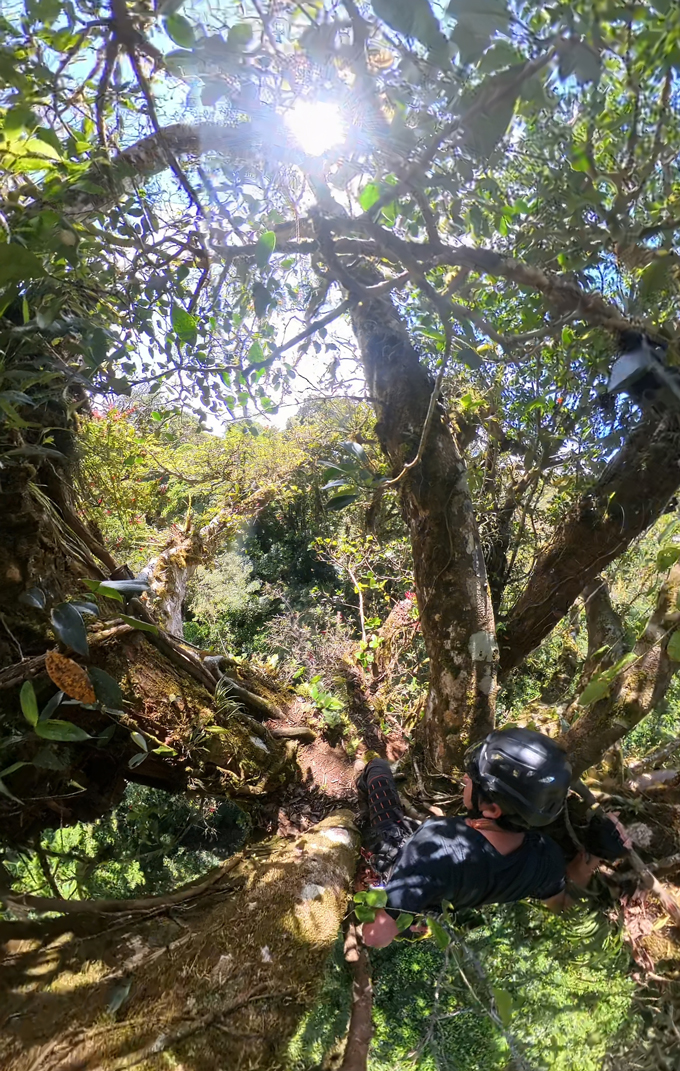
Jeremy Quirós-Navarro stands on the edge of an animal toilet that is tens of meters up in a strangler fig tree. The area where the branches join serves as a flat surface for animals to poop. Tropical canopy ecology project
Many mammals choose a favorite place to poo, says Mike Cove. He did not take part in the new research, but he does study mammals at the North Carolina Museum of Natural Sciences. That’s in Raleigh. There’ve been lots of reports of multiple tropical species sharing a pooping spot, Cove says. But all those toilets, also called latrines, were on the ground.
Jeremy Quirós-Navarro found his first treetop toilet by accident. At the time of this doo-doo discovery, he had been documenting plant life in the cloud forest of Costa Rica. These are forests that have a constant cover of mist and clouds. Quirós-Navarro works at the University of Connecticut, in Storrs, where he studies plant identification.
In a tree, right where a bunch of large branches came together, Quirós-Navarro found a pile of poo. As he kept climbing, he found more poop piles. “But only in a specific [type of] tree,” he says.
The lucky tree was a strangler fig (Ficus tuerckheimii). This plant is very important in tropical ecosystems. It provides plenty of food. It also has lots of holes that animals can use for shelter. Its wide, spreading branches along the forest ceiling also create walkways for many animals.
All these things make the strangler fig a hub for cloud forest mammals. That, in turn, makes this tree what scientists call a keystone species. Serving as a public restroom might be yet one more role that strangler figs play in forests.
Researchers shared their new findings March 16 in Ecology and Evolution.
The go-to for number two
Quirós-Navarro may have found the first fig tree toilet by accident. But after running into three more, “we started thinking that this is a pattern,” he recalls. So his team decided to look for more treetop latrines. They checked 29 different species — in all, 169 trees.
They turned up 11 latrines, all in strangler figs. In fact, 73 percent of the fig trees his team inspected had at least one pooping place. That’s almost three out of every four fig trees.
The scientists don’t know why figs are the preferred elevated forest potty. But Quirós-Navarro thinks the tree’s structure is important. “They have a specific and particular structure that forms, like, a hand at the crown,” he says. “All the branches grow from that part.”
The flat platform where all the branches join can be up to one meter (39 inches) wide and filled with soil and small plants. And poop.
Looking up into a strangler fig tree. Many mammals that dwell in tropical forests spend much of their lives high above the ground in the forest canopy. When one feels the need to “do its business,” those in Costa Rica often choose this type of tree as their latrine of choice.Michael Metzger/iStock/Getty Images Plus
A bathroom grapevine
To figure out which critters visited treetop toilets, researchers added a camera trap to one of the latrines. Over two months, this potty was used by about three mammals a day. They came from 17 different species.
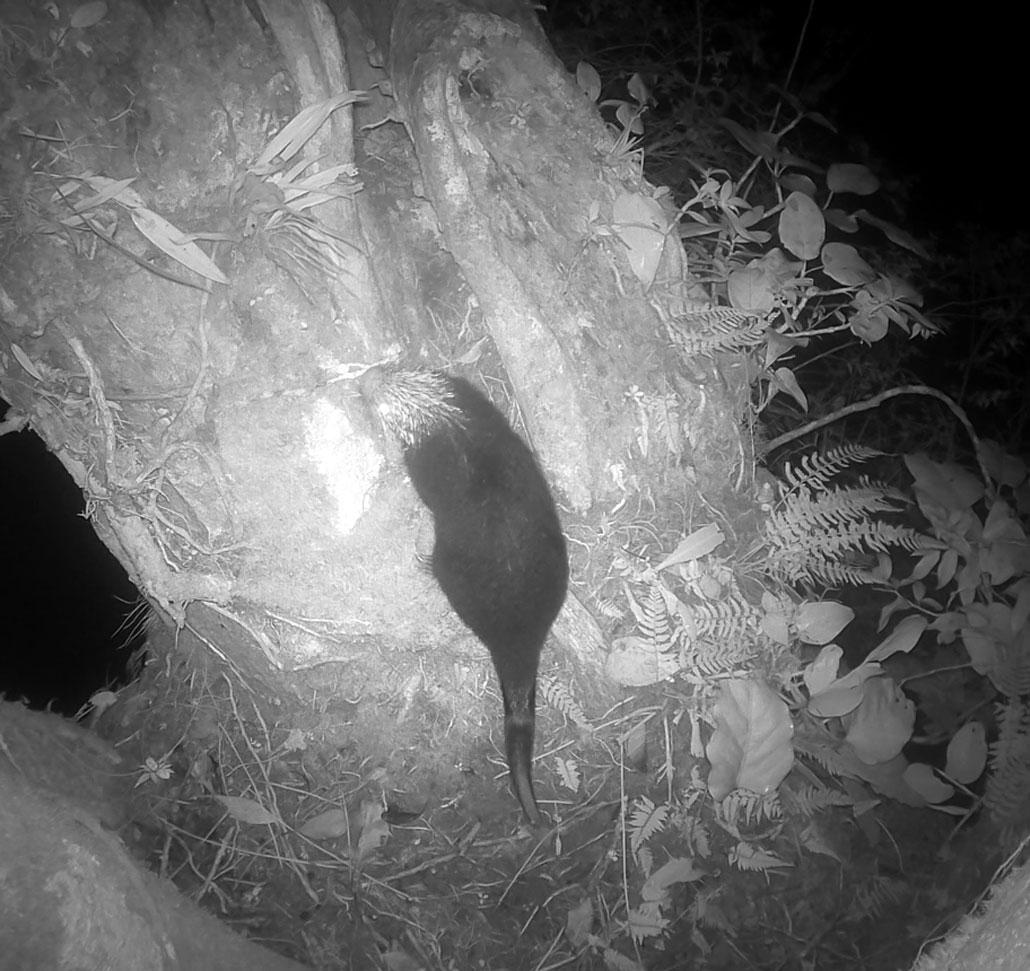
Mexican hairy dwarf porcupines were the most frequent visitors. But kinkajous, opossums, pocket mice, coatis and capuchin monkeys all stopped by. Even margays, secretive tree-dwelling cats, hit the toilet (though only to spray urine).
A porcupine pauses to poo in a tree latrine. Porcupines live in trees in Costa Rica and were frequent visitors to the treetop potties.Tropical canopy ecology project
The most surprising visitor was Hoffmann’s two-toed sloths. This was unexpected because these sloths were thought to come down to the ground to poop. Both visits caught on camera were made by a female with young. That might be why they used the tree latrine. “It’s more [of a] risk for them to go and poop in the ground,” Quirós-Navarro says.
It’s also possible the sloth didn’t realize the platform wasn’t the ground, Erik Hom points out. He studies symbiosis at the University of Mississippi in University and did not take part in the research. Once an animal is in a tree, “coming down is quite a way,” he says. So a flat, dirt-covered place in the branches might seem enough like the ground to go on.
It’s especially interesting that there are so many species using these poop spots, Cove says. “You have all of these animals coming together,” he says. They are “scent marking, defecating, urinating — and then, in some cases, rolling in it.”
Tree toilets might serve as the group chats of the forest canopy, Quirós-Navarro adds. All these mammals using the same toilet leave signals for each other through their poop and pee. The message could be “a predator was here,” “I’m looking for a mate” or even “this tree is mine.”
In the future, Quirós-Navarro hopes to find out why fig trees are the forest’s potty of choice. But serving as potties only adds to the strangler fig’s value in tropical forests. It’s a food source, a highway — and now, a la-tree-n.

 Login