Login
Britain Is Bringing in Some Innovative Engineering to Tackle Flooding: Beavers
12 June 2026 at 21:43
 London's mayor praised the beavers, who are already having a noticeable impact.
 London's mayor praised the beavers, who are already having a noticeable impact.

April 13, 1986 – April 27, 2026
Guadalajara, Mexico, was quite a different place when it last hosted World Cup games 40 years ago. The city welcomed matches in June 1986 and did so again in 2026, when South Korea faced Czechia at Guadalajara Stadium in the opening round of the 2026 FIFA World Cup.
In 1986, Guadalajara Stadium had not yet been built in Zapopan, the fast-growing municipality just northwest of Guadalajara. Many of that year’s World Cup matches were held instead at Jalisco Stadium in northeastern Guadalajara. It was in that stadium that France defeated Brazil in a penalty shootout in the 1986 quarterfinals, in what is widely regarded as one of the most memorable World Cup games of all time.
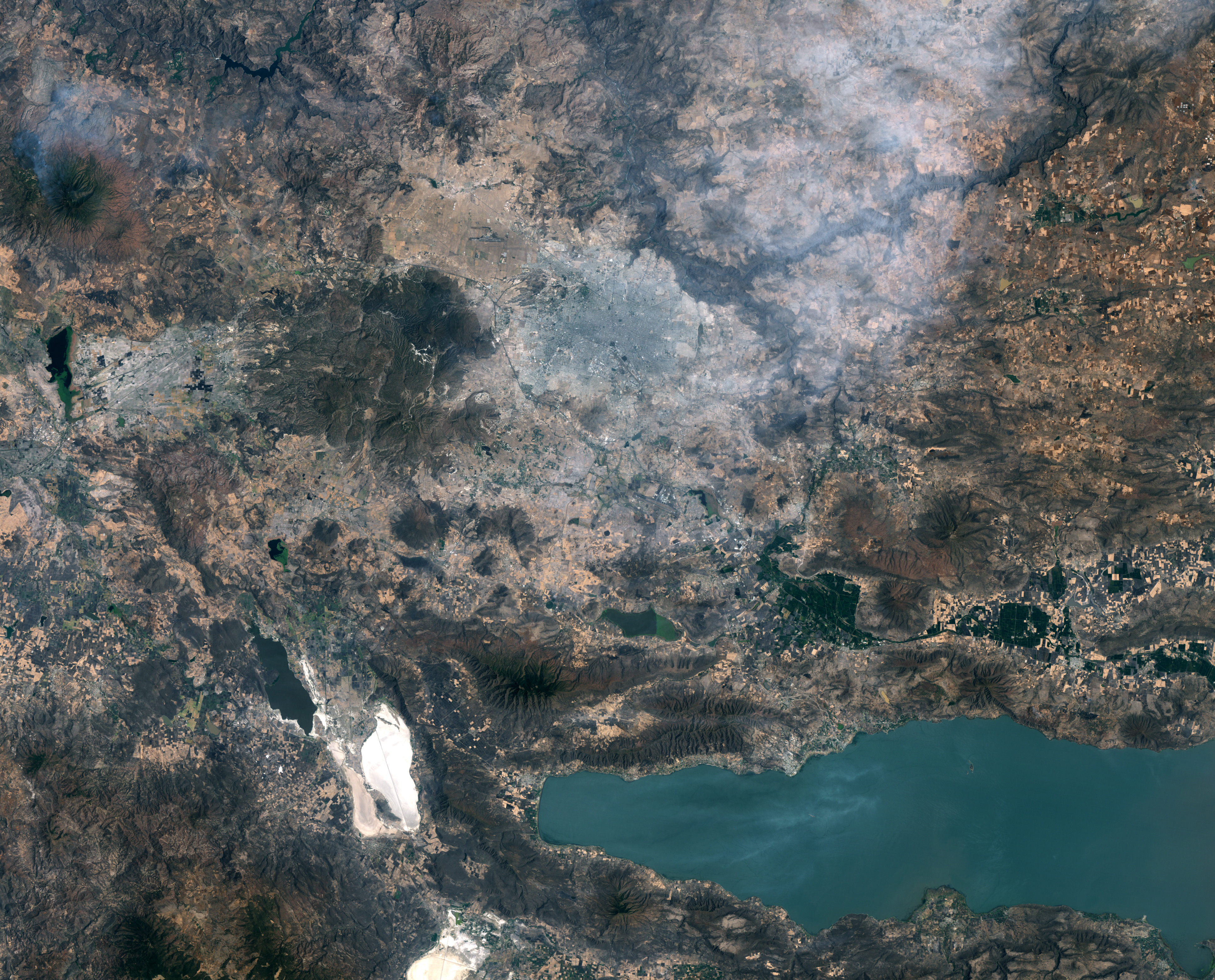
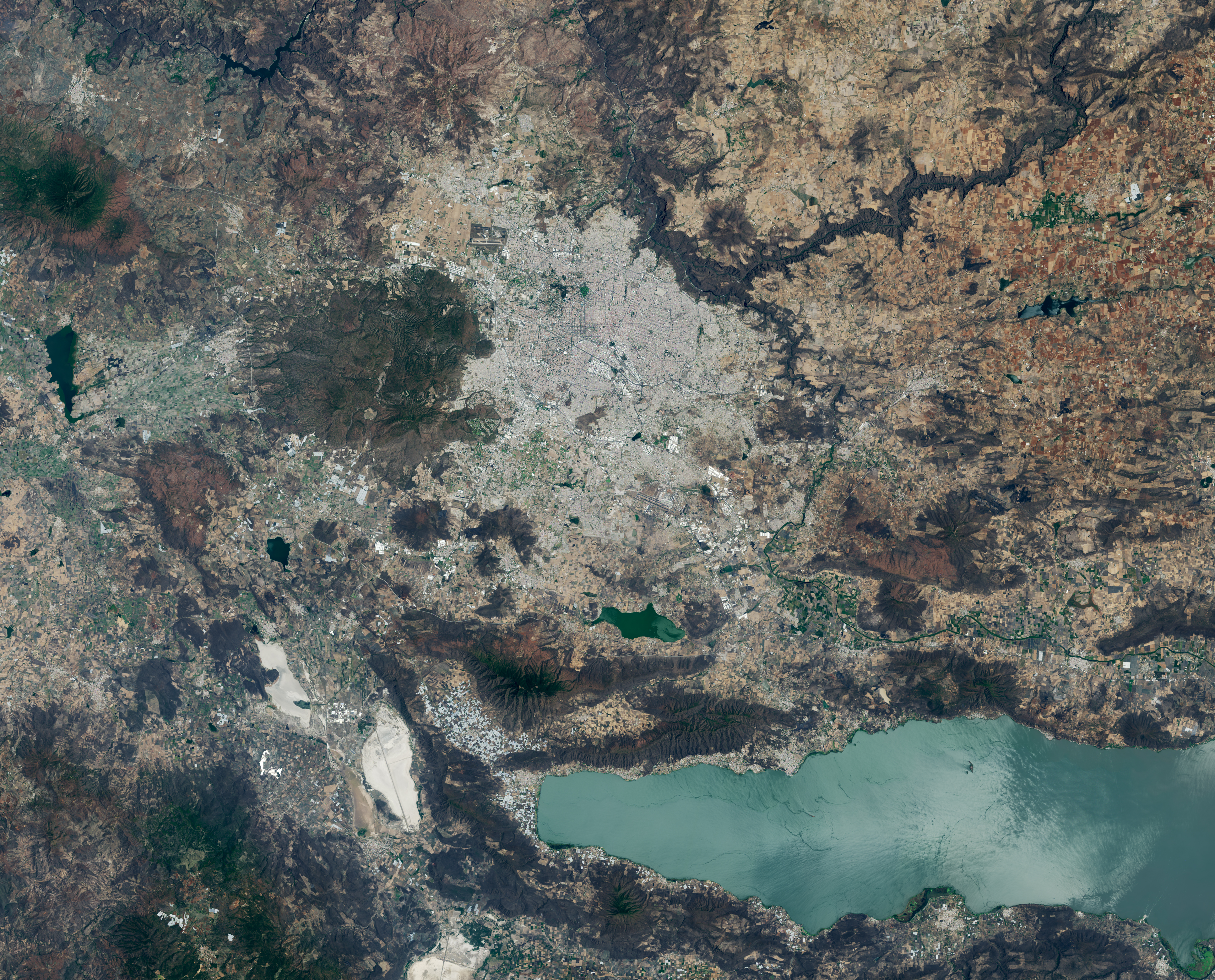
As seen in the Landsat images above, the land where Guadalajara Stadium (also called Estadio Akron) now sits was farmland in 1986. The new stadium, built in 2010 to host Mexico’s Club Deportivo Guadalajara, or Chivas, lies near the Sierra la Primavera volcanic complex, a rugged landscape full of lava flows, volcanic domes, steam vents, and hot springs. The architects who designed the stadium took inspiration from the nearby volcanic terrain, creating a structure that rises from a grassy earthen berm meant to resemble the flanks of a volcano, topped with a white roof reminiscent of a volcanic cloud.
About 95,000 years ago, the volcanic system underneath Sierra la Primavera produced a massive eruption that caused a caldera 11 kilometers (7 miles) in diameter to slump downward. Water filled the depression for tens of thousands of years, but tectonic uplift and the accumulation of sediment eventually led to the demise of the lake. Erosion wore away the softer surrounding rock over time, leaving harder, erosion-resistant volcanic rocks within the circular feature that now stand high above the surrounding terrain.
Starting about 60,000 years ago, several lava domes erupted along the southern edge of the caldera. The youngest of them, Cerro del Colli, formed about 30,000 years ago, leaving the dome-shaped feature just south of the stadium and contributing to a broader landscape dotted with other volcanic domes and cinder cones.
Today, much of the original caldera has been preserved as a forested area known as La Primavera Biosphere Reserve, even as development has partially encircled it during the past 40 years. The population of the Guadalajara metro area has grown from about 2.7 million in 1986 to more than 5.5 million now, with particularly rapid growth in Zapopan, a burgeoning tech hub sometimes billed as “Mexico’s Silicon Valley.” A prominent development visible in Landsat images is Guadalajara Technology Park, one of several new industrial parks in Zapopan. New greenhouses have also come to the area en masse, including south of the reserve, where they are mostly used to grow fruits and vegetables.
World Cup fever runs particularly high in Guadalajara, which is hosting World Cup matches for the third time. During Brazil’s legendary title run in 1970, when Pelé led the team, Jalisco Stadium was the venue for Brazil’s first-round, quarterfinal, and semifinal matches. To commemorate him, the city in May 2026 erected a 9.5-meter (31-foot) bronze statue of the iconic football (soccer) player.
Even the animals at Guadalajara Zoo are taking part in the festivities, with elephants, gorillas, giraffes, capybaras, pumas, and macaws “predicting” match winners by choosing between food, shirts, boxes, soccer balls, and other items. A puma named Muluk predicted South Korea would beat Czechia by sniffing and moving a ball, one newspaper reported.
Guadalajara will host four first-round matches: South Korea vs. Czechia on June 12, Mexico vs. South Korea on June 18, Colombia vs. Democratic Republic of the Congo on June 23, and Uruguay vs. Spain on June 26.
NASA Earth Observatory images by Lauren Dauphin, using Landsat data from the U.S. Geological Survey. Story by Adam Voiland.
Stay up-to-date with the latest content from NASA as we explore the universe and discover more about our home planet.
A massive, old caldera and more recently formed craters shape the landscape in the eastern Sierra Nevada.
The hill-shaped features are a sign of explosive volcanic activity—a rarity on the Red Planet.
Episode 43 of the Hawaiian volcano’s current eruption was marked by high lava fountains and widespread ash dispersal.
Subscribe to the Earth Observatory and get the Earth in your inbox.
NASA's Earth Observatory brings you the Earth, every day, with in-depth stories and stunning imagery.
Explore Earth Science
Open access to NASA’s archive of Earth science data
The post World Cup Fever in Guadalajara appeared first on NASA Science.
April 13, 1986 – April 27, 2026
Guadalajara, Mexico, was quite a different place when it last hosted World Cup games 40 years ago. The city welcomed matches in June 1986 and did so again in 2026, when South Korea faced Czechia at Guadalajara Stadium in the opening round of the 2026 FIFA World Cup.
In 1986, Guadalajara Stadium had not yet been built in Zapopan, the fast-growing municipality just northwest of Guadalajara. Many of that year’s World Cup matches were held instead at Jalisco Stadium in northeastern Guadalajara. It was in that stadium that France defeated Brazil in a penalty shootout in the 1986 quarterfinals, in what is widely regarded as one of the most memorable World Cup games of all time.
As seen in the Landsat images above, the land where Guadalajara Stadium (also called Estadio Akron) now sits was farmland in 1986. The new stadium, built in 2010 to host Mexico’s Club Deportivo Guadalajara, or Chivas, lies near the Sierra la Primavera volcanic complex, a rugged landscape full of lava flows, volcanic domes, steam vents, and hot springs. The architects who designed the stadium took inspiration from the nearby volcanic terrain, creating a structure that rises from a grassy earthen berm meant to resemble the flanks of a volcano, topped with a white roof reminiscent of a volcanic cloud.
About 95,000 years ago, the volcanic system underneath Sierra la Primavera produced a massive eruption that caused a caldera 11 kilometers (7 miles) in diameter to slump downward. Water filled the depression for tens of thousands of years, but tectonic uplift and the accumulation of sediment eventually led to the demise of the lake. Erosion wore away the softer surrounding rock over time, leaving harder, erosion-resistant volcanic rocks within the circular feature that now stand high above the surrounding terrain.
Starting about 60,000 years ago, several lava domes erupted along the southern edge of the caldera. The youngest of them, Cerro del Colli, formed about 30,000 years ago, leaving the dome-shaped feature just south of the stadium and contributing to a broader landscape dotted with other volcanic domes and cinder cones.
Today, much of the original caldera has been preserved as a forested area known as La Primavera Biosphere Reserve, even as development has partially encircled it during the past 40 years. The population of the Guadalajara metro area has grown from about 2.7 million in 1986 to more than 5.5 million now, with particularly rapid growth in Zapopan, a burgeoning tech hub sometimes billed as “Mexico’s Silicon Valley.” A prominent development visible in Landsat images is Guadalajara Technology Park, one of several new industrial parks in Zapopan. New greenhouses have also come to the area en masse, including south of the reserve, where they are mostly used to grow fruits and vegetables.
World Cup fever runs particularly high in Guadalajara, which is hosting World Cup matches for the third time. During Brazil’s legendary title run in 1970, when Pelé led the team, Jalisco Stadium was the venue for Brazil’s first-round, quarterfinal, and semifinal matches. To commemorate him, the city in May 2026 erected a 9.5-meter (31-foot) bronze statue of the iconic football (soccer) player.
Even the animals at Guadalajara Zoo are taking part in the festivities, with elephants, gorillas, giraffes, capybaras, pumas, and macaws “predicting” match winners by choosing between food, shirts, boxes, soccer balls, and other items. A puma named Muluk predicted South Korea would beat Czechia by sniffing and moving a ball, one newspaper reported.
Guadalajara will host four first-round matches: South Korea vs. Czechia on June 12, Mexico vs. South Korea on June 18, Colombia vs. Democratic Republic of the Congo on June 23, and Uruguay vs. Spain on June 26.
NASA Earth Observatory images by Lauren Dauphin, using Landsat data from the U.S. Geological Survey. Story by Adam Voiland.
Stay up-to-date with the latest content from NASA as we explore the universe and discover more about our home planet.
A massive, old caldera and more recently formed craters shape the landscape in the eastern Sierra Nevada.
The hill-shaped features are a sign of explosive volcanic activity—a rarity on the Red Planet.
Episode 43 of the Hawaiian volcano’s current eruption was marked by high lava fountains and widespread ash dispersal.
Subscribe to the Earth Observatory and get the Earth in your inbox.
NASA’s Earth Observatory brings you the Earth, every day, with in-depth stories and stunning imagery.
Explore Earth Science
Open access to NASA’s archive of Earth science data
A German court has sparked a legal controversy by ruling that Google is responsible for defamatory comments generated by its own AI system. The search giant had argued that it couldn’t be blamed for the false results, but a Munich court has deemed that not to be the case and has ruled in favor of the two unnamed plaintiffs, both publishing companies, who the Google AI Overview inaccurately said engaged in shady business practices.
Google is required to remove the comments and ensure that they are not repeated. The case is certainly going to raise some questions globally. Will this mean that other courts are going to rule against AI vendors?
Bernhard Buchner, a partner at Lausen Rechtsanwälte, the legal firm that acted for the plaintiffs, said, “I believe it shows that online providers such as Google cannot hide behind the fact that a statement was generated by AI, but rather that they can be held liable for its output. It is an important step towards ensuring that providers of AI systems have to take responsibility for their outputs.”
So, does this mean that the decision could be replicated in the US or elsewhere? Alex Shahrestani, managing partner at Austin-based Promise Legal, said, “the short answer is ‘yes’: the Munich ruling travels, because US courts are already making the same move.”
He explained that Section 230 of the US Communications Decency Act, which has been applied to protect online service providers like social media companies from lawsuits based on their decisions to transmit or take down user-generated content, was built for computer bulletin boards, “not for a model that writes its own answers. Once the AI is the author, the company is the publisher.”
This means, he said, “businesses now need named humans at accountability nodes, verification gates before AI output ships, and audit trails that survive discovery, because ‘the model recommended it’ is a legally empty sentence.”
Does the decision mean that other AI providers could find themselves in the same position? Buchner believes it’s possible, although, he said, the situation in this case is unusual; it does not involve a classic chatbot scenario, but one where the AI-generated statements are published as an ‘AI overview’ of a search query.
“Google’s liability here is based not so much on the fact that it operates the underlying AI, but rather on the publication of its output. However, it seems entirely conceivable to me that this could also be applied generally to inaccurate or defamatory AI,” he pointed out.
Nonetheless, said Carolyn Shelby, head of SEO at Yoast, the German ruling should ensure that companies will be more circumspect in how they handle AI in the future, to protect themselves from any legal action. The first thing they should do is to separate low-risk use of AI from major decision-making.
“Using AI to summarize meeting notes, brainstorm campaign ideas, or create a first draft of something is very different from using it to make decisions about customers, employees, finance, compliance, health, legal claims, competitive positioning, or public communications,” she noted.
She pointed out that the effects of AI use could be devastating for companies. “The consequences could include customer complaints, reputational damage, regulatory attention, legal claims, correction costs, loss of trust, and internal disruption,” she said. “Even when a mistake does not become a lawsuit, the operational cost of correcting bad information can be significant.”
However, she noted, things may not change immediately. “Many companies will wait until there is a high-profile court case, regulatory action, or major corporate embarrassment before they take this seriously. That is usually how governance catches up with technology. But the better-run organizations will start treating AI governance as part of normal business risk management now.”
And, said Shahrestani, after the Google decision, everything has changed. It will become more important to ensure that employees remain part of the process.