Login
India Plans a Registry to Vet AI Agents Making Payments on UPI
11 September 2026 at 11:40
Identity Checks For Software Buyers Payment systems were built on a simple assumption: a person is on the

 eclecticlight.co
Ancient meteorite minerals reveal a surprisingly strong magnetic field from the solar system’s first 200,000 years. About 4.6 billion years ago, before the Sun and planets existed in their familiar forms, the solar system was a vast cloud of gas and dust. Within a few million years, this “solar nebula” collapsed and flattened into a [...]
Wrinkles on the surface of Mercury have revealed that the closest planet to the sun is shrinking faster than scientists thought.
New research suggests that Mercury is shrinking between 10% and 30% faster than had been previously estimated. The team behind this research calculated that the planet has lost nearly 12 miles (19 kilometers) of its total diameter since it formed.
The researchers think that the extremity of this shrinking has gone unnoticed previously because bombardment from space rocks over time has created craters that obscured the evidence of this process.
Scientists say determining the extent of the shrinking of Mercury is key to investigating the composition of the planet's interior.
"More shrinking means Mercury could have a larger metal core, less light elements like silicon mixed into the metal core, or a higher starting temperature," team leader Gaku Nishiyama, of the German Aerospace Center (DLR) Institute of Space Research said in a statement.
Like all rocky planets in the solar system, Mercury was formed 4.5 billion years ago during a violent and turbulent time in the solar system's history, as rocks and asteroids collided with each other and were bound together.
These impacts generated heat, which Mercury has been losing ever since. As the interior of Mercury cooled, it also shrank. This caused geological wrinkles in the form of scarps and ridges to develop in the rocky outer layers of Mercury.
This cooling should result in Mercury shrinking in a roughly uniform way, and that would make these shortening structures common across the planet. However, asteroid impacts throughout its history have not only created craters that obscure signs of its geological history, but have also spread debris across the surface of Mercury. This makes wrinkles tougher to spot among the accumulation of billions of years' worth of geological features.
The team combined previous maps of Mercury's geology with new observations of the entire planet's surface roughness. They found the roughest terrain of Mercury featured the fewest wrinkles.
"It made us think that there's a process obscuring shortening structures," said Nishiyama, who thinks that impact debris in the roughest regions of Mercury is covering shrinking wrinkles.
The team then used the ridges and scarps in regions less affected by the dispersal of debris to estimate the amount of contraction. This indicated that missing features in rough areas could amount to 10% to 30% extra shrinkage over the 4.5 billion-year lifetime of Mercury. That amounts to a total change in diameter of up to 14.5 miles (23 kilometers) rather than the currently estimated 2.5 to 10 miles (4 to 16 kilometers).
"30% is a little bit surprising, but the corrected amount of contraction actually makes sense to me," Nishiyama said.
There may be more surprises in store. Nishiyama believes that the updated figures could still be an underestimate. This estimate is based on data collected by NASA's MESSENGER probe, which ended in 2015. MESSENGER could only distinguish features larger than around 3 miles (5 kilometers) across.
In November 2026, the BepiColombo mission will start conducting scans of Mercury's surface in much higher resolution than this, and that could reveal even more shrinkage features.
The team's research was published on Thursday (Sept. 10) in the journal Geophysical Research Letters.
In order to survive, the first humans to reach Mars will immediately need a safe and reliable place to set up shop. But building on Earth’s neighbor is immensely more challenging than construction projects at home. The Martian surface is a practically airless vacuum, constantly bombarded with radiation, and regularly reaches temperatures as low as -81 degrees Fahrenheit.
However, there is a very specific process on Earth that approximates similar conditions to the Red Planet: freeze-drying. According to researchers at The Hong Kong University of Science and Technology, the same method used to preserve perishable foods could also inspire sturdy and even recyclable 3D-printed houses on Mars. The secret ingredients? Everyday gelatin and yeast. The novel approach is detailed in a study published today in the journal Chem Circularity.
“My inspiration came from freeze-dried fruits that become harder. So I asked myself if we can take advantage of that and make some materials,” Jishen Qiu, a study co-author and civil engineer, said in a statement.
The combination of materials are simple: sand and an adhesive binder. Since gluing tiny rocks together requires specialized stickiness, Qiu’s team invented a new concoction from gelatin and lab engineered yeast. When mixed, the yeast microbes become coated with adhesive proteins similar to those used by mussels to anchor on stones underwater. The goop is then extruded through a 3D printer nozzle into an extremely cold, low-pressure environment, where it solidifies as the water instantly freezes and converts from ice to vapor. The final result is a light, porous, foam-like material that remains very resilient.
“This is actually strong enough to build a one- or two-story building on Earth—whose gravity is three times that of Mars,” explained Qiu. “So, you can probably easily build a multistory building on Mars with the material.”
Qiu and his collaborators know they must first start small before expanding to Martian neighborhoods. Their prototype domes are only about the size of a wine cork at this point, but their compressive strength is comparable to low-grade concrete.
Engineers have experimented with 3D-printed structures to use on the moon and Mars for years, but many of these still require steps like melting down rocks or lunar regolith. These methods usually require a lot of extra energy, which may limit their utility. Qiu’s technique requires comparatively little energy, although he admits it’s still unclear if yeasts can withstand life on Mars. That said, the team’s early results are a promising step towards simple, efficient, and sturdy buildings beyond Earth. If nothing else, yeast also lends itself to trial-and-error.
“As long as there’s one yeast that’s still alive, you can grow them again,” added Qiu.
The post Mars astronauts could live in houses 3D-printed from freeze-dried yeast appeared first on Popular Science.

Decades ago, Captain Kirk faced off against the Gorn on the uncharted desert planet Metron. But as we can see in new satellite imagery from NASA, that mysterious rocky world can actually be found right here on Earth in California.
In this new image captured by the Operational Land Imager (OLI) on NASA's Landsat 9 satellite, you can see the wide variety of rock and vegetation in the area around Vasquez Rocks Natural Area County Park in southern California.
The 25-million-year-old Vasquez Rocks is a magnificent natural area with an incredible range of unique, large rocks jutting out of the ground. In this false-color image, you can see the area in shortwave-infrared and near-infrared wavelengths that show the differences in vegetation across the landscape.
And this location hides some amazing history. Not only is Vasquez Rocks home to incredible rock formations and desert vegetation, it is also where Captain Kirk fought the Gorn in Star Trek the Original Series. It's not a surprise the series chose this location for its infamous fight scene (among many other Trek scenes), as the massive, sun-bleached boulders pointing to the sky and barren landscape give it a distinctly alien feel.
While the rocky landscape of Vasquez Rocks is firmly fixed here on Earth, it has consistently made history as the backdrop to a whole host of iconic science fiction moments.
Indeed, Star Trek is one as Vasquez Rocks has been used for filming in a whole host of Trek episodes. It was even Spock's home world of Vulcan in the films Star Trek IV: The Voyage Home and Star Trek (2009).
But beyond Star Trek, the site has been used for filming sci-fi classics like Galaxy Quest, Battlestar Galactica and Planet of the Apes in addition to a whole host of cowboy movies and more.
It turns out that right here on Earth, we can find perfectly good alien worlds.

Apple on Wednesday announced its most advanced health and fitness experience yet, expanding what Apple Watch and iPhone can do as intelligent, science-driven tools for users’ personal wellbeing. Apple Watch Series 12 and Apple Watch Ultra 4 introduce the new Health Sensing System, enabling the most accurate heart rate sensing in a wearable, as well as a new readiness experience to give users insight into their body’s capacity to take on their day. They pair with a redesigned Health app coming later this year to iPhone, which offers a holistic view of long-term health alongside new, easy-to-understand health and longevity insights powered by Apple Intelligence. Together, these updates will give users a more complete picture of their health and fitness while keeping their personal health data private, secure, and under their control.

“At Apple, we believe technology can empower everyone with actionable, science-based insights built with privacy at the core. By combining breakthrough sensing on Apple Watch with Apple Intelligence in the Health app, we’re able to translate complex biometric data into clear guidance for users,” said Sumbul Desai, M.D., Apple’s vice president of Health and Fitness, in a statement. “This both helps people navigate their day-to-day routines with confidence and connects those moments with deeper context around their longevity, building a strong foundation for a healthier future.”
The New Health Sensing System on Apple Watch
The new Health Sensing System on Apple Watch Series 12 and Apple Watch Ultra 4 features new optical and electrical heart sensors, enabling higher-frequency heart rate and heart rate variability (HRV) measurements, a new readiness score, a more comprehensive Vitals overview with the addition of HRV, and an updated Heart Rate app.
Accuracy of health data is critical to providing meaningful insights. A scientifically rigorous study on a population of over 1,000 participants with representation across demographic groups compared the new heart rate sensing accuracy on Apple Watch against leading wearables, and resulted in Apple Watch showing the highest heart rate accuracy across devices.
With larger, power-efficient green LEDs on the optical heart sensor, Apple Watch Series 12 and Apple Watch Ultra 4 now measure heart rate every five seconds, all day long. This continuous, passive measurement delivers deeper insight into a user’s fitness and physiological state while making Exercise and Move Activity rings even more accurate. Users can view their real-time heart rate at a glance throughout their day — whether they’re recovering from a workout or dashing for the train — using the updated Heart Rate app and new watch face complications.
HRV, a key indicator of stress and recovery, is now measured as often as every five minutes — 24x more frequently — and available to view in a new section of the Heart Rate app. Apple Watch provides two separate variants of HRV for better understanding of a user’s health status. Recovery HRV is best to identify daily signals of stress and recovery, while overall HRV is best for insights on a user’s broader health, including cardiovascular health. Higher variability is generally associated with better overall recovery.
Overnight vitals now includes Recovery HRV analyzed against a user’s personal baseline, providing a more complete view of their health status. A new daytime vitals view lets users toggle between overnight and daytime metrics, and can potentially spot shifts in their metrics before they show up overnight.

Readiness: A Daily Read on the Body’s Capacity
Apple Watch Series 12 and Apple Watch Ultra 4 introduce readiness — a new feature that analyzes a user’s recent activity, vitals, and sleep score, and then provides a single 0-10 score each day with a clear, actionable recommendation: Recover, Pace Yourself, Ready, or Go For It. This helps a user decide how to take on their workday or tackle their training plan.

Readiness updates throughout the day as new data comes in, reflecting, for example, an intense workout or a shift in daytime vitals. Readiness clearly highlights which factors are driving the score and allows users to tap into more details. The scoring algorithm was developed using data from the Apple Heart and Movement Study, in collaboration with exercise scientists and physicians at Apple.

A Redesigned Health App with Apple Intelligence at Its Core
The Health app on iPhone is a central and secure location for a user’s health and fitness information, and can uniquely provide a better understanding of their overall health. Apple Intelligence brings powerful AI capabilities into the apps and experiences users rely on every day, making them more personal and helpful than ever, and with iOS 27 and iPadOS 27, Apple Intelligence extends to the Health app. Redesigned to dynamically adapt to a user’s personal health and fitness metrics, the Health app now offers iPhone and iPad users a view of their long-term health alongside easy-to-understand insights, providing personalized guidance that can help them live a better day and healthier life. The redesigned Health app has been built to securely and privately protect a user’s data at every step.
Insights Tab
The new Insights tab surfaces timely health information with a summary that updates throughout the day across heart, sleep, readiness, fitness, vitals, and cycle tracking data. A new For You section delivers personalized recommendations and relevant articles based on a user’s data — like a suggestion to improve a wind-down routine after a stretch of late nights.

Longevity Tab
A new Longevity tab analyzes a user’s longitudinal health data for deeper insights into heart health, sleep, mental wellbeing, movement health, metabolic health, hearing, and nutrition. The tab includes Health Age, a new feature that uses Apple Watch data to show users how their metrics are tracking relative to their chronological age, informed by the best available science. The algorithm can factor in metrics from Apple Watch like VO2 max, resting heart rate, sleep, and HRV, and users can also add lab data, including A1c and LDL, to enrich the analysis.
Within the Longevity tab, users can see what’s shaping their long-term health based on data from iPhone, Apple Watch, AirPods, and clinical health records, as well as third-party apps and devices. An informative visualization fills in each category, helping users understand their status in different areas of health. Users can further build out their health picture through new evaluations, at-home movement assessments, and the ability to add lab tests.
Movement Evaluations
Mobility is a critical marker of overall function and a strong predictor of independence, chronic disease risk, and quality of life. Yet routine assessment remains largely absent from proactive health management, typically requiring a visit to an exercise physiologist or physical therapist. Now, users can take in-depth physical assessments — measuring flexibility, strength, balance, movement mechanics, and VO2 max — right at home using their iPhone camera and Apple Watch. This experience runs entirely on device; no video is ever recorded, stored, or shared. Using vision-based AI models, these assessments provide real-time audio and visual feedback, and were developed using clinician input.
Labs
Lab results from routine testing can provide important insights into a user’s overall wellbeing. Health app users can already import existing labs and see their results and trends over time. Users will be able to schedule and purchase new labs that feature over 50 key biomarkers for $119 directly through the Health app at approximately 2,000 Quest Diagnostics locations in the U.S.
Tailored Health Content
Users will be able to see videos and articles across each area of health that overlays their data with insights from Apple Health clinical experts explaining why it’s important. For example, after a user receives their annual lab results, the Health app will present a video from an expert explaining their LDL levels, what the data means, and how they can take steps to improve, if needed. Or if a user learns from their movement assessment that they need to work on their balance, the Health app will present a video from an expert explaining what they can do. They will also receive an exercise plan to help them improve their balance, with moves selected for their ability and needs.
The redesigned Health app will be available later this year, starting in U.S. English, with more languages to follow.
Perimenopause and Menopause Support Arrive on Cycle Tracking
A person’s menstrual cycle is an essential indicator of overall health, and the Cycle Tracking experience is designed to support individuals across life stages, from logging their first period to receiving a retrospective ovulation estimate, and now, to supporting perimenopause and menopause. Cycle Tracking adapts as users’ health priorities change, whether that’s rooted in curiosity, daily planning, family building, or long-term wellbeing.
With iOS 27, the Health app adds support for perimenopause and menopause, as well as notifications about cycle deviations inclusive of perimenopause, to Cycle Tracking. Users will be able to log if they are in perimenopause or menopause for further customization of their Cycle Tracking experience, track their symptoms, and monitor cycles over time. Additionally, if a user logs bleeding after menopause, they will receive a notification to speak with their doctor. New educational articles are available in the Health app to help users better understand this new chapter, in addition to tips informed by clinical experts.
Additionally, many people don’t recognize they’re in perimenopause because the symptoms can start years before their last period. Now, users age 40 and over can receive a notification if a deviation in their logged cycle patterns is suggestive of perimenopause, so they can speak to their doctor about it at their next appointment.
More Ways to Stay Healthy
With iOS 27, iPadOS 27, macOS 27, and watchOS 27, Apple introduces additional ways to stay healthy:
• Workout Buddy works on Apple Watch even when users don’t have their iPhone nearby. The feature also now incorporates even more fitness data when delivering motivational insights, and is available in both English and Spanish.5
• Expanded GymKit functionality enables users with AirPods Pro 3 to sync their heart rate data through iPhone with compatible gym equipment, including treadmills and indoor bikes.
• More accurate treadmill readings, powered by new machine learning models, improve distance calculations from the very first step of a walk or run.
Availability
• watchOS 27 will be available for Apple Watch Series 9 or later, Apple Watch SE 3, and Apple Watch Ultra 2 or later beginning Monday, September 14, and requires iPhone 11 or later or iPhone SE 3 with iOS 27. Not all features are available on all devices or in all regions. For more information about availability, visit apple.com.
• The redesigned Health app will be available on Apple Intelligence-enabled iPhone and iPad models with the latest software, with select features available only on iPhone. Some features may not be available in all regions or languages. Health Age requires Apple Watch. The test to estimate VO2 max requires Apple Watch, AirPods Pro 3, or a third-party heart rate sensing device. Some features require users to be 18 or older. For information on Apple Intelligence availability, visit support.apple.com/en-us/121115.
• Features are subject to change. Some features may not be available in all languages or regions, and availability may vary due to local laws and regulations. For more information about availability, visit apple.com.
MacDailyNews Take: Very nice health and fitness additions to a strong Apple Watch lineup this year!
Please help support MacDailyNews — and enjoy subscriber-only articles, comments, chat, and more — by subscribing to our Substack: macdailynews.substack.com. Thank you!
Support MacDailyNews at no extra cost to you by using this link to shop at Amazon.
The post Apple Watch has the most accurate heart-rate sensor of any wearable appeared first on MacDailyNews.
Além de servir como uma rede social com conteúdos para passar o tempo, o TikTok também possui um grande número de criadores de conteúdo focados em publicações de cunho educacional.
Para incentivar e expandir o acesso a esses posts, a rede social permite ativar o chamado Feed STEM (Science, Technology, Engineering and Mathematics, ou Ciência, Tecnologia, Engenharia e Matemática).
Apesar de já vir ativado para usuários entre 13 e 17 anos, todos podem ativar o filtro STEM manualmente. Veja como! 😄
Posts relacionados

Volte à tela inicial do TikTok e deslize o dedo da esquerda para a direita (na parte superior) para escolher “STEM”.

Opcionalmente, também é possível ativar as legendas.
Look up at the night sky and it is easy to imagine a few bright worlds hanging in an empty blackness. But what are we really looking at when we say “the Solar System”? It is a family shaped by one star’s gravity, built from the same ancient disk of gas and dust, and still […]
The post What Is the Solar System? How Our Cosmic Neighborhood Took Shape appeared first on Curiosmos.
After nearly two decades of work, scientists have completed a wiring diagram of the central nervous system of an adult male fruit fly (Drosophila melanogaster).
The post Researchers Unveil Complete Fruit Fly Connectome appeared first on Sci.News: Breaking Science News.
For the first time, astronomers combined Hubble and Webb space telescopes to hunt down some of the smallest, faintest objects ever spotted in the outer Solar System.
The post Hubble and Webb Team Up to Spy Tiny Frozen Worlds beyond Neptune appeared first on Sci.News: Breaking Science News.
Solar system simulations starting from varied initial conditions suggest that Earth-like planets can emerge naturally from planet formation. Computer simulations of planetary systems can now begin from thousands of different starting conditions, allowing researchers to explore how worlds might emerge without assuming the final outcome. Over the past three decades, these models have advanced from [...]
Program Scientist
Dr. Delia Santiago-Materese wants things to get complex
From terrestrial animals to experiments in microgravity and Martian clouds, this NASA program scientist’s career path links diverse challenges. Today, she supports a mission to Saturn’s moon Titan, a world teeming with organic molecules that could hold valuable clues about the origin of life.
When novelty is your hobby, you already have a large part of the recipe for a career full of challenges. That is why Dr. Delia Santiago-Materese describes her path within NASA as “meandering.” Her diverse roles have taken her to low Earth orbit, to the clouds of Mars, and to the surroundings of Jupiter. Now, they are also bringing her closer to the surface of Titan, an intriguing moon of Saturn. Woven together by her exploring spirit and a perennial curiosity, all these experiences have one point in common: life.
Today, Santiago-Materese is part of the Planetary Science Division at NASA Headquarters in Washington. The main decoration in her office is a model of Jupiter, larger than a basketball, resting next to a scale model of the spacecraft exploring it, Juno. Small black and red pins with the inscription “Dragonfly” rest in the center of a round table. Several framed diplomas cover a wall. From here, Santiago-Materese does “a little bit of everything” on any given workday as a program scientist for the Juno and Dragonfly missions, and for the Discovery program, which features a portfolio of several missions in our cosmic neighborhood.
This medley of roles is no coincidence. Santiago-Materese describes herself as someone who does not pursue a single goal, but rather diverse interests that she discovers along the way. “I am always looking for something new to add to my experiences,” she says, “because I think I also get bored easily.”

The daughter of a military family, Santiago-Materese was born in Spain by coincidence. Her roots are actually on another continent: her mother is Mexican-American and her father is Puerto Rican. From her time in Spain, she only keeps some baby photos; she lived part of her life in Texas and then in California, which she considers her home—despite having spent her childhood summers in San Sebastián, Puerto Rico. It was in the Golden State where she first imagined herself as a veterinarian and decided to study Biological Sciences. And it was during her studies at Stanford University, “just around the corner” from NASA’s Ames Research Center in California’s Silicon Valley, that Santiago-Materese discovered astrobiology.
This elective course brought her closer to a discipline that, to some extent, was in its infancy. Today, NASA’s Astrobiology Program investigates life in the universe on many levels: how it began, how it evolved here on Earth, and where it might exist elsewhere. And that was how Santiago-Materese realized that biology and space were not two isolated things, she recounts.
After finishing her studies, Santiago-Materese completed a one-year internship at the San Francisco Zoo. But the unknown that astrobiology presents continued to intrigue her, so she went back to one of her professors to inquire more about it. She asked around and found someone at Lockheed Martin, a company that often contracts with NASA on space projects. They were looking for people for a new project studying the nutrition of the food bars for rodents traveling to space aboard the space shuttle.
Santiago-Materese has applied that formula ever since: identifying what truly interests her and finding the right person to ask questions. If people “don’t know what you’re interested in, they can’t help you,” she explains. After experience with the Space Shuttle Program, including managing databases for science payloads aboard the space shuttle, she went on to work with the International Space Station, which was then beginning its legacy of over 25 years in Earth orbit. She supported the development of biological experiments in microgravity, this time with fruit flies. But Santiago-Materese wanted to keep moving farther from Earth and investigate future space destinations.
This curiosity led her to the Martian sky. As part of her graduate studies at the University of California, Santa Cruz, Santiago-Materese investigated the Martian atmosphere, focusing on ice in the clouds and the development of climate models for the Red Planet. She earned her master’s degree and would later return to complete her doctorate under the NASA Pathways program, which is one of the agency’s primary early-career hiring pathways. She would defend her thesis six months after giving birth to her first daughter (one of the achievements she is most proud of, she says). That is why, although she loves the “weird” planets of the outer solar system, she is “more of a Mars person,” by training.
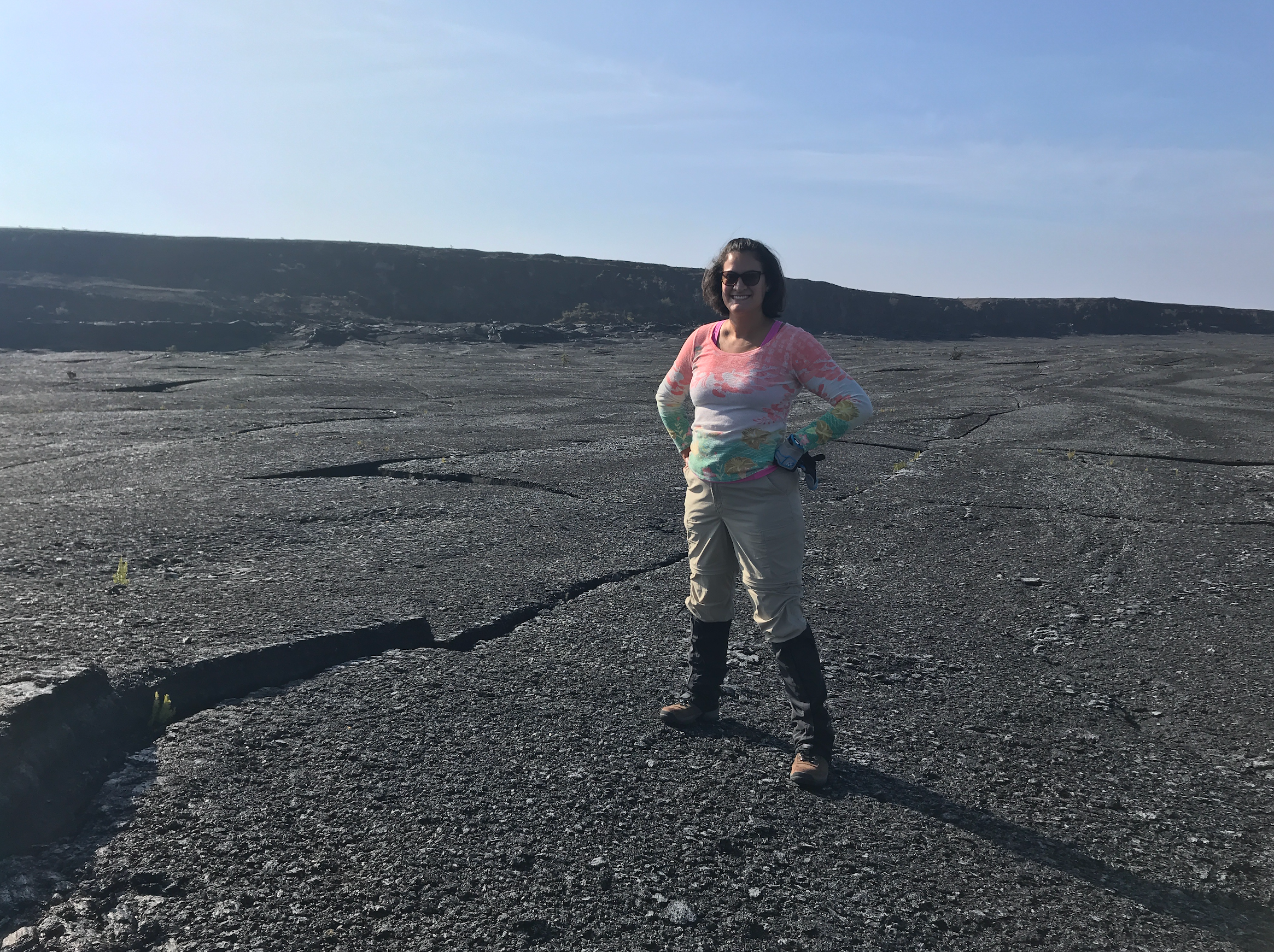
At NASA Ames, Santiago-Materese held various roles, ranging from social media and open science to lunar sciences. She then became a program officer for the Solar System Workings program in the Planetary Science Division at NASA Headquarters as part of a detail, or temporary assignment. And then, she took off for Maryland along with her family.
Santiago-Materese sums up her current role as a program scientist as the “science liaison” between NASA Headquarters and a mission. “When you do program scientist work, you might not be specialized or an expert in the exact science, but you need to be able to understand it and talk about it, to understand its importance,” she explains. “In general, we are supporting other people so they can do science.” In this endeavor, being someone who “gets more energy from working with people” is useful… and necessary: “You are having conversations all day long” with colleagues from different disciplines— from science and engineering to finance.
The Juno mission, in orbit around Jupiter since 2016, and Dragonfly, which is scheduled to launch no earlier than July 2028, are part of NASA’s New Frontiers program. Santiago-Materese also oversees the array of missions in the Discovery program, which includes ongoing science missions like Psyche and Lucy—heading to different asteroids—and future missions to Venus.
For Santiago-Materese, sharing her unconventional path can be valuable for students and youth in general, especially those who are unsure of what they want to do. “Your dream job,” she says, “you might not know it exists, or maybe it doesn’t exist today.” Beyond that, this zigzagging path has led her to accumulate experiences and relationships with different people, which she treasures even as she sets off for her next destination.
About two years out from Dragonfly’s launch, it is no surprise that this robotic mission takes up much of Santiago-Materese’s time. “Dragonfly feels like a combination of all my different experiences over time,” she reflects. And it signifies, to some extent, a return to her roots: it is an astrobiology mission. Although not designed to detect life, Dragonfly will investigate prebiotic chemistry: the chemical processes that could have led to the emergence of life on Earth.
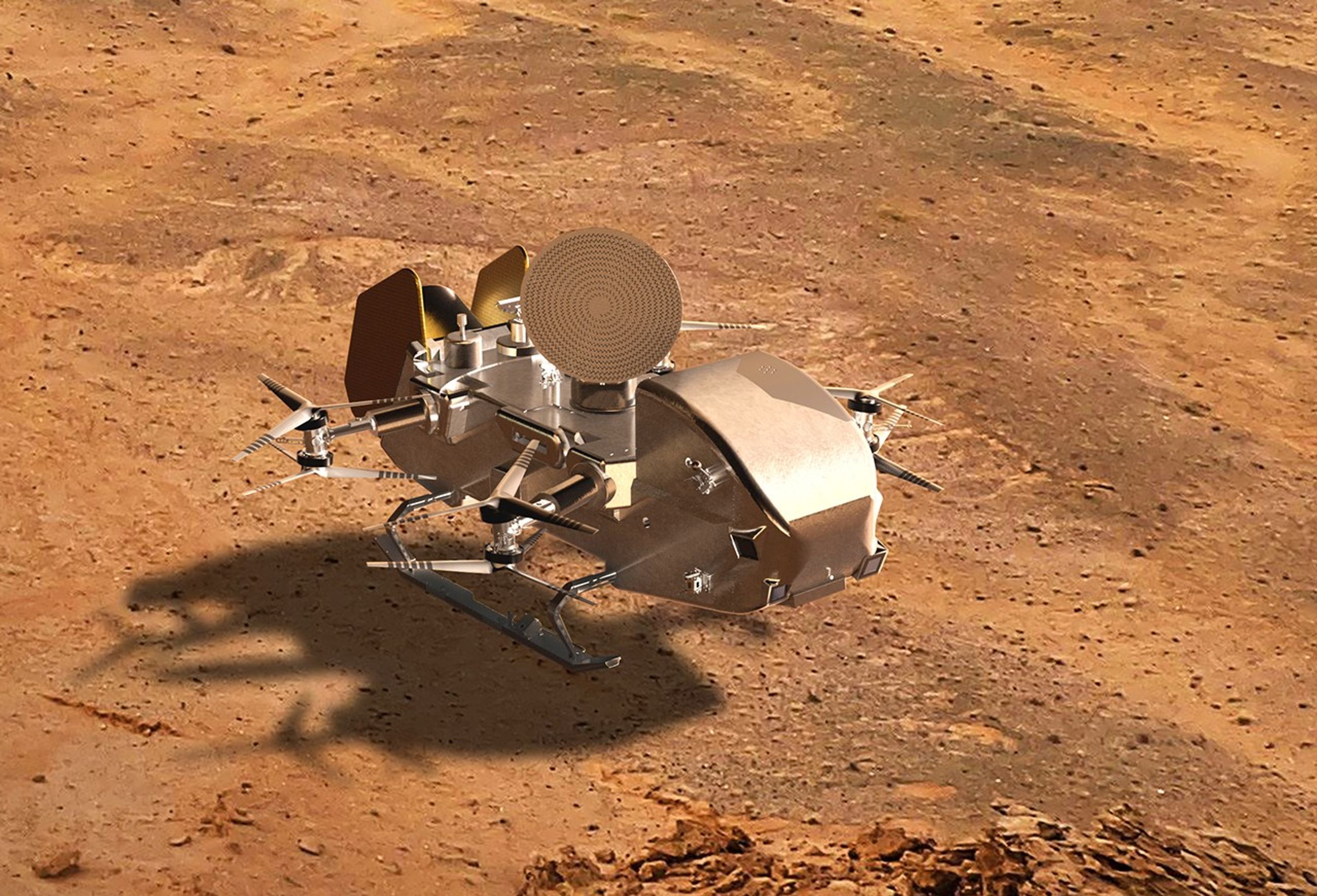
Dragonfly will embark on a journey of about six years to the surface of Titan. The spacecraft will carry an array of science instruments and will be the first NASA science mission to explore another world by flying from location to location. This car-sized rotorcraft will touch down at various geological sites of interest to analyze the moon’s composition and its habitability potential.
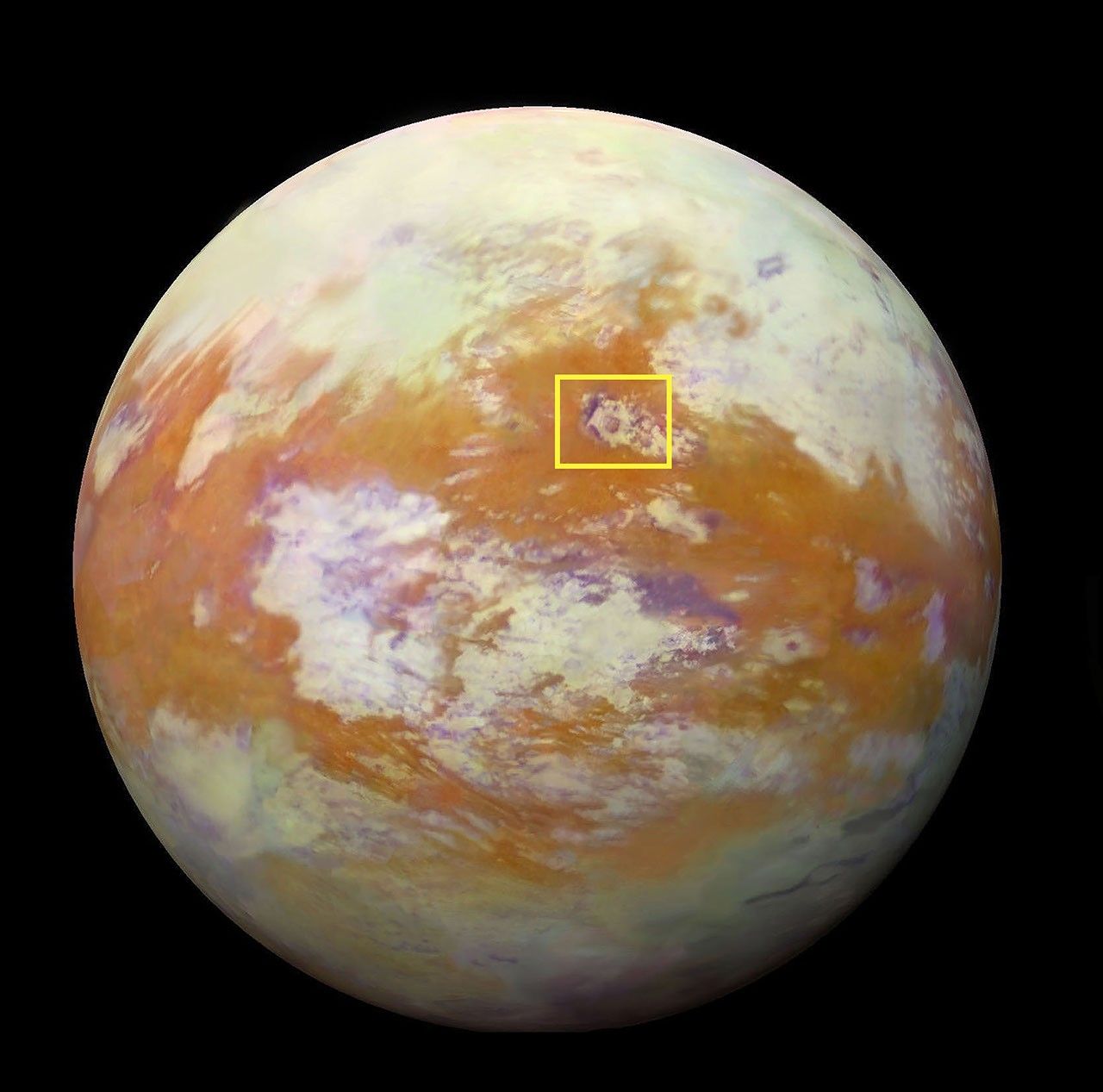
When it arrives at Titan, it will encounter a landscape that is strange and familiar at the same time: it could be a window into Earth’s remote past. This frozen world has a thick atmosphere and clouds drifting across the sky; dunes, lakes, rivers, canyons and mountains. Titan even has a process equivalent to our water cycle. However, on Titan, it is not water that flows but hydrocarbons, primarily methane and ethane. “It’s a more methane-based chemistry, so it is very alien, and that is what I really love about Titan,” says Santiago-Materese. And on this moon, organic molecules abound.
These molecules contain carbon and are used by all known forms of life. They are fundamental to understanding the origin of life, as they can be produced by both biological and non-biological processes. On Titan, these organic molecules fall to the surface and form dense deposits over its bedrock of water ice. Scientists believe that the complex chemistry precursor to life could be triggered there if provided with a little liquid water, such as that generated by an asteroid impact.
Santiago-Materese is especially excited about what the Dragonfly Mass Spectrometer (DraMS) instrument will help discover. DraMS, designed and built at NASA’s Goddard Space Flight Center in Greenbelt, Maryland, will analyze samples from Titan’s surface. “The more complex things get, the more interesting things happen,” she says. “So I’m curious: just how complex do the molecules get? Will we find any interesting patterns?”
But in science, every time you ask a question, a new one arises. Dragonfly will try to answer several of them. “When you have a planet with complex chemistry but not life, what happens? What is there before life?” the program scientist wonders.
Titan, a valuable natural laboratory, “is going to completely change our understanding of what another world can be like,” she anticipates. In addition to what the scientific community expects to discover thanks to Dragonfly, Santiago-Materese is interested in the potential unexpected findings. “There are very defined science goals, but a lot of it is exploratory work,” she explains. “It is kind of nice to know that there is a big range [of possibilities], that we could be very surprised.”
By Noelia González, NASA’s Goddard Space Flight Center, Greenbelt, Maryland
Lee esta historia en español aquí.
The post Dr. Delia Santiago-Materese appeared first on NASA Science.
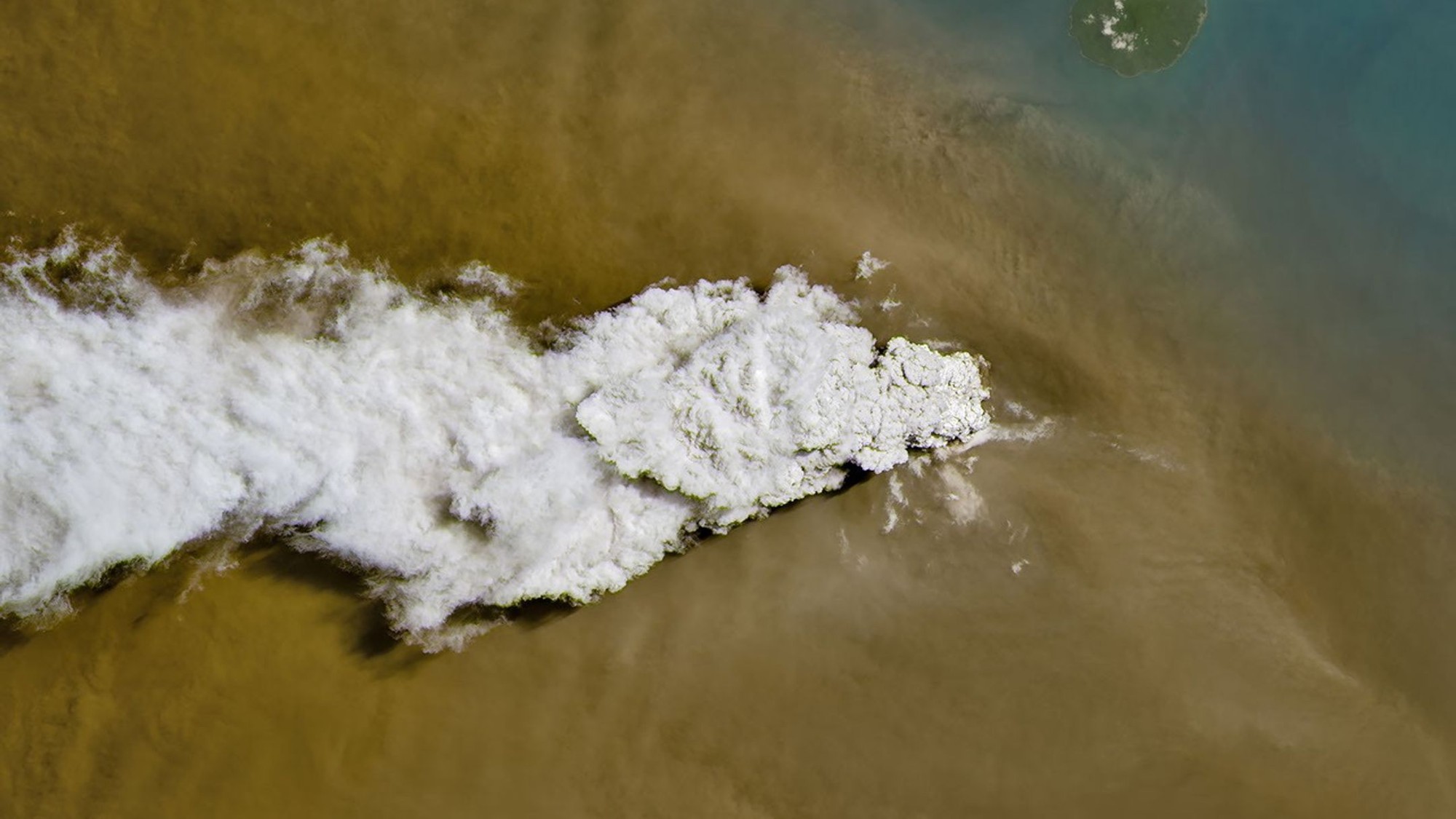
A volcano on an Indonesian archipelago began erupting on Sept. 4, and satellites in orbit have been watching closely.
The volcano Anak Krakatau started spitting out ash and lava on Sept. 4. On an archipelago between Sumatra and Java, the island volcano's sudden eruption grounded flights, closed schools and even stopped fishing in the area.
The volcano launched ash into the air and into the city of Jakarta and the Lampung province during a 25-hour-long eruption. But even following this eruption, Anak Krakatau remained active throughout the weekend. In fact, the volcano is still so active that it could erupt again soon.
But it wasn't just people on Earth watching the volcano erupt this past weekend. The Landsat 8 satellite, operated by NASA and the U.S. Geological Survey (USGS), spotted a white plume of volcanic gas billowing into the atmosphere all the way from space. The white plumes of gas are thought to mainly contain water vapor, carbon dioxide and sulfur dioxide, while ash and debris make up the brown clouds surrounding the plumes.
While Anak Krakatau simmers after this most recent eruption, this event isn't a major shock, as the volcano sits in what is known as the "Ring of Fire." This "ring" (a loose term, as it's not exactly a ring) snakes about 25,000 miles (40,000 kilometers) around the Pacific Ocean and includes over 750 volcanoes, some dormant and some active.
In fact, in Indonesia alone there are 500 volcanoes, and 127 of them are active, including Anak Krakatau. And this volcano has a particularly interesting story: It emerged from the sea in 1927, rising from the caldera formed by the 1883 eruption of Krakatau (also known as Krakotoa), which was one of the most famous and destructive volcanic events in history. (Anak Krakatau means "child of Krakatau" in the Indonesian language.)
While not all geologists agree on the exact margins of the Ring of Fire, it rests on a string of tectonic plates and has existed for over 35 million years. And not only is this ring home to hundreds of volcanoes, it's also a hot spot for earthquakes.