
❌

Normal view

MacDailyNews presents live coverage of Apple’s ‘Surprise and Shine’ special event

9 September 2026 at 17:31

Apple Event: Surprise and Shine

Apple CEO John Ternus and a team of Apple executives are expected to host the company’s “Surprise and Shine” special event today, Wednesday, September 9th, at 10am PDT / 1pm EDT.

Apple’s event will be webcast from the Apple Park campus in Cupertino, California.
‎ ‎
During Apple’s event, MacDailyNews will offer live notes on this page below.
‎ ‎
You can watch the event live right here:

‎ ‎
Live notes from Apple’s “Surprise and Shine” special event in reverse chronological order:

• End of event.

• Ternus: “Thank you for joining us. Have a great day.”

• Ternus recaps today’s announcements

• AAPL: 310.63, -5.60, (-1.77%) @ 2:16:21 PM EDT

• iPhone Duo commercial being shown

• Available: October 23rd
• Pre-order: October 16th
• Starts at 1999 256GB; up to 2TB available
• Apple has made two cases: iPhone Duo Folio and iPhone Duo Case
• iPhone Duo is the perfect selfie camera – use the best cameras and still see the outer display
• Dual capture in FaceTime – share both simultaneously
• Center Stage front camera
• Supports Texture and Grain control
• 4K 120 FPS video
• iPhone Duo Camera system: 48MP Fusion Ultra Wide Main Camera and 2X optical quality Telephoto
• All-day battery life, up to 31 hours of video playback (inner display); 44 hours (outer display)
• iPhone Duo is eSIM-only worldwide
• Apple’s advanced C2 Modem: 5G mmWave support in US
• Peak performance for on-device AI immediately; up to 35% higher sustained performance than iPhone 17 Pro
• Powered by A20 Pro
• Titanium pate at the bottom of display for increased durability
• Multilayer lamination display
• iPhone Duo – custom nano-texture finish for display – minimized crease visibility
• Myriad apps are being updated for iPhone Duo
• Can be your perfect bedside clock
• Standby mode available even when not charging
• Can use iPhone Duo partially folded
• Works in Portrait and Landscape (like iPad)
• Split view multitasking
• Ceramic Shield on back, Ceramic Shield 2 on front display
• Grade 5 Titanium frame
• Two colors: Star White and Night Sky
• Can unlock iPhone Duo effortlessly with Apple Watch
• Touch ID integrated into the side button
• Apple Pencil capable on either display
• 5.4-inch outer display
• iPhone mini spotted off in a corner weeping silently to itself
• iPhone Duo makes new experiences possible
• iPhone Duo and iOS 27 redefine what an iPhone can do
• System reacts when you fold our turn to side or flip it over
• As you most betwen displays, the software seamlessly transitions
• iOS 27 adjusts to fit iPhone Duo
• Very pocketable when closed
• Aerospace-grade titanium fram
• Impressive battery system
• Thinnest iPhone ever when opened
• Hinge mechanism – custom variable torque control
• Fluid transitions between opened and closed – faceTime camera behind the display
• Largest iPhone display ever designed
• Similar size to your passport
• Apple redefines the experience of using a foldable smartphone
• Introducing iPhone Duo

• Ternus: “There is one more thing”

• AAPL: 312.57, -3.65, (-1.16%) @ 1:52:03 PM EDT

• Series 12 commercial shown
• Pre-order today, available September 18th
• Ultra 4 starts at $799
• Series 12 starts at $399
• Apple Watch Ultra 4 Black and natural titanium
• Apple Watch Series 12 Titanium in gold and silver
• Apple Watch Series 12 ceramic available in white and blue
• Apple Watch Series 12 Aluminum: Space Gray, Black, Light Gold, Dark Bronze
• Apple Watch offers thousands of face and bad customizations
• New S11 chip – Always-on processor, faster CPU, faster GPU, and faster Neural Engine
• Live Rewind and Siri Recap coming later this year in beta
• New Siri Modular Face for Apple Watch
• Audio is not recorded or stored, Apple cannot listen
• Siri recap: Uses ambient listening to take notes of meetings, lectures, etc.
• Live Rewind lets you see a transcription of the last 15 seconds
• Sound recognition to Apple Watch – can listen to notify you of what’s hapening
• Audio Intelligence makes sense of what your hear using Apple Watch microphone
• iPhone, Apple Watch, and Apple Intelligence all work together in new Health app (coming later this year)
• VO2 Max test via iPhone camera – follow instructor on iPhone screen, measured by Apple Watch
• New longevity tab give you deeper insights into your health
• Health Age: a simple way to measure your data vs. your calendar age and how to improve it
• Personalize guidance powered by Apple Intelligence
• Health app is a central and secure repository – all-new design in iOS 27
• Readiness: tells you when to push and when to hold back in workouts (recovery score)
• Updated Heart Rate app
• Apple Watch’s health sensing vs. rivals: Apple Watch has the most accurate heart rate sensing in a wearable
• Higher freq. continuous heart rate data – every 5 seconds all day long – a 60X increase
• Increase electrode area, redesigned photo diodes; larger, green LEDs
• Advanced sensor array – Health Sensing System
• Both get all-new Apple Silicon
• Apple Watch Ultra 4
• Apple Watch Series 12
‎
• Ternus: ANC is now standard across the entire AirPods lineup

• Pre-order today, available September 18th
• AirPods 5 with all of these extras in $149
• Comes with wireless charing case
• Up to 5 hours with ANC
• Second model has on-stem volume control

• AirPods 5: $129
• More duarale than ever; up to 4 hours with ANC and up to 20 hours with charging case
• Live Translation in AirPods 5
• AirPods 5 are a seamless extension between Siri AI and your iPhone
• AirPods 5 auto adjust between ANC and Transparency
• Transparency is even more natural
• The best ANC in any open ear earbud
• Active Noise Cancelation: 50% more than previous generation
• Personalize Spatial Audio improved
• AirPods 5: Open ear fit, redesigned from the inside for improved audio, adaptive EQ
• New AirPods: AirPods 5
• Ternus returns to talk AirPods

• Pre-order this Friday, available September 18th
• iPhone 18 Pro Mac starts at $1299
• iPhone 18 Pro starts at $1199
• Updated clear case, Silicone case, new wrist strap, new TechWoven cases
• iPhone Handoff – uses same number on multiple iPhones (carrier dependent)
• iOS 27 review
• iPhone 18 Pro/Max offer a Smaller Dynamic Island

• iPhone 18 Pro Max used to shoot today’s special event video
• Photographers will want iPhone 18 Pro or iPhone 18 Pro Max
• Apple Reference Image: prove the authenticity of a photo taken on iPhone 18 Pro (not available in EU or China)
• Image authenticity: Apple will support AI tagging
• Photographic styles: Texture and grain control
• Smart focus tracking uses on-device AI models to track
• Change white balance, use histogram, manually adjust aperture, adjust shutter speed
• Pro controls: Lets you customize your camera experience
• 4K time lapse
• Cinematic video after you capture video
• Camera system is paired with AI
• iPhone 18 Pro’s 48 MP fusion camera with variable aperture, custom-designed mechanical aperture
• Aperture controls how much light enters the system
• Camera: Biggest camera improvement in years
• Game demos
• Game developers can push further than ever on iPhone
• iPhone 18 Pro provides up to 24-hours usage per charge; 30 hours for iPhone 18 Pro Max
• Battery life: iPhone 18 Pro is smaller, but delivers the same battery life as iPhone 17 Pro Max
• Highest sustained performance on an iPhone – ever
• iPhone 18 Pro has a next-gen Vapor Chamber – significantly improved cooling vs. iPhone 17 Pro
• Brand new thermal design
• Silicon connected directly to Vapor Chamber
• Custom packaging, inspired by M-class chips
• 50% memory bandwidth increase
• 32-cores dual Neural Engine is an AI acellerator
• New Neural Acelerators
• 7-core GPU, 40% faster than A19 Pro
• Super cores are desktop class – fastest in any smartphoen
• 6-core CPU, 2 new super cores / 4 efficiency cores
• A20 Pro is an exceptional chip – brand new 2nm architecture

• Increased access available with “most” iCloud+ plans
• iPhone 18 Pro delivers deeply personal AI
• Siri AI and Apple Intelligence is woven throughout – in Safari, Phone app, Calendar, Camera, etc.
• Siri AI has expressive voices – powered by on-device model
• You can write with Siri AI
• Siri app lets you maintain history and sync across your Apple device ecosystem
• Siri AI has Visual Intelligence and can work with over 300K apps
• 2.5 billion Siri requests made everyday, currently (with the sucky Siri)
• Built for Apple Intelligence, Apple Foundation Models, Siri AI
• Color-matched aluminum and back glass: Black, Silver, Glacier, and Burgundy
• iPhone 18 Pro and iPhone 18 Pro Max
• Most advanced camera system ever
• Longest battery life in iPhone history
• Apple A20 Pro
• Ternus intros next-gen iPhone
• Private Cloud Compute extends privacy to the cloud when needed
• iPhone understands your context; Apple values privacy; personal data stays on-device whenever possible
• Ternus: There’s no product in the world better for personal AI hub than iPhone
• Apple’s goal: To make the best products available
• Ternus talks about inspiration and relentless pursuit of excellence at Apple
• Apple CEO John Ternus 🙂 takes the stage (on video; missed opportunity; better would’ve been live on-stage)
• Narrated at the end by Tim Cook
• Opens with short film Shot on iPhone (shows the quality and versatility of iPhone camera systems)

• AAPL: 313.78, -2.44, (-0.77%) @ 12:55:27 PM EDT
• AAPL: 313.61, -2.61, (-0.83%) @ 12:29:18 PM EDT


‎
Please help support MacDailyNews — and enjoy subscriber-only articles, comments, chat, and more — by subscribing to our Substack: macdailynews.substack.com. Thank you!

Support MacDailyNews at no extra cost to you by using this link to shop at Amazon.

The post MacDailyNews presents live coverage of Apple’s ‘Surprise and Shine’ special event appeared first on MacDailyNews.
How 2 US, European Satellites Are Studying Hurricanes During El Niño

9 September 2026 at 17:00

5 min read

How 2 US, European Satellites Are Studying Hurricanes During El Niño

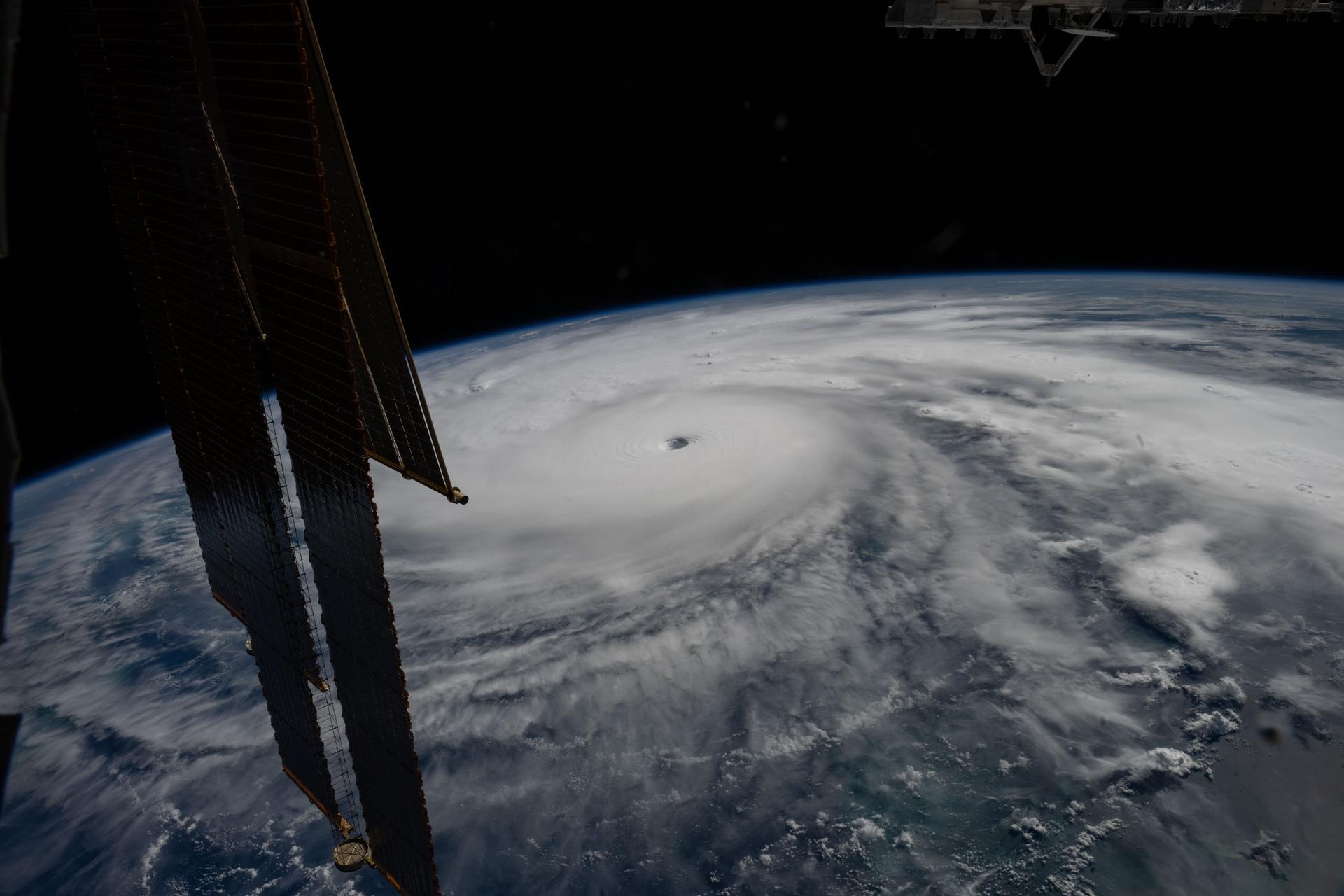
Category 5 Hurricane Melissa, one of the most powerful storms to strike the Caribbean in recent history, is pictured about 50 miles south of Jamaica in this photograph from the International Space Station as it orbited 262 miles above the Yucatan Peninsula.
Hurricane Melissa is seen 50 miles south of Jamaica in this photograph taken from the International Space Station on Oct. 28, 2025.
NASA

Last November, NASA and its European partners launched the Sentinel-6B satellite to improve hurricane forecasts, help protect infrastructure, and benefit commercial industries, including shipping. The satellite now is flying 30 seconds behind its predecessor, Sentinel-6 Michael Freilich. Both satellites are providing precise sea level height measurements during what oceanographers expect to be a historic El Niño, a naturally occurring oceanic phenomenon in which warmer-than-usual Pacific waters shift global weather patterns.

The two satellites make up the Copernicus Sentinel-6/Jason-CS (Continuity of Service) mission, the latest in a series of ocean-observing radar altimetry missions that have been monitoring Earth’s changing seas continuously since the early 1990s.

The data each satellite is collecting will not only allow scientists to better understand this year’s El Niño but will also help them create more accurate hurricane predictions.

“This El Niño was a late-bloomer,” said Josh Willis, Sentinel-6B’s project scientist at NASA’s Jet Propulsion Laboratory in Southern California. “It didn’t kick off until the middle of the year and is just now reaching a strength similar to what we’ve seen in the satellite record during significant El Niños in 1997 and 2015. We expect it to be big, and it’s already having big impacts.”

El Niños generally scramble weather patterns tied to rainfall and storms, including hurricanes. They also redistribute heat in the ocean, which affects sea level. Normally, Earth’s warmest ocean waters sit along the equator in the western Pacific. During El Niño, weakened winds, which usually blow westward along the equator, result in heat spreading east toward South America. The change in ocean heat shifts hurricane activity from the Atlantic to the Pacific Ocean.

Predicting hurricane strength

On July 15, Sentinel-6B began delivering low-latency data to scientists that could be used for weather predictions. That data will take some time to work its way into the research models on which meteorologists and climate scientists rely, but when it does, those improved models could save lives.

Data from Sentinel-6 satellite missions feeds into hurricane tracking algorithms used by federal and state agencies. Those predictions can activate disaster response efforts, mobilizing resources ranging from sandbag placement to National Guard activation. They also can lead to evacuation orders that require quick but well-informed decisions about logistics at a local level. More severe events may require engaging larger organizations, such as the Federal Emergency Management Agency.

A tropical storm can take a week or more to become a hurricane and make its way to a coastline, but a hurricane can rapidly intensify in the 48 hours prior to landfall, leaving planners little time to prepare.

“Hurricanes have been known to speed up quickly at the last moment, so the window in which to decide what to do is short,” said Deirdre Byrne, an oceanographer and altimetry expert with the National Oceanic and Atmospheric Administration (NOAA). “The goal is to forecast how much and how rapidly intensification will happen so that officials can make the right calls.”

Byrne oversees one of the country’s most crucial hurricane forecasting algorithms, NOAA’s Satellite Ocean Heat Content Suite, which has been operating since 2012.

Each Sentinel-6 satellite measures ocean height, as well as the size of waves and marine wind speed, using a radar altimeter, which bounces thousands of radar pulses a second off the crests and troughs of waves. Ocean height varies from place to place and provides insight into the ocean’s heat content, since warm water expands. That, in turn, helps forecast how fast hurricanes will grow.

The satellites each carry a second instrument, called the Global Navigation Satellite System – Radio Occultation (GNSS-RO), which measures atmospheric properties, such as humidity, pressure, and temperature.

Among the measurements Sentinel-6 is gathering, Byrne is most anticipating the ocean height data, which she plans to begin incorporating into the current Satellite Ocean Heat Content Suite algorithm by the end of the year.

“In terms of data quality, the Sentinel-6 missions are unparalleled,” Byrne said.

Together, the missions are also extending a precise dataset deep into its fourth decade. This record of sea level observations traces back to the TOPEX/Poseidon mission, which launched in 1992, and continues through to the present day with Sentinel-6 Michael Freilich. Sentinel-6B will take over for its predecessor as the reference satellite for global sea level measurements later this year.

“The key is consistency, measuring the same way, every time,” said Severine Fournier, Sentinel-6B deputy project scientist, JPL. “That’s what lets us predict hurricanes, and, in turn, protect coastal communities and infrastructure.”

More about Sentinel-6B

Sentinel-6 Michael Freilich, named after a former director of NASA’s Earth Science Division, is one of two satellites that compose the Copernicus Sentinel-6/Jason-CS mission.

Sentinel-6/Jason-CS, a part of the European Union’s Earth observation program called Copernicus, was jointly developed by ESA (European Space Agency), EUMETSAT (European Organisation for the Exploitation of Meteorological Satellites), NASA, and NOAA, with funding support from the European Commission and technical support on performance from the French space agency CNES (Centre National d’Études Spatiales). Spacecraft monitoring and control, as well as the processing of all the altimeter science data, is carried out by EUMETSAT on behalf of the European Union’s Copernicus Programme, with the support of all partner agencies.

NASA JPL, a division of Caltech in Pasadena, contributed three science instruments for each Sentinel-6 satellite: the Advanced Microwave Radiometer, the GNSS-RO, and the Laser Retroreflector Array. NASA also contributed launch services, ground systems supporting operation of the agency’s science instruments, the science data processors for two of these instruments, and support for the United States members of the international Ocean Surface Topography Science Team.

For more about Sentinel-6B, visit:

https://science.nasa.gov/mission/sentinel-6B

-end-

Media Contacts

Andrew Good / Andrew Wang
Jet Propulsion Laboratory, Pasadena, Calif.
818-393-2433 / 626-379-6874
andrew.c.good@jpl.nasa.gov / andrew.wang@jpl.nasa.gov

2026-060

The post How 2 US, European Satellites Are Studying Hurricanes During El Niño appeared first on NASA Science.

How 2 US, European Satellites Are Studying Hurricanes During El Niño

9 September 2026 at 17:00

5 min read

Preparations for Next Moonwalk Simulations Underway (and Underwater)

Category 5 Hurricane Melissa, one of the most powerful storms to strike the Caribbean in recent history, is pictured about 50 miles south of Jamaica in this photograph from the International Space Station as it orbited 262 miles above the Yucatan Peninsula.
Hurricane Melissa is seen 50 miles south of Jamaica in this photograph taken from the International Space Station on Oct. 28, 2025.
NASA

Last November, NASA and its European partners launched the Sentinel-6B satellite to improve hurricane forecasts, help protect infrastructure, and benefit commercial industries, including shipping. The satellite now is flying 30 seconds behind its predecessor, Sentinel-6 Michael Freilich. Both satellites are providing precise sea level height measurements during what oceanographers expect to be a historic El Niño, a naturally occurring oceanic phenomenon in which warmer-than-usual Pacific waters shift global weather patterns.

The two satellites make up the Copernicus Sentinel-6/Jason-CS (Continuity of Service) mission, the latest in a series of ocean-observing radar altimetry missions that have been monitoring Earth’s changing seas continuously since the early 1990s.

The data each satellite is collecting will not only allow scientists to better understand this year’s El Niño but will also help them create more accurate hurricane predictions.

“This El Niño was a late-bloomer,” said Josh Willis, Sentinel-6B’s project scientist at NASA’s Jet Propulsion Laboratory in Southern California. “It didn’t kick off until the middle of the year and is just now reaching a strength similar to what we’ve seen in the satellite record during significant El Niños in 1997 and 2015. We expect it to be big, and it’s already having big impacts.”

El Niños generally scramble weather patterns tied to rainfall and storms, including hurricanes. They also redistribute heat in the ocean, which affects sea level. Normally, Earth’s warmest ocean waters sit along the equator in the western Pacific. During El Niño, weakened winds, which usually blow westward along the equator, result in heat spreading east toward South America. The change in ocean heat shifts hurricane activity from the Atlantic to the Pacific Ocean.

Predicting hurricane strength

On July 15, Sentinel-6B began delivering low-latency data to scientists that could be used for weather predictions. That data will take some time to work its way into the research models on which meteorologists and climate scientists rely, but when it does, those improved models could save lives.

Data from Sentinel-6 satellite missions feeds into hurricane tracking algorithms used by federal and state agencies. Those predictions can activate disaster response efforts, mobilizing resources ranging from sandbag placement to National Guard activation. They also can lead to evacuation orders that require quick but well-informed decisions about logistics at a local level. More severe events may require engaging larger organizations, such as the Federal Emergency Management Agency.

A tropical storm can take a week or more to become a hurricane and make its way to a coastline, but a hurricane can rapidly intensify in the 48 hours prior to landfall, leaving planners little time to prepare.

“Hurricanes have been known to speed up quickly at the last moment, so the window in which to decide what to do is short,” said Deirdre Byrne, an oceanographer and altimetry expert with the National Oceanic and Atmospheric Administration (NOAA). “The goal is to forecast how much and how rapidly intensification will happen so that officials can make the right calls.”

Byrne oversees one of the country’s most crucial hurricane forecasting algorithms, NOAA’s Satellite Ocean Heat Content Suite, which has been operating since 2012.

Each Sentinel-6 satellite measures ocean height, as well as the size of waves and marine wind speed, using a radar altimeter, which bounces thousands of radar pulses a second off the crests and troughs of waves. Ocean height varies from place to place and provides insight into the ocean’s heat content, since warm water expands. That, in turn, helps forecast how fast hurricanes will grow.

The satellites each carry a second instrument, called the Global Navigation Satellite System – Radio Occultation (GNSS-RO), which measures atmospheric properties, such as humidity, pressure, and temperature.

Among the measurements Sentinel-6 is gathering, Byrne is most anticipating the ocean height data, which she plans to begin incorporating into the current Satellite Ocean Heat Content Suite algorithm by the end of the year.

“In terms of data quality, the Sentinel-6 missions are unparalleled,” Byrne said.

Together, the missions are also extending a precise dataset deep into its fourth decade. This record of sea level observations traces back to the TOPEX/Poseidon mission, which launched in 1992, and continues through to the present day with Sentinel-6 Michael Freilich. Sentinel-6B will take over for its predecessor as the reference satellite for global sea level measurements later this year.

“The key is consistency, measuring the same way, every time,” said Severine Fournier, Sentinel-6B deputy project scientist, JPL. “That’s what lets us predict hurricanes, and, in turn, protect coastal communities and infrastructure.”

More about Sentinel-6B

Sentinel-6 Michael Freilich, named after a former director of NASA’s Earth Science Division, is one of two satellites that compose the Copernicus Sentinel-6/Jason-CS mission.

Sentinel-6/Jason-CS, a part of the European Union’s Earth observation program called Copernicus, was jointly developed by ESA (European Space Agency), EUMETSAT (European Organisation for the Exploitation of Meteorological Satellites), NASA, and NOAA, with funding support from the European Commission and technical support on performance from the French space agency CNES (Centre National d’Études Spatiales). Spacecraft monitoring and control, as well as the processing of all the altimeter science data, is carried out by EUMETSAT on behalf of the European Union’s Copernicus Programme, with the support of all partner agencies.

NASA JPL, a division of Caltech in Pasadena, contributed three science instruments for each Sentinel-6 satellite: the Advanced Microwave Radiometer, the GNSS-RO, and the Laser Retroreflector Array. NASA also contributed launch services, ground systems supporting operation of the agency’s science instruments, the science data processors for two of these instruments, and support for the United States members of the international Ocean Surface Topography Science Team.

For more about Sentinel-6B, visit:

https://science.nasa.gov/mission/sentinel-6B

-end-

Media Contacts

Andrew Good / Andrew Wang
Jet Propulsion Laboratory, Pasadena, Calif.
818-393-2433 / 626-379-6874
andrew.c.good@jpl.nasa.gov / andrew.wang@jpl.nasa.gov

2026-060

Apple Event 2026 live — new foldable iPhone Duo, AirPods 5, and more set to be announced

9 September 2026 at 10:12

Apple's hotly anticipated ‘Surprise and Shine’ event is happening now, and we're on the ground in California bringing you all the big announcements as they happen.

Leading the list of rumored-to-be-unveiled products is Apple's first foldable iPhone — expected to be called either the iPhone Duo or iPhone Ultra — which, if it does arrive, would represent the biggest iPhone shake-up in recent history. This dual-screen device could also skyrocket the popularity of foldable phones more generally, so Samsung and Google executives are surely paying close attention.

Elsewhere, Apple looks set to refresh its wearable, earbud, and smart home lines with new Apple Watches, AirPods, and HomePods, respectively — and we may even see a new version of the Apple TV 4K, which hasn't been updated since 2022.

Proceedings kicked off at 10am PT / 1pm ET / 6pm BST — or 3am AEST on September 10 if you're in Australia — and you can follow along below for our live reaction to new CEO John Ternus' first-ever Apple Event.

Jump to the live updates here

Apple Event 2026 — rumored announcements

  • Foldable iPhone Duo (or Ultra)
  • iPhone 18 Pro and Pro Max
  • Apple Watch Series 12
  • Apple Watch Ultra 4
  • AirPods 5
  • Apple TV 4K (2026)
  • HomePod mini 2

Apple Event 2026 — how to watch

Today's ‘Surprise and Shine’ Apple event is taking place at the Steve Jobs Theater in Apple Park, California, but you can follow along via the livestream video embedded above or via Apple’s official event page.

Proceedings kicked off at 10am PT / 1pm ET / 6pm BST, which is 3am AEST on September 10 if you're in Australia, but you'll be able to re-watch the stream once the event finishes (we're expecting things to wrap up around 12pm PT / 3pm ET / 8pm BST, or 5am AEST in Australia).

Live updates

Good morning, folks! It's Apple Day — the most important date in the annual tech calendar and the busiest day of the year for the TechRadar office (sigh).

I'll be bringing you the latest iPhone, AirPods, and Apple Watch rumors ahead of the event's kick-off later today, and trust me: there's a lot to cover.

First, a quick reminder of what's happening: Apple's ‘Surprise and Shine’ event is scheduled to start at 10am PT / 1pm ET / 6pm BST today (that's 3am AEST on September 10 if you're in Australia).

This is the 2026 edition of Apple's annual product showcase, and we're expecting to see as many as nine (yes, nine) new products unveiled.

Of those nine rumored products, the most hotly anticipated is Apple's first foldable iPhone, which we've been referring to as the 'iPhone Ultra' for close to a year now. But at the very last minute, the rumor mill has spat out an unexpected new name for this folding device...

Could the iPhone Ultra be the iPhone Duo?

According to seasoned Apple tipster Mark Gurman, the iPhone Ultra will in fact be called the iPhone Duo. It's pretty hard to believe that such a drastically different name has emerged just hours before the product itself is due to be unveiled — so we're still a tad skeptical about its authenticity — but Gurman has an excellent track record when it comes to Apple predictions.

Apple landed on the iPhone Duo name for the foldable iPhone and a $2,000 starting price, eating the additional memory costs. Storage capacities will reach 2 terabytes and roughly $3,000. It’ll ship in October, has support for the Apple Pencil and come in dark blue + white. https://t.co/58VLtVNka6September 9, 2026

Gurman adds in the same X post that the iPhone Duo will have a starting price of $2,000, rising to $3,000 for the 2TB model. And, yes, in case you were in any doubt: those numbers would make the Duo the most expensive iPhone of all time.

Another important note: Gurman says Apple's first foldable iPhone will have Apple Pencil support. Steve Jobs won't be happy...

Steve Jobs on stage announcing the original iPhone

(Image credit: Apple)

Let's talk AirPods

The open cases for AirPods Pro 2 and AirPods 4 held next to each other, showing the tops of the earbuds poking out

(Image credit: Future)

Moving away from the iPhone for the moment, let's talk AirPods. Today, we're expecting Apple to announce two new AirPods models: the AirPods 5 without ANC (active noise cancellation), and AirPods 5 with ANC.

Both models are set to use Apple's new H3 chipset, which should improve audio processing and reduce latency, though it remains to be seen how different the AirPods 5 with ANC will be from the AirPods Pro, which already offer ANC.

In any case, we're not expecting to see any camera-equipped AirPods launch today, despite rumors suggesting that such a product is indeed in development.

The Apple HomePod Mini on an orange background

(Image credit: Apple)

Today might also be the day we finally get a successor to the HomePod mini. This smaller, more affordable version of the standard Apple HomePod (which now exists as the HomePod 2) was released way back in November 2020, but hasn't been updated since.

More than 20 (!) new iPhones have launched in that same period, so to say the HomePod mini 2 has been a long time coming would be an understatement.

Rumored upgrades for the HomePod mini include a faster chipset (duh!), superior audio quality, and Siri AI functionality.

A clear message from Samsung

A Samsung advertising board in Piccadilly Circus

(Image credit: Samsung)

If you walk around London, New York, or Seoul today, you may spot Samsung's new tongue-in-cheek advertising campaign, dubbed ‘Welcome to Foldables’.

The Galaxy Z Fold 8 manufacturer is clearly hoping to remind people that it has spent a decade developing foldable technology, and that Apple — if it does release its first foldable today — is late to the party.

That said, Samsung isn't totally against Apple's late entry into the foldables market. Speaking to Bloomberg last year, Samsung's President and COO of the company’s Mobile eXperience (MX) division, Won-joon Choi, said: "I think healthy competition with other companies will bring more innovations, and then bring more benefits to consumers. So we are welcoming others to join this category, which we created back in 2019 [...] Having another global company join this category, I think it's good for the industry, and also, it's going to be great for consumers."

Don't forget about the iPhone 18 Pro

A quick word on the iPhone 18 Pro and Pro Max, which will likely be the forgotten children of today's Apple Event while also being the best-selling Apple products of the next 12 months.

Gurman says both phones will have smaller, more functional Dynamic Islands, an upgraded vapor chamber (read: they won't get as hot), and "major" new camera hardware. Rumors suggest a variable aperture feature could be chief among this new hardware, which would make the iPhone 18 Pro and Pro Max some of the best camera phones around.

The iPhone 18 Pro and iPhone 18 Pro Max will have a smaller and upgraded Dynamic Island that can support three tasks at once (up from two currently), major new pro camera hardware and software, plus an upgraded vapor chamber. https://t.co/58VLtVNka6September 9, 2026

iPhone Ultra concept image on a yellow background

(Image credit: Future)

Back to the iPhone Ultra/Duo/whatever you want to call it, let's talk about what features it reportedly won't have. According to various rumors, there's a chance Apple's first foldable will lack Face ID, a telephoto camera, MagSafe, the Action button, and a physical SIM card slot.

Now look, I can live without the Action button, a SIM card slot, and a telephoto camera, but no Face ID or MagSafe? I'm not sure I would spend $2,000 on an iPhone without those two features, which feel pretty essential to how I use my iPhone every day.

Thinking of selling your iPhone 17 Pro? Do so ASAP

Best iPhone 17 Pro and Pro Max plans

(Image credit: Apple / Future)

Here's some last-minute advice for you: if you're planning on selling your current iPhone 17 Pro or Pro Max to fund an upgrade to the iPhone 18 Pro line, you should head out to your local tech store and do so ASAP. Why? Because current iPhones could fall in value by up to 30% once the new models launch.

“Many people will make the mistake of waiting to see what new features the next iPhone range has before trading in their old device, but our data clearly shows that waiting just a few weeks could mean a significant hit on the amount customers can get for it," Joe Armstrong, Head of Trading at musicMagpie, tells TechRadar. "Those who wait until October may see handsets drop by an average of £48 and up to £122."

It's the same story in the US and Australia, and while Armstrong references October as the hard trade-in deadline, your absolute best bet is to sell your current iPhone before 12pm PT / 3pm ET / 8pm BST today.

Of course, selling before the iPhone 18 Pro has even been announced would leave you with no phone until the new models begin shipping later this month, but some retailers will allow you to lock in a sale price today and keep using your phone for a few more weeks. That's the ideal scenario during this precarious time of year for iPhone trade-in values.

First official look at the iPhone Ultra?

New Apple CEO John Ternus has just posted what appears to be a tease for one of the company's new iPhones on X. There's no Tim Cook-style "Good morning!" here, nor even a reminder of today's event start time. Instead, Ternus has shared a 14-second clip of a spotlight shining down on the corner of what looks like an iPhone. Is this a hint that the iPhone Ultra/Duo won't have four straight edges à la the Samsung Galaxy Z Fold 8, or a reference to the rumored variable aperture feature on the iPhone 18 Pro?

pic.twitter.com/CLu9eRDP5bSeptember 9, 2026

The Apple Store is down

A screenshot of the Apple Store website

(Image credit: Future)

Oh, and the Apple Store website is now closed for maintenance, which typically happens right before the company refreshes its product lineup. Not long to go now!

Regarding Ternus' teaser post on X, some Apple fans are pretty convinced it refers to the iPhone 18 Pro's variable aperture, rather than the company's first foldable iPhone. Perhaps we'll get a second teaser video before the event kicks off at 10am PT / 1pm ET / 6pm BST?

Pro phones to come to variable aperture!Notice how the light source widens up and then convergesJust a guess !September 9, 2026

In terms of what won't be unveiled today, we're not expecting Apple to announce new MacBooks, iPads, or Vision Pro-style VR hardware. Software upgrades will most likely take a backseat, too, after iOS 27, Siri AI, and WatchOS 27 were all announced at WWDC 2026 back in June (though it's worth noting that these new OS packages will almost certainly be released alongside their corresponding hardware products in September).

Lance Ulanoff taking a selfie outside the Apple Store in Apple Park

(Image credit: Future)

TechRadar's Editor at Large, Lance Ulanoff, has touched down in Apple Park. His first stop? The official Apple Store, which appears to be temporarily boarded up in preparation for new products.

The Boys Are Back in Town

Lance Ulanoff and Jacob Krol at Apple Park

(Image credit: Future)

Lance has now been joined by Jacob Krol, TechRadar's US Managing Editor for News. Between them, they'll be bringing you hands-on impressions and videos of everything Apple is announcing today — including, we hope, the company's first foldable iPhone.

OK, I'm pretty sure I know what the winning response will be (it rhymes with "grindstone culture"), but cast your vote below for your most anticipated announcement from today's Apple Event:

Just two hours to go! A reminder that today's event kicks off at 10am PT / 1pm ET / 6pm BST (or 3am AEST if you're in Australia, but if you're reading this from Sydney: go back to sleep).

Here's Lance and Jake on their predictions for today's event:

And here's part 2 of the pair's predictions:

The sun is out at Apple Park! Incidentally, it was raining cats and dogs during last year's event, so perhaps the universe is telling us we're in for a more exciting set of announcements in 2026.

Apple Park exterior shot

(Image credit: Future)

Watch out for watches

Apple Watch Series 11 in person

The Apple Watch Series 11 (Image credit: Future)

The foldable iPhone Duo and iPhone 18 Pro won't be the only stars of today's event: Apple Watches also look set to get an overhaul, starting with the Apple Watch Series 12.

Now, if you're expecting major design upgrades, prepare to be disappointed. According to the latest rumors, the Series 12 will look similar to its predecessor, the Apple Watch Series 11 — though one rumor does hint at ceramic case options, which would be a nice touch. We’ve also heard that the Series 12 could have a new LTPO display instead of the classic OLED, but we’re taking this claim with a pinch of salt.

For now, we’re expecting the biggest upgrades to come inside the watch. Specifically, the Series 12 is tipped to house Apple’s new S12 chipset, which should be powerful enough to support Siri AI, as well as a larger battery for a much-needed battery life boost.

Apple Watch Ultra 3

(Image credit: Apple)

The premium Apple Watch Ultra is also tipped to get another update today, but again, it won't necessarily look any different from the current model. Some speculate that the Watch Ultra 4 will be identical in appearance to the Watch Ultra 3, while others claim it will have a bigger screen and slimmer build.

Of course, the biggest updates will likely come under the hood, with the Watch Ultra 4 set to get a new chipset — a no-brainer given Siri AI’s imminent rollout — and a suite of new sensors for more accurate health tracking.

Look out for new health-tracking software

While both new Apple Watch models will almost certainly get hardware upgrades, Apple is also expected to unveil new wellbeing tracking tools for health-minded users. A new default Readiness app is expected to launch for the Apple Watch home screen, delivering a new and improved recovery experience for users — because what you do after a workout is just as important as the workout itself.

The Workout app could be getting an overdue facelift, too. The new version will reportedly let you record individual reps and sets for strength routines to help you keep track of your progress. I’ve been using my iPhone's Notes app in the gym for years, so this is one feature I’m hoping will make an appearance at today's event.

Another handy health tool we’re expecting to see unveiled is always-on heart rate data tracking, which will monitor your activity and recovery over 24 hours using only your heart rate. This sounds exciting, but given that only the Ultra 4 is expected to get new sensors, it’s likely that this feature will be exclusive to Apple's most premium wearable.

Queue at Apple Park

(Image credit: Future)

Just 45 minutes to go — Lance and co. are being ushered into the Steve Jobs Theater to take their seats.

The current foldable competition

The Xiaomi 18 Fold being held in the hand

The Xiaomi 18 Fold (Image credit: Future)

Switching focus back to Apple's first foldable iPhone, there are currently three similarly sized devices available on the market right now: the Samsung Galaxy Z Fold 8, the Xiaomi 18 Fold, and the Huawei Pura X Max.

The first of that trio is the big competition for the iPhone Duo/Ultra. The Z Fold 8 is available globally, and it's been well-received by reviewers and customers as a sturdy, pocket-friendly phone designed for content consumption above all else. Apple will surely ensure its foldable iPhone one-ups the Z Fold 8 in some way, but we're not sure how just yet. I'm banking on a less-visible crease or a superior camera array.

The Xiaomi 18 Fold and Huawei Pura X Max are only available in China, but both may look more similar in appearance to Apple's foldable iPhone than the Galaxy Z Fold 8. Both phones have two rounded corners when closed and four when open, while Samsung's phone is straight-edged whichever way you slice it.

The inside of the Steve Jobs theater

(Image credit: Future)

Lance and Jake have taken their seats inside the Steve Jobs Theater. It's getting real now.

Tim Cook is in the building

Tim Cook at Apple Park

(Image credit: Future)

Former (which feels weird to write) Apple CEO Tim Cook is in the building for new CEO John Ternus' first big Apple Event. A penny for his thoughts...

Two mins to go. Good luck, folks — I hope you get every foldable iPhone you wished for.

And we're off. We're getting a 'Shot on iPhone' sequence to kick things off (classic!). $10 says Craig Federighi appears before it finishes.

Screenshot from Apple's September 2026 event

(Image credit: Apple)

Tim Cook officially hands the reins to John Ternus. Here we go.

Screenshot from Apple's September 2026 event

(Image credit: Apple)

We're kicking off with... iPhone?! I wasn't expecting that. Ternus says the iPhone represents the perfect intersection between AI and hardware. Private Cloud Compute delivers "personal intelligence that's actually personal."

OK we really are getting straight into the new iPhones. I respect it!

Screenshot from Apple's September 2026 event

(Image credit: Apple)

First up is the iPhone 18 Pro and iPhone 18 Pro Max. "We made massive advancements in Intelligence, Performance, Battery, and Camera," Ternus says.

It comes in Black, Silver, Glacier, and Burgundy.

Screenshot from Apple's September 2026 event

(Image credit: Apple)

The iPhone 18 Pro features Apple's most advanced foundation models, which, of course, unlock the full capabilities of Siri AI. We got a taste of Siri AI at WWDC 2026 earlier this year, but it now looks set to roll out properly on the 18 Pro, Pro Max, 17 Pro, 17 Pro Max, and iPhone Air (other iPhones will get it, too, but the best version of the software will be locked to these top-end models).

Screenshot from Apple's September 2026 event

(Image credit: Apple)

The iPhone 18 Pro features the Expressive Voices feature in Siri AI for more accurate dictation and improved personalization.

We're getting a lot on Siri AI and Apple Intelligence here, but we heard most of this back in June. Let's hope we move onto the hardware upgrades soon...

Screenshot from Apple's September 2026 event

(Image credit: Apple)

OK, we're finally onto the hardware: the iPhone 18 Pro and Pro Max feature Apple's latest chipset, the A20. It's built on 2nm technology, and features a 6-core CPU (including 2 new super cores and 4 efficiency cores), a 7-core CPU (delivering a 40% increase in graphics performance), and two Neural Engines.

Its the "ultimate chip for running on-device AI models," Apple says.

Screenshot from Apple's September 2026 event

(Image credit: Apple)

The iPhone 18 Pro and Pro Max also feature a redesigned vapor chamber. It has three times the surface area as the one inside the iPhone 17 Pro, and features more thermally conducted graphite than before. It's much better at dissipating heat, basically (you'll supposedly get a 40% gain in sustained performance).

Screenshot from Apple's September 2026 event

(Image credit: Apple)

OK, onto the battery – the iPhone 18 Pro Max supposedly delivers the largest increase in battery life ever on an iPhone. You'll get 36 hours of video playback on the 18 Pro, and 45 hours on the Pro Max. As expected, Apple isn't sharing the specific mAh figures.

Apple’s ‘Surprise and Shine’ event arrives tomorrow: Foldable iPhone, 18 Pro lineup, and a new CEO era

8 September 2026 at 19:00

It's official: Apple sets September 9th date for iPhone launch event: 'Surprise and Shine'

Apple holds its biggest product event of the year on Wednesday, September 9, at 10am PDT / 1pm EDT at Apple Park in Cupertino. The “Surprise and Shine” keynote will be livestreamed on Apple’s website, the Apple TV app, and YouTube. It is also the first major launch under new CEO John Ternus.

The company is expected to skip a standard iPhone 18 this fall and instead focus on premium hardware: the iPhone 18 Pro, iPhone 18 Pro Max, and its first foldable iPhone, widely referred to as the iPhone Ultra. New Apple Watch models are also on the docket. The base iPhone 18 and a follow-up iPhone Air are rumored for spring 2027.

The foldable is the main actThe long-awaited foldable is expected to use a book-style design: a compact phone when closed and a larger tablet-like screen when opened. Reports describe an outer display around 5.5 inches and an inner display of about 7.8 inches. Pricing is expected to start above $2,000.

Rumored details include Apple’s A20 Pro chip, an in-house modem, Touch ID instead of Face ID on at least some reports, and a hinge designed to reduce the crease that has defined earlier foldables. Camera setup is expected to be more limited than the Pro models, with some reports saying there will be no dedicated telephoto lens. If Apple pulls it off, this would be the first major iPhone form-factor change in nearly two decades.

iPhone 18 Pro and Pro Max stay the volume play

The Pro and Pro Max are expected to look similar to last year’s models, with most of the work happening inside. Anticipated upgrades include the A20 Pro processor, better thermal design, improved battery life, and camera refinements. Some reports point to a smaller Dynamic Island and new color options. The Pro Max may get the larger battery and extra cooling.

Apple appears to be splitting its iPhone calendar: high-end and experimental devices in September, more affordable models later. That would keep this week’s stage focused on the products with the highest prices and the most novelty.

Watches and the rest of the lineup

Apple Watch Series 12 and Apple Watch Ultra 4 are widely expected. Typical September extras such as new AirPods could appear, though camera-equipped AirPods Pro rumors have been less consistent for this date. Macs and iPads are more likely later in the fall. Software release windows for iOS 27 and related updates usually get mentioned as well.

Why this event matters

Ternus takes the stage after years as Apple’s hardware chief. The company has spent much of the past decade refining existing lines. A foldable iPhone, a narrower fall phone lineup, and a new CEO on the same day add up to more than a routine refresh. Whether the foldable becomes a mainstream product or a high-priced niche will be one of the first real tests of the next chapter.

MacDailyNews Note: Watch the stream Wednesday at 10am PDT / 1pm EDT here and check our home page tomorrow for the link to our live coverage.


‎
Please help support MacDailyNews — and enjoy subscriber-only articles, comments, chat, and more — by subscribing to our Substack: macdailynews.substack.com. Thank you!

Support MacDailyNews at no extra cost to you by using this link to shop at Amazon.

The post Apple’s ‘Surprise and Shine’ event arrives tomorrow: Foldable iPhone, 18 Pro lineup, and a new CEO era appeared first on MacDailyNews.

The Moon Will Hide Venus on September 14, 2026 — Where and When to Watch

8 September 2026 at 12:27

Astronomy • Venus • Moon • September 14, 2026 On September 14, 2026, the crescent Moon will pass directly in front of Venus, temporarily making the brilliant planet disappear from the daytime sky. The lunar occultation of Venus will be visible from parts of Europe, Africa, Asia and western Russia — including Central Europe. Illustration: […]

The post The Moon Will Hide Venus on September 14, 2026 — Where and When to Watch appeared first on Strange Sounds.

Le Creuset x Star Trek Collection: Prices, Availability, Release Date

8 September 2026 at 00:00
Vulcan oven mitts, spaceship baking dishes, and an out-of-this-world communicator grater—you'll need warp speed to Klingon to this limited-edition kitchen kit, ideal for perfecting the broth of Khan.

John Ternus Begins His Apple CEO Era With a Discreet Public Profile

5 September 2026 at 14:47

John Ternus has entered one of the most visible positions in global business without trying to turn his first days into a personal media event. The new CEO arrived with a remarkably discreet public profile, a newly opened social presence and decades of work completed mostly behind Apple’s products.

His X account, @johnternus, appeared publicly on September 1, the day he officially succeeded Tim Cook. Its biography contained only the company logo and his new title. The first post was even shorter: “hello.”

The simplicity felt consistent with an executive who has spent most of his career explaining materials, engineering decisions and manufacturing improvements rather than building a public personality. It also created a sharp contrast with the scale of the position he now occupies.

Ternus can remain personally reserved, but the CEO role will repeatedly place him before customers, employees, investors, governments and developers. His first social post may have been quiet. The responsibilities arriving behind it are anything but.

John Ternus Arrives Without a Personal Media Machine

Ternus did not maintain a prominent public social account during his years leading hardware engineering. Most customers encountered him through carefully produced product presentations, occasional interviews or appearances focused on a particular device.

Even within those settings, his style remained technical and controlled. He usually spoke about engineering choices, durability, materials, performance and the work required to turn a design into a product that could be manufactured at enormous scale.

His new X account does not immediately change that character. Opening a channel is different from revealing a private life or becoming a daily commentator. The minimal introduction suggests a place for official communication rather than an invitation into every passing thought.

That would follow an established pattern for senior leadership. Tim Cook used his public account to acknowledge product launches, employees, social causes, environmental initiatives, community visits and major events. His posts rarely became extended personal debates.

Ternus may adopt a similar rhythm, although the account is too new to define its purpose. One word and a short biography cannot tell us how frequently he will post, which subjects he will address or whether he will write directly during moments of controversy.

The restrained opening still served one practical purpose. It established an authenticated public identity before unofficial profiles, impersonators and parody accounts could occupy the space around a newly appointed CEO.

A man with short dark hair and light stubble, rumored to be Apple Next CEO, smiles at the camera. He is wearing a black crew-neck shirt and is posed in front of a plain, light background.
John Ternus | Image Credit: Apple Inc.

A Career Built Behind the Hardware

The limited public profile should not be mistaken for limited influence inside the company.

Ternus joined the product design team in 2001 and became a vice president of hardware engineering in 2013. He entered the executive team as senior vice president in 2021, eventually overseeing engineering work across iPhone, iPad, Mac, AirPods and Apple Watch.

His official biography credits him with an instrumental role in the introduction of iPad and AirPods, along with work across multiple generations of the company’s largest product lines. It also connects his leadership to improvements in reliability, durability, materials, repairability and environmental performance.

This background gives Ternus a different starting point from a CEO recruited principally through finance, sales, software or public policy. He arrives from the part of the organization responsible for making difficult designs function consistently outside a laboratory.

Hardware engineering at this scale reaches far beyond choosing a processor or shaping an enclosure. It requires coordinating displays, batteries, cameras, radios, thermal systems, structural materials, manufacturing equipment, repair procedures and supplier capacity. A small change can affect production across millions of units.

That experience may explain part of his measured communication style. Engineering organizations reward details that survive testing. Public attention often rewards immediate confidence. Ternus has spent his career in an environment where confidence eventually meets a drop test, production line or repair bench.

His public appearances have often carried the same discipline. He tends to explain what a product team accomplished without placing himself at the center of the accomplishment.

The CEO Role Changes the Audience

Leading hardware engineering allowed Ternus to speak after a product decision had passed through years of development. As CEO, he will also need to speak while difficult questions remain unresolved.

Investors will expect him to explain spending, growth and long-term priorities. Governments will want answers about manufacturing, competition, privacy and platform control. Employees will look for direction as artificial intelligence, robotics, home technology, augmented reality and satellite communications create new opportunities across the company.

Customers will judge him through products, but they will also hear his response when a launch disappoints, a service fails or a policy creates frustration.

This is where a discreet profile can become either an advantage or a limitation.

A CEO who does not comment constantly preserves the weight of the moments when he chooses to speak. Fewer posts also reduce the chance that a hurried reaction becomes the story instead of the company’s work.

Silence becomes harder to maintain when people expect reassurance. Product defects, security incidents, employee concerns and political disputes can create situations in which a carefully prepared statement feels too distant. Ternus will have to decide when restraint protects the company and when it begins to look like avoidance.

Cook will remain involved as executive chairman and is expected to assist with areas including engagement with policymakers. That arrangement gives Ternus continuity during the transition without removing the need to develop his own public authority.

The distinction between their roles will become more visible with time. Cook can offer experience and institutional relationships, but employees and customers need to recognize which priorities belong to the new CEO.

A More Technical Public Voice Could Work

Ternus does not need to imitate Steve Jobs’ stage presence or Cook’s diplomatic style. A convincing public identity can grow from the expertise that brought him to the position.

The most natural version would be an engineering-minded CEO who explains trade-offs without turning every decision into a slogan. Product design is full of compromises involving battery life, weight, cost, durability, repairability and production capacity. Carefully explaining some of those decisions could make corporate communication more informative.

His 2024 commencement appearance at Penn Engineering offered a rare view outside a product presentation. Ternus returned to the university where he earned his mechanical engineering degree and addressed students as an experienced engineer rather than a celebrity executive.

That type of setting allows more personality to appear without requiring constant social posting. Longer interviews, engineering discussions, employee conversations and educational appearances may suit him better than trying to manufacture spontaneity several times a day.

A restrained profile could also reinforce collaboration. The products reaching customers are built by large teams, and Ternus has generally presented himself as a representative of that work. Maintaining that tone as CEO would keep attention on the organization rather than turning every announcement into a personal performance.

The difficulty will be preserving technical depth while discussing areas beyond hardware. Services, entertainment, artificial intelligence, software platforms and international policy cannot always be explained through materials and manufacturing. The CEO must connect them into one recognizable direction.

His First Major Appearances Will Define the Account

The opening “hello” gives Ternus room to decide how visible he wants to become.

Upcoming product events will offer an early test. A social account can distribute announcements and photographs, but the stage will reveal more: which subjects he chooses to introduce, how much technical detail he includes and whether he remains present throughout the presentation or delegates most of it to other executives.

Earnings calls will create a different test. Product videos are rehearsed around finished work; financial discussions require direct answers about demand, margins, investment and risks. His language in those conversations will begin shaping how investors understand the new administration.

Internal communication may prove equally influential even when the public sees only fragments. Employees will listen for signals about decision-making speed, tolerance for experimentation and the relationship between engineering ambition and commercial discipline.

The X account can support that work, but it cannot substitute for it. A polished stream of product announcements would tell customers what has shipped. Occasional direct messages during difficult moments would reveal more about how Ternus intends to lead.

For now, the empty space around his first post is part of the story. The next useful signal may not be how often John Ternus speaks, but which moment persuades this notably private engineer that the CEO should speak in his own voice.

Two men walk side by side on a gravel path surrounded by greenery, smiling and engaged in conversation. Both are casually dressed in long-sleeve shirts, jeans, and sneakers.
Image Credit: Apple Inc.


The post John Ternus Begins His Apple CEO Era With a Discreet Public Profile appeared first on AppleMagazine.

Apple Event Set for September 9, New iPhone Expected

26 August 2026 at 21:11

Apple has scheduled an event for September 9 at 10 AM PT, titled “Surprise and shine” on their homepage and invitations. The event will be streamed for anyone to watch on Apple.com as well as YouTube. Typically, Apple uses the September event to unveil their new iPhone models, along with other updates to hardware, and ... Read More

The post Apple Event Set for September 9, New iPhone Expected appeared first on OS X Daily.

Wildfires and forest harvesting worsen severe weather impacts

17 August 2026 at 12:00

Have you ever experienced a severe weather event, like a hurricane or a tornado? Researchers have shown that climate change is causing such weather events to become more extreme and more frequent, destroying communities and infrastructure. To determine which areas are most at risk, researchers from Canada studied the environmental effects of a powerful flooding event that occurred in southwestern British Columbia (BC) in November 2021. 

They focused on a type of severe flooding event that is characteristic of the North American Pacific coastal region, called an atmospheric river. An atmospheric river occurs when a long, narrow vapor cloud flows toward land from the Pacific Ocean, causing heavy rainstorms. In November 2021, an atmospheric river in southwestern BC destroyed numerous regional highways, pipelines, power lines, and railways within its path. Over 18,000 people were evacuated due to flooding, and 6 people died. 

The team explained that before the storm, BC experienced a severe drought and an unprecedented heatwave, followed by widespread thunderstorm activity. In 2021, lightning and human activity caused nearly 1,000 wildfires, which led to the third-worst wildfire season ever recorded in BC, partially because trees grow back slowly in forests that have been cut down or harvested. Poor vegetation recovery makes harvested forests more vulnerable to wildfires than old-growth forests. The November atmospheric river occurred shortly after this wildfire season. 

To determine how the atmospheric river impacted southwestern BC, the researchers analyzed approximately 70,000 square kilometers (27,027 square miles) of affected area. They compared satellite images of southwestern BC from Google Earth, Sentinel, and Landsat taken before and after the event to detect changes in river channels and identify geohazards, like landslides and debris flows. They also used satellite images and Canadian government data to identify which forests had been harvested within the study area. The researchers then traversed the area to confirm their remote analyses. 

The researchers used a type of 3D remote sensing, called light detection and ranging, or lidar, to measure how the 2021 atmospheric river redistributed sediment in the Coquihalla and Coldwater River valleys. With the help of lidar, the researchers discovered that both rivers had severely unstable banks due to erosion from the flooding event. Along the Coquihalla River, approximately 53,000 cubic meters (1,871,677 cubic feet) of sediment were eroded, while nearly 50,000 cubic meters (1,765,733 cubic feet) of sediment were eroded along the Coldwater River. 

The researchers also found that hillslope geohazards increased the volume of sediment in both rivers. And in some cases, upstream areas with a history of forest harvesting and wildfires also affected stable banks downstream. For example, they identified debris flows on an unstable hillslope that triggered a landslide on a riverbank downstream. They observed that the river and stream channels shifted due to a sudden addition of sediment from hillslope geohazards and floodwater during the event.

In total, the researchers documented over 1,300 geohazards along 47 kilometers (about 30 miles) of the Coquihalla River and 19 kilometers (about 12 miles) of the Coldwater River and nearby creeks. Nearly half of the geohazards originated in an area with a history of wildfires or forest harvesting. Of the 155 geohazards at the Coquilhalla River, 43% occurred below forest harvesting resource roads, and of the 117 geohazards observed at the Coldwater River, 29% originated in areas with past wildfires.

The researchers suggested that their findings could help scientists predict where severe geohazards will occur during extreme weather events, since both watersheds had geohazards originating in harvested forests. Before 2000, clear-cutting was a widespread practice in BC, and the team’s results demonstrate that unsustainable harvesting practices like this can have lasting environmental impacts.

The researchers concluded that both forest harvesting and wildfires contributed to the severe impacts of the November 2021 atmospheric river, causing catastrophic landslides and debris flows to occur in traditionally dry regions. They suggested that more accurate risk assessments can better equip communities for severe weather events like this. While the next atmospheric river that lands in the Pacific coastal region may be worse than the last, this study can inform scientists and communities about which areas it might affect most.

The post Wildfires and forest harvesting worsen severe weather impacts appeared first on Sciworthy.

❌