❌

Normal view

Rannasangpei crocin-1 improves valproate-induced autism-like behaviors by reducing oxidative stress

19 July 2026 at 14:49

A new study reporting in Translational Psychiatry suggests that a traditional medicinal formulation called Rannasangpei—and particularly its constituent crocin-1—may help blunt autism-like behaviors triggered by prenatal exposure to valproic acid (VPA). The work frames autism-related impairments not only as behavioral phenomena, but also as downstream consequences of disrupted redox balance and chronic neuroinflammatory signaling in the brain.

The researchers used a VPA-induced model to mimic key aspects of autism-like neurodevelopmental disruption. Within this framework, they assessed whether Rannasangpei components could restore biological stability and translate into measurable improvements in behavior. The experimental logic is straightforward: if oxidative stress and neuroinflammation are causal amplifiers, then reducing them should lead to behavioral rescue.

A central finding is that treatment with Rannasangpei correlated with reduced oxidative stress markers. Oxidative stress is increasingly viewed as a bridge between genetic/environmental risk and neuronal dysfunction, because reactive oxygen species can disturb synaptic integrity, neuronal maturation, and signaling cascades essential for social and cognitive behaviors.

Equally important, the study reports a suppression of neuroinflammation. Neuroinflammation can reshape neural circuits through glial activation and altered cytokine profiles, potentially worsening developmental trajectories. By dampening inflammatory responses, crocin-1–linked effects appear to protect the brain environment during a sensitive developmental window.

The authors also emphasize that crocin-1’s contribution is not merely supportive but functionally significant, consistent with the bioactive chemistry of crocins that have been studied for antioxidant and anti-inflammatory activity. In this sense, the paper positions crocin-1 as a mechanistic candidate within a multi-component formulation.

Importantly for translational enthusiasm, the results connect molecular readouts to behavior, strengthening the argument that the observed changes are not cosmetic. Instead, they suggest an integrated pathway: oxidative imbalance and inflammatory tone shift in parallel with autism-like phenotype severity.

Overall, the study adds to a growing viral science-news narrative in neurodevelopment: natural compounds may modulate the biological “stress–inflammation” axis that shapes risk models like VPA. While animal data cannot be directly generalized to humans, the mechanistic coherence makes crocin-1 and Rannasangpei an attention-worthy direction for future preclinical and clinical exploration.

In the meantime, the headline is clear: Rannasangpei and crocin-1 show promise in reducing VPA-induced autism-like behaviors by calming oxidative stress and neuroinflammation, bringing a traditional medicine ingredient into modern neurobiological spotlight.

Subject of Research: Autism-like behaviors induced by valproic acid; oxidative stress and neuroinflammation
Article Title: Rannasangpei and its constituent crocin-1 ameliorate valproic acid–induced autism-like behaviors accompanied by reduced oxidative stress and neuroinflammation.
Article References: Qiu, R., Li, L., Yao, T. et al. Transl Psychiatry (2026). https://doi.org/10.1038/s41398-026-04283-0
Image Credits: AI Generated
DOI: https://doi.org/10.1038/s41398-026-04283-0

A Wandering Supermassive Black Hole Eating a Star

29 June 2026 at 17:00

disk of hot gas swirling around a black hole

Editor’s Note: Astrobites is a graduate-student-run organization that digests astrophysical literature for undergraduate students. As part of the partnership between the AAS and astrobites, we occasionally repost astrobites content here at AAS Nova. We hope you enjoy this post from astrobites; the original can be viewed at astrobites.org.

Title: The Wandering Supermassive Black Hole Powering the Off-Nuclear Tidal Disruption Event AT2024tvd
Authors: M. Guolo et al.
First Author’s Institution: Johns Hopkins University
Status: Published in ApJL

A Star Gets Eaten in the Wrong Neighborhood

We find supermassive black holes at the centers of most large galaxies. They end up there because of how galaxies form: as matter collapses and merges over time, material sinks to the gravitational center, and the black hole settles in.

So, what happens when we catch a star being ripped apart by a supermassive black hole that is not at the center of its galaxy?

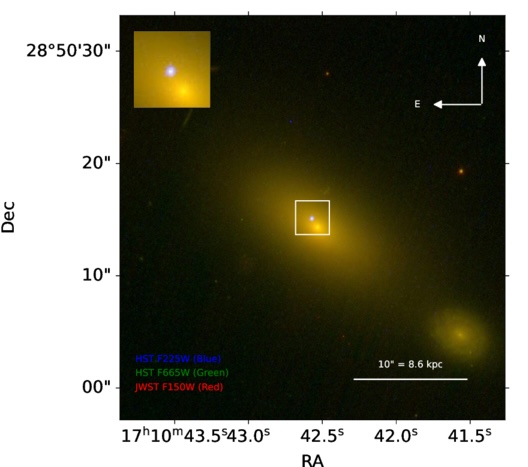
That is exactly the puzzle posed by AT2024tvd, a tidal disruption event (TDE) spotted roughly 2,600 light-years from the center of a massive galaxy located 600 million light-years away from us (see Figure 1).

AT2024tvd from Hubble and JWST

Figure 1: A color image of AT2024tvd from the Hubble Space Telescope and JWST. The yellow dot inside the square marks the galaxy’s center, while the TDE is the white dot, which is visibly offset to the upper left, about 2,600 light-years away. [Adapted from Guolo et al. 2026]

We see TDEs when a black hole tears apart a star that gets too close to it. It happens because the black hole’s gravity pulls harder on the near side of the star than the far side, stretching the star until it comes apart. The stellar debris then forms a hot accretion disk, a ring of material swirling around the black hole that spirals inward and releases a burst of electromagnetic energy across many wavelengths — from visible light to X-rays. These events are valuable to astronomers because they briefly light up black holes that would otherwise be invisible, giving us a rare window to measure their properties. Since supermassive black holes live at galactic centers, that is also where we expect TDEs to happen, which makes a TDE found away from a galactic center rare and puzzling. The galactic center is often called the nucleus of a galaxy, so astronomers refer to these displaced events as “off-nuclear” TDEs. AT2024tvd is only the third known off-nuclear TDE, and this research article makes a strong case that it is the most remarkable one yet.

Measuring Mass Using Light

To figure out the mass of the black hole responsible for AT2024tvd, the authors needed to get creative. You cannot weigh a black hole directly, so astronomers have to work backward from what they can see. The key idea is that a black hole’s mass controls how its accretion disk behaves. A more massive black hole produces a larger, cooler disk, while a less massive one produces a smaller, hotter disk. By measuring how bright the disk is at different wavelengths and how hot it gets, you can figure out how massive the black hole must be.

The authors did this by modeling the light the event produced across many wavelengths. They combined data from several telescopes: the Zwicky Transient Facility, the Neil Gehrels Swift Observatory, Pan-STARRS, and two rounds of high-quality X-ray data from XMM-Newton. TDE light curves go through different phases. The early flare in visible and ultraviolet light is bright but complicated, and the physical processes behind it are not fully understood. But after a few hundred days, TDEs settle into a quieter “plateau phase,” where the ultraviolet and visible light come directly from the accretion disk. At this stage, the emission follows well-understood physics, and astronomers can model it reliably.

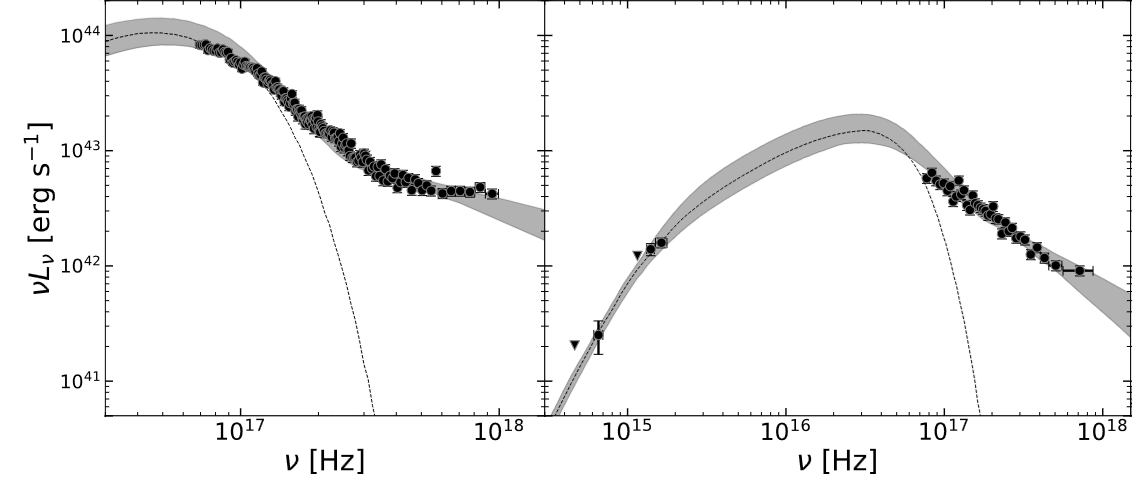
The authors used a model called kerrSED, which describes the spectral energy distribution (SED) of a spinning black hole’s accretion disk (kerr). It accounts for the disk’s temperature, its physical size, the black hole’s spin (how fast it rotates), and the angle at which we are viewing the system. It also accounts for a process called Comptonization, where hot electrons near the black hole boost lower-energy photons (particles of light) up to X-ray energies. By fitting this model to the observed light at multiple wavelengths simultaneously, the authors could pin down the disk properties and extract the black hole mass. The result was a clean fit: the disk model alone could explain all the observed light during the plateau phase, with nothing significant left over (see Figure 2).

brightness evolution of AT2024tvd

Figure 2: The brightness of AT2024tvd measured across a wide range of wavelengths, after correcting for absorption and the galaxy’s motion. The symbols show individual measurements from different telescopes, while the shaded contours represent the best-fit disk model and its uncertainty. Left: The early X-ray data, which is well explained by emission from the hot inner accretion disk. Right: The later data covering both visible/ultraviolet light and X-rays, all consistently explained by the same disk model. [Adapted from Guolo et al. 2026]

Not an Intermediate, but a Supermassive Black Hole

From their fit, the authors found a black hole mass of about one million solar masses. Black holes above about 100,000 solar masses are considered supermassive, while those below that threshold but above about 100 solar masses are called intermediate-mass black holes. So, this puts AT2024tvd in the supermassive category. This matters because the two previously known off-nuclear TDEs, called 3XMM J2150-05 and EP240222a, were both powered by intermediate-mass black holes. Those black holes were found inside small, dense collections of stars called ultra-compact dwarf galaxies that were orbiting larger host galaxies.

AT2024tvd is different. When the authors looked at deep images of the location where the TDE happened, they found no star cluster or small galaxy there. Whatever group of stars once surrounded this black hole has been almost entirely pulled apart by the gravity of the much larger parent galaxy. The ratio of the black hole’s mass to the mass of any remaining stars around it is extreme: greater than 3%, which is far above what we normally see. This is the signature of a “wandering” supermassive black hole, one that was brought in during a past galaxy merger and has been slowly sinking toward the center of its new host ever since, losing its surrounding stars along the way.

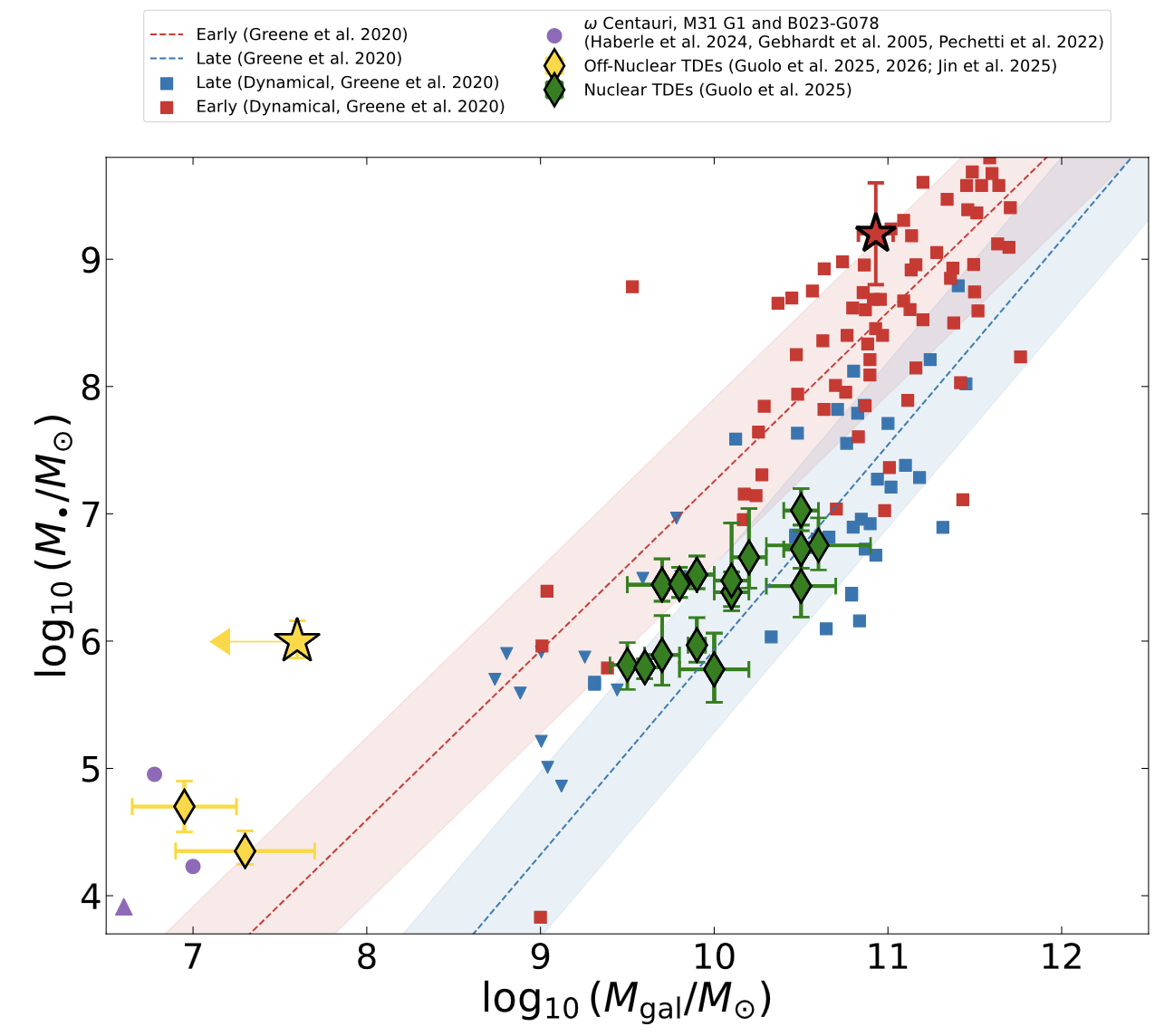
The authors compared AT2024tvd to other TDEs using established relationships between accretion disk properties and black hole mass (Figure 3). In terms of its disk temperature, luminosity, and inferred mass, AT2024tvd behaves like a typical nuclear TDE powered by a supermassive black hole. However, when placed on the black hole mass versus host stellar mass relation, it stands out as a strong outlier. The black hole mass is far too large for the small amount of surrounding stellar mass detected at its location.

plot of black hole mass versus host galaxy mass

Figure 3: AT2024tvd (yellow star) plotted on the relationship between black hole mass and host galaxy stellar mass. Red squares show nearby galaxies with dynamically measured black hole masses plotted against galaxy bulge stellar mass, while blue squares show the relation using total galaxy stellar mass. Purple points and green diamonds represent nuclear TDE host galaxies with black hole masses inferred from different TDE modeling techniques. Yellow diamonds mark the two previously known off-nuclear TDEs. AT2024tvd stands out as a clear outlier, with a very high black hole mass compared to the upper limit on any surrounding stellar mass. [Guolo et al. 2026]

The Big Picture

This discovery matters for several reasons. It shows that off-nuclear TDEs are not limited to intermediate-mass black holes sitting in small satellite galaxies. Some are powered by fully supermassive black holes that have been displaced from their original galactic centers. It also shows that TDE modeling, when done carefully during the plateau phase of the light curve (when the emission is dominated by well-understood accretion disk physics), can provide reliable black hole masses on its own, without assuming any relationship between the black hole and its host galaxy. This is particularly important for wandering black holes, where those relationships do not apply.

Looking ahead, upcoming surveys like Vera C. Rubin Observatory’s Legacy Survey of Space and Time are expected to find many more off-nuclear TDEs. Combined with X-ray follow-up from telescopes like XMM-Newton, these events could become our main tool for mapping out the population of displaced black holes in the nearby universe. One disrupted star at a time, we are starting to find black holes that theory told us should exist but that had, until now, stayed hidden.

Original astrobite edited by Kelsie Taylor and Veronika Dornan.

About the author, Serat Saad:

Serat is a first-year PhD student in astronomy at The Ohio State University. His research is on stellar and galactic dynamics, where he uses observational data to understand gravity. He also has interests in active galactic nuclei and tidal disruption events.

The post A Wandering Supermassive Black Hole Eating a Star appeared first on AAS Nova.

Inflammation and Metabolism Trigger Early Puberty in Obese Kids

21 June 2026 at 09:32

In a groundbreaking study published in Pediatric Research on June 21, 2026, researchers led by Wang, Yan, and Liu have unveiled critical insights into how metabolic, hormonal, and inflammatory pathways intertwine to accelerate precocious puberty in children suffering from obesity. This pioneering research uncovers the complex biological dialogue that propels early pubertal onset among obese youth, a phenomenon that has raised alarm bells worldwide due to its profound health implications.

Puberty, the process marking the transition from childhood to sexual maturity, is classically regulated by a symphony of endocrine signals, with the hypothalamic-pituitary-gonadal (HPG) axis as the conductor. However, the timing of this process is increasingly disrupted in obese children, leading to precocious puberty—defined as puberty occurring before age 8 in girls and 9 in boys. The new study delves deeply into the serum profiles of obese children to unravel the mechanistic underpinnings of this hastened developmental timeline.

Central to the pathophysiology elucidated by the researchers is the role of systemic inflammation, a hallmark of obesity. The team identified a distinctive inflammatory signature characterized by elevated levels of cytokines and acute phase reactants that converge on the HPG axis. This pro-inflammatory milieu is postulated to trigger neuroendocrine alterations that prematurely activate gonadotropin-releasing hormone (GnRH) neurons, thereby advancing pubertal initiation.

Complementing the inflammatory dimension are metabolic dysregulations that obesity engenders. The study meticulously profiles alterations in insulin and leptin dynamics—two pivotal hormones intimately linked to energy homeostasis and reproductive function. Elevated insulin levels, common in obese states due to insulin resistance, were found to potentiate GnRH neuronal activity. Meanwhile, hyperleptinemia, reflective of adipose tissue abundance, appears to modulate hypothalamic circuits governing puberty, providing a metabolic ‘green light’ for sexual maturation.

The research team employed high-throughput serum profiling techniques alongside advanced statistical modeling to choreograph the intricate interplay of metabolic and inflammatory mediators. This comprehensive approach allowed them to construct a predictive biochemical tableau correlating specific serum markers with rapid pubertal progression. Crucially, these findings bridge the gap between clinical observations of precocious puberty and the molecular pathways that orchestrate it in obesity.

Beyond identifying biomarkers, the study explores potential mechanistic pathways. It proposes that chronic low-grade inflammation potentiates neuronal sensitization within the hypothalamus, thereby lowering the threshold for GnRH secretion. Concurrently, metabolic hormones such as leptin may amplify neuroendocrine responsiveness, creating a synergistic environment favoring early puberty onset. This dual-hit model of inflammation and metabolic disturbance advances our understanding of the biological complexity underlying pubertal acceleration.

Furthermore, the research highlights the nuanced hormonal crosstalk influencing gonadal maturation. Upregulation of adrenal and gonadal steroidogenesis appears to be downstream of the altered serum milieu, fostering a hormonal cascade that further catalyzes secondary sexual characteristic development. This insight underscores the multifactorial nature of obesity-driven puberty alterations, extending beyond central neuroendocrine changes to peripheral endocrine feedback loops.

One of the notable technical innovations in this study is the longitudinal analysis of serum samples from a diverse pediatric cohort. This enabled the researchers to pinpoint temporal shifts in inflammatory and metabolic markers relative to pubertal milestones. The temporal dynamics revealed suggest potential windows for therapeutic intervention that could recalibrate aberrant biological signals before irreversible pubertal advancement occurs.

The implications of these findings are profound, particularly as precocious puberty is linked to increased risks of psychosocial stress, metabolic syndrome, and certain cancers later in life. By elucidating the biological signatures that accelerate puberty in obese children, the study opens avenues for early diagnostic screening and targeted therapeutics aimed at mitigating long-term health impacts.

Medical professionals and endocrinologists stand to gain new tools for assessing pubertal risk by integrating serum inflammatory and metabolic profiles into routine evaluations of obese pediatric patients. This could transform clinical practice by enabling proactive management strategies tailored to individual biochemical risk landscapes, rather than relying solely on phenotypic assessments.

From a public health perspective, the study amplifies the urgency of addressing childhood obesity not only for its well-known metabolic complications but also for its disruptive influence on normal developmental timing. Interventions that reduce systemic inflammation and restore metabolic balance might delay unwanted precocious puberty, improving both physical and mental health outcomes.

Looking forward, the researchers advocate for expanded studies to explore therapeutic modulation of the identified pathways. Immunomodulatory agents, metabolic enhancers, or lifestyle interventions targeting systemic inflammation and hormone regulation could serve as novel strategies to realign pubertal timing in susceptible children. Such approaches hold promise for personalized medicine frameworks in pediatric endocrinology.

This investigation also raises important questions about environmental and genetic factors that may interact with inflammatory and metabolic signals to influence puberty. Understanding how external exposures or inherited susceptibilities modulate these biochemical networks could refine predictive models and prevention efforts in diverse populations.

In conclusion, Wang, Yan, Liu, and colleagues have charted an unprecedented map of the intersecting biological forces accelerating precocious puberty in obese children. Their integrative analysis of inflammatory and metabolic serum markers fundamentally shifts our comprehension of childhood development, offering hope for interventions that could recalibrate the endocrine clock disrupted by obesity. As the obesity epidemic continues to burden global health, studies like this provide crucial scientific foundations to mitigate its far-reaching consequences on human growth and maturity.


Subject of Research: The interplay of metabolic, hormonal, and inflammatory factors in precocious puberty and obesity in children.

Article Title: Serum inflammatory and metabolic signatures accelerate precocious puberty in obese children.

Article References:

Wang, L., Yan, H., Liu, J. et al. Serum inflammatory and metabolic signatures accelerate precocious puberty in obese children.
Pediatr Res (2026). https://doi.org/10.1038/s41390-026-05214-x

Image Credits: AI Generated

DOI: 21 June 2026

NRSN2 Deficiency Disrupts Memory via NMDA Impairment

21 June 2026 at 03:39

In a groundbreaking study soon to redefine neuroscientific understanding of memory mechanisms, researchers have uncovered the pivotal role played by Neurensin-2 (NRSN2) in regulating hippocampal synaptic plasticity and memory functionality. This newly published research reveals how deficiency in NRSN2 leads to profound impairments in memory, traced back to disrupted excitatory synaptic transmission and weakened long-term potentiation (LTP) within the hippocampus, a brain region critically involved in memory formation and cognitive processing.

The hippocampus serves as the brain’s memory hub, integrating myriad neuronal signals to encode and retrieve information efficiently. Central to this integration is the function of excitatory synapses that employ glutamate receptors, especially the N-methyl-D-aspartate (NMDA) receptor, which plays an essential role in synaptic plasticity—the ability of synapses to strengthen or weaken over time. This plasticity underlies learning and memory. The study elucidates how NRSN2 exerts a regulatory influence on the expression of NMDA receptor subunits, with deficiency in NRSN2 tipping the balance unfavorably and compromising synaptic efficacy.

Utilizing advanced genetic models, the investigators engineered mice lacking NRSN2 to dissect its functional contributions. Behavioral assays showcased a marked decline in memory performance, particularly in spatial and recognition tasks reliant on hippocampal circuits. These deficits were not attributed to developmental anomalies but to disrupted synaptic physiology, signaling a direct role for NRSN2 in maintaining synaptic integrity and plasticity during adult cognition.

At the molecular scale, the absence of NRSN2 triggered a significant downregulation of key NMDA receptor subunits, notably NR1, NR2A, and NR2B. These subunits orchestrate receptor assembly and gating properties critical for calcium influx, a signal cascade necessary for potentiation of synaptic strength. The reduction in their expression correlated tightly with the inhibition of LTP induction, a process considered the cellular analog of memory encoding, confirming the hypothesis that NRSN2 deficiency impairs memory by hampering core synaptic mechanisms.

Electrophysiological recordings from hippocampal slices further substantiated the disrupted synaptic function. In control animals, robust LTP was readily induced by theta burst stimulation—a protocol mimicking physiological neuronal firing during learning. Conversely, hippocampi from NRSN2-deficient mice exhibited significantly weakened potentiation, underscoring the protein’s critical role in modulating synaptic responsiveness. This impairment was not a general defect of synaptic transmission but selectively impacted excitatory plasticity mediated through NMDA receptors.

Delving deeper, the team explored the intracellular cascades influenced by NRSN2, discovering that its absence perturbed the trafficking and surface expression of NMDA receptor complexes. NRSN2 appears to act as a chaperone or scaffold protein, ensuring proper receptor assembly and synaptic localization. Without it, receptor subunits fail to achieve adequate membrane insertion, resulting in diminished postsynaptic sensitivity to glutamate and compromised signal transduction.

This mechanistic insight offers a fresh perspective on how synaptic architecture and molecular composition govern cognition. The study’s integration of molecular biology, electrophysiology, and behavioral neuroscience draws a comprehensive picture of how a single protein’s deficit can destabilize the neural substrates of memory. Such findings not only enrich fundamental neuroscience but also hint at novel targets for cognitive-enhancing therapies.

Intriguingly, alterations in NRSN2 expression and NMDA receptor dysfunction have been implicated in various neuropsychiatric disorders, including schizophrenia and major depressive disorder. By illuminating this molecular nexus within the hippocampus, the research opens doors to understanding disease pathophysiology at a finer scale and may spur development of precision interventions aimed at restoring synaptic balance in affected individuals.

The investigators also examined compensatory mechanisms that might mitigate NRSN2 absence. While some plasticity-related proteins showed upregulation, these changes failed to rescue the deficits in NMDA receptor expression and synaptic potentiation. This highlights the non-redundant and indispensable nature of NRSN2 in maintaining synaptic homeostasis and cognitive function.

Beyond the laboratory findings, the study raises fascinating questions about how synaptic proteins coordinate to sustain the dynamic range of neural connectivity required for adaptive learning. The delicate equilibrium modulated by NRSN2 and NMDA receptors underscores the complexity of neuronal networks and their vulnerability when key molecular elements are compromised—insights that are pivotal as the field seeks to decode the neural basis of memory disorders.

Future research directions spawned by this work include investigating how NRSN2 interacts with other synaptic scaffold proteins and cytoskeletal elements, potentially shaping the three-dimensional organization of the postsynaptic density. Additionally, exploring the developmental timeline of NRSN2 expression could reveal critical periods during which intervention might prevent or reverse memory impairments.

From a translational perspective, the study’s revelations beckon the clinical neuroscience community to consider NRSN2 and its pathways as therapeutic candidates. Pharmacological strategies aimed at upregulating NRSN2 or mimicking its stabilizing effects on NMDA receptors could hold promise for enhancing cognition or slowing neurodegenerative progression in disorders marked by synaptic decline.

In sum, this landmark research defines NRSN2 as a vital regulator of excitatory synaptic plasticity and memory formation. Its deficiency causes a cascade of molecular disturbances culminating in impaired NMDA receptor expression and disrupted LTP, ultimately compromising hippocampal-dependent memory functions. This work not only advances our understanding of the molecular machinery underlying memory but also charts new territory in the quest to ameliorate cognitive dysfunction.

As neuroscience inches closer to mapping the intricate cellular and molecular landscape of cognition, findings such as these underscore the profound impact a single synaptic protein can have on brain function. The compelling evidence presented lays a robust foundation for future explorations into synaptic plasticity and memory, promising strides in both basic science and clinical applications that may soon transform lives burdened by memory loss.


Subject of Research: Impact of Neurensin-2 (NRSN2) deficiency on hippocampal memory functions and synaptic plasticity

Article Title: Impact of NRSN2 deficiency on memory: Altered excitatory synaptic plasticity associated with reduced expression of NMDA receptor subunits and impaired LTP in the hippocampus.

Article References:
Wei, J., Wu, Y., Yi, Y. et al. Impact of NRSN2 deficiency on memory: Altered excitatory synaptic plasticity associated with reduced expression of NMDA receptor subunits and impaired LTP in the hippocampus. Transl Psychiatry (2026). https://doi.org/10.1038/s41398-026-04163-7

Image Credits: AI Generated

DOI: https://doi.org/10.1038/s41398-026-04163-7

Thinking of Gifting a DNA Test for Father’s Day? This Researcher Warns it Could Lead to Surprising Discoveries

20 June 2026 at 14:45


Have you ever considered buying a DNA kit for a family member as a special gift, such as Father’s Day? On the surface, it may seem like a good idea, as it allows loved ones or friends to peer into their past and family history; however, psychologists have recently warned against it, as it might have profound psychological implications.

In a new book titled The Psychology of Genealogy, Dr. Susan Moore, a retired Australian university researcher in social and developmental psychology, examines the complex emotions associated with DNA testing and uses real-life case studies to illustrate its psychological impact.

“Should you give DNA kits as gifts? It can be fun, [but] it can be risky,” Moore says in a statement. 

Moore cautions that the psychological impact of DNA testing may be far greater than many people anticipate. These tests can reveal unexpected family secrets, uncover cases of misattributed paternity, disclose donor conception, and even link individuals to hundreds of previously unknown half-siblings or relatives they may not want to be connected with.

“Do first think carefully about how your intended recipient might cope with unexpected outcomes,” Moore says.

“Hobbyist family historians are uncovering joyful and inspiring stories of the past as well as sad and unsettling secrets of their ancestry,” Moore explains. “Records and DNA matches provide boosts, challenges, and even threats to one’s sense of self, and this is occurring at unprecedented levels.”

Unexpected DNA results can deeply impact a person’s sense of self and identity, along with family belonging and dynamics—a phenomenon psychologists call “identity disruption.” Moore’s book highlights cases involving revelations of misattributed parentage, late-discovered adoption, and donor conception uncovered through genetic testing, all of which caused more physical harm than good. 

“At the personal level, these may be findings that cause you great distress, that destabilize your sense of who you are, that initially at least, you would have preferred not to know. Once known, however, they cannot be unknown,” says Moore.

DNA testing has also raised privacy concerns in recent years. A 2023 23andMe data breach exposed millions of users’ genetic information, while financial challenges that DNA companies have faced raise questions about what happens to genetic data if these companies fail.

Surprising statistics show that, presently, over 30 million people have tested their DNA through genealogical services like 23andMe and AncestryDNA. 

Still, for many people, even with data breaches and larger companies buying up DNA data sets, it’s still enticing to buy, as their curiosity seems to outweigh the risks.

“How exciting it can be to discover the identity of an ancestor, solve a family mystery, prove or disprove family ‘legends’ or discover previously unknown living relatives,” Moore says. 

“Indeed, genealogists regularly report elation and joy as they unearth lost relatives, discover the identity of a ‘missing’ ancestor, or otherwise break down ‘brick walls’ (genealogical puzzles that seem to resist solutions due to missing, inaccurate, or hard-to-access records).”

“Curiosity is a great motivator,” Moore adds.

Chrissy Newton is a PR professional and the founder of VOCAB Communications. She currently appears on The Discovery Channel and Max and hosts the Rebelliously Curious podcast, which can be found on YouTube and on all audio podcast streaming platforms. Follow her on X: @ChrissyNewton, Instagram: @BeingChrissyNewton, and chrissynewton.com. To contact Chrissy with a story, please email chrissy @ thedebrief.org.

Investigation of the First Radio-Bright Off-Nuclear Tidal Disruption Event

15 October 2025 at 17:00

Illustration of a tidal disruption event

Catastrophic encounters between stars and massive black holes usually take place in the nuclei of galaxies, but not always. Researchers recently reported on the brightest-ever radio emission from an off-nuclear tidal disruption event caused by a wandering or recoiling black hole.

Signature of a Roaming Black Hole

Tidal disruption events occur when a star ventures too close to a massive black hole. The tidal forces of the black hole stretch the star until it’s partially or entirely disrupted, sometimes causing jets or outflows to spray from the shredded star. One thing that often distinguishes a tidal disruption event from the sea of other possible transients is the location, close to the nucleus of a galaxy.

But not all tidal disruption events happen in the center of a galaxy. In rare cases, a massive black hole roaming elsewhere in a galaxy may encounter a star, sending out a tell-tale signal in an unexpected location.

radio images of AT 2025tvd

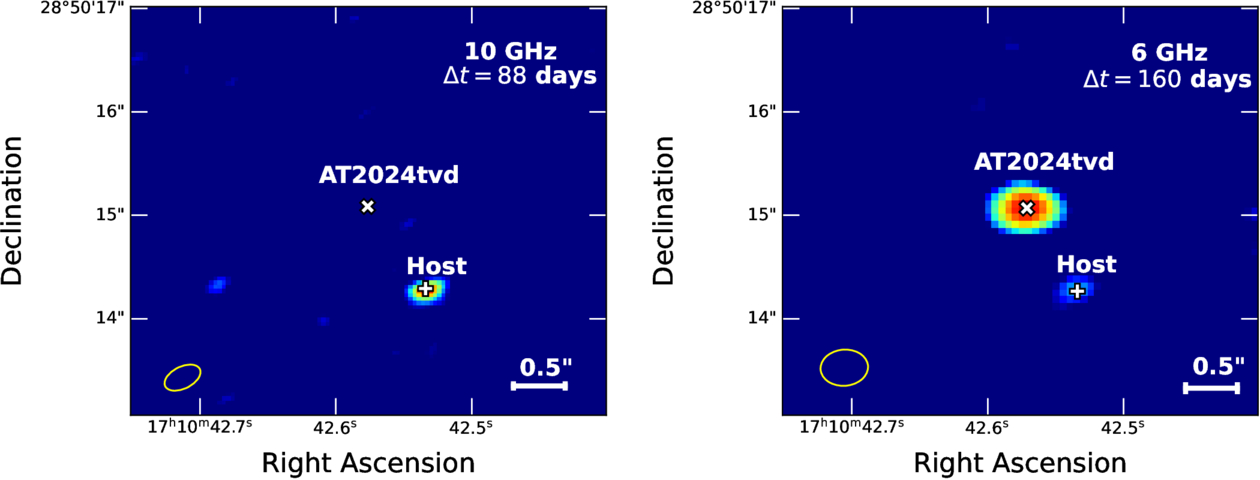
Radio observations of AT 2024tvd on two dates after its optical discovery. The tidal disruption event was not detected at 88 days post-discovery (left) and outshone the center of its host galaxy on 160 days post-discovery (right). Click to enlarge. [Sfaradi et al. 2025]

One such event is AT 2024tvd, which was discovered at optical wavelengths by the Zwicky Transient Facility. Though the initial identification placed it at the center of its host galaxy, follow-up observations suggested that it was in fact 2,600 light years from the center. What can radio observations tell us about this rare off-center event?

Radio Reconnaissance

Less than three months after AT 2024tvd was discovered, Itai Sfaradi (University of California, Berkeley) and collaborators launched a months-long radio-wavelength observing campaign using the Very Large Array, the Atacama Large Millimeter/submillimeter Array, the Arcminute Microkelvin Imager Large Array, the Allen Telescope Array, and the Submillimeter Array. Radio observations are critical for investigating jets and outflows from tidal disruption events.

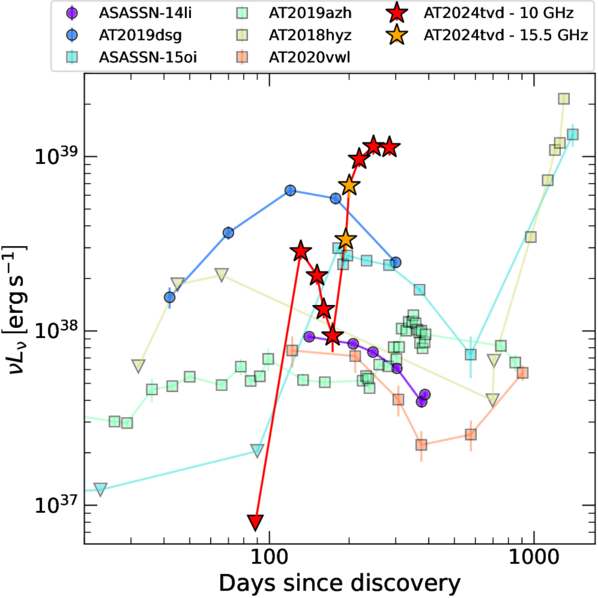
The observations, which spanned centimeter and millimeter wavelengths, revealed two emission peaks from the tidal disruption event. The first peak occurred roughly 131 days after the event was discovered, and the second followed at day 194.

Radio emission from AT 2024tvd compared to other radio-bright tidal disruption events

Demonstration of the fast evolution of AT 2024tvd’s radio emission (red and orange stars) compared to other radio-bright tidal disruption events (other symbols). [Sfaradi et al. 2025]

About 40% of the tidal disruption events that have been identified at optical wavelengths show this kind of delayed brightening at radio wavelengths, but AT 2024tvd stands out as having the fastest radio evolution ever seen. Even among fairly fast-evolving flares, AT 2024tvd is unusual, having a brighter second peak than peer events.

Prompt or Delayed, Outflow or Jet?

To understand the origin of the fast-evolving, extremely bright radio emission from AT 2024tvd, Sfaradi’s team modeled the emission that would arise from outflows and jets. For both wide-angle outflows and narrow jets, the team considered both prompt — arising simultaneously with the event’s optical detection — and delayed sources.

The team’s modeling highlighted several possible scenarios. In the first, both bright radio peaks arose from a single outflow that was launched about 84 days after the star met its doom. The double-peaked behavior is due to the outflow interacting with a complex distribution of material surrounding the black hole. It’s also possible for the two peaks to arise from separate outflows or jets, one launched around 84 days and the other around either 170 or 190 days, depending on whether the second source is a mildly relativistic outflow or a relativistic jet.

Sfaradi and collaborators posited that AT 2024tvd’s unusual radio behavior could be due to its off-nuclear location, but they acknowledged that this event might simply occupy a region of tidal disruption event parameter space that had yet to be explored. Sensitive interferometric or polarimetric observations may reveal more about how AT 2024tvd interacts with its environment, helping to illuminate the nature of this rare event.

Citation

“The First Radio-Bright Off-Nuclear TDE 2024tvd Reveals the Fastest-Evolving Double-Peaked Radio Emission,” Itai Sfaradi et al 2025 ApJL 992 L18. doi:10.3847/2041-8213/ae0a26

The post Investigation of the First Radio-Bright Off-Nuclear Tidal Disruption Event appeared first on AAS Nova.

Scars from a Black Hole

10 September 2025 at 17:00

A spiral of bright material circling a black core.

Simulations suggest that there should be a million stars in our galaxy that once wandered so close to a supermassive black hole that they were nearly destroyed. What are the long-term effects of this encounter, and could astronomers observe the scars of these near-death experiences?

Moths to a Flame

center of the Milky Way

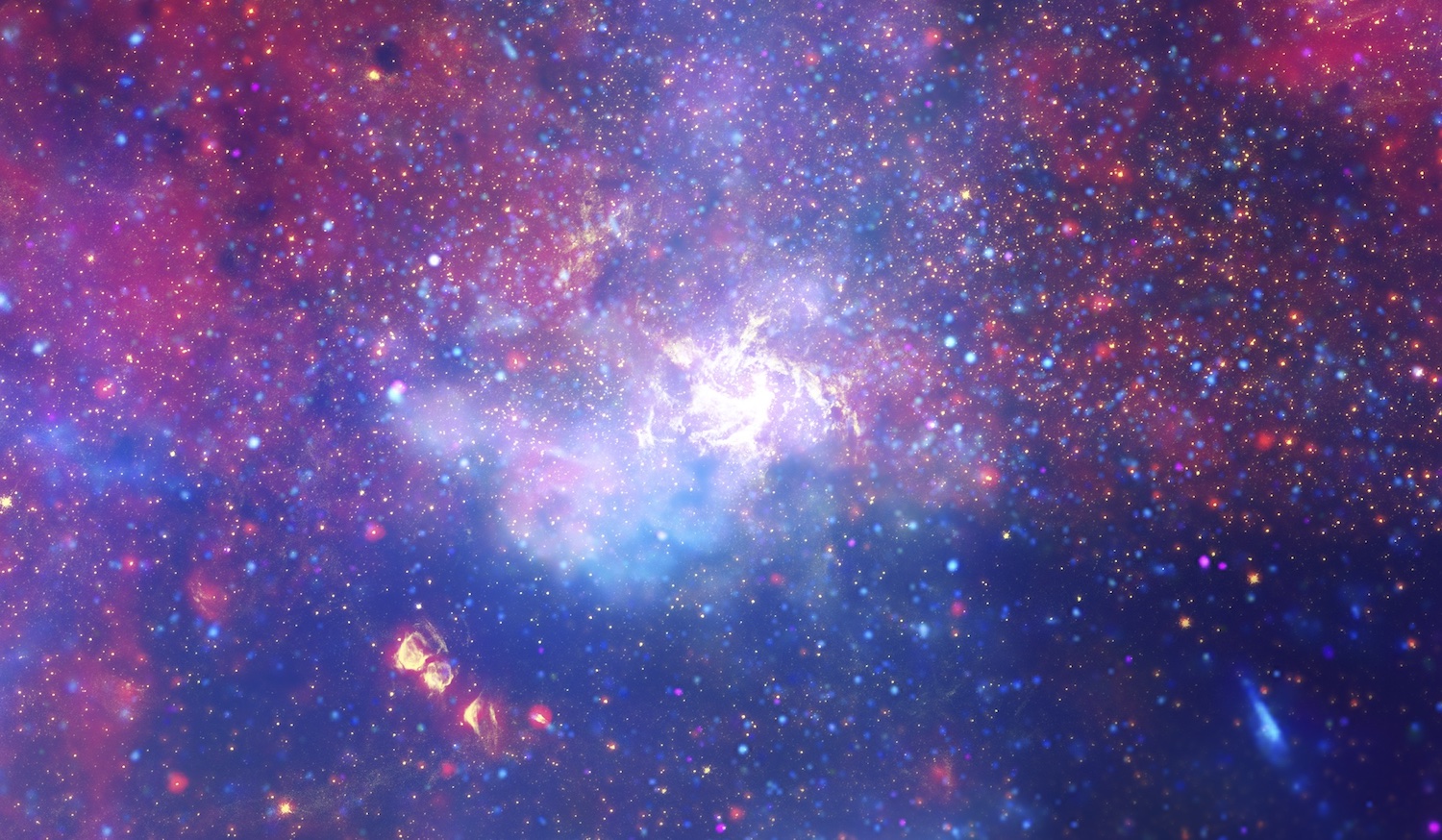
This infrared and X-ray image of the Milky Way’s center shows a swirl of hot gas surrounding Sagittarius A*, our galaxy’s central supermassive black hole. [NASA, ESA, SSC, CXC, STScI]

The center of our galaxy is a dangerous place to be a star. Like mosquitoes drawn to a light, millions of stars swarm around the supermassive black hole named Sagittarius A*, packing themselves in tight and kicking one another onto wild, eccentric, and ever-changing orbits. Every 100,000 years or so, one of these stars gets an unlucky push and finally gives in to the black hole’s irresistible pull. A nudge from a neighbor will send it hurtling beyond the point of safety, and in one intense flyby, it’ll be ripped apart by Sagittarius A*’s immense gravitational field.

Simulations suggest that most of the time, these hapless stars are not completely destroyed by their close encounters with the black hole. In principle, then, there should be about a million “survivor” stars wandering near the center of our galaxy. But, what would these survivors look like? And with careful measurements, could we tell them apart from their regular, unscathed counterparts?

Simulating a Star’s Worst Day

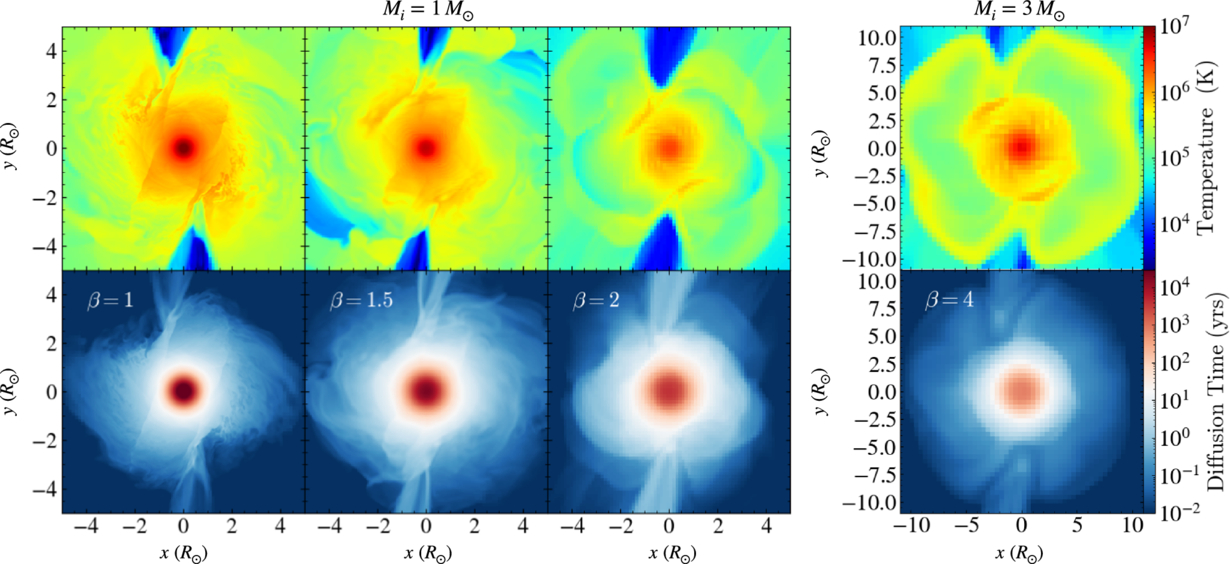
Recently, a team of astronomers led by Rewa Clark Bush (University of California Santa Cruz, Cabrillo College, Wesleyan University) tackled this question. First, the team needed to simulate a terrible day for a hypothetical star: the day it passes closest to the black hole. To compute what happens to the star in those intense couple of hours, they used an open-source hydrodynamic code called FLASH to track the state of the star in granular detail.

An 8-panel figure showing complex, asymmetric patterns of gas around a dense core.

Temperatures (top row) and diffusion timescales (bottom row) of four stars soon after their closest approach to the black hole. Click to enlarge. [Bush et al. 2025]

Then, once the star (or what was left of it) managed to flee back to safety, the team froze the simulations and took stock. They found that depending on the initial size of the star and the distance of its closest approach, the black hole stripped away anywhere from a few percent to almost two thirds of the star’s mass. The researchers then fed the stars into another code called MESA to simulate how the disturbed stars would settle into a new equilibrium and evolve over billions of years.

Back on Track

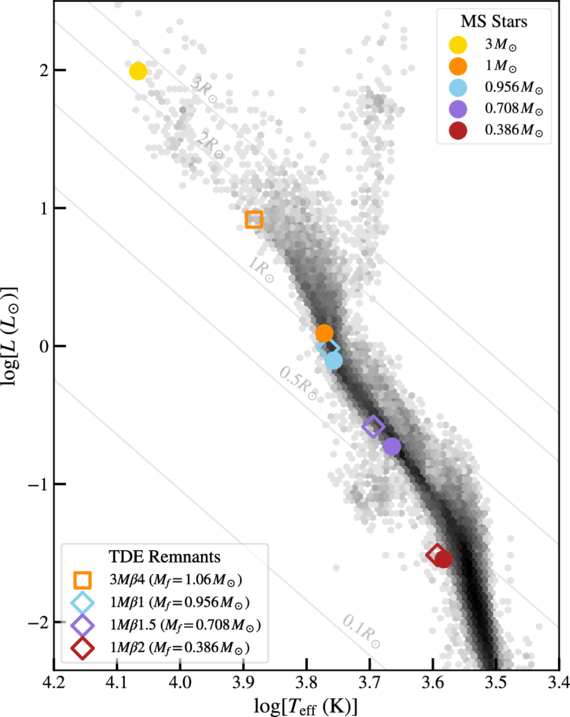
Plot comparing disturbed and undisturbed stars

Comparison of the original undisturbed stars (filled circles), the stars after a black hole encounter (open symbols), and other stars with different initial masses (black points). Click to enlarge. [Bush et al. 2025].

The team found that although these unlucky stars likely glow tens to hundreds of times brighter than usual after their flyby, this period of enhanced brightness lasts less than 100,000 years. For our galaxy, this translates to 1–10 stars currently in the galactic center that have been brightened by an encounter with a supermassive black hole.

Eventually, though, these stars pretty much return to a new normal. Though these stars would have had slightly different colors and luminosities had they not encountered the black hole, they end up looking similar to undisturbed stars with the same final mass.

Although detailed spectroscopic measurements of these remnants might reveal a strange composition thanks to all the stirring that happened during the flyby, it’d be hard to tell anything happened to these stars otherwise. Ultimately, life goes on, even for stars that were nearly destroyed by the most massive creature in the galaxy.

Citation

“Black Hole Survival Guide: Searching for Stars in the Galactic Center that Endure Partial Tidal Disruption,” Rewa Clark Bush et al 2025 ApJL 990 L7. doi:10.3847/2041-8213/adefde

The post Scars from a Black Hole appeared first on AAS Nova.

Double Disruption Dilemma: Exploring the Tidal Disruption Events of AT 2022dbl

11 July 2025 at 17:00

Falling into a supermassive black hole will leave a star mangled and destroyed but not without a fiery end. A recent study explores an intriguing case, uncovering new possibilities for stars lost to black hole bites.

Tidal Disruption Events

Invisible in light but strong in gravitational influence, some supermassive black holes reveal themselves when a star comes close enough to be ripped apart by the black hole’s tidal forces. This violent encounter produces a flare of radiation known as a tidal disruption event, allowing astronomers to explore the otherwise hidden properties of supermassive black holes and their influence on the material around them. 

Tidal disruption events vary depending on the properties of the host galaxy, the supermassive black hole, and the star itself. These events often appear as X-ray flares, but over the past decade, researchers have discovered a new class of optical-ultraviolet tidal disruption events. Emitting primarily in ultraviolet and optical wavelengths, these flares are significantly less energetic than predicted, leaving researchers wondering — what drives these disruptions?

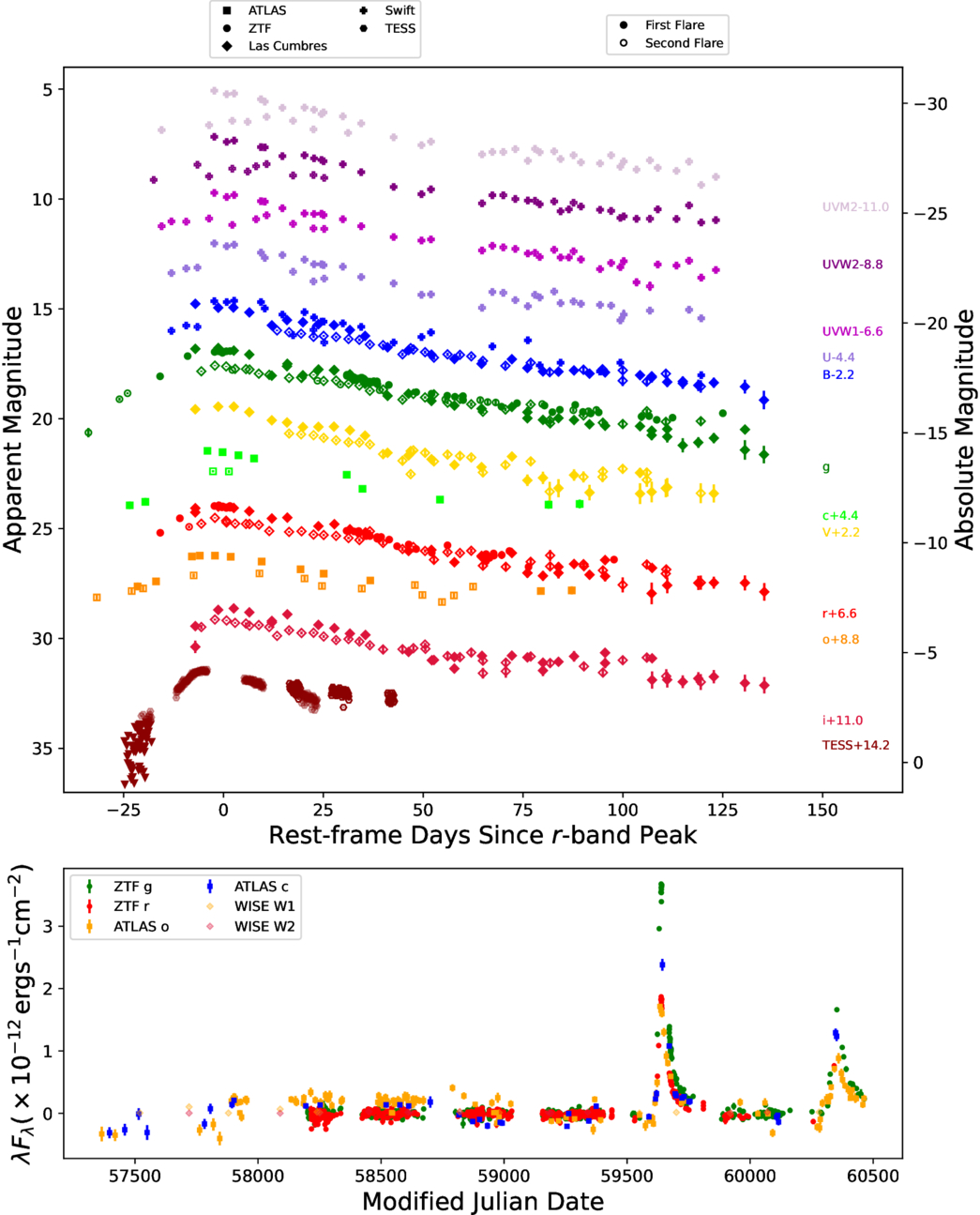
Optical and ultraviolet light curves for the two observed flares of AT 2022dbl. The flares have very similar light curves across wavelengths. Click to enlarge. [Makrygianni et al 2025]

Origins of AT 2022dbl

New detections of optical-ultraviolet tidal disruption events can provide insights into their origins, and one such discovery is particularly intriguing. AT 2022dbl first flared in 2022 and emitted a second, nearly identical flare 700 days later in 2024 — behavior uncommon among this class of tidal disruption events — raising many questions about AT 2022dbl’s origins. Did this supermassive black hole perhaps capture two unrelated stars? Is this actually the same flare seen twice due to gravitational lensing? Could a single star have survived the first flare only to be disrupted again?

Lydia Makrygianni (Lancaster University) and collaborators performed follow-up imaging and spectroscopy of AT 2022dbl to probe how the two flares compare to each other and to other observations of optical-ultraviolet tidal disruption events. With these observations and detailed analysis, the team determined that gravitational lensing, the tidal disruption of two separate stars, and even the possibility of a hidden binary companion to the supermassive black hole slurping up some stellar crumbs each cannot account for the two flares of AT 2022dbl.

Ultimately, the authors concluded that the two flares of AT 2022dbl are related to the same star, leaving two possibilities. First, loose debris from the initial flare bound to a tidal tail around the black hole could have ignited the second flare; however, the authors found that there would not be enough loose material bound to the black hole to produce the bright second flare. Rather, the second and likeliest explanation is two repeated disruptions of the same star.

Disrupting Expectations

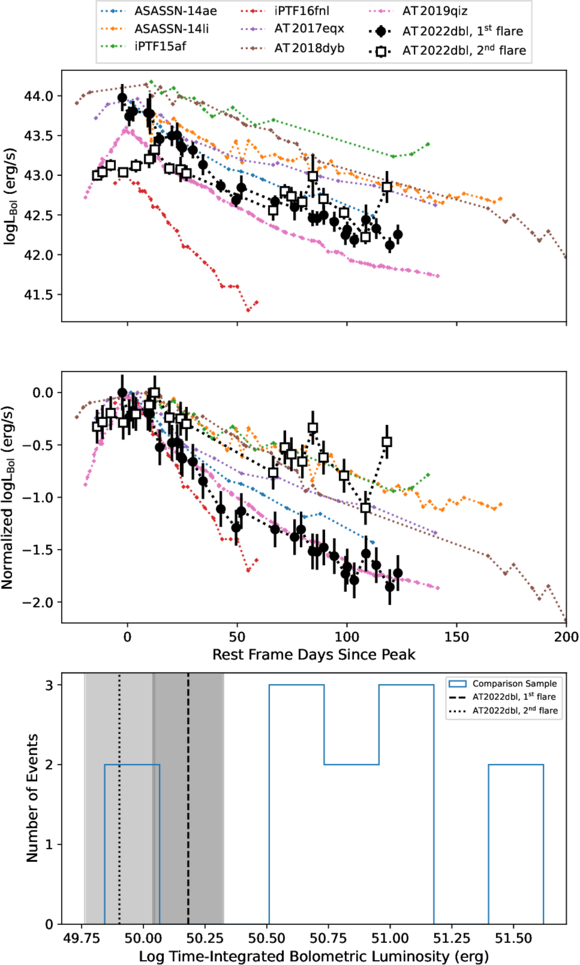
Light curves of AT 2022dbl flares compared to other optical-ultraviolet tidal disruption events. Both flares show similar peak luminosities and decline rates to other events. Click to enlarge. [Makrygianni et al 2025]

Assuming that the two tidal disruption events are from the same star, this implies that the first flare was a partial disruption, removing only some material without destroying the star entirely. The second flare could be a complete disruption or another partial disruption, but observations of a third flare in 2026 would be necessary to confirm this. 

Other optical-ultraviolet tidal disruption events appear similar to the flares of AT 2022dbl, and these have generally been assumed to be complete disruptions. With the discovery and classification of AT 2022dbl, the similar optical-ultraviolet tidal disruption events could also be partial disruptions, with their second flares on longer timescales yet to be observed. Future observations of optical-ultraviolet tidal disruption events are required to further understand the mechanisms driving them, and this study opens up new possibilities to consider. 

Citation

“The Double Tidal Disruption Event AT 2022dbl Implies that at Least Some ‘Standard’ Optical Tidal Disruption Events Are Partial Disruptions,” Lydia Makrygianni et al 2025 ApJL 987 L20. doi:10.3847/2041-8213/ade155

The post Double Disruption Dilemma: Exploring the Tidal Disruption Events of AT 2022dbl appeared first on AAS Nova.

A New Theory for Little Red Dots: Shredded Stars Feeding Growing Black Holes

21 May 2025 at 17:00

disk of hot gas swirling around a black hole

When JWST peered back into the early universe, its keen eyes revealed an unexpected population of galaxies nicknamed “little red dots” for their compact size and bright red hue. A new research article proposes that tidal disruption events could be responsible for the surprising appearance of these galaxies.

Galactic Surprises

galaxies known as little red dots

Six “little red dot” galaxies seen by JWST. [NASA, ESA, CSA, STScI, Dale Kocevski (Colby College)]

Using JWST, researchers have discovered more than 300 little red dots. Most of these galaxies are concentrated around when the universe was 600 million years old, though they’ve been spotted out to about 1.6 billion years after the Big Bang. But why do these galaxies look the way they do? Do they host enormous, active black holes, as many researchers suspect? Do they get their characteristic red color from a population of old, evolved stars? Or could rapid, dust-shrouded star formation be the cause?

A successful theory of little red dot identity must account for several observed properties: “V”-shaped spectra, broad H-alpha lines, and little or no emission at X-ray wavelengths. In a recent research article, Jillian Bellovary (Queensborough Community College; CUNY Graduate Center; American Museum of Natural History) has theorized that little red dots get their curious characteristics from stars being torn apart by a young and growing black hole.

A New Hypothesis

In this scenario, little red dots arise in the extremely dense star clusters created in the early universe. Because of their extraordinary density, these star clusters are vulnerable to gravitational collapse, causing the packed-together stars to crash into one another. The colliding stars combine to form a supermassive star that collapses, leaving behind an intermediate-mass black hole — a seed that could someday grow into a supermassive black hole.

Situated at the center of a dense star cluster, an intermediate-mass black hole would be poised to ensnare stars in its gravitational web, pulling the stars apart with its powerful tidal forces and stealing their mass. These star-shredding events are known as tidal disruption events.

predicted number density of intermediate-mass black holes and observed density of little red dots

Predicted number density of intermediate-mass black holes (blue and orange lines). The symbols show the observed number densities of little red dots as a function of redshift. [Bellovary 2025]

Simulations predict that in the era during which little red dots have been observed, a cubic megaparsec should contain about 0.3–1 intermediate-mass black holes. (These intermediate-mass black holes could arise through the cluster collapse scenario outlined above, or through other pathways like the collapse of the first stars in the universe.) Observations show roughly 10,000 fewer little red dots in this same volume.

Because tidal disruption events tend to remain bright for about a year, this implies that a tidal disruption event rate of one per 10,000 years is necessary for tidal disruption events to explain little red dots.

Matching Predictions

predicted tidal disruption event rates

Modeled tidal disruption event (TDE) rates for two different models and various values of velocity dispersion, σ, and stellar density, nstar. [Adapted from Bellovary 2025]

Using analytic and numerical models, Bellovary showed that this tidal disruption event rate is reasonable for intermediate-mass black holes with masses between 1,000 and 100,000 solar masses. But would tidal disruption events provide a match for other little red dot characteristics? Tidal disruption events tend to be faint at X-ray wavelengths and sport broad H-alpha lines, much like little red dots. Another plus is that unlike in the active black hole scenario, the H-alpha emission from a tidal disruption event doesn’t scale with the mass of the black hole; this means that black holes categorized as over-massive based on the strength of their H-alpha emission may not be over-massive after all. One drawback of the tidal disruption event scenario is that it doesn’t necessarily predict the characteristic red color of a little red dot; this color might come from the galaxy’s stars instead.

As Bellovary notes, little red dots could have multiple causes. Some might be due to tidal disruption events, while others could contain active black holes, ancient populations of red stars, or dusty starburst galaxies, as others have suggested.

To verify the tidal disruption event hypothesis, astronomers would need to find evidence for time variability at rest-frame ultraviolet wavelengths, as well as a characteristic decrease in brightness over time. These changes are expected to unfold over the course of years or decades, meaning that while observations may settle this question in due time, there will be plenty of time to ponder the mysteries of little red dots while we wait.

Citation

“Little Red Dots Are Tidal Disruption Events in Runaway-Collapsing Clusters,” Jillian Bellovary 2025 ApJL 984 L55. doi:10.3847/2041-8213/adce6c

The post A New Theory for Little Red Dots: Shredded Stars Feeding Growing Black Holes appeared first on AAS Nova.

Did That Supermassive Black Hole Rip Apart a Star, or Is It Eating Lunch Like Normal?

13 May 2025 at 17:00

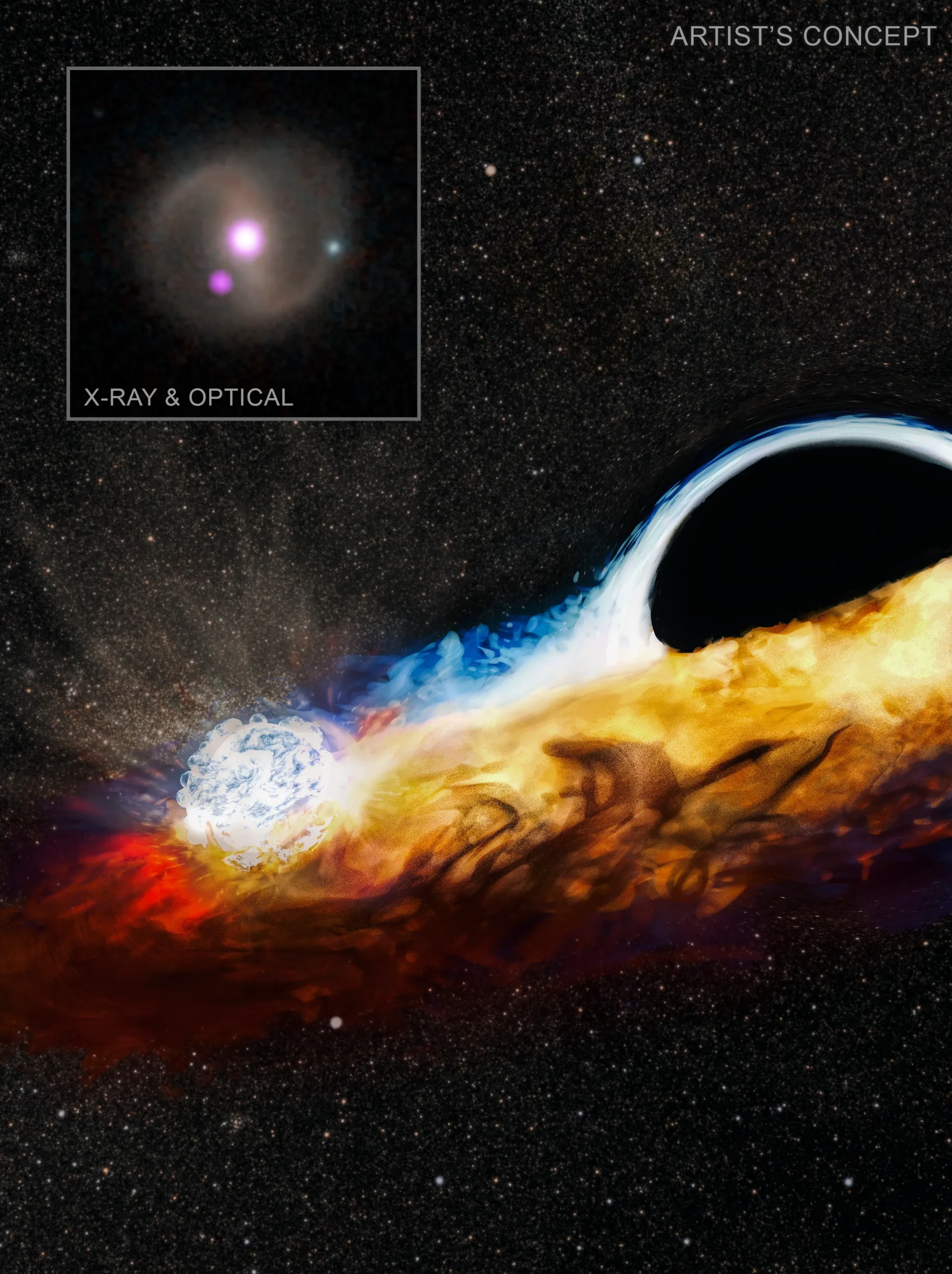
artist's impression of a tidal disruption event

Editor’s Note: Astrobites is a graduate-student-run organization that digests astrophysical literature for undergraduate students. As part of the partnership between the AAS and astrobites, we occasionally repost astrobites content here at AAS Nova. We hope you enjoy this post from astrobites; the original can be viewed at astrobites.org.

Title: An Untargeted Search for Radio-Emitting Tidal Disruption Events in the VAST Pilot Survey
Authors: Hannah Dykaar et al.
First Author’s Institution: University of Toronto
Status:
Published in ApJ

The supermassive black holes in the centers of most galaxies are notoriously, and predictably, violent actors in the universe. While some, classified as active galactic nuclei, act like a drain on their host galaxies, swallowing anything and everything that falls into them, even dormant black holes will react destructively when provoked. Orbit too closely, and any galactic nucleus will break you apart like a first-year chemistry student bumping an unsuspecting beaker off the lab bench.

If an ill-fated star falls into a black hole, the system will briefly glow across the electromagnetic spectrum. When and where these mishaps, known as tidal disruption events (TDEs, shown in Figure 1), occur, as well as the exact physical processes causing the brief glow, are not well understood. TDEs have been detected overwhelmingly in galaxies that do not have active galactic nuclei and are calming down after an era of intense star formation, and current models of the TDE occurrence rate disagree with observations. We expect to see more types of galaxies, such as those with active galactic nuclei, that host TDEs at similar rates, but we don’t — however, we might just be looking in the wrong places, or rather, with the wrong set of eyes.

Traditionally, TDEs have been identified by their optical, ultraviolet, or X-ray emission, but active galactic nuclei are surrounded by dust, which absorbs light at these wavelengths on its way to us. However, at radio wavelengths, the issue of dust obscuration fades, allowing us to uncover the TDEs that may be hiding. While radio emission has been observed from known TDEs, identifying TDEs in the radio comes with a major hurdle, presented by the pesky active galactic nuclei themselves; they are famously variable in radio emission, and they can serve as pretty convincing TDE imposters.

Searching for TDEs at Radio Wavelengths

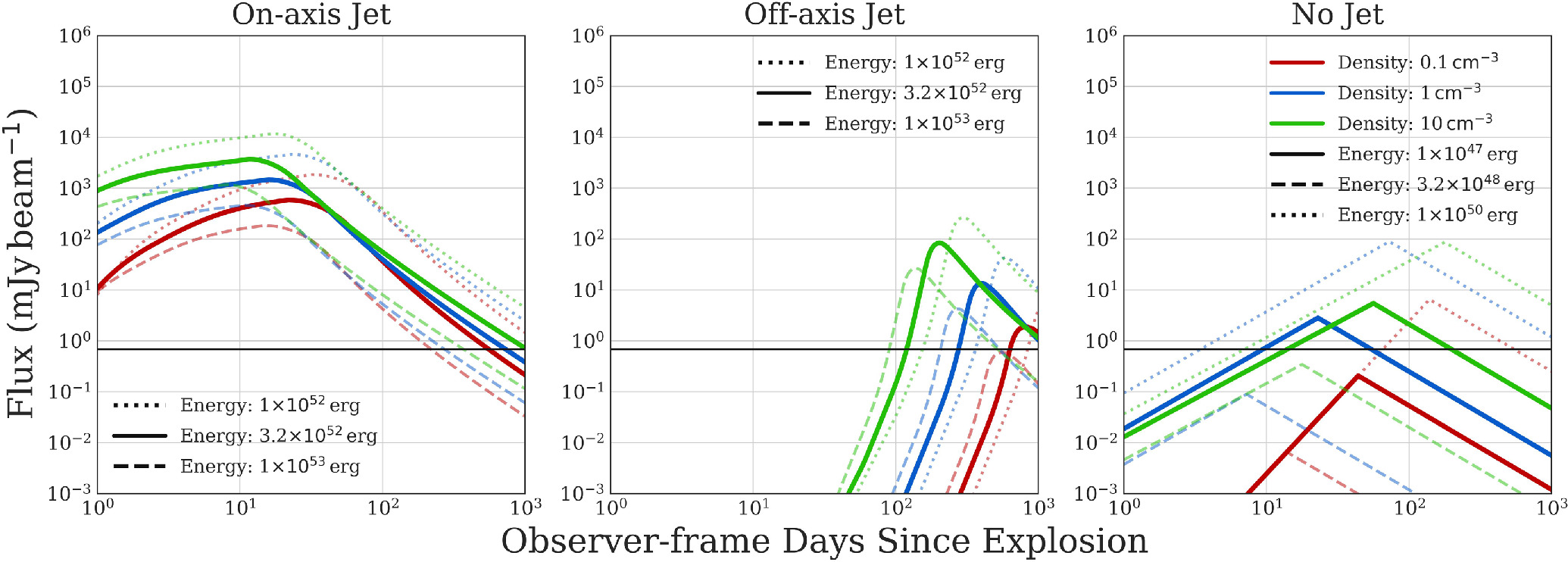
Today’s authors decide to take on this challenge, armed with data from the Variable and Slow Transients (VAST) pilot survey, which observes large swaths of the sky at regular intervals to track variability on the order of days to months. VAST is optimized for observing TDEs, but unfortunately, it is also excellent at finding active galactic nuclei. How do we know what to look for, and how can we distinguish a TDE from an active galactic nucleus? Easy, we can just identify characteristics common to all the known radio-emitting TDEs in the VAST field of view — all one of them, that is. Surely, that won’t do. Instead, our authors simulate the evolution of TDEs as seen by VAST, which can only catch discrete snapshots of light at a specific radio wavelength. Their models of TDE radio emission assume one of three cases: either the TDE produces a relativistic jet directed at us (on-axis), directed away from us (off-axis), or none at all. The presence or absence of a jet, and its direction, determine the shape of the light curve, as shown in Figure 2.

Light curves of simulated TDEs

Figure 2: This figure shows the change in radio brightness over time we expect to see from a galaxy during a TDE given different models. The shape of the radio flare depends strongly on whether the TDE results in a relativistic jet, and if so, whether the jet points toward us (on-axis) or not (off-axis). These simulated light curves were used to establish criteria for TDE candidacy, and compared with observations from the final sample to constrain the incidence rate of TDEs and likelihood of different jet geometries. [Dykaar et al. 2024]

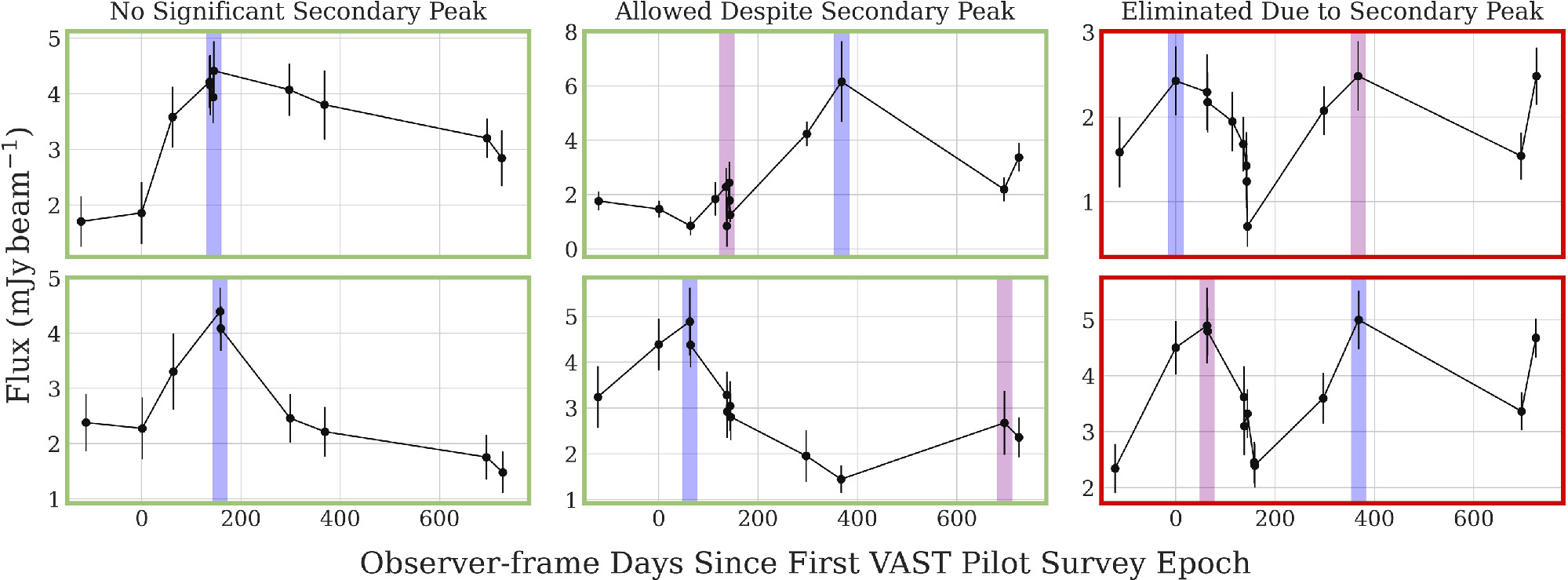
From these simulations, the authors identify three overarching characteristics that wannabe TDEs must exhibit: first, they must be variable, signaling the flare of activity as the star crashes into the black hole; second, the flare should be sufficiently bright compared to the galaxy’s normal brightness; and third, the flare must last for more than one observation, to ensure it is not a spurious detection. Additionally, the authors find that the peak brightness of the TDE must be double the typical galaxy brightness to effectively rule out active galactic nucleus imposters, which do not tend to vary this drastically, as shown in Figure 3. Lastly, the TDE must actually occur near the center of a galaxy (the black hole locale), as confirmed by optical or infrared survey catalogs. In the VAST pilot survey, 12 sources meet these criteria.
Three types of light curves, two of which are considered TDE candidates.

Figure 3: To distinguish TDEs from active galactic nucleus imposters, the authors kept only sources that exhibited one dominant peak in their radio flux, shown by the blue windows. Sources with secondary peaks (shown by the purple windows) that were much smaller than the primary peak were allowed, as the secondary peak could reasonably be due to ambient active galactic nucleus activity. However, multiple comparable peaks are indicative of only intrinsic active galactic nucleus fluctuations, not a TDE. [Dykaar et al. 2024]

Following Up on TDE Candidates at Other Wavelengths

The authors next subject these TDE candidates to thorough multi-wavelength scrutiny using archival survey data. First, they investigated whether the candidates are associated with gamma-ray bursts, which are extremely luminous and energetic events that may accompany TDEs. Unfortunately, gamma rays are easily absorbed, making them notoriously difficult to trace back to their sources. (After all, the journey of a gamma ray through light-years of dust and gas to Earth is not unlike Odysseus’s return to Ithaca, and we all know how many made that journey unscathed.)

The authors found that all 12 sources were coincident with a gamma-ray burst, but all 12 sources were also coincident with multiple gamma-ray bursts (which is unlikely to be physical), as were randomized, TDE-free regions of the VAST sky. In other words, the gamma-ray burst association is inconclusive. Contemporary optical and infrared observations of the candidates revealed no corresponding flares, which leads to more questions. Are the sources simply too far away for their optical and infrared flares to be discernible, or could dust absorption be at play? Additionally, nearly all candidates maintained an increased radio flux after the TDE flare. This may indicate that the TDE occurred within an active galactic nucleus as it was transitioning to a higher radio flux state, that the TDE was followed by intense star formation, or both.

By comparing their candidates to the expected observational manifestations of their TDE models, the authors conclude that the candidate sources are consistent with TDEs that have relativistic jets. They also independently constrain the TDE incidence rate, which agrees with current theory. As our window into the variable radio universe expands with future observations, such as with the ongoing VAST survey, we will have a growing population of such radio-detected TDEs to study, and the ability to distinguish them from regular active galactic nuclei will be ever more valuable in our quest to understand them.

About the author, Chloe Klare:

I’m a PhD student in Astronomy and Astrophysics at Penn State, with a physics doctoral minor. In my research, I’m looking for newly evolving synchrotron jets in active galactic nuclei (in the radio!).

The post Did That Supermassive Black Hole Rip Apart a Star, or Is It Eating Lunch Like Normal? appeared first on AAS Nova.

❌