 Login
The Ecosystems Woven Into Our Clothes
28 July 2026 at 09:00
Can clothing become a climate solution?

A new analysis suggests that psychological research is rapidly moving from journals into the machinery of U.S. governance, with findings increasingly cited in policy documents addressing education, health, and social justice. The trend highlights how behavioral science is becoming a preferred source for guidance that aims to be evidence-based, testable, and actionable across institutions.
Researchers reviewed how a broad set of psychological studies is referenced in government policy materials and found that citations are not uniformly distributed. Instead, the most frequent appearances cluster around topics where human behavior, motivation, and learning processes can be translated into measurable outcomes, such as classroom achievement, public health adherence, and interventions aimed at reducing inequities.
The study emphasizes that psychology’s influence often comes through research that offers clear mechanisms—how thoughts, beliefs, and social contexts shape behavior over time. In policy language, these mechanisms become frameworks for designing programs, evaluating impact, and justifying resource allocation, even when the original work is not a “policy trial” per se.
A key technical takeaway is the role of systematic constructs from psychology—such as expectancy, self-efficacy, stigma dynamics, and behavioral choice architectures—being mapped onto policy levers. By linking experimental or observational findings to specific policy implementations, document authors can argue that interventions should work for defined populations under defined conditions.
The authors also note that citation patterns can reflect more than scientific quality. They may signal changing editorial norms within policy agencies, increased availability of review literature, and the growing use of structured evidence standards that encourage referencing peer-reviewed work.
Beyond what is cited, the analysis points to how psychological research can travel: through policy briefs, synthesis reports, and cross-disciplinary writing that converts statistical results into guidance. This translation step matters, because policy documents prioritize clarity and generalizability, while academic papers emphasize boundaries and uncertainty.
In a viral science-news moment for researchers, the findings suggest psychology is not merely being used—it is being “operationalized.” That means researchers’ results are increasingly treated as building blocks for frameworks that guide interventions, performance metrics, and stakeholder communication.
Importantly, the researchers call attention to the potential risks of citation without careful fit. If a policy references a study whose populations, settings, or effect sizes differ from the target context, implementation may underperform or misestimate benefits. The work therefore implicitly argues for tighter alignment between evidence and local decision-making.
Overall, the analysis positions psychological science as an expanding influence in U.S. policy, especially where behavior is central and where policymakers want interventions grounded in empirically tested models. As the citation footprint grows, so does the need for rigorous evidence translation and scrutiny.
Subject of Research: Psychological research citations in U.S. policy documents, especially for education, health, and social justice.
Article Title: Psychological research is increasingly cited in U.S. policy documents especially for education, health and social justice issues.
Article References: Yu, CW., Hu, HY., Furnas, A.C. et al. (2026). Commun Psychol. https://doi.org/10.1038/s44271-026-00516-6
Image Credits: AI Generated
DOI: 10.1038/s44271-026-00516-6
Keywords: Psychological research, U.S. policy, education policy, health policy, social justice, citations, evidence-based interventions
A newly published study reports that tropical cyclones were far more common during the Late Paleozoic Ice Age than many climate reconstructions have suggested. Led by Yan, Macarewich, Jiang, and colleagues, the work appears in Nature Communications (2026) and reframes how Earth’s cold interval coexisted with warm-water storm systems.
The researchers investigated geological signatures linked to extreme marine events, combining stratigraphic evidence with climate-model constraints. Their goal was to distinguish ordinary seasonal variability from the kind of widespread, repeated disturbances that characterize tropical cyclone belts.
A key technical advance in the study is the integration of paleoclimate boundary conditions with storm-resolving dynamical reasoning. Instead of treating cyclone activity as a simple function of temperature alone, the team considered large-scale patterns that govern where warm oceans can persist long enough to power rotating storms.
The results point to an expanded region of conditions favorable for cyclogenesis. Even though the planet was globally in an ice-age mode, ocean–atmosphere coupling—driven by uneven heat storage, changing circulation, and shifting storm tracks—likely enabled tropical systems to form across parts of the tropics more frequently than expected.
The authors describe “widespread” activity, implying that cyclone impacts were not limited to rare episodes. This interpretation aligns with the idea that cooling did not fully suppress tropical cyclone energetics; rather, it altered the geography and intensity distribution of storm-prone environments.
Using the preserved sedimentary record, the study connects storm activity to repeated depositional pulses. Those pulses, they argue, reflect basin-scale disturbance rather than local weather anomalies, strengthening the case for frequent tropical cyclone events during this interval.
From a broader perspective, the findings have implications for how we understand resilience and feedbacks in past climates. If cyclones continued to thrive under ice-age background states, then tropical extremes may persist through major global reorganizations.
The study’s viral potential is clear: it challenges an intuitive narrative that “ice ages mean calm tropics,” and replaces it with a more nuanced picture in which warm-water dynamics and circulation shifts can sustain storminess despite global cooling.
Below are the details available from the provided text:
Subject of Research: Tropical cyclone activity during the Late Paleozoic Ice Age.
Article Title: Widespread tropical cyclone activity during the Late Paleozoic Ice Age.
Article References: Yan, Q., Macarewich, S., Jiang, N. et al. Widespread tropical cyclone activity during the Late Paleozoic Ice Age. Nat Commun (2026). https://doi.org/10.1038/s41467-026-75609-1
Image Credits: AI Generated
DOI: 10.1038/s41467-026-75609-1

A new prenatal roadmap could soon help clinicians place endotracheal tubes (ETTs) more precisely in the tiniest preterm newborns. In infants with birth weights under 500 g, even small positioning errors during intubation can increase the risk of life‑threatening complications, including inadequate ventilation or airway trauma. Researchers say their approach uses measurements taken before birth—capturing the baby’s anatomy while it is still developing in utero.
The study focuses on predicting the optimal ETT depth rather than relying solely on standard postnatal formulas. Using prenatal biometry, investigators model how fetal growth and structural proportions relate to the distance from the mouth to the trachea. The goal is to translate ultrasound-derived anatomical signals into a practical estimate that can guide clinicians at the bedside.
Technically, the model links prenatal measurements to the anticipated airway dimensions at delivery. This requires defining which biometric inputs best correlate with the final tube placement target, then training a predictive framework to output a recommended insertion depth for extremely low birth weight infants. By emphasizing prenatal inputs, the method aims to reduce uncertainty that can arise from day-to-day postnatal changes.
Importantly, the research targets a subgroup with particularly high vulnerability. Infants below 500 g are at increased risk because their airway structures are extremely small and intubation margins are narrow. In this context, individualized prediction could improve consistency compared with one-size-fits-all guidelines.
If validated in larger clinical settings, the prenatal model could be integrated into obstetric and neonatal workflows. After routine prenatal ultrasound assessments, clinicians would generate an ETT depth estimate ahead of delivery, supporting more confident planning for immediate respiratory care.
The findings also highlight a broader trend in perinatal medicine: using quantitative prenatal data to optimize invasive procedures. Instead of reacting after intubation placement, the strategy moves decision-making earlier—toward anticipation, personalization, and safety.
Overall, the work suggests that prenatal biometry can carry actionable information for airway management. The team frames the approach as a step toward more precise, data-driven neonatal resuscitation and ventilation strategies for the smallest patients.
The study, published in Journal of Perinatology, is available under DOI: 10.1038/s41372-026-02851-2.
Subject of Research: Prenatal biometry-based prediction of optimal ETT depth
Article Title: Prenatal biometry-based prediction of optimal endotracheal tube depth in infants with a birth weight less than 500 g.
Article References: Yoo, K., Kim, S.H., Park, J. et al. J Perinatol (2026). https://doi.org/10.1038/s41372-026-02851-2
Image Credits: AI Generated
DOI: 10.1038/s41372-026-02851-2
Keywords:
A new UC Irvine–led poll released four months before Election Day suggests Orange County remains a rare political battleground, with the governor’s race hovering near statistical dead heat. In a June 9–12 field survey of 809 Orange County adults, likely-voter preferences put Republican Steve Hilton ahead of Democrat Xavier Becerra, 47% to 44%, well within a reported ±4.2 percentage-point margin of error.
The deeper story is turnout mechanics. Becerra performs best among groups that report lower voting certainty—Latino and Asian-American respondents, women, and Independents—while Republicans show higher levels of commitment. Only about half of Independents say they are absolutely certain to vote in November, compared with roughly three-quarters of Republicans and Democrats, raising the possibility that the election hinges more on who shows up than on who is preferred.
Orange County’s issue landscape narrows to a single dominant demand: housing costs. Sixty-one percent of residents name housing among the top problems facing California, and 37% identify it as the single most important issue—nearly double the next closest category. That cross-cutting salience persists despite demographic and partisan differences, making housing the campaign’s defining scalar variable.
The electorate also shows a structural shift. Independents now match Democrats as the county’s largest bloc, leaving Republicans virtually tied. The resulting near-perfect three-way split—34% Democrat, 34% Independent or other, 32% Republican—mirrors the March 2026 results and reinforces Orange County’s classification as a highly competitive electorate.
Generation appears to be the strongest cleavage dimension. Approval for President Donald Trump ranges from 14% among Gen Z to 53% among Baby Boomers, while voting certainty spans from 45% (Gen Z) to 87% (Boomers). Explanations for skipping the June primary cluster around forgetfulness, registration barriers, and skepticism about vote efficacy, especially among younger and Independent residents.
Racial and ethnic patterns complicate conventional realignment narratives. Although Latino and Asian-American groups are becoming more independent rather than simply shifting left or right, their head-to-head lean remains Democratic in candidate matchups. However, the turnout gap—about half of Latino residents and 59% of Asian-Americans reporting absolute voting certainty versus 82% for White respondents—may determine which coalition converts into votes.
Gender divides are consistent across the ballot. Men back Hilton by 14 points, while women support Becerra by 8 points, and approval of Trump and opposition to Governor Gavin Newsom track similarly by gender. Unlike generations, however, the gender gap does not translate into different turnout intentions, with roughly two-thirds of both men and women expressing absolute certainty to vote.
Finally, perceptions of institutional direction show persistent anxiety. Around two-thirds of respondents say the United States is headed in the wrong direction, while California fares only slightly better. Locally, optimism is more stable and surprisingly bipartisan, suggesting that residents may differentiate between county-level functioning and national or state governance.
Subject of Research:
Political science / Public opinion (elections; social surveys)
Article Title:
Orange County’s governor race remains a statistical toss-up as housing dominates public priorities
News Publication Date:
Today (June 9–12 field dates; exact publication date not specified)
Web References:
https://sites.uci.edu/ocpoll/
References:
UC Irvine School of Social Ecology “UCI-OC Poll” (fielded June 9–12 among 809 Orange County adults)
Image Credits:
Not provided
Keywords:
public opinion, elections, housing affordability, voter turnout certainty, political polarization, Independents, generational gap, gender gap, Orange County
For over 20 years, Live Science has been committed to bringing you the latest breakthroughs and incredible discoveries with clarity, authority and good humor (when appropriate, of course). In that time, we've evolved through a modernized website design, a transition to more deeply reported stories, and the addition of engaging videos produced by a dedicated team.
Over the years, we have relied on advertising to support our team of journalists. However, the fast-changing economic landscape has pushed us to continue evolving so we can deliver quality science journalism. That is why I am proud to say we have launched Live Science Pro, a new space on Live Science that allows you to directly support our award-winning team of science journalists so we can continue writing best-in-class stories.
Right now, the world needs credible, rigorous science more than ever. Our mission is to responsibly communicate that science with the highest degree of accuracy, informing the scientific community and sparking the fascination of those who can't wait to learn about our world and the universe beyond. By joining Live Science Pro, your subscription supports this goal and allows us to produce high-quality journalism that is written and fact-checked by our experienced writers and editors, without ever seeing an advertisement on our articles. This means you get all the science, and none of the distractions.
While you can still read the latest science news for free, written to the same high standards as our Pro content, as a part of your paid membership, a Live Science Pro subscription gives you access to our Science Spotlight features, which take an in-depth look at the paradigm shifts and breakthroughs that will transform science in the coming years. Your subscription puts must-reads at your fingertips, including our insightful analyses, which give you crucial context for the biggest science headlines; and interviews and exclusive book excerpts, which provide a more personal look at the people driving progress. You also get access to our opinion pieces, which reveal how experts are thinking about the biggest issues in their fields.
Plus, you'll receive our exclusive, members-only weekly newsletter, which provides a curated look at the stories our writers and editors are most excited about and their take on what matters most in their areas of expertise.
To mark the launch of Live Science Pro, we're offering an introductory price of $3 for the first three months, or for an even better value, you can sign up for an annual subscription for just $30 for the first year. You can find more details on how to subscribe here: livescience.com/subscription
Right now, there are more voices and options than ever. We know you demand credibility and accuracy from your science reporting, and we thank you, again, for placing your trust in ours.
Alexander McNamara
Editor-in-Chief, Live Science

6 min read
Each time the Moon covers the Sun during a total solar eclipse — darkening daytime skies and briefly revealing the Sun’s ethereal outer atmosphere, the corona — it presents new opportunities to better understand our star and its influence on Earth.
On Wednesday, Aug. 12, as the next total solar eclipse sweeps over Greenland, Iceland, and Spain, NASA-funded science teams will be chasing the Moon’s shadow with a high-altitude jet and scientific balloons to investigate the Sun’s dynamics and how the temporary darkening of our skies affects our atmosphere.
“From our unique perspective on Earth during a total solar eclipse, scientists can study the Sun’s corona in a way we can’t from anywhere else in the solar system,” said Kelly Korreck, eclipse program manager at NASA Headquarters in Washington. “The Sun impacts our daily life, satellites, and astronauts in space, and we can take advantage of this moment to advance our understanding of that influence.”
Soaring in the nose cone of NASA’s WB-57 high-altitude research aircraft is a suite of four cameras to take high-resolution images of the corona in several different wavelengths of visible and infrared light. Part of an instrument developed by the NASA Scientifically Calibrated In-Flight Imagery (SCIFLI) team at NASA’s Langley Research Center in Hampton, Virginia, the cameras will capture at least 20 images per second, recording structures, outflows, and rapid changes in the corona during the total solar eclipse.
With these images, scientists hope to learn more about the formation of prominences (solar material that gets suspended above the Sun’s surface), better understand the corona and how it gets heated to nearly a million degrees, and investigate how material in the corona and the solar wind are related, which flows out from the Sun across the solar system.

By chasing the Moon’s shadow, the jet will extend how long the cameras can observe the corona. On the ground, the longest anyone will be able to see the corona is two minutes and 18 seconds. But flying along the eclipse path at 460 miles per hour, the jet’s view of the corona will last nearly three minutes.
NASA’s WB-57 will fly at 50,000 feet, above any clouds that might obscure the view of the corona from the ground. The altitude also allows the cameras to observe some infrared wavelengths that get absorbed by the lower atmosphere before reaching the ground, and the corona only has been observed in those wavelengths a few times before.

The instrument, called SCIFLI Multispectral Airborne Imager, or SAMI, also flew on a WB-57 during the total solar eclipse on April 8, 2024, providing valuable imagery and information about the corona. However, the study’s principal investigator, Amir Caspi of the Southwest Research Institute in Boulder, Colorado, says each total solar eclipse provides new opportunities to learn more about the corona.
“The Sun is always changing,” Caspi said. “Every eclipse is different. So we could see things we didn’t see before. And we learn from each eclipse how to better observe the next one.”
Caspi’s team also is making some enhancements for the 2026 campaign based on lessons learned in 2024. For example, the team will adjust exposure times to better capture bright features that were overexposed in 2024 imagery. They will also leverage software developed since 2024 to process and analyze the data sooner than before.
The experiment is funded by NASA’s Heliophysics Low Cost Access to Space Program.
When a total solar eclipse suddenly turns daytime skies dark, our atmosphere changes in ways we don’t yet fully understand.
The NASA-supported Nationwide Eclipse Ballooning Project, led by Angela Des Jardins at Montana State University, is sending students from several U.S. universities to Iceland and Spain to launch scientific balloons before, during, and after the eclipse to better understand those changes.

In Iceland, two teams will launch a total of 80 balloons starting 18 hours before the eclipse until eight hours afterward to study how the eclipse affects Earth’s “boundary layer,” the part of the atmosphere that touches the ground. The thickness of the boundary layer changes depending on factors such as surface temperature and moisture in the air.
Previous balloon flights during solar eclipses in October 2023 and April 2024 showed that the boundary layer collapsed, or decreased in thickness, in locations with clear skies but not where there were cloudy skies. Scientists wonder whether that will be different in Iceland in 2026. Changes in the boundary layer are driven by the day-night cycle. However, in Iceland in August, the days are long and nights are short, so the nighttime influences might not be as strong as in 2023 or 2024.
“Will this eclipse be able to collapse the boundary layer?” said Matthew Bernards, a chemical engineering professor at the University of Idaho, who leads one of the Iceland teams.
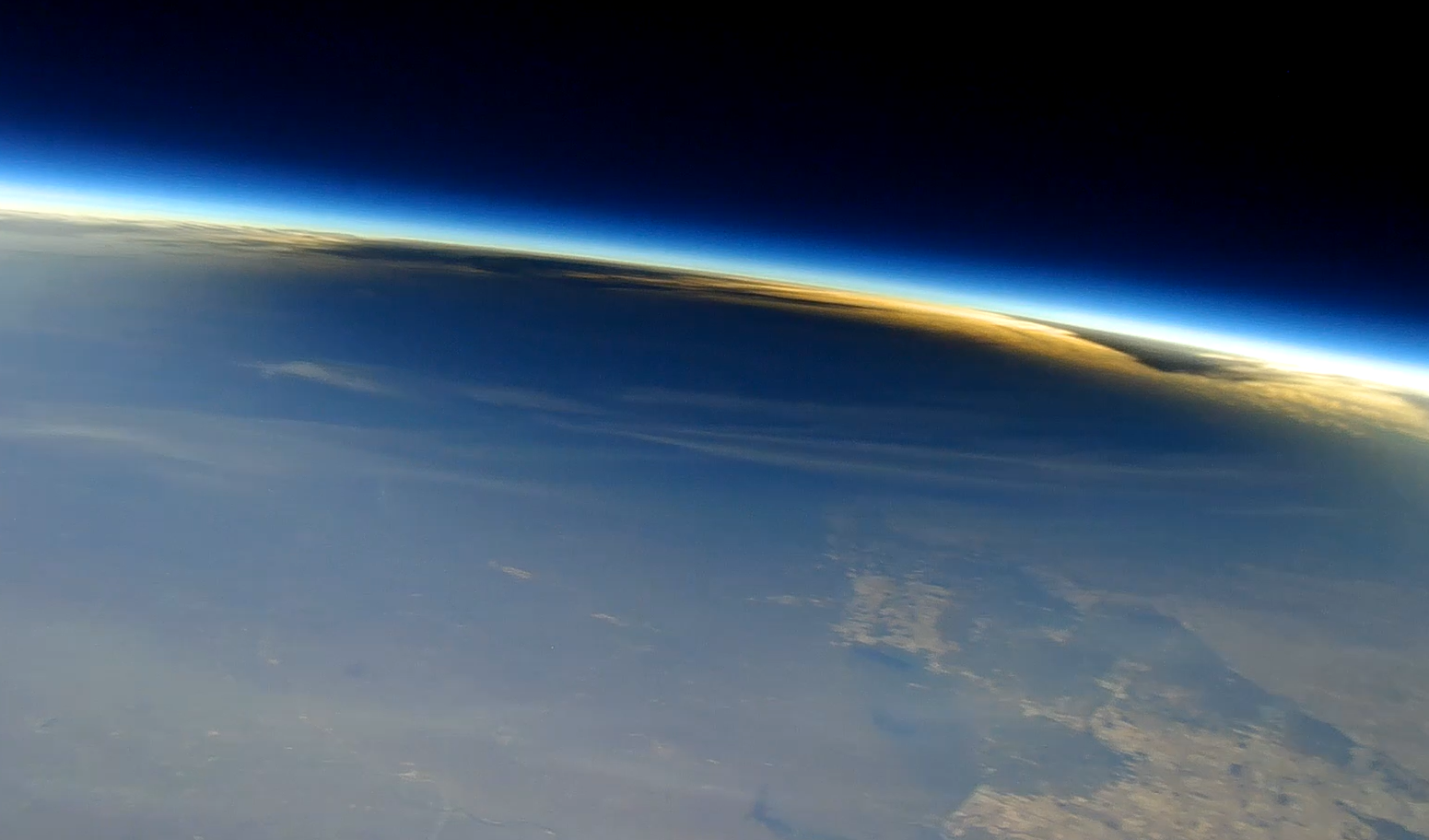
In Spain, three balloon teams will launch a total of six balloons with 360-degree cameras to image the eclipse shadow from above. These balloons also will include instruments designed to measure levels of ozone in the atmosphere, which requires sunlight to form. Similar balloon experiments showed that ozone decreased during totality in April 2024. Scientists wonder whether there will be differences with this eclipse, particularly since it happens at a later time of day and during a different season.
While the total solar eclipse won’t be visible in the U.S., some parts of the country will be able to see a partial solar eclipse. Learn more about where to see the eclipse and how to view it safely.
by Vanessa Thomas
NASA’s Goddard Space Flight Center, Greenbelt, Md.
Lee esta historia en español aquí.
A collaboration of researchers in North America has reported their findings from the first diagnostic X-ray imaging performed in space. X-ray images recorded during an orbital spaceflight exhibited similar overall quality to those taken preflight on Earth, demonstrating the feasibility of adding radiography as a diagnostic tool for crew health.
With humans venturing further into space and spending more time in this harsh environment, the risk of adverse medical events increases. Accurate and timely diagnosis and treatment is a must-have. Currently, the only reliable medical imaging modality available to astronauts in spaceflight is ultrasonography – which is operator dependent, requires substantial training and relies on limited acoustic windows.
X-ray imaging, on the other hand, benefits from low operator dependence, rapid acquisition and typically higher spatial resolution than ultrasound. Digital radiography could also offer superior diagnostic capabilities for many medical conditions of concern during spaceflight, including dental disease, musculoskeletal trauma, inhalational injury, collapsed lung and arthritis.
Traditional X-ray scanning systems are bulky, produce a lot of radiation and are sensitive to motion – making them less than ideal for sending into space. But a new generation of portable X-ray scanners shows potential to survive the spaceflight and be operated by crew members with minimal training.
“It’s been a dream for aerospace medicine to have more than one imaging modality for diagnosing illnesses and injuries in space,” says lead researcher Sheyna Gifford, an assistant professor of aerospace medicine at the Mayo Clinic in Rochester, MN, in a press statement.
In a study led by co-author David Lerner, the researchers first demonstrated the feasibility of X-ray imaging in simulated microgravity in 2022. During a parabolic flight, they used a commercial off-the-shelf digital radiography system to successfully capture radiographs of a human subject and a phantom during lunar gravity (1/6g), Martian gravity (1/3g) and microgravity.
In this latest project, reported in in Radiology, Gifford and her team investigated the performance of a similar portable digital radiography system aboard the Dragon spacecraft, during the Fram2 spaceflight mission, a 3.5-day polar orbital flight launched on 31 March 2025 on a SpaceX Falcon 9 rocket. The imaging system comprised a commercial off-the-shelf, FDA-cleared, portable, digital X-ray generator (Impact Wireless; MinXray) along with an FDA-cleared flat-panel detector.

Prior to the mission, three crew members received 4 hr of training on the portable X-ray system and acquired preflight X-ray images of the hand, forearm, abdomen, pelvis, chest and a quality control phantom. They then recorded the same anatomic and phantom images whilst in space, and also imaged a smartwatch to investigate the potential for non-destructive testing.
During anatomic imaging, the devices were handheld by the crew members, while the phantom and smartwatch were secured to the detector for imaging. The crew reported that they found it easy to use the X-ray system and follow the imaging protocols.
To assess the quality of the seven X-ray images acquired by the crew, three independent radiologists evaluated and compared the preflight and in-flight anatomic radiographs, finding no differences in overall image quality, contrast resolution or spatial resolution. For central-body radiographs (chest, abdomen and pelvis), image positioning was worse in-flight than preflight. Despite this, all X-rays achieved good or near-excellent diagnostic quality (rated on a 5-point Likert scale).
Phantom radiographs recorded in space exhibited good spatial and contrast resolution, imaging low-contrast targets down to the smallest 2-mm target and easily visualizing high-contrast meshes ranging from 20 to 60 lines per inch, with 80 lines per inch remaining visible. The smartwatch radiograph clearly showed the watch’s internal components at the submillimetre scale.
The research team found that the X-ray generator had sustained minor re-entry damage, but its internal components and X-ray output were not affected. Similarly, the detector passed visual inspection and quality control tests. The researchers also recorded a set of postflight X-rays (on non-crewmembers) following the same in-flight protocols. These showed no qualitative differences from the preflight or in-flight radiographs.
“By acquiring the first human and equipment X-rays in space, our study demonstrates the feasibility of in-orbit radiography and expanded diagnostic capabilities for crew health and hardware evaluation,” says Gifford. “Acquiring diagnostically useful X-rays in space is something that anyone can do. Three very talented nonmedical people with four hours of training in one of the harshest environments did it right and did it well.”
Gifford points out that a spaceflight-ready radiography system could also prove indispensable for mission-critical non-medical tasks. “For sustained human presence in space, X-rays are critical not just for crew members but also for other mission components like electronics and spacesuits. The only way to look inside these objects without taking them apart is to X-ray them,” she explains.
The post First medical X-ray images taken in space achieve diagnostic quality appeared first on Physics World.
A compact optical technology that has already proved its worth in Earth-bound applications could be on its way to space after researchers at the University of California San Diego, US showed that it can map the Sun’s magnetic field just as well as traditional instruments. By making polarization gratings from specially engineered metasurfaces rather than a complex assembly of optics, the researchers say that future solar-observing missions could benefit from reduced complexity and cost as well as size.
“Our work makes use of recent advancements in nanoscale optical technologies to help improve the hardware for making astronomical observations of the Sun,” says study leader Noah Rubin of UC San Diego’s Jacobs School of Engineering. “We believe this is one of the first times that metasurface optics – which have been a subject of intense interest in both academic research and industry for about a decade – have been used to improve scientific instrumentation of any kind outside of a lab/academic proof-of-concept.”
Although light emitted by the Sun is generally unpolarized – that is, the light waves do not vibrate along a particular axis – strong magnetic fields that develop near sunspots can polarize this light via the quantum mechanical Zeeman effect. These magnetic fields are closely associated with space weather events such as solar storms that can damage electronic infrastructure both on Earth and in orbit. Studying the Sun’s magnetic activity by monitoring areas of polarized light is thus an important step towards detecting or predicting such storms in time to take protective action.
Usually, measuring the polarization state of light means analysing different polarization directions using a device such as a waveplate that mechanically rotates between exposures. Rubin compares this process to taking several photographs through polarized sunglasses held at different angles, then combining them to obtain a fuller picture of what’s going on.
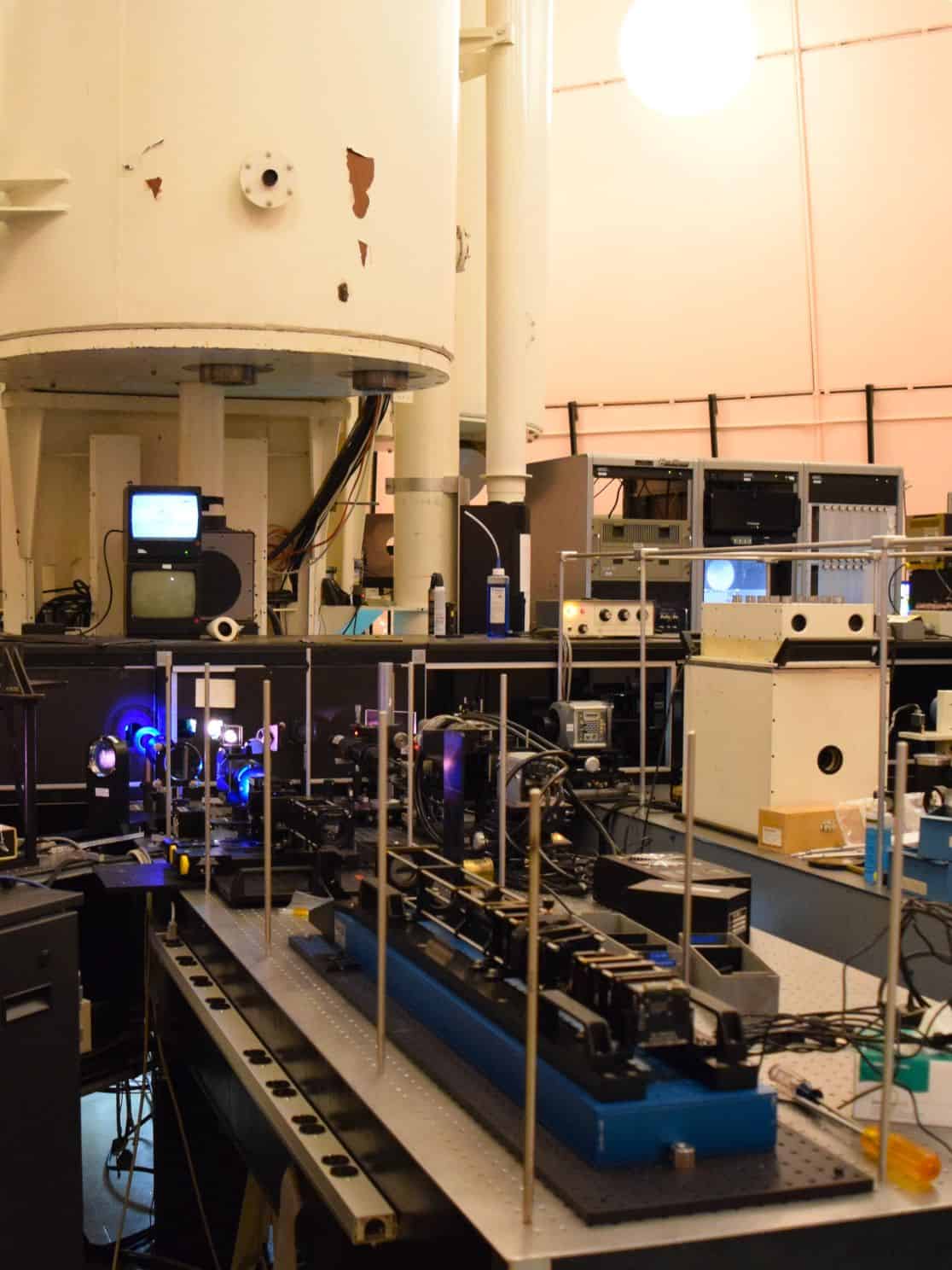
While this technique works, and instruments that use it have already been sent into space, the image analysis process is very time-consuming. It also requires an external power source, and the need to mechanically rotate the waveplate introduces extra complexity and cost, says Rubin.
“In space-based applications, a satellite itself can be moving while this component reorients, causing a highly undesirable blurring effect,” he explains. “As a result, designers of these systems often invest considerable resources into mechanical remediation and engineering to correct the motion of the telescope on the satellite, and this frequently ends up being substantially more expensive than the telescope optics themselves.”
In the new study, which is detailed in Science Advances, Rubin and colleagues solved this problem by creating a polarization-sensitive metasurface that splits light into its different polarization components. A camera-like system containing this metasurface polarization grating can then form multiple images of a scene in parallel. Rubin explains that each image in this scene is analysed with respect to a different polarization state, meaning that the system can measure the polarization of light simultaneously and passively in a single camera frame.
Rubin notes that this technique of condensing an instrument that would ordinarily involve a complex assembly of optics into a single, flat surface has previously made its way into applications as diverse as facial recognition in mobile phones and the preparation of complex photon states in quantum optics experiments. “In this work, we show that these advantages translate to polarization imaging in astronomy,” he tells Physics World.
Working with industrial partners at BAE Systems Space & Mission Systems in Colorado, US (formerly known as Ball Aerospace, which Rubin describes as “well-known for its involvement in the development of the James Webb Space Telescope, Hubble and countless other NASA missions”), the team designed a specialized telescope built around such a metasurface polarization grating. They also deployed their instrument on the Dunn Solar Telescope in New Mexico, US, and showed that they could quantitatively map the magnetic fields in sunspots by capturing simultaneous polarization images of these spots.
The researchers report that their results were comparable to those obtained by the state-of-the-art NASA Solar Dynamics Observatory mission in-orbit, highlighting what Rubin calls “the significant advantages that these metasurface components can offer when designed in conjunction with more traditional optical systems”. The UC San Diego team is now exploring ways of integrating its technology into future NASA solar-observing space missions.
The post Metasurface grating gives solar telescopes a boost appeared first on Physics World.
A galaxy that formed around a billion years after the Big Bang is in its death throes thanks to a powerful galactic wind that is blasting its gas into space, say astronomers at Australia’s Swinburne University of Technology. The discovery, which is based on data from the James Webb Space Telescope (JWST) and the Atacama Large Millimeter/submillimeter Array (ALMA) in Chile, could help explain why some of the universe’s earliest massive galaxies ceased to form new stars.
One of the JWST’s most surprising discoveries is that when the universe was between one and two billion years old, it already contained large numbers of massive galaxies. Astronomers think these galaxies may have acquired most of their mass in intense bursts of star formation. But at some point, that process stopped: in technical terms, the galaxies became quiescent.
“These galaxies seemed to have formed all their stars very quickly and then they suddenly died, all within the first two billion years of the universe being formed,” says Rebecca Davies, who led the new research.
One possible explanation for the onset of quiescence is that when galaxies collide with each other, the resulting winds “blow away” the hydrogen fuel required for new stars to form. To investigate this hypothesis, Davies and colleagues focused on a galaxy called CRISTAL-02, which was one of 20 galaxies in the recent ALMA-CRISTAL survey of early star-forming galaxies.
“When we looked at the data, it stood out because it was the only one that showed strong evidence for a galaxy wind,” Davies explains. “We saw this as an excellent opportunity to study how winds impacted the evolution of galaxies in the early universe.”
The light from CRISTAL-02 travelled for approximately 12.7 billion years to reach us, meaning that we see it as it was one billion years after the Big Bang. Because the universe has been expanding since then, the galaxy’s spectra appear highly red-shifted. This meant the Swinburne astronomers needed the JWST’s infrared-sensing capabilities to analyse a spectral feature known as the hydrogen-alpha (Hα) line that is normally red. They also used ALMA to analyse CRISTAL-02’s C II line, which comes from ionized carbon and has a (non-redshifted) wavelength of 158 mm. Both emission lines can yield important information about the properties of early galaxies.
From the ALMA-CRISTAL survey’s measurements of Hα luminosity, astronomers knew that CRISTAL-02 forms stars at a rate of around 260 M☉ per year. This is about three times the average value for “main-sequence” star-forming galaxies at similar mass and redshifts.
The latest observations, however, suggest that it won’t maintain this pace for long. Davies and colleagues identified a huge plume of C II emissions that extends as far as 7 kiloparsecs (kpc) to the north-east of CRISTAL-02, making it almost as long as the galaxy itself. This is a telltale sign that gas is being driven out of the galaxy. The fact that the gas in this plume is blue-shifted by 100 km s-1 lends further support to this explanation.
If this rapid blowout continues, Davies says that CRISTAL-02 will cease to exist in less than 50 million years. But the team’s findings may have implications beyond the fate of this single galaxy. “Our results could help to explain how some of the earliest massive quiescent galaxies in the universe behave,” she tells Physics World. “When the JWST started observing distant galaxies in 2022, it found far more evolved galaxies in the early universe than models predicted. These galaxies seemed to have formed all their stars very quickly and then suddenly died, all within the first two billion years of the universe. The galaxy we discovered seems to be following this path.”
Davies explains that because the early universe was much more compact than it is now, collisions between galaxies were common. During such collisions, gas funnels towards the galactic centres, triggering strong bursts of star formation but also producing strong winds that eventually drive the gas away. “If many early galaxies collide and experience rapid growth, then it may not be surprising at all that we see so many dead galaxies in the early universe,” she says.
The researchers stress that the present work, which is detailed in the Monthly Notices of the Royal Astronomical Society, is based on a case study of just one galaxy. They now need to observe other early, massive galaxies caught during periods of intense growth to determine whether they, too, experience powerful winds that could rapidly expel their gas and stop them from forming stars.
The post Powerful cosmic winds may have destroyed galaxies in the early universe appeared first on Physics World.
The Nobel-prize-winning Belgian theoretical physicist François Englert, whose work led to the discovery of the Higgs boson, died on 18 June at the age of 93.
Englert’s studies, which he carried out in the early 1960s with his colleague Robert Brout, demonstrated that fundamental particles can acquire mass by interacting with a field that permeates the universe. The work set in motion a decades-long hunt for the Higgs boson, which was finally discovered at the CERN particle-physics lab near Geneva in 2012.
For the work, Englert shared half of the 2013 Nobel Prize for Physics together with the British theoretical physicist Peter Higgs, who died in 2024.
Born in Brussels, Belgium, on 6 November 1932, Englert studied electrical engineering at the Free University of Brussels (ULB) before switching to physics and completing a PhD at the university in 1959.
For two years he then worked at Cornell University before returning to ULB in 1961, where he remained for the rest of his career.
“Spontaneous symmetry breaking” is a well-known concept in condensed-matter physics where it had been used to explain how, for example, unordered regions of a magnetic material could suddenly align themselves in a specific direction.
In the early 1960s, the Japanese–American particle physicist Yoichiro Nambu adapted the phenomenon into quantum field theory.
Working at the ULB, Englert and Brout took inspiration from Nambu’s work and in 1964 the pair proposed that the weak and electromagnetic interactions could be united by spontaneous symmetry breaking.
Higgs, who independently came to the same conclusion as Brout and Englert, showed that the particles that carried the weak force acquired their mass through interactions with an all-pervasive field, now known as the Higgs field with the interactions occurring via the Higgs boson.
In 2012 at CERN’s Large Hadron Collider, physicists working on the LHC’s giant ATLAS and CMS detectors discovered the Higgs boson with a mass of about 125 GeV.
The following year, Englert shared half of the 2013 Nobel Prize in Physics with Higgs “for the theoretical discovery of a mechanism that contributes to our understanding of the origin of mass of subatomic particles, and which recently was confirmed through the discovery of the predicted fundamental particle, by the ATLAS and CMS experiments”.
Brout died in 2011 so was not given the Nobel prize as it is not awarded posthumously.
As well as the Nobel prize, Englert won many other awards including the Francqui Prize, awarded by the Francqui Foundation in 1982, the Wolf Prize in Physics (2004) and the American Physical Society J J Sakurai Prize (2010). In 2013, he was ennobled a baron by King Albert II of Belgium.
Particle physicist John Ellis from King’s College London, who has spent most of his career at CERN, told Physics World that he will remember Englert for his “his modest and polite demeanour, despite his evident and justified pride in his ground-breaking work”.
“His memory lives on as one of the founders of the Standard Model and an originator of one of its greatest puzzles, the Brout-Englert-Higgs mechanism for breaking symmetries and generating particle masses,” adds Ellis. “How long will it be before we understand this remarkable, yet crucial, aspect of Nature?”
The post Belgian Nobel-prize-winning theoretical physicist François Englert dies aged 93 appeared first on Physics World.
Black carbon particles released by rocket launches remain in the upper atmosphere for much longer than sooty particles produced by sources on the ground. This finding, which comes from a study led by researchers at University College London (UCL), UK, suggests that the soot created in deploying “megaconstellations” containing hundreds or thousands of satellites could have poorly understood and potentially serious consequences for the Earth’s climate.
“Rocket launches are a unique source of pollution, injecting harmful chemicals directly into the upper layers of the atmosphere and contaminating Earth’s last remaining relatively pristine environment,” says the study’s lead author, UCL atmospheric chemist Connor Barker.
The number of rockets being launched into space has increased dramatically since 2019, and the trend shows few signs of stopping. This year has already seen more launches than the whole of 2020, and space industry experts believe the eventual total could surpass 2025’s figure of 329. The increase has primarily been driven by the Falcon 9 rockets launched by the US firm SpaceX, though China also logged a record 92 launch attempts in 2025.
In the new work, Barker and colleagues analysed data from rocket launches and satellite re-entries from 2020 to 2022. Their results, which they detail in Earth’s Future, show that the soot particles lingering in the upper atmosphere are 540 times more effective at altering climate than ground-based soot emissions from sources such as cars and power plants.
“Space industry pollution is like an unregulated geoengineering experiment,” says Barker. Soot particles from burning kerosene in rocket fuel absorb sunlight, he explains, which prevents it from reaching the Earth’s surface. The result is a small cooling effect, which might sound like a good thing in the context of rising global temperatures. However, Barker stresses that this cooling is minimal compared to the global warming caused by other human-generated emissions, while the particles themselves could have “many other serious unintended consequences”.
As well as quantifying recent space industry emissions, the researchers make predictions about future ones. According to their calculations, by 2029 the space industry will be releasing about 870 tonnes of soot into the atmosphere each year. By way of comparison, Baker notes that according to the latest UK government figures, the annual emissions of the country’s entire passenger car fleet amounted to just 728 tonnes.
The team based its predictions on projections of data from 2020-2022, which is considered the beginning of the megaconstellation satellite era. Because of this, Barker cautions that they are likely to be underestimates, making the problem even more urgent. “It is critical that we understand the environmental impacts of satellite megaconstellations now while their impact is small, before any unforeseen consequences are difficult to reverse or repair,” he tells Physics World.
While scientists have made great progress in the last few years, Baker says that are still large uncertainties in our emission estimates for the industry and our understanding of how they affect the atmosphere. “We hope that this work spurs further research to measure space industry emissions and highlights the need to regulate the geoengineering impacts of the space industry,” he says.
Team leader Eloise Marais, a professor of atmospheric chemistry and air quality at UCL, echoes this sentiment. “So far, there has been limited effort to effectively regulate this type of pollution,” she says.
The researchers are now working on an emissions tracker to visualize these emissions across the entire space age. “We are also using satellite imagery to remotely detect and quantify rocket launch emissions,” Barker reveals.
The post Soot from rocket launches is polluting Earth’s upper atmosphere appeared first on Physics World.
Thanks to new “transit” observations of the hot Jupiter exoplanet WASP-94A b using the James Webb Space Telescope (JWST), researchers at Johns Hopkins University in the US have discovered a striking weather pattern on this distant world. Their work could help provide a clearer picture of the atmospheres on exoplanets, which has been very limited until now.
When an exoplanet passes in front of (or transits) its host star, some of the light from that star passes through the planet’s atmosphere. By detecting this light using telescopes, either ground-based or in space, astronomers are able to obtain the exoplanet’s atmospheric light spectrum.
A team led by Sagnick Mukherjee and David Sing has now analysed data on WASP-94A b from the space-based JWST and have found that the mornings on this exoplanet are extremely cloudy – with water absorption features in the spectrum – while its evenings are very clear. Clouds likely form on the planet’s colder, permanent nightside where temperatures are low enough for minerals to condense. Winds then carry those clouds towards the morning limb (the leading edge of the atmosphere), explains Mukherjee.
“As these cloud particles are dragged farther toward the hotter dayside, the clouds evaporate or sink deeper, leaving the evening side much clearer,” he says. “This is a clear discovery of a planet-wide cloud cycle in action on a distant exoplanet.”
The researchers, who detail their findings in Science, decided to study WASP-94A b as part of a broader survey of exoplanet atmospheres with the JWST called the “Grand Tour Program”. The goal of this project, says Mukherjee, is to better understand the composition of these exoplanets and the physical processes at play in their atmospheres.
One of the main difficulties encountered during such observations is how small the signals that we are trying to look at are, he explains. However, in this case, the asymmetry between the morning and evening side of the planet was rather dramatic, which made it possible to separately probe the two.
Until now, researchers only had access to a single averaged spectrum of WASP-94A b – and indeed most other exoplanets studied over the last decade –from observations made by the Hubble telescope, for example. The chemical composition of the exoplanet’s atmosphere was therefore highly biased, says Mukherjee, and it was thought that the levels of oxygen and carbon there were hundreds of times higher than on the Sun. “This finding baffled us because this result could not be explained by planet formation theories. The new data show that WASP-94A b only contains only about five times as much oxygen and carbon.”
“Being able to resolve the cloudy morning and clear evening separately therefore gives us a much cleaner view of what the atmosphere is actually made of,” Mukherjee tells Physics World. “And this is not just relevant to hot-Jupiters like WASP-94A b, but might be extended to all exoplanet atmospheres that we are trying to understand using the transit method.”
For Mukherjee, this is one of the most exciting aspects of the JWST era. “We are taking a step beyond simply detecting the atmospheres of distant planets and are now beginning to map their weather, chemistry, and three-dimensional structure in extraordinary detail.”
Indeed, using WASP-94A b as a benchmark, the Johns Hopkins team has already studied eight other hot gas giants and discovered the same distinctive cloud cycle on two other worlds: WASP-39 b and WASP-17 b. “Inspired by these observations, our collaboration, co-led by David Sing, myself and our colleague Guangwei Fu, is about to receive more than 180 hours of new JWST data to understand weather on diverse exoplanets and measure how their weather and cloud-coverage vary with planet temperature and gravity,” reveals Mukherjee.
The post Asymmetric weather pattern reveals exoplanet’s true atmosphere appeared first on Physics World.
The most precise calculation of the muon’s anomalous magnetic moment to date has put to rest the possibility of that property revealing new physics beyond the Standard Model – at least for now. The new result, from an international team of physicists, was obtained using a new method to calculate this anomaly that is based on lattice quantum chromodynamics (QCD).
In the Standard Model (SM) of particle physics, which is currently our best theory of the fundamental forces of nature (barring gravity), the muon is an elementary particle. It belongs to the same family (of quarks and leptons) as the electron, but is more than 200 times heavier. The muon interacts with other SM particles via two of the fundamental forces – electromagnetism and the weak force.
Quarks and leptons all possess a magnetic moment that comes from their intrinsic angular momentum, or spin, and quantum theory posits that this magnetic moment is related to the spin by the “g-factor”. This quantity was originally calculated to be equal to exactly two for both the electron and muon.
Experiments over the last 50 years have detected minute deviations from this number, however. This difference, of roughly 0.1 %, is known as the “anomalous g-factor”, aµ = (g – 2)/2, and it comes from so-called radiative corrections – the continuous emission and re-absorption of short-lived “virtual particles” by electrons and muons.
Measuring such discrepancies is very important for physicists because the g-factor could point to the existence of other particles – both known and as-yet undiscovered – so hinting at physics beyond the SM. They can do this thanks to the muon. Since this particle is so heavy compared to the electron, the impact of virtual particles acting on it is significantly greater. This enhanced sensitivity means that measuring the muon g−2 is better for searching for new physics than the electron g−2.
The problem is that such calculations are not easy – all the more so because the muon’s magnetic moment also receives contributions from the strong force as well as the electromagnetic and weak interactions (even though the muon does not itself partake in strong interactions). These strong contributions come from the muon interacting with the photon, which in turn interacts with quarks that then themselves interact via the gluon — the mediator of the strong-force.
The strong force (which is responsible for binding quarks into protons, neutrons and other hadrons) is notoriously difficult to integrate into theoretical calculations, however, because it is so strong.
In the new work, the researchers overcame this problem using lattice QCD of the most uncertain theoretical contribution to the muon g−2 – the “leading-order hadronic vacuum polarization” (LO-HVP), which has been traditionally determined using experimental data. Lattice QCD, they explain, is a computational technique that simulates the strong force on supercomputers by dividing space-time into a fine grid or lattice of small cells. The equations of the strong interaction are then solved on this lattice.
To reach the level of precision required to calculate the muon g−2, the researchers improved on their previous lattice calculation using finer grids and also combined it with experimental data in the very long-distance interaction region. This hybrid approach dramatically reduced errors, so allowing for the most precise value of the muon magnetic moment ever.
“Our result together with the other contributions yields a prediction that combines three interactions (the electromagnetic, weak and strong forces), each of which require vastly different theoretical tools, into a single calculation that differs from the recent experimental measurement of aμ by only 0.5 standard deviations,” says Kalman Szabo of Penn State University in the US, who is a lead researcher on the team. “This provides a notable validation of the Standard Model to 11 digits.”
The original goal in their latest work, he explains, was to have an unambiguous and ab initio pure theoretical work to calculate the magnetic moment of the muon. “When we started, there were very strong signs that there was a tension between experiment and theory in this quantity, which would mean the presence of a new interaction.”
“Confirming this tension would have been – with some bias from our side – the ‘fundamental discovery of the century’”, he says. “In the end, however, our study shows that there is no tension. Thus, we did not find the new interaction but proved that quantum theory holds with an unprecedented accuracy.”
The result does not mean that new physics has been ruled out, however, he adds. Future experiments and calculations will help clarify the picture, but for now, the Standard Model holds strong.
“We now have a beautiful proof of quantum field theory and this gives credibility to any further work based on this theory,” he tells Physics World. “The accuracy is astonishing, which gives hope to answer other questions related to the strong interaction with similar or even better accuracies.
“Indeed, other groups are now racing to try to validate (or refute) our result, something that can only beneficial for the advance of our field in general.”
The research is described in Nature.
The post Muon g−2 calculation sets precision record and backs the Standard Model appeared first on Physics World.
YH Toys YH18001 PRO is a compact yet powerful 1/18-scale brushless RC monster truck designed for enthusiasts who want high-speed performance without stepping up to a larger and more expensive platform. Featuring a 4300KV brushless motor, 4WD drivetrain, metal drivetrain components, and a claimed top speed of 70km/h, the YH18001 PRO promises an exciting driving experience on a wide variety of terrains.
Whether you’re new to the RC hobby or looking for a portable off-road basher, the YH18001 PRO packs impressive specifications into a rugged pickup-style body.
Despite its 1/18 scale, the YH18001 PRO is engineered for performance rather than being a simple toy.
The truck measures 277 × 202 × 120mm and weighs approximately 758g, making it easy to transport while remaining stable at higher speeds. Its aggressive pickup truck body is complemented by LED headlights, realistic wheel arches, and a durable PVC shell that gives it an authentic off-road appearance.
The biggest highlight is its 2435 4300KV brushless motor, paired with a 35A integrated brushless ESC and receiver.
This setup enables the truck to reach speeds of up to 70km/h under ideal conditions, providing rapid acceleration and smooth throttle response. Compared to brushed RC vehicles, the brushless system delivers:
The truck supports proportional throttle and steering control, allowing drivers to precisely manage speed instead of operating at only full throttle or full brake.
The YH18001 PRO uses a shaft-driven four-wheel-drive system designed to maintain traction across challenging surfaces.
It performs well on:
The drivetrain also includes numerous upgraded metal components such as:
These upgrades improve durability during aggressive driving and repeated jumps.
Handling is enhanced by a double wishbone independent suspension system with front and rear spring shock absorbers.
This setup helps the truck absorb bumps while maintaining tire contact over uneven terrain, improving both stability and cornering performance.
Large off-road tires with deep tread patterns provide strong grip on loose surfaces, making the truck suitable for recreational bashing as well as casual racing.
The YH18001 PRO arrives in RTR (Ready-to-Run) configuration.
Inside the box you’ll find:
Only three AA batteries for the transmitter need to be purchased separately.
Power comes from a 7.4V 1600mAh 20C Li-ion battery.
Expected performance includes:
While runtime is typical for a high-speed brushless RC vehicle, enthusiasts planning extended sessions may wish to purchase an additional battery pack.
The included 4-channel 2.4GHz transmitter provides:
The 2.4GHz system also minimizes interference when multiple RC vehicles are operated nearby.
YH Toys YH18001 PRO delivers an impressive balance of speed, durability, and value in the increasingly competitive 1/18-scale RC market. Its 70km/h brushless powertrain, metal drivetrain upgrades, independent suspension, and full-time 4WD make it a capable off-road performer that is equally enjoyable for beginners looking to step into the hobby and experienced drivers wanting a compact high-speed basher.
For RC enthusiasts seeking a portable monster truck with genuine hobby-grade performance, the YH18001 PRO stands out as an exciting option that offers far more capability than its compact dimensions might suggest.
The post YH Toys YH18001 PRO Review: A 70km/h 1/18 Brushless RC Monster Truck Built for Speed and Off-Road Fun appeared first on IGeeKphone China Phone, Tablet PC, VR, RC Drone News, Reviews.
Vodafone has begun trialing a mobile mast fitted with an AI system and a robotic arm capable of adjusting radio antennas automatically.
The technology combines AI analysis with automated hardware movement to reduce manual intervention across 4G and 5G networks.
An algorithm developed internally by Vodafone first evaluates network demand and local conditions before directing the robotic arm's movements.
The robotic component itself comes from Humax Networks, a South Korean equipment supplier working alongside Vodafone on this trial.
Once the AI algorithm identifies where coverage or capacity needs shift, it instructs the arm to rotate or tilt the antenna accordingly.
This process reportedly takes between 20 and 30 minutes to complete while optimising for energy efficiency across the network.
Manual antenna reconfigurations, by comparison, often take days or weeks once planning approvals, site access, and road closures are factored in.
Physical engineering works are typically required as well, adding further delay to any conventional antenna adjustment process.
The system adapts coverage based on environmental patterns, pushing more signal outdoors during clear weather and boosting indoor coverage when conditions turn poor.
Self-organising algorithms also respond to shifts in local traffic congestion, allowing antennas across several sites to reposition ahead of anticipated demand peaks.
Vodafone is currently testing this setup at a site overlooking a shopping centre in Tirana, Albania.
There, coverage automatically shifts between retail and residential zones as usage patterns change throughout the day, tracking real consumer movement.
Francisco Pignatelli, director of mobile access engineering at Vodafone, described the trial as an early example of physical AI within telecoms infrastructure.
“By analysing network demand and making autonomous decisions, the AI algorithm can adjust radio antennas to optimise coverage and capacity without human intervention,” Pignatelli said.
Despite the current trial's reliance on physically moving robotic hardware, Vodafone already anticipates a different approach becoming standard soon.
The company expects autonomous antenna technologies capable of adjusting internal components, rather than repositioning entire units, to reach the market within the coming months.
This shift toward internal adjustment is expected to reduce energy consumption further compared with moving an entire antenna assembly outdoors.
Vodafone stated that combining antenna digitalisation with AI-powered automation is a major step toward fully self-adapting wireless networks.
Whether internal antenna adjustment can match the physical precision achieved through robotic arm movement remains an open technical question for now.
Vodafone has not yet detailed how internal components alone will replicate the directional control that robotic rotation currently provides across varying environmental and traffic conditions.
