Abrindo a última semana de julho com a nossa seleção de promoções na App Store, para esta segunda-feira!
O destaque do dia é o jogo Klocki, do desenvolvedor Maciej Targoni — o mesmo criador do sucesso HOOK.
Sua meta é conectar, de forma uniforme, diferentes tipos de linhas em diversas fases, bastando tocar em um bloco e depois no outro para movê-los. A coisa parece simples nas primeiras fases, mas, quando as figuras se tornam 3D, tudo fica bem mais desafiador!
Confira um vídeo:
Não há tempo, não há limite. O objetivo é relaxar e completar cada uma das fases. A trilha sonora fica por conta de Wojciech Wasiak.
Não perca mais tempo, aproveite esse desconto agora!
Abaixo outros jogos/apps que, juntos, somam mais de R$130 em descontos:
Jogos
Jogo de corrida.
Jogo da franquia LEGO.
Jogo de estratégia.
Aplicativos
Escaneie e defina as palavras.
Utilitário para metadados.
Utilitário para sua biblioteca musical.
Aproveite as ofertas e até amanhã! Vale lembrar que as ofertas são sempre por tempo limitado, então é bom correr. 🦖
“Solar towers” that convert sunlight into heat could play a useful role in the renewable energy transition, but high installation costs and complex requirements limit their attractiveness to commercial operators. A team of researchers from Germany’s Karlsruher Institut für Technologie (KIT) and the German Aerospace Center (DLR) is now taking steps to change that. By creating a freely accessible database of information about how these plants work, they aim to accelerate research on solar thermal energy and drive improvements that could allow the technology to be more widely deployed in the future.
Unlike photovoltaic panels, concentrating solar power (CSP) plants do not convert sunlight directly into electricity. Instead, they generate heat by using an array of movable mirrors called heliostats to funnel sunlight onto a receiver located at the top of a tower. This heat can be used to drive a turbine to produce electricity immediately, but it can also be stored and used to generate electricity at night or on cloudy days. Depending on the plant’s location and setup, the heat could even be used directly for industrial applications and district heating.
The problem, explains study leader Kaleb Phipps, is that operating solar power tower plants safely and efficiently is a complex and expensive task. “CSP technologies have the potential to help the transition to a renewable energy system,” says Phipps, a research fellow at KIT’s Scientific Computing Center. “However, they are still not financially viable and there are operating challenges associated with them.”
Before researchers can develop and reliably test new, improved processes, Phipps explains that they need access to real-world operational CSP data. “We believe that modern data-driven machine learning methods like ours can help solve a lot of these problems,” he says.
849 gigabytes of operational data
To construct their database, which is known as PAINT, researchers collected data from the CSP tower near Jülich, Germany. These data include the exact positions of the tower’s 2014 mirrors, their dimensions, how they are warped and the way they rotate and tilt. The team also obtained fine-grained weather data for the entire 2021-2024 period under study, plus a further 218 000 images to help determine whether the mirrors were efficiently directing sunlight precisely to the top of the tower.
All in all, the PAINT database contains 849 gigabytes of operational data organized using the SpatioTemporal Asset Catalog (STAC) standard. To make these data FAIR (findable, accessible, interoperable and reusable), the researchers developed software to simplify access to the database and then published the data in a way that is freely available to all users.
Their goal, they say, is for other researchers to use this FAIR database to develop “digital twins”, or virtual replicas, of real-world CSP plants. When combined with machine-learning models, such twins can be used to answer questions such as whether the mirrors are aligned for maximal light absorption (one of the most important parameters for efficient operation) in near real time.
Community reaction
“The fact that we are receiving many positive responses regarding the data and that people seem to appreciate it is our biggest success,” Phipps says. Such responses are especially gratifying, he adds, because constructing databases like PAINT can be an arduous task.
“The main difficulties were about collecting the data, cleaning and unifying it into standard formats and parsing and organising all the metadata, which was originally complete chaos,” Phipps recalls. “We therefore put a lot of time and effort into creating standardized and automated workflows so that the process is as transparent as possible and can be reused for future data.”
The team also faced challenges when trying to convince peers that this work counted as “research”, he adds. “The fact that the data itself didn’t directly result in a new algorithm or method meant that lots of people didn’t believe we would be able to publish the results or achieve anything with them,” says Phipps. “Luckily, we were able to prove the doubters wrong.”
While the PAINT database currently contains data from only one CSP, the KIT researchers, who report their work in Nature Energy, are hoping to expand it. “We really need contributions from other CSP power plants around the world to transform the database into a truly international and diverse source for researchers,” Phipps says. “As data from different facilities is added in the future, it will be possible to develop a common standard for open operational data in solar tower research. This would speed up the development and promote a widespread adoption of this technology.”
Private fusion companies have raised almost $4.5bn in funding over the past year – a 70% increase year-on-year. That is according to a report on the state of the fusion industry, which was published yesterday by the Fusion Industry Association (FIA). The report – The Global Fusion Industry in 2026 – also finds that private fusion endeavours now employ over 16,000 people worldwide.
Magnetic confinement, in which magnetic fields are used to contain a high-temperature plasma, is the most popular fusion technique, being used by 48% of firms according to the report. Inertial confinement, which uses rapid compression, usually by lasers, to create a confined plasma for a short period of time, is employed by 21% of firms – with other techniques such as magneto-inertial making up the remainder.
While electricity generation is a main target for private fusion companies, many also see the technology being applied to space propulsion, with other markets including marine propulsion, hydrogen fuel and industrial heat.
The funding boost for this year’s figures has come from major funding rounds, with CFS raising $863m in August 2025 while Inertia Enterprises, Helion Energy and Proxima Fusion have raised about $1.5bn in total this year.
Ambitious goals
The first FIA report on the fusion industry was published in 2021, where it found that private fusion endeavours had received over $1.8bn of funding since the 1990s.
The 2021 report discovered that over two-thirds of the 35 companies surveyed thought that electricity generated from fusion would enter the grid in the 2030s, with a further 20% thinking it would more likely come in later decades.
That confidence, however, has grown – with this year’s report finding that 71% expect the first fusion plant to deliver commercial electricity by the 2030s.
Indeed, FIA chief executive Andrew Holland says he is “confident” that commercial fusion will be delivered in the 2030s.
“Alongside private investment, fusion companies still need the support of governments to address common challenges including the availability of resilient materials and the fusion fuel cycle,” he says. “The governments that update their programmes and funding priorities to meet the sector’s needs today will be the ones to capitalize on this vital emerging industry.”
The report comes as General Fusion has become the first fusion company to be publicly listed. It joined the Nasdaq exchange with $150m in fresh funding, which is expected to go towards the firm’s Lawson tokamak programme that is expected to be complete in 2028.
Telltale patterns of antineutrino emissions could reveal whether fusion reactors have been reconfigured to produce material for nuclear weapons, say physicists in the US. Although commercial fusion power plants are still some years away, members of the team at Virginia Tech and Princeton University argue that it is nevertheless useful to develop robust ways of monitoring their output now, to ensure the technology is not misused.
“Neutrinos cannot be shielded, their signatures cannot be spoofed and they can be detected from a distance, either onsite or offsite, allowing for nonintrusive monitoring of reactor operation,” says team member Patrick Huber, a physicist at Virginia Tech’s Center for Neutrino Physics. Better still, the team’s calculations show that existing antineutrino detectors such as Virginia Tech’s mobile MiniCHANDLER are sensitive enough to spot these signatures.
The DT process and nuclear proliferation
Most fusion technologies rely on the deuterium-tritium (DT) fusion process, which occurs when a deuterium nucleus (a proton bound to a neutron) and a tritium nucleus (one proton and two neutrons) fuse to produce helium-4, a free neutron and large amounts of energy. Because fissile materials are not directly involved in this reaction, the nuclear proliferation risk of fusion reactors is widely regarded as being much lower than that of fission power plants.
That said, if neutrons released in the DT process were combined with small amounts of material such as uranium-238 or thorium-232 in the “blanket” that surrounds the DT fuel in the fusion reactor, it would, in principle, be possible to use the reactor to produce plutonium-239 or uranium-233. Both materials are used in nuclear weapons, and a gigawatt-scale fusion reactor operating in this mode could produce tens of kilograms per week – enough for several first-generation bombs.
Checking for nuclear fingerprints
Crucially, though, this clandestine production would not necessarily go unnoticed. Whenever radioisotopes in the blanket absorb neutrons during the fusion process, they give off a distinctive pattern of antineutrinos. And according to the Princeton-Virginia Tech team’s simulations, the current generation of antineutrino detectors is already capable of distinguishing this pattern from the one produced during normal reactor operations.
In the current study, which appears in Phys. Rev. Applied, the researchers focused on the plutonium antineutrino signal. Using a Monte Carlo particle transport code called MCNP6, they modelled the output of a simplified toroidal fusion reactor with an outer radius of 6.2 m and an inner radius of 2.0 m. This reference reactor would operate at a typical power density, and Huber explains that it would produce a total of 1500 MW of power through plasma fusion via the DT reaction. The team also analysed two designs for the “blanket”: one featuring a molten salt (LiF-BeF2 or FLiBe) and one that relied on dual-coolant lead-lithium (DCLL).
Next, the two Princeton members of the team, Alexander Glaser and Robert James Goldston, defined and evaluated a reference fissile material production scenario. As part of this, they estimated both the plutonium production rate and the energy release that occurs as some of the covertly introduced nuclear material undergoes fission. Huber explains that this evaluation provided the first part of the antineutrino background signal.
Glaser and Goldston then analysed the neutron activation and antineutrino signatures driven by neutrons emanating from the fusion plasma. These provided the second part of the background. Finally, the team used these signatures to assess the detectability of covert fissile material production against the combined background from neutron activation and cosmogenic antineutrinos.
Based on these simulations, the team concluded that a detector like MiniCHANDLER could pick up on the production of a few kg of plutonium over 30 days – a result that Huber says should be applicable to any fusion power system that relies on DT fusion. Importantly, he points out that unlike some alternatives, antineutrino-based monitoring does not require inspectors to have access to reactor buildings and could allow plants to be monitored around the clock.
Practical advantages
The idea of using antineutrinos to detect illicit nuclear material production is not new. It dates back to the 1970s, and the two Princeton team members have previously worked on nuclear monitoring and verification for a variety of nuclear reactors and nuclear fuel-cycle facilities (including some in Iran). Given the rapid development of fusion energy systems, Hubner tells Physics World it was “a natural next step” to consider non-intrusive, antineutrino-based monitoring options for them, too. He adds that the group has been studying possible safeguards for fusion reactors since the early 2010s and was part of an IAEA consultancy on the topic in 2013.
As well as optimizing the design of detector systems, Huber says he and his colleagues are also interested in studying thorium as an alternative “fertile” material. “Even though the fission signature would be weaker compared with the uranium reference case analysed in this study, the results we have reported on already suggest that such an effort is well justified,” he says.
Physicists (and engineers) are great at estimating. We’ve obviously never counted the number of electrons in the visible universe, but we reckon there are between 1080 and 1082 of them. As for the “Planck length” at which quantum effects start to dominate gravity, that’s estimated to be 10–35 metres. The transition between laminar and turbulent flow in fluids, meanwhile, comes in at Reynolds’ numbers of between 2500 and 4000.
These estimation skills, which are a familiar part of any physicist’s toolkit, can also come in handy for anyone working in the business world. In particular, the ability to estimate is useful when examining the business cases drawn up by start-up companies seeking to drum up financial support from investors and banks.
Most business cases completely overestimate a company’s predicted profits and make wild – and mostly nonsensical – statements
Such documents inevitably paint a rosy picture of a firm’s potential because, without money, nothing can be done. However, in my experience, most business cases completely overestimate a company’s predicted profits. They also make wild – and mostly nonsensical – statements about the transformational impact it will have on a particular industry.
Now I appreciate that business cases need to contain a bit of hyperbole if they are to attract investor funding; there’s no point being unnecessarily gloomy and down-beat. But given that up to 90% of start-up companies fail, it’s essential to have the ability and skills to evaluate a start-up company’s business case as realistically as possible.
Here’s the rub
Let me give you a specific example from tribology – the science of friction, lubrication and wear. Tribology might seem mundane, but it is a big deal, especially when you realize that 25% of the world’s energy is used simply to overcome friction and wear. (The Institute of Physics has a special interest group in tribology if you want to find out more about the field.)
One topic of huge interest, on which Google Scholar reckons almost 15,000 papers were published in 2025 alone, is that of nanoparticles as potential lubricant additives. Despite that large amount of research, I am not aware of any mainstream commercial lubricants that use any of these additives. So why is there such a large disconnect between academia and actual practice?
This is where our estimation skills come in. We know that lubricants are mostly hydrocarbon oils plus chemical additives such as antioxidants, friction modifiers, dispersants, detergents and anti-wear and anti-foaming agents. According to data from Kline and Company, about 40 million tonnes of lubricants are used annually around the world, roughly evenly split between industry and the automotive sector.
Automotive lubricants typically contain 15% additives, whilst industrial lubricants have about 1%. The “average” additive content, over all lubricants, is therefore about 8%, which equates to 3.2 million tonnes. With Polaris Market Research estimating that the lubricant-additives business being worth about $20 billion, we can see that the “average” additive price is roughly $6250 per tonne.
Particularly important to lubricants are anti-wear additives, which stop metal surfaces from breaking down when the oil that normally keeps them apart has disappeared. Lubricants usually have about 1% of such additives. Given the numbers above, we can estimate that the overall market for them should be about 400,000 tonnes.
That’s not far off the real market size, which business analysts Markets and Markets reckon to be about 300,000 tonnes. (The figure is slightly less than my estimate because some lubricants, such as transformer and circulating oils, don’t contain such additives.) With that market being worth almost $1 billion a year, the average price of anti-wear additives is about $3300 per tonne.
There’s also another key component of modern engine oils, namely friction modifiers – “slippery” substances that form films on moving surfaces to reduce friction and stop them from shearing. Some of the best friction modifiers, which are based on molybdenum, cost about $10,000 per tonne. Given that base oils typically cost between $1000 and $2500 per tonne, molybdenum-based friction modifiers are much pricer than anti-wear additives.
Graphene isn’t gold
Armed with this information, we can now see why graphene – the “poster child” of lubricant nanoparticles – has flopped so badly from a commercial point of view as a lubricant additive. This 2D carbon material costs a staggering $50,000–$200,000 per tonne, which is more than five times pricier than the most expensive additives in lubricant formulations.
The message is clear. For lubricant nanoparticles to become commercially competitive additives, their price per tonne needs to be come down by at least an order of magnitude. Now most Physics World readers are unlikely to be in the business of selling lubricants. But for anyone developing a new technology, the point is you cannot assume customers will come running.
Businesses need to be aware of what existing technologies are out there – and how much those rival technologies cost
Businesses need to be aware of what existing technologies are out there – and how much those rival technologies cost. If a new technology is too expensive for that application, different markets may need to be considered. Graphene, for example, has proved more useful in composites and materials reinforcement, coatings, energy storage and electronics, rather than lubricants.
Looking at new technologies even more broadly, the most successful by far are those that have fallen in price year-on-year for a decade or more. In computing, for example the cost of CPU time per dollar has typically dropped by a third every single year for the last 70 years, while computer memory has plummeted from $604trillion per terabyte in 1959 to just over $1000 per terabyte in 2023. As for electric cars, they are selling like hot cakes now that batteries have dropped from $10,000 per kWh in 1991 to barely $100 per kWh today.
My message is simple. When it comes to any technology, a sure-fire way to judge if it’ll succeed is to see if its price is likely to drop. No-one can know what the future will hold, but as physicists and engineers, we have a great ability to make estimations. By applying those skills when we sift through business cases, we’re more likely than most to identify the real gems from the rest.
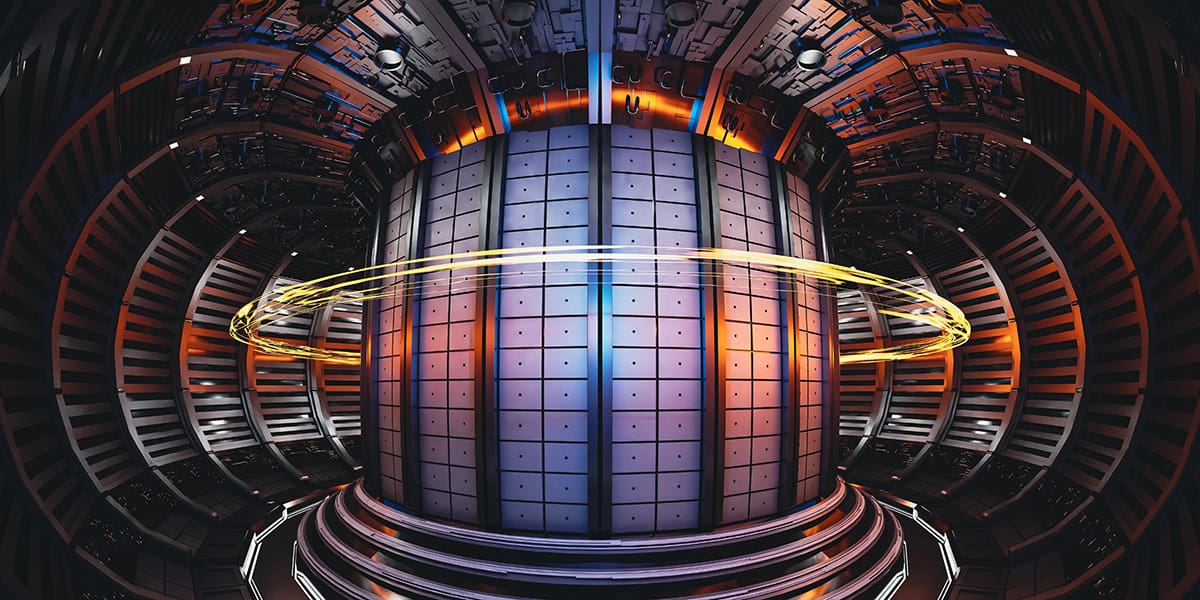
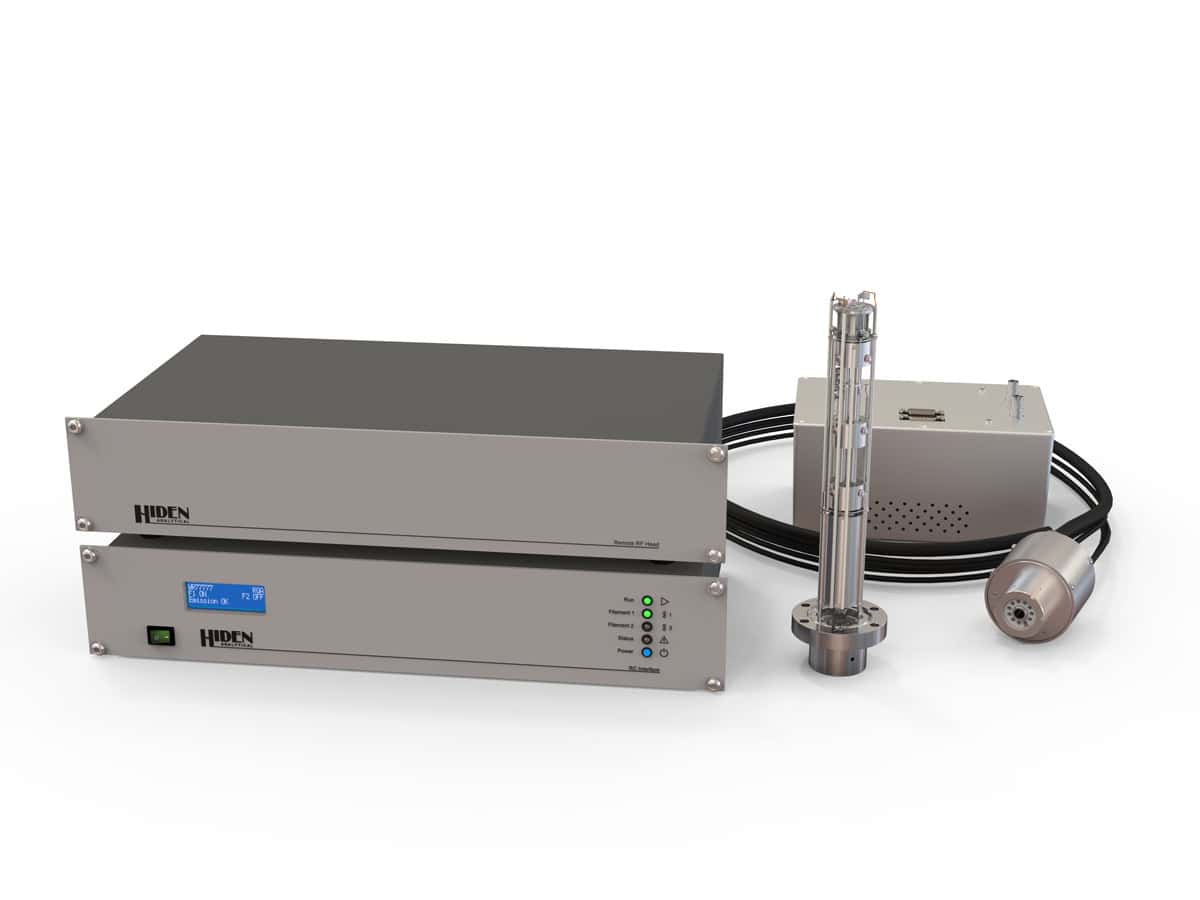
Hiden Analytical has designed a quadrupole mass analyser that can resolve the isotopes of hydrogen and helium that are involved in nuclear fusion (Credit: shutterstock/Mesh Cube)
Nuclear fusion promises to deliver an abundant, safe and sustainable source of energy, but replicating the reactions that power the Sun remains a scientific and engineering challenge. Experimental reactors, such as the ITER facility now being built in France, are designed to heat and confine a plasma containing deuterium and tritium to extreme temperatures, with the aim that the two hydrogen isotopes fuse together to form helium along with a neutron and a huge amount of energy. Crucial to success is understanding what is happening inside the reactor, allowing the plasma composition and properties to be adjusted in real time to initiate and sustain the reaction.
The extreme conditions inside the reactor preclude the use of direct probes, but a combination of external diagnostics can be used to monitor the plasma conditions and the progress of the reaction. To push the capabilities of these techniques, Chris Marcus and colleagues at Oak Ridge National Laboratory (ORNL) in the US have been developing a system that will exploit both mass spectrometry and optical spectroscopy to analyse the complex mixtures of light gases that are released from the tokamak while the reaction is taking place. “Each of these techniques provides complementary information that will help to isolate the hydrogen and helium isotopes we are interested in,” he says.
Complementary diagnostics
As part of this project, Marcus has been working with Hiden Analytical in the UK to develop a mass spectrometer that offers unique capabilities for fusion research. A key part of the brief was to achieve a higher resolving power for hydrogen and helium isotopes than can be achieved with standard instruments. “Our main objective was to detect small concentrations of helium-4, the main product from the nuclear reaction,” says Marcus. “But commercial instruments are unable to resolve helium-4 from deuterium when it is present at concentrations below about 10%.”
The spectrometer developed by the Hiden team exploits a quadrupole design, which is favoured for its rapid scanning speeds, compact footprint, and the ability to provide real-time analysis of atoms and molecules over a broad mass range. These quadrupole sensors work by ionizing the gas species, and then sending the ions through four cylindrical rods impressed with a composite DC and radio-frequency voltage. The resulting electric field separates the ions according to their mass-to-charge ratio, isolating the species of interest and preventing any other ions from reaching the sensor. The ion current produced at the output can then be related to the relative abundance of each species in the gas mixture.
However, conventional quadrupole analysers can only distinguish between atoms and molecules with a difference in mass of 1 amu. That makes it difficult to isolate helium-4 from deuterium, the species of particular interest for fusion research, since their masses differ by just 0.026 amu. “Although large-rod mass spectrometers are able to separate helium and deuterium, they are not suitable for deploying close to the outlet of a fusion reactor,” says Bob Mellor of Hiden Analytical. “We needed to develop a compact instrument that also delivers the extra resolving power.”
Improving resolution
Fortunately, quadrupole devices offer stable operation in several different zones. Standard instruments exploit a region of stability that can be accessed at lower voltages, but the Hiden team designed a spectrometer that can operate in a different stability zone that can separate helium and deuterium, albeit at significantly higher voltages. “This zone, which we call Zone H, achieves the detection limits that Oak Ridge required, but still enabled the use of a small quadrupole sensor,” says Mellor. The operational mode of the spectrometer can easily be switched between Zone H and the more usual Zone 1, which means that the instrument can also be used for conventional vacuum diagnostics.
Once a prototype instrument had demonstrated the feasibility of this solution, the next challenge for Hiden was to engineer a system that would be immune to the strong magnetic fields and high levels of radiation close to the tokamak. That posed a particular problem for the power and control electronics, since solid-state devices are prone to radiation damage and must be installed behind a radiation shield. As a result, the connecting cable between the power unit and the sensor can be up to 140 m long, which presents problems in connecting the RF voltage that is impressed on the quadrupole sensor rods.
A coaxial cable can be used, but simply connecting the RF voltage over long distances results in significant power loss in the generator. This means that the operating frequency of the sensor must be reduced to keep within the available power budget. “If you go much longer than 10 m, the frequency becomes so low that you don’t have any useful resolving power,” says Mellor.
The solution is to transmit RF power down the long coaxial cable to a set of intermediary electronics, or matching unit, that contains radiation-hard passive components and thermionic valves. “In the matching unit there is a power to-voltage convertor that generates the high-voltage RF to be impressed on the rods,” explains Mellor. “Independent testing at a fusion facility has confirmed that this solution is immune to radiation, magnetic fields, and ground vibrations.”
The resolving power of the mass spectrometer has also been evaluated at ORNL. “We have demonstrated that the quadrupole analyser can detect helium-4 at a concentration of 3% in a mixture containing 97% of deuterium,” says Marcus. “It also provides a fast response time, providing an analysis in less than a second, which is another key requirement for fusion diagnostics.
Experimental validation
In the meantime, Hiden has developed a series of commercial instruments to make the technology available to other fusion developers, as well as for other applications that require similar levels of performance. Both the DLS-2 and DLS-2X offer switchable dual-zone operation, combining high resolving power for light species along with high-performance residual gas analysis for vacuum diagnostics. They are available in two possible configurations: one with a Zone H that achieves an ultrahigh mass resolution of 0.0065 amu for species with masses of up to 10 amu, and the other providing a separation of 0.02 amu over a mass range extending to 22.5 amu. While the resolving power and sensitivity are the same for both instruments, the DLS-2X also features remote electronic control for use in harsh environments.
The HAL 101X combines dual-zone operation with radiation-hard electronics (Credit: Hiden Analytical)
Meanwhile, the HAL 101X includes all the features that were developed for the gas analyser system being developed and tested at ORNL. That includes dual-zone operation and radiation-hard electronics, as well as an additional analysis mode in Zone 1 – called Threshold Ionization Mass Spectrometry (TIMS) – that can help to distinguish between species with similar mass-to-charge ratios when they are present in sufficiently high concentrations.
The Hiden team is now working with Marcus to investigate the capabilities of the HAL 101X to distinguish between other light gases that are important for fusion research. “We have established that we can isolate neon, which can be used as a catalyst for the fusion reaction,” says Mellor. “The usual difficulty with neon is that its mass-to-charge ratio is overlapped by argon ions, but Zone H can be used to separate neon-20 from doubly charged argon.” More challenging will be to resolve tritium from hydrogen deuteride, which are separated by just 0.006 amu. “It may be possible by using the TIMS method in Zone 1, or by further increasing the applied DC and RF voltages to achieve a higher mass resolution in Zone H,” says Marcus.
While those investigations continue, Marcus is continuing to evaluate the HAL 101X on a diagnostic test stand at ORNL. “The next steps for the mass analyser will be to advance it into the production phase for the full diagnostic suite,” says Marcus. “That will yield a complete system that has been validated for operational use.”
Nature is always more complicated than the models we use to describe it. Ocean waves, for example, are constantly evolving. They grow when wind transfers kinetic energy to the water’s surface. They interact with each other in highly nonlinear ways. And once the wind dies down, their internal viscosity makes them dissipate away to nothing, leaving behind a surface as flat as glass.
This process is familiar to anyone who’s ever been to the seaside, yet physicists’ go-to models of water moving through the ocean essentially ignore it. Instead, the standard theory of wave transport, known as classical Stokes drift theory, concentrates on describing the flow of steady waves with finite amplitude. And while extensions of the theory incorporate complications such as nonlinear wave shapes, uneven seabeds and the inertia of particles carried along by the waves, they don’t account for waves that grow and fade over time.
For Marco Edoardo Rosti, a physicist at Japan’s Okinawa Institute of Science and Technology (OIST), this shortcoming has real-world consequences. “There is increasing interest in understanding near-surface transport processes because they are directly connected to problems such as pollutant dispersion, microplastic accumulation, sediment transport, and air-sea exchange,” he explains. “Since these processes depend sensitively on particle trajectories, even subtle modifications of the drift mechanism may become important over long times.”
Wave mechanics Team members (l-r) Tatsuo Izawa, Giulio Foggi Rota and Marco Edoardo Rosti. (Courtesy: Marco Edoardo Rosti/OIST)
In a study published in the journal EPL, Rosti and his colleagues Alessandro Chiarini, Tatsuo Izawa and Giulio Foggi Rota explored ways of remedying this deficiency. They focused on the simplest type of wave evolution: a freely decaying, single-frequency gravity wave, one where the force of gravity acts to restore equilibrium and smooth out the surface of the water. Physics World spoke with the team about the findings.
What is the most important advance in this work?
Classical Stokes drift theory predicts that on average, particles will get transported through the water horizontally, in the direction of the wave. But by combining fully nonlinear two-phase simulations with a perturbative analytical model, we demonstrate that when you allow those waves to decay, additional transport mechanisms appear.
Specifically, we identified a net vertical particle migration that arises solely from the temporal decay of the wave field, due to the interplay between fluid inertia and viscous dissipation. This migration persists even for fluids with relatively weak viscosity. Also, because the drift velocity depends on depth, even small vertical displacements alter particle trajectories and mixing properties.
International collaboration: Team member Alessandro Chiarini. (Courtesy: Alessandro Chiarini)
More broadly, our results show that unsteadiness in the wave amplitude is not a minor correction to classical Stokes drift. It’s something that can qualitatively change how an individual parcel of fluid moves through space and time – what we call Lagrangian transport. This has important implications for understanding how floating and suspended materials, including sediments, aerosols and microplastics, get redistributed near the ocean surface.
Can you say more about those implications?
Because gravity waves at the ocean surface span a broad range of wavelengths, from centimetres to hundreds of meters, even a modest fractional vertical displacement per wave cycle can significantly change the depth of a drifting particle. And because the drift velocity beneath a wave decays exponentially with depth, these small vertical excursions can substantially alter how much horizontal drift a particle accumulates. That could influence whether microplastics remain near the surface (where they are most bioavailable), or whether they instead migrate to greater depths, where different biological and physical processes govern their fate.
Why have previous studies not seen this vertical drift?
The drift mechanism we identify accumulates gradually as the wave field decays. That means it only becomes apparent when “tracer” particles in the water are exposed to the same wave as its amplitude decreases over many periods. Most wave-tank experiments and field measurements instead follow tracers as they are swept through a passing wave packet, which is a fundamentally different configuration.
In open-sea conditions, similar arguments apply, and the presence of currents, wind forcing and turbulence all complicate the picture. These effects mask a signal that only shows up unambiguously in clean, unforced conditions.
What was the most challenging aspect of this work?
The most challenging part was to bridge the limits of classical wave theories with the fully nonlinear, two-phase simulations of an air-water interface. The classical Landau wave-decay theory, for example, assumes an isolated, weakly viscous fluid (water). However, our high-resolution simulations demonstrate (as previously reported in other studies) a deviation from these idealized assumptions. In fact, the dominant viscous energy dissipation occurs in a thin layer of air just above the water surface, rather than in the bulk.
To investigate how continuous wave energy decay affects Lagrangian particle transport, we developed a perturbative analytical model based on the classical Landau framework. This was a difficult step because the framework is inherently blind to the two-phase dissipative system. As a result, its asymptotic predictions progressively diverged from simulated flow fields at long times, likely due to intrinsic limitations of the Landau decay-wave model.
What do you plan to do next?
The drift mechanism we discuss in this study applies to a very idealized form of wave decay. In the future, we would like to test whether and how this mechanism propagates in more complex but realistic wave conditions. In particular, we want to work out how to measure such mechanisms in wave-tank experiments. To do so, we will study a different setup, one in which waves decay spatially instead of temporally, since this is closer to what observed in wave tanks. We would also like to study how our mechanism affects drift in waves that vary over time, with controlled unsteadiness, rather than simply decaying.
Fusion is usually performed via two types of plasma confinement. Magnetic involves using magnetic fields to hold stable a hydrogen plasma, while inertial confinement uses rapid compression, usually by lasers, to create a confined plasma for a short period of time.
In the late 1990s, scientists working on the TCV tokamak found that a certain plasma shape — dubbed negative triangularity – can help to keep the hot plasma stable and better contained.
The award-winning work build on the progress made in the decades since to show that such a configuration can lead to enhanced plasma confinement.
Indeed, the findings highlight how negative‑triangularity plasmas are no longer a niche idea but can work reliably, at high performance, and in reactor‑relevant conditions making them promising for real fusion power.
Stefano Coda from the Swiss Federal Technology Institute of Lausanne
Awarded each year, the PPCF prize aims to highlight work of the highest quality and impact published in the journal. The award was judged on originality, scientific quality and impact as well as being based on community nominations and publication metrics.
The journal is now seeking nominations for next year’s prize, which will focus on papers in the following areas: foundational and discovery plasma physics; astrophysical, space and ionospheric plasmas; laboratory astrophysics, high energy density physics; low temperature, dusty and industrial plasmas, and inertial fusion.
Below, Coda talks to Physics World about prize, the importance of recognition and what advice he has for early-career researchers.
What does winning the 2026 PPCF Outstanding Paper Prize mean to you?
This prize is especially meaningful as it recognizes a line of research that has long been associated with our facility TCV but has taken decades to enter the mainstream. Negative triangularity is now considered a realistic option for a fusion power plant. The success of this paper confirms our group’s longstanding and continuing leadership in this effort.
How important is it that researchers receive recognition for their work?
Recognition takes several different forms. It begins with the simple act of acceptance of a publication through the peer-review process. The broader recognition that comes from downloads, citations, and ultimately the propagation of a scientific idea – the replication of an experiment, the application of a theory, a practical implementation of a conceptual notion – is the engine that keeps propelling science forward by giving it visibility and credibility. Researchers are driven primarily by curiosity and the desire to contribute new knowledge, so recognition is most meaningful when it reflects genuine scientific impact. Prizes and awards are then the cherry on the cake!
What advice would you give to early-career researchers looking to pursue a career in plasma physics?
Do not lose sight of the beauty of the science. Plasma physics is enormously complex, full of unsolved mysteries, and yet still rooted largely in classical physics. It is an exceptionally exciting time for the field with applications ranging from manufacturing to biology, and above all nuclear fusion, whose tantalising promise of abundant clean energy is driving tremendous momentum in both the public and private sectors. But whatever direction you choose, it will be rewarding if you keep your eye on the beauty of the science.
In the event of a nuclear holocaust, the only life remaining on Earth may be cockroaches, Keith Richards and physicists arguing about philosophical interpretations of quantum mechanics. One especially rich source of arguments is a deterministic alternative to the standard Copenhagen interpretation that dates back to the American (and later British, after Princeton University fired him for alleged communist sympathies) theoretical physicist David Bohm. According to Bohm, the position of a quantum particle is well defined everywhere and guided by a “pilot wave” which, alas, cannot be measured directly.
Despite these philosophical differences, Bohmian mechanics makes the same predictions as the Copenhagen interpretation. Except maybe it doesn’t. Occasionally, a bright theorist hypothesizes that, under very specific circumstances, one could distinguish them. Very occasionally, a bright experimentalist conducts an experiment that claims to actually do so.
This is what happened last year when Jan Klärs and colleagues at the University of Twente in the Netherlands sent photons from a laser down one of two coupled waveguides towards a potential step. When the photons reached the step, they could pass through it by quantum tunnelling. They could also pass into the other waveguide. The researchers interpreted the distance the photons travelled through the barrier before tunnelling into the other waveguide as a measurement of their speed.
The key result was that, when the wave functions on both sides of the barrier were the same, the photons still tunnelled at, ahem, light speed – matching the Copenhagen notion that tunnelling occurred equally in both directions. However, the Twente team calculated that Bohmian mechanics predicted that photons inside the step – where the guiding equation didn’t have a real-valued frequency – would be at rest and get stuck. Interferometric measurements showed that wasn’t happening.
Not so fast
Game, set and match to Copenhagen? Er, no. Proponents of Bohmian mechanics immediately disputed the team’s definition of velocity. “It’s just an operational definition,” says Aurélien Drezet of the CNRS University of Grenoble-Alps in France. “It has the units of velocity…but that doesn’t mean that Bohmian mechanics can interpret the result.”
In a “Matters Arising” article in Nature, Drezet and two colleagues at the Technion–Israel Institute of Technology in Haifa now add an experimental qualm. The fact that the Twente team was able to produce an image shows that radiation must be leaking out of the cavity, Drezet claims: “If you go to higher approximations and include cavity losses, you explain the experiment completely using Bohmian mechanics,” he says.
Klärs, who is preparing a formal response, is unconvinced. On the first point, he sees no reason “why the same speed measurement, which correctly captures the Bohmian velocity in the propagating regime, should cease to be a speed measurement in the evanescent regime”. On the second, he says his group did not ignore radiative leakage from the cavity: they measured it and found it “does not have a significant impact on the scattering physics we investigate or on the interpretation of our results”.
This could go on for some time – regardless of how many seconds it is to midnight.
Capital connections Janet Coyle from London and Partners addressing delegates at a meeting at the Institute of Physics to mark the first anniversary of the London Quantum Cluster. (Courtesy: Carmen Vilano)
“There are two types of people when it comes to quantum,” joked Howard Dawber, deputy mayor of London for business and growth at a meeting at the Institute of Physics last night to celebrate the first anniversary of the London Quantum Cluster.
“There are those who understand quantum mechanics. There are those who don’t. And there are those who are in superposition of understanding and not understanding until they are observed.”
It was a light-hearted remark that matched the mood of what was essentially an evening of boosterism for quantum technology in London ahead of London Tech Week next week.
As chair of London and Partners – the growth agency for London – Dawber told the gathering of more than 100 “quantum influencers” that the organization was “100% behind the London Quantum Cluster”.
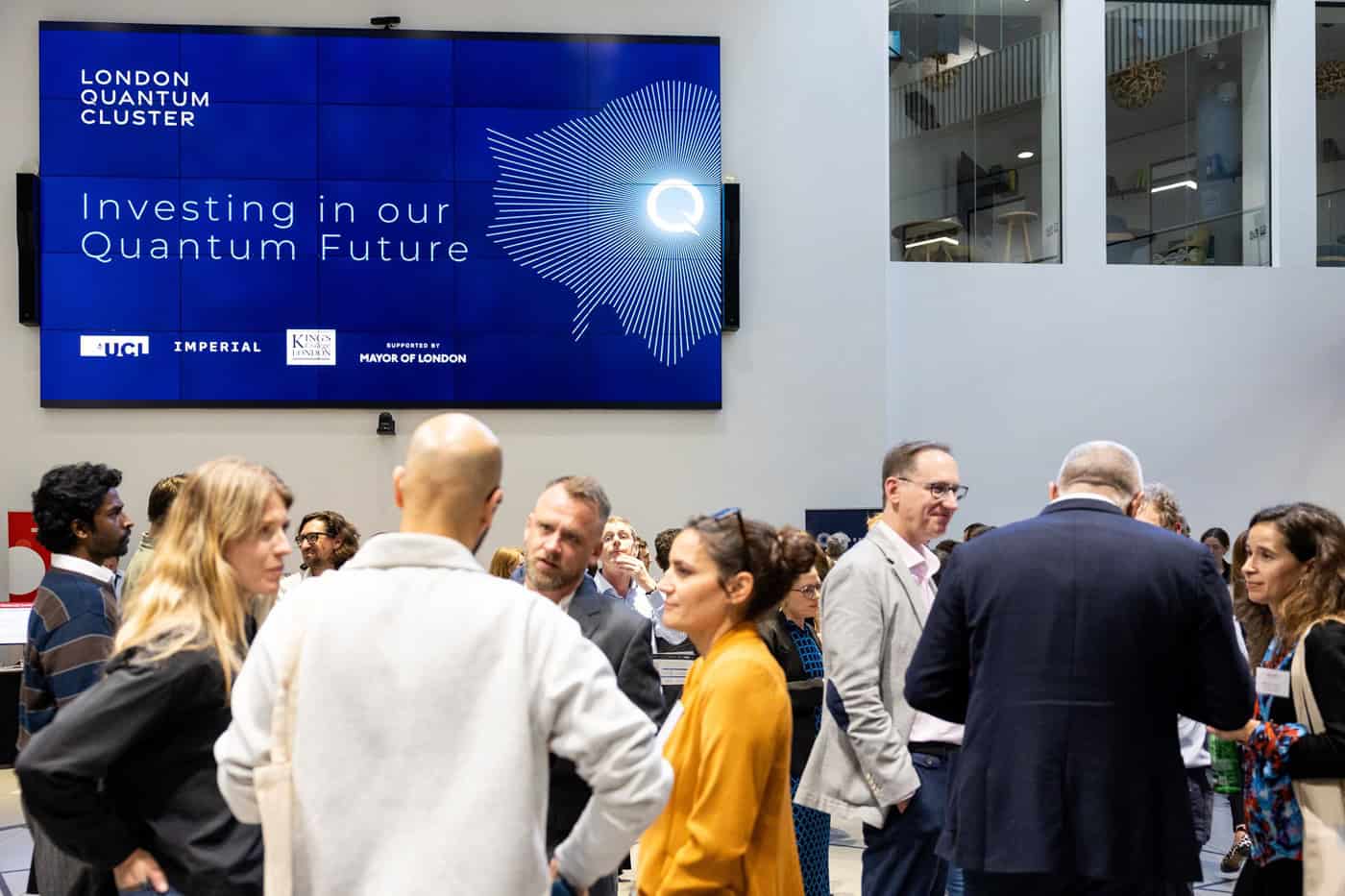
Founded in 2025 by University College London, King’s College London and Imperial College London, with support from the Mayor of London and the UK government, the cluster seeks to establish the capital as a powerhouse of quantum tech.
Georgia Siora from Warwick Economics and Development presented data to show that London is already doing well in the sector, being home to more than 160 quantum companies, with seven of the top 10 UK quantum firms based in the city. Small- and medium-sized quantum firms in the capital, she added, contribute an estimated £153m annually to the economy.
Happy anniversary The London Quantum Cluster is now one year old. (Courtesy: Carmen Vilano)
“Quantum and deep tech are at the heart of the capital’s 10-year growth plan,” added Janet Coyle, managing director of London and Partners.
Geraint Rees, vice-provost for research, innovation and global engagement at UCL, said his aim was “to make London the best place on the planet for serious quantum companies”. He pointed to UCL spin-out Quantum Motion, which has just won $160m of venture-capital funding, as an example of the kind of firm making a name in the city.
The evening ended with a panel debate chaired by Jess Wade from Imperial College London, featuring Maria Maragkou from Nu Quantum as well as Richard Murray, founder of ORCA Computing, who drew a distinction between universities being all about expanding the frontiers of knowledge, whereas for start-ups “the aim is to win”.
Also on the panel was physicist Alejandro Montblanch – head of quantum communication and networking at banking group HSBC – who made it clear that what he wanted to know was: “How can your quantum company help HSBC make more money?”
A welcome note of caution came from London-based venture-capital investor Eloisa Angeles, who pointed out that while the UK has a good track record of government-funded research, the UK is weak at “follow through”, with the government not focused on procurement and not having the end customer of the research in sight.
From heatwaves to extreme rainfall, the impact of climate change is rapidly becoming a reality in our daily lives and a danger to our planet. But physicists are in a great position to help, with physics-based research bringing about practical, real-world solutions, whether it’s more efficient solar cells, better climate models, or novel materials for capturing carbon dioxide from the atmosphere.
There are huge economic and commercial benefits from such work too. A 2023 report from the Institute of Physics (IOP), entitled Physics Powering the Green Economy, estimates there are almost 1800 companies in the UK and Ireland taking green technologies to market with a combined turnover of £750bn.
Last year a follow-up IOP Impact report entitled Unleashing Physics to Power the UK Energy Sector identified the most promising physics technologies for transforming the UK’s energy system. These fall into three main areas: energy generation (nuclear power, photovoltaics), storage (batteries) and transmission (high-temperature superconductors).
The clean-energy revolution will not be easy, however. As the IOP report points out, the UK has a strong research base, good international collaborations, and a growing pipeline of spin-out and early-stage companies. But the country doesn’t invest enough in technology scale-up facilities, faces critical skill shortages, and isn’t great at recycling either.
To discuss how physicists are supporting the green economy – and what more they can do – a panel debate was recently held at the IOP in central London. Attended by Prince Edward, the Duke of Edinburgh, as well as about 100 business leaders, policy chiefs, senior physicists, and IOP and IOP Publishing staff, it was chaired by Tara Shears, the IOP’s vice-president for science and innovation.
The panel featured ex-BP boss John Browne, who now works in green energy, Emily Nurse from the UK’s Climate Change Committee, former Sizewell C energy-strategy director David Cole, solar-cell physicist Jenny Nelson from Imperial College, and Nellie Technologies founder Stephen Milburn. The following is an edited extract of the discussion.
Physicists for a greener future
Green game-changers Tara Shears (far left) chairing the panel debate at the Institute of Physics in London on how physics can support the green economy. It featured (from left to right) John Browne, Emily Nurse, David Cole, Jenny Nelson and Stephen Milburn. (Courtesy: Carmen Valino)
John Browne is chair of BeyondNetZero, a climate-growth equity venture firm. He was group chief executive of energy giant BP from 1995–2007, having joined the firm in 1966 after studying natural sciences.
Emily Nurse, who was originally an experimental particle physicist, is the director of net zero at the UK’s Climate Change Committee, which advises the UK government on reducing emissions and adapting to the impacts of climate change.
David Cole, an engineer by training, was at the time of the discussion director of energy strategy at the Sizewell C nuclear-power plant, which is being built in Suffolk in the UK. When complete, it is expected to meet up to 7% of the UK’s total electricity demand. He is now executive president, consulting, at energy firm Wood.
Stephen Milburn is a physicist who is founder and chief executive of the firm Nellie Technologies in South Wales. It removes carbon dioxide form the atmosphere using biomass, which can then be used as animal feed or construction material.
What role are physicists currently playing in our quest for a greener economy?
John Browne: I made a wonderful decision 60 years ago, when I was 18, which was to read physics. After graduating, I became an engineer, but over the last 30 years physics has come back in to my life as I’ve found myself doing something very important – trying to get to net zero. Physics, you see, touches absolutely everything.
All that I’ve ever done – whether it’s renewable energy or “old energy” [fossil fuels] in my old life – starts with physics. Whether you’re involved in chemistry, biology, electronics or engineering, it could not exist without a much deeper understanding of physics. We have to make sure everybody knows that – but I don’t think people currently do. They tend to think engineering is the only enabler for commercialization, but physics is there.
Emily Nurse: I started out as a particle physicist working at CERN on the Large Hadron Collider but for the last four years, I’ve been involved in climate policy and now work with the UK’s Climate Change Committee. We are the UK government’s official advisers on its climate targets – and assessing progress towards meeting those targets. As we celebrate global decarbonization to date, we need to remember it’s all underpinned by physics.
Take the rise of solar power for example, which has been the fastest growing source of global electricity generation for the last 20 years in a row. Solar installations in 2024 were double those in 2022. Along with wind, solar has led to a reduction in electricity from fossil fuels. We’re seeing the costs of solar plummeting and they just keep falling further.
In the UK, solar power has been growing more slowly, but it’s starting to pick up and is going to be a really important part of the electricity mix. We’ve also got a lot of wind here in the UK – it’s a very windy island after all. I would also like to give a shout out to heat pumps: as a physicist, how can you not love their efficiency?
David Cole: I am an engineer, not a physicist, but I’ve spent my career in lots of different sectors and been fascinated with the role that energy plays in creating a better society. What’s really interesting at Sizewell C is the ownership structure, which involves both state and private investment. It’s the first time private investment has been used for a new nuclear build in the UK.
I hope it leads to a virtuous circle, in which the more plants we build, the more we can reap from that investment
David Cole
Getting this hybrid financial structure over the line was not trivial – it took a lot of effort – but I think it will drive great performance. We’re also trying to use as much UK content in the plants as possible, whether that’s materials, skills or technology. I hope it leads to a virtuous circle, in which the more plants we build, the more we can reap from that investment. Sizewell C will, in other words, bring down energy costs, which is fundamental to economic growth.
Jenny Nelson: I have been active in research into solar photovoltaic (PV) materials and devices for over 30 years and we should celebrate how much has happened in the field during that time. In the last 10 years, we have seen capacity increase globally by more than a factor of 10, we’ve seen the efficiency of solar cells increase, and we’ve seen the cost come down almost by a factor of eight, all of which is remarkable.
Those innovations are firmly rooted in physics – whether it’s changes in device structure… or of the optical properties of materials
Jenny Nelson
The cheapest form of electricity globally, in other words, is now from solar PV, which was not the case 30 years ago. These developments have come partly from economies of scale and partly from technological innovations that have now fed through into production. Those innovations are firmly rooted in physics – whether it’s changes in device structure due to our understanding of semiconductor physics or new developments in the optical properties of materials.
The next generation of PV cells, which are likely to be silicon-based tandem devices, will also depend on scientific breakthroughs and innovations.
Stephen Milburn: I’m chief executive of Nellie Technologies, which is based in South Wales on the site of a former chemical-weapons storage facility. We’re using biomass waste for removing atmospheric carbon dioxide, and if you visit us, you’ll see all kinds of activity: in one corner there’s chemistry, in another engineering and in the next there’s biology and biochemistry. But physics is at the heart of the technology. Physicists are a bit arrogant when we say we think we can do everything, but the fact is we probably can.
But we should also celebrate the work that has gone on to create a market in which carbon-emission credits can be bought and sold. Trading carbon credits has been a bit of a dark activity over the last 10 years, with double counting and bad things happening purely by firms wishing to make a profit. However, the market does have the power to regulate itself – in fact the alignment we’re starting to see between the UK and the EU will help greatly.
Challenging times Technologies to store, generate or transmit energy are rooted in physics. (Courtesy: iStock/Galeanu Mihai)
What are the biggest growth opportunities for the green-economy sector?
John Browne: First, we can do much more with what we’ve already got – for example we could increase our offshore wind or rethink whether we should go back into onshore wind. Second, we can improve what we’re doing – for instance, by increasing the efficiency of solar panels to their theoretical maximum, which would make rooftop solar economically attractive. Third, there are new opportunities, such as metallic organic frameworks and nuclear fusion.
What we do here in the UK needs to move the needle globally, which means thinking about how to scale and finance it properly
John Browne
However, the UK needs to avoid doing things that others are doing much better. The race for the best battery in the world is, for example, probably going to be won elsewhere. What we do here in the UK needs to move the needle globally, which means thinking about how to scale and finance it properly. The UK shouldn’t end up as a secondary player.
Emily Nurse: The UK has made a lot of progress in our quest to reach net zero by 2050. Since 1990, for example, we’ve halved our carbon emissions, mainly by decarbonizing electricity – phasing out coal, reducing gas generation, while significantly increasing wind, solar and other renewables. Electricity generation now accounts for only around 7% of UK emissions, which are dominated by transport (cars and vans) and heating (oil and gas boilers).
Reducing emissions still further will predominantly come from moving to electric technologies, including electric vehicles and heat pumps, and by further decarbonizing the electricity supply. There will be a backbone of wind and solar, but to ensure a secure supply, we’ll need nuclear, carbon capture and storage, hydrogen and batteries. We’ll have to reduce emissions from agriculture and land use too.
A report from the Confederation of British Industry (CBI) last year estimated that the net-zero economy grew by 10% in 2024, which is three times faster than the rest of the UK. But we’ll need more innovations to continue to bring costs down – and we’ll also need to provide incentives to boost the take-up of electric technologies. If we do that, there’ll be an overall saving to the UK economy in about 15 years’ time, our analysis suggests. There are huge opportunities for green growth to come from this investment.
David Cole: I agree that for the UK to be competitive, the cost of energy has to come down – not just for domestic customers but businesses too. In fact, there are two main opportunities First, we have to adopt a “whole-systems” approach. If we’re building a power station, for example, can we use every bit to its maximum potential?
Let’s say I’m running a direct air-capture plant operating at 25–30 ºC – can I use the waste flow from my coolant system to encourage new industries? Can it support nearby hydrogen generation plants or companies making, say, synthetic aviation fuel? Those questions involve thinking about physics and engineering as well as materials science, which is also super important.
Whichever way you look at it, we’re talking about building a lot of hardware, which involves materials. How much energy per unit mass are they using? Can we recycle those materials? What can we do with the waste products? Ultimately, what is really important is energy security: where does your energy come from, who made it and what impact does it have on the environment?
Jenny Nelson: The net-zero economy is growing significantly faster than the rest of the economy and I think that will continue. But decarbonizing the power sector only addresses part of the problem and we’re going to see a big transition across the rest of industry, agriculture and elsewhere that will generate a wide range of opportunities and stimulate the economy too. I’m not just talking about rolling out more renewables, but about integration – bringing together the generation and storage of energy, ensuring that we are managing demands and have the right infrastructure.
As for my area of photovoltaics, we’ve seen great ideas and technologies come out of the UK that are very likely going to be developed outside the UK because the manufacturing capacity isn’t here. Nevertheless, those ideas and innovations can still benefit the country through licensing, partial manufacturing and new technology.
One thing to remember about solar power is it’s distributed. You can have solar generation without being connected to the grid. That not only opens some markets for certain applications where you want to generate electricity locally, but it also provides a route to energy security through back-up generation, towards which solar power will be an important part.
Stephen Milburn: Having a strong green-technology manufacturing base is a huge opportunity for the UK. My company is based in South Wales, where we have lots of highly skilled people who used to work in traditional industries but now don’t have many places to go. Yes, there’s a fantastic semiconductor industry here, but when it comes to deploying green technology we cannot outsource that responsibility to other parts of the world.
Green tech needs to be deployed in the UK’s industrial heartlands… if we don’t nurture jobs and skills here there’s a real risk they will be gone forever
Stephen Milburn
Green tech needs to be deployed in the UK’s industrial heartlands to take advantage of the skills we already have, but which we are at risk of losing. In fact, if we don’t nurture those jobs and skills here there’s a real risk they will be gone forever. Having a strong green-technology manufacturing base is a huge opportunity for the UK.
Deep thinkers Combining analytical minds with great problem-solving skills, physicists are well placed to tackle the challenges of climate change. (Courtesy: iStock/MTStock Studio)
What needs to happen so that these opportunities can be put into practice?
Stephen Milburn: Many science graduates leave university equipped with solid academic rigour and a great scientific understanding, but they often lack practical green-technology skills. This summer my company is therefore hoping to launch a climate apprenticeship programme, which will allow graduates to pick up those skills. We need to build green-tech skills in the real economy, in particular those that will deal with climate change.
Jenny Nelson: The UK must do more to support its own innovations. We need better regulations to avoid unnecessary bottlenecks. We need to invest in infrastructure like the grid. We should completely avoid subsidizing fossil fuels and instead divert any subsidies into alternative economies. Finally, we need to train and educate people, showing the public the potential of green technology so that they become part of the transition, for example by generating their own electricity.
David Cole: We need to integrate our policies on industry, energy, land use and AI so that we can invest in them all as growth areas. In particular, I’d like to see a long-term nuclear programme in which we build a fleet of new reactors all of the same design, which will drive down costs by letting us replicate a particular technology. It’s also vital that we get a high proportion of UK content and technology into these reactors, which will lead to a virtuous circle, with money coming back into the economy that we can re-invest in industrial and academic partnerships.
Emily Nurse: What’s vital is consistency in policies; we need certainty. In the UK, we are fortunate to have world-leading climate legislation in the form of the 2008 Climate Change Act, which does not just make it a legal requirement to reach net zero by 2050 but also gives us targets along the way. It means we know what we need to do in both the medium- and long-term, which gives certainty to investors, businesses, innovators and consumers.
What’s really important is communication – supporting communities through the transition and making sure they realize the benefits
Emily Nurse
So the first thing we need to do is keep the Climate Change Act. Then, of course, we’ve got to address barriers to delivery, including having the right incentives to electrify the economy. And what’s really important is communication – supporting communities through the transition and making sure they realize the benefits, not just in terms of reducing carbon production but of having cleaner, better and more efficient technologies too.
John Browne: First, we must never stop investing in people who can discover things and translate them into real commercial products. Second, we need to understand how to scale things, which means focusing on the winners and getting rid of things that are “nice to have” but aren’t going anywhere. That’s not easy because you have to push people to say, “You’ve done great work, but you’ll have to stop”.
What’s more, to scale new technology, people have to learn what it takes. When I’m in the US, I often speak to chief executives who can explain their technology to the financier who’s supporting it, whereas here in the UK that often doesn’t happen.
Third, we need to maintain confidence in what we’re doing. I often talk to people who think that it’ll be really expensive to get to net zero, but in fact estimates suggest that each household would only have to spend an average of about £150 a year to get there. So it’ll be less than the cost of a TV licence to get to net zero.
Of course the investment needed will be “lumpy” – it’s not as simple as just levying a fee – but the point about governments is that they can smooth things out. That is what they have done in the past and it’s what they should continue to do.
For more information about the IOP’s work on the green economy, click here. You can also keep up to date with the all latest research in the field through IOP Publishing’s series of open-access Environmental Research Journals at this link.
In today’s technologies, mechanical mechanisms generally provide the brawn while electronics supplies the brains. This is partly because it is challenging to write information into mechanical memories without resetting each bit individually. However, that could change as researchers led by Pedro Reis at École Polytechnique Fédérale de Lausanne in Switzerland and Martin van Hecke at AMOLF in the Netherlands have now found a practical means of writing mechanical bits. Their technique, which they describe in Science Advances, uses structures that resemble children’s slap bracelets placed on a rotating turntable. While they acknowledge it is unlikely to replace electronic memories, they argue that it could have specialist applications and might produce insights that translate into electronic innovations.
“The framework we propose could be very useful, for example, in the domain of physical intelligence, where you provide hardware with capabilities that don’t require essentially a brain or an electronic control system to do individual tasks,” Reis says.
Mechanics for memory
Reis and van Hecke’s interest in mechanical memory stems from their research on metamaterials, which are materials that are defined not just by their composition, but also by the structures within them. Mechanical systems offer a tangible means of getting to grips with the complex behaviour of these metamaterials. “Often, all sorts of things that we do rely on nonlinear responses,” van Hecke notes, adding that such responses are much easier to study in mechanical systems than in optical devices.
A metamaterial made up of an array of switchable mechanical elements could function as a form of mechanical memory. However, to be practical, it needs to be possible to flip the states of individual mechanical bits using global controls, as opposed to addressing them individually. Otherwise, writing data will be very fiddly.
A solution emerged from Reis’ interest in rotating platforms, which he describes as “a very versatile way of loading mechanical systems”. While the pair had been friends for more than two decades, they had been working independently until, during a visit, the penny dropped and they realized that placing the metamaterial array on a rotating platform could provide the control they needed.
Because the angular velocity of the platform sends its momentum outwards, each mechanical object experiences a force in the radial direction, known as the centrifugal force. If this angular velocity is not constant, the object will experience an additional force in the orthogonal azimuthal direction, known as the Euler force. “So you have a complex force and bi-directional field that is highly tuneable,” says Reis. “And this tuneability is what we realized is very powerful.”
A rotating array
To construct their array, the researchers used clamped beams with two stable mechanical states – a little like a slap bracelet can be coiled up or flat, except these beams could either curve to the right or to the left. To individually address different beams, they ensured that each beam was unique in its width, the angle it was clamped at, and so on, all of which affect how much force is needed for a beam to ping into the opposite state. By tuning the parameters of each clamped beam and the angular acceleration of the rotating platform, they could engineer the applied force to switch (or not switch) specific beams, thereby writing data into the array purely by rotating the platform.
Doing this accurately requires a level of precision in acceleration control that surpasses what standard lab motors can achieve. However, the researchers say they were able to team up with a local company that had designed high-spec rotating platforms for its high throughput silicon chip production process. By programming platforms with five tailored clamped beams and the right rotation functions, they showed they could write the letters of the alphabet in ASCII script.
“This is a significant advance because it points toward future smart devices and robots that can be reprogrammed remotely without complex wiring or electronics, using only carefully designed motion‑based signals driven by a sole dynamic driving strategy,” explains Damiano Pasini of McGill University, Canada, who studies systems for mechanical computing but was not involved with this work directly.
Reis says he is excited about the scalability of the approach and its potential in high throughput experiments. Meanwhile, van Hecke is looking into how the idea might transfer to other systems, such as applying engineered force functions to crumpling sheets of complex glasses. “It just opens up possibilities for both studies, really fundamental studies of complex systems, but also real applications where you use this dynamic idea,” he tells Physics World.
Toutes les vitamines D ne se valent pas. Une vaste analyse révèle même que l'une des deux formes pourrait faire baisser les niveaux de l'autre, celle qui protège le mieux notre immunité. De quoi interroger le choix des compléments alimentaires, très prisés à la saison sombre.
Anthropic and OpenAI are clashing with the rest of the tech industry over whether “open-source” models from China should be freely available or restricted.
Un étage d’une fusée Falcon 9 devrait frapper la Lune à grande vitesse le 5 août 2026. Un événement rare, potentiellement observable depuis certains points du Globe et précieux pour les scientifiques.
US firm Rescale, a digital engineering platform that combines AI, simulation, and high-performance computing to help R&D and engineering teams design, test, and bring new products to market faster, has received funding under the Genesis Mission, a national initiative led by the US Department of Energy to build an advanced integrated science discovery platform.
As part of the program, Rescale will join Lawrence Berkeley National Laboratory, Lawrence Livermore National Laboratory, and Oak Ridge National Laboratory as a funded partner in the Agentic HPC Pipeline Initiative (AHPI).
The initiative aims to use agentic AI on Rescale’s platform to help accelerate the adoption of national laboratory-developed computing tools and simulations by US industry.
Doubling scientific research output with AI and advanced computing
The Genesis Mission is an ambitious initiative aimed at accelerating scientific and technological breakthroughs by combining artificial intelligence, supercomputing, quantum systems, and advanced scientific instruments into a single research platform.
Established through an executive order in November 2025, the program brings together the department’s 17 national laboratories and around 40,000 scientists and engineers to advance research in areas including energy, scientific discovery, and national security.
Department officials have compared the scale and ambition of the initiative to landmark US efforts such as the Manhattan Project and the Apollo program, with the goal of doubling the productivity of the country’s scientific research within the next decade.
The US Department of Energy launched the first Genesis Mission funding round earlier this year, awarding $293 million to projects focused on areas including advanced manufacturing, biotechnology, nuclear energy, and quantum science. The program received more than 8,000 applications, making it the department’s largest-ever funding call.
Rescale’s AHPI was selected for Phase I funding to address a key challenge: helping industry access advanced simulation tools developed by US national laboratories that have often required specialized expertise and infrastructure.
The company will work with three US national laboratories to bring agentic AI capabilities to advanced simulation tools. The project will integrate AI agents into WarpX, LiDO, and Adamantine, codes developed by Lawrence Berkeley National Laboratory, Lawrence Livermore National Laboratory, and Oak Ridge National Laboratory.
Using the Rescale platform, AI agents will help engineers choose simulation tools, configure inputs, monitor runs, and analyze results. The initiative aims to reduce the time and specialized expertise needed to use these simulations by more than five times, making advanced research capabilities more accessible to US manufacturers.
According to Rescale CEO Joris Poort, the Genesis Mission highlights the importance of making industrial AI technologies available to leading research and development teams that can apply them in real-world applications.
Building on Rescale’s existing partnership with ORNL’s Manufacturing Demonstration Facility, AHPI addresses a common gap: DOE-industry collaborations run for a fixed term, and once they end, partners keep the insight but lose the tools to act on it. AHPI keeps the resulting agentic workflows, surrogate models, and code environments live on Rescale, letting labs and industry keep collaborating long after a project’s funding ends.
Xiaomi’s next-generation premium smartphones are reportedly preparing for a wider global debut. According to information shared by well-known tipster Digital Chat Station, the international versions of the Xiaomi 18 Pro series have received certification, suggesting that Xiaomi plans to bring its dual-screen flagship lineup to overseas markets.
If the report proves accurate, it would mark a significant change in Xiaomi’s flagship strategy. While the Xiaomi 17 Pro remained exclusive to China, with only the Xiaomi 17 and Xiaomi 17 Ultra launching internationally, the upcoming Xiaomi 18 Pro family is expected to make its global debut.
Dual-Screen Design Returns with Expanded Functionality
One of the defining features of the Xiaomi 18 Pro series is its rear secondary display, a concept Xiaomi is said to be refining for this generation.
According to the leak, the new rear screen offers broader app compatibility, allowing more applications to take advantage of the secondary display. Xiaomi is also reportedly developing additional interactive features and customization options to make the rear display more practical for photography, notifications, widgets, and other everyday tasks.
Two Models Planned
The Xiaomi 18 Pro lineup is expected to include two models:
Xiaomi 18 Pro
Xiaomi 18 Pro Max
Both devices are rumored to target the ultra-premium smartphone segment while offering different screen sizes and camera configurations.
Snapdragon 8 Elite Gen6 Pro Built on 2nm Process
Powering both models is expected to be Qualcomm’s upcoming Snapdragon 8 Elite Gen6 Pro platform, reportedly manufactured using TSMC’s advanced 2nm process.
The new chipset is said to deliver approximately 30% higher transistor density than the previous 3nm generation, enabling notable improvements in both performance and energy efficiency.
Leaked specifications also suggest the processor will feature:
Third-generation Oryon CPU architecture
2+3+3 octa-core CPU configuration
16MB L2 cache
Adreno 850 GPU
18MB dedicated graphics cache
Support for LPDDR6 memory
The platform is also expected to significantly enhance on-device AI processing, hardware-accelerated ray tracing, and the ability to run increasingly sophisticated local AI models.
New “Super Pixel” 2K Displays
Both smartphones are rumored to feature Xiaomi’s latest Super Pixel flat display technology.
According to the report, the panels are designed to provide 2K-level visual clarity while consuming power comparable to a conventional 1K display, helping improve battery efficiency without sacrificing image quality.
The displays are also expected to feature:
Ultra-narrow bezels
Large-radius rounded corners
Symmetrical four-sided design
Upgraded Camera Systems
Photography remains a major focus for the Xiaomi 18 Pro series, with the two models offering different camera hardware.
Xiaomi 18 Pro Max
The larger flagship is rumored to include:
200MP main camera featuring a LOFIC ultra-large image sensor
200MP telephoto macro camera with a large sensor
Ultra-wide camera
This would create a triple-camera system highlighted by dual 200MP sensors, making it one of Xiaomi’s most ambitious imaging systems to date.
Xiaomi 18 Pro
The standard Pro model is expected to feature:
200MP large-sensor main camera
200MP large-sensor telephoto macro camera
Ultra-wide camera
Unlike the Pro Max, however, the main camera is not expected to incorporate LOFIC sensor technology.
Massive Batteries with Fast Charging
Battery capacity is another area where Xiaomi appears to be pushing new boundaries.
According to the leak:
Xiaomi 18 Pro: approximately 7,000mAh battery
Xiaomi 18 Pro Max: approximately 8,000mAh battery
Despite their large capacities, both models are rumored to support:
100W wired fast charging
Wireless charging
These specifications could place the Xiaomi 18 Pro series among the highest-capacity flagship smartphones currently available.
Outlook
Although Xiaomi has yet to officially announce the Xiaomi 18 Pro lineup, the latest certification leak suggests the company is preparing to expand its premium flagship strategy beyond China. The reported arrival of the international Xiaomi 18 Pro series, combined with a refined rear display, next-generation Snapdragon platform, upgraded cameras, and exceptionally large batteries, indicates that Xiaomi is aiming to compete more aggressively in the global high-end smartphone market.
As with all pre-release reports, these specifications should be regarded as preliminary until Xiaomi formally unveils the devices. More details, including pricing, regional availability, and launch timing, are expected to emerge in the months ahead.

 Login