
❌

Normal view

NASA’s James Webb Space Telescope May Have Just Unraveled a Longstanding Black Hole Mystery

15 July 2026 at 13:07

James Webb Space Telescope (JWST) observations have astronomers on the brink of solving another long-standing astronomical mystery: how do supermassive black holes feed?

Astronomers from the Université de Montréal led an international team in the new research, reported in a recent paper in The Astrophysical Journal, which presents the clearest images ever recorded of gaseous filaments connecting a galaxy’s atmosphere to the rotating disk that the supermassive black hole feeds on.

The team’s analysis of the data paves the way toward understanding how black holes consume matter, a mystery that has stumped astronomers for decades.

Strange Black Hole Feeding

“JWST observations are offering us thousands of new facts and measurements, and I can report it’s a lot to absorb,” said co-author Megan Donahue, MSU University Distinguished Professor of physics and astronomy. “We are all working together to solve the astrophysics questions about how these black holes get their fuel and how they interact with their host galaxy.”

Supermassive black holes anchor most galaxies in the universe, with masses ranging from millions to billions of times that of the Sun. In active galactic nuclei (AGN), these central black holes both consume enormous amounts of surrounding material and unleash powerful jets that shape the galaxies around them.

This activity presents a longstanding puzzle. Because an AGN’s jets heat the surrounding gas, they should effectively cut off the black hole’s fuel supply, leaving astronomers to wonder how it continues to accrete matter.

Testing a Hypothesis

To investigate, the researchers tested the leading explanation: that heated gas eventually cools, condenses into long filaments, and falls back toward the galactic center, replenishing the black hole’s supply of material.

They turned JWST toward one of the best natural laboratories for studying AGN: the galaxy NGC 4696, located at the heart of the Centaurus Cluster, roughly 145 million light-years from Earth.

Using JWST’s NIRSpec instrument, the team collected eight hours of observations, mapping the motion of gas deep within the galaxy—where the black hole’s gravitational influence dominates—at a resolution of about 30 light-years.

Their observations revealed an 800-light-year-wide disk of gas orbiting the supermassive black hole at roughly 600 kilometers per second. Connected to this rapidly rotating disk was a large infalling filament, funneling gas inward to feed the AGN.

Feeding Cycle of the Black Hole

The discovery fills in a crucial missing piece of the puzzle surrounding how supermassive black holes sustain themselves. The researchers propose that after the black hole injects energy into the surrounding gas, heating it, that material eventually cools and collapses into thin filaments stretching hundreds of thousands of light-years. Guided by magnetic fields, these filaments then fall toward the galaxy’s center, where they accumulate in the rotating accretion disk.

The team also ran a series of computer simulations based on this model and found that the predicted behavior closely matched what JWST observed. While additional observations will be needed to confirm the results, the findings provide strong support for the filament-feeding hypothesis.

“It’s been really exciting to participate in this project,” co-author Mark Voit, an MSU Physics and Astronomy Professor, said in a statement.

“Calculations done by our Michigan State group predict that magnetic fields should help feed the universe’s biggest black holes by channeling cool gas toward them, and it’s amazing to see that happening in these JWST images,” he added.

The paper, “JWST Reveals How Lack Holes Are Fed: Kiloparsec-Scale Multiphase Filaments Feed Sub-Kiloparsec Circumnuclear Disks,” appeared in The Astrophysical Journal Letters on July 14, 2026.

Ryan Whalen covers science and technology for The Debrief. He holds an MA in History and a Master of Library and Information Science with a certificate in Data Science. He can be contacted at ryan@thedebrief.org, and follow him on Twitter @mdntwvlf.

James Webb Space Telescope Reveals New Features of an Unusual Galaxy That Left Baffled Astronomers Questioning Its Origins

10 July 2026 at 14:13

NASA’s James Webb Space Telescope (JWST) is celebrating four years of unexpectedly strong performance by providing a deep new view into one of the universe’s most familiar galaxies: Centaurus A.

Typically, Centaurus A’s thick dust obscures astronomers’ attempts to peer into it, yet the JWST’s near- and mid-infrared sensitivity allows scientists to see more of the galaxy than ever before. 

In new images released by NASA to celebrate JWST’s four years of impressive discoveries, the most powerful telescope ever constructed reveals the dense collection of stars that make up the ever-changing Centaurus A galaxy.

Inside Centaurus A

Due to two crucial factors, Centaurus A is an extremely interesting galaxy for astronomers. It is highly active, offering an important opportunity to monitor galaxy and black hole growth while being relatively close by, at just 11 million light-years away—a highly unusual combination.

The history of imaging Centaurus A is marked by questions, which JWST has now begun to answer. Webb’s predecessor, Hubble, could only view visible light in its examinations, leaving the galaxy’s central regions obscured by dust. Additionally, the Spitzer Space Telescope lacked sufficient resolution to resolve individual stars in infrared, although the data it collected provided new discoveries of massive dust structures.

Powerful events are on display in Centaurus A, the aftermath of a collision with another galaxy and a supermassive black hole’s active feeding. As the black hole releases powerful jets and gushes energy, it shapes the surrounding galaxy, which still retains an unusual shape left by its two-billion-year-old merger.

“No single telescope tells the whole story,” said Shawn Domagal-Goldman, division director, Astrophysics, NASA Headquarters in Washington. “Discoveries build over time, and new observatories expand on the foundations laid by earlier missions. Webb represents the most powerful step forward yet, opening a window into wavelengths and details never before accessible. This allows astronomers to examine structures and processes that other telescopes could not see.”

MIRI Centaurus A
MIRI image of Centaurus A. Credit: NASA, ESA, CSA, STScI; Image Processing: Alyssa Pagan (STScI), Joseph DePasquale (STScI), Macarena Garcia Marin (ESA Office at STScI)

JWST Reveals Amazing Structures

Thanks to JWST’s mid-infrared capabilities, astronomers captured detailed images of Centaurus A’s dust structures and were surprised and confused by the glowing shapes revealed. One unusual feature is a band cutting across the galactic center, shaped like a warped parallelogram, with wispy tendrils stretching out of it.

Another feature, shaped like the letter “S,” also confounds astronomers, leaving many questions about the influence of both the central black hole and the galactic merger on its shape and evolution. 

A large portion of the red glowing dots in the image above represent dusty areas, either dust-rich stars or stellar nurseries, both important sources of dust for star formation, and therefore, the continuance of the galaxy.

Single Stars and JWST

The JWST’s incredible resolution is allowing astronomers to study the galaxy star by star for the first time. Combining images from the MIRI (Mid-Infrared Instrument) and the NIRCam (Near-Infrared Camera) revealed tightly packed individual stars.

This view of individual stars is essential for what some astronomers call “galactic archaeology,” by providing important clues that help scientists reconstruct the galaxy’s formation and evolution. This galactic timeline is made up of many important pieces revealed by individual stars, such as when the oldest stars formed, when star formation slowed, when the merger reignited a powerful burst of star formation, and how that collision stirred the galaxy’s gases, further accelerating star formation.

Capturing these details requires spectroscopy, a technique where light is broken down to reveal detailed information about distant stars. Also using this technique, researchers can gain important information about the central black hole, identifying that it can both compress gas to accelerate star formation and push gas away to limit it.

On its fourth anniversary, the unprecedented details now revealed about one of our most interesting galactic neighbors continue to underscore the JWST’s incredible promise as NASA’s premier space observatory.

Ryan Whalen covers science and technology for The Debrief. He holds an MA in History and a Master of Library and Information Science with a certificate in Data Science. He can be contacted at ryan@thedebrief.org, and follow him on Twitter @mdntwvlf.
“It’s Like Using a Time Machine” Unexpected Cosmic ‘Life After Death’ Discovered on Planets Around a Burned-Out Star

1 July 2026 at 21:11

James Webb Space Telescope (JWST) observations have revealed that the fate of planets after the death of their host star may be surprisingly warm, according to new research from the University of St Andrews.

The JWST observations offer a possible glimpse into what our solar system will be like billions of years from now, particularly for gas giants like Jupiter. In a recent paper published in Nature, the St Andrew researchers describe JWST observations of WD 1856 b, a Jupiter-sized exoplanet much warmer than would be expected for orbiting a dead white dwarf star.

Webb Observes WD 1856 b

A collaboration between NASA, the European Space Agency, and the Canadian Space Agency, the JWST has provided an unprecedented view of the distant edges of the universe, revealing many unexpected finds. Among these surprises was WD 1856 b, whose mass, temperature, and atmosphere readings reveal a surprisingly intact planet after the death of its star.

Our own Sun is projected to exhaust its supply of hydrogen in roughly five billion years, after which it will expand into a red giant star about 100 times larger than it is today, before shedding mass in its final transformation into a white dwarf star.

In the distant future, the Sun’s transformations will likely someday obliterate Mercury, Venus, and even Earth, yet scientists have remained uncertain about how more distant planets will fare. Only by observing real-world examples of planets orbiting dead stars can scientists gather more data on how these scenarios play out for the remaining planets, as with JWST’s observations of WD 1856 b.

A Strange System

Discovered in 2020 by the TESS survey and the Spitzer space telescope, WD 1856 b orbits the white dwarf star WD 1856+534 at a distance of around 80 light-years from Earth.

“The planet is quite the oddball. It’s about the size of Jupiter, but the white dwarf it orbits is the size of Earth, so the planet is seven times larger than its star,” said lead author Dr. Ryan MacDonald from the University of St Andrews.

Perhaps the most confounding element of this system is how close the exoplanet is to its host star. At a distance of 50 times closer than the Earth is to the Sun, the planet is at a distance at which the star’s red giant phase should have destroyed it. How the planet managed to escape the destruction while ultimately ending up so close to its star intrigued the St. Andrews team.

James Webb Space Telescope Data

As WD 1856 b performed a grazing transit, where just its top edge passed in front of the host star, JWST observations allowed the researchers to crucially measure mass and temperature data, allowing them to estimate its mass at between four and eleven times that of Jupiter.

“We’re used to looking back in time when we use telescopes, but this is the first time we have been able to look forward to what might happen to the outer planets around the remnant of a Sun-like star,” MacDonald said, adding that “it’s like using a time machine to peer into the distant future of our Solar System.”

Infrared light emitted by the planet’s own heat showed a surprising temperature of 126°C, which is 240°C hotter than it would be from the white dwarf’s heat alone.

JWST Tells The Future

As the team worked on the problem, the temperature mystery proved to be the answer to the distance issue.

“The big question is how WD 1856 b ended up where it is today, and there are two theories. One is that the planet was swallowed by the host star as it was dying, and managed to survive on the inside,” said Dr. Christopher O’Connor of Northwestern University. “The other is that the migration took place due to the gravitational effect of other objects in the system. The white dwarf is part of a triple star system, and the outer companion stars could have influenced WD 1856 b’s orbit.”

Since no present source of energy should be capable of generating this much heat on the exoplanet, the researchers suggest that it represents heat left over from being engulfed by the red giant or possibly through an inward migration. Cooling models the team analyzed indicated that the planet likely first captured heat about 3 to 3.5 billion years ago, then cooled to its present temperature and migrated closer to its host star.

“This is just the beginning of our exploration of planets orbiting dead stars with Webb, and the search for further planets orbiting white dwarfs is ongoing,” Dr. MacDonald concluded. “Our results show that stellar death is not the end – some planets experience a vibrant and lively future after the death of their star.”

The paper, “Aerosol and Hydrocarbons in the Atmosphere of a White Dwarf Planet,” appeared in Nature on July 1, 2026.

Ryan Whalen covers science and technology for The Debrief. He holds an MA in History and a Master of Library and Information Science with a certificate in Data Science. He can be contacted at ryan@thedebrief.org, and follow him on Twitter @mdntwvlf.

Astronomers Discover a Sleeping Giant: Ancient Black Hole 6 Billion Times the Sun’s Mass

22 June 2026 at 17:47
Highly Distorted Red Galaxy MRG M0138Researchers have identified the most distant dormant black hole known, dating back to the universe’s early history. Astronomers have long relied on brilliant quasars, supermassive black holes actively feeding on surrounding matter, to study the early universe. Yet these luminous objects reveal only part of the story. Now, researchers have detected the most distant dormant [...]

NASA’s Webb Telescope Spied on Interstellar Object 3I/ATLAS as It Left Our Solar System—What It Spotted “Surprised Researchers”

22 June 2026 at 17:07

Newly published research made possible by NASA’s James Webb Space Telescope has revealed surprising insights into the mysterious interstellar comet 3I/ATLAS.

The findings, which stem from observations of the space visitor as it was leaving our Solar System months ago, reveal new clues to the ancient object’s origins, thanks to detailed new measurements of its chemistry.

Following its trip around the Sun late last year, 3I/ATLAS had been significantly warmed, causing a large amount of its icy exterior to be converted into a cloudy coma. This not only made the comet more visible but also provided Webb an ideal opportunity to collect spectrographic data that could offer important information about its chemical composition.

The Webb data, which was detailed in a recent study, indicates chemical ratios of carbon and deuterium emanating from the object that are very unlike those of comets found within our solar system.

The compelling new findings, according to NASA officials, “surprised researchers.” Here’s why.

A Rare Look at an Ancient Space Object

Fundamentally, the recent Webb observations provided astronomers with one of their best opportunities to observe information about the comet’s possible origins throughout the duration of its visit to our Solar System last year.

Martin Cordiner, an astro-chemist at NASA’s Goddard Space Flight Center in Greenbelt, Maryland, called the observations “a unique opportunity to study an ancient object from the distant galaxy, probably pre-dating our Sun and solar system.”

Webb 3I/ATLAS
Above: Researchers used Webb’s NIRSpec instrument to map specific chemical contents of comet 3I/ATLAS as it exited our Solar System (Image Credit: NASA, ESA, CSA, STScI, Martin Cordiner (CUA, NASA-GSFC); Image Processing: Alyssa Pagan (STScI).

Cordiner, who was also the lead author of the recent Nature study, said that the data he and his co-authors were able to obtain helped to provide “direct insight into that distant time and place” from which 3I/ATLAS originates, while also providing new insights into “how unusual our own solar system may be.”

Understandably, the Webb telescope is in high demand, and Cordiner and his team had to interrupt the space observatory’s planned schedule to turn its powerful eye toward 3I/ATLAS as it made its exit.

A Deuterium-Rich Space Object

Cordiner and the research team joined astronomers from many sub-disciplines in taking the opportunity to get a look at 3I/ATLAS on its journey through the solar system, which relied primarily on Webb’s NIRSpec (Near-Infrared Spectrograph) instrument.

As previously reported by The Debrief, the telescope’s NIRSpec instrument revealed “exceptionally high” levels of deuterium—also known as “heavy hydrogen”—amounting to nearly 30 times the amount normally seen in comets within our solar system.

One thing this probably indicates is that early in its lifetime, 3I/ATLAS was likely exposed to large amounts of radiation, which gave rise to the deuterium-rich ice in its composition. However, after drifting through space for eons without coming into proximity to a star like our Sun, there were no opportunities for this “heavy water” to be converted back into the typical kind of H20 water common on our planet.

Clues from Carbon Traces

Another primary finding Cordiner and the team made is that NIRSpec data revealed only small amounts of carbon-13, as opposed to its lighter counterpart, carbon-12. Since carbon-13 enrichment is known to occur within stellar systems over time, the team interprets this as evidence for the extreme age of 3I/ATLAS, which could have origins going as far back as an astonishing 12 billion years ago.

This would place the interstellar object’s birth within the period astronomers identify as “cosmic noon,” during which our universe was undergoing its peak period in star formation. Additionally, separate observations involving the European Southern Observatory’s Very Large Telescope help to affirm the recent Webb findings, along with complementary insights into the ancient comet’s carbon content, as well as nitrogen present in the form of cyanide, revealed from recent spectrographic analysis.

“For us as scientists, finding these rare isotopes is fascinating, but the bigger picture here is looking at the possibilities of prebiotic chemistry elsewhere in the galaxy,” said Stefanie Milam, one of the recent study’s co-authors, and also a researcher at NASA Goddard, in a recent statement.

Fundamentally, what the latest data on 3I/ATLAS conveys is more than just a rare look at a cosmic voyager who briefly entered our Solar System—it is a potential glimpse at how the very building blocks of life could have made their way into our planetary neighborhood long ago, eventually arriving here on Earth.

“So far, we know of only one place in the vast cosmos where chemical ingredients led to life – our solar system, our Earth,” Milam recently said.

“Analysis of these interstellar objects is a major step towards learning how common, or uncommon, the conditions for the evolution of life are in the universe,” Milam added.

The team’s recent study, “Isotopic evidence for a cold and distant origin of 3I/ATLAS,” appeared in the journal Nature on June 22, 2026.

Micah Hanks is the Editor-in-Chief and Co-Founder of The Debrief. A longtime reporter on science, defense, and technology with a focus on space and astronomy, he can be reached at micah@thedebrief.org. Follow him on X @MicahHanks, and at micahhanks.com.

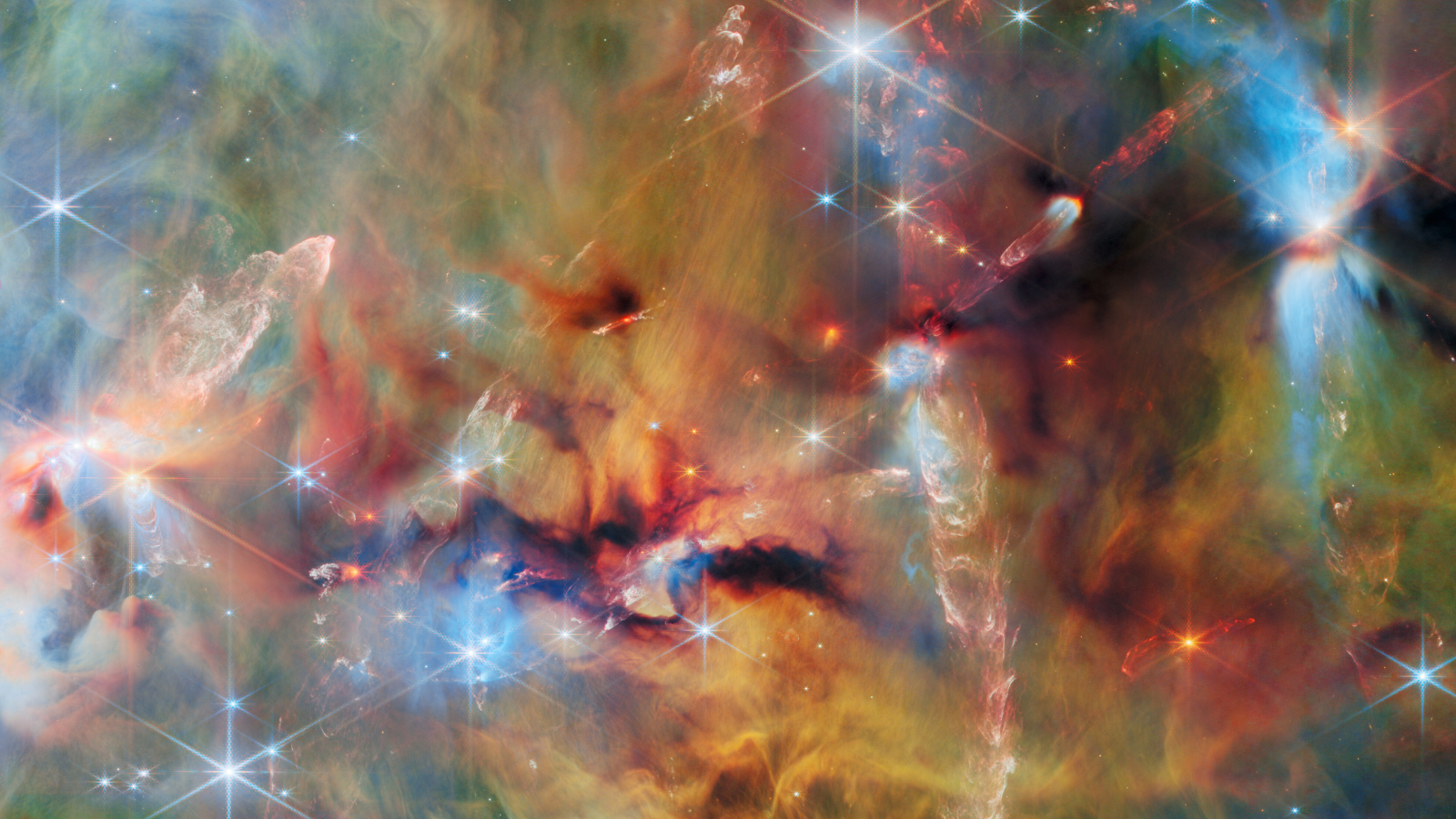
James Webb Space Telescope captures the star-forming clouds of Orion A in stunning detail | Space photo of the day for June 22, 2026

22 June 2026 at 15:00

The James Webb Space Telescope Picture of the Month shows the giant molecular cloud Orion A, an area of the sky replete with star-forming clouds.

The James Webb Space Telescope Picture of the Month shows the giant molecular cloud Orion A, an area of the sky replete with star-forming clouds. (Image credit: ESA/Webb, NASA & CSA, T. Megeath, M. Zamani (ESA/Webb) Acknowledgement: M. H. Özsaraç)

The image of the day for Monday (June 22) shows the star-forming clouds of Orion A in stunning detail.

Released as the James Webb Space Telescope (JWST) Picture of the Month, the image further demonstrates the impact the $10 billion space telescope has had on our view of the cosmos since it began operations in July 2022.

What is Orion A?

Located around 1,300 light-years from Earth and situated to the south of Orion's Belt in the night sky, Orion A is one of the largest and closest molecular clouds to our planet. Shaped like a filament, this structure of gas and dust is around 290 light-years long.

Part of the Orion molecular cloud complex, Orion A is a packed stellar nursery. Over the last few million years alone, it is estimated that Orion A has given birth to around 3,000 stellar objects.

The molecular cloud is also host to many young protostars surrounded by platters of gas and dust called protoplanetary disks, which, as the name suggests, will form planets. Thus, studying regions like Orion A could be key to understanding how the solar system came to be around 4.6 billion years ago.

James Webb Space Telescope Made a Salty Discovery in This Unusual Exoplanet’s Skies

20 June 2026 at 14:37


James Webb Space Telescope (JWST) observations have revealed the colorful secret of the Pink Planet, the coldest object of its type ever directly observed.

A team of astronomers led by Northwestern University has revealed their findings in a recent paper published in The Astronomical Journal, finally describing the rose-colored haze covering the planetary-mass companion GJ504b, thanks to JWST data.

For over a decade, researchers have speculated that atmospheric salt clouds may create the pink planet’s strange hue, but this is the first concrete evidence for the hypothesis.

The Pink Planet

Since its discovery in 2013, GJ504b, commonly known as “The Pink Planet,” has been a bit of an astronomical mystery. Even the object’s description is imprecise: a “planetary-mass companion,” a nebulous category teetering between the size of a large planet and a brown dwarf, at roughly 25 times Jupiter’s mass. Residing 57 light-years from Earth, the object’s host star is similar to our Sun.

Faint due to extremely cold temperatures, astronomers cannot obtain clear enough observations with ground-based telescopes to perform spectroscopic analysis. However, from its vantage point beyond our atmosphere, the JWST’s advanced instruments have finally provided the necessary data to make sense of the object’s strange pink atmosphere.

The exoplanets most clearly observed are much hotter than our world, with temperatures between 1,000 and 2,000°F, creating a brilliance which can be seen across the gulf of space and through Earth’s atmosphere.

This giant planet is a mere 550°F, still hot by Earth standards, but far cooler than is normal for its type. According to the new study, GJ504b is an ancient world, some 2.5 to 4billion years old, with a slow cooling over time accounting for its decreased temperature.

Challenging JWST Observation

In addition to providing the first evidence for The Pink Planet’s elusive salt clouds, the team’s research has broader implications for studying cold objects, laying the groundwork for future JWST observations of such faint glows, too dim for ground-based telescopes.

“The Pink Planet is the coldest companion ever discovered using ground-based instruments,” according to Aneesh Baburaj, the study’s lead author. “Many teams all around the world performed follow-up observations to study its light, but it was too faint for ground-based instruments. That made it a perfect target for JWST. When we finally obtained its spectrum, it immediately looked interesting. But once we started digging deeper into the data, we realized it was not like anything we have analyzed before.”

To accurately analyze the light, Baburaj’s team used an advanced data-processing technique to remove considerable glare from the Pink Planet’s host star, improving the quality of the JWST data. Breaking light into separate colors through spectroscopic analysis allows scientists to determine the elemental composition of exoplanet atmospheres using JWST data.

“In the past, other astronomers observed the companion for an entire night with some of the biggest telescopes in the world to obtain a spectrum,” Baburaj said. “And they could not see the object. With JWST, our entire observation took around two hours, and we were successful.”

Analyzing the JWST Data

The team discovered water vapor, methane, carbon dioxide, ammonia, and other molecules in the object’s atmosphere, but these results conflicted with existing atmospheric models, which only made sense if the object had an extremely unlikely combination of physical features. However, once the team added clouds to the model, the effect of their salty formations on the light made the JWST data much easier to explain.

“We ran simulations with clouds, and the results aligned with what we know about cold planets,” Baburaj said. “We tried three different types of clouds, and salt clouds fit best. When we accounted for salt clouds, it subdued the signature of molecules hidden deeper in the companion’s atmosphere. Then, the results became physically possible.”

In addition to the salty clues, the researchers discovered an abundance of heavy metals. These may have something to do with The Pink Planet’s origins, as it may have originally formed as a star instead of a planet, but astronomers remain uncertain. In any case, the work process developed here will be essential to future JWST investigation of cold objects.

“This is the first time we’ve found that salt clouds are critical to explaining the spectrum of an object,” Baburaj concluded. “It’s a good reminder to account for clouds in our models.”

The paper, “JWST-TST High Contrast: First Direct Spectroscopy of GJ504b Reveals Clouds and Possible Metal Enrichment,” appeared in The Astronomical Journal on June 18, 2026.

Ryan Whalen covers science and technology for The Debrief. He holds an MA in History and a Master of Library and Information Science with a certificate in Data Science. He can be contacted at ryan@thedebrief.org, and follow him on Twitter @mdntwvlf.

James Webb Space Telescope Reveals Two Completely Different Twilights on an Alien World

16 June 2026 at 13:09


For the first time, astronomers have distinguished between the morning and evening atmospheres of a single planet, revealing two remarkably different environments at its edges. WASP-121 b is a gas giant that orbits extremely close to its star, resulting in one hemisphere exposed to temperatures approaching 2,500 degrees Celsius while the opposite side remains in constant darkness.

A research team from the Max Planck Institute for Astronomy used the James Webb Space Telescope to provide observational evidence for a phenomenon that models had previously predicted. The boundary regions between day and night on tidally locked planets can exhibit distinct temperatures and chemical compositions.

The recent findings appeared in a study published in Nature Astronomy.

A World Stuck in Time

WASP-121 b is part of a group of gas giants known as hot Jupiters. These massive planets orbit their stars in just a few days and eventually become locked in place by gravity. Tidal forces keep one side facing the star at all times, while the other side never sees daylight.

“WASP-121 b is particularly extreme,” said co-author Tom Evans-Soma of the University of Newcastle, Australia. “Average temperatures on the dayside hemisphere are around 2,770 Kelvin, while those on the nightside are closer to about 1,000 Kelvin.”

The difference in temperature between the two hemispheres, which is about 1,775 degrees Celsius, makes WASP-121 b one of the most thermally extreme exoplanets known. The regions at the boundary between day and night, called terminators, are where the planet experiences constant morning or evening conditions. Scientists expected these areas to have different atmospheric properties, but only with the precision of JWST could these differences be directly observed.

Mapping the Atmosphere

The researchers used a method based on the planet’s transit across its star to study these differences. As WASP-121 b passes in front of its star, it rotates by about 30 degrees, which means that different parts of its atmosphere can be observed during each transit. By tracking how infrared starlight filters through the atmosphere over time, the team reconstructed how temperature and chemical composition change across different longitudes.

“By measuring how starlight absorption changes as WASP-121 b rotates, we probe its atmosphere longitude by longitude,” said lead author Cyril Gapp of MPIA. The observations not only confirmed what models had predicted, but also showed that the differences between the two terminators are even greater than expected.

Two Different Skies

The evening side of the planet’s terminator absorbs more starlight than the morning side. Powerful eastward winds sweep heat from the scorching dayside toward the nightside, with the evening region getting the first blast of this warmth. This extra heat causes the atmosphere there to puff up, allowing it to absorb even more starlight, as the observations showed.

Chemical measurements backed up these findings. Carbon monoxide absorption increased as the hotter regions of the evening came into view near the end of the transit. Water showed a different pattern. Rather than simply decreasing with higher temperatures, the researchers interpret the result as evidence that water molecules in the upper atmosphere are breaking apart, likely due to the intense heat at the evening terminator. This points to a real chemical change, not just a shift in molecular location.

The Cloud Problem

The morning side shows a different environment. Although models predicted a difference between the two terminators, they did not fully explain why the morning side appears cooler and more opaque. The most likely explanation involves clouds that are unlike those on Earth.

At the morning terminator, air comes in from the cold nightside. Temperatures may be low enough for silicate and mineral compounds to turn into tiny particles, forming clouds that block infrared radiation from below. This makes the atmosphere appear cooler than it really is underneath.

When the team adjusted their models to account for these clouds, the results more closely aligned with their observations. Still, confirming exactly how these clouds form and behave will require more advanced modeling, as cloud formation and evaporation in such extreme environments remain a major puzzle in exoplanet science.

A Method Ready to Scale

WASP-121 b has been the subject of previous studies, but JWST now enables astronomers to examine its atmosphere in detail, section by section. This approach is now also available for use with other exoplanets.

The team has already found other ultra-hot gas giants with the right temperatures and orbits for similar analysis. Using this method on other planets will help astronomers compare atmospheric conditions and deepen our understanding of extreme planetary environments.

Austin Burgess is a writer and researcher with a background in sales, marketing, and data analytics. He holds an MBA, a Bachelor of Science in Business Administration, and a data analytics certification. His work focuses on breaking scientific developments, with an emphasis on emerging biology, cognitive neuroscience, and archaeological discoveries.

James Webb Spots Something Strange Between Day and Night on an Alien Planet

Exoplanet WASP-121 bJames Webb has revealed that the sunrise and sunset sides of WASP-121 b have surprisingly different atmospheres. Astronomers using the James Webb Space Telescope (JWST) have discovered striking differences between the morning and evening sides of the atmosphere of WASP-121 b, an ultra-hot gas giant located far beyond our solar system. The findings provide the [...]

NASA’s James Webb Space Telescope Spots a Hidden ‘Galaxy Killer’ Lurking in the Early Universe

13 June 2026 at 16:48


The James Webb Space Telescope (JWST) has revealed a cosmic catastrophe, as winds extinguished a star-forming galaxy in the early universe, offering new insight into earlier strange observations.

Cosmic winds may destroy entire galaxies, according to new JWST research exploring the lingering mystery of why certain parts of the universe are unexpectedly devoid of growth.

The findings were published in a recent paper in the Monthly Notices of the Royal Astronomical Society, revealing galactic-scale death in a universe just one billion years old, and potentially answering questions about previous troubling JWST observations.

James Webb Space Telescope Observation

Observations made by the JWST revealed cold gas, an essential star-forming material, blowing out of the CRISTAL-2 galaxy in a massive plume, severely degrading its ability to produce new stars. According to the researchers, it would take less than 50 million years for the galaxy to be completely dead if this activity keeps up, a mere blink in the scheme of a 13.8 billion-year-old universe.

Astronomers consider galaxies to be “dead” if they are no longer capable of producing fresh stars. Traditionally, astronomers expected that it would take billions of years for an old galaxy to slowly run out of fuel and burn out. However, JWST observations have continually captured events in the early universe that were not expected to occur until much later.

One of these was finding a host of dead galaxies in the early universe shortly after it first became operational in 2022. How galaxies could die so close to the beginning of the universe, without sufficient time to burn through their cold gas supplies, has long perplexed scientists.

Explaining Galaxy Death

As researchers began considering various explanations for the phenomenon, they initially settled on dark energy, essentially explaining one unknown with another. Dark energy is a theoretical substance that scientists believe drives the expansion of the universe and was once a stronger force than it is now. While the Dark Energy Spectroscopic Instrument survey revealed last year that dark energy appears to be weakening over time, an exotic galaxy-killer is not required, according to this latest research.

Instead, researchers offer a much simpler explanation of powerful cosmic winds in the remote past. Conventional thinking has it that such powerful winds could only be generated by a supermassive black hole, yet these new observations challenge that assumption.

JWST Reveals the Culprit

CRISTAL-02 is a galaxy still in the making, composed of several smaller galaxies in the final stages of merging into a single system. Because the early universe was far denser than it is today, such collisions were much more common. During these mergers, gravitational forces funnel vast amounts of gas toward the galactic centers, triggering intense bursts of star formation.

Observations of CRISTAL-02 by the James Webb Space Telescope and the Atacama Large Millimeter/submillimeter Array (ALMA) revealed a star formation rate roughly twice that of similar galaxies. Ironically, this extraordinary burst of stellar activity is also generating a powerful cosmic wind that is stripping away the very gas needed to form new stars.

Compounding the effect, many of the newly formed stars rapidly exhaust their fuel and end their lives as supernovae, producing additional outflows that further deplete the galaxy’s star-forming material.

Together, these processes appear capable of shutting down star formation far more quickly than astronomers previously believed possible. Going forward, ongoing JWST observations are likely to continue challenging astronomers’ assumptions, as more evidence indicates that nearly half of the early universe’s massive galaxies were interacting—a finding which also suggests early “galactic deaths” like these may not be all that rare, after all.

The paper, “Multiphase Images of a Powerful Supernova-Driven Wind in the Early Universe,” appeared in Monthly Notices of the Royal Astronomical Society on June 10, 2026.

Ryan Whalen covers science and technology for The Debrief. He holds an MA in History and a Master of Library and Information Science with a certificate in Data Science. He can be contacted at ryan@thedebrief.org, and follow him on Twitter @mdntwvlf.

This James Webb Space Telescope Discovery Could Finally Solve the Mystery Behind “Little Red Dots”

12 June 2026 at 15:58


James Webb Space Telescope (JWST) observations of what astronomers call “little red dots” have intrigued researchers since their discovery in 2022.

Now, new data on the spectra of one of these dots, made possible with imagery obtained by Webb, may hold the answers researchers have long sought.

In a recent paper published in The Astrophysical Journal, a team of astronomers led by the University of Texas at Austin’s Vasily Kokorev revealed their intriguing observations of the little red dot GLIMPSE-17775 using the JWST.

Data collected by the JWST support the BH* scenario, the hypothesis that little red dots are supermassive black holes surrounded by a cloud of partially ionized gas.

JWST and the Little Red Dot

The recent JWST observation of GLIMPSE-17775 is the deepest spectral view of a little red dot ever captured, spanning 40 spectral lines and offering a powerful opportunity to compare the data with various theories about the object’s origins. Born only about 1.8 billion years after the Big Bang, or about 12 billion years ago, the object hails from the universe’s early days.

As with many of science’s most interesting discoveries, this observation was a fortunate accident, captured as the JWST was observing the Abell S1063 galaxy cluster, located in front of GLIMPSE-17775 from our point of view.

Gravitational lensing magnifies GIMPSE-17775, allowing JWST a better look at the object despite its extreme distance, and making the 30-spectrum JWST captured equivalent to hours of observations. 

“When we saw the spectrum for the first time, it was like having all the pieces of a puzzle scattered on the floor,” said Kokorev. “We picked up each piece of the puzzle, measured the lines, and started combining the different pieces into a mosaic. Maybe a few pieces looked like nothing at first, but then a couple of them came together, and we realized that there was something there.”

Explaining Little Red Dots

First appearing at around 600 million years after the Big Bang, the mysterious little red dots have puzzled scientists since they first came to light. The black hole scenario is just one of several that researchers have proposed as a possible explanation, although it is currently gaining the most support as more data comes in.

“I think part of the scientific community is converging on a singular picture — that little red dots can be explained by black hole star models. But none of the previous little red dots have all of the pieces of evidence in the same place,” Kokorev said. “With GLIMPSE-17775, we can test these models because of how deep and amazing this source’s spectrum is.”

The researchers interpret the data as showing a rapidly accreting black hole covered by a dense gas cocoon that reprocesses the black hole’s light into the spectrum observed by JWST.

Comparing the spectra to various models revealed some intriguing evidence for the BH* scenario. The helium, oxygen, and hydrogen lines don’t fit a simple rotating gas cloud model, but do correspond to an electron scattering, a broadening effect associated with a dense, layered gas cocoon.

Other lines, such as the 16 iron lines, suggest a powerful energy source, which could indicate a rapidly accreting black hole. Additionally, helium absorption and fluorescence are seen in the spectrum, signs that a powerful energy source is enveloped in a dense medium.

What JWST Didn’t See

Beyond this incredibly deep spectrum, other little red dot observations have been faint in X-rays, a form of emission that the gas cocoon, in the BH* scenario, is likely to absorb.

One strange quirk of GLIMPSE-17775 is that the spectrum was missing the portion that would indicate the little red dots’ signature dip in light emission, known as a Balmer break. However, supplementary data collected by the Hubble Space Telescope resolved this issue, identifying that interference from a giant host galaxy is the root cause.

“Everything fits, nothing is broken, and I think that makes the puzzle that is our universe even better,” Kokorev concluded. “Looking ahead, I’m eager to dive deeper and learn about what is powering the central engines of little red dots. While we think it’s a black hole, there are some other interesting theories being proposed, which is exciting. Maybe in a year or two, we’ll have the final answer to what powers these sources.”

The paper, “The Deepest GLIMPSE of a Dense Gas Cocoon Enshrouding a Little Red Dot,” appeared in The Astrophysical Journal on June 10, 2026.

Ryan Whalen covers science and technology for The Debrief. He holds an MA in History and a Master of Library and Information Science with a certificate in Data Science. He can be contacted at ryan@thedebrief.org, and follow him on Twitter @mdntwvlf.

Il telescopio spaziale James Webb sta offrendo una visione senza precedenti…

9 June 2026 at 21:33
Il telescopio spaziale James Webb sta offrendo una visione senza precedenti dell’universo primordiale grazie alla sua capacità di osservare la luce infrarossa proveniente da oggetti estremamente lontani. Tra le sue scoperte più sorprendenti figurano galassie molto luminose e apparentemente mature esistite poche centinaia di milioni di anni dopo il Big Bang. Queste osservazioni hanno acceso un intenso dibattito scientifico, poiché suggeriscono che la crescita delle prime strutture cosmiche potrebbe essere avvenuta più rapidamente del previsto. Sebbene analisi successive abbiano ridimensionato alcune delle stime iniziali, Webb continua a fornire dati che stanno portando gli astronomi a perfezionare le teorie sulla formazione delle galassie, dei buchi neri supermassicci e dell’universo delle origini.

James Webb Space Telescope weighs 'sleeping giant' black hole from 10 billion light-years away — and it's 6 billion times our sun's mass

8 June 2026 at 21:00
Using the James Webb Space Telescope, and with a little help from Einstein, astronomers have "weighed" a sleeping giant, a dormant supermassive black hole located a staggering 10 billion light-years away.

Le télescope James-Webb révèle la composition surprenante de la comète interstellaire 3I/Atlas !

8 June 2026 at 19:03
Le télescope spatial James-Webb de la Nasa a recueilli sa première signature chimique infrarouge moyenne d'un objet interstellaire lors d'une récente observation de la comète 3I/Atlas. Les résultats concernant la composition chimique et le comportement de la comète sont étranges.

Interstellar Comet 3I/ATLAS Reveals Strange Chemistry Beyond Our Solar System

By: NASA
6 June 2026 at 13:33
Interstellar Comet 3I ATLASAn interstellar comet just revealed hidden methane and chemical clues from another star system. NASA’s James Webb Space Telescope has achieved another milestone by capturing the first mid-infrared chemical fingerprint of an interstellar object. The observations focused on comet 3I/ATLAS, a rare visitor from beyond our solar system, and the findings have been published in [...]

James Webb Space Telescope | Extremely High Redshift Failure

2 June 2026 at 01:25
The James Webb Space Telescope (JWST) has observed what appear to be very distant red galaxies challenging the standard big bang theory. Misidentifying some Brown Dwarf stars within our Milky Way as these red distant galaxies brings into question the existing cosmological models.

❌