❌

Normal view

China’s Coal Surge Threatens Historic Emissions Drop, Hoover Dam Faces Massive Power Cut as Lake Mead Hits Critical Low — Today’s Environmental Briefing for Sat, Jun 13 2026

13 June 2026 at 14:01
Hoover Dam hydroelectric facility with dramatically lowered water levels visible at Lake Mead

**

Across the stories today, a common thread emerges: the tension between revelation and rescue—moments when new understanding drives urgent action, even as time runs short.

Beneath our feet, scientists have mapped fungal networks stretching nearly a billion times the distance to the sun, revealing an underground web of connection that dwarfs anything visible above ground. It’s a reminder that the natural world operates on scales both microscopic and cosmic, with systems we’re only beginning to understand. This same spirit of discovery appears in unexpected places—from the ghostly earthshine illuminating the moon’s dark side to the arrival of a tropical western reef heron in Wales, likely pushed northward by changing climate patterns.

The day’s coverage points to growing momentum around what happens when scientific insight meets conservation urgency. In Mozambique, nine female white rhinos completed their journey to establish the country’s first viable breeding population in generations—a decade-long effort finally bearing fruit. Meanwhile, Australian researchers at PlantBank work like modern-day ark builders, preserving seeds before species disappear forever. On Palau’s Ulong Island, the simple act of removing invasive rats triggered rapid ecological recovery across both land and marine environments, challenging assumptions about how long nature needs to heal.

Yet revelations don’t always bring good news. China’s power sector emissions fell for the first time in a decade, a historic milestone, but a coal surge threatens to reverse that progress. Trees may store less carbon than scientists hoped, according to new research examining growth patterns across 137 forest sites. And Antarctica is missing sea ice equivalent to France’s size, with winter temperatures soaring 20°C above normal—numbers that feel abstract until you consider their global implications.

It’s a reminder that progress and pressure often arrive together. Lake Mead approaches the critical threshold that will slash Hoover Dam’s electricity production, while thousands of marine animals die in fishing nets annually through bycatch. For the 58-year-old Kenyan fisherman Mohamed Mwazigona, returning to shore with just 2 kilograms of fish, these aren’t statistics—they’re the reality of dwindling catches that threaten coastal livelihoods.

Behind the numbers are real communities adapting in real time. Eight volunteers used ropes and pulleys to rescue a 172-pound loggerhead turtle named Bowser from a Florida pier—the kind of hands-on conservation that makes the difference between survival and loss. In Albania, protesters dubbed the “Flamingo Revolution” emerged after bulldozers illegally destroyed protected wetlands for a luxury resort, showing how environmental destruction can galvanize public resistance.

The stories also reveal how legal frameworks struggle to keep pace with environmental challenges. A federal judge ruled the Trump administration’s cancellation of environmental justice grants illegal, while Australia’s climate chief outlined plans to transform the country from fossil fuel exporter to renewable energy leader. Meanwhile, environmental laws were waived to enable border wall construction through Big Bend National Park, illustrating how political priorities can override conservation concerns.

What emerges is a picture of a planet under pressure, but also of human ingenuity rising to meet unprecedented challenges. As commercial satellites threaten the night sky that has guided humanity for millennia, conservationists celebrate osprey chicks hatching in Wales and sengi pups born in captivity. Progress isn’t linear, and solutions often come from unexpected directions—underground fungal networks, community rescue efforts, and the patient work of seed preservation.

As the week unfolds, all eyes will be on how these parallel stories of discovery and rescue continue to intersect, shaping our understanding of what’s possible when knowledge meets action.

The post China’s Coal Surge Threatens Historic Emissions Drop, Hoover Dam Faces Massive Power Cut as Lake Mead Hits Critical Low — Today’s Environmental Briefing for Sat, Jun 13 2026 first appeared on EnviroLink Network.

"Le futur c’est quoi " : questionner notre rapport au temps

12 June 2026 at 09:01
Du 7 mai au 10 janvier 2027, le Musée d’ethnographie de Genève propose une enquête sur un thème insaisissable : le futur. Comment définir et matérialiser ce concept ? Le parcours revient sur les multiples manières d'imaginer l'avenir à travers les époques et les cultures.

World Cup Fever in Guadalajara

12 June 2026 at 05:01
April 13, 1986
April 27, 2026
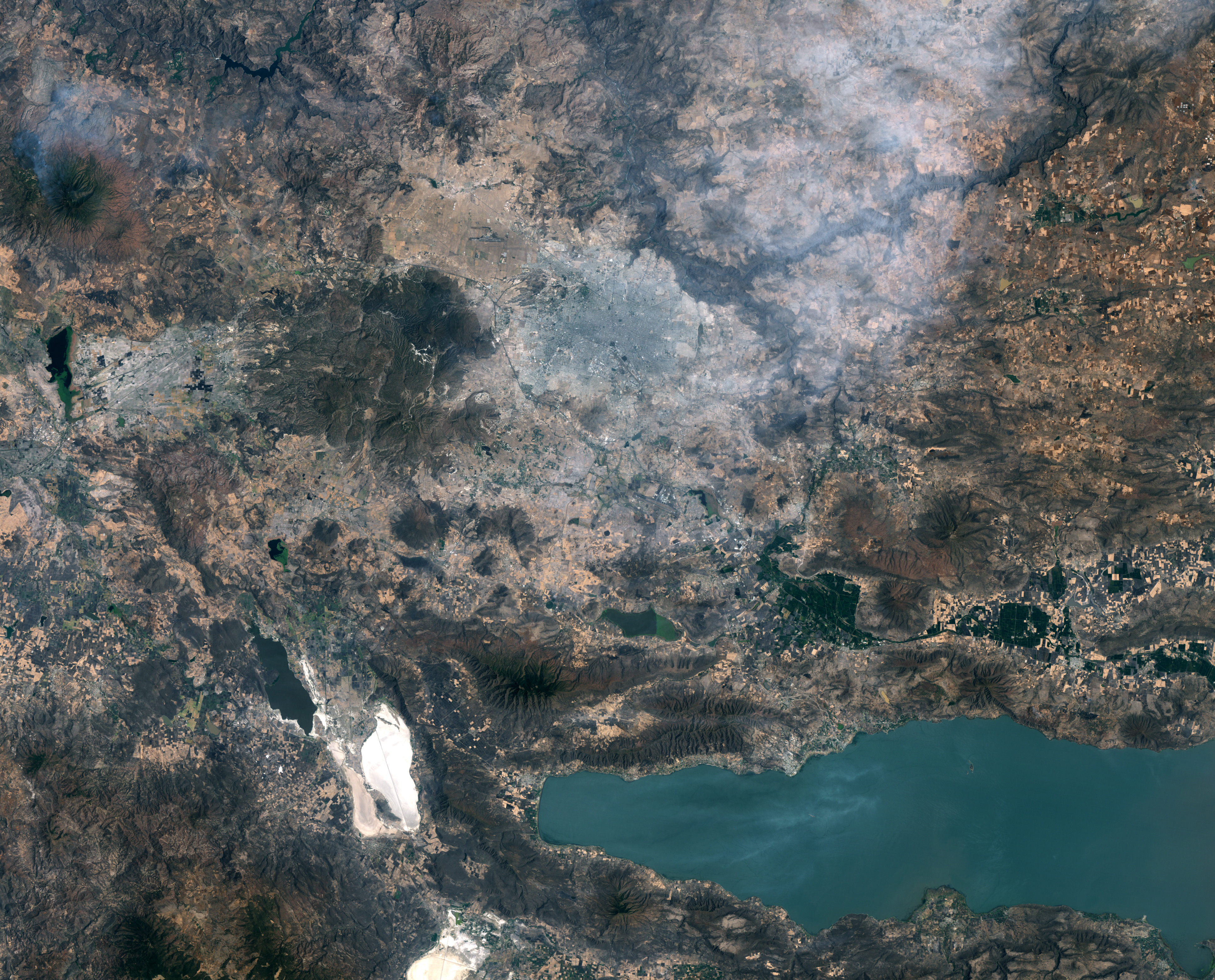
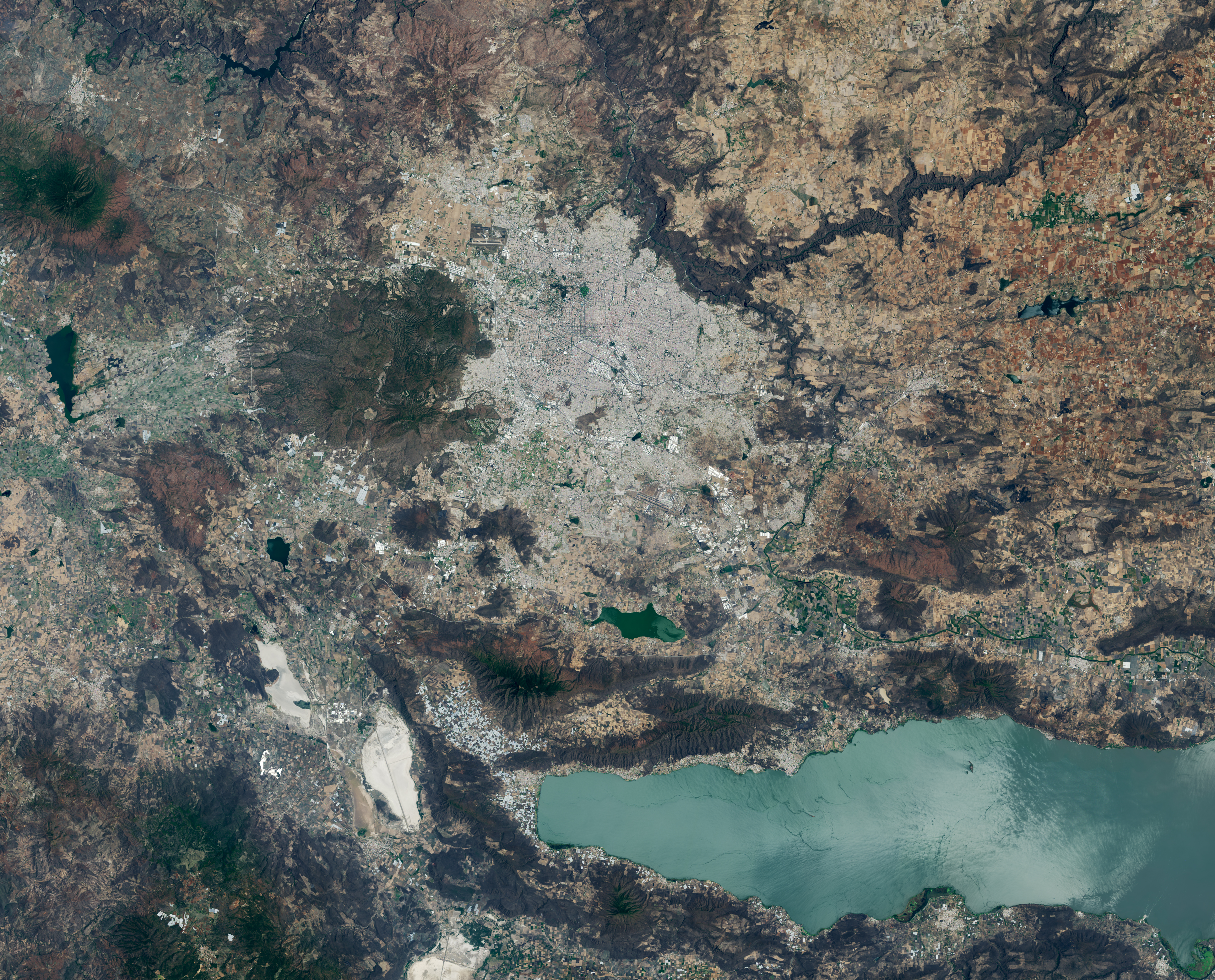
: Images of Guadalajara in 1986 (left) and 2026 (right) shows the city expanding westward into an area that had been mostly farmland. Guadalajara Stadium appears as a small circular feature on the left side of the 2026 image.
A pair of Landsat images shows 40 years of westward urban expansion from Guadalajara, Mexico. The Thematic Mapper on Landsat 5 captured the left image in 1986; the Operational Land Imager on Landsat 8 captured the right image in 2026.
Images of Guadalajara in 1986 (left) and 2026 (right) shows the city expanding westward into an area that had been mostly farmland. Guadalajara Stadium appears as a small circular feature on the left side of the 2026 image.
A pair of Landsat images shows 40 years of westward urban expansion from Guadalajara, Mexico. The Thematic Mapper on Landsat 5 captured the left image in 1986; the Operational Land Imager on Landsat 8 captured the right image in 2026.
NASA Earth Observatory / Lauren Dauphin
April 13, 1986
April 27, 2026

April 13, 1986 – April 27, 2026

A pair of Landsat images shows 40 years of westward urban expansion from Guadalajara, Mexico. The TM (Thematic Mapper) on Landsat 5 captured the left image in 1986; the OLI (Operational Land Imager) on Landsat 8 captured the right image in 2026.

Guadalajara, Mexico, was quite a different place when it last hosted World Cup games 40 years ago. The city welcomed matches in June 1986 and did so again in 2026, when South Korea faced Czechia at Guadalajara Stadium in the opening round of the 2026 FIFA World Cup.

In 1986, Guadalajara Stadium had not yet been built in Zapopan, the fast-growing municipality just northwest of Guadalajara. Many of that year’s World Cup matches were held instead at Jalisco Stadium in northeastern Guadalajara. It was in that stadium that France defeated Brazil in a penalty shootout in the 1986 quarterfinals, in what is widely regarded as one of the most memorable World Cup games of all time.

As seen in the Landsat images above, the land where Guadalajara Stadium (also called Estadio Akron) now sits was farmland in 1986. The new stadium, built in 2010 to host Mexico’s Club Deportivo Guadalajara, or Chivas, lies near the Sierra la Primavera volcanic complex, a rugged landscape full of lava flows, volcanic domes, steam vents, and hot springs. The architects who designed the stadium took inspiration from the nearby volcanic terrain, creating a structure that rises from a grassy earthen berm meant to resemble the flanks of a volcano, topped with a white roof reminiscent of a volcanic cloud.   

About 95,000 years ago, the volcanic system underneath Sierra la Primavera produced a massive eruption that caused a caldera 11 kilometers (7 miles) in diameter to slump downward. Water filled the depression for tens of thousands of years, but tectonic uplift and the accumulation of sediment eventually led to the demise of the lake. Erosion wore away the softer surrounding rock over time, leaving harder, erosion-resistant volcanic rocks within the circular feature that now stand high above the surrounding terrain.

Starting about 60,000 years ago, several lava domes erupted along the southern edge of the caldera. The youngest of them, Cerro del Colli, formed about 30,000 years ago, leaving the dome-shaped feature just south of the stadium and contributing to a broader landscape dotted with other volcanic domes and cinder cones.

Today, much of the original caldera has been preserved as a forested area known as La Primavera Biosphere Reserve, even as development has partially encircled it during the past 40 years. The population of the Guadalajara metro area has grown from about 2.7 million in 1986 to more than 5.5 million now, with particularly rapid growth in Zapopan, a burgeoning tech hub sometimes billed as “Mexico’s Silicon Valley.” A prominent development visible in Landsat images is Guadalajara Technology Park, one of several new industrial parks in Zapopan. New greenhouses have also come to the area en masse, including south of the reserve, where they are mostly used to grow fruits and vegetables.

World Cup fever runs particularly high in Guadalajara, which is hosting World Cup matches for the third time. During Brazil’s legendary title run in 1970, when Pelé led the team, Jalisco Stadium was the venue for Brazil’s first-round, quarterfinal, and semifinal matches. To commemorate him, the city in May 2026 erected a 9.5-meter (31-foot) bronze statue of the iconic football (soccer) player.

Even the animals at Guadalajara Zoo are taking part in the festivities, with elephants, gorillas, giraffes, capybaras, pumas, and macaws “predicting” match winners by choosing between food, shirts, boxes, soccer balls, and other items. A puma named Muluk predicted South Korea would beat Czechia by sniffing and moving a ball, one newspaper reported.

Guadalajara will host four first-round matches: South Korea vs. Czechia on June 12, Mexico vs. South Korea on June 18, Colombia vs. Democratic Republic of the Congo on June 23, and Uruguay vs. Spain on June 26.

NASA Earth Observatory images by Lauren Dauphin, using Landsat data from the U.S. Geological Survey. Story by Adam Voiland.

Downloads

Images of Guadalajara in 1986 (left) and 2026 (right) shows the city expanding westward into an area that had been mostly farmland. Guadalajara Stadium appears as a small circular feature on the left side of the 2026 image.

April 13, 1986

JPEG (13.09 MB)

Images of Guadalajara in 1986 (left) and 2026 (right) shows the city expanding westward into an area that had been mostly farmland. Guadalajara Stadium appears as a small circular feature on the left side of the 2026 image.

April 27, 2026

JPEG (13.71 MB)

References & Resources

You may also be interested in:

Stay up-to-date with the latest content from NASA as we explore the universe and discover more about our home planet.

A Volcanic Medley Near Mammoth Lakes 
4 min read

A massive, old caldera and more recently formed craters shape the landscape in the eastern Sierra Nevada.

Article
Scoria Cones on Earth and Mars
7 min read

The hill-shaped features are a sign of explosive volcanic activity—a rarity on the Red Planet.

Article
Restless Kīlauea Launches Lava and Ash
3 min read

Episode 43 of the Hawaiian volcano’s current eruption was marked by high lava fountains and widespread ash dispersal.

Article

The post World Cup Fever in Guadalajara appeared first on NASA Science.

World Cup Fever in Guadalajara

12 June 2026 at 05:01


April 13, 1986
April 27, 2026

: Images of Guadalajara in 1986 (left) and 2026 (right) shows the city expanding westward into an area that had been mostly farmland. Guadalajara Stadium appears as a small circular feature on the left side of the 2026 image.
A pair of Landsat images shows 40 years of westward urban expansion from Guadalajara, Mexico. The Thematic Mapper on Landsat 5 captured the left image in 1986; the Operational Land Imager on Landsat 8 captured the right image in 2026.

Images of Guadalajara in 1986 (left) and 2026 (right) shows the city expanding westward into an area that had been mostly farmland. Guadalajara Stadium appears as a small circular feature on the left side of the 2026 image.
A pair of Landsat images shows 40 years of westward urban expansion from Guadalajara, Mexico. The Thematic Mapper on Landsat 5 captured the left image in 1986; the Operational Land Imager on Landsat 8 captured the right image in 2026.
NASA Earth Observatory / Lauren Dauphin

: Images of Guadalajara in 1986 (left) and 2026 (right) shows the city expanding westward into an area that had been mostly farmland. Guadalajara Stadium appears as a small circular feature on the left side of the 2026 image.
A pair of Landsat images shows 40 years of westward urban expansion from Guadalajara, Mexico. The Thematic Mapper on Landsat 5 captured the left image in 1986; the Operational Land Imager on Landsat 8 captured the right image in 2026.
Images of Guadalajara in 1986 (left) and 2026 (right) shows the city expanding westward into an area that had been mostly farmland. Guadalajara Stadium appears as a small circular feature on the left side of the 2026 image.
A pair of Landsat images shows 40 years of westward urban expansion from Guadalajara, Mexico. The Thematic Mapper on Landsat 5 captured the left image in 1986; the Operational Land Imager on Landsat 8 captured the right image in 2026.
NASA Earth Observatory / Lauren Dauphin

April 13, 1986

April 27, 2026

April 13, 1986 – April 27, 2026


A pair of Landsat images shows 40 years of westward urban expansion from Guadalajara, Mexico. The TM (Thematic Mapper) on Landsat 5 captured the left image in 1986; the OLI (Operational Land Imager) on Landsat 8 captured the right image in 2026.

Guadalajara, Mexico, was quite a different place when it last hosted World Cup games 40 years ago. The city welcomed matches in June 1986 and did so again in 2026, when South Korea faced Czechia at Guadalajara Stadium in the opening round of the 2026 FIFA World Cup.

In 1986, Guadalajara Stadium had not yet been built in Zapopan, the fast-growing municipality just northwest of Guadalajara. Many of that year’s World Cup matches were held instead at Jalisco Stadium in northeastern Guadalajara. It was in that stadium that France defeated Brazil in a penalty shootout in the 1986 quarterfinals, in what is widely regarded as one of the most memorable World Cup games of all time.

As seen in the Landsat images above, the land where Guadalajara Stadium (also called Estadio Akron) now sits was farmland in 1986. The new stadium, built in 2010 to host Mexico’s Club Deportivo Guadalajara, or Chivas, lies near the Sierra la Primavera volcanic complex, a rugged landscape full of lava flows, volcanic domes, steam vents, and hot springs. The architects who designed the stadium took inspiration from the nearby volcanic terrain, creating a structure that rises from a grassy earthen berm meant to resemble the flanks of a volcano, topped with a white roof reminiscent of a volcanic cloud.   

About 95,000 years ago, the volcanic system underneath Sierra la Primavera produced a massive eruption that caused a caldera 11 kilometers (7 miles) in diameter to slump downward. Water filled the depression for tens of thousands of years, but tectonic uplift and the accumulation of sediment eventually led to the demise of the lake. Erosion wore away the softer surrounding rock over time, leaving harder, erosion-resistant volcanic rocks within the circular feature that now stand high above the surrounding terrain.

Starting about 60,000 years ago, several lava domes erupted along the southern edge of the caldera. The youngest of them, Cerro del Colli, formed about 30,000 years ago, leaving the dome-shaped feature just south of the stadium and contributing to a broader landscape dotted with other volcanic domes and cinder cones.

Today, much of the original caldera has been preserved as a forested area known as La Primavera Biosphere Reserve, even as development has partially encircled it during the past 40 years. The population of the Guadalajara metro area has grown from about 2.7 million in 1986 to more than 5.5 million now, with particularly rapid growth in Zapopan, a burgeoning tech hub sometimes billed as “Mexico’s Silicon Valley.” A prominent development visible in Landsat images is Guadalajara Technology Park, one of several new industrial parks in Zapopan. New greenhouses have also come to the area en masse, including south of the reserve, where they are mostly used to grow fruits and vegetables.

World Cup fever runs particularly high in Guadalajara, which is hosting World Cup matches for the third time. During Brazil’s legendary title run in 1970, when Pelé led the team, Jalisco Stadium was the venue for Brazil’s first-round, quarterfinal, and semifinal matches. To commemorate him, the city in May 2026 erected a 9.5-meter (31-foot) bronze statue of the iconic football (soccer) player.

Even the animals at Guadalajara Zoo are taking part in the festivities, with elephants, gorillas, giraffes, capybaras, pumas, and macaws “predicting” match winners by choosing between food, shirts, boxes, soccer balls, and other items. A puma named Muluk predicted South Korea would beat Czechia by sniffing and moving a ball, one newspaper reported.

Guadalajara will host four first-round matches: South Korea vs. Czechia on June 12, Mexico vs. South Korea on June 18, Colombia vs. Democratic Republic of the Congo on June 23, and Uruguay vs. Spain on June 26.

NASA Earth Observatory images by Lauren Dauphin, using Landsat data from the U.S. Geological Survey. Story by Adam Voiland.

Downloads

Images of Guadalajara in 1986 (left) and 2026 (right) shows the city expanding westward into an area that had been mostly farmland. Guadalajara Stadium appears as a small circular feature on the left side of the 2026 image.

April 13, 1986

JPEG (13.09 MB)

Images of Guadalajara in 1986 (left) and 2026 (right) shows the city expanding westward into an area that had been mostly farmland. Guadalajara Stadium appears as a small circular feature on the left side of the 2026 image.

April 27, 2026

JPEG (13.71 MB)

References & Resources

You may also be interested in:

Stay up-to-date with the latest content from NASA as we explore the universe and discover more about our home planet.

A Volcanic Medley Near Mammoth Lakes 

4 min read

A massive, old caldera and more recently formed craters shape the landscape in the eastern Sierra Nevada.

Article

Scoria Cones on Earth and Mars

7 min read

The hill-shaped features are a sign of explosive volcanic activity—a rarity on the Red Planet.

Article

Restless Kīlauea Launches Lava and Ash

3 min read

Episode 43 of the Hawaiian volcano’s current eruption was marked by high lava fountains and widespread ash dispersal.

Article

Google is held liable for false information from its AI

11 June 2026 at 23:33

A German court has sparked a legal controversy by ruling that Google is responsible for defamatory comments generated by its own AI system. The search giant had argued that it couldn’t be blamed for the false results, but a Munich court has deemed that not to be the case and has ruled in favor of the two unnamed plaintiffs, both publishing companies, who the Google AI Overview inaccurately said engaged in shady business practices.

Google is required to remove the comments and ensure that they are not repeated. The case is certainly going to raise some questions globally. Will this mean that other courts are going to rule against AI vendors?

Bernhard Buchner, a partner at Lausen Rechtsanwälte, the legal firm that acted for the plaintiffs, said, “I believe it shows that online providers such as Google cannot hide behind the fact that a statement was generated by AI, but rather that they can be held liable for its output. It is an important step towards ensuring that providers of AI systems have to take responsibility for their outputs.”

So, does this mean that the decision could be replicated in the US or elsewhere? Alex Shahrestani, managing partner at Austin-based Promise Legal, said, “the short answer is ‘yes’:  the Munich ruling travels, because US courts are already making the same move.”

He explained that Section 230 of the US Communications Decency Act, which has been applied to protect online service providers like social media companies from lawsuits based on their decisions to transmit or take down user-generated content, was built for computer bulletin boards, “not for a model that writes its own answers. Once the AI is the author, the company is the publisher.”

This means, he said, “businesses now need named humans at accountability nodes, verification gates before AI output ships, and audit trails that survive discovery, because ‘the model recommended it’ is a legally empty sentence.”

Does the decision mean that other AI providers could find themselves in the same position? Buchner believes it’s possible, although, he said, the situation in this case is unusual; it does not involve a classic chatbot scenario, but one where the AI-generated statements are published as an ‘AI overview’ of a search query.

“Google’s liability here is based not so much on the fact that it operates the underlying AI, but rather on the publication of its output. However, it seems entirely conceivable to me that this could also be applied generally to inaccurate or defamatory AI,” he pointed out.

Nonetheless, said Carolyn Shelby, head of SEO at Yoast, the German ruling should ensure that companies will be more circumspect in how they handle AI in the future, to protect themselves from any legal action. The first thing they should do  is to separate low-risk use of AI from major decision-making.

“Using AI to summarize meeting notes, brainstorm campaign ideas, or create a first draft of something is very different from using it to make decisions about customers, employees, finance, compliance, health, legal claims, competitive positioning, or public communications,” she noted.

She pointed out that the effects of AI use could be devastating for companies. “The consequences could include customer complaints, reputational damage, regulatory attention, legal claims, correction costs, loss of trust, and internal disruption,” she said. “Even when a mistake does not become a lawsuit, the operational cost of correcting bad information can be significant.”

However, she noted, things may not change immediately.  “Many companies will wait until there is a high-profile court case, regulatory action, or major corporate embarrassment before they take this seriously. That is usually how governance catches up with technology. But the better-run organizations will start treating AI governance as part of normal business risk management now.”

And, said Shahrestani, after the Google decision, everything has changed. It will become more important to ensure that employees remain part of the process.

Google's New AI Translator Lets Conversations Flow Across 70+ Languages

11 June 2026 at 18:06
Google’s Gemini Live Translate brings real-time speech translation to developers, but accuracy, latency, and technical vocabulary remain key tests.

Microsoft 365: A guide to the updates

11 June 2026 at 03:20

Microsoft 365 (and Office 365) subscribers get more frequent software updates than those who have purchased Office without a subscription, which means subscribers have access to the latest features, security patches, and bug fixes. But it can be hard to keep track of the changes in each update and know when they’re available. We’re doing this for you, so you don’t have to.

Following are summaries of the updates to Microsoft 365/Office 365 for Windows over the past year, with the latest releases shown first. We’ll add info about new updates as they’re rolled out.

Note: This story covers updates released to the Current Channel for Microsoft 365/Office 365 subscriptions. If you’re a member of Microsoft’s Office Insider preview program or want to get a sneak peek at upcoming features, see the Microsoft 365 Insider blog.

Version 2605 (Build 20026.20168)

Release date: June 9, 2026

This build offers “various fixes to functionality and performance,” according to Microsoft.

Get more info about Version 2605 (Build 20026.20168).

Version 2605 (Build 20026.20140)

Release date: June 3, 2026

This build fixes a single bug, in which images didn’t display when using top and bottom text wrapping in classic Outlook.

Get more info about Version 2605 (Build 20026.20140).

Version 2605 (Build 20026.20112)

Release date: May 26, 2026

This build offers “various fixes to functionality and performance,” according to Microsoft.

Get more info about Version 2605 (Build 20026.20112).

Version 2605 (Build 20026.20076)

Release date: May 20, 2026

This build fixes several bugs, including one in which Excel or PowerPoint closed unexpectedly in rare cases while the user was actively co-authoring, particularly when opening a document for the first time.

Get more info about Version 2605 (Build 20026.20076).

Version 2604 (Build 19929.20172)

Release date: May 14, 2026

This build fixes a bug in Outlook in which sending mail failed when multiple Exchange accounts were configured.

Get more info about Version 2604 (Build 19929.20172).

Version 2604 (Build 19929.20164)

Release date: May 12, 2026

The build plugs a number of security holes. For details, see Release notes for Microsoft Office security updates.

What IT needs to know: Because this is a security update, it should be applied relatively soon. Over the next few weeks, check for reports about problematic issues, and if all seems well, apply the update.

Get more info about Version 2604 (Build 19929.20164).

Version 2604 (Build 19929.20136)

Release date: May 5, 2026

This build fixes a bug in which Outlook closed unexpectedly after replying to a mail item with labels.

Get more info about  Version 2604 (Build 19929.20136).

Version 2604 (Build 19929.20106)

Release date: April 29, 2026

This build includes “various fixes to functionality and performance,” according to Microsoft.

Get more info about Version 2604 (Build 19929.20106).

Version 2604 (Build 19929.20090)

Release date: April 21, 2026

This build includes “various fixes to functionality and performance,” according to Microsoft.

Get more info about Version 2604 (Build 19929.20090).

Version 2603 (Build 19822.20182)

Release date: April 14, 2026

In this build, Copilot can now edit your PowerPoint documents. Copilot can start a new presentation or build on an existing one, generate slides, update content, improve layouts, and polish design, while preserving formatting, structure, and branding. 

The build also plugs a number of security holes. For details, see Release notes for Microsoft Office security updates.

What IT needs to know: Because this is a security update, it should be applied relatively soon. Over the next few weeks, check for reports about problematic issues, and if all seems well, apply the update.

Get more info about Version 2603 (Build 19822.20182).

Version 2603 (Build 19822.20168)

Release date: April 9, 2026

This build fixes several bugs, including one in Outlook in which users could not close the Copilot chat pane using a keyboard. Users can now close the pane by navigating to the Close button using a keyboard or by using the assigned keyboard shortcut.

Get more info about Version 2603 (Build 19822.20168).

Version 2603 (Build 19822.20142)

Release date: March 31, 2026

This build includes “various fixes to functionality and performance,” according to Microsoft.

Get more info about Version 2603 (Build 19822.20142).

Version 2603 (Build 19822.20114)

Release date: March 24, 2026

This build fixes a single bug in which PowerPoint sometimes closed unexpectedly when opening a newly created empty file from the OneDrive folder.

Get more info about Version 2603 (Build 19822.20114).

Version 2602 (Build 19725.20190)

Release date: March 18, 2026

This build fixes an Outlook bug in which updating a single instance of a recurring meeting in a Microsoft 365 group calendar updated the entire series.

Get more info about Version 2602 (Build 19725.20190).

Version 2602 (Build 19725.20172)

Release date: March 10, 2026

This build introduces agent mode in Word, which adds a conversational chat experience that helps create, edit, and refine document content as you work. In addition, the build fixes a bug that impacted the rendering of extended characters in calendar items, causing certain characters to appear as question marks.

The build also plugs a number of security holes. For details, see Release notes for Microsoft Office security updates.

What IT needs to know: Because this is a security update, it should be applied relatively soon. Over the next few weeks, check for reports about problematic issues, and if all seems well, apply the update.

Get more info about Version 2602 (Build 19725.20172).

Version 2602 (Build 19725.20152)

Release date: March 3, 2026

This build fixes a bug in which closing a document sometimes remained in progress indefinitely after the Office app resumed from sleep or hibernation.

Get more info about Version 2602 (Build 19725.20152).

Version 2602 (Build 19725.20126)

Release date: February 24, 2025

This build fixes several bugs, including one that caused OneNote to close unexpectedly upon startup.

Get more info about Version 2602 (Build 19725.20126).

Version 2601 (Build 19628.20214)

Release date: February 17, 2025

This build includes, in Microsoft’s words, “various fixes to functionality and performance.”

Get more info about Version 2601 (Build 19628.20214).

Version 2601 (Build 19628.20204)

Release date: February 10, 2026

This build fixes a bug that sometimes prevented users from opening emails with the Encrypt Only label in Outlook.

It also plugs a number of security holes. For details, see Release notes for Microsoft Office security updates.

What IT needs to know: Because this is a security update, it should be applied relatively soon. Over the next few weeks, check for reports about problematic issues, and if all seems well, apply the update.

Get more info about Version 2601 (Build 19628.20204).

Version 2601 (Build 19628.20166)

Release date: February 3, 2026

This build includes, in Microsoft’s words, “various fixes to functionality and performance.”

Get more info about Version 2601 (Build 19628.20166).

Version 2601 (Build 19628.20150)

Release date: January 27, 2025

In this build, OneNote applies your chosen proofing language more consistently, so you don’t have to reset it for every paragraph when writing in multiple languages. In addition, the build fixes several bugs, including one that caused Office applications to become unresponsive when profile card-related activities were performed.

Get more info about Version 2601 (Build 19628.20150).

Version 2512 (Build 19530.20184)

Release date: January 21, 2025

This build includes, in Microsoft’s words, “Various fixes to functionality and performance.”

Get more info about Version 2512 (Build 19530.20184).

Version 2512 (Build 19530.20144)

Release date: January 13, 2026

This build fixes a number of bugs, including one that caused Excel, PowerPoint, and Word to become unresponsive when profile card-related activities were performed.

It also plugs a number of security holes. For details, see Release notes for Microsoft Office security updates.

What IT needs to know: Because this is a security update, it should be applied relatively soon. Over the next few weeks, check for reports about problematic issues, and if all seems well, apply the update.

Get more info about Version 2512 (Build 19530.20144).

Version 2512 (Build 19530.20138)

Release date: January 8, 2025

This build offers, in Microsoft’s words, “Various fixes to functionality and performance.”

Get more info about Version 2512 (Build 19530.20138).

Version 2511 (Build 19426.20218)

Release date: December 16, 2025

This build offers, in Microsoft’s words, “Various fixes to functionality and performance.”

Get more info about Version 2511 (Build 19426.20218).

Version 2511 (Build 19426.20186)

Release date: December 9, 2025

This Patch Tuesday build offers, in Microsoft’s words, “Various fixes to functionality and performance.” The build also has a variety of security updates (see details).

What IT needs to know: Because this is a security update, it should be applied relatively soon. Over the next few weeks, check for reports about problematic issues, and if all seems well, apply the update.

Get more info about Version 2511 (Build 19426.20186).

Version 2511 (Build 19426.20170)

Release date: December 3, 2025

This build includes, in Microsoft’s words, “Various fixes to functionality and performance.”

Get more info about Version 2511 (Build 19426.20170).

Version 2510 (Build 19328.20244)

Release date: November 20, 2025

This build fixes a bug in Outlook that caused users to see “Contacting the server for information” repeatedly when loading some emails.

Get more info about Version 2510 (Build 19328.20244).

Version 2510 (Build 19328.20232)

Release date: November 18, 2025

This build includes, in the words of Microsoft, “various fixes to functionality and performance.”

Get more info about Version 2510 (Build 19328.20232).

Version 2510 (Build 19328.20190)

Release date: November 11, 2025

This Patch Tuesday build fixes a bug in Outlook that caused some recipients to be unable to access OneDrive links shared with them via email. The build also has a variety of security updates (see details).

What IT needs to know: Because this is a security update, it should be applied relatively soon. Over the next few weeks, check for reports about problematic issues, and if all seems well, apply the update.

Get more info about Version 2510 (Build 19328.20190).

Version 2510 (Build 19328.20178)

Release date: November 4, 2025

This build fixes a single bug, in which @mention searches produced no results in Office apps.

Get more info about Version 2510 (Build 19328.20178).

Version 2510 (Build 19328.20158)

Release date: October 30, 2025

This build introduces a new Get Data dialog in Windows that simplifies finding and using external data, and adds Analyze Data to the Data tab.

The build also fixed an bug in Outlook that prevented users from downloading web add-ins in some virtualized environments.

Get more info about Version 2510 (Build 19328.20158).

Version 2509 (Build 19231.20216)

Release date: October 21, 2025

This build has, in Microsoft’s words, “various fixes to functionality and performance.”

Get more info about Version 2509 (Build 19231.20216).

Version 2509 (Build 19231.20194)

Release date: October 14, 2025

This build has a variety of security updates (see details), along with various fixes to functionality and performance.

What IT needs to know: Because this is a security update, it should be applied relatively soon. Over the next few weeks, check for reports about problematic issues, and if all seems well, apply the update.

Get more info about Version 2509 (Build 19231.20194).

Version 2509 (Build 19231.20172)

Release date: October 7, 2025

This build has, in Microsoft’s words, “various fixes to functionality and performance.”

Get more info about Version 2509 (Build 19231.20172).

Version 2509 (Build 19231.20156)

Release date: October 1, 2025

This build fixes two bugs, one in Excel in which ribbon controls were not rendered when rejoining Office sessions in a virtual machine, Azure Virtual Desktop, or remote desktop environment, and another that caused Outlook to terminate unexpectedly when starting.

Get more info about Version 2509 (Build 19231.20156).

Version 2508 (Build 19127.20264)

Release date: September 23, 2025

This build has, in Microsoft’s words, “various fixes to functionality and performance.”

Get more info about Version 2508 (Build 19127.20264).

Version 2508 (Build 19127.20240)

Release date: September 16, 2025

This build has, in Microsoft’s words, “various fixes to functionality and performance.”

Get more info about Version 2508 (Build 19127.20240).

Version 2508 (Build 19127.20222)

Release date: September 9, 2025

This build has multiple security updates (see details), along with various fixes to functionality and performance.

What IT needs to know: Because this is a security update, it should be applied relatively soon. Over the next few weeks, check for reports about problematic issues, and if all seems well, apply the update.

Get more info about Version 2508 (Build 19127.20222).

Version 2508 (Build 19127.20192)

Release date: September 3, 2025

This build fixes a bug in which some Outlook add-ins were getting “Office.auth.getAccessToken is not a function” errors.

Get more info about Version 2508 (Build 19127.20192).

Version 2508 (Build 19127.20154)

Release date: August 26, 2025

This build fixes a bug that caused Outlook to terminate unexpectedly when sending a meeting invite with an encryption label. It also adds support for pixelated rendering of embedded images in SVG assets for the entire Office suite.

Get more info about Version 2508 (Build 19127.20154).

Version 2507 (Build 19029.20208)

Release date: August 19, 2025

This build fixes a variety of bugs.

Get more info about Version 2507 (Build 19029.20208).

Version 2507 (Build 19029.20184)

Release date: August 12, 2025

This build fixes a bug which required users to restart Outlook to open a .msg file after initially accessing it once. The build also includes a variety of security updates (see details).

What IT needs to know: Because this is a security update, it should be applied relatively soon. Over the next few weeks, check for reports about problematic issues, and if all seems well, apply the update.

Get more info about Version 2507 (Build 19029.20184).

Version 2507 (Build 19029.20156)

Release date: August 5, 2025

This build fixes a single bug, in which users had to restart Outlook to open a .msg file after initially accessing it once.

Get more info about Version 2507 (Build 19029.20156).

Version 2507 (Build 19029.20136)

Release date: July 30, 2025

This build fixes a wide variety of bugs, including in which Outlook closed unexpectedly shortly after launch, and another in Word in which the word count sometimes displayed incorrectly.

Get more info about Version 2507 (Build 19029.20136).

Version 2506 (Build 18925.20184)

Release date: July 22, 2025

This build fixes two bugs, one that caused the Copilot Command Center to continue to be visible after disabling the Copilot user interface, and another in which when creating handouts in PowerPoint, certain characters (full-width numbers) couldn’t be properly transferred to the handout.

Get more info about Version 2506 (Build 18925.20184).

Version 2506 (Build 18925.20168)

Release date: July 15, 2025

This build fixes two bugs, one that caused Visio 32-bit to close unexpectedly when using the Drawing control, particularly in setups involving COM components or .NET integrations, and another in Word in which copying and pasting content between documents sometimes changed the applied style unexpectedly.

Get more info about Version 2506 (Build 18925.20168).

Version 2506 (Build 18925.20158)

Release date: July 8, 2025

This Patch Tuesday build fixes several bugs in Outlook, PowerPoint, Word, and the whole Office suite, including one that caused the Copilot icon to unexpectedly display in Outlook when Copilot had been disabled by the admin in government cloud.

The release also includes a variety of security updates (see details).

What IT needs to know: Because this is a security update, it should be applied relatively soon. Over the next few weeks, check for reports about problematic issues, and if all seems well, apply the update.

Get more info about Version 2506 (Build 18925.20158).

Version 2506 (Build 18827.20176)

Release date: July 1, 2025

This build fixes a wide variety of bugs, including one in Word in which print preview sometimes stopped working when printing long emails.

Get more info about Version 2506 (Build 18827.20176).

Version 2505 (Build 18827.20176)

Release date: June 26, 2025

This build introduces several new features, including one in Excel in which the PivotTables dialog box interface has been replaced by a redesigned panel, making it easier to view all of your options and simpler to change your data selection before inserting a recommended PivotTable.

Get more info about Version 2505 (Build 18827.20176).

Version 2505 (Build 18827.20164)

Release date: June 17, 2025

This build fixes a bug that caused the “Try the new Outlook” toggle to be enabled when working in Classic Outlook side by side with the new Outlook.

Get more info about Version 2505 (Build 18827.20164).

Version 2505 (Build 18827.20150)

Release date: June 10, 2025

This build fixes several bugs, including one for the entire Office suite in which a Save As attempt on an existing file didn’t complete successfully, and subsequent attempts continued to encounter issues when trying to save to a file that no longer existed.

This Patch Tuesday release also includes a variety of security updates: see details.

What IT needs to know: Because this is a security update, it should be applied relatively soon. Over the next few weeks, check for reports about problematic issues, and if all seems well, apply the update.

Get more info about  Version 2505 (Build 18827.20150).

Version 2505 (Build 18827.20140)

Release date: June 3, 2025

This build offers a variety of bug and performance fixes.

Read about Version 2505 (Build 18827.20140).

Version 2504 (Build 18730.20186)

Release date: May 20, 2025

This build introduces a new PowerPoint feature: Notification emails for mentions, tasks, comments, and replies will now contain context previews even when the source document is encrypted, and the email will inherit the document’s security policies.

Get more info about Version 2504 (Build 18730.20186).

Version 2504 (Build 18730.20168)

Release date: May 13, 2025

This build fixes a bug in which users were seeing high CPU usage when typing in Outlook. It also includes a variety of security updates: see details.

What IT needs to know: Because this is a security update, it should be applied relatively soon. Over the next few weeks, check for reports about problematic issues, and if all seems well, apply the update.

Get more info about Version 2504 (Build 18730.20168).

Version 2504 (Build 18730.20142)

Release date: May 6, 2025

This build includes various bug and performance fixes.

Get more info about Version 2504 (Build 18730.20142).

Version 2504 (Build 18730.20122)

Release date: April 29, 2025

This build fixes a wide variety of bugs, including one in which PowerPoint was unable to open a file from a network mapped drive from File Explore, another in which Word closed unexpectedly when opening .doc files, and another for the entire Office suite in which large 3D files couldn’t be inserted.

Get more info about Version 2504 (Build 18730.20122).

Version 2503 (Build 18623.20208)

Release date: April 17, 2025

This build fixes a bug that could cause Excel to stop responding.

Get more info about Version 2503 (Build 18623.20208).

Version 2503 (Build 18623.20178)

Release date: April 8, 2025

This build fixes a single bug in Word in which users may have encountered an issue with saving, seeing the message “saving…” in the title bar. It  also includes a variety of security updates. Go here for details.

What IT needs to know: Because this is a security update, it should be applied relatively soon. Over the next few weeks, check for reports about problematic issues, and if all seems well, apply the update.

Get more info about Version 2503 (Build 18623.20178).

Version 2503 (Build 18623.20156)

Release date: April 2, 2025

This build lets you use Dark Mode in Excel, which darkens your entire sheet, including cells, and may reduce eye strain. It also fixes several bugs, including one in Word in which opening specific files that contain many tracked changes and comments resulted in poor performance, and one in PowerPoint in which the app was not displaying the icon for an inserted PDF object.

Get more info about Version 2503 (Build 18623.20156).

Version 2502 (Build 18526.20168)

Release date: March 11, 2025

This build fixes several bugs, including one in which some Word files with numerous tracked changes and comments were slow. It also includes a variety of security updates: see details.

What IT needs to know: Because this is a security update, it should be applied relatively soon. Over the next few weeks, check for reports about problematic issues, and if all seems well, apply the update.

Get more info about Version 2502 (Build 18526.20168).

Version 2502 (Build 18526.20144)

Release date: March 5, 2025

This build fixes a wide variety of bugs, including one in Word in which the default font size may not be 12pt as expected, and another in which PowerPoint automatically closed when the system went into hibernate or sleep mode.

Get more info about Version 2502 (Build 18526.20144).

Version 2501 (Build 18429.20158)

Release date: February 11, 2025

This build removes the option to display Track Changes balloons in left margin in Word. It also includes a variety of security updates. See “Release notes for Microsoft Office security updates” for details.

What IT needs to know: Because this is a security update, it should be applied relatively soon. Over the next few weeks, check for reports about problematic issues, and if all seems well, apply the update.

Get more info about Version 2501 (Build 18429.20158).

Environmental News Roundup: Rare Duke of Burgundy Butterfly Population Soars 90-Fold in Kent Conservation Success

11 June 2026 at 14:01
Environmental news and nature photography

Across the stories today, a common thread emerges: conservation is working, but the planet isn’t waiting for us to catch up. From Kent’s butterfly meadows to Cambodia’s tiger corridors, dedicated efforts are bringing species back from the brink — yet climate disasters are simultaneously accelerating faster than anyone predicted.

The Duke of Burgundy butterfly’s 90-fold population surge in Kent represents the kind of conservation victory that reminds us what’s possible with focused effort and patience. Similarly, Kyrgyzstan’s massive wildlife corridor for snow leopards and Cambodia’s ambitious tiger reintroduction program signal that countries are thinking beyond traditional protected areas toward landscape-scale solutions. These aren’t just feel-good stories — they’re blueprints for how targeted conservation can reverse seemingly impossible odds.

But the day’s coverage points to growing momentum around an uncomfortable truth: even our biggest successes are racing against accelerating climate impacts. In Indonesia, extreme rainfall killed 58 of the world’s rarest orangutans in just four days — a 7% population loss that no conservation program can quickly replace. Meanwhile, Antarctica recorded winter temperatures above 15°C, shattering records and leaving scientists describing conditions as “very strange.”

Behind the numbers are real communities adapting in real time. Indonesian fishers are turning to mangrove restoration and crab farming as traditional catches dwindle. Coffee farmers worldwide are rediscovering forgotten species as familiar varieties fail under changing conditions. In the Cotswolds, citizen scientists are filling gaps left by overstretched agencies, uncovering “worrying” pollution levels in rivers that official monitoring might have missed.

The tension between protection and development threads through multiple stories today. Property developers argue that new environmental regulations will drive up housing costs, while environmental groups fight to prevent SpaceX from acquiring wildlife refuge land in Texas. In Ethiopia, successful conservation efforts are preserving nature but may be undermining local food security — a reminder that progress and pressure often arrive together.

Perhaps most revealing is how different institutions are responding to crisis. While the U.S. weakens marine protections domestically, it’s actively policing illegal fishing internationally. Kenya becomes the first African nation to receive UN climate disaster compensation, while proposed federal budget cuts threaten to eliminate Great Lakes monitoring programs. China’s Belt and Road Initiative generates massive emissions through steel-heavy construction, even as solar power surpasses coal in the U.S. for the first time in history.

The enforcement stories offer a different kind of hope. South Africa sentenced two pangolin traffickers to eight years in prison — a serious consequence in a field often marked by weak penalties. Durham’s chemical company faces state lawsuits for decades of toxic contamination, while an 80-year-old Texas shrimper traveled 8,000 miles to Taiwan to confront a petrochemical giant at their shareholder meeting.

What emerges is a picture of environmental action happening at every scale — from butterfly meadows to international courts — but also of systems under unprecedented stress. As extreme weather kills endangered species faster than breeding programs can replace them, and as climate displacement intensifies while immigration laws offer no protection, the question isn’t whether we can solve individual problems. It’s whether we can solve them fast enough, and at the scale the planet now demands.

The post Environmental News Roundup: Rare Duke of Burgundy Butterfly Population Soars 90-Fold in Kent Conservation Success first appeared on EnviroLink Network.

❌