In September 1976 physicist Masao Doi, then working at Tokyo Metropolitan University, published two groundbreaking papers. The work – published in Journal of Physics A – cast classical stochastic many-body problems in the mathematical language samiliar to that of quantum-field theory (9 1465 and 9 1479).
Although this happened at a time when theoretical field methods in statistical mechanics were getting into full swing, this gem of deep scientific insight remained hidden for many years.
Indeed, it was reinvented several times, most notably in 1980 by Peter Grassberger and Martin Scheunert from the University of Wuppertal, who also highlighted the many applications for the theory.
Following conversations with Grassberger at a meeting organised by the Centre Européen de Calcul Atomique et Moléculaire in September 1985, Luca Peliti from the University of Rome went about putting Doi’s theory into a path integral formalism, thus making it amenable to renormalisation.
That same year he published a letter on the renormalisation group treatment of a reaction-diffusion process, using the framework that was named Doi-Peliti field theory (J. Phys. France46 1469).
The works by Doi and Peliti quickly became viewed as fundamental building blocks to calculate not only asymptotics but also systematic approximations of observables in reaction-diffusion processes.
Theoretical physicist John Cardy from the University of Oxford, used Doi-Peliti theory as a work-horse for reaction-diffusion processes.
In the 2000s, Cardy and colleagues produced not only a string of renormalisation group treatments of reaction-diffusion processes, but also reviews and tutorials at different levels of technicality, which made Doi-Peliti field theory accessible to many of us.
Key insights
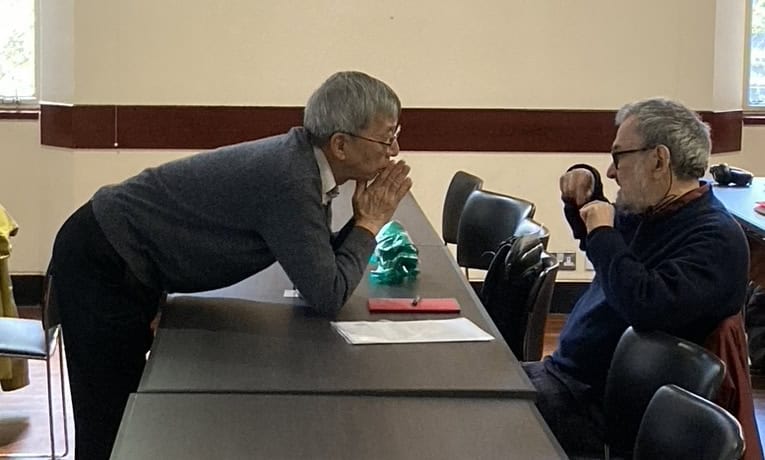
Eye to eye: Doi (left) and Peliti met for the first time at the event in Cambridge (courtesy: Gunnar Pruessner)
In 2018 Doi became chief scientist at the Wenzhou Institute of the University of Chinese Academy of Sciences and was well-known for his work in polymer and soft-matter physics.
Yet when my former PhD student Ziluo Zhang joined the Wenzhou Institute as a postdoc in 2023, he found that Doi was unaware that the field theory bears his name and the many developments since its inception.
In a relaxed atmosphere, some of the key players explained how their insights came about.
Doi-Peliti field theory is a brilliant concept conceived by brilliant minds. One might be tempted to speculate how many more theories have been spun off and developed that are attributed – or even unattributed – to the pair without them ever knowing.
An upcoming special issue of Journal of Physics A will be dedicated to the Doi-Peliti field theory.
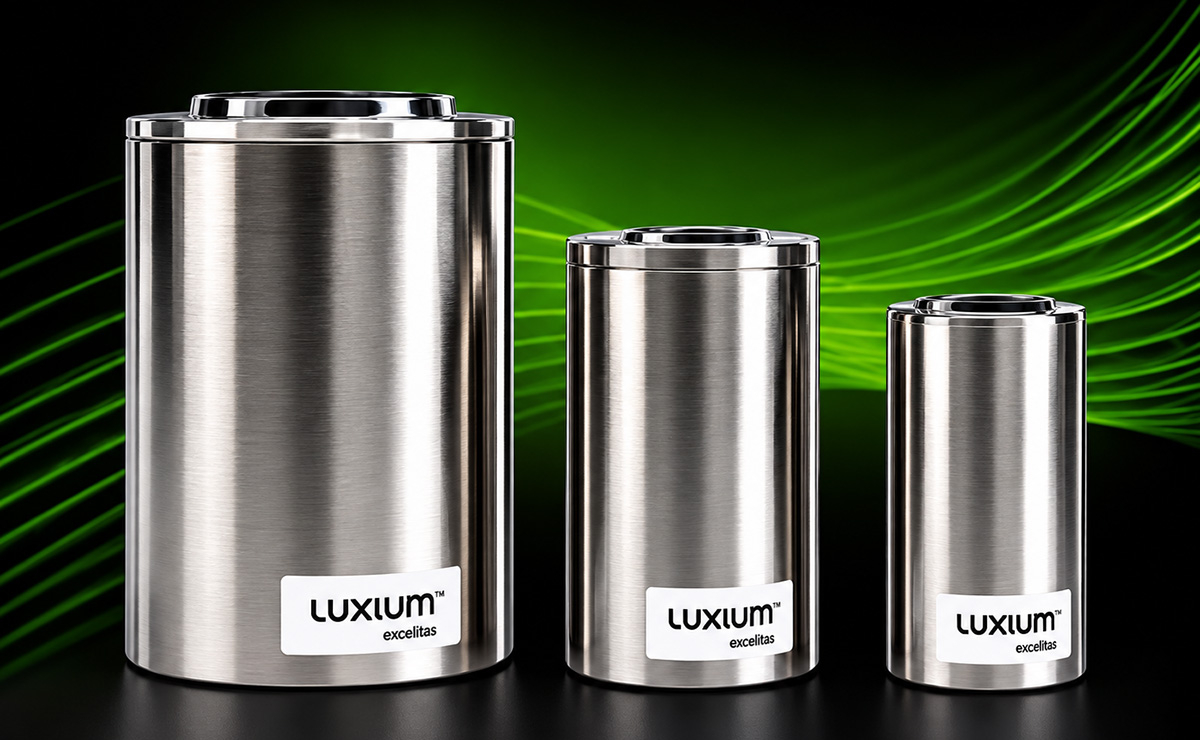
LuxiumTM Lanthanum bromide detectors are available in various sizes.
Scintillation detection advanced rapidly during and after the Second World War, with a major breakthrough coming in 1948 when physicist Robert Hofstadter discovered that thallium-activated sodium iodide (NaI(Tl)) was an exceptionally effective scintillation material for detecting gamma rays. This discovery laid the foundation for practical gamma-ray spectroscopy and established NaI(Tl) as a cornerstone of radiation detection.
The principle behind scintillation detection is relatively simple. When a high-energy gamma-ray photon from a radioactive source enters a scintillator crystal, the gamma ray deposits energy in the crystal, which is converted into scintillation light. This light is directed onto a photoreceptor—such as a photomultiplier tube or a silicon photomultiplier—which converts the optical pulse into an electrical signal. The amplitude of that signal directly corresponds to the energy of the incoming gamma ray, allowing scientists and engineers to build a detailed spectrum of the radioactive source.
Today, there is a wide range of methods for detecting and discerning radioactive sources. One of the most prevalent is NaI(Tl). While versatile and relatively inexpensive, NaI(Tl) has moderate energy resolution, typically around 6–7% at 662 keV for common detector configurations, i.e. just a basic ability to distinguish between different energies of incoming radiation, making precise identification of multiple radioactive species challenging.
The gold standard for energy resolution (<0.2%) is high-purity germanium (HPGe), a semiconductor technology that very clearly separates closely spaced isotope signatures. However, HPGe detectors are more complex and costly, and require cryogenic cooling traditionally using liquid nitrogen or mechanical cryocoolers.
Diane Fruehauf, Business Unit Director (Radiation Detection) at Excelitas Technologies.
“Lanthanum bromide is kind of special,” explains Diane Fruehauf, Business Unit Director (Radiation Detection) at Excelitas Technologies. “It hits the sweet spot where you can have better energy resolution than traditional scintillators, but it’s simple, it’s compact, it’s fast and you can operate at room temperature. You can get a lot of the performance advantages without the cryogenic cooling.”
Beyond a highly respectable energy resolution of ~2.6%, cerium-doped lanthanum bromide (LaBr3(Ce)) also exhibits an exceptional response speed. With a primary decay time of approximately 25 nanoseconds—compared to hundreds or thousands of nanoseconds for other scintillators—its fast response enables high count-rate operation and rapid data collection, making it particularly valuable when measuring intense radioactive sources.
Luxium™ Lanthanum bromide in action
LuxiumTM Lanthanum bromide detector has an energy resolution of ~2.6%.
These properties make LaBr3(Ce) an ideal scintillator for radiation detection in a wide range of situations. One application is border security, explains Guillaume Gautier, Product Manager at Excelitas Technologies. “For example, it enables the signature of nuclear materials to be discriminated and identified from radioisotopes commonly encountered in medical applications, preventing materials of concern from getting masked,” he says. “These emitted gamma-ray photons are close in energy but, unlike other scintillators, lanthanum bromide can discriminate between them accurately.”
Another key use-case is environmental monitoring. After the Fukushima nuclear accident, for example, Luxium™ Lanthanum bromide detectors (made by Excelitas Technologies) have been used to survey the surrounding areas for radioisotopes. And they are used in routine environmental monitoring too, with independent agencies utilizing LaBr3(Ce) detectors to map field contamination, inspect soil or agricultural runoff, and verify environmental safety.
A more complicated application is prompt gamma neutron activation analysis (PGNAA). This works by bombarding a target material with neutrons, causing atomic nuclei to emit characteristic gamma-ray photons almost instantaneously. These photons are then detected and resolved by a high-performance LaBr3(Ce) scintillation crystal.
“It’s used in mining, for example,” says Gautier. “You activate the raw material and you detect the composition, and from this you are able to analyse—in the field—whether it contains anything valuable, such as lithium or rare-earth elements, before you begin extraction.”
Precision manufacturing and the Excelitas advantage
Excelitas Technologies has a longstanding history of innovation with LaBr3(Ce). Originally developed through academic research in Europe in the early 2000s, these crystals showed significant potential for high-performance radiation detection. Saint-Gobain Crystals recognized that potential and pioneered their commercialization, building decades of expertise in the development and manufacture of LaBr3(Ce) detectors. After rebranding to Luxium Solutions for a brief time, the company was acquired this year. Today, that expertise continues as part of Excelitas Technologies.
Nowhere is this expertise more valuable than in growing large, high-purity LaBr3(Ce) single crystals with uniform light yield. This task is made difficult because the crystals are sensitive to ambient moisture and require absolute chemical purity during growth to maintain structural integrity and optical clarity. The solution was to take control of the whole process in-house. “We control our purification and refine our materials ourselves, which gives us a level of process control that directly yields reliable, high-quality crystals,” explains Fruehauf. “Our goal is to deliver consistent performance from crystal to crystal, year after year.”
More recently, the team has focused on pushing lanthanum bromide’s properties even further, developing what they have branded ‘Luxium™ Enhanced Lanthanum bromide’. By co-doping the crystal structure with cerium and strontium, Excelitas engineers improved the scintillation proportionality, yielding higher light output and even sharper resolution.
“With standard Luxium™ Lanthanum bromide, we guarantee energy resolution under 3%,” explains Gautier. “With our enhanced version co-doped with strontium, we lower that threshold below 2.5%, guaranteeing levels down to 2.3% or even 2.2% in optimum conditions.”
And now, the company is not only manufacturing raw crystals for OEMs, but also detector assemblies integrated with photomultiplier tubes or silicon photomultipliers. Backed by Excelitas’ broader photonics and electronics portfolio, the company is well-positioned to deliver complete end-to-end detection solutions for a wide range of demanding field applications.
“At the company, we’re always learning and the technology is always evolving, but ultimately it comes down to helping customers make faster, better decisions in the field,” says Fruehauf. “Whether it’s monitoring environmental safety or identifying critical materials for new technologies, the more efficient and accurate we can help everyone be, the better it is for everyone.”
How can one sample reveal more when examined from multiple perspectives? Combining SEM, TEM/STEM, 4D-STEM, spectroscopy, nanoindentation, nanoCT, CryoSEM or other analytical techniques can provide complementary information. Bringing these approaches together places demand on sample positioning, access and manipulation.
This webinar explores the role of precision sample manipulation as a key element for multimodal nanoscale characterization. We will look at how flexible, multi-axis positioning can support sample alignment, different measurement geometries and transitions between imaging, spectroscopy, diffraction, probing and other analytical methods.
Using SmarAct’s customizable SEM platform and related positioning solutions as examples, we will discuss practical approaches to integrating precise sample motion into advanced microscopy and characterization workflows, including applications in SEM, STEM, TEM, spectroscopy, tomography and in-situ experimentation.
The focus is not on one technique, but on the sample manipulation. How precise, adaptable manipulation systems can help to investigate the same specimen across complementary measurements and extract a more complete picture of its structure and properties.
Alexandra Gluck
Alexandra Glück is a physicist turned technical sales engineer. She studied in Freiburg and Berlin and has worked at German Aerospace Center (DLR), where she completed her doctorate in experimental physics. At SmarAct, she is in contact with researchers and companies active in materials science and related fields, and enjoys having technical discussions about the developments at the frontier of science and technology.
Quantum computing research team. (Courtesy: Edwards Vacuum)
Building quantum technologies is the definition of finicky. And there is one primary reason: the fundamental unit of information is not a bit, but a qubit. Though qubits come in many guises – trapped ions, neutral atoms, superconducting circuits, particles of light, etc – they all share three quantum properties.
First, a qubit does not just represent a 1 or a 0, but can exist in a superposition of states, an uncertain blend of both until it collapses to a 0 or 1 when measured. Second, a qubit can be entangled with other qubits, meaning their physical states become entwined regardless of their distance from one another. And third, all qubits are extremely fragile or, in technical terms, they are vulnerable to decoherence.
Whereas the first two properties offer the potential to provide huge advantages for quantum technologies over their classical counterparts, the latter has been a stumbling block for decades. Qubits lose their quantum properties with almost any interaction with the environment, meaning any mote of dust, tiny vibration or stray photon has the potential to scupper a quantum process.
Filling the vacuum
Vacuum and cryogenic environments play an essential role in mitigating decoherence across many major quantum modalities, whether this is superconducting, trapped, neutral atom or photonic, and these technologies are coming out of the laboratory into the real world.
For example, whether operating a trapped-ion quantum computer or an advanced quantum gravimeter, if left unmitigated, qubits are bombarded by trillions of gas molecules every second, immediately causing them to decohere. Extreme-high vacuum (XHV) environments eliminate this problem, effectively removing ambient matter from the equation.
Vacuum Technique Business Area (Atlas Copco Group) supporting quantum computing applications. (Courtesy: Edwards Vacuum)
Vacuum technologies are also needed in concert with cryogenics in low-temperature dilution refrigerators that prevent heat causing decoherence in superconducting quantum computers and ultra-sensitive single-photon detectors used in quantum communication. These refrigerators cool hardware down to sub-Kelvin temperatures (~10 mK) – hundreds of times colder than deep space.
“We have shipped products that support XHV environments, 10-12 millibar, to isolate everything from the environment of the hardware. We also have plans in our roadmap to go beyond the current pressures, and we have worked with companies that build these dilution refrigerators,” says Jos Donders, head of the Emerging Markets & Technologies team of Atlas Copco’s Scientific Vacuum Division.
“What is very good for us is that 95% of these modalities – whether it’s quantum computing, sensing or communications – require a vacuum and a cryogenic low-temperature environment.”
Going in blind
For Donders, and indeed the global Atlas Copco Group (through the Edwards Vacuum brand), now is the ideal time to be working in quantum across the different modalities. Quantum is still far from delivering on its potential, and there remains significant work to be done in terms of hardware and equipment development to go from the laboratory prototypes of today to the robust machines needed to build useful commercial quantum computers.
Vacuum system quantum computer materials validation. (Courtesy: Edwards Vacuum)
For this, scaling the hardware will be essential for companies to enable their goals towards a fully fault-tolerant quantum system solution. As part of the Atlas Copco Group, Edwards Vacuum can offer highly skilled technology and engineering expertise to enable the development of these solutions.
“We are working on solutions for the future,” underlines Donders. By this, he means that most of the time Edwards Vacuum is building vacuum and cryogenic equipment for different quantum modalities that do not yet exist. For instance, when a dilution refrigerator manufacturer or a quantum hardware OEM designs a next-generation platform, Donders and his team discuss in depth future needs with in-house technology engineers to define future solutions based on market inputs from customers in this field. “We sit down, have a detailed discussion, and outline what is possible, what is maybe possible and what is not possible in the timelines that are required,” he says.
A prime example of this in action is Edwards Vacuum’s partnership with Universal Quantum, a UK-based quantum computing company aiming to build robust, scalable quantum computers. In the first act of their ongoing cooperation, in 2022, Edwards Vacuum deeply collaborated with Universal Quantum researchers to deliver an XHV system to house a quantum error corrected quantum computer based on trapped-ion technology that Universal Quantum had not yet constructed.
Roadmap to success
A large part of why it is possible to engineer complex vacuum and cryogenic technologies for quantum computing, sensing and communication devices that do not yet exist is the detailed roadmaps that the major quantum companies produce.
Donders says that these roadmaps are generally not full of blue-sky wishful thinking, but detailed specifications that target specific numbers of qubits, fidelity and also operational parameters by ambitious but realistic dates where timescales matter due to the financial investments behind them.
“At the same time, we also realize that there will be quite some disruptive changes along the way,” Donders adds. “That’s why we work very closely with these companies to synchronize with them and ensure that whatever we develop is in line with their requirements.”
Flexibility and deep technical collaboration are paramount for another reason too: no single quantum modality has yet emerged as the definitive winner. Backed by the scale and industrial expertise of the Atlas Copco Group, Edwards Vacuum works directly with quantum companies, serving as a foundational link in the global quantum supply chain. This means Edwards Vacuum is equally adept at providing ultra-clean XHV systems for trapped ion quantum computing and neutral-atom quantum sensing, specialized helium pumping and circulation setups for dilution refrigerators or robust pumps for quantum key distribution nodes.
As the quantum industry shifts focus from proving basic quantum principles to scaling robust, fault-tolerant architectures, vacuum and cryogenic technologies will remain indispensable. By stepping into the unknown alongside quantum pioneers, Edwards Vacuum is helping lay the physical foundations required to make the quantum revolution a commercial reality. As Donders neatly summarizes: “That’s where we want to be – at the forefront.”
International members of the research community, from academia to industry, often face additional cultural, social and financial challenges compared with those working in their native countries.
This is especially true in times of global uncertainty and rising anti-immigration sentiment. While institutions bear responsibility for promoting inclusivity and creating a positive environment for everyone, individuals also have an important role to play in supporting their international colleagues.
The BQIT annual workshop has been running for the past 13 years, welcoming the quantum research community to Bristol to present and discuss recent advances in quantum technology as well as share ideas and stimulate collaborations in this rapidly developing field.
Since 2019 the workshop has included a session dedicated to equity, diversity and inclusion (EDI). At BQIT:26, which was held on 27–29 April and attended by more than 200 people, the two-hour EDI session focused on the difficulties faced by international co-workers and what we can do as individuals to create a more welcoming workplace.
It began with a panel discussion featuring three panellists who currently work in research communities outside their native countries. They were: Gosia Drewniok, assistant director for international student success at the University of Bristol; Belinda Sharpe, operations director at the firm Duality Quantum Photonics; and Marija Radulović, partnership director at Hartley Ultrafast.
One interesting point that emerged during the debate was how some tasks that are seemingly “simple” to those living in a country for a while, such as where to buy furniture or where to access healthcare, are relatively challenging to many individuals coming from abroad. Often these challenges are not considered when employing an international colleague and are easily remedied by having more complete on-boarding resources that include out-of-workplace elements.
Conversations were also had around expressing discomfort about attending certain social activities, for example attending events where alcohol is served.
We believe that all positive change begins with a conversation
Those who do not drink alcohol, are fasting during Ramadan, or have strict dietary requirements may not be able to attend such events, and some may worry that raising their needs will burden others. They therefore choose not to speak up, when in fact their peers may be willing to adapt and make appropriate adjustments.
There were also deeper and more complex points raised, such as finding the balance between maintaining one’s own cultural core traditions and adapting to a new work environment.
The panel highlighted that while integrating into a new culture can be challenging, there should be no pressure to “change oneself” or to “fit in”.
Activities such as international and cultural events, alcohol-free events, or even suggesting your own events if you feel up to it, are excellent ways to meet new people.
Furthermore, even though this session took place in the UK, the issues discussed often apply to those working abroad in other countries, especially due to the international nature of the BQIT attendees.
This came up when points were raised by attendees with UK citizenship who have worked abroad during an exchange, who are also considered international colleagues in that country and face similar challenges. This highlights the importance of having such conversations.
Shared responsibility
Following the panel debate, attendees divided into small groups where they shared ideas and their own experiences, as well as adding key conclusions to a shared online discussion platform.
Some interesting highlights include having onboarding procedures that constantly evolve based on feedback from previous international students or staff; keeping events affordable; and keeping in mind that those who have further to travel home to their native countries may need larger blocks of holiday time.
Examples of additional factors to consider include cultural differences regarding normal working hours, including how setting clear expectations and emphasizing healthy work–life balance may be helpful.
Other issues are the hidden costs (time and money) of getting language and other certifications required for some applications (e.g., visas, permanent residency or citizenship applications) as well as the potential for increased vulnerability to scams due to lower awareness of various systems such as rent or guarantor schemes.
Yet minor actions can have a significant positive impact such as planning trips well in advance to allow for visa processing times, checking in on international colleagues so the onus isn’t on them to raise these issues, or simply using more direct and plain language in professional communication.
While attendees responded overwhelmingly positive to the session, some may think it will change nothing and will not resolve the issues. Yet we believe that all positive change begins with a conversation.
In our field, like many others, researchers are likely to find themselves living in a country different to their native one at some point during their career. Promoting these changes and conversations with colleagues now, and creating a culture of shared responsibility, may even benefit you personally in the future.
The article was written with Carrie Weidner, Sanna Al-Abdally, Nicole Luc and Deepak Bhardwaj.
In the mid-1970s a graduate student wrestling with a deceptively simple quantum problem uncovered one of the most haunting images in modern physics. The pattern seemed almost impossibly intricate: delicate wings assembled from infinitely nested bands and gaps, a self-similar pattern born from the motion of electrons in a crystal under a magnetic field. First published in 1976 (Phys. Rev. B14 2239), it came to be known as Hofstadter’s butterfly, after its discoverer Douglas Hofstadter.
Half a century later, the butterfly has not faded into scientific nostalgia. If anything, it has become even more important – reappearing in new materials, new experiments and in places no-one imagined when it was first plotted. Recent research by Kazuki Ikeda from the University of Massachusetts and Yaron Oz at Stony Brook University suggests that related patterns may even surface in the physics of black holes (J. High Energy Phys.2026 38).
Each new realization adds another chapter to a story that is not really about a single graph, or even a single discovery, but about the unity of patterns across the physical world. A structure first seen in a simple model has become a symbol of how richness can emerge from basic rules, how beauty can arise from constraint, and how the quantum world still harbours forms strange enough to surprise us.
How the butterfly got its wings
What makes Hofstadter’s butterfly so compelling is the remarkable story of its birth and, more importantly, how far it has travelled from its original birthplace. Like many scientific breakthroughs, its discovery was fairly obscure initially and owed a great deal to luck. In 1974 Hofstadter – son of the 1961 Nobel-prize-winning nuclear physicist Robert Hofstadter – had just dropped out of graduate school at Stanford University in the US and was “in despair” according to friend and physicist Francisco Claro.
Having just completed a PhD with the renowned solid-state physicist Gregory Wannier at the University of Oregon, Claro suggested that Hofstadter should approach Wannier as well. As it happened, Wannier had been struggling with a problem that had puzzled him for years: he could not obtain an analytical solution to Harper’s equation, which describes the motion of electrons on a 2D crystal lattice subjected to a perpendicular magnetic field.
Named after P G Harper, who was a graduate student of Rudolf Peierls at the University of Birmingham, UK, this classic “magnetic problem” displayed a mysterious sensitivity to whether the magnetic flux was a rational or irrational number. It was a feature that immediately captured Hofstadter’s imagination and, with the rational–irrational dichotomy echoing in his mind, Hofstadter began his PhD studies at Oregon by immersing himself in solving the problem.
But he soon found himself equally stuck. Frustrated by the analytical approaches often discussed at the time, he pursued a different path: numerical computation. Using a programmable Hewlett Packard desktop calculator that by today’s standards looks laughably primitive, he displayed the numerical solutions graphically as the energy of electrons versus magnetic flux Φ per unit cell of the lattice. At that moment, he became convinced that he had uncovered the true structure of the problem. “All at once my eyes were opened,” Hofstadter recalls.
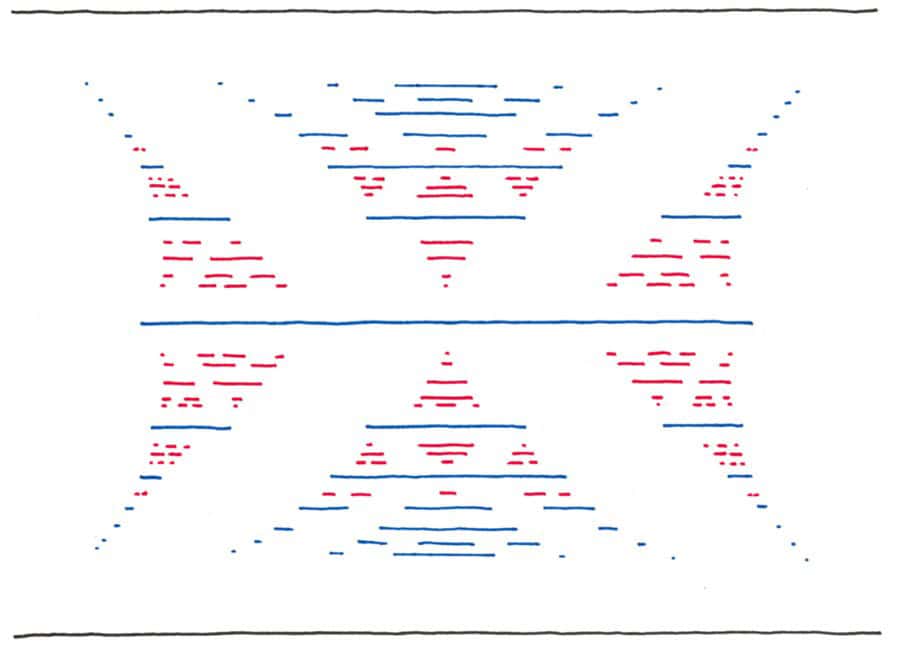
Beautiful beginning Hofstadter’s butterfly dates back to November 1974 when Douglas Hofstadter, who was then a PhD student at the University of Oregon, was trying to describe the motion of electrons in a 2D crystal lattice under an applied magnetic field. His work led him to produce a primitive, hand-drawn diagram – dubbed “Gplot” – that looked like a butterfly. The original diagram has been lost so Hofstadter created this reconstruction in 2016. (Courtesy: Indu Satija. Permission granted by Douglas Hofstadter)
What he found was a complex recursive shape (or fractal in today’s terminology) hidden within the energy spectrum of electrons in a magnetic field. Resembling a butterfly, Hofstadter brought his hand-plotted diagram, which he codenamed “Gplot”, to Wannier, who was not impressed. According to Hofstadter, Wannier dismissed the result as “numerology” and even threatened to withdraw the PhD student’s funding.
But after nearly a year, Wannier came to recognize the validity and significance of Hofstadter’s work, ultimately awarding Hofstadter his PhD and accepting the butterfly as a legitimate description of the energy spectrum of electrons moving on a 2D lattice in a magnetic field. Wannier even added to the butterfly’s story with a paper titled “A result not dependent on rationality for Bloch electrons in a magnetic field (Phys. Status Solidib88 757). This work, along with further studies with Claro, introduced a set of integers uniquely labelling every gap in the graph, providing a simplified description of the spectrum (Phys. Rev. B 19 6068).
Douglas Hofstadter: in his own words
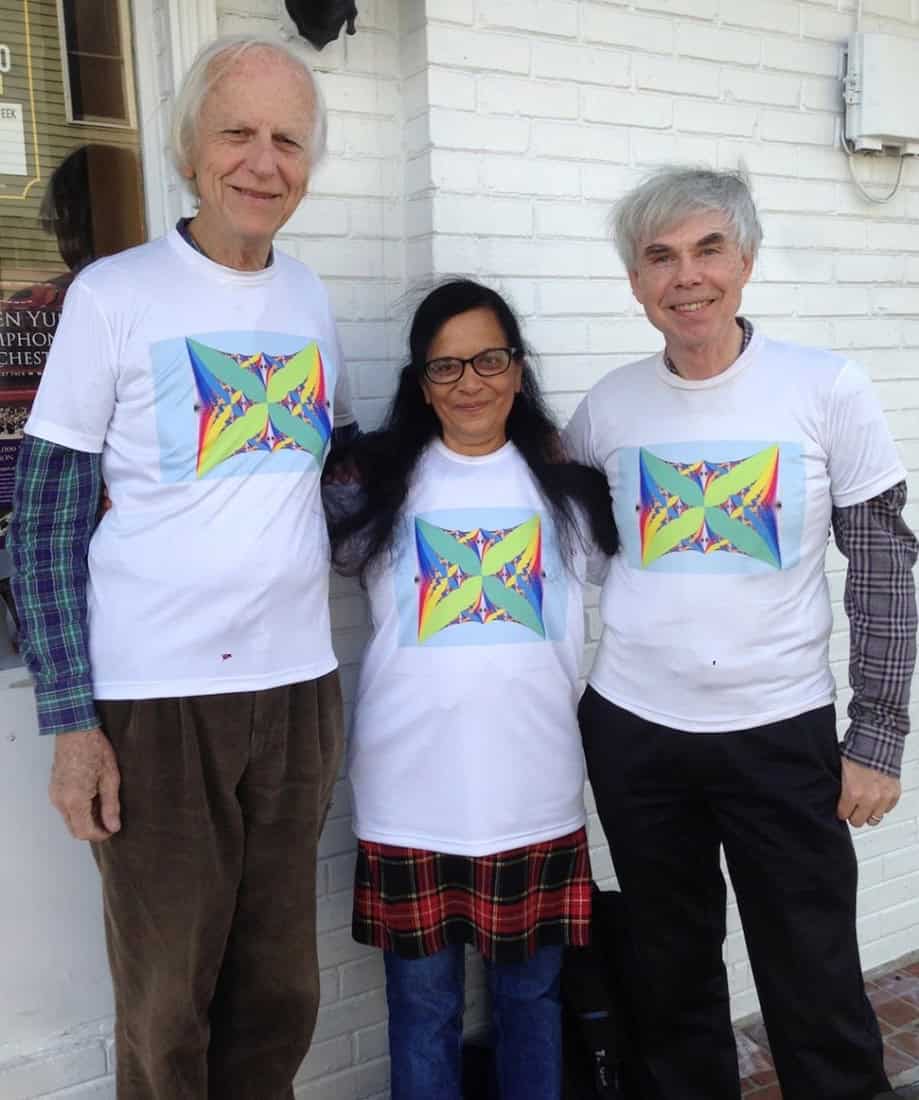
Ruby celebration Douglas Hofstadter (right) pictured in 2016 with colleagues Indu Satija (centre) and Francisco Claro (left) all wearing T-shirts emblazoned with Hofstadter’s butterfly to celebrate its 40th anniversary. (Courtesy: Indu Satija)
Born in 1945, Douglas Hofstadter discovered his eponymous butterfly while a PhD student at the University of Oregon in 1975, using computational modelling to make his breakthrough (see main text). Four years later Hofstadter published his Pulitzer-prize-winning popular-science book Gödel, Escher, Bach, which tackles cognition, mathematics and symmetry.
Currently a professor of cognitive science and comparative literature at Indiana University in Bloomington, US, Hofstadter is still active as a researcher and wrote a follow-up book I Am a Strange Loop in 2007. On the golden jubilee of the now-famous butterfly named after him, Hofstadter provided the following comment to Physics World.
“This graph was first computed using a programmable desktop calculator and was first plotted by hand using coloured felt-tip pens. I was just extremely relieved that by showing that my ‘Gplot’ graph was made of distorted copies of itself, I would at last be able to get a PhD thesis. I had no idea that Gplot would go on to become well known as the Hofstadter butterfly, and that variations on the theme would proliferate like wildfire over the coming decades.”
“As the years have gone by,” he continues, “articles about Hofstadter’s butterfly have grown more and more numerous and harder and harder for me to follow. For better or for worse, these theories are all way beyond me, but remembering the first wingbeats of the butterfly’s flight cheers me up.”
Statements about states
Hofstadter’s butterfly is more than a beautiful graph. It is a map of what happens when quantum particles are caught between two competing kinds of order: the regular periodicity of a crystal lattice and the circular orbits of a magnetic field. When these two scales contend with one another, the energy spectrum does something extraordinary. Instead of varying smoothly, it fragments into a hierarchy of allowed and forbidden energies, referred to as bands and gaps, respectively.
Zoom in on one region and new structures emerge. Zoom in again and the pattern repeats, endlessly varied yet ruled by strict mathematical order. It is one of the rare instances in which fractal geometry appears not only in abstract mathematics or artistic imagination, but in the measurable behaviour of matter itself.
The deep connection between this theoretical pattern and real-world matter became clear through an exotic quantum phenomenon known as the integer quantum Hall effect. It was discovered experimentally by Klaus von Klitzing at the Max Planck Institute for Solid-State Physics in 1980 – a breakthrough that earned him the Nobel Prize in Physics five years later.
The classical Hall effect is what happens when a voltage is produced in a bulk conductor at right angles to an applied magnetic field. Similarly, the quantum Hall effect is the appearance of a voltage across opposite faces of a thin 2D semiconductor when a current is passed along the plane of the material and a magnetic field applied perpendicularly it. But there is one big difference in the quantum version.
If you slowly increase the power of the magnet, the transverse electrical conductance does not grow steadily. Instead, it jumps up sharply, with plateaus in between like steps on a staircase. In other words, it assumes quantized values given by integer multiples of the fundamental constant e2/h, where h is Planck’s constant and e is the charge on an electron.
In 1982 the British physicist David Thouless and his collaborators at the University of Washington, Seattle, made another remarkable discovery: the effect, they found, is topological. Topology is the study of the global properties of objects and topological invariants are those properties that do not change regardless of how much you try to deform a given object.
Thouless and colleagues found that the integers underlying the quantum Hall effect are topological invariants arising from the global topology of the electronic wave functions. This seminal work, which was published in 1982 (Phys. Rev. Lett.49 405), significantly contributed to Thouless earning the 2016 Nobel Prize in Physics, which he shared with Duncan Haldane and Michael Kosterlitz for their work on “topological phase transitions and topological phases of matter”.
1 Butterfly behaviour
(Courtesy: Indu Satija; CC BY 3.0 New J. Phys.18 103023; J. Stat. Phys. 156 417. Reused with permission from Springer Nature)
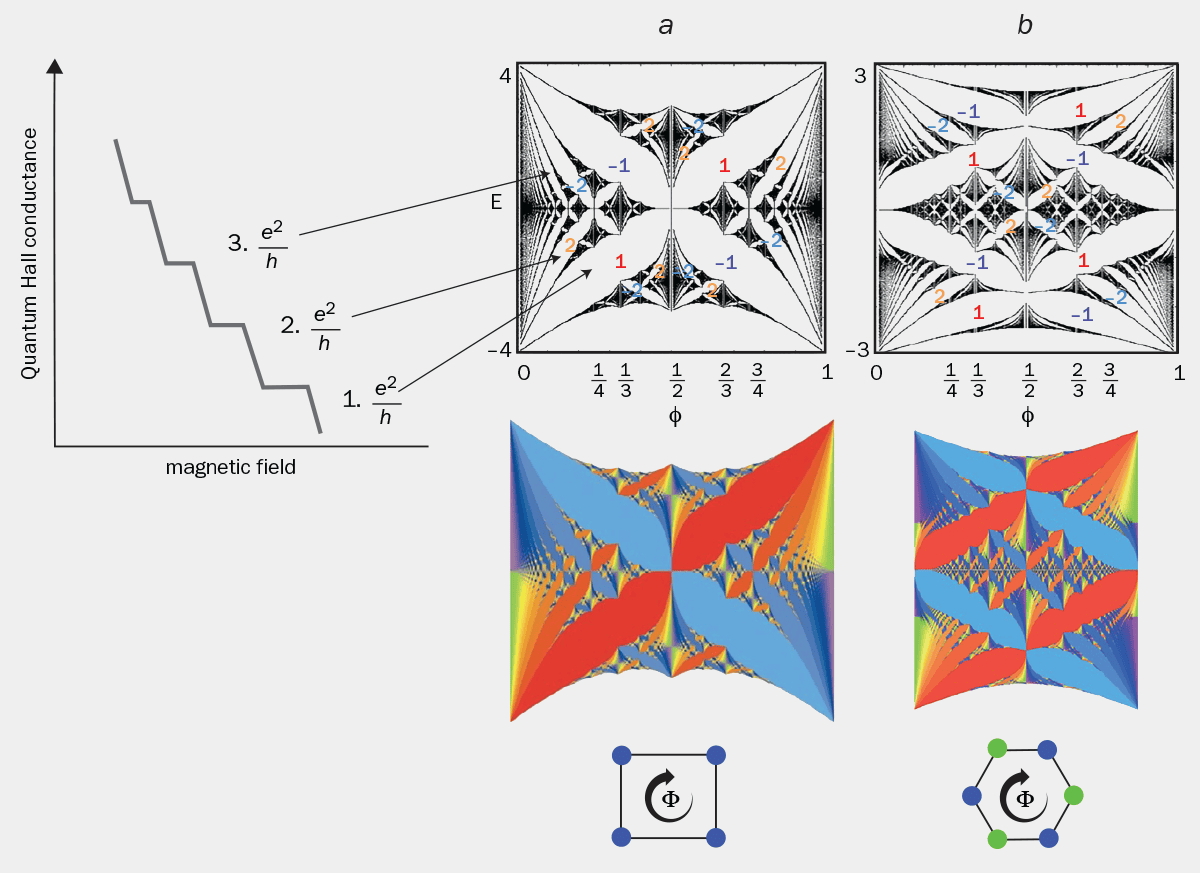
Hofstadter’s butterfly, in its original form, refers to the behaviour of electrons in 2D lattices subject to an applied magnetic field. (a and b) Shown here (top row) are graphs of the electrons’ energy (E) plotted against the magnetic flux (Φ) per unit cell for square and honeycomb lattices (bottom row). The relation between the quantum Hall effect (displayed in the staircase-like graph, left) and Hofstadter’s butterfly is shown via the arrows. The colours on the “butterfly graphs” (middle row) correspond to the quantum numbers of the Hall conductivity. Some of these integer labels are shown (colour coded) in the top row.
How all of this relates to Hofstadter’s butterfly is simple: the butterfly model describes all integer quantum Hall states, where the integers of Hall conductivity label the gaps in Hofstadter’s butterfly – the exact same integers that Wannier and Claro introduced in the butterfly spectrum (figure 1). In other words, the butterfly is not merely a chart of recursively split energy levels; it is also a coded map of topology in quantum matter under a magnetic field.
A pattern repeating across physics
That connection places it squarely within one of the central themes of modern condensed-matter physics, namely the realization that certain physical properties are protected not by local details, but by global features of the quantum state. But what is fascinating is that in the 50 years since Hofstadter’s butterfly was discovered, physicists have found that the same spectral architecture in it can also arise in a remarkable range of settings. It has appeared, for example, in other lattice geometries, in engineered semiconductor devices and in so-called moiré materials.
The butterfly’s migration into moiré systems has been especially fruitful. Such materials are created by stacking two atomically thin materials onto each other with a slight twist, creating a moiré pattern with different properties from the individual layers. Utilizing moiré materials, in research that began in 2013 led by Philip Kim of Columbia University (Nature497 598) and continues apace with a team led by Ali Yazdani of Princeton University (Nature639 60), the butterfly structure can now be tuned, probed and in some cases directly imaged on modern quantum platforms.
Over the last 50 years, the butterfly itself has also evolved into other forms. For instance, in some systems, the butterfly emerges without an external magnetic field. As a team of researchers led by Xu-Tao Wan from East China Normal University showed in 2025 (Phys. Rev. Lett.136 033401), the fractal pattern can be controlled by twist angle – that is, by geometry alone.
Each time physicists add a new layer of realism – spin, interactions, periodic driving or lattice complexity – the butterfly adapts, and re-emerges in new forms, so long as it is not overwhelmed by strong interactions, disorder or thermal effects
In other realistic systems, electron spin – the particle’s intrinsic magnetic orientation, absent from the original simplified model – becomes an essential part of the physics. Even when a magnetic field splits the system into spin-up and spin-down states via Zeeman splitting, the butterfly spectrum survives. More striking still, the butterfly can emerge independently for each spin state, as Xiaomeng Liu and Zhida Liu of Cornell University discovered in 2025 (Nature Phys.21 1873).
This persistence of the fractal structure, despite the added complexity introduced by spin, highlights the extraordinary robustness and universality of the underlying quantum phenomenon. More generally, what these new iterations of Hofstadter’s butterfly reveal is that what once looked like a specialized theoretical curiosity now seems more like a recurring motif in quantum matter.
Indeed, this is part of its enduring fascination: each time physicists add a new layer of realism – spin, interactions, periodic driving or lattice complexity – the butterfly adapts, and re-emerges in new forms, so long as it is not overwhelmed by strong interactions, disorder or thermal effects. This durability prompted a friend to once joke that whenever he undergoes an MRI scan, he cannot help wondering what kind of butterfly his body might be producing.
Beauty from simplicity
As my friend’s joke reveals, there is something unmistakably human about the butterfly’s appeal. Physicists are drawn to it not only for its usefulness, but for its beauty. It belongs to that rare class of scientific objects whose visual grace seems to gesture toward deeper truths. And yet its deepest charm may lie in the fact that its immense complexity grows from remarkable simplicity.
2 Baby butterflies
(Courtesy: Indu Satija)
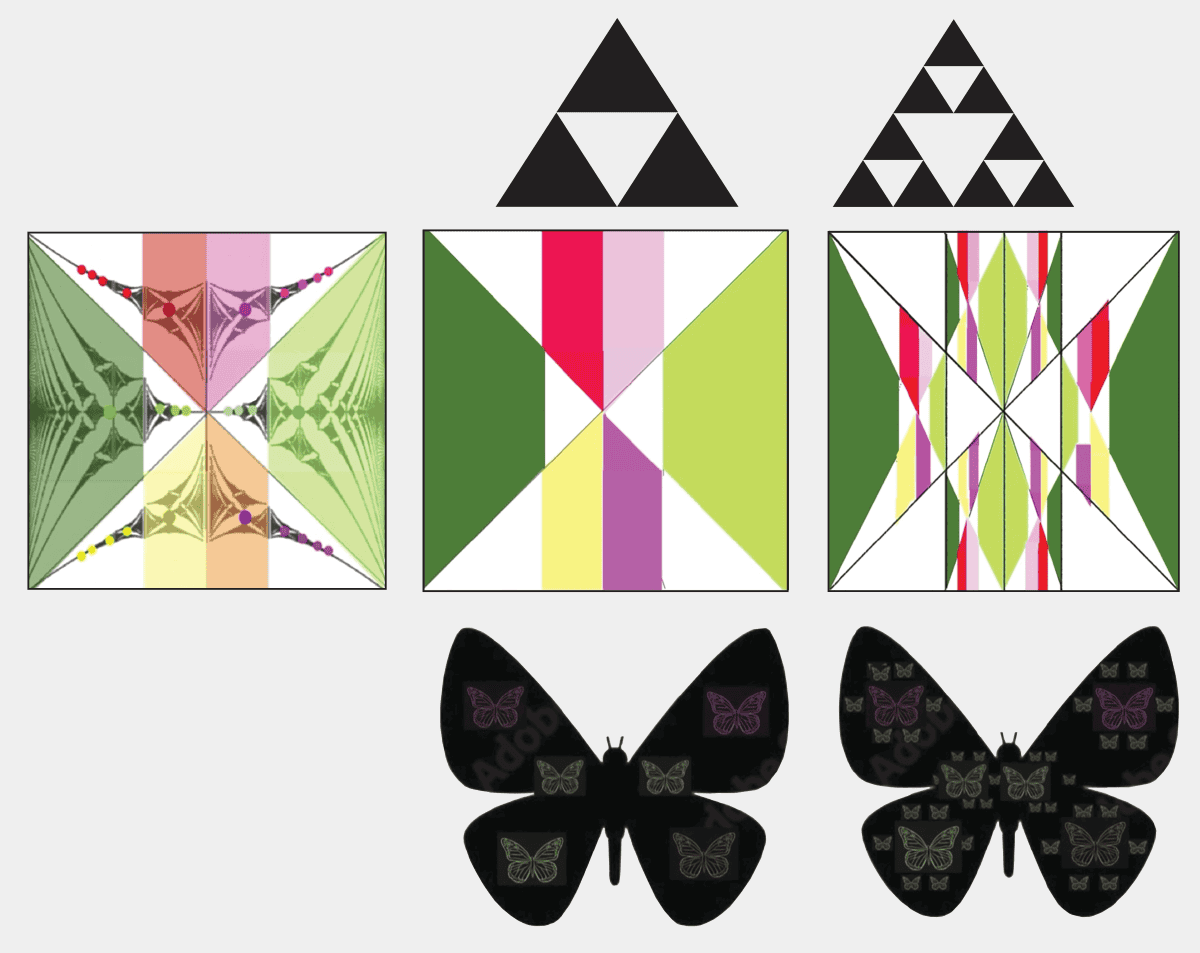
A simplified representation of Hofstadter’s butterfly, commonly known as the butterfly skeleton, interpreted as a 2D tessellation of trapezoids and triangles. It is shown in parallel with the “Sierpiński gasket” (top), which is made entirely from triangles. The iterative construction underlying this fractal consists of a parent butterfly generating six “baby” butterflies, represented by the six colour-coded trapezoids. Each baby butterfly is accompanied by a tail – an infinite chain of progressively smaller butterflies, indicated schematically by dots in the corresponding colour. The two butterflies at the bottom provide a schematic illustration of the hierarchical organization of the structure.
Beneath the intricate pattern are integers, recursion relations and number-theoretic structures that connect it to fairly simple geometric patterns, including the Farey tree, the tree of Pythagorean triplets and fractal packings such as the Apollonian gasket. In fact, this complicated quantum fractal admits a surprisingly simple geometric description: the butterfly landscape can be organized as a hierarchical lattice of trapezoids, bringing it into close parallel with geometric fractals such as the Sierpiński gasket (figure 2). It is extraordinary to think that this geometric harmony underlies such a complex and beautiful graph.
Fifty years on, Hofstadter’s butterfly remains exactly what great scientific ideas are supposed to be: elegant, prolific and unfinished. That interplay of beauty, mathematics and physical reality is what keeps the butterfly alive. Its evolution under interactions, spin effects and new forms of engineered geometry continues to reveal unexpected physics. And with each turn, the butterfly reminds us of something rare and precious in science: that the universe can hide immense complexity within simple forms, and that sometimes, if we are lucky, those forms are beautiful enough to be unforgettable.
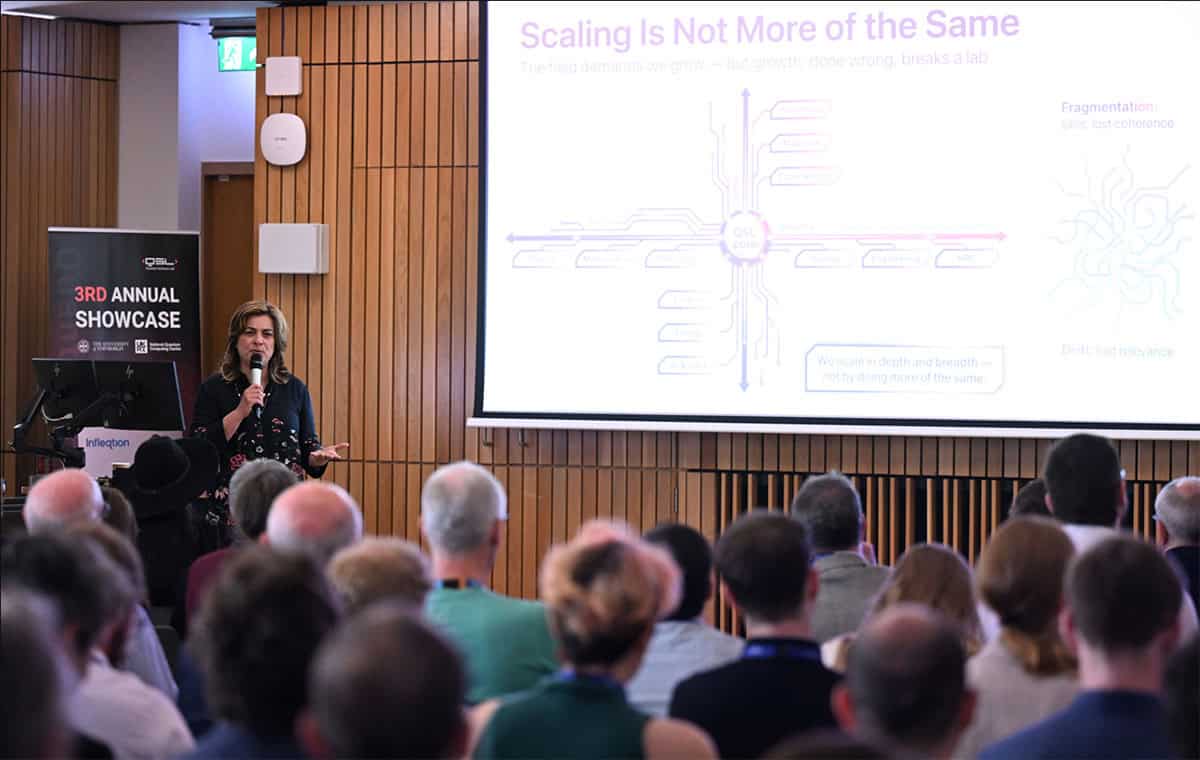
Towards quantum advantage Elham Kashefi, director of the QSL and chief scientist of theNQCC, speaks at the third annual showcase of the lab. (Courtesy: QSL)
The Quantum Software Lab (QSL) at the University of Edinburgh is going from strength to strength. Buoyed by its strategic partnership with the UK’s National Quantum Computing Centre (NQCC), in just three years the lab has become a globally recognized hub for creating software solutions that generate practical value from emerging quantum computers. With more than 70 researchers working across applications, algorithms and the underpinning theory and software, the QSL is also poised to lead a £20m project that will drive the delivery of tools, methods and systems for useful quantum computing.
The growing momentum at the QSL has also provided the impetus for the Quantum Fringe, a festival of events that debuted in 2025 to mark UNESCO’s International Year of Quantum Science and Technology. Modelled on Edinburgh’s world-famous Fringe festival, the programme provides a showcase for quantum-inspired events that have been convened by different organizations for a diverse range of audiences.
“The Quantum Fringe belongs to everyone who takes part, whether they are researchers, scientists in government and industry, or students at university or school,” says Elham Kashefi, director of the QSL and chief scientist of the NQCC. “That’s the whole point: no-one can do this alone, and each of the 16 events in this year’s festival provided an opportunity for the community to come together.”
That cross-cutting ethos was evident in several collaborative workshops. As an example, a two-day event organized by the research hub for Integrated Quantum Networks (IQN) enabled scientists from different sectors and backgrounds to share expertise on the authentication requirements that will be needed to ensure the security of future quantum communications. Tutorial sessions enabled a broad spectrum of experts to engage meaningfully in technical discussions, while informal networking helped to establish new connections between the research and business communities.
Another workshop, this time organized by the QCi3 research hub, encouraged interactions between academics and industry experts by exploring the applications and integration challenges for quantum computing in the defence sector. Meanwhile, the aptly named TartanQEC workshop, organized by the Universities of Edinburgh and Strathclyde, welcomed more than 120 researchers from the UK and Europe to discuss practical methods for quantum error correction (QEC). Talks spanned hardware co-design, implementations, and software development, and the event was headlined with a keynote on QEC schemes for superconducting quantum computers by Andreas Wallraff of the ETH Zürich in Switzerland.
Building the ecosystem
Experts from start-up companies were involved too, with the QSL convening a workshop that brought together hardware vendors and the research community to discuss scalable frameworks for verifying and benchmarking the performance of rapidly evolving hardware architectures. Legal firm Simmons + Simmons offered start-up firms an insight into the legislation that can protect their core technology and guide their future growth plans, while the regular AIMday provided an opportunity for companies of all sizes to work with academics to explore a series of industry-relevant challenges. This year’s event was the largest yet, with more than 60 participants tackling such problems as using quantum optimization to design a multi-hub logistics network for the UK.
Scottish software The TartanQEC workshop enabled researchers from across the UK and Europe to explore the rapid convergence between theory and experiment in quantum error correction. (Courtesy: QSL)
QSL also organized two educational events to inspire the next generation of quantum researchers. A three-day summer school enabled high-school students to find out what a research career might look like, learn the basics of quantum computing from practising scientists, and gain hands-on experience in coding techniques. Meanwhile, a week-long event offered postgraduate students and early-career researchers a deep-dive into quantum informatics within the stunning and peaceful surroundings provided by the Isle of Skye.
Reflecting the eclectic nature of the Edinburgh Fringe, the programme also featured an evening of music and poetry inspired by key concepts in quantum physics. Performed by Erika Andersson, a quantum researcher at Heriot-Watt University, along with computer scientist Ruth Aylett and a group of professional musicians, “Quantum Worlds” offered the audience a creative exploration of complex scientific ideas such as superposition, wave-particle duality, and quantum entanglement. The response was enthusiastic, with audience members commenting that the performance “helped to understand the science” and “made quantum physics feel more approachable”.
Making an impact
Among this multitude of events, the Quantum Fringe offered an opportunity for QSL to mark three years since its launch in 2023. In that time the team has grown from around 15 members to almost 100 researchers working across all facets of quantum software, ranging from foundational quantum theories through to the development of powerful quantum algorithms and real-world applications. “Quantum computing is almost always told as a hardware story, but a machine only matters if it can give you an answer that is useful and that can be trusted,” says Kashefi. “That is a software problem.”
The QSL’s anniversary event showcased some of its key achievements, and highlighted how the lab’s strategic partnership with the NQCC has shaped and enriched its research agenda. One particular benefit has been the opportunity for software specialists at the QSL to work directly with quantum hardware, with the NQCC now hosting seven testbed platforms based on all the leading qubit modalities.
“It is really important for us to build the engineering knowledge and skills needed to work with these machines,” says Caitlin Jones, a senior QSL researcher. “The hardware may not yet be perfect, but if we don’t try to use real devices we might come across unforeseen bottlenecks or miss opportunities that we might not have considered.”
As an example, PhD student Mario Herrero Gonzáles is investigating the use of quantum machine learning to generate new samples that are similar to an existing dataset. Herrero Gonzáles uses a classical computer to train the model and a quantum machine to generate the samples, with the aim of optimizing the quantum part of the solution to run on a neutral-atom platform from Infleqtion. “The Infleqtion team helped Mario to understand the timings of the gate operations and the sources of errors,” explains Jones. “That allowed him to reduce the noise by recompiling the programme to exploit the gate fidelity and connectivity offered by neutral-atom systems.”
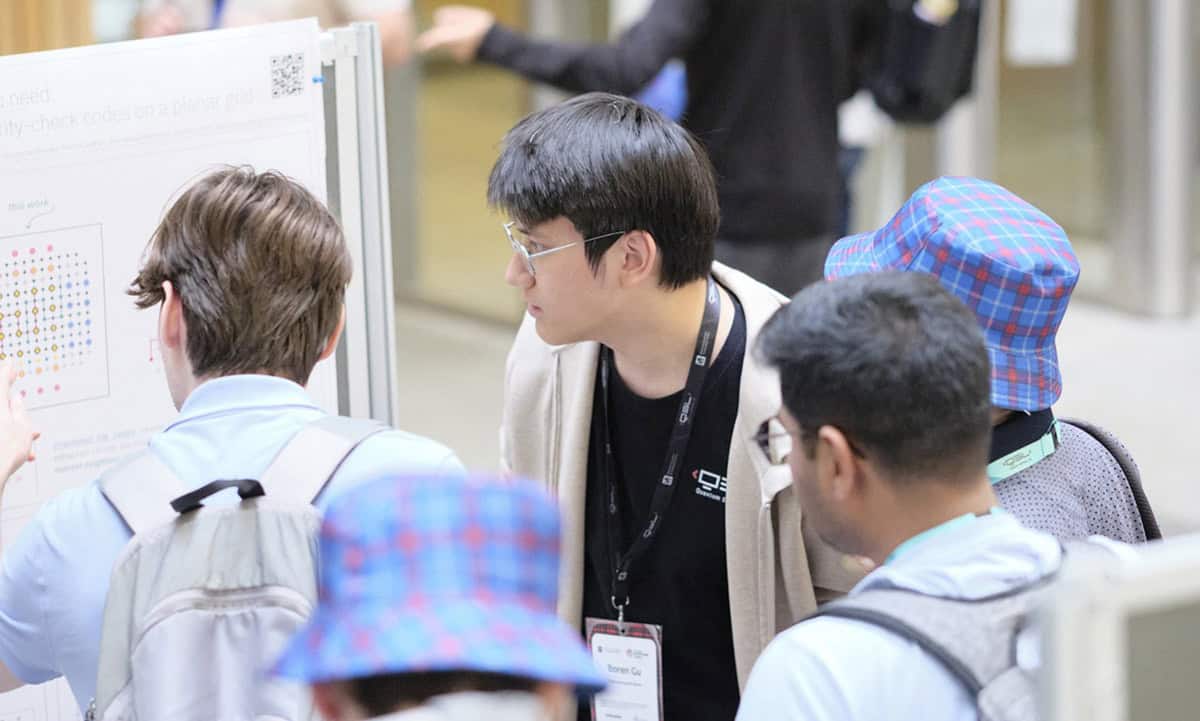
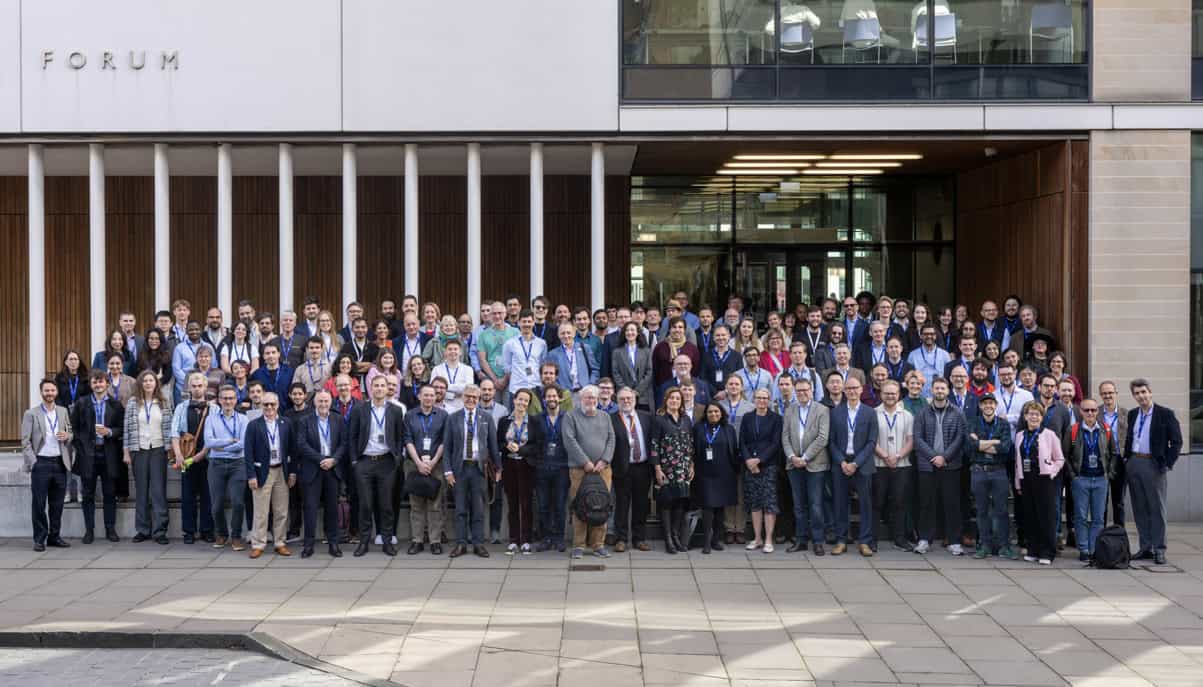
Community building Around 170 people from all parts of the quantum ecosystem attended the QSL’s third annual showcase. (Courtesy: QSL)
Another project is developing an adaptable computational approach to the problem of classically hard sampling, which is a good match for quantum photonic platforms. A team led by Leo Monbroussou has been working with two of the testbed providers, ORCA Computing and Aegiq, that have developed photonic platforms with different architectures and control mechanisms. “Having a direct dialogue with the hardware experts has really helped to push the research forwards,” says Jones. “Through the collaboration with the NQCC we have been able to embed that knowledge into the way that we approach software development.”
This established operating model provides a strong starting point for the new research programme, called QATCH (short for Quantum Advantage TurboCHarger), that is worth £20m from the UK government over the next four years. “We have an existing body of knowledge on how to run software on real quantum systems, which is really valuable and hard to create from scratch,” says Jones. “QATCH gives us more runway to design more ambitious experiments, such as developing code that will run on different hardware devices for cross-platform benchmarking and optimisation.”
QATCH also marks a change of emphasis for the QSL team. While the first three years focused on exploring potential routes to achieving quantum advantage, QATCH has a clear mission to deliver the tools, methods and systems that will drive real and evidenced impact from quantum computing in the UK. “The QATCH programme will launch the UK’s first full-stack feedback loop, serving as the software engine that translates fundamental theory into verified applications,” says Kashefi. “Through daily co-creation between our researchers, hardware vendors, and industry end-users on the national testbeds, we are ensuring that software actively drives forward the design and utility of these new quantum machines.”
This year’s Quantum Fringe was supported by the NQCC, Infleqtion, Quantinuum, Riverlane, Classiq, IBM, Institute of Physics, National Physical Laboratory, Nu Quantum, with input from Edinburgh Innovations, the Centre of Doctoral Training in Quantum Informatics, the QCi3 and IQN hubs, the Quantum Software Alliance, and Quantum Computing Application Cluster
Picture a room where every photon bouncing off a doorbell camera, every acoustic reflection captured by a passing delivery drone, and every drop of ambient thermal noise is fed directly into a Bayesian inference engine. This is the courtroom depicted in director Timur Bekmambetov’s 2026 film Mercy, which delves deep into the murky boundary between artificial intelligence (AI) and human behaviour.
Set in 2029, the film features Los Angeles police detective Chris Raven, who is also the defendant, played with an increasingly desperate, sweat-soaked intensity by Chris Pratt (Jurassic World, Guardians of the Galaxy). He is starting his trial at a staggering 97.5% probability of guilt.
The judge sitting across from him isn’t a human in robes, but an AI avatar named Judge Maddox, brought to life with icy, terrifying calm by Rebecca Ferguson (Silo, Dune). Raven has precisely 90 minutes to look into the municipal network, cross-reference any telecommunication data recorded by the system, and drive that probability score down below 92%, or a focused acoustic shockwave will end his life by rupturing his internal organs on the spot.
Mercy has not filled critics with delight (it got a score of just 24% on the Rotten Tomatoes “Tomatometer”) but audiences are finding much to enjoy in it (81% on the Rotten Tomatoes “Popcornmeter”). Beneath the reasonably compelling visuals and a home-movie-night-worthy whodunnit lies a fascinating (and possibly accidental) masterclass in the limits of computational physics.
The premise of the “Mercy Capital Court” rests entirely on a classic piece of scientific hubris: the concept of “Laplace’s Demon”. The concept dates back to 1814, when French mathematician Pierre-Simon Laplace postulated that if an intellect knew the exact position and momentum of every atom in the universe, it could calculate the past and future with absolute certainty. Judge Maddox is Hollywood’s latest incarnation of that demon, vacuuming up petabytes of data from the urban landscape under the assumption that total observation inevitably yields objective truth.
As the film unfolds within its high-stress 90-minute limit, reality asserts itself through the unavoidable laws of measurement and noise. The court treats its data streams as pure, classical bits; but the reality is that the physical world generating those feeds is still fundamentally chaotic. A camera feed misses a vital angle because of atmospheric diffraction; a digital packet drops over a high-latency mesh network; and a corrupted timestamp introduces entropy into the dataset.
Ferguson’s AI character acts less like an objective judge and more like the ultimate “black box” algorithm: impenetrable, unyielding and bound by the feedback loops of its own training data. This is not just cinematic exaggeration but mirrors the real-world crisis of predictive risk-assessment tools like COMPAS.
Used across American bail and sentencing hearings, COMPAS was famously exposed for generating disproportionately high risk scores for Black defendants, regardless of actual reoffending rates. It was a stark lesson in how automated systems codify historical bias under the guise of neutral maths. So when Pratt’s character desperately feeds fresh evidence into the system to shift his 97.5% guilt probability, he too is fighting a version of algorithmic bias. This is a feedback loop where an initial prediction, once generated by a closed-source formula, becomes nearly impossible for a human to contest.
The absurdity of the courtroom’s execution chair – where a single computational calculation yields an instantaneous, violent sentence – amplifies the real-world stakes of automated misidentification. In recent years, away from the cinema screen, law-enforcement reliance on automated tools, particularly facial-recognition software, has already led to disastrous false arrests.
With innocent citizens including Robert Williams and Christopher Gatlin being jailed for crimes they didn’t commit due to faulty algorithm matches, we have already seen what happens when police and courts outsource critical human judgement to automated systems with known failure rates. Mercy takes this terrifying precedent to its absolute extreme, demonstrating what happens when we strip away human discretion, constitutional due process, and the right to meaningful cross-examination in favour of algorithmic convenience.
Ultimately, the film succeeds as both a relentless, clock-ticking thriller and a thought-provoking slice of near future paranoia. Bekmambetov’s direction keeps the 2029 world feeling real enough to suspend disbelief, while Ferguson provides a wonderfully nuanced counterweight to Pratt’s frantic energy.
More than anything, the film serves as a stark reminder that no matter how much data we feed an AI, an algorithm cannot understand context, empathy or justice. As AI continues to creep into real-world courtrooms, the film’s message is clear: substituting automated probability for human reason doesn’t remove human bias, it merely automates it.
On 9 October 2022, a gamma-ray burst called GRB 221009A sent an enormous amount of high-energy radiation toward Earth. The Large High Altitude Air Shower Observatory (LHAASO) detected thousands of photons from the event, including some above 10 TeV. More than an hour later, the Carpet cosmic ray detector recorded something much harder to explain: a photon-like event with an estimated energy of 300 (+43/-38) TeV. At that energy, according to standard physics, the photon should have disappeared during its journey to Earth.
Giorgio Galanti of INAF and Marco Roncadelli of INFN have now examined what could allow such a photon to survive. Their explanation, reported in Physical Review Letters, involves two hypothetical effects: axion-like particles, or ALPs, and a possible violation of Lorentz invariance.
The space between galaxies is filled with background light, including the cosmic microwave background (CMB), the faint radiation left from the early universe. A 300 TeV gamma ray can collide with these low-energy photons and produce an electron and a positron. At this energy, the CMB is the dominant source of absorption.
“The CMB is extremely dense,” Galanti explains. A 300 TeV photon therefore has a mean free path far shorter than the distance from GRB 221009A, making the universe effectively opaque to it.
The numbers are difficult to put into perspective. Galanti and Roncadelli calculate that conventional propagation would result in only about 10-96 expected photons in the Carpet energy range. The Carpet event itself is also unusual because the detector did not find the muon signal expected from a hadronic cosmic-ray shower. The collaboration estimated the probability of a hadron being misidentified as the event at about 3 × 10⁻⁴.
Galanti says the researchers are taking the published Carpet result at face value while leaving open the question of whether it will ultimately prove to be a signal of new physics.
Two options to consider
One possible explanation involves ALPs, hypothetical particles that can mix with photons in magnetic fields. A photon can convert into an ALP, travel through a region where photons would be absorbed, and later convert back into a photon. This mechanism could help explain the LHAASO photons detected between roughly 10 and 20 TeV. But it runs into trouble at 300 TeV.
“ALPs alone fall short by roughly two orders of magnitude at 300 TeV,” Galanti says. They remain useful at lower energies, but the CMB absorption becomes too severe at the Carpet energy. The researchers found that within the range of ALP parameters under consideration, the expected number of Carpet photons stays below about 10-4, lower than the 0.0513 required at the 95% confidence level.
That led the researchers to consider another effect: a possible violation of Lorentz invariance, one of the foundations of relativity.
In the scenario they studied, the Lorentz invariant violation (LIV)-induced modifications of photon propagation change the threshold for photon–photon absorption. A 300 TeV photon can then interact with higher-energy background photons, which are much less abundant than the CMB photons responsible for ordinary absorption. The universe then becomes more transparent to the photon.
The researchers calculate upper limits of 1.22 × 10²¹ GeV for the linear LIV scale and 2.03 × 10¹³ GeV for the quadratic case, at 95% confidence.
The interesting part is that they don’t use LIV as a replacement for ALPs. As Galanti explains, ALPs function at LHAASO energies but not at Carpet energies, while LIV operates at Carpet energies but not at LHAASO energies. Their model incorporates both effects into a single theoretical framework.
There is another clue. A separate analysis by Dmitry Ofengeim and Tsvi Piran found that the more-than-one-hour delay between the LHAASO and Carpet events can also be explained with quadratic LIV. Their estimated scale is consistent with the limit obtained by Galanti and Roncadelli.
But Galanti is careful about what the result means.
“A single candidate photon from a single cosmic event cannot be claimed as an undisputed discovery,” he says. Confirmation would require repeated observations from multiple distant sources showing the same energy-dependent signatures.
Future observations from facilities including ASTRI Mini-Array, CTAO, SWGO and the expanded LHAASO could test whether similar high-energy signatures appear in gamma-ray bursts and distant active galaxies.
For now, the 300 TeV event remains an unusual observation with a possible explanation that goes beyond standard photon propagation.
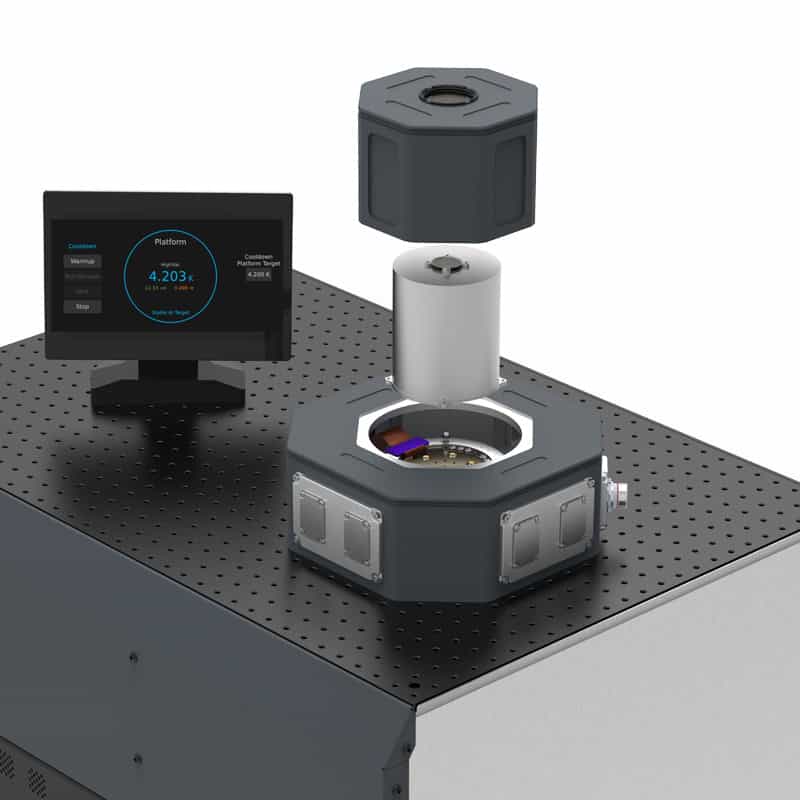
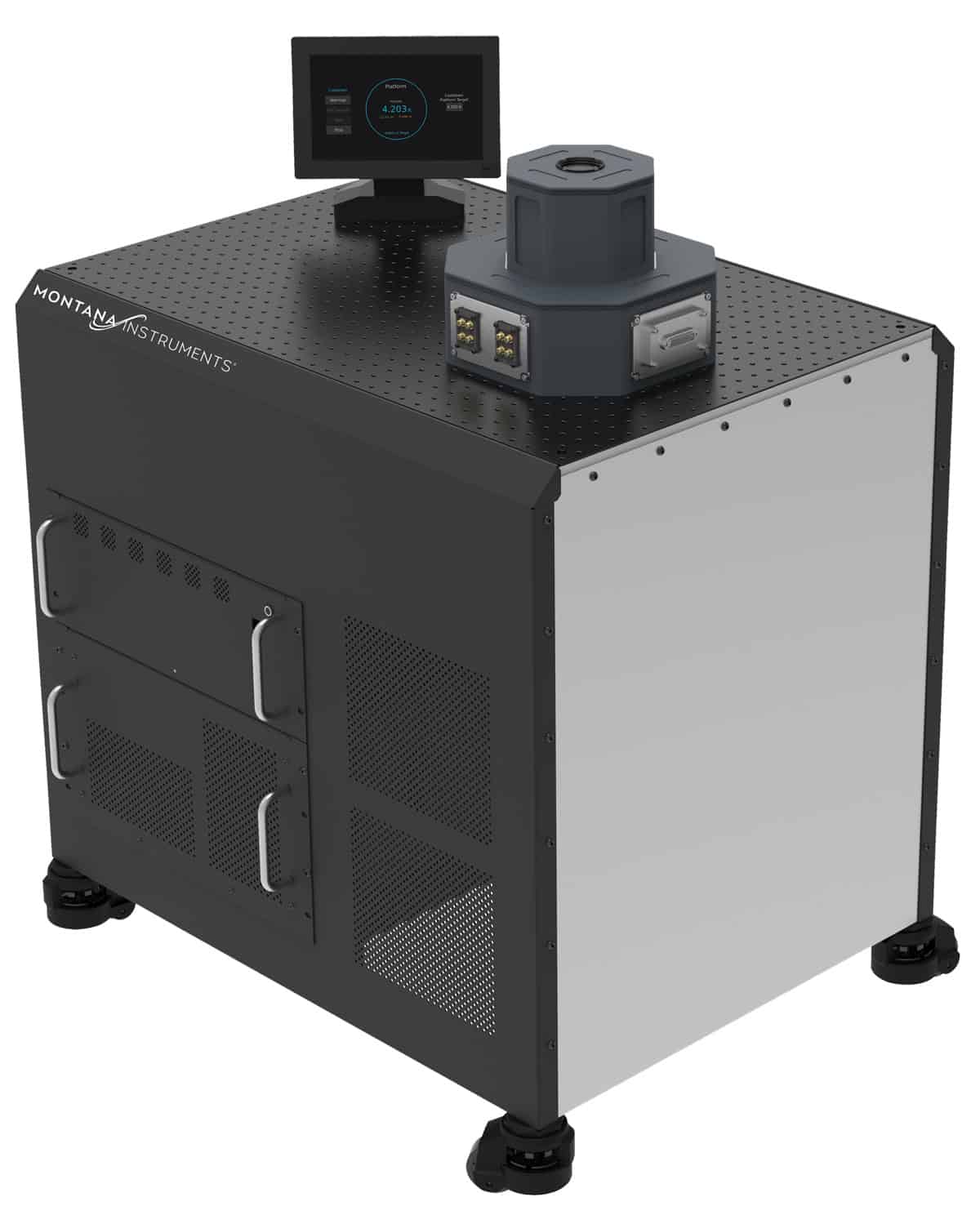
Cool stuff The new RapidCycle 100 EC cryostat from Montana Instruments, which can cool down from room temperature to 4 K within an hour and warm back up again just as fast. (Courtesy: Montana Instruments)
As quantum computing enters its commercial phase, demand is growing for electronic components that can operate reliably at ultralow temperatures. But suppliers that routinely test the performance of their devices under a wide range of conditions rarely extend their characterization efforts to the cryogenic regime. Quantum developers must either test the components themselves, or run the risk that a faulty device ruins the performance of increasingly complex quantum machines.
“Quantum computers are often operated within a dilution refrigerator, which takes days or weeks to cool down,” says Ben Wilbur, a senior design engineer at cryogenics specialist Montana Instruments. “A single faulty component requires the whole system to be warmed up again, which can waste the best part of a month and slow down progress.”
To avoid that scenario Montana Instruments has designed and built a cryostat, called the RapidCycle 100 EC, that can cool down from room temperature to 4 K within an hour and warm back up again just as quickly. The overall cycle time is around three times faster than for similar systems, and a fraction of the time needed to cool down and warm up a large-scale dilution fridge.
Such a rapid cycle time offers an efficient solution for quantum engineers to validate electronic components before integration and for suppliers to measure the low-temperature response of their devices before shipping them out to customers. “From talking to different companies we know there is a market desire to test more components, but there is also a commercial impetus to streamline the testing process,” says product manager Patrick Gale.
Gale points out that many of the electronic components that are being used to build quantum computers have not been designed to operate at ultralow temperatures. As an example, radio-frequency devices play a critical role in many qubit architectures for controlling and reading out the quantum states, but manufacturers of these components are unlikely to have the expertise or equipment to know whether their components function effectively in this regime.
“This system is designed for companies that want to understand how their devices perform at ultralow temperatures, but without needing to hire a cryogenics engineer,” says Gale. “Having the capability to characterize their own components could offer suppliers a competitive advantage, allowing them to pre-qualify their devices and even to improve their low-temperature performance for quantum applications.”
Commercial drivers
The idea for the RapidCycle cryostat first emerged in 2023. Initial development results were promising, but more immediate priorities delayed efforts to engineer a commercially viable product. Around a year ago, as the need for faster cycle times became more urgent within the rapidly expanding quantum industry, the company restarted its design work. “We felt we were in a unique position to tackle this problem,” says Gale.
Speedy response Montana Instruments’ fast-acting cryostat lets quantum engineers validate electronic components and measure the low-temperature response of devices before being shipped to customers. (Courtesy: Montana Instruments)
But cutting the cycle time by a third was not an easy task. “Most of the thermal energy is from room temperature down to around 50–70 K, so that is where we needed to focus our development efforts,” says Wilbur. “Beyond that the temperature starts to drop much more rapidly, since the heat capacity of the materials become much lower close to absolute zero.”
While the original work had shown that rapid cool downs were feasible, further iterations were needed to achieve the target temperature of 4 K and to generate enough cooling power to maintain the device at that temperature during the test. “To optimize the performance we needed to think carefully about the materials we used, and about the amount of thermal mass that really needed to be in the system,” says Wilbur. “The more you have in there, the longer it will take to cool down.”
While there was a clear design focus to minimize the thermal mass, the system has been engineered to provide plenty of space and flexibility for testing electrical components. Samples can be mounted on a 100 mm platform, large enough to accommodate a diverse range of electronic components, while the configuration can easily be adapted to different testing protocols. Extra space has also been created around the sample to provide an easy-access wiring system that supports a flexible combination of RF and DC feedthroughs into the cryogenic environment.
“As these tests get more complicated, all the inputs and outputs to the sample can make the cryostat really messy,” says Wilbur. He explains that the unit has a tiered structure, with the sample space at the top and a lower housing that provides extra room for connecting and disconnecting the cables. “It really cleans up the wire management but also reduces the volume within the sample space to achieve a fast cycle time.”
Targeted design
Other design features have focused on the usability of the system, particularly for electronic engineers and technicians with limited knowledge of cryogenics. In keeping with the company ethos of making cold science simple, the complexities of the cool-down process – such as reaching the right vacuum level before engaging the cryocooler – are hidden from view. “The user just needs to set a target temperature and press the cool-down button,” says Gale. “The same for warm-up, all the temperature monitoring is done automatically so the user can just walk away.”
A touchscreen interface provides real-time readouts of the internal temperature, vacuum pressure and temperature stability, while the system can also be connected to a computer network to allow for remote control and monitoring. All the measurements taken with the system can easily be exported over the network connection, enabling them to be combined with other performance data that have been collected for device characterization.
Such automated processes are nothing new for Montana Instruments, which has built a reputation for building systems that allow users to focus on their own experiments and assemblies rather than the intricacies of the cryogenics. In this case, however, special attention was also paid to creating an integrated system that can operate within the constraints of a manufacturing environment. “We focused on consolidating the form factor to ensure that the unit doesn’t take up too much space on the production floor,” says Wilbur. “The cryostation and all the controls fit into a cart that can easily be wheeled around.”
Following the official launch of the RapidCycle earlier this year, Montana Instruments is expecting to ship the first commercial units in the next month or two. But Gale points out that some beta customers in the manufacturing sector have already been trialling the system. “The feedback has been positive,” he says. “With some simple training we have had them up and running in a day or two, and they really appreciate the fast cooldown.”
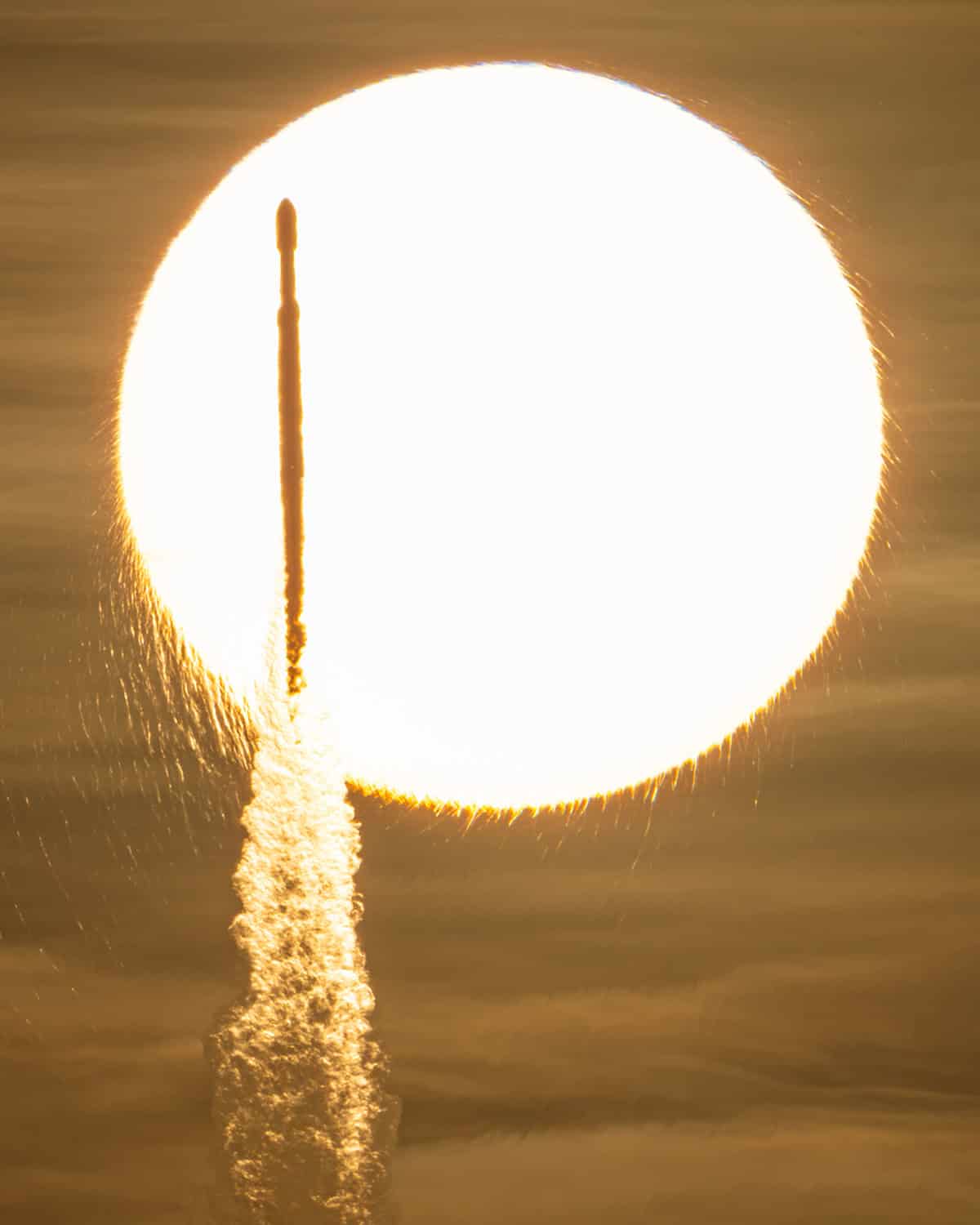
Lift off A SpaceX Falcon Heavy rocket with NASA’s Nancy Grace Roman Space Telescope on board is seen transiting the Sun during launch from the Kennedy Space Center in Florida on 30 August 2026. Named after the agency’s first chief astronomer, the telescope will survey billions of stars and galaxies with a field of view far larger than Hubble’s, helping scientists to study dark energy, exoplanets and the evolution of the universe. (Courtesy: NASA/John Kraus)
At 7.26 a.m. on Sunday 30 August 2026, a SpaceX Falcon Heavy rocket rose from the Kennedy Space Center in Florida, carrying NASA’s Nancy Grace Roman Space Telescope on its initial three-month journey beyond the Moon. As I watched online from my home in Sydney, Australia, that evening, the launch did not disappoint. There was all the familiar theatre of a rocket taking off: the brilliant column of flame, mission control calling out that it had gone through the point of peak aerodynamic stress, then the booster and main-engine cut-offs, before the fairing finally fell away.
Just 31 minutes after lift-off, Roman separated from its carrier rocket and began its long journey to L2, the second Sun–Earth Lagrange point, 1.5 million kilometres from Earth. Once it arrives there at the end of November, the gravitational balance will let Roman maintain its orbit with relatively little fuel. The Sun, Earth and Moon will all be on the same side of the spacecraft so that a single shield can block their light and heat, while the telescope faces away from them and stays cold.
Yet the most impactful part of Roman’s journey will be less visible. When its first images are released, hopefully in early 2027, the telescope will accelerate a change already long under way in astronomy. Rather than investigating carefully selected objects in the sky, astronomers are now increasingly mapping entire populations – monitoring a changing sky and searching enormous datasets for discoveries no single observer could conceivably find by eye. Roman will speed up that trend much further.
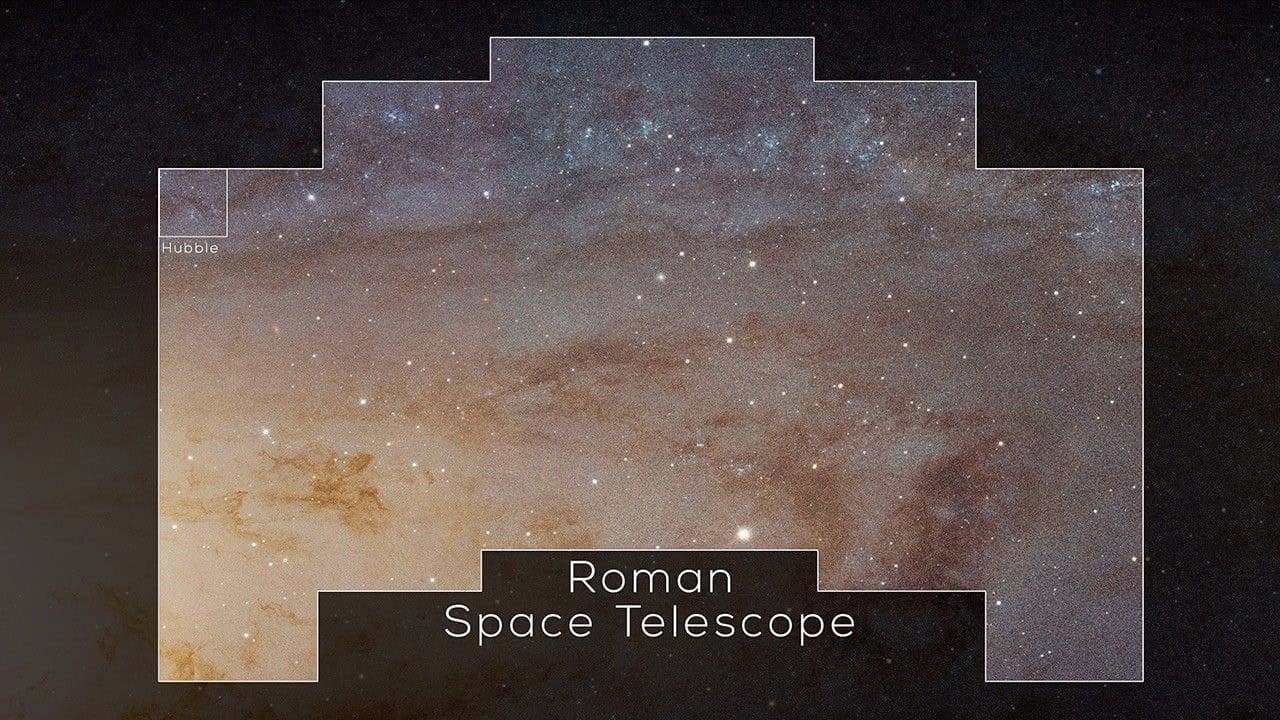
During the launch broadcast, I heard NASA administrator Jared Isaacman say Roman will study the “ecology of the universe”. Some cameras, he suggested, can provide an overview of a forest, while others can zoom in on individual birds and leaves. Roman, however, will combine both approaches. With a 2.4 m-diameter primary mirror, its images will be as sharp as those from the Hubble Space Telescope. But Roman’s Wide Field Instrument (WFI) can cover at least 100 times as much sky in a single pointing.
Bigger, brighter, better The Roman telescope will scan a much wider field of view than the Hubble Space Telescope (insert) ever could. (Courtesy: NASA)
With Roman, the detailed and population views become part of the same observation. Traditionally in astronomy, a sharp image of a single galaxy can reveal its stars, dust and morphology, while a wide but (usually) less detailed survey can tell us how galaxies are distributed. Roman will do both: it will record fine detail while retaining the wider view of the environments and populations to which individual objects belong. It will, in essence, allow astronomers to study in detail entire cosmic ecosystems as well as their constituent objects.
And that is what makes Roman so revolutionary.
From observing targets to interrogating surveys
For much of modern professional astronomy, observing began with a proposal to study an object of scientific interest. If it was accepted by an observatory’s time-allocation committee, the astronomer would travel to the telescope (or, later, log in remotely), collect a manageable quantity of data, reduce and analyse it, and retain exclusive access during a proprietary period while preparing their first research paper. The observer knew why each exposure had been taken.
That model has not disappeared. The Hubble and James Webb space telescopes remain extraordinarily powerful precisely because they can study selected targets in fantastic detail. Roman’s coronagraph, meanwhile, will test active optics that suppress starlight far more effectively than existing space-based coronagraphs, allowing it to image giant planets orbiting nearby stars and paving the way for future missions to photograph smaller, Earth-like worlds.
However, alongside targeted astronomy, a different observing mode has become increasingly important, namely observatories designed to produce systematic, reusable maps of the sky. The Gaia mission of the European Space Agency (ESA) is one such example. Over its 11-year life between 2014 and 2025, Gaia took more than three trillion (3 × 10¹²) observations of roughly two billion stars and other objects. Its public catalogues have allowed researchers to reconstruct the Milky Way’s structure, identify stellar streams and star clusters, examine binary stars and search for rare objects, often without ever applying for new telescope time.
Gaia’s third data release, which was made public in June 2022, included 10.5 million “variable sources” – any objects that change in brightness over time, sometimes regularly and sometimes unpredictably. They were all classified using supervised machine-learning techniques, in which an algorithm learns from previously labelled examples. No astronomer could personally have inspected that many light curves (records of brightness versus time).
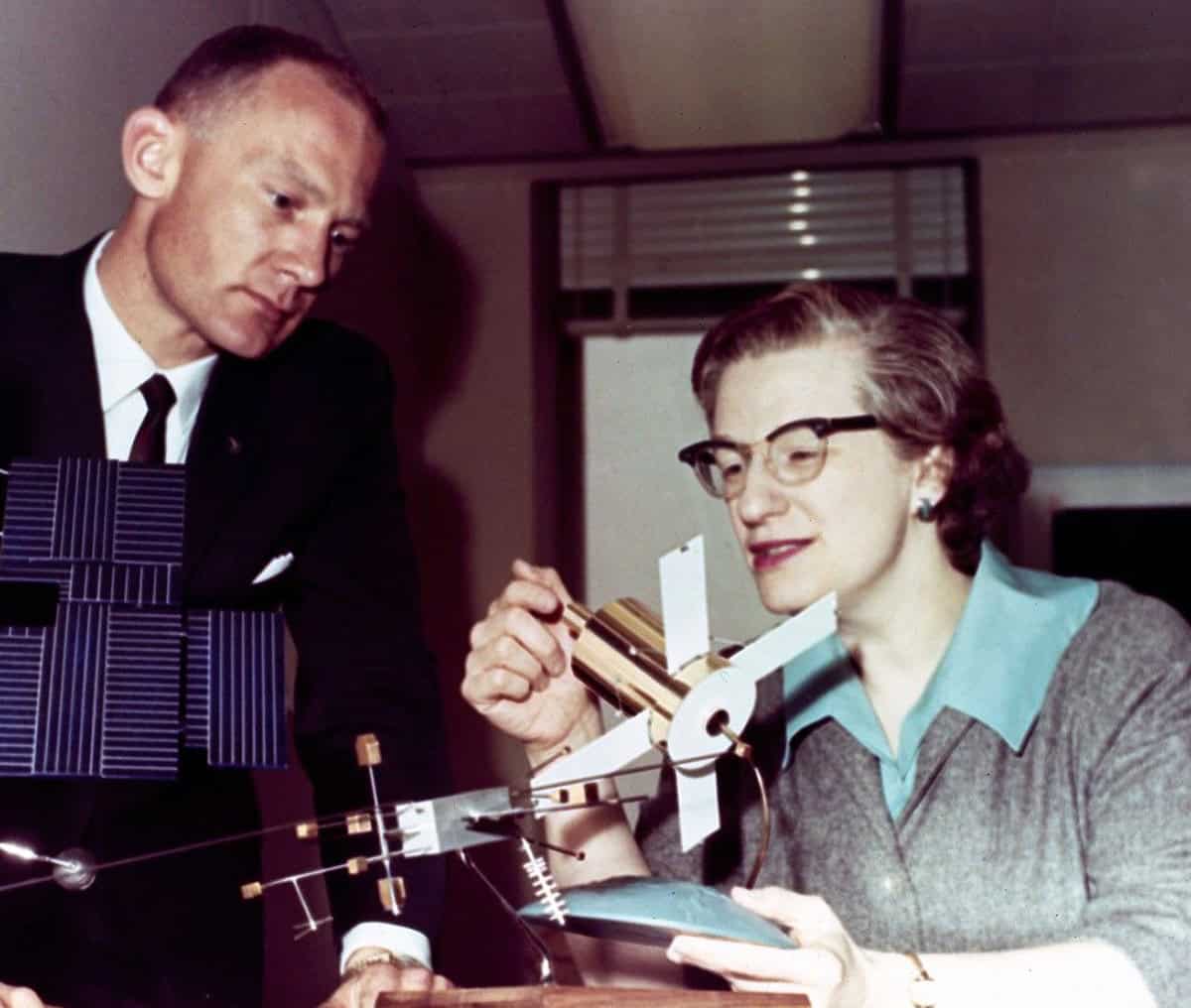
Space pioneer Nancy Grace Roman, born in 1925, was the first female executive at NASA and served as the agency’s first chief of astronomy throughout the 1960s and 1970s. She created NASA’s space astronomy programme and is known to many as the “Mother of Hubble” for her role in planning the Hubble Space Telescope. Pictured here explaining the Advanced Orbiting Solar Observatory to astronaut Edwin “Buzz” Aldrin, she was also an active public speaker, educator and advocate for women in science. (Courtesy: NASA)
The Vera C Rubin Observatory in Chile makes the new approach to professional astronomy even more explicit. Its decade-long Legacy Survey of Space and Time, which began in 2026, is collecting some 10 terabytes of data each and every night. Whenever its software detects that something has changed, it issues an alert. When alerts are triggered, they will be sent to automated “brokers”, which will cross-match them against existing catalogues, classify them and rank candidates for follow-up scrutiny. It is unlikely that an astronomer searching for supernovae, variable stars or hazardous asteroids, for example, will begin with the telescope’s raw images. Throughout modern astronomy, the starting point will instead be a filtered stream produced by a chain of algorithms.
Roman will carry this survey logic into space, beyond the blurring and infrared glow of the Earth’s atmosphere. As Roman’s deputy WFI scientist Ami Choi explained during the launch broadcast, the wide view is essential, especially for cosmologists. They don’t only need sharp measurements of individual galaxy shapes but also data on enough galaxies across a sufficiently large volume. That way they can distinguish the behaviour of the universe on large scales from the peculiarities of one small region.
Roman's three surveys
Roman’s three core surveys will show how a dataset can be designed to answer one question while creating the raw material for many others.
The High-Latitude Wide-Area Survey will map more than 5000 square degrees, which is more than 12% of the sky. It will do this using both imaging and “slitless” spectroscopy, in which spectra are recorded for every suitable object in the field rather than just individually selected targets.
Measuring the subtly distorted shapes of hundreds of millions of galaxies should reveal the distribution of dark matter – the mysterious, invisible stuff that makes up 27% of the universe by mass-energy – and also how cosmic structure has grown over time. Yet the same observations will also contain stars in the Milky Way, nearby galaxies, distant quasars, strong gravitational lenses and objects that no survey committee will ever have thought to put on a target list.
Roman’s High-Latitude Time-Domain Survey, meanwhile will repeatedly image “deep” fields at roughly five-day intervals, producing an anticipated 100,000 transient light curves. Type Ia supernovae, whose luminosities can be standardized to make them cosmic distance indicators, will trace the expansion history of the universe, but the repeated images should also expose variable galactic nuclei and rare explosions.
Finally, the Galactic Bulge Time-Domain Survey will revisit six fields of the sky about every 12 minutes during its most intensive observing seasons. Its main goal is to detect the temporary brightening of a star that occurs when the gravity of an unseen object passes in front and bends its light. Such “gravitational microlensing” events can reveal cold planets orbiting their host stars as well as free-floating planets and isolated black holes. The same sequence becomes a record of stellar variability and motion.
The reuse of data that we’ll see with Roman is not entirely new. Photographs recorded on physical glass plates often preserved far more sky than the astronomer who exposed them intended to study. Indeed, there have been instances of researchers trawling through old plate archives who’ve made discoveries decades after the photos were originally recorded. Electronic detectors, which produce digital images, made searching old data in this way far easier.
But what is new is the scale and the degree to which reuse is built into the Roman observatory from the outset. Many papers about data from the Roman mission will, I am sure, be written years later by researchers who were never involved in choosing the original data collection and may encounter the observation only as a row in a database.
Together, these observatories mark the arrival of what might be called astronomy’s “production era”. The phrase may sound industrial, but it describes a real shift in our professional practice. Telescope time remains precious, but it is no longer the only scarce resource. What will be increasingly hard to come by will be the capacity to process, connect and interpret what surveys have already observed, and to formulate a question sharp enough to extract meaning from an archive built for many purposes.
A picture too large to see
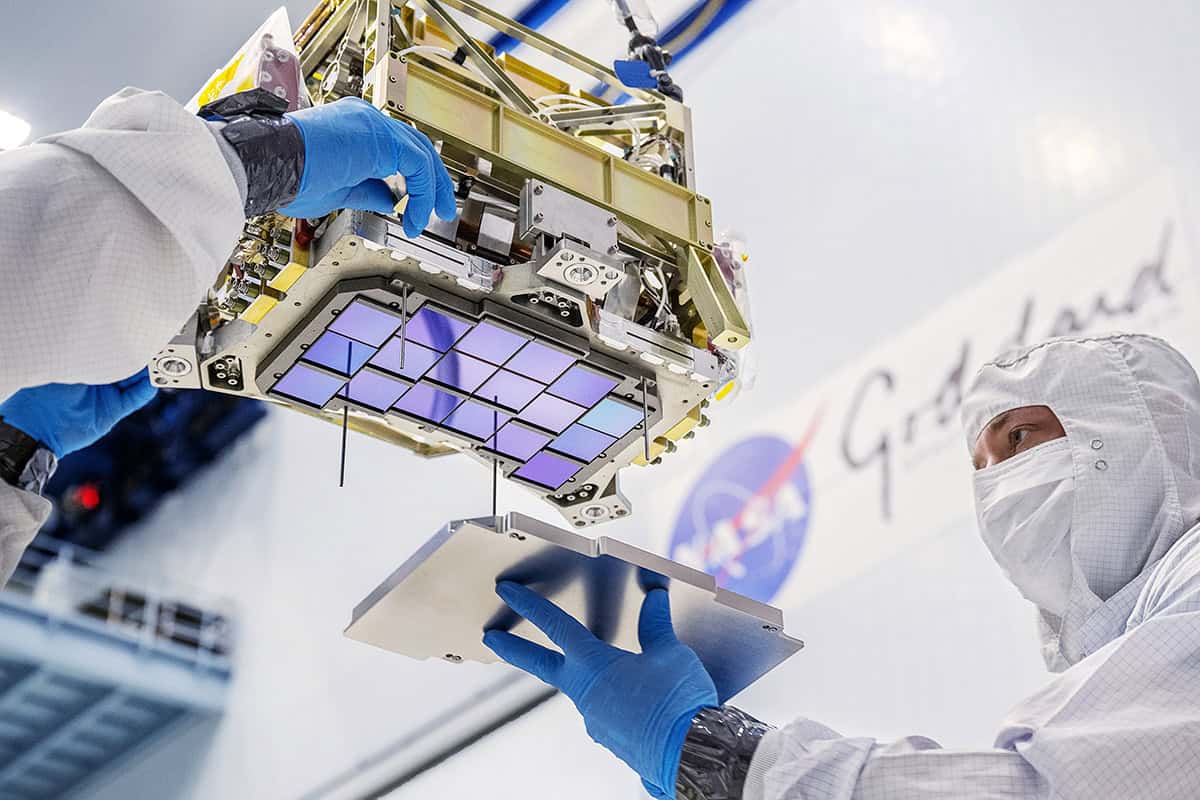
The data that Roman will yield is mind-boggling. Roman’s WFI has 18 infrared detector arrays with a total of about 300 million pixels. Even one field would require three dozen 4K television screens to display at full resolution. But Roman will tile thousands of such fields into surveys. During the pre-launch broadcast, Roman programme scientist Dominic Benford joked that NASA would need more than 500,000 TV sets to display the largest completed survey; laid out together, they’d cover some 45 city blocks.
Instrumental magic The Roman telescope’s Wide Field Imager has 18 detectors that can create 300-million-pixel images over a 0.28 square degree field of view. (Courtesy: NASA/Goddard Space Flight Center)
Calling this a single “picture” is convenient but misleading. It will be a computationally constructed portrait assembled from many pointings, observing epochs and filters. The telescope collects photons; processing pipelines calibrate the detectors, remove instrumental signatures, align exposures and turn them into images, mosaics and catalogues. In survey astronomy, computation is not something that happens after the observation; it is part of observing.
During its lifetime, Roman is expected to return around 1.4 terabytes (1.4 × 1012 bytes) of compressed data each and every day. In fact, if you take into account the intermediate data generated when the information is processed, Roman’s archive could top 20 petabytes (20 × 1015 bytes) over its five-year primary mission. NASA expects automated methods, including machine learning, to help explore the torrent of data.
Automation is unavoidable, but it poses a subtle problem. Algorithms are excellent at finding examples of phenomena on which they have been trained. The discoveries that change science, however, often do not fit into established categories. An anomaly-detection system can flag statistical outliers, but deciding which outliers are artefacts, familiar objects in unusual circumstances or genuinely new phenomena remains a scientific assessment.
Human involvement in Roman won’t be entirely superfluous, however, and will still be required to make breakthroughs. Citizen scientists will play their part too. We need to encourage amateur sleuths to follow in the footsteps of people like Hanny van Arkel – the Dutch schoolteacher who in 2007 spotted an unfamiliar green cloud in data gathered by the Sloan Digital Sky Survey. “Hanny’s Voorwerp”, as it became known, is an ionized cloud preserving the light echo of a quasar that had faded dramatically.
Open data, uneven opportunity
Roman will need both kinds of intelligence: machines capable of surveying the statistical forest and people – whether professional astronomers or citizen scientists – willing to pause over a strange bird in one of its trees. But the question is not just how Roman’s data will be searched. It is also who will get to search them.
The Roman space telescope will fundamentally change who gets the first chance to make a discovery
Roman, you see, will fundamentally change who gets the first chance to make a discovery. Hubble observers can receive up to a year of exclusive, “proprietary” access to their new data, which is typical for space- and ground-based professional programmes. Roman, however, will have no such period. Calibrated exposures are intended to become public within days, with more elaborate mosaics and catalogues following in periodic releases.
In principle, therefore, anyone will be able to start looking at observational data as soon as it’s released. The beauty of Roman is that a PhD student, a researcher at a small institution, or members of large international consortium will all be able to get going at the same time. The move to “open data” will also benefit astronomers at institutions who have traditionally lacked access to major telescopes.
However, it also complicates familiar ideas about ownership and priority. Who receives credit when one team designs a survey, another builds the pipeline, a machine identifies a puzzling candidate, and a third group recognizes its significance? Will researchers feel pressure to publish quickly rather than investigate carefully when competitors can access the same data?
Indeed, open access does not automatically create equal opportunity. A 20-petabyte archive cannot simply be downloaded onto a laptop. Researchers need computing resources, efficient code and the expertise to use them. That’s why the Space Telescope Science Institute in Baltimore, Maryland, has developed the cloud-based Roman Research Nexus, which will let users analyse mission data where they are stored.
Rather than trying to transfer vast wodges of raw data to their home institutions, researchers will instead write or upload code to a cloud-based environment where the Roman archive is stored, run the analysis there and then download the results. Essentially, they will take their code to the data, not the data to the code. Without such a platform, nominal access to the archive would be of limited use.
Even so, differences in funding, training, network bandwidth and available time will continue to shape who can exploit the archive most effectively. Astronomers will, in other words, still need to understand telescopes, detectors, calibration and astrophysics. But they will increasingly work alongside software engineers and statisticians, evaluate machine-generated classifications and design searches that can operate across billions of sources. Knowing what not to trust in a catalogue may become as important as knowing where to point a telescope.
From 3596 pixels to 300 million pixels
New development The Roman telescope is the next big thing in space-based infrared astronomy, which began in 1983 when NASA launched the Infrared Astronomical Satellite (IRAS). It created images such as this, in which the bright horizontal band is the plane of our Milky Way galaxy, with the centre of the galaxy located in the middle. Being so near, the Milky Way dominates our view of the entire sky, but when IRAS data was processed to show smaller regions of the sky, thousands of sources beyond our galaxy were revealed. (Courtesy: NASA/JPL)
In the early days of optical astronomy, researchers used traditional photographic plates to record individual images of the sky. To look at infrared light, astronomers turned to heat-sensitive detectors, but they’d still have to measure one position at a time, scanning a telescope across a source to build up information sequentially.
That logic changed in 1983 when NASA launched the Infrared Astronomical Satellite, which was the first space-based infrared observatory and had 62 separate detectors. By the 1990s, huge 256 × 256 arrays, encompassing 65,536 detector elements, had become common enough to support detailed infrared imaging of galaxies. Hubble’s Near Infrared Camera and Multi-Object Spectrometer, installed in 1997, used three arrays of this format.
I’ve seen the changes at first hand myself. In 1994 when I was doing my PhD at the University of Groningen in the Netherlands, I published my first paper on near-infrared astronomy, which I’d co-written with an undergraduate student I was supervising. It was based on infrared images of a galaxy taken with a camera on the 2.1 metre telescope at the Kitt Peak National Observatory in Arizona, which used an indium-antimonide detector with just 3596 pixels.
For my PhD itself, however, I observed a sample of galaxies using the European Southern Observatory’s 2.2-metre telescope at La Silla in Chile using a mercury cadmium telluride detector with 65,536 pixels. That was an 18-fold increase over the Kitt Peak camera, yet Roman’s focal plane, with its 18 detector arrays, contains more than 300 million physical pixels.
Progress is not just about pixel count. The advantages of working in space are even bigger because you get none of the atmospheric turbulence or infrared background that you do on Earth. However, it’s not all plain sailing. Space-borne infrared arrays need to be sensitive, uniform, low-noise and reliable; they also have to operate at cryogenic temperatures (roughly 90 K) and endure a harsh radiation environment.
In fact, Roman’s equipment represents decades of progress in materials science, fabrication, electronics, calibration and computing as well as our ability to make pixels ever-smaller. Its infrared detectors are cooled passively by radiators that discharge heat into space rather than by liquid helium.
Larger arrays have also changed what it means to select an astronomical target. A single detector requires an astronomer to decide where to measure: a small array records one selected view. Roman, however, will capture a panoramic field large enough to contain a huge amount of scientifically useful objects. It will transform astronomy, which will be less about choosing what to study and more about working out how to analyse huge data sets.
Looking differently
Roman will not replace targeted observatories or the astronomer’s intuition. Its most intriguing discoveries will often require the James Webb Space Telescope, Hubble or ground-based telescopes to inspect individual objects in greater detail. Instead, these facilities are complementary: one maps entire populations, another inspects exceptional objects, and each changes what the other knows to look for.
Roman’s launch on 30 August lasted little more than half an hour. But the transition the observatory represents has taken decades, driven by larger detectors, faster electronics, public archives and increasingly sophisticated software. I entered professional astronomy when infrared images containing tens of thousands of pixels were normal (see box). Roman will create survey portraits containing trillions of pixels, release its data rapidly to the world and ask humans and machines to explore them together.
When Roman reaches L2 and begins returning science data, its most important legacy may be a way of observing in which the sky becomes a shared, continuously growing dataset. And discovery begins with learning how to explore it.
The performance of optoelectronic materials and devices relies on carrier transport, recombination, ion migration and phase segregation. They unfold on length scales from nanometers to micrometers and timescales from picoseconds to hours. Conventional characterization averages over this heterogeneity and rarely captures these events in operational devices.
Optical microscopy and spectroscopy can recover this hidden picture. They convert local material function directly into optical contrast, and that contrast can be resolved across the length and time scales where the function happens.
In this webinar, Dr Sudipta Seth will talk about advanced optical microscopy and spectroscopy that interrogate halide perovskite materials and corresponding optoelectronic devices under relevant in situ and operando conditions. This approach uncovers the local fields, transport bottlenecks, and defect chemistry that set solar cell performance. He will show how these local optical signatures translate into a mechanistic understanding of device operation, and how that understanding feeds back into the design of better probes, interfaces, defects and devices.
The talk is aimed equally at materials scientists curious about what happens inside their samples and at microscopists and spectroscopists looking for new problems suited to their tools.
Certificate of attendance will be awarded upon completion of the webinar.
Sudipta Seth is a research associate at KU Leuven, Belgium, where he conducts advanced research at the intersection of materials chemistry, optoelectronic devices and spectroscopy through the development of innovative microscopy methodologies. He leads the nanoscale device spectroscopy research line at Hofkens Laboratory. He completed his PhD at the University of Hyderabad and subsequently worked as a postdoctoral fellow at Lund University and as a visiting junior fellow at the Tokyo Institute of Technology. His work integrates single-particle spectroscopy, super-resolution and nanoscale microscopy and ultrafast spectroscopy to investigate fundamental photophysics in semiconductor materials and optoelectronic devices. He has received several academic fellowships, including INSPIRE-SHE (India), Wenner-Gren Postdoctoral Fellowship (Sweden), FWO Research Stay Abroad (Belgium), and Marie Sklodowska-Curie Postdoctoral Fellowship (European Commission).

 Login