❌

Normal view

Did space weather delay a train in 1841?

28 September 2026 at 15:00

Back when I used to commute to Physics World’s Bristol, UK offices every day, I heard a lot of excuses explanations for why my train was delayed. Missing crew members. Road vehicles colliding with bridges. Even, on one memorable occasion, a herd of cows blocking the tracks.

One explanation I never heard, though, was the one proposed for a train that supposedly left the south-west English city of Exeter at 10.05 p.m. on 18 October 1841. According to an anonymous correspondent in Nature some 30 years later, this 10.05 train was delayed by 16 minutes because of “a very intense magnetic disturbance” that made it “impossible to ascertain if the line was clear”. This disturbance, the correspondent argued, was due to “the magnetic and auroral storms that have of late excited some attention and discussion in these pages”.

Such storms are now known as space weather, and in 2013 Trey Cade, a physicist who leads the Space Weather Research Lab at Baylor University in the US, made an intriguing suggestion: was this supposed 1841 delay the first recorded example of space weather affecting human technology?

An auroral detective story

According to the latest research, the answer is firmly in line with Betteridge’s law, which states that any headline that ends in a question mark can be answered by the word “no”. Although space weather was (and is) capable of delaying trains, it couldn’t have delayed the 10.05 from Exeter in 1841 for a very simple reason: the railway line in that part of England didn’t open until 1846.

That, however, raises a further question. Assuming Nature’s correspondent wasn’t making up the story of the aurora-delayed train, was he perhaps misremembering the date of a different, later storm?

To find out, a broad group of experts led by Lancaster University’s Jim Wild, and including personnel from the British Geological Survey, Natural Resources Canada, Nature, RMIT University in Australia and STFC RAL Space in the UK as well as Cade himself – dug into the data. By combining evidence from railway timetables, historical newspapers, records of solar observations, reports of aurorae and digitized geomagnetic records, they concluded that Nature’s correspondent – whom they tentatively identified as an electrical engineer called Nathaniel John Holmes – was probably thinking of a storm that took place on 18 October 1848, not 1841.
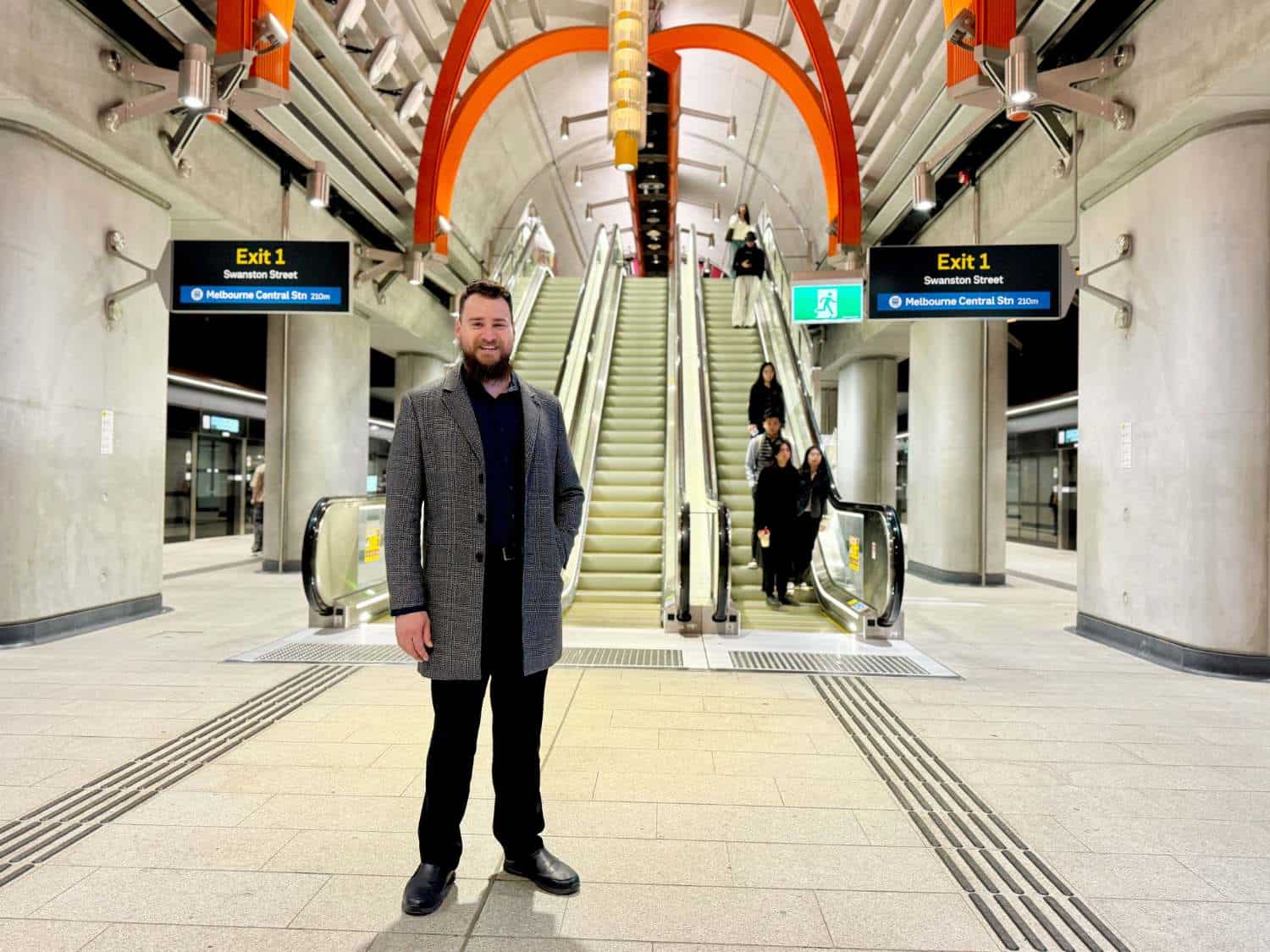
Photo of Brett Carter standing in front of the escalator at Melbourne Central Station. Two departure boards are visible in the background
Historical insights: Brett Carter of RMIT University (pictured at Melbourne Central Station in Australia) was part of the international team of experts who collaborated on the mystery of the delayed 10.05 from Exeter. (Courtesy: Michael Quin, RMIT University)

Having debunked the 1841 hypothesis, the authors of the new research, which is published in Space Weather, say that the earliest known example of space weather impacting human technology is now an incident involving telegraph systems on England’s Midland Railway in March 1847. If that still sounds rather early, Wild says that’s the point. “Society has been experiencing the effects of space weather on technology for almost as long as electrical technologies have existed,” he says. “The technologies affected have evolved from railway telegraphs to satellites…but the challenge remains the same: understanding the risk and ensuring society is resilient to its impacts.”

Raising awareness

According to Lasse Clausen, who studies space weather at the University of Oslo, Norway, but was not involved in the 10.05 from Exeter study, the biggest barrier to this understanding is a shortage of data about what’s going on in the Earth’s ionosphere, where space weather occurs. Although our ability to detect space weather has improved since the 1840s, he says that when it comes to predicting it, we’re roughly where conventional weather forecasting was in the 1920s. “Essentially, we can look out the window and say whether it’s raining or not,” he says.

Changing that will require additional funding, and for that, Clausen thinks raising awareness is essential. “The ionosphere is useful, but it’s not very sexy,” he tells me. The new study, he adds, is “a nice piece of detective work” that “firmly belongs in the ‘awareness raising’ category”.

The post Did space weather delay a train in 1841? appeared first on Physics World.
Illuminating, beautiful and disturbing: a photographic record of the Trinity atomic test

21 September 2026 at 11:00

One does not simply walk into the Trinity test site. Although the radioactivity from the world’s first atomic explosion has mostly dissipated over the past 81 years, the gates to this real-life Mordor are still guarded by military police, and the US Army continues to use it as a missile range.

Members of the public are allowed in just once a year, on the third Saturday in October, between 8 a.m. and 3.30 p.m. Apart from these tightly controlled “open house” events, the site where Manhattan Project participants gathered on 16 July 1945 to witness the dawn of the nuclear age is strictly off-limits.

For fans of atomic history who lack the time, money or inclination to visit this inhospitable corner of New Mexico during its annual open house, Trinity: an Illustrated History of the World’s First Atomic Test is the next best thing. In some respects, this coffee-table-sized book by Emily Seyl and her colleagues at the Los Alamos National Laboratory’s National Security Research Center (NSRC) may even be better.

As the book makes clear, there is not much to see at Trinity nowadays. A few dilapidated buildings; a commemorative obelisk; a fragment of a half-million-pound steel tank – these are all that remain of the once-bustling site where the first atomic device, known as the Gadget, was assembled and tested.

Trinity’s great achievement is to turn back the clock and make both the site and the individuals who worked there come alive. Using more than 200 photos from the test’s official archive and other sources, Seyl and her colleagues have created an important public record of a period that is fast receding from living memory and a place that is still veiled in secrecy. The result is a book that is by turns illuminating, beautiful and disturbing.

A fresh look at familiar history

Let’s start with the illuminating part. As an undergraduate intern at Los Alamos, I read Richard Rhodes’ seminal book The Making of the Atomic Bomb. Since then, I’ve read (and occasionally reviewed for this magazine) numerous other works of atomic history, from Ray Monk’s 800-page biography of the Manhattan Project’s scientific leader, J Robert Oppenheimer, to Denise Kiernan’s The Girls of Atomic City and Kate Brown’s Plutopia, both of which focus on less well-known figures.

Even so, once I got past Trinity’s introduction – which takes just six pages to cover Lise Meitner and Otto Frisch’s 1938 realizations about nuclear fission; the start of the Second World War; Enrico Fermi’s demonstration of the first nuclear chain reaction; and the launch of the Manhattan Project to weaponize these discoveries and thereby secure an Allied victory – I was into material new to me.

That steel tank, for example. Its name is Jumbo, it cost $12m in 1940s money, and it was originally designed to withstand the conventional explosives that imploded the Gadget’s plutonium core. If the explosives worked, but the chain reaction didn’t (a definite possibility – hence the need to test the Gadget’s design before deploying it in a bomb), the idea was that Jumbo would prevent plutonium from spraying all over the site.

So far, so sensible. In early 1944, Manhattan Project engineers duly drew up specifications for a containment vessel. An Ohio-based manufacturer, Babcock & Wilcox, agreed to build it, though for security reasons no-one told them what this mysterious “accumulator” was for. The finished Jumbo was then transported, under wraps, to New Mexico by heavy-duty freight train, offloaded onto a specially built carriage and wheeled to a location 800 yards from the intended ground zero.

Which is where it stayed. By the time it arrived in spring 1945, scientists working at the Manhattan Project’s nerve centre in Los Alamos, nine hours’ drive north of Trinity, had grown confident enough in the Gadget that Jumbo was deemed surplus to requirements, more likely to confuse diagnostic tests than to provide any useful safety function.

The fact that technicians had spent days hauling Jumbo across the desert is an excellent example of how the Manhattan Project combined herculean effort and ingenious engineering with tremendous cost and institutionally stupid bureaucracy

The fact that their technician colleagues had spent days hauling it across the desert is thus an excellent example of how the Manhattan Project combined herculean effort and ingenious engineering with tremendous cost and institutionally stupid bureaucracy. Despite this, I do not recall reading about Jumbo before. It’s to Seyl’s credit that she and her NSRC managers granted this potentially embarrassing episode so many pages of gorgeous black-and-white photos.

Because make no mistake, Trinity is gorgeous. I love the New Mexico desert, but you don’t need to be a fan of this austere landscape to appreciate these photographs of the people who toiled there and the machines they built. Though Oppenheimer and other well-known physicists appear in several photos, much of the book focuses on the contributions of relative unknowns such as Jack Aeby, a technician in the Army’s Special Engineer Detachment.

This organization existed to divert soldiers with technical training away from battlefields and into atomic grunt work, and Aeby, an amateur photographer, asked his group leader (the physicist Emilio Segrè) if he could document the explosion with his personal camera. Due to technical problems with the official Kodak cameras, Aeby’s snapshot is now the only decent colour image we have of the Trinity test.

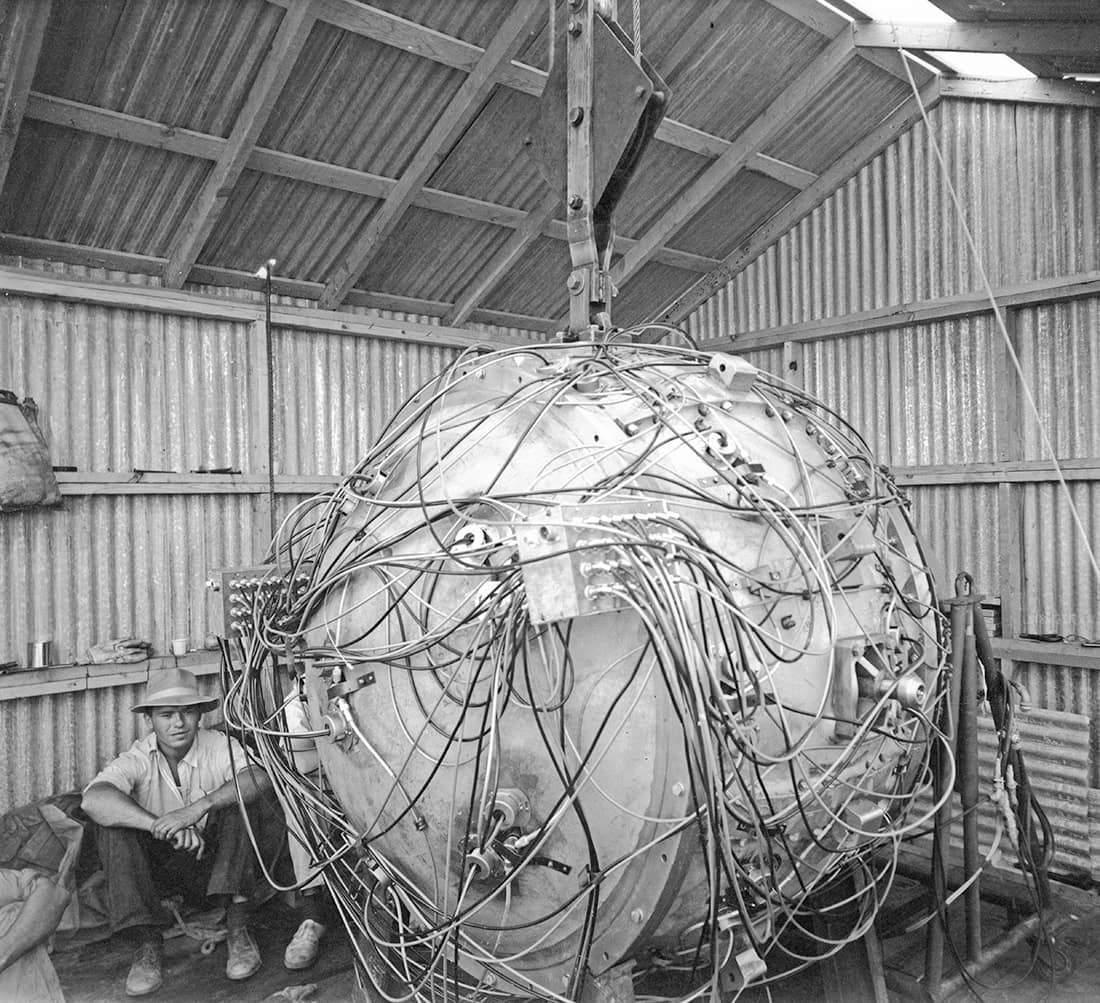
Man wearing a hat sat on the ground next to a large round metal object
What was he thinking? Donald Hornig with the Gadget just before the first atomic test. (Courtesy: Los Alamos National Laboratory)

My favourite photo in the book is of a chemist called Donald Hornig. As the inventor of the X unit – a heavy-duty switch that triggered the Gadget’s detonators – Hornig had the unenviable job of arming this switch a few hours before the test, with a summer lightning storm flickering all around him. He thus became the last person to see the Gadget intact, and his expression as he slumps next to it is hard to read. Is he smiling? Proud? Or merely exhausted and wishing the photographer would leave him alone?

The final pages of Trinity depict events that followed the test, including the atomic bombings of Hiroshima and Nagasaki. Only five photos are known to exist of the immediate aftermath in Hiroshima, and the book reproduces three of them. Taken by Yoshito Matsushige, a staff photographer at the regional newspaper Chugoku Shimbun, they are far more disturbing for what they don’t show than for what they do. Although Matsushige later explained that he felt a professional duty to document the bombing, he found himself unable to press the shutter on most of what he witnessed. It was simply too horrible.

Beauty and horror make an unsettling combination. Despite Trinity’s quality, it is hard to see it appealing to a broad audience; in one of the book’s two forewords, Jim Eckles, who used to work in the missile range’s public affairs office, suggests it will “make a great memento for visitors to the site”. This unambitious statement is probably correct, but I hope that some physicists – weaponeers, disarmament campaigners and everyone in between – will also find space for it on their shelves. Our atomic age may yet end with a whimper, but it began with a bang, and it is worth remembering that bang in all its complicated majesty.

  • 2026 University of Chicago Press $39.00/£32.00hb 344pp

The post Illuminating, beautiful and disturbing: a photographic record of the Trinity atomic test appeared first on Physics World.

Ask me anything: Kiefer Vermeulen – ‘We had to figure everything out on a shoestring budget and on a really challenging timescale’

14 September 2026 at 11:00

Kiefer Vermeulen studied applied physics at Delft University of Technology in the Netherlands, where he did his master’s thesis at its QuTech research institute on the topological properties of Majorana quantum bits. He is now head of research at Delft Circuits, where he leads a team of quantum engineers developing the cabling and wiring needed for quantum-based devices.

What skills do you use every day in your job?

When I was at QuTech, I’d work on qubit systems using equipment that was sometimes worth several hundreds of millions of dollars. It’s now very different at Delft Circuits, which is a start-up company, where I have to get by with budgets that may be as little as few hundred dollars. So I need to take problems and condense them down into manageable work packages. After being a junior and then senior researcher at the company, I now lead a team of eight fantastic scientists and one of the most important skills for me is talking. I don’t just mean chatting – but really trying to figure out a problem by talking and listening to different stakeholders.

It’s vital to be able to communicate what might be a very niche understanding of a specific field to a wider audience

If you’re in academia and want to go into industry, it’s vital to be able to communicate what might be a very niche understanding of a specific field to a wider audience. If you can do that, then you can solve problems, which is what being in industry is all about.

What do you like best and least about your job?

I really like innovation. For anyone in industry, the aim is to make money, which means developing and selling products. At Delft Circuits, we make cryogenic cabling for quantum computing, but none of that technology previously existed. We had to do it all ourselves – figuring everything out on a shoestring budget and on a really challenging timescale. That to me is super exciting especially when you’re doing something for the first time ever. As for the least favourite part of the job, raising money – whether it’s to build a lab or a factory – is tough. I’m currently in Denver, I was in Taiwan a few weeks ago, I’ve got three or four meetings coming up elsewhere in the next few weeks because the speed at which you need to do things might even outpace the money you can get for selling the things you have. I also don’t like the sheer amount of e-mails I have to deal with. When I started at Delft Circuits, there were just four members of staff. But now we’re so much bigger, I might get 50 or 100 e-mails a day. I guess I could speed things up by feeding them all into AI but I can’t really do that as a lot of work is confidential.

What do you know today that you wish you knew when you were starting out in your career?

I wish I’d known how important communication is, whether that’s getting your ideas across – or understanding those of other people – and really being able to frame your expertise and explain it to potentially non-technical people. Trust is important too because in start-up companies you all need to rely on each other and work through problems together so that things come to fruition. I also wish I’d known to talk a bit less – and let the other person in a conversation come up with the answers that might be different to your own. When I started out, I always wanted to answer problems quickly – in fact, I had to do that because it was expected of me. But as I’ve started managing and leading teams, I’ve learned to give others the opportunity to go through the same type of brain puzzles and thinking that I went through myself.

The post Ask me anything: Kiefer Vermeulen – ‘We had to figure everything out on a shoestring budget and on a really challenging timescale’ appeared first on Physics World.

Finding careers in STEM and the weirdness of AI

3 September 2026 at 15:00

This episode of the Physics World Weekly podcast features two conversations. The first is with career consultant Alaina G Levine who gives advice on how to build a “unicorn career” in science, technology, engineering, and mathematics. Our second guest is the optics and artificial-intelligence researcher Janelle Shane who writes extensively about the absurd, and often hilarious, side of AI.

Levine’s latest book is called Create Your Unicorn Career and Shane writes about artificial intelligence on her blog  AI Weirdness.

This podcast is supported by American Elements, the world’s leading manufacturer of engineered and advanced materials. The company’s ability to scale laboratory breakthroughs to industrial production has contributed to many of the most significant technological advancements since 1990 – including LED lighting, smartphones, and electric vehicles.


The post Finding careers in STEM and the weirdness of AI appeared first on Physics World.

Ask me anything: Kristian Dominek Barajas – ‘I’m able to take a really complicated problem and give it my best guess’

5 August 2026 at 10:00

Kristian Dominek Barajas is head of quantum theory at the UK-based quantum computing company Oxford Ionics, which merged with the US firm IonQ in 2025. Barajas got his PhD – which was focused on developing analytic methods for high-accuracy models of driven quantum systems beyond the rotating-wave approximation – at the University of California Los Angeles, US, via the American Physical Society’s Bridge Program. The programme provides pathways into research for qualified students who might not otherwise continue their physics education. He now serves as chair of the APS Committee on Minorities (2025–2026), where he helps shape national initiatives that support physicists from historically marginalized backgrounds – particularly people of colour, LGBTQIA+ physicists, and physicists with disabilities.

What skills do you use every day in your job?

Because I’m relatively new to the field, I often have to break difficult questions down into simpler ideas before I can grapple with them. That has trained me to take a really complicated problem and give it my best guess, and that first-pass intuition often gets me surprisingly close to the full solution.

The other thing I’d highlight is leadership skills. I come from an untraditional background – it took me a long time to do my undergraduate degree, and afterwards I worked in a lot of different jobs, including working at a pet store, where I was training to become a team lead. When I went to grad school, I applied through the APS Bridge Program, which is great, and it gave me an opportunity to get into research. But again, my path wasn’t traditional: I did soft condensed matter physics for four years, and then my advisor passed away unexpectedly, so I switched fields to trapped ions because I needed to graduate. I had no background in quantum physics at that point, so it was quite a transition.

Experiences like this added up. By the time I joined Oxford Ionics right before the merger with IonQ, even though I was the “greenest” person in my team in terms of being new to the field, I had the most leadership experience. That meant I went from being an entry-level quantum theorist to a senior quantum theorist in two or three months. A month and a half later, I became the atomic, molecular and optical (AMO) theory manager. The experience I’d gained made it easy to set priorities and get people to go in the correct direction.

What do you like best and least about your job?

My least favourite part of the job is that I don’t get to read much new research. The job is so fast-paced and there’s so many things happening every day that getting the chance to sit down and read an article is quite rare. I use AI tools to help me find and keep up with new research. Part of my workflow involves asking AI to identify relevant papers and give me an initial sense of what I need to know. I still skim the papers themselves as much as I can, but I don’t get the chance as often as I’d like to pick up a manuscript and spend a whole day working through it like I did in academia.

We also don’t always have the time to write papers about what we’re doing. It’s not that we aren’t allowed to – in fact, we’re encouraged to pursue that if we want to do it – but finding time is challenging.

I’m constantly getting to do new and interesting physics, and I absolutely love that about my job

The upside is that the pace at which I get to do research far, far outweighs what I experienced in academia. What we accomplish on our team in four to six weeks is comparable to the amount we would do in six months in academia. It is absurd how fast we get to move. I’m constantly getting to do new and interesting physics, and I absolutely love that about my job.

What do you know now that you wish you’d known at the start of your career?

I wish I’d known that feelings of imposter syndrome don’t always have to be something to fear. For me, they can also be a reminder that there is still so much more to learn, and that can be exciting. That’s why I was so excited for the opportunity to earn my PhD in physics: it gave me the chance to keep learning. Now, whenever that old imposter feeling comes up, I try to see it as an opportunity to learn rather than a reason to hold myself back. I wish I had embraced that earlier in my career and not been so afraid to try things.

The post Ask me anything: Kristian Dominek Barajas – ‘I’m able to take a really complicated problem and give it my best guess’ appeared first on Physics World.

Heat-transfer fins give phase change materials a boost

31 July 2026 at 09:00

If you’ve ever kept a drink cool on a hot summer day by placing it inside a frozen, gel-filled sleeve, you’ll understand the appeal of phase change materials (PCMs). The reason these sleeves work so well (and so much better than simply putting your drink in a cold bath or cool room) is that the solid inside them has a high latent heat, meaning it can absorb relatively large quantities of energy before melting and beginning to warm up.

But what if surrounding your drink with a frozen PCM isn’t enough? What if you want to cool your drink more quickly and evenly? One option would be to create a PCM sleeve with fin-shaped extensions that protrude into your drinking vessel. These fins would cool your drink – or, equivalently, allow your drink to melt the PCM – much more efficiently than a simple sleeve. But what should the fins look like? How far apart should they be? And how many of them do you need?

These are the questions that Paolo Proia, Mauro Sbragaglia and Giacomo Falcucci considered in a study published in EPL – though not with the aim of keeping their drinks cold. As researchers at the University Tor Vergata of Rome, Italy, Proia, Sbragaglia and Falcucci are interested in PCMs that store and release heat like a battery. Such materials are useful in fields such as electronics and refrigeration where heat is a common byproduct. Other applications include maintaining the efficiency of solar panels by preventing them from getting too hot and keeping buildings cool in the daytime via insulation.

Physics World spoke with them about their work.

What was your motivation for doing this research?

Our interest in PCMs stems, in part, from our interest in their many applications, especially in the ecological transition to less carbon-intensive fuels. PCMs are particularly good at managing heat in hydrogen storage with metal hydrides, for example, because storing hydrogen in these materials produces heat, while releasing the hydrogen requires it. Using a PCM to store the heat of the adsorption process and give it back during the release means that the produced heat doesn’t go to waste. Instead, it improves the efficiency of the process.

We’re also fascinated by the complexity of the equations involved. The coupling of fluid and temperature dynamics already causes interesting phenomena such as convection. By adding a phase transition to the mix, you introduce a moving boundary that complicates the system even more, both phenomenologically and analytically, since the describing equations must account for it.

We started this paper as a way of extending our previous work on the insertion of fins inside a PCM to three dimensions. PCMs are exceptionally good in latent heat but severely lacking in sensible heat; in other words, they store heat well, but they absorb and release it poorly. Fins are useful in relieving this flaw since they enhance the heat transfer surface and provide a horizontal heat source, which is instrumental for the development of convection, the main driver of heat transfer in this kind of system. By switching to a 3D system, we had more freedom to explore complex layouts of multiple fins and the importance of their relative position.

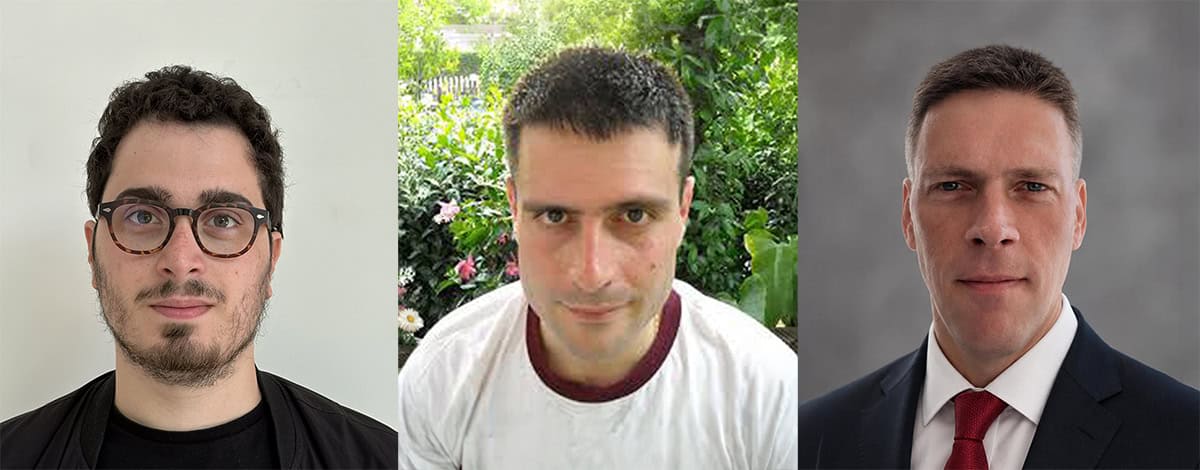
Individual head shot photos of Paolo Proia, Mauro Sbragaglia and Giacomo Falcucci
Phase change modellers: (left-right) Paolo Proia, Mauro Sbragaglia and Giacomo Falcucci. (Courtesy: Paolo Proia)

What is the most important advance in the paper?

The most important result is that naively inserting fins too close to each other can cause interference. If there are overlaps in the fins’ “influence zone”, the system will waste energy by, in effect, trying to melt something that was already molten from heating by a nearby fin. Moreover, by comparing a single fin and multiple fins with the same total surface, we found that the latter configuration benefits from the gaps between the fins. This is because the substance in these gaps melts early and starts acting as an extra heating surface, contributing to the development of bigger convective structures.

Why is it so challenging to model melting in phase change materials in 3D?

Beyond the analytical requirements we already mentioned, the success of this type of modelling depends on having a resolution that is high enough to capture correctly all the phenomena in the system. This means the number of computational sites N must be sufficiently large. In 2D, we “only” have N2 sites to model, but in 3D, this scales to N3. That creates a challenge because making N too large would severely slow down the simulation. Moreover, we must be sure to respect the restraints on the physical parameters for which the lattice Boltzmann method is a correct approximation of the equations involved. So, we underwent a thorough validation process to pinpoint the best parameters for the algorithm.

What do you plan to do next?

First, we’d like to further optimize the code. The main bottleneck is the speed of a single iteration. Ideally, we’d like to study a wider range of layouts and physical conditions, but with the code we have now, that would impact heavily on performance. For example, a slower-melting substance requires more iterations to completely melt, which translates into more real-life time to model, sometimes outside the limits of feasibility. This problem would obviously be solved if we can make a single iteration faster.

Another issue we have is that some ranges of physical parameters can make the simulation unstable. Fortunately, there exist some remedies to this, and we plan to eventually adopt them.

Finally, we would be happy to see other researchers use these findings in their own optimization studies on fin shapes and spatial layouts. It would also be very interesting to see someone study this problem from an analytical angle or to see some experimental validation. In the medium term, we are planning to conduct our own experiments to use as a benchmark for our computational results.

The post Heat-transfer fins give phase change materials a boost appeared first on Physics World.

Static electricity: mysteries lurk within this everyday phenomenon

9 July 2026 at 14:30

Static electricity is one of those everyday phenomena that turns out to be much more complicated than you might expect. Indeed, our guest in this episode of the Physics World Weekly podcast has devoted much of his career to understanding how objects exchange electrical charge – a process that he says scientists are mostly “clueless” about.

Based at the Institute of Science and Technology Austria, Scott Waitukaitis is in conversation with Physics World’s Margaret Harris. He explains how his early work in granular physics opened his eyes to the many unsolved problems related to static electricity. They also chat about some of Waitukaitis’s current research projects including his quest to understand the role that adsorbed molecules play in how an object is charged.

The post Static electricity: mysteries lurk within this everyday phenomenon appeared first on Physics World.

New superconducting diode gives greater control over the flow of electrons

2 July 2026 at 15:00

Like a two-lane highway with one lane empty and the other clogged with traffic, superconducting diodes allow electrons to flow without resistance in one direction while encountering normal, resistive conditions in the other. First demonstrated experimentally in 2020, these devices have considerable potential as platforms for fundamental studies of quantum materials and as building blocks for superconducting electronics.

For many applications, being able to control the flow of electricity through the diode – or even reverse its polarity – is essential. In principle, there are several ways of doing this because the efficiency of the superconducting diode effect (SDE) depends on many factors. Examples include magnetic field, temperature and diode design as well as intrinsic properties such as the momentum of the Cooper-paired superconducting electrons and their spin-orbit coupling.

In practice, though, some of these properties are more easily changed than others. To return to the highway analogy, it’s much more straightforward to alter the flow of traffic by posting new road signs, rather than by rebuilding the road or redesigning the cars.

In a recent paper in Chinese Physics Letters, Yanwu Xie, Yishuai Wang, Wenze Pan and Meng Zhang of Zhejiang University in Hangzhou, China describe a new superconducting diode platform that makes it far easier to change the device’s configuration, and thus to control the flow of superconducting electrons through it. Physics World spoke to them about their research and its possible applications.

How did you get the idea for this new type of superconducting diode?

This work started with an unexpected experimental observation. While we were making routine current-voltage measurements on a conventional strip-shaped superconducting device constructed at the interface between two materials, LaAlO3 and KTaO3 (LAO/KTO), we noticed a pronounced difference between the critical currents in opposite directions. Given the growing interest in the SDE, this surprising result immediately caught our attention and prompted us to investigate its origin.

What is special about these two materials?

The properties of conventional superconducting diodes are typically locked into their fixed physical structures, such as Josephson junctions or patterned vortex pinning sites. This inflexibility makes post-fabrication tuning or reconfiguration of the diode characteristics extremely challenging.

Two-dimensional oxide interface superconductors such as LAO/KTO and LaAlO3/SrTiO3 are good candidates for overcoming this problem. The strong spin-orbit coupling near the interface enables possible finite-momentum Cooper pairing, while the extremely low superfluid density and intrinsic two-dimensional nature of the materials create ideal conditions for studying vortex dynamics and magnetic flux behaviour.

In addition, these systems have exceptional tuneability. Their superconducting states can be well controlled through both global substrate gating and local conductive atomic force microscope (cAFM) lithography, which opens new possibilities for post-fabrication SDE engineering.

What was the most challenging aspect of this research?

The most challenging part was unravelling the frustrating sample-to-sample variability we encountered early on. We now know that the SDE in conventional LAO/KTO devices stems from asymmetric vortex entry conditions caused by random, fabrication-induced edge imperfections. At the time, however, even devices with nominally identical geometries exhibited wildly different SDE efficiencies and polarities, showing no discernible systematic trend.

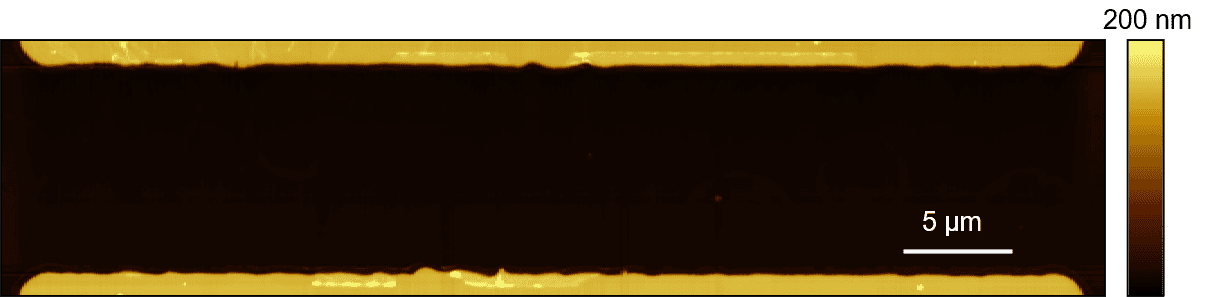
The breakthrough came when AFM imaging revealed random edge defects on the superconducting channels. To test whether these random imperfections were indeed the root cause, we used cAFM lithography to “straighten” the originally photolithography-produced rough channel boundaries. This atomic-scale trimming strongly suppressed the SDE, providing unambiguous evidence for the vortex edge asymmetry mechanism.

AFM image showing two horizontal yellow-orange surfaces separated by a larger black gap. The inner edges of the surfaces are visibly bumpy.
Channel edges: An atomic force microscopy (AFM) image of the LAO/KTO channel in the diode, showing the roughened edges. (Courtesy: Yanwu Xie)

We then turned this challenge into an opportunity. By using cAFM to re-shape the channel edges repeatedly and in a non-volatile way, we transformed a source of random sample variability into a tool for deterministic, on-demand quantum device control.

What are some possible applications for this editable superconducting diode?

The nonreciprocal transport of charge carriers – exemplified by p-n junctions in semiconductor diodes – is a cornerstone of modern electronics. Similarly, superconducting diodes are emerging as pivotal components for superconducting electronics. What distinguishes our approach is our ability to reversibly modify the diode polarity and efficiency within the same device through nanoscale control of the superconducting channel geometry. This editability may enable reconfigurable superconducting circuit elements and adaptive circuit architectures, while also providing a versatile platform for investigating the role of geometry-associated vortex dynamics in nonreciprocal superconducting transport.

What will you do next?

We plan to fully exploit the unique cAFM lithography capability of our oxide interface platform to systematically investigate how tailored vortex-boundary configurations shape the SDE. The diode performance can be further optimized by mapping out the precise relationship between channel geometry, vortex entry barriers and rectification efficiency.

In parallel, we plan to introduce artificial pinning centres (such as nanoscale insulating dot arrays) directly into the superconducting channel. This will allow us to engineer asymmetric vortex-pinning landscapes within the bulk of the channel. Combining this engineered flux pinning with the asymmetric vortex-boundary mechanism demonstrated in the current work offers a promising route toward achieving a robust, deterministic and highly controllable superconducting diode.

The post New superconducting diode gives greater control over the flow of electrons appeared first on Physics World.

New model of ocean waves sheds fresh light on the spread of microplastic pollution

25 June 2026 at 16:00

Nature is always more complicated than the models we use to describe it. Ocean waves, for example, are constantly evolving. They grow when wind transfers kinetic energy to the water’s surface. They interact with each other in highly nonlinear ways. And once the wind dies down, their internal viscosity makes them dissipate away to nothing, leaving behind a surface as flat as glass.

This process is familiar to anyone who’s ever been to the seaside, yet physicists’ go-to models of water moving through the ocean essentially ignore it. Instead, the standard theory of wave transport, known as classical Stokes drift theory, concentrates on describing the flow of steady waves with finite amplitude. And while extensions of the theory incorporate complications such as nonlinear wave shapes, uneven seabeds and the inertia of particles carried along by the waves, they don’t account for waves that grow and fade over time.

For Marco Edoardo Rosti, a physicist at Japan’s Okinawa Institute of Science and Technology (OIST), this shortcoming has real-world consequences. “There is increasing interest in understanding near-surface transport processes because they are directly connected to problems such as pollutant dispersion, microplastic accumulation, sediment transport, and air-sea exchange,” he explains. “Since these processes depend sensitively on particle trajectories, even subtle modifications of the drift mechanism may become important over long times.”

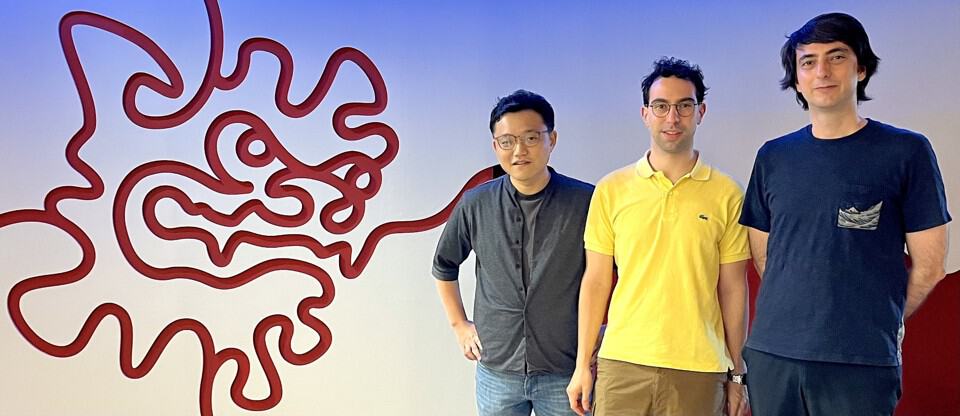
Photo of Tatsuo Izawa, Giulio Foggi Rota and Marco Eduardo Rosti standing in front of the squiggly red line logo of the Okinawa Institute of Science and Technology
Wave mechanics Team members (l-r) Tatsuo Izawa, Giulio Foggi Rota and Marco Edoardo Rosti. (Courtesy: Marco Edoardo Rosti/OIST)

In a study published in the journal EPL, Rosti and his colleagues Alessandro Chiarini, Tatsuo Izawa and Giulio Foggi Rota explored ways of remedying this deficiency. They focused on the simplest type of wave evolution: a freely decaying, single-frequency gravity wave, one where the force of gravity acts to restore equilibrium and smooth out the surface of the water. Physics World spoke with the team about the findings.

What is the most important advance in this work?

Classical Stokes drift theory predicts that on average, particles will get transported through the water horizontally, in the direction of the wave. But by combining fully nonlinear two-phase simulations with a perturbative analytical model, we demonstrate that when you allow those waves to decay, additional transport mechanisms appear.

Specifically, we identified a net vertical particle migration that arises solely from the temporal decay of the wave field, due to the interplay between fluid inertia and viscous dissipation. This migration persists even for fluids with relatively weak viscosity. Also, because the drift velocity depends on depth, even small vertical displacements alter particle trajectories and mixing properties.

Photo of Alessandro Chiarini, seen in profile outdoors near an autumn-leaved forest
International collaboration: Team member Alessandro Chiarini. (Courtesy: Alessandro Chiarini)

More broadly, our results show that unsteadiness in the wave amplitude is not a minor correction to classical Stokes drift. It’s something that can qualitatively change how an individual parcel of fluid moves through space and time – what we call Lagrangian transport. This has important implications for understanding how floating and suspended materials, including sediments, aerosols and microplastics, get redistributed near the ocean surface.

Can you say more about those implications?

Because gravity waves at the ocean surface span a broad range of wavelengths, from centimetres to hundreds of meters, even a modest fractional vertical displacement per wave cycle can significantly change the depth of a drifting particle. And because the drift velocity beneath a wave decays exponentially with depth, these small vertical excursions can substantially alter how much horizontal drift a particle accumulates. That could influence whether microplastics remain near the surface (where they are most bioavailable), or whether they instead migrate to greater depths, where different biological and physical processes govern their fate.

Why have previous studies not seen this vertical drift?

The drift mechanism we identify accumulates gradually as the wave field decays. That means it only becomes apparent when “tracer” particles in the water are exposed to the same wave as its amplitude decreases over many periods. Most wave-tank experiments and field measurements instead follow tracers as they are swept through a passing wave packet, which is a fundamentally different configuration.

In open-sea conditions, similar arguments apply, and the presence of currents, wind forcing and turbulence all complicate the picture. These effects mask a signal that only shows up unambiguously in clean, unforced conditions.

What was the most challenging aspect of this work?

The most challenging part was to bridge the limits of classical wave theories with the fully nonlinear, two-phase simulations of an air-water interface. The classical Landau wave-decay theory, for example, assumes an isolated, weakly viscous fluid (water). However, our high-resolution simulations demonstrate (as previously reported in other studies) a deviation from these idealized assumptions. In fact, the dominant viscous energy dissipation occurs in a thin layer of air just above the water surface, rather than in the bulk.

To investigate how continuous wave energy decay affects Lagrangian particle transport, we developed a perturbative analytical model based on the classical Landau framework. This was a difficult step because the framework is inherently blind to the two-phase dissipative system. As a result, its asymptotic predictions progressively diverged from simulated flow fields at long times, likely due to intrinsic limitations of the Landau decay-wave model.

What do you plan to do next?

The drift mechanism we discuss in this study applies to a very idealized form of wave decay. In the future, we would like to test whether and how this mechanism propagates in more complex but realistic wave conditions. In particular, we want to work out how to measure such mechanisms in wave-tank experiments. To do so, we will study a different setup, one in which waves decay spatially instead of temporally, since this is closer to what observed in wave tanks. We would also like to study how our mechanism affects drift in waves that vary over time, with controlled unsteadiness, rather than simply decaying.

The post New model of ocean waves sheds fresh light on the spread of microplastic pollution appeared first on Physics World.

❌