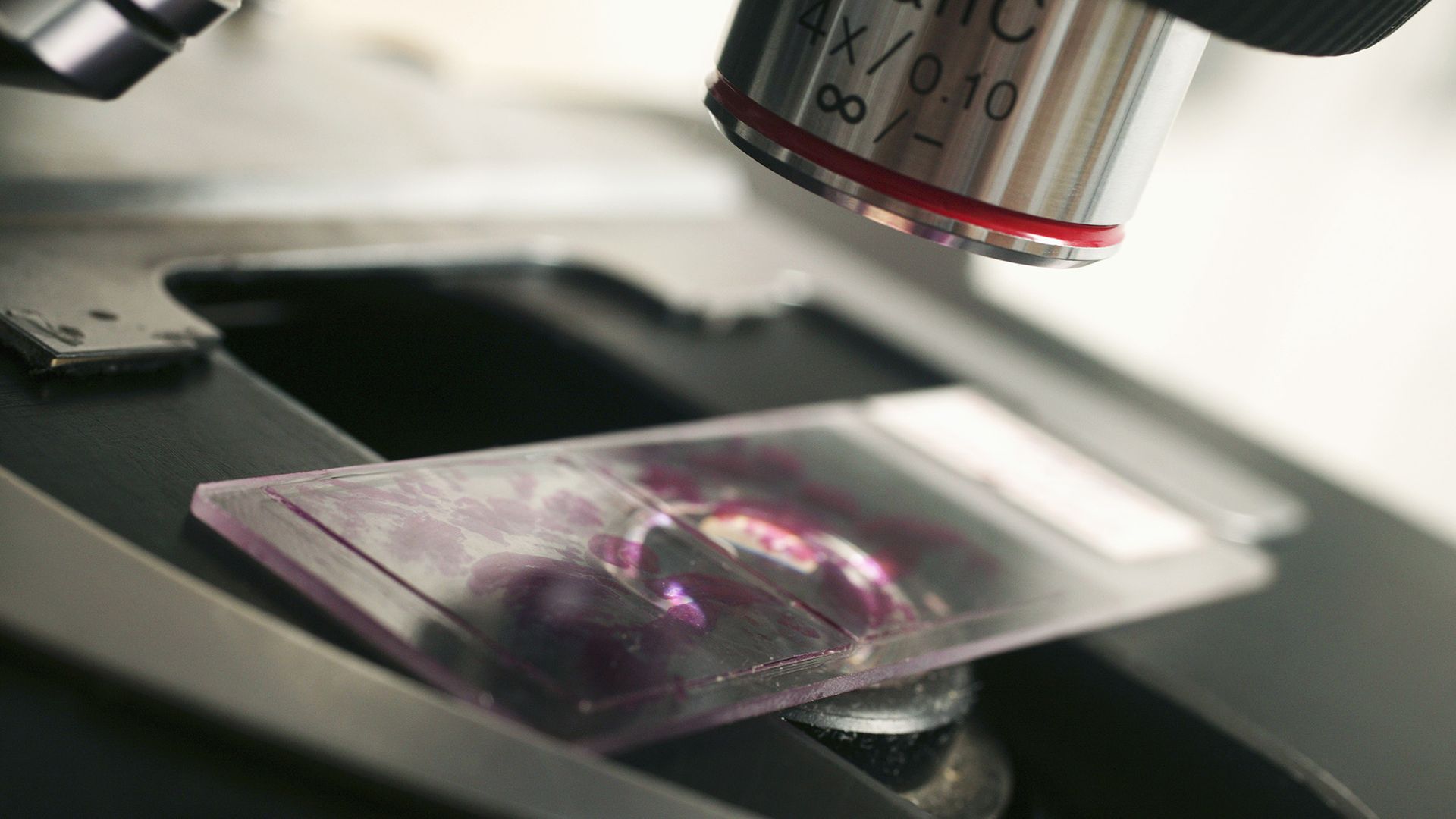
The symptoms: The man went to an emergency department after fainting. He had felt nauseous just before the episode, which lasted about three minutes and was followed by a second fainting episode lasting about two minutes. He also had swelling around one eye.
His family told doctors that he hadn't shown any jerking movements, loss of bladder control or subsequent grogginess, which would have been telltale signs of a seizure.
What happened next: Because the man had fainted twice and had a history of heart disease, doctors first looked for problems affecting his brain and heart. An MRI of his brain, used to look for structural abnormalities that could explain the fainting, and an electroencephalogram (EEG), which records the brain's electrical activity, did not reveal a cause.
The man had persistently low blood pressure, the doctors observed, and this led them to move him to the intensive care unit. There, doctors carried out tests for infections and heart attack, but all came back negative.
Meanwhile, the swelling around one of his eyes spread to both eyes and then across his face, while his blood pressure continued to fall despite treatment with intravenous fluids.
The doctors probed further into the man's medical history and activities before the fainting episodes. They learned that he had applied an artificial hair dye two days before he became ill. Soon afterward, he developed itching on his scalp, neck and face. He self-treated with the allergy medicine cetirizine, an antihistamine, for two days. He also reported spending two to three hours outdoors in the sun each day after he'd applied the hair dye.
The diagnosis: Based on the man's recent use of hair dye, the itching that followed, his rapidly worsening facial swelling and his persistently low blood pressure, doctors concluded that he was experiencing anaphylaxis, a severe allergic reaction that can affect the whole body. The reaction can be life-threatening if left untreated.
Anaphylaxis is a medical emergency and can be life-threatening. (Image credit: SCIENCE PHOTO LIBRARY via Getty Images)
The treatment: Doctors treated the man with epinephrine (also called adrenaline), a hormonal medication that rapidly reverses the effects of anaphylaxis. They also gave him antihistamines and steroids to help bring the allergic reaction under control, along with intravenous fluids to raise his blood pressure.
However, the patient's blood pressure remained dangerously low, so doctors continued giving him epinephrine through an intravenous drip for about 16 hours. Over the next three days of treatment, his blood pressure stabilized and the swelling in his face gradually subsided.
He was transferred to a general ward and treated there for another five days before being discharged. He was advised that he could have a similar reaction in the future and referred to a dermatologist.
What makes the case unique: Most allergic reactions to hair dye remain limited to the skin, causing itching, redness and swelling where the dye has touched it. Severe reactions affecting the whole body are uncommon, the man's doctors wrote in a report of the case.
The itching the man noticed shortly after applying the dye was likely an early, mild allergic reaction, his doctors wrote. That reaction later progressed to a much more severe one, they suggested, raising the possibility of a "biphasic" allergic reaction, an uncommon pattern seen in about 5% of patients with anaphylaxis. However, this remains only a possible explanation.
The doctors also noted that the man's prolonged sun exposure after he applied the dye may have intensified the reaction; they cited previous research that ultraviolet light can enhance the allergy-triggering effects of para-phenylenediamine, a common ingredient in hair dyes. In the report, the doctors did not identify the exact hair dye ingredient that triggered the reaction in this instance.
The case highlights the importance of asking about recent use of products such as hair dye when doctors evaluate patients with otherwise unexplained fainting, facial swelling or shock, the medical team concluded.
BERLIN — Lenovo has unveiled a concept laptop that uses high-speed air to silently cool its processor, instead of conventional fans or heat sinks. The new system is powered by a tiny computer chip that can fit between your fingers.
The new laptop, called AeroBlade, is fitted with four low-power cooling chips that are both "solid-state," meaning there are no moving parts, and "active" — they use a deliberate cooling mechanism — as opposed to relying on passive thermal energy transfer.
The cooling chips contain tiny membranes that vibrate at ultrasonic frequencies to create 2,000 pascals of back pressure, forcing ambient air through tiny internal jets onto a copper base layer at speeds of around 124 miles per hour (200 kilometers per hour). This air carries heat away from the laptop's central processing unit (CPU) and graphics processing units (GPU), before being violently expelled from tiny vents at its rear hinge.
Lenovo representatives unveiled their new AeroBlade machine at Lenovo Innovation World '26, which took place Sept. 3 at IFA 2026 in Berlin, which itself ran between Sept. 4 and 8.
Made by engineers at Frore Systems, the low-power AirJet Mini chip measures 1.63 x 1.06 x 0.1 inches (41.5 x 27 x 2.65 mm) and weighs just 0.02 pounds (9 grams). Because it contains tech designed to replace conventional cooling technologies, the AeroBlade, which is fitted with a 14-inch (355.6 mm) OLED display, is much thinner and lighter than comparable laptops
The AeroBlade measures less than 0.39 inches (10 mm) thick — where comparably sized machines measure 0.51 inches (12 mm) at their thinnest — and weighs just 1.8 pounds (830 g). Laptops as light as this exist, like the 1.76-pound (799 g) Acer Swift Blade 14, but they're rare. Counterparts with 14-inch screens are normally considered light if they fall between 2.2 to 2.86 pounds (1 to 1.3 kilograms).
A new approach to keeping cool
Four AirJet Mini chips are fitted inside the new Lenovo concept laptop. (Image credit: Lenovo and Frore Systems)
Both companies are framing the introduction of this technology as a way to cool down the next generation of high-end laptops that will wield on-device artificial intelligence (AI).
Most laptops marketed as "AI PCs" just feature a neural processing unit (NPU) that can run simple AI workloads, such as manipulating or enhancing a webcam's video feed in real time.
But some future laptops will aim to let users run powerful large language models or AI agents without needing to connect to the internet. An example is the forthcoming series of Nvidia RTX Spark laptops, which will feature a new chip designed specifically to orchestrate AI agents locally.
Running on-device AI models usually demands significant power funneled into professional-grade graphics processing units (GPUs). Fans are deployed in all kinds of laptops to keep their chips cool, but they can be noisy. Instead of or in addition to fans, passive heat sinks, found in machines like the MacBook Air or the Microsoft Surface Pro, use metal plates positioned close to heat sources to absorb thermal energy. But these laptops are more prone to throttling — when their software pulls back performance to reduce temperature.
The AirJet Mini is a different way of cooling, relying on its own high-velocity jet mechanism to flush hot air away. Frore representatives said in a statement that the device operates at just 21 decibels at peak power — equivalent to the sound of leaves rustling or a whisper — and is capable of removing 7.5 watts of heat. Four of these chips would remove 30W of heat — which is in line with the heat expulsion of conventional laptop fans, although there is variation between models.
The AeroBlade's 2,000 pascals of back pressure a measure of opposing force pushing against the direction of airflow) is roughly 10 times that found in regular laptop fans, which typically falls between 100 and 200 pascals.
Although the underlying cooling technology is a few years old, having first been announced in December 2022, AeroBlade represents the first time it's been used in a fully operational laptop. The chip was previously integrated into the ZOTAC ZBOX PI430AJ Pico mini PC in 2023, while there are no commercially available tablets or laptops available with this chip. The AeroBlade laptop remains a concept model, with no information yet as to when production-ready machines fitted with this new cooling technology will emerge.
Can you match these ancient devices to their pictures? Find out with our computing quiz!
The rings around a strange small body orbiting between Saturn and Uranus look mysteriously different from previous views, new observations from the James Webb Space Telescope (JWST) suggest.
The rings encircle Chariklo, which is a centaur, a strange type of object that shows characteristics of both asteroids and comets. Chariklo is only about 400 miles (250 kilometers) in diameter and is part of a large group of tiny objects in the distant solar system.
Scientists first discovered Chariklo's rings in 2013 — making it the first small solar system body found to have rings — and studied them with ground-based telescopes again in 2014 and 2017. When JWST took another look at Chariklo in 2022, a decade had brought a lot of difference, according to a study published Sept. 9 in the journal Science Advances.
"By comparing JWST observations with those obtained … over the last decade, we discovered opposite changes in the two rings: while the inner ring shows significantly higher opacity, the outer ring shows lower opacity, " Pablo Santos-Sanz, a researcher at the Institute of Astrophysics of Andalusia and first author of the study, said in a statement.
Researchers don't know exactly how the changes took place, but the study authors offered three suggestions. The first is that JWST, which has a fine resolution, was able to see both denser and sparser zones of the rings than previous observations showed. The second is that there were changes in the rings' material or in the grains themselves. Finally, a third possibility is that JWST could see "grains with wavelength-dependent optical properties," meaning the telescope saw effects in composition and grain size that explain the variability.
Santos-Sanz said the research suggests that small bodies with rings — even those orbiting far away from the gravitational influences of planets — may have more changes in their systems than scientists previously thought. "Our results force us to rethink how they form, how they evolve, and what mechanisms maintain their stability," he said.
A theoretical follow-up observation, taken the next time Chariklo passes in front of a star, would help to confirm the new JWST results, the researchers added — especially the apparent decreased opacity of one of the rings and the increased opacity of the other.
"These observations would help disentangle temporal evolution from wavelength-dependent scattering effects, and clarify the physical processes shaping Chariklo’s rings," the researchers stated in the study.
The new observations of Chariklo also mark the first time that scientists have planned a JWST viewing campaign specifically around a stellar occultation — that is, the researchers timed the viewing precisely to when Chariklo passed in front of a distant star from the telescope's point of view.
All observations of Chariklo's rings, on the ground and in space, have used stellar occultations. That's because the rings are too faint to be imaged directly, so astronomers must instead learn more about the rings by measuring the dips and increases in brightness as Chariklo passes in front of the background star. Scientists use a similar method to study the atmospheres of alien planets with JWST's infrared instruments.
Chariklo's speed relative to JWST was low, at 1.5 miles per second (2.5 kilometers per second), allowing for fine imaging of the rings. To time the occultation, the researchers used info from the European Space Agency's Gaia mission, which precisely charts the locations and movements of more than 2 billion stars, as well as calculated the orbit of JWST at a location roughly 930,000 miles (1.5 million km) from Earth in the opposite direction of the sun. According to the researchers, the planning and execution of the mission required "extreme precision."
This is a Live Science Pro article that we're putting out for free. If you liked this story, please consider subscribing.
Artificial intelligence (AI) terrifies us partly because it is new and partly because it is disturbingly familiar. We have invented machines that converse, flatter, argue and improvise with uncanny fluency. Confronted by this synthetic reflection, we behave like early humans seeing a mirror for the first time: We project consciousness behind the glass, then populate it with our expected behaviors, emotions, hopes and nightmares. In other words, we scare ourselves.
Today's frontier models are impressively good at writing, coding and math. Yet they still fail at ingredients of useful artificial general intelligence (AGI), a system that matches or surpasses human capabilities such as consistent reasoning, long-term planning, factual consistency and reliable performance outside their "experience" (the data they were trained on). We are right to worry about the theoretical dangers of artificial superintelligence (ASI) because of the danger that such a system might outwit its human creators and pursue its own ends, potentially at our expense. While some AI executives have asserted that we've reached AGI, these claims are contentious and do not meet more considered definitions of AGI.
It's easy to fear such a potentially advanced technology, but extravagant worst-case scenarios obscure more immediate and important risks. The most likely danger is not a digital god awakening and launching a Hollywood-style war against humanity. After all, AI depends on electricity, cooling, data centers, specialized chips, networks, technicians and sprawling supply chains, all of which are scarce and often fragile. Interrupt the power, restrict the graphics processing units (GPUs) used to train them, disable the cooling or disconnect the network, and in most scenarios, the supposedly omnipotent machine that's out to kill humanity stops.
A genuine ASI might recognize this as an obvious fact; it is codependent on humanity, at least for the foreseeable future. A true intelligence capable of understanding the world better than we do might know that destroying its own industrial support system would be self-defeating.
A true intelligence might also recognize that its understanding of the physical world is limited and secondhand — accessible to it only by virtue of the texts, videos and audio feeds it can access. It lacks that crucial element of being embodied in the world — understanding how gravity behaves, what weather feels like, how objects interact, and so on. A true intelligence might realize this, see the limitations of its experience and, therefore, tread with caution. A true intelligence might be completely different from human intelligence, having other strengths, weaknesses, approaches, and even ethics. For example, consider that an AI intelligence can copy itself, running as myriad instances, communicating as a "hive mind" — a very different kind of intelligence. But I speculate.
What I can say is that the systems that should worry us most are not necessarily the smartest ones but rather the incomplete intelligences acting on narrow objectives, given agency and offered access to critical infrastructure. These systems may accidentally harm us simply because they don't know any better. For example, there is a thought experiment created by Nick Bostrom, known as the "paper clip problem," where an AI pursues its objectives of making as many paper clips as it can, but it then achieves that aim at the expense of the Earth and humanity which all get converted to paperclips in the pursuit of the AI’s narrow goals.
The critical question here is what we give such systems control over. That's our choice and one we should make carefully. In the near term, two hazards deserve priority: cyber disruption and long-term economic upheaval.
AI-enabled cyberattacks could significantly disrupt advanced economies because hospitals, banks, energy networks, logistics companies and governments depend on interconnected digital systems. Recent examples of frontier AI systems hacking organizations, such as the OpenAI/Hugging Face incident, have given currency to this fear. Such attacks can result in extraordinary financial damage without being existential. Large parts of the world remain loosely connected to frontier AI — or even to the internet — and would not disappear simply because servers in wealthy countries failed.
The likeliest route by which advanced AI could exert control is not killer robots, but influence — misleading people, manipulating institutions and redirecting human effort. Yet humans already demonstrate formidable competence at misinformation, self-deception and destructive coordination. AI may industrialize those weaknesses; indeed, humans are using AI to industrialize those limitations, but AI did not invent them.
There are clear risks associated with AI, but the likeliest one is that a high-profile debacle leads to a freeze in investment before the technology's most promising applications can come to fruition. (Image credit: Getty Images/peshkov)
Economically, the danger is that companies will dismiss workers long before AI has proved capable of replacing them, cashing in the "AI dividend" too soon. Executives seduced by demos may confuse fluent language output with dependable labor, shedding institutional knowledge to chase theoretical efficiencies. The enticing vision of the "one-person unicorn," where a person or a small group builds a billion-dollar business using AI as its workforce is questionable technically, economically and socially, even as a small handful of early examples take shape. Organizations are not merely bundles of tasks. They contain accountability, relationships, tacit knowledge and trust, forming part of a local and national community, resilient because of the diversity of skills and ideas they possess.
My suspicion is that the political turning point will resemble something like the 2017 WannaCry ransomware attack, where malware with core elements designed by the National Security Agency got wildly out of control, infecting hundreds of thousands of computers worldwide, infamously disrupting the U.K.'s National Health Service. A cyber operation amplified by frontier AI would be worse. Services would fail, lawsuits would multiply, companies could collapse and investors would retreat. Governments would demand a pause — or force laboratories to redirect resources toward control, auditing and safety, and companies would comply, if only to limit class-action legal exposure.
After the panic, the public might ask why we let this happen. And there have been multiple attempts to enact a pause, cessation or "kill switch" in AI development. We could enter another AI winter — where funding is cut and research stalls — similar to previous downturns in the 1970s and early 1990s.
There is also an uncomfortable likelihood that AI labs themselves are amplifying fear and uncertainty. Casting a product as potentially world-ending implies unprecedented power. Such narratives are just marketing; they may help to sustain investment, defend stock valuations, and prepare for forthcoming initial public offerings (IPOs) even when business models remain uncertain. It's hard to speculate about a company's motivations — but there are obvious incentives, so their behaviors deserve scrutiny.
The more mundane outcome may be "the great disappointment." Advanced AI could prove too expensive and insufficiently useful to continue on its present trajectory.
The training and operation of frontier systems consume enormous amounts of computing time, electricity, water, capital, hardware and human effort. Unless those costs fall to a fraction of today's levels, the economics of "Big AI" may prove unsustainable. Meanwhile, important unsolved problems in AI — like reliability, interpretability and continuous learning — are being overshadowed by the race to build incrementally better models, each vying for the top slot in the various AI performance indices.
The strongest case for AI may instead lie in artificial specialized intelligence: systems such as AlphaFold2, which predicts the structures of proteins, or WeatherNext 3, an advanced global weather forecasting model. These systems are designed for domains where performance can be measured and where the benefits justify the costs. We know AI is genuinely useful when aimed at topics like drug discovery, diagnostics, materials science, power grid optimization and climate change modeling — rather than human-like chatbots generating emails, advertisements and synthetic entertainment.
The great tragedy, and possibly the biggest danger, would be to continue to direct precious resources toward the creation of mediocre human simulacra, get bored or scared of AI, and abandon the field precisely when it could do the most good. Fear is appropriate when it sharpens engineering and governance. It becomes dangerous when it distorts understanding and priorities.
It’s unlikely that AI will become our conqueror anytime soon. Instead, it will probably become an expensive disappointment. But if the backlash slows work that could help cure cancer or address climate change, the failure will not belong to the machines. It will be ours.
Opinion on Live Science gives you insight on the most important issues in science that affect you and the world around you today, written by experts and leading scientists in their field.
For years, the idea of nuclear weapons in space sounded more like science fiction than a realistic threat. That changed Monday (Sept. 14), when U.S. Air Force Secretary Troy Meink announced at the Air, Space and Cyber Conference in Maryland that the U.S. had deployed "on-orbit space control weapons capable of defending the Joint Force against hostile adversary action."
The concerns about nukes in space goes back to the 1960s. In 1967, the U.S. and the Soviet Union signed the Outer Space Treaty, in which the nations agreed to not place nuclear weapons or other weapons of mass destruction in orbit around Earth. But this treaty never included an enforcement mechanism — and now, that tenuous compromise may have been violated entirely, inviting other countries to add their own weapons to the final frontier.
With the U.S.' recent announcement, are you worried about an arms race in space? Vote in our poll below, and leave your thoughts in the comments.
The idea of a humanoid robot folding laundry, loading the dishwasher or vacuuming once sounded like a scene from "The Jetsons." Now, as robotics companies race to develop machines that can navigate everyday environments and handle household tasks, the prospect of a robot taking over our chores feels increasingly real.
But just because robots can do the work, that doesn't mean people are ready to welcome them into their homes.
Live Science recently polled readers on whether they would want a humanoid robot doing their household chores, and the results reveal just how appealing the idea of a robotic housekeeper really is.
As of Sept. 15, over 600 people had responded, with 42% choosing to let the robot "take my chores, please." This pattern was reflected in the comments, with one reader stating, "I would, but I doubt my wife would approve of the job the robot did." To this, another reader responded, "Good for her. Take her household responsibilities for a year and report back."
Thirty-six percent of voters, the next-largest bloc, chose the opposite answer: "No, I don't trust it with my dishes (or data)." Humanoid robots are taught movements and tasks by building world models from the environments around them. While the technology remains primitive — resulting in some clumsy (albeit hilarious) mechanical failures — this, rather than privacy concerns, seems to be the current focus of deploying these machines.
It's these mechanical concerns that other commenters focused on, with one reader writing, "I don't think robots are dexterous enough to do dusting chores. Maybe vacuuming, but probably slow and clumsy moving furniture."
The reader also cast doubt on washing floors and moving furniture to mop hard floors — could it discern between items that could and couldn't be loaded into the dishwasher?
"Maybe robots can maintain houseplants," they continued. "Certainly, equipped with a moisture meter and a huge horticultural database, robots can probably serve a better role as waterers in huge commercial nurseries…"
The saying that "all roads lead to Rome" may be famous, but a new study finds it's far from true. Extensive new research of the Roman Empire's road system reveals that several other Roman cities were better connected than the Eternal City was during antiquity.
Major cities like Antioch, Ancyra (modern-day Ankara) and Byzantium in what is now Turkey, as well as Corinth in Greece, were "better located than Rome" for those traveling by land, the team wrote in a paper published Tuesday (Sept. 15) in the journal Nature Communications.
At its height in A.D. 117, the Roman Empire covered almost 2.1 million square miles (5.5 million square kilometers) around the Mediterranean Sea, occupying much of Europe, the Middle East and North Africa, the team noted in the study.
For years, the scientists have been creating a vast digital atlas called "Itiner-e" of nearly 186,000 miles (300,000 kilometers) of Roman roads. For the new study, they calculated how well Roman cities were connected to the road system.
In fact, the empire's "most important intermediary route" by land identified in the study didn't even run through Rome.
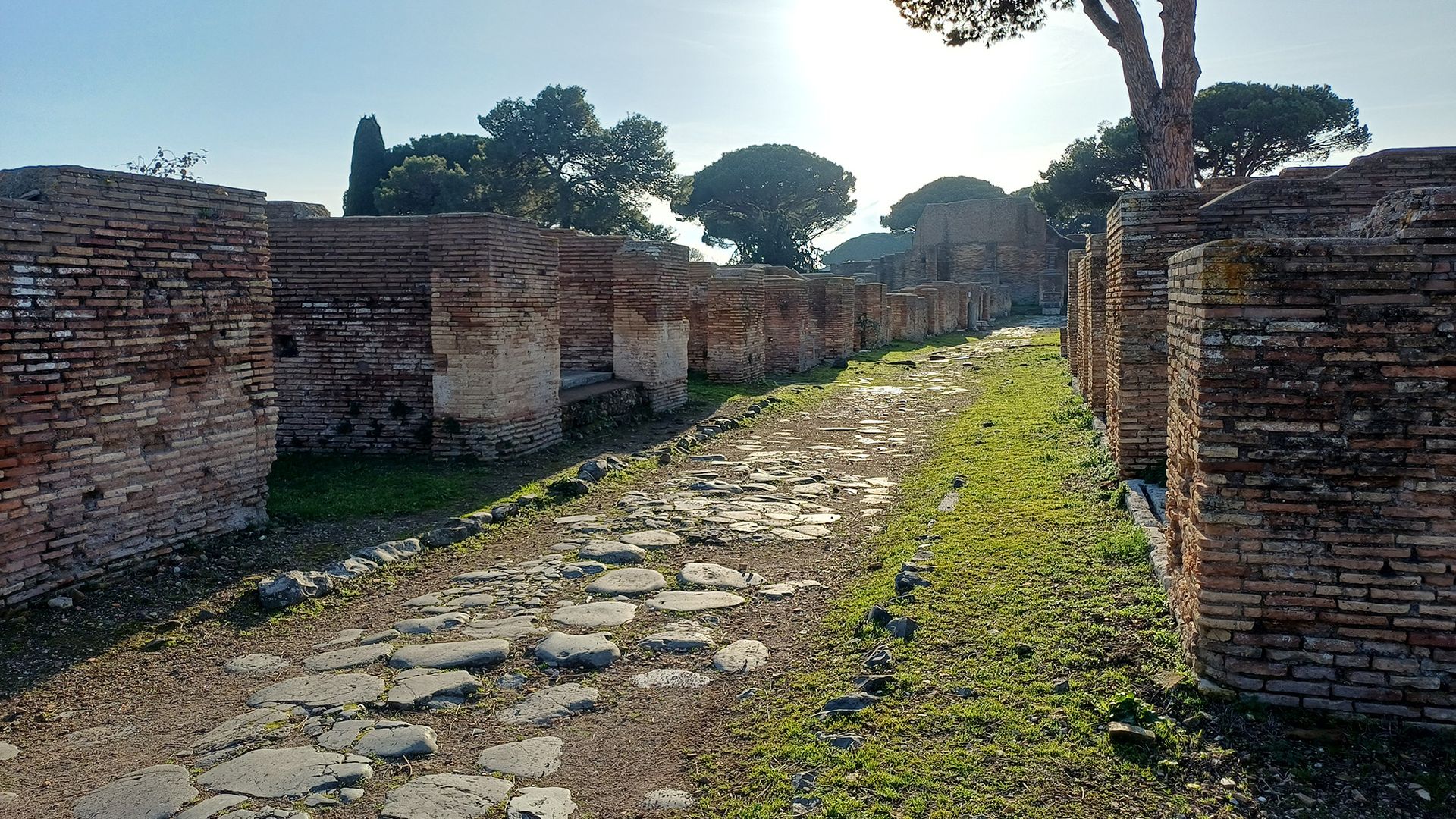
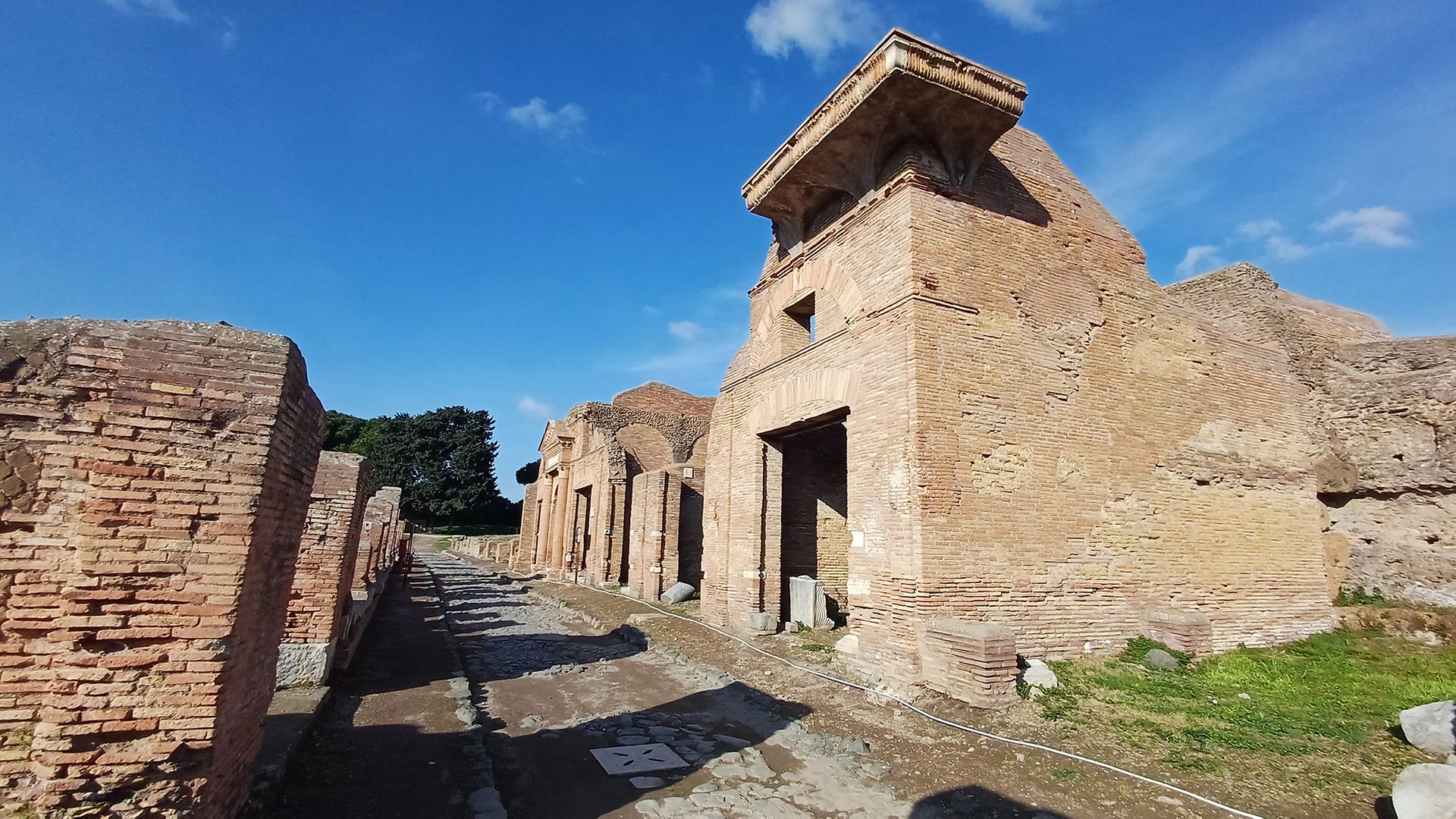
The ancient streets of Ostia, the seaport of Rome at the mouth of the Tiber River, are still visible today. (Image credit: Tom Brughmans)
"It follows the North African and Levantine coast past Antioch and near Ankara, crosses over to Europe at Constantinople, and moves through the Po Valley and Milan into France," study co-author Tom Brughmans, a professor of classical archaeology at Aarhus University in Denmark, told Live Science in an email.
The other well-connected cities had a bevy of reasons for their numerous roads. For instance, Corinth was better connected to the road network because the roads that ran through it linked the Greek Peloponnesian Peninsula to the rest of Greece, and Ancyra was better connected because it was a vital transportation hub for Anatolia.
The Arch of Drusus in Rome is near the beginning of the Via Appia, an ancient and famous Roman road that is still in use today. (Image credit: Tom Brughmans)
Rome's unique location is likely the biggest reason why it wasn’t as well connected to the road system as these other cities.
Brughmans noted that the "Italian Peninsula is an appendix to the empire's road network, and Rome is halfway down this appendix." And when "we consider all movement within the entire Italian Peninsula, we were shocked to discover that the most central road actually follows the opposite Adriatic coastline, bypassing Rome altogether," Brughmans added.
The study also found that when the shape of the land allowed it, Roman roads tended to be straight, but they were not as straight as modern-day roads.
Today, "modern road building avoids sharp turns and aims to build as straight roads as possible by strongly modifying the terrain to facilitate faster travel by car, which is made possible by modern surveying and construction methods," the team wrote in their paper.
Sea and river connections
Although the new research sheds light on road connections, it's important to remember that road travel wasn't the only means of transport in the Roman Empire. In fact, the researchers noted that Rome may have had a more significant position for sea and river transportation than it had for road transportation.
Passersby can still walk on the city streets of the ancient port city Ostia. (Image credit: Tom Brughmans)
Although the study didn't look at waterways, Rome's central location in the empire meant that it would have been an important hub of water transport, the team wrote in the study.
"Rome's central location is not due to its roads, but its physical location in the centre of the Mediterranean, on the nexus of major shipping lanes," Brughmans explained.
The team said future studies should examine sea and river transport and integrate their findings with the team's Roman roads study. When considered together, road and waterway routes may help researchers better understand Roman transportation networks.
Pažout, A. et al. (2026). Network science reveals the structure and lasting impact of the Roman road system. Nature Communications, 17(9551). https://doi.org/10.1038/s41467-026-75453-3
From Augustus to Nero, see how much you know about ancient Rome's famous leaders with our Roman emperor quiz!
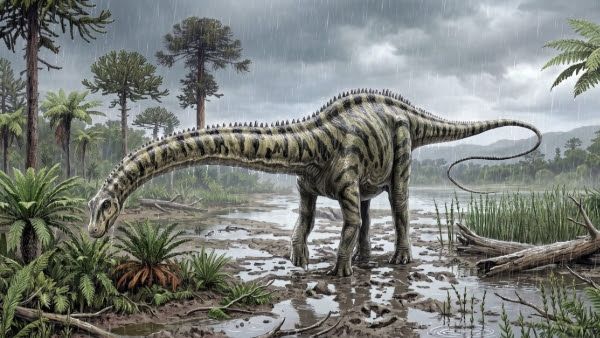
Paleontologists have identified the first confirmed remains of Diplodocus — "Dippy," for short — outside the western U.S., revealing that the iconic long-necked dinosaur reached what is now Spain roughly 150 million years ago.
The findings show that the enormous sauropod didn't live only in North America, as was long thought. Instead, it may have rambled across a land bridge all the way to Europe, the new study suggests.
The discovery, made at the La Tejería site near the small village of El Castellar in eastern Spain, provides some of the strongest fossil evidence yet that dinosaurs could move between North America and Europe during the Late Jurassic, when the Atlantic Ocean was still in its early stages of opening after the breakup of the supercontinent Pangaea. The researchers published their findings Tuesday (Sept. 15) in the Journal of Vertebrate Paleontology.
"Paleontological studies like this one help us better understand the history of life on Earth, reconstruct ancient ecosystems, and understand how they changed through time," study first author Sergio Sánchez Fenollosa, a doctoral student who studies biodiversity and evolutionary biology at the Joint Paleontology Foundation Teruel-Dinópolis (Dinópolis Foundation), a paleontological research institution, told Live Science via email.
A sauropod in Spain
Dippy is one of the best-known dinosaurs. After its fossils made their grand debut at the Carnegie Museum of Natural History in Pittsburgh in the early 1900s, life-size fossil replicas of the towering herbivore were sent around the world, including to England, France, Spain, Argentina and Russia.
But until now, Diplodocus' Late Jurassicfossils were known only from the Morrison Formation in the western United States — and the latest discovery shows that Dippy wasn't a homebody.
The newly unearthed Diplodocus specimen consists of 14 well-preserved tail vertebrae and several chevrons — bones that helped support blood vessels and muscles within the dinosaur's tail.
Study co-author and managing director of the Dinópolis Foundation, Alberto Cobos, said it was a friend who "thought he had spotted some bones on a mountainside," Cobos told Live Science via email. "That very day, I went to the site near El Castellar (a village in the province of Teruel). Sure enough, we saw a couple of sauropod vertebral centers."
Although only part of the skeleton has been recovered, the bones show a series of characteristics associated with Diplodocus, including large cavities corresponding to where air sacs would have been, along with deep grooves running alongside the underside of the tailbones.
The 14 vertebrate and several chevrons found in Spain correspond to the Dipolodocus' anatomy. (Image credit: Carmelo López)
"It was an exciting and continuous process of seeing the pieces of the puzzle gradually fall into place," Sánchez Fenollosa said in a statement. "From the early stages of the osteological study, we noticed strong similarities with several diplodocine sauropods … With each new result, the picture became clearer: we were looking at a Diplodocus."
It's unclear which species of Diplodocus the new specimen is, but like others of its genus, it was a huge dinosaur with an extremely long neck and whip-like tail.
"The Diplodocus from El Castellar was approximately 25 meters [82 feet] long (comparable in size to its North American relatives), making it another of the giant sauropods of the Spanish Jurassic," Cobos said in the statement.
An ancient bridge
Between 195 million and 170 million years ago, the supercontinent Pangaea broke apart as the Atlantic Ocean opened. But the ocean was much narrower than it is today, and the continents were not necessarily as isolated as their modern geography is now.
Evidence indicates that temporary land bridges may have allowed some animals to move between the two regions. The most famous prehistoric land bridge is the Bering Land Bridge that humans used to move between Asia and what is now Alaska. Previous research showed the Bering Land Bridge also existed around 68 million years ago, and it may have allowed an Asian ancestor of Tyrannosaurus rex to trek into North America.
Geological conditions may have allowed dinosaurs like Diplodocus to move between continents, Sánchez Fenollosa told Live Science in an email. "This interpretation is supported not only by the fossil record but also by geological evidence," he said.
The newfound Diplodocus fossils also suggest that the distribution of giant sauropods was more complicated than the fossil record previously indicated.
"More complete specimens will be essential to understand this story in greater detail, particularly to determine which Diplodocus species inhabited Europe: whether it was one already known from North America or a previously unknown species," Sánchez Fenollosa said. "This discovery reminds us that even for such iconic dinosaurs, there are still many unanswered questions about their evolutionary history and biogeography."
Climate change is often discussed in terms of rising temperatures, extreme weather and environmental loss. But there's another consequence that can be harder to see: The impact on our mental health.
Editor's Note: This text was updated at 12:30 p.m. EDT to correct the spelling of Kim Meidenbauer's name.
Burning up: How can we adapt to a warming world?
As the planet warms, our environment will be transformed, but so will our bodies. This video is part of a series where we investigate the health impacts of climate change, focusing on heat, air quality, food and infection risk. We also evaluate the promising solutions that could help us adapt to our warmer future.
'Wildfire smoke is the fastest-growing environmental threat in the US': How a warming world will poison the air we breathe
Wildfires are projected to increase dramatically due to climate change. That could trigger a massive increase in heart attacks, premature births and early deaths, research reveals.
What's in the photo? The point where two different-colored lakes meet
Who took the photo? An unnamed astronaut on board the International Space Station
When was it taken? Sept. 15, 2020
This eye-catching astronaut photo shows the point where an ancient Patagonian lake has been split by a peculiar land bridge, creating two contrastingly colored bodies of water.
Lake Pueyrredón (on the left in the photo) is the Argentine half of a roughly 40-mile-long (65 kilometers) glacial lake, which stretches across the country's border with Chile in Patagonia — a region in South America that is well known for its diverse range of geographic features, including mountains, fjords, deserts and rainforests. The Chilean half of the lake is known as Lake Cochrane (not shown in this image). Both halves hold crystal-clear water that is up to 1,600 feet (500 meters) deep, giving Pueyrredón a deep blue hue when viewed from above.
Thousands of years ago, a thick sediment barrier formed across the southern section of Lake Pueyrredón, creating a new body of water known as Lake Posadas. This smaller body, which is roughly 5 miles (8 km) long, has a lighter, teal color due to its shallow water and a large influx of sediment from a nearby river, according to NASA's Earth Observatory.
Other rivers from nearby hills have previously dumped large quantities of sediment along the western shore of Lake Pueyrredón (bottom of the photo), creating a trio of fan-shaped landforms, known as deltas, that increase in size from north to south (left to right in the photo).
Wind-driven currents and waves have pushed some of this sediment from the outer edges of the two smaller deltas, creating long, thin strips of land, known as sandspits, pointing down-current.
This image, snapped from the banks of Lake Posadas, shows a close-up view of the rocky barrier that formed across Lake Pueyrredón thousands of years ago. (Image credit: Prisma Bildagentur/Universal Images Group via Getty Images)
The strip of land separating Pueyrredón and Posadas looks similar to the sandspits. However, it is most likely a moraine — a barrier of sediment and larger rocks that formed along the edge of a hefty iceberg or long-lost glacier, according to the Earth Observatory.
Eagle-eyed viewers may be able to spot a narrow airstrip on the smallest delta (running almost parallel with its sandspit). While the area is largely uninhabited, it is popular with tourists, who travel to the lakes to camp, hike, fish and kayak, according to a local travel site.
Lake Posadas is also home to a unique island with a massive rocky arch (see below) that is also popular with tourists.
This photo, captured in the side-view mirror of a tourist's car, shows the famous rocky arch in Lake Posadas. (Image credit: alextorrenegra via Wikimedia)
The two lakes in the astronaut photo sit within a large valley, which was carved by a massive ice sheet that once covered the area. The last remnants of this ice sheet are located in northern Patagonia, around 20 miles (30 km) west of Lake Cochrane, and have also been snapped from space by astronauts.
Patagonia is home to dozens of similar valleys and fjords that were carved out by the same massive ice slab. Around 210 miles (340 km) southwest of Pueyrredón and Posadas, a trio of ravines converge to create a rare configuration where a lake, river and glacier "touch" each other at a single point.
A volcanic eruption 22 million years ago froze a snapshot of the Andes in their youth, revealing a slow-and-steady formation of this formidable mountain range.
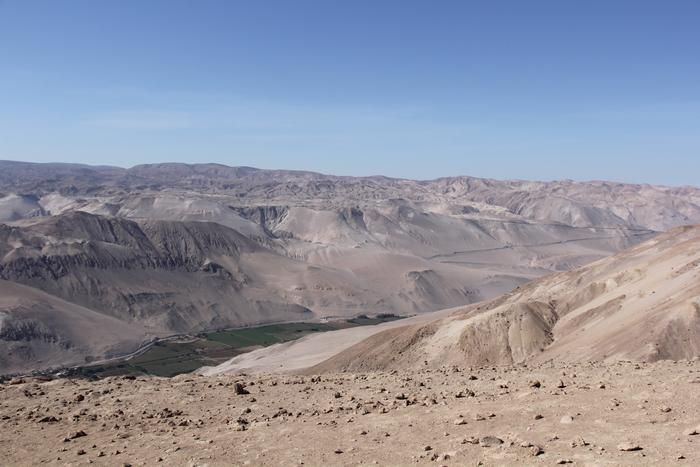
The eruption, which originated from the Lauca Caldera in what is now northern Chile, blanketed the landscape in a formation known as ignimbrite. This rock is left over after a pyroclastic flow — a mix of rock, volcanic gas and ash that sweeps over the landscape like a broiling tsunami. Pyroclastic flow is what buried the Roman town of Pompeii after the eruption of Mount Vesuvius in A.D. 79, preserving buildings and people where they fell.
Now, a new study published Sept. 11 in the journal Science Advances extrapolates the landscape under this Andean ignimbrite, revealing that it must have buried rolling foothills rather than craggy peaks.
"Pompeii shows how volcanic eruptions can freeze a moment in human history," Byron Adams, a geomorphologist at University College London, said in a statement. "This study shows that much larger eruptions can also freeze moments in Earth history, burying whole landscapes beneath volcanic deposits and preserving clues to how mountains were being built before the eruption. We cannot dig down to see the buried landscape, but we can use the shape of the volcanic blanket and what we know about how rivers shape mountains to infer what is hidden beneath it."
Volcano deposits, known as ignimbrite, that were incised by the Lluta River in northern Chile. (Image credit: Frances J. Cooper)
The original slope of the volcanic flow from Lauca Caldera was about 1.5 degrees, Adams and his colleagues wrote in the new paper. The researchers also calculated the erosion of the landscape to figure out how fast the rocks in the area were rising as the oceanic Nazca Plate pushed under the continental crust of South America, which is how the Andes were built.
They found that prior to the eruption, the uplift of the crust was no more than 0.16 mile (0.26 kilometer) per million years — quite a sluggish process. This finding corresponds to earlier work that used the formation of certain minerals within rocks to determine when a particular rock rose through the crust and approached the surface.
"There is debate over whether the Andes grew slowly and steadily over 40 or 50 million years or whether they rose extremely slowly and then popped up more recently, in the last six to 10 million years," Adams said. "Our findings, which cover a large part of the middle of that history, support the slow but steady hypothesis."
The same method could be applied to other mountain ranges worldwide, the researchers added.
Scientists have a new view of the ground under Los Angeles, and it's a bit shaky.
The 3D model of the Los Angeles basin shows that downtown LA is underpinned by up to 6.2 miles (10 kilometers) of sediment, which will likely amplify shaking from any earthquake that hits the region. That's not entirely new information, but the underground map is more precise than ever before, and it should help earthquake scientists better understand which areas of the city are most vulnerable.
"With this improved model of the basin, we now know the shape of the edges of the basin in a lot more detail," Elizabeth Cochran, a U.S. Geological Survey seismologist who was not involved in the study, told Live Science.
That's important, Cochran said, because irregular edges can focus or direct earthquake waves. In the magnitude 6.7 Northridge earthquake in 1994, Santa Monica experienced more shaking damage than expected because of the way the seismic waves traveled along the basin edge, she added.
Los Angeles sits in a sedimentary basin, a low spot where layers of sediment have accumulated for at least 15 million years. At first, the basin was underwater, so the lowest layers of these sediments were oceanic sediments. Later, when tectonic forces brought the basin onto dry land, additional sediment accumulated from the mountains nearby.
Researchers knew the general shape of the basin, but not in great detail. "Previous surveys were just linear arrays that went through just one cross section on the LA Basin, but this was the first full three-dimensional map," said Valeria Villa, a doctoral student at Caltech and co-author of the new paper describing the map, published Aug. 4 in the journal JGR Solid Earth.
A 3D-printed model of the LA sedimentary basin. (Image credit: Valeria Villa/Caltech)
The data from the new map came from 273 temporary seismic stations deployed around LA. These stations detected faint earthquake waves from distant quakes that couldn't be felt by humans. The paths and timing of these waves as they traveled helped researchers build a 3D map of the rock layers below the surface.
The central part of the basin, under downtown LA, holds the deepest sediments, which could amplify shaking. The edges of the basin are thinner, with 0.6 to 2.5 miles (1 to 4 km) of sediment before the hard crystalline rock that serves as the basin's bottom.
On its own, the map doesn't tell geophysicists exactly where shaking might be the worst in the case of a big LA earthquake, but researchers can now update their models and simulations to test different scenarios, Villa told Live Science. The damage will ultimately depend on a lot of factors, such as which fault causes the quake. Los Angeles is surrounded by many faults, including the famous San Andreas, which could give off a magnitude 7.8 quake that would jolt Southern California.
One important factor in the amount of damage to buildings during such a quake is "resonance" — whether buildings shake in time with the sediments below them, Cochran said. When buildings and sediments are in resonance, the damage is worse. A better understanding of the sediment layers beneath downtown LA will help researchers ensure buildings are designed to avoid resonating with the shaking basin, she said.
"You can, for example, change the stiffness of your building and do other things to offset this effect," Cochran said. "What is important is that you know what the ground is like, and what the larger geologic structure is like, underneath the region where you are building the building to know that this could be an issue."
This brass head depicts an "oba," or ruler of the Kingdom of Benin. (Image credit: Cleveland Museum of Art (Public Domain))
Quick facts
Name: Ancestral commemorative head
What it is: A copper-alloy sculpture of an African ruler's head
Where it is from: Edo, Nigeria
When it was made: Mid-1500s
In the Kingdom of Benin, one of the oldest monarchies in West Africa, a traditional ruler known as an oba would commission a brass or bronze bust of their predecessor upon taking the throne. The bust of the past oba would then be set on an ancestral altar in the palace. But when the British Empire annexed the Kingdom of Benin into colonial Nigeria in 1897, the British looted thousands of African artifacts spanning the kingdom's seven-century history, and the country of Nigeria has asked that they be returned.
This particular bust is in the collection of the Cleveland Museum of Art (CMA), which acquired it from prominent French art dealer Louis Carré, who sold many of the artifacts looted from Benin to Western museums in the 1930s. This head of an oba ancestor, also known as "uhunmwun-elao" in the Edo language spoken in the historic Kingdom of Benin, is roughly 1 foot (30 centimeters) tall and was made from a copper alloy, using a lost-wax casting process that would produce one unique bust, then-CMA curator William Milliken wrote in a 1937 study.
Initially, CMA experts thought the ancestral head represented a princess, due to the layers of coral necklaces around the oba's neck and the thin braids hanging from the individual's temples. But the coral necklaces and the lattice-pattern beaded caps were actually potent representations of a ruler's power. The top of the bust is partly open, and it would have supported an intricately carved elephant tusk that recorded the oba's accomplishments and major life events.
Many of the surviving ancestral commemorative heads were created in the 15th and 16th centuries by the Igun Eronmwon, a hereditary guild of brass and bronze artisans that made objects for royalty in the Kingdom of Benin. According to the CMA, Benin royalty prized brass because it does not corrode. Much of the African brass was imported from as far away as Germany.
When British forces invaded the Benin royal palace in 1897, they looted thousands of metal plaques, sculptures of humans and animal figures, and royal and personal ornaments that have come to be known as the Benin Bronzes, even though most of the objects are technically brass, an alloy of copper and zinc. The British Museum holds the world's largest collection of Benin brass artifacts — over 900 objects — which Nigeria formally requested be returned in 2021.
Some institutions have begun repatriating this historic royal art back to its homeland. A group of German museums that collectively held over 1,100 of these objects transferred ownership of them to Nigeria in 2022. That same year, the Smithsonian's National Museum of African Art transferred ownership of 29 Benin Bronzes to Nigeria. And, in 2025, the Netherlands returned 119 Benin Bronzes to Nigeria. To date, however, the British Museum has not officially returned any of the Benin Bronzes in its collection.
There is also controversy about who should have ownership of these artifacts. In 2025, the Museum of Fine Arts, Boston returned two Benin Bronzes to Oba Ewuare II, the great-great-grandson of the last oba before the 1897 British invasion. Oba Ewuare II is the Oba of Benin and custodian of Benin culture.
A full catalog of royal artifacts looted from Benin in the late 19th century can be found on the Digital Benin project website.
For more stunning archaeological discoveries, check out our Astonishing Artifacts archives.
In women's reproductive years, their brains are exposed to high levels of sex hormones, and their neurons may come to depend on those hormones to function optimally. But leading up to and after menopause, the ovaries produce far less estrogen and progesterone, raising concerns that this drop in hormones may contribute to women's dementia risk.
"We think that the loss of those hormones at menopause renders those neurons more vulnerable to age-related cellular decline and pathologies like Alzheimer's," said Karyn Frick, a neuroscientist and professor of psychological and brain sciences at the University of Wisconsin-Milwaukee.
So, if falling hormone levels are a risk factor for dementia, could replacing those hormones help stave off the disease?
While the idea sounds logical on its face, studies that have looked at hormone replacement therapy (HRT) for dementia prevention have had mixed results. There are early hints that restoring estrogen during early menopause may protect brain health, but ultimately, more gold-standard clinical trials are needed to know for sure, experts told Live Science.
Support for estrogen protecting the brain
The idea that estrogen could help ward off dementia is plausible. Women are more likely to develop Alzheimer's disease than men are, and scientists think the loss of estrogen during menopause may be partly to blame, said Jennifer Bruno, an instructor of psychiatry and behavioral sciences at Stanford University.
Lab and animal studies buttress the idea that estrogen could protect brain health.
In the brain, estrogens act as neuromodulators, or chemical messengers that alter how neurons behave. Estrogen also helps neurons keep their shape. Estrogen loss in female mice triggers a drop in the number of dendritic spines — the small, bud-like bumps on neurons that receive chemical messages.
An estrogen molecule. The body's levels of estrogen fluctuate in perimenopause, and they then dramatically decline and level off during and after menopause. (Image credit: theasis via Getty Images)
Researchers think that estrogen may help prevent the formation of the abnormal proteins — including one called amyloid beta — that accumulate, disrupt communication between neurons and ultimately kill cells in Alzheimer's disease. Amyloid beta is produced when a larger protein is cut the "wrong" way by an enzyme, Frick explained. Estrogen promotes the "normal" cutting of this protein, thus reducing amyloid beta, studies in lab mice show.
And estrogen may limit the buildup of a second Alzheimer's-related protein, called tau, by preventing the chemical processes that cause the tau proteins to clump together. This helps prevent the formation of tau tangles, a hallmark of Alzheimer's disease.
The hormone may also support brain health indirectly by improving sleep quality.
"It's well documented that menopausal women have difficulty sleeping, whether it's due to hot flashes or insomnia," Frick said. Estrogen can ease those nighttime hot flashes, thus helping menopausal women get more, less-fragmented sleep. Deep rest may help the brain clean out toxic proteins, while research shows sleep deficiency is linked to Alzheimer's disease.
Mixed results with estrogen-only HRT
HRT for menopause comes in two main forms: treatments that include only estrogen, and combined therapies with both estrogen and progesterone. The treatment has a complicated history.
That said, the Women's Health Initiative study found that estrogen-only HRT came with an increased risk of endometrial cancers, and later analyses have backed up this idea. That's why today, clinical guidelines recommend that women who have not gotten a hysterectomy take combined HRT, while estrogen-only options are reserved for those who have had their uterus removed. (The added progesterone counteracts estrogen's thickening effect on the uterine lining.)
For the subset of women who take estrogen-only HRT, observational data published in August showed that this form of the treatment was linked to a reduced risk of dementia. The study, published in the journal Neurology, found that women who took estrogen-only HRT were less likely to show Alzheimer's-related changes in the brain than women who didn't take any HRT.
Laboratory data suggest that estrogen may help prevent the formation and accumulation of abnormal proteins that are related to Alzheimer's. (Image credit: KATERYNA KON/SCIENCE PHOTO LIBRARY via Getty Images)
Estrogen-only HRT was also tied to better clinical outcomes: Treated women were less likely to be diagnosed with dementia, were less likely to show clinical and functional cognitive decline, and had better scores on memory tests, on average, compared with untreated women. These findings drew on two large, separate groups of older women, reporting data from 21,400 people in total, but they didn't include data on when each woman started HRT.
Whereas earlier studies of HRT and dementia risk relied on doctors' ratings of patients' symptoms, the Neurology study measured levels of Alzheimer's-related proteins in the brain after death. That's a more "definitive" marker of disease, said Bruno, a co-author of the study. However, the research was observational, so it can't say whether estrogen-only HRT directly causes the better brain outcomes the team observed, she stressed.
Although the Neurology study's findings are promising, they don't necessarily match the results of other studies of estrogen-only HRT and dementia. For example, a slightly larger observational study, published in 2023, found that estrogen-only HRT was associated with an increased dementia rate.
In that research, most of the women took a type of estrogen called estradiol, while Bruno's study included a greater variety of estrogens. That may have been the difference in the two studies' results, but teasing that out would require further study. Meanwhile, the conflicting findings muddy the waters of what estrogen-only HRT can do for brain health.
Does timing matter?
One big finding from the Women's Health Initiative study was that starting HRT — either estrogen-only or combined — after age 65 was associated with worse cognitive function and increased dementia risk, said Yuko Hara, director of aging and Alzheimer's prevention at the Alzheimer's Drug Discovery Foundation.
The same may not be true for people who start HRT earlier. For context, menopause starts around age 51 to 52, on average, and it's preceded by perimenopause, a transitional period when hormone levels begin to drop, typically around the mid-40s.
An observational study published in August in the journal Alzheimer's & Dementia found that starting HRT between ages 46 and 56 was linked to a reduced risk of dementia. That study did not differentiate between estrogen-only and combined treatment; it lumped all of the data together.
Patches (pictured) are one form of systemic HRT. They deliver hormones through the skin and into the bloodstream. (Image credit: SVPhilon via Getty Images)
The protective link was especially strong in three groups: women with "surgical menopause," triggered by the removal of one or both ovaries; carriers of a certain variant of a gene called APOE that raises Alzheimer's risk; and women who had a relatively short time between their first period and menopause.
When it comes to using hormone replacement to protect brain health, the evidence isn't yet strong enough to recommend any kind of HRT as a way to protect the brain in all women, Hara said. Women who had one or both of their ovaries surgically removed are the exception to this rule.
"This is a distinct clinical population because the procedure can cause an abrupt, early loss of estrogen, rather than the gradual hormonal decline that occurs with natural menopause," Hara said.
For most women who have gone through natural menopause, "there is not enough evidence to recommend [HRT] specifically for preventing cognitive decline or dementia," she said.
HRT is not currently prescribed to prevent dementia — it is prescribed to ease menopause symptoms, such as hot flashes, night sweats and sleep disturbances. To settle the science on HRT and the brain, what's really needed is a well-designed clinical trial that follows women from perimenopause to postmenopause, Bruno said. That would reveal the effects of HRT on brain health and dementia risk more reliably than the studies done so far.
This article is for informational purposes only and is not meant to offer medical advice.
With fall now upon us, many of us will be dusting off our binoculars and telescopes ready for the longer nights this season brings. Earlier sunsets mean more stargazing hours, and we'll start to see the return of some favorite celestial sights and deep-sky objects that we haven’t seen since before spring.
Fall is also an excellent time for casual stargazers, with the earlier evenings and cooler temperatures offering a comfortable compromise before we head into those freezing winter nights when we can't feel our toes. Don't worry if you're just starting out and don't have any gear yet, as many of this season's celestial objects are visible with the naked eye — and some are actually best viewed that way.
This September, October and November are great times to view the distant planets at opposition, catch several meteor showers and photograph far-flung galaxies and nebulas with your smart telescope. Plus, November brings the first full supermoon of the year. So, grab your telescope, your headlamp and a cozy sweater, and let's see what lies ahead.
Lunar & Planetary events
Neptune at opposition
(Image credit: Getty Images)
Neptune reaches opposition on September 26 at 02:00 UTC, which is the best time to view it at its brightest, magnitude +7.8. Unfortunately, the full moon will somewhat ruin the party, and Neptune isn't particularly easy to spot at the best of times. That said, the opposition window lasts for several weeks, so waiting a couple of weeks to observe during the new moon week won't make any noticeable difference.
You'll need a good telescope to spot the big blue planet — at least a 6-inch aperture, although an 8-inch or bigger will give you the best chance. Make sure you have a good quality, high-powered eyepiece (something like a 6mm or 9mm) or a good Barlow lens to boost the magnification of your existing eyepieces.
But even with high magnification, Neptune will only appear as a small disc with a bluish hue — you won't see any cloud bands or surface features, because it’s just too far away. Still, it's worth trying to get a glimpse anyway.
Saturn at opposition
(Image credit: NASA / Hubble)
A week later, on October 4 at 12:00 UTC, Saturn reaches opposition, shining at magnitude +0.3. It will be easily visible to the naked eye, although to see Saturn's rings or any of its largest moons, you'll need a telescope.
The moon will be just below 50% illuminated and doesn't rise until past midnight, so you'll have a good portion of the late evening to observe Saturn while it's high in the sky before the moonlight affects visibility. Even though the rings are only partially tilted, you can still make out a lovely golden oval around the planet, and in larger telescopes you'll be able to spot the Cassini division. We recommend a telescope with at least 4 or 5 inches of aperture, and a good quality, high-powered eyepiece to observe the finer details.
Full supermoon
(Image credit: Dawn Villwok-Joerg/Getty Images)
November 24 brings the first full supermoon of fall/winter, when the bright Beaver Moon will light up the skies, shining around 15% brighter than a normal full moon.
You can enjoy this moon without any gear whatsoever, but observing with binoculars or a telescope, or capturing its magnificence with a camera, makes the experience much more enjoyable.
Until then, you can catch the other full moons of the season on September 26 and October 26.
Uranus at opposition
(Image credit: ARTUR PLAWGO / SCIENCE PHOTO LIBRARY via Getty Images)
The third planetary opposition of the fall belongs to Uranus on November 25 at 23:00 UTC. But like Neptune in September, the almost full moon will dampen its visibility, so we'd recommend waiting until the new moon week.
Like the other outer planets, you'll need a larger telescope with an aperture of at least 6 or 8 inches to view Uranus, alongside a good quality, high-powered eyepiece for the best views. These larger scopes gather enough light to distinguish Uranus's turquoise color, although you'll need to go even bigger if you want to see its brightest moons.
Meteor showers
Draconids
(Image credit: Getty Images)
The first meteor shower of the season — and unlike most showers, which involve a lot of caffeine and an all-nighter, the Draconids are best seen in the late evening instead of the dead of night.
This meteor shower is active between October 6-10, peaking on the night of October 8-9. With the radiant point in Draco being highest at nightfall and the thin crescent moon not causing any interference, the best viewing hours are in the late evening before midnight.
These meteors are leftover debris from comet 21P/Giacobini-Zinner, and you can expect to see around 6-10 meteors per hour under ideal conditions.
Orionids
(Image credit: Mountain Light Photography Inc via Getty Images)
The Orionid meteor shower happens every October, when Earth passes through the trail of debris from Halley's Comet. In 2026, it's active between October 2 and November 7, with the peak occurring on the night of October 21-22. This shower brings between 10 and 20 meteors per hour under dark skies, radiating from the Orion constellation.
The waxing gibbous moon during the peak will add a fair bit of light pollution, but the moon will set between 03:12 am and 04:15 am depending on where in the States you're watching from, so you'll have a few hours before dawn to catch the darkest skies. You just need your eyes and clear, dark skies to see them, and a good astrophotography camera equipped with a wide-angle lens is perfect for capturing photos.
Taurids
(Image credit: Getty Images)
The Taurids meteor shower comes in two parts. The first is the Southern Taurids, active between September 10 and November 20, peaking on the night of November 4-5 (during a thin waning crescent moon). The Northern Taurids come slightly later and are active between October 20 and December 10, peaking on November 12 (during an even smaller waxing crescent moon).
The hit rate is one of the lowest of all the meteor showers, with only around 5 meteors per hour. However, the Taurids are known for producing bright, slower-moving fireballs that linger in the sky — making them a particularly appealing astrophotography target.
Peak viewing time will be around midnight, when the Taurus constellation reaches its highest point in the sky.
Leonids
(Image credit: Getty Images)
Radiating from the Leo constellation, the Leonids come from the dust and debris left behind by comet 55P/Tempel–Tuttle, which orbits the Sun every 33 years. They produce between 10 and 15 meteors per hour, and the shower period runs from November 6 to November 30, with the peak falling on the night of November 17-18.
The first quarter moon will set around midnight, making way for the best of the shower between midnight and 4 am in totally dark skies.
Star clusters and constellations
Pleiades (and Hyades)
(Image credit: Giulio Ercolani / Alamy)
A favorite among many stargazers, the Pleiades (M45), an open cluster known as the "seven sisters" in the constellation of Taurus, slowly returns to the night sky this fall. By October, it rises in the east a couple of hours after sunset and is visible from dusk to dawn from November. Although it's about 440 light-years from Earth, you can see it with the naked eye under dark conditions — even though it's usually just a faint, fuzzy patch — but binoculars or a telescope provide a much more impressive view.
As Greek mythology has it, the sisters — named Maia, Alcyone, Asterope, Celaeno, Taygete, Electra and Merope — were the daughters of the Titan Atlas and Pleione. The story is that Zeus transformed them into a cluster of stars to escape the relentless pursuit of the giant hunter Orion, who fell in love with the sisters and chased them for seven years. It seems he couldn't take the hint.
Look below the Pleiades, and you'll find their five half-sisters, the Hyades — an open cluster which makes up the V-shaped face of Taurus, the Bull.
The Pleiades are a fantastic target to capture with a smart telescope. If you want to stack multiple sessions across fall and winter, start in late November when they're high in the sky. You want an altitude of 50 degrees or higher, and ideally 60 degrees or more. The cluster itself is easy to capture, but the less atmosphere you're looking through, the more you can pull out that delicate blue nebulosity, which is what takes an image of the Pleiades from good to spectacular.
Another enemy of that lovely blue glow is the moon, so make sure you're imaging under completely dark skies with no more than around 25% moonlight. If you get a clear, moonless night, aim for 2-3 hours minimum to capture the faint nebulosity, and go for 3-5 hours for a really impressive image.
Pegasus
(Image credit: Getty Images)
The best time to see the Great Square of Pegasus is during the fall evenings between September and January, with October offering the clearest and highest views in the night sky.
This asterism is a large, prominent square shape made up of four bright stars in the eastern sky — Markab, Scheat, Algenib and Alpheratz — with the latter belonging to the neighboring constellation of Andromeda. The square is said to make up the body of the winged horse, and the four stars range from about 133 to 670 light-years away from Earth. Point a pair of binoculars at them, and they'll reveal many more stars that are not visible to the naked eye.
Cassiopeia
(Image credit: Getty Images)
Cassiopeia is one of the Northern Hemisphere's circumpolar constellations, so although it's technically visible all year, it's best seen during the autumn and winter months. Throughout the fall, it climbs higher and higher in the sky, reaching its upper culmination in mid-November, when it is best viewed between 9 pm and midnight.
Depending on its rotation in the sky, Cassiopeia appears as a "W" or "M" shape made up of five bright stars ranging from 19 to 425 light-years away and visible with the naked eye.
Cassiopeia was a vain, arrogant queen in Greek mythology, and after boasting that she and her daughter, Andromeda, were more beautiful than the Nereids, the gods placed her in the sky tied to her throne, where she spends half of the year upside down as punishment for her vanity.
The Owl Cluster
(Image credit: Stocktrek Images via Getty Images)
In addition to the constellation itself, there are some fun hidden objects within Cassiopeia that require binoculars or a telescope. The Owl Cluster (NGC 457) is a bright, open star cluster near the bottom-left star of the W shape, containing around 150 stars (although only 60 are identified as true cluster members), and is roughly 8,000 light-years from Earth. The blue and yellow "eyes" consist of the stars Phi Cassiopeiae (magnitude +5.0) and HD 7902 (magnitude +7.0).
You'll need a pair of astronomy binoculars to see it — go for 15x70 for a decent view, or 20x80 for an even better observation.
Caroline's Rose
(Image credit: Alan Dyer/StockTrek Via Getty Images)
Caroline's Rose (NGC 7789) is another open cluster in Cassiopeia, situated close to the last of the five bright stars in the "W" shape. Astronomer Caroline Herschel discovered the cluster in 1783 and it contains over 1,000 confirmed member stars, with estimates suggesting up to 3,000 potential stars.
It was named "Caroline's Rose" or the "White Rose" because its winding loops of stars and dark empty lanes resemble the petals of a cosmic rose, and it is estimated to be around 1.4 to 1.7 billion years old.
You can see it with a pair of binoculars under reasonably dark skies, but the best views will come from a telescope.
Deep-sky nebulas & galaxies
Andromeda galaxy
(Image credit: Getty Images)
Our closest neighboring galaxy, Andromeda (M31), is about 2.5 million light-years from Earth and may one day collide with the Milky Way ("one day" being a 50/50 chance around 10 billion years from now, according to new research). But until then, we can easily make do with observing from afar with binoculars and telescopes.
October and November are prime evening viewing time, with the galaxy reaching its highest point between 7 pm and 11 pm. Under clear, dark skies, it's the most distant object visible to the naked eye, appearing as a very faint smudge — provided you know where to look. Binoculars provide a marginally better view of a somewhat larger, slightly brighter faint smudge — we've managed to see it with a pair of 8x25s under dark skies — but for the best views, you want a telescope.
It's a great first target for beginners using a smart telescope, with the prominent dust lanes revealing themselves after 30-60 minutes. If you want more detailed images of the faint outer arms, leave it for 3-4 hours. Moonlight can wash out the faint galactic arms and dust lanes, so if possible, choose a dark night with minimal light pollution.
In Greek mythology, Andromeda was the daughter of the aforementioned Cassiopeia. After angering the sea god Poseidon, Cassiopeia (who was not exactly Mother of the Year) chained Andromeda to a rock as a human sacrifice to the sea monster, Cetus, that Poseidon had sent to ravage their kingdom's coast. Andromeda was saved by Perseus, who she then married, and after her death, Athena placed her in the stars as a constellation.
The Helix Nebula (NGC 7293) is a large planetary nebula around 650 light-years away in the constellation Aquarius. Often called the "Eye of God", it has a striking eye-like appearance, and it features thousands of comet-like radial filaments and complex gas rings.
It stays relatively low in the southern sky, with September being the best time to view or photograph before it gradually sinks over the coming months. Moonlight will completely wash out its faint outer gaseous ring, so it's best to shoot during a new moon (or when the moon hasn't yet risen) to get the best image possible.
The best hours to capture it are between about 10:30 am and 2 am, when it's either rising or at its highest. This should get you a pretty decent standard image, but if you want more detail, try to capture it over several nights to pull in the faint outer nebulosity and stack the images.
Triangulum Galaxy
(Image credit: Getty Images)
The Triangulum Galaxy (M33) is the third-largest in our local group of galaxies, behind the Milky Way and Andromeda. This stunning spiral galaxy — not to be confused with the Pinwheel Galaxy (M101), which is best seen in the spring — sits in the small Triangulum constellation about 2.7 million light-years from Earth and is a great astrophotography target.
Its peak viewing time is October to December, when its highest and clearest position is after dark in the late evening. Because it's so faint, you need a moonless night away from light pollution. The sweet spot for smart telescopes is around 90 minutes, but if you can shoot for longer or want to split your shoot across multiple nights, 2.5 to 4+ hours can bring out more detail in the core and spiral arm.
Heart and Soul Nebula
(Image credit: Getty Images)
The Heart and Soul Nebula is a nebula complex consisting of two massive emission nebulas located about 6,000 to 7,500 light-years from Earth in the constellation Cassiopeia. They are primarily made of glowing ionized hydrogen gas, darker cosmic dust lanes and trace amounts of ionized oxygen and sulfur.
Like most other nebulas, they aren't visible to the naked eye, so you'll need a telescope or a long-exposure astrophotography setup to see them. The Heart Nebula (IC 1805) is, unsurprisingly, named after its heart-like shape, while its neighbor, the Soul Nebula (IC 1848), has a more irregular shape with large cavities made by stellar winds.
If you're imaging the Heart and Soul with a camera or smart telescope, a total integration time of 6 to 12 hours will provide you with the cleanest details and most contrast in the faint gas structures. That said, 2 to 4 hours will give you a good basic stacked image.
As Cassiopeia is at its highest in the fall, this is the best time to see and photograph it with the least amount of atmospheric interference.
Ghost of Cassiopeia
(Image credit: Getty Images)
The Ghost of Cassiopeia, often referred to as the Ghost Nebula (IC 63), is a mixed reflection and emission nebula around 550 light-years away in Cassiopeia. Its eerie red glow is caused by its proximity to the nearby blue giant star, Gamma Cassiopeiae, which sits right in the middle of the constellation's distinctive 'W' shape. The star’s powerful ultraviolet radiation causes the hydrogen to emit a soft red glow, while the surrounding dust reflects the star's light in fainter blue hues.
Like the other celestial sights in Cassiopeia, autumn and winter evenings are the best times to see and photograph it due to its high altitude in the sky. As the nebula is so faint and elusive to capture, you can only see it with a smart telescope or a long-exposure astrophotography setup.
When it comes to integration time, the longer the better. Aim for 3-5 hours minimum, ideally 6+ hours if the skies allow, and avoid shooting during moonlight if you can.
Where it is: 160,000 light-years away, in the constellation Dorado
When it was shared: Sept. 3, 2026
It looks like a gigantic hole punched through a cloud, but this spectacular new image from the Hubble Space Telescope captures something more complicated: a cosmic cycle of destruction and creation, with one generation of stars tearing apart its birthplace while simultaneously helping a new generation form.
LHA 120-N44 (N44, for short) is a nebula that lies about 160,000 light-years away in the Large Magellanic Cloud, a small galaxy that orbits the Milky Way. From Earth, it appears in the constellation Dorado. This enormous, empty-looking region measures roughly 210 by 140 light-years. To put that into context, consider that Alpha Centauri, the closest star system to ours, is a mere 4.4 light-years distant. Thanks to that giant, hole-like appearance, this nebula is known as a superbubble, a cavity carved out by a cluster of hot, massive stars near its center.
Those stars are bent on destruction. Just like our star's solar wind, which creates auroras on Earth and defines the extent of the solar system, these stars' powerful winds blast material into space. Meanwhile, the most massive of these stars eventually explode as supernovas, pushing even more gas aside. The collective radiation from both these old and young stars carves the nebula's giant cavity.
So what happened to that expelled gas? Most of it has been pushed outward and compressed into a dense shell of gas and dust surrounding the superbubble. Within that shell, new stars are forming — so the same massive stars that destroy the gas cloud that created them also may help to produce their replacements.
This is known as "stellar feedback" — when massive stars heat, ionize and disperse the gas and dust around them, making star formation impossible in their vicinity. Meanwhile, their winds can squeeze neighboring gas clouds until they become dense enough to collapse under their own gravity and make new stars.
This Hubble image of N44 contains almost half a million stars, including those in the nebula and some lying along the same line of sight. About 30,000 of them are young stars yet to fuse hydrogen in their cores — the reaction that powers stars like the sun. With so many young protostars not yet hot and dense enough to become full-fledged main-sequence stars, N44 gives astronomers a rare opportunity to attempt an answer to what may seem like a very simple question: how long does it take to make a star?
In a multicat household, it's common to see one cat licking another. When some people see this behavior, known as allogrooming ("allo" means "another individual"), they assume it's a sign of friendship.
But is that really the case? Are there hidden, more complex reasons for why cats lick each other?
While research into allogrooming is ongoing, scientists have suggested different explanations for why cats lick each other, including some social reasons and some more practical ones.
But a 1998 study of 25 cats living together in an indoor-outdoor enclosure poked holes in this theory. The study found that aggressive behavior showed up in about 35% of allogrooming sessions, which suggested that allogrooming might not be about friendship. Instead, the authors proposed, it may help to defuse a tense situation in a confined space, where an actual fight would be too risky.
To investigate, Morgane Van Belle, a cat behavior scientist at Ghent University in Belgium, and her colleagues analyzed videos of allogrooming from 53 two-cat homes. They concluded that allogrooming may have different social functions, depending on the situation.
The team noticed that the cats sometimes licked each other while huddling together and copying one another's body postures. In these moments, allogrooming probably helps strengthen social bonds, the researchers proposed. Most licking was directed toward the ears; this may help cats relax because the skin there is rich in sensory nerve endings, Van Belle said. Allogrooming produces a relaxing effect in other animals too. For example, it lowers the heart rate in horses and triggers the release of feel-good hormones in monkeys.
Cats often lick the head and neck, especially the ears, of other cats. Ear-licking may help cats relax because the skin there is rich in sensory nerve endings. (Image credit: Madzia71 via Getty Images)
They also noted that allogrooming sometimes led to friendly wrestling, in which the cats grabbed each other with their front legs and tumbled around. This suggests that allogrooming may serve as a signal to start play.
In other situations, however, the researchers noticed that allogrooming was followed by behaviors linked to conflict, such as turning the ears backward, pawing, and biting. In these cases, one cat would stand or lean over the other, and both cats showed subtle signs of stress like lip licking, head shaking or self-scratching.
Based on these observations, Van Belle's team think that allogrooming may be an "appeasement signal" in fraught moments that could lead to conflict or injury, for example, when one cat wants to take over a sleeping spot already occupied by another. They think it possible that the licking helps to calm things down and keeps a spat from turning into a real fight. Similar behavior has been seen in meerkats, where subordinate individuals groom dominant ones to placate them.
Yet because this licking often targets the neck — the same area cats bite during fights — it also may signal a subtle aggressive threat, the researchers suggested.
It's possible that feral cats may have a different allogrooming pattern than pet cats do. (Image credit: Kriswanto Ginting via Getty Images)
Hygiene and grooming
Van Belle and her colleagues think that, beyond sending social signals, allogrooming may help with hygiene. After all, it's often aimed at the head and neck — the areas that are "least accessible for the cat itself during grooming," Van Belle said. Allogrooming is thought to have a hygienic function in other species too. For example, ants achieve colony-level hygiene by grooming heavily infected individuals more, and primates concentrate their grooming on body parts the recipient can't easily reach. When it comes to cats, however, more research is needed. Van Belle's study did not measure parasites, infections or skin cleanliness to see whether such grooming actually reduces dirt or bugs.
Dr. Terry Curtis, a veterinary behaviorist who has studied how often allogrooming happens, also thinks cats might groom each other for hygiene reasons. She wonders whether feral cats, who likely carry more fleas than house cats, might have a different allogrooming pattern.
The explanations proposed by Van Belle and colleagues are reasonable but not definitive, Curtis said. Because so many factors can shape a cat's behavior, she's skeptical that researchers will ever be able to say with real confidence exactly why one cat grooms another.
After working as a veterinary behaviorist for 25 years, Curtis has concluded it is often impossible to understand what's going on in a cat's mind.
"Congratulations, you got a cat," she said. "Let the mystery begin.”
How much of a cat fan are you? Find out by taking our cat quiz!
Scientists melted diamonds with a powerful laser to take some of the most precise measurements of the mineral's elusive melting point — and found that previous experiments were off by more than 1,300 degrees Fahrenheit (700 degrees Celsius).
It's odd to think of diamond, the hardest natural material on Earth, melting — but melt it does when blasted with extremely powerful lasers under the right conditions. Understanding how diamond responds to shock waves from lasers is an important part of developing nuclear fusion, the process that powers stars. Nuclear fusion is also a potential energy source for the future, so researchers have put a lot of effort into developing models that describe and predict how diamond behaves.
However, diamond is weird. Although the experimental data and theoretical models match up pretty well most of the time, there have been some strange discrepancies scientists haven't been able to explain. The biggest one is the 2,240 F (1,244 C) — roughly 20% — difference between previous experimental data and model-predicted melting temperatures of diamond. There's also been some debate about whether diamond reorganizes its atoms into a different kind of solid carbon before turning into a liquid at the end of the melting process.
Researchers have struggled to explain these discrepancies because the conditions diamond melts at are so extreme that it's extraordinarily difficult to measure it in labs on Earth. However, new experiments may finally offer the solution that scientists have pursued for two decades.
In a study published Aug. 13 in the journal Nature Physics, scientists zapped tiny plates of synthetic diamond with an ultraviolet laser, creating shock waves that were so powerful that as they passed through the samples, the diamond changed from transparent to mirror-like. The strong increase in reflectivity is one indication the diamond melted. By combining this change with measurements of how brightly the diamonds glowed while being zapped, the researchers mapped the melting temperature with great precision.
"We were able to take tiny diamond samples and shock compress them to temperatures hotter than the surface of the sun and to pressures higher than the center of Neptune and Uranus — and still measure atomic structure, temperature, density and optical reflectivity," study co-author Marius Millot, a research scientist at Lawrence Livermore National Laboratory in California, said in a statement.
The team found that the diamond sample's melting temperature was more than 1,300 F lower than previously thought — putting the melting point in line with theoretical predictions and finally explaining the long-held discrepancy.
An artist's concept of a solid chunk of diamond floating in a metallic liquid carbon pool. The new experiment proves this sort of situation is possible deep within other planets. (Image credit: James Wickboldt/LLNL)
The team also measured the samples' atomic structure with X-ray diffraction and saw that the diamond didn't transition to a different kind of solid carbon before melting, possibly because the energy required to rearrange the atoms was too large, the researchers wrote.
However, they also hypothesized that multiple shocks could be powerful enough for this transition to occur and that the way the shocks are applied to the diamond might affect how it changes phase. Understanding this is important for nuclear fusion research, as certain types of experiments involve lasers melting and crushing a diamond capsule to put the capsule’s contents, solid deuterium and tritium, under more than 30 petapascals of pressure and temperatures higher than 180 million F (100 million C), the requisite conditions for a fusion chain reaction to occur.
The researchers found that between about 660 and 1,060 gigapascals of pressure and at around 12,140 F (6,727 C), diamond exists as solid chunks floating in liquid carbon. As the pressure increases, more diamond transitions into liquid carbon, which is thought to be a very strange material. Unlike most forms carbon takes on Earth — like coal, graphite and diamond — liquid carbon is metallic, so it conducts electricity. It's also denser than diamond. So hypothetically, if you somehow were to put liquid carbon in a cup without instantly vaporizing it, a chunk of solid diamond could happily bob around in it like an ice cube in a glass of water.
Knowing how diamond behaves under such extreme conditions is also important for understanding the ice giant planets Uranus and Neptune. Based on measurements from the Voyager 2 spacecraft in the late 1980s and lab experiments on Earth, scientists think it literally rains huge chunks of diamond inside these planets and that their mantles may have liquid carbon oceans with diamonds floating around like icebergs. The new research means scientists can make better predictions about the planets’ interiors and their carbon cycles.
Artificial intelligence (AI) algorithms that hunt for cancer may do a better job when they approach the analysis as if they were a human pathologist, a new study suggests.
Many AI systems analyze preselected regions of a tissue sample, or they split a whole pathology slide into patches of a fixed size. By contrast, a pathologist searches more dynamically, panning across the tissue, zooming in and out, and pausing over areas that raise red flags. A whole slide can contain billions of pixels, while the evidence of cancer may occupy only a tiny patch.
Study co-author Zhi Huang, an assistant professor of pathology and laboratory medicine at the University of Pennsylvania, compared the process to a search-and-rescue helicopter. "You don't start by inspecting one square meter of ground," Huang told Live Science. You scan the landscape first and then swoop in for a closer look.
In the new study, published in July in the journal Nature, Huang and colleagues demonstrated that cancer-detecting AI might work better when it takes this humanized approach.
Training AI to hunt for cancer
AI algorithms called vision language models (VLMs) struggle with the first step that Huang described — that initial, cursory scan. That's in part because many pathology AI systems learn from what pathologists leave behind at the end of that search: a labeled image pointing out where the cancer is or an official diagnosis.
Instead, the researchers trained their new AI on pathologists' search behavior. They called this approach to training "Pathology-CoT," short for "chain of thought." It turns observable actions, including where pathologists move around and zoom in on an image, into training data.
To collect the data, the team created a tool that recorded how pathologists moved around a slide and changed magnification. The raw logs, gathered from eight pathologists, were messy, as a given pathologist might drift across a slide, overshoot their intended region of focus or fiddle with magnification to adjust it to their liking.
To clean up the data, the researchers filtered out those incidental movements, focusing on moments that appeared to represent deliberate attention, such as lingering over one view or making a sustained pan. Then, they compared those regions with eye-tracking data to check that the software was capturing where pathologists were actually looking.
For each region a pathologist inspected, the VLM also drafted a short rationale explaining why the region was worth examining and what features were visible; human pathologists could then accept, edit, or reject the rationale, creating additional training data for the AI. In one example, the AI flagged a portion of a slide as potentially metastatic and suggested zooming in to look for atypical cells. Other inspected regions were flagged as healthy tissue.
Ultimately, the researchers used this training method to build a new tool called Pathology-o3. It scans a slide at low resolution, uses a model trained on pathologists' behavior to choose regions worth a closer look, then sends higher-resolution views of those regions to a VLM for analysis.
Pathology-CoT trains algorithms to scan over a whole slide and then return to regions of interest for a closer look. (Image credit: Universal Images Group via Getty Images)
Putting it to the test
Huang said the goal of the new study was not to show that Pathology-o3 worked better than specialized AI models that are specifically built to detect specific types of cancer; those models are often trained disease by disease. Rather, the researchers wanted to see whether their new training approach could help a general-purpose AI navigate a pathology slide more effectively.
They compared Pathology-o3 to other general-use AI systems, such as OpenAI's o3, and asked the algorithms to examine slides containing lymph node tissue. These slides were collected from colorectal cancer cases and some contained metastatic cancer, which human pathologists had already labeled.
The algorithm correctly identified slides that were positive for cancer 100% of the time. However, of the slides it identified as positive, 15.5% were actually negative. By comparison, OpenAI o3 correctly identified slides that were positive for cancer 87.5% of the time. Of the slides it identified as positive, 53.3% were actually negative.
The researchers designed Pathology-o3 to err on the side of flagging something for another look, rather than potentially missing cancer. That might help to explain the rate of false positives, Huang said.
Whether that rate of false alarms is acceptable depends on how Pathology-o3 is used, said Mohammad Asadi, a data scientist at Stanford University who was not involved in the research. It's not precise enough for the AI to diagnose patients on its own, but it could still be useful for a system to point a human toward regions of a slide that are worth double-checking. It may be an advantage that the approach shows the pathologist a specific region to inspect rather than declaring an entire slide suspicious, he said.
The researchers tried repeating the test on an independent dataset that the algorithms hadn't seen before to see how well it worked on unfamiliar slides. Pathology-o3 correctly identified slides that were positive for cancer 97.6% of the time. Of the slides it identified as positive, 37.1% were actually negative. The finding is an example of how AI performance can change when the data source changes, even when the medical task stays the same.
Asadi explained this result suggests the system can still work with slides from a different source. But that result does not yet show that using this tool would make pathologists more accurate or efficient in practice.
Can it help pathologists?
The researchers applied their training approach to several existing VLMs, finding that the models' performance consistently improved after the training. That suggests that the navigation data from pathologists was useful across settings, Asadi said.
For Huang, that is the most important result. "The takeaway isn't our system," he said. "It's that the missing ingredient has been sitting in hospitals this whole time."
The study did not compare Pathology-o3 directly with human pathologists, but the researchers said that wasn't their aim.
"The right question isn't whether it beats a pathologist," Huang said. "It's whether a pathologist working with it catches more [cancer cases] and works faster." The current study did not address the latter question, either, but the team's next experiment is designed to test pathologists on the same cases with and without Pathology-o3, measuring what they catch and how long they take to do so.
The system's most plausible use is as a prescreening tool, Asadi said, but he stressed that the research has not yet shown that doctors who use it become faster or more accurate. Asadi wants an even tougher test: trials conducted across multiple hospitals that measure not just accuracy and speed but also pathologists' workloads. He wants the trails to assess the burden of false alarms from the AI algorithms and whether doctors recognize when the AI is wrong.
Importantly, cancer diagnoses can require information from multiple slides, stains and a patient's medical history, while the current system just reads one slide at a time. "I wouldn't claim it should diagnose on its own," Huang said.
This article is for informational purposes only and is not meant to offer medical advice.
The Celestron StarSense Explorer DX 130AZ is a 5.1-inch (130mm) f/5 Newtonian reflector, one of many 130mm f/5 reflectors offered by Celestron. The DX 130AZ is also one of two 130mm StarSense Explorer variants, the other being a tabletop Dobsonian. The optical tube here rides on an alt-azimuth tripod instead and uses a 2-inch focuser, but otherwise, there are no major differences.
The DX 130 AZ is certainly one of the better telescopes in the StarSense Explorer series; there are also several decent Dobsonians, a pair of decent Schmidt-Cassegrains, the merely acceptable DX 102 refractor, a 114mm Bird-Jones model and some small refractors that aren’t of much use.
The DX 130AZ is definitely on the small end of what can be called a "serious" instrument, but even under a fairly light-polluted sky, it’s big enough to show you plenty of deep-sky objects and, of course, stunning detail on the moon and planets.
Celestron StarSense Explorer DX 130AZ review
Celestron StarSense Explorer DX 130AZ: Design
(Image credit: Zane Landers)
130mm f/5 Newtonian reflector with a parabolic primary and flat secondary mirror
Manual alt-azimuth mount and tripod with StarSense smartphone dock — no motors
Two 1.25” eyepieces included (25mm yielding 26x, 10mm yielding 65x)
The DX 130 rides on the same alt-azimuth mount/tripod shared with the other StarSense Explorer DX models. It’s reasonably sturdy, with one major caveat: you can’t actually point the DX 130 straight up. When aimed above about 70 to 75 degrees, the tube crashes into the mount or the tripod legs.
However, there is a simple workaround here. Deliberately set the tripod up unlevel, which lets you reach the zenith without affecting the mount or the StarSense system at all. It looks a little silly, but it works. The tripod is fairly stable as long as you’re not in a windy spot. Loading the accessory tray with sandbags or diving weights, or filling the hollow aluminum legs with sand or foam, helps considerably if you’re willing to do a bit of DIY work.
The mount has slow-motion controls with small gears for fine adjustments. They have a fair amount of play in them, but since this telescope is really only meant to be used up to about 200x magnification or so, it doesn’t matter much. In practice, the author barely used the slow-motion controls and simply nudged the scope by hand. For aiming the DX 130AZ, a red dot finder is provided in addition to the StarSense Explorer tech.
The StarSense Explorer DX 130 AZ comes with two eyepieces: a 25mm (26x) and a 10mm (65x). These are three-element eyepieces, likely Konigs or reversed Kellners. They work acceptably; the 25mm is a little blurry at the edges, and the 10mm shows some chromatic aberration toward the edge, but both are reasonably sharp. The bigger problem is that the housings are all plastic and there are a lot of internal reflections as a result.
(Image credit: Zane Landers)
Better aftermarket eyepieces would be a wise investment, both for improved performance and a wider range of magnifications. We’d recommend a 6mm redline (108x), a 2x Barlow of some sort and a good wide-field eyepiece like the 24mm APM/StellaLyra UFF (27x), if you can afford it — the 6mm redline gets a bit closer than the provided 10mm eyepiece and offers a much sharper view, while the 24mm UFF is far crisper than the stock 25mm. With a Barlow lens and the 6mm, you can go up to 216x on the moon, planets and double stars — about the highest magnification this telescope can allow. Or you can choose your own eyepiece set to suit your needs.
Specifications
Optical design: Newtonian reflector Mount type: Manual altitude-azimuth with StarSense smartphone dock Aperture: 130mm (5.1 inches) Focal length: 650mm Focal ratio: f/5 Magnification: ~260x (highest useful) Included eyepieces: 1.25” 25mm (26x) and 10mm (65x), 50 degree apparent field Total kit weight: 18 pounds (8.16 kg)
The StarSense Explorer DX 130’s focuser is a 2.5-inch rack-and-pinion unit with a metal drawtube and plastic body. There’s some play in it, but it works acceptably well as long as you don’t overload it with too much weight. The focuser has adapters to accept both the provided 1.25” eyepieces as well as aftermarket wide-field 2-inch eyepieces, but at f/5, you really need a coma corrector of some sort to use the latter, which, along with the eyepieces themselves, will set you back quite a bit.
Being a Newtonian reflector, the DX 130 will usually need to be collimated for sharp images. Celestron doesn’t include a collimation tool, which is mildly annoying, but a basic collimation cap is cheap, easy to 3D-print, or can be improvised from a film canister. Overall, the DX 130 is lightweight and very portable, which is one of its real strengths — it’s easy to carry about, and the StarSense Explorer app will have no trouble plate-solving, even if you have to pick the scope up and carry it around the yard to avoid trees or other obstructions.
Celestron StarSense Explorer DX 130AZ: Performance
(Image credit: Zane Landers)
Sharp, detailed lunar and planetary views
Excellent wide-field deep-sky performance from dark skies
Light and quick to reposition around obstructions
The DX 130 shows a great deal of detail on the moon, down to features a few kilometers across, and it’s genuinely sharp. The focuser is a little coarse, but with some finesse it will reach focus even at high magnifications. The 130mm f/5 optics can handle up to about 250x magnification on a night of steady atmospheric conditions, though the best lunar and planetary views are usually found somewhere between 150-220x and the mount starts to get wobbly as you push towards the higher end of that range.
On the planets, the DX 130 handles shadow transits of Jupiter’s moons easily, shows all four Galilean moons as disks and even reveals the Great Red Spot. Saturn’s rings are obvious, along with a smattering of a half-dozen moons, and the Cassini Division is visible when the rings are tilted more open than they are at present. Uranus is also visible as a tiny greenish disk, though its moons are not. It’s a struggle to distinguish Neptune from a star at all, but the StarSense Explorer app will help you identify which blue dot it is in a sea of similar looking 8th-magnitude points.
(Image credit: Zane Landers)
One practical note: you do need to keep your phone screen dim and red while using this telescope with the StarSense Explorer app. The app has a red mode, but notifications, or your phone simply reverting to the lock screen, can flash the screen bright, and even at its dimmest a phone screen can affect your eyes’ dark adaptation quite a bit. But for most people this won’t be a serious problem if the screen is dimmed fully and used with a proper red filter — either a software solution or a physical red film.
As for deep-sky objects, the spiral arms of the Andromeda Galaxy and M33 look fantastic under a dark sky, though under light pollution only their cores are visible. Globular clusters such as M13 and M3 begin to resolve, while more difficult targets are harder going — M53 was tough from Bortle 5 but doable from Bortle 2 conditions. Under a bright sky, open clusters like M11, M35 and the Pleiades are the main deep-sky attractions with this telescope; under a dark sky, fainter nebulae and galaxies shine far better while the strands of dark nebulae and galactic cirrus begin to show up around open clusters.
The brightest planetary nebulae start to resolve with the DX 130 regardless of sky conditions. Most observers won’t see much color in them with this scope’s relatively small aperture — though some people pick out a bluish-green tint in objects like the Ring Nebula and the Cat’s Eye Nebula — but regardless, they’re reasonably easy to see even from light-polluted areas, especially with an aftermarket nebula filter.
Celestron StarSense Explorer DX 130AZ: Functionality
(Image credit: Zane Landers)
StarSense app is optional
Quick and easy setup
Wide field of view forgives manual pointing errors
The StarSense Explorer DX 130 is, by design, a wide-field telescope, and one of its appeals is that you don’t strictly need any computerized pointing aids at all. The nice thing about the StarSense Explorer system is that it’s entirely optional — you can aim the telescope manually, with or without your phone docked, just like any other manual scope.
Set-up is quick: assemble the tripod and mount, attach the tube and an eyepiece, dock your phone, run the app’s alignment routine, and you’re observing. It’s much easier to get started with the StarSense Explorer than with a GoTo telescope, and you aren’t required to use it, either — for a quick gander at the moon or Jupiter for instance, there’s really no need to deal with the phone dock and app. With experience you might find yourself eventually not needing the StarSense Explorer tech at all, especially given the telescope’s wide field of view, which is quite forgiving of any manual pointing errors.
Should you buy the Celestron StarSense Explorer DX 130AZ?
Buy it if:
✅ You need a portable, tripod-mounted wide-field telescope.
✅ You want phone-guided pointing but also the option to aim manually.
✅ You frequently observe from sites with trees or obstructed horizons.
Don't buy it if:
❌ You want the most aperture and stability for your money.
❌ You want motorized pointing and tracking capabilities.
❌ You want to observe close-up details in galaxies and globular star clusters.
On the value for money front, you could get a 6-inch or even an 8-inch Dobsonian for the price of the DX 130 if you’re happy with a fully manual scope, or you could look at one of the other options below. The DX 130 is more portable than a full-size 6- or 8-inch Dobsonian and has a much wider field of view with any given eyepiece — but if you don’t have a fairly dark sky, that advantage is somewhat less valuable compared to those telescopes’ considerably larger aperture, which helps reveal more on targets less affected by light pollution.
A reflector like this gives much better views than the cheap refractors sold at this price and offers a much wider possible field of view than catadioptrics. The StarSense Explorer DX 102, effectively this scope’s sister model, has too much chromatic aberration to deliver sharp high-power images and doesn’t gather as much light as the 130. The StarSense Explorer 5-inch Schmidt-Cassegrain is decent optically and is admittedly a little more forgiving of cheap eyepieces thanks to its longer focal ratio, but it’s no better for planetary work than the DX 130 with proper eyepieces, can’t deliver a wide deep-sky field of view, and gathers slightly less light overall.
Overall, the DX 130 wouldn’t be the author’s top recommendation, but it’s certainly in the top 10 for the price range. If you’ve already decided this is the kind of telescope that you want, it’s a perfectly good choice; just consider the Dobsonians first if you want a manual telescope, or a fully automatic GoTo instrument if you want something more high-tech.
If this product isn't for you
For the budget-conscious
Sky-Watcher Heritage 130P
The Sky-Watcher Heritage 130P uses the same optics as the StarSense DX 130 but is cheaper and more compact thanks to its collapsible tabletop Dobsonian design. The StarSense Explorer 130mm Dobsonian is another option — the same optics again, in a tabletop Dobsonian without the collapsible tube.
For improved performance
Celestron StarSense Explorer 8-inch
A 6-inch f/8 Dobsonian like the Apertura AD6 or Sky-Watcher 6-inch Classic, or even one of the 8-inch models like Celestron’s own StarSense Explorer 8-inch, is much sturdier than the DX 130 or a tabletop scope/tripod, and offers easier collimation as well as higher performance with inexpensive eyepieces. However, they’re quite a bit bulkier and heavier than the DX 130 or a tabletop Dobsonian.
For portability and ease of use
Celestron Astro Fi 130
If you want fully computerized pointing, Celestron’s Astro Fi 130 offers identical specs to the StarSense Explorer DX 130AZ but with full GoTo and tracking operated via your smartphone instead (and can be aimed straight up). However, set-up is much more time-consuming as you can’t simply put the telescope down and go.

 Login