
Normal view

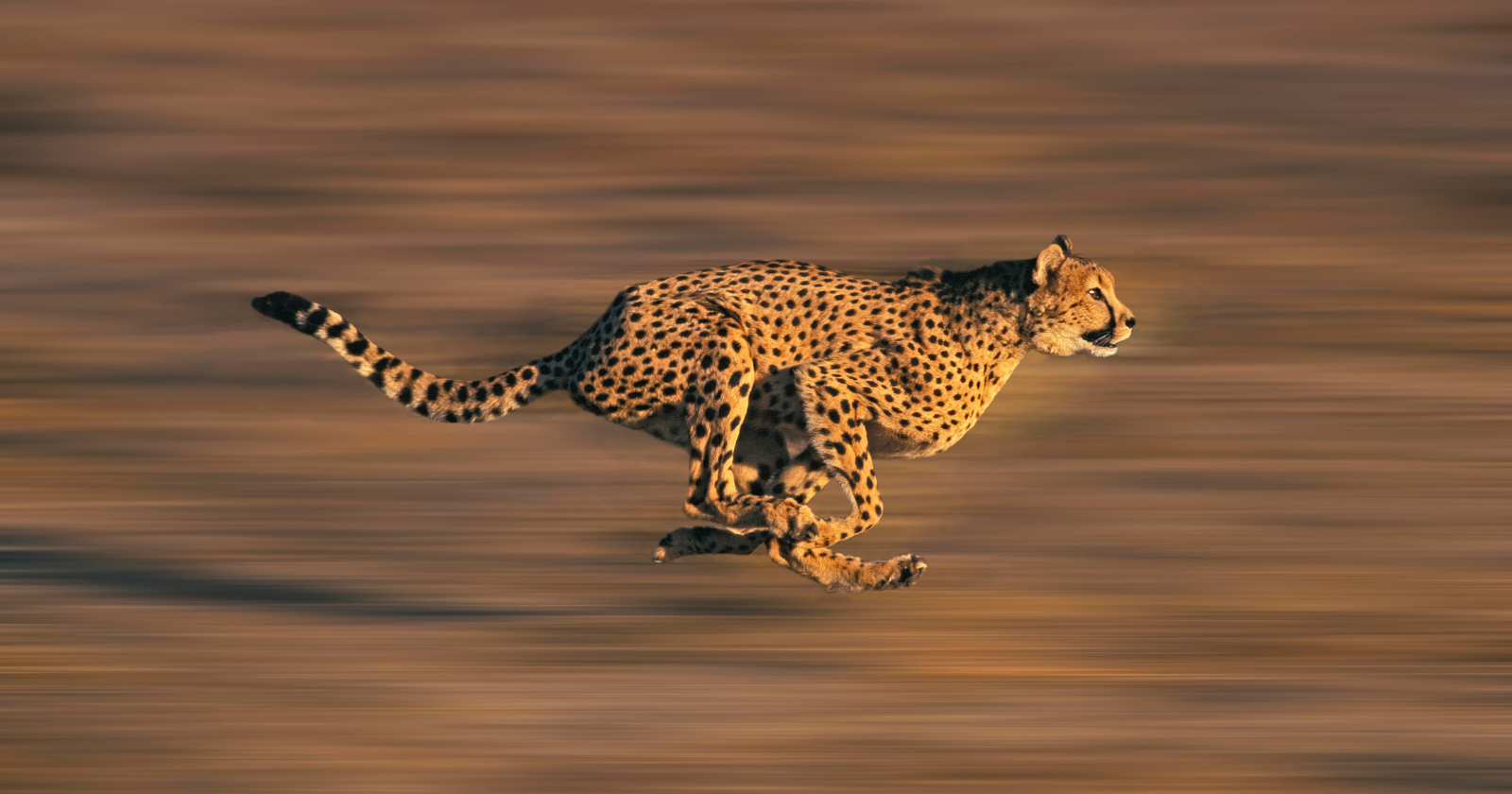
A cheetah can go from a standstill to about 60 miles an hour in roughly three seconds, out-accelerating many sports cars, but it can’t hold that speed for long

Three seconds. That is roughly how long a cheetah needs to go from a dead stop to about 60 miles an hour.  The Cheetah Conservation Fund goes a little further, citing acceleration to a top speed past 110 km/h in just over three seconds.

Numbers like these tend to get pressed into a familiar comparison: the cheetah out-accelerates a sports car. The comparison is not wrong but it often leaves out the fact that the animal sustains this only for about half a minute before it has to stop.

Why the supercar comparison holds, and where it breaks

On the acceleration figure alone, the cheetah genuinely keeps pace with fast machinery. A three-second sprint to 60 mph sits in the same range as a great many high-performance cars, and beats most ordinary ones outright.

For context, a Toyota GR Supra 3.0 can do 0–60 mph in 3.9 seconds, while Car and Driver note that a 2025 Porsche 911 Carrera reaches that speed in 3.1 seconds. Sure, the quickest performance cars are now faster — the BMW M3 Competition xDrive at 2.8 seconds to 60 mph — but that only makes the comparison stranger: a wild animal is operating in the same acceleration conversation as serious modern machinery.

The comparison breaks down on duration. A supercar can hold its top speed for as long as the road and the fuel allow. A cheetah cannot. As put by the Cheetah Conservation Fund, “Prey must be caught within about 30 seconds, as maximum speed can only be maintained briefly”. The engine and the chassis are not the same thing as the fuel tank, and in a cheetah the tank is small.

There is a second wrinkle. The headline top speeds, the 110-plus figures, mostly come from captive or estimated conditions. When researchers actually measured wild cheetahs at work, the picture changed.

What the wild data showed

In 2013, Alan Wilson and colleagues at the Royal Veterinary College published a Nature study that fitted five wild cheetahs in Botswana with custom GPS-and-motion collars and recorded 367 hunting runs. The fastest run they captured was striking but earthbound: a top speed of about 93 km/h, or 58 mph. Most hunts involved only moderate speeds. Note that this figure is the top speed in this sample of wild animals, not the species ceiling.

The more telling number is the average. Most runs in the study were well below that record, with the typical chase topping out around 33 mph. The cheetahs were not maxing out. They were managing.

The 30-second ceiling, and the myth around it

So why does the sprint end so soon? For decades the textbook answer was overheating. The cheetah, the story went, hits a thermal ceiling and has to stop before it cooks itself. That figure, a body temperature of 40.5 C, traced back to a single 1973 treadmill experiment in which cheetahs ran at only about 30 km/h.

The physiologist Robyn Hetem put the problem plainly. Hetem noted that the long-standing overheating theory traced back to that single early study. Her 2013 work on free-living cheetahs measured body temperature minute by minute and found it averaged just 38.4 C when chases ended, well below the supposed limit. The animals stopped, but they were not overheating.

If not heat, then what? That question is not fully settled. Hetem’s own candidate is energy, and she keeps it hedged: the cheetahs “may just run out of energy after 30 seconds of sprinting.” Oxygen debt and the sheer cost of anaerobic effort sit somewhere in that explanation. 

Built for the moment, not the chase

What emerges from the data is a different animal than the speedometer suggests. The cheetah’s gift is not sustained velocity. It is the explosive opening, the burst. Its impressive top speed is something it can reach but rarely needs to hold.

The three-second sprint is real. What the collars added is the part the comparison to cars leaves out: the animal is engineered around a window it cannot hold open for long, and almost everything it does in a hunt is an attempt to finish before that window shuts.

The post A cheetah can go from a standstill to about 60 miles an hour in roughly three seconds, out-accelerating many sports cars, but it can’t hold that speed for long appeared first on Space Daily.
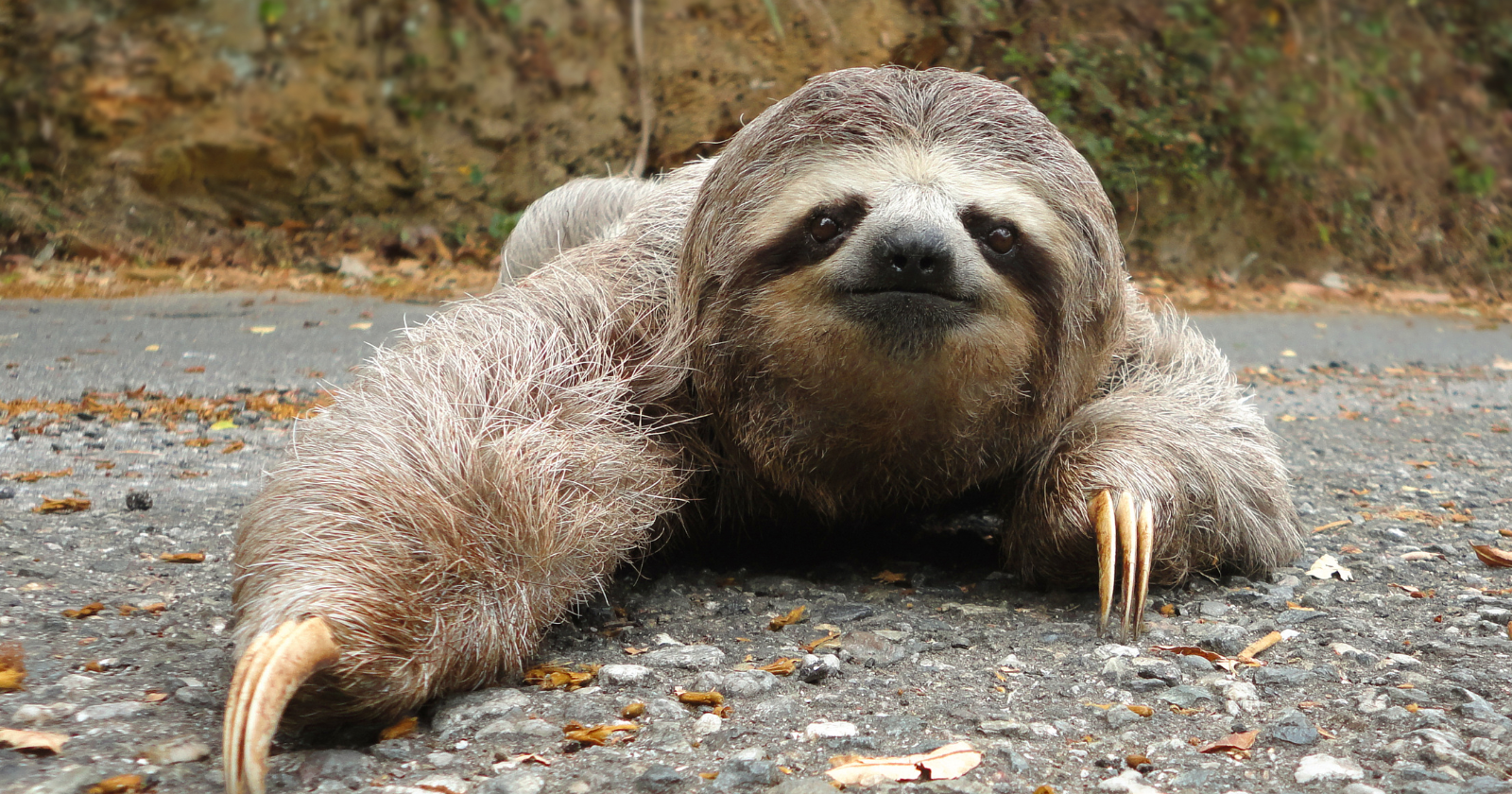
A sloth can take up to 30 days to digest a single leaf, the slowest recorded digestion of any mammal — its stomach stays so full that its abdominal contents can account for more than a third of its body weight, and it climbs down to relieve itself only about once a week

A leaf goes into a sloth and, in the worst case, takes a full month to come out the other end. Across marker trials in three-toed sloths, food passage varied between 11 and 30 days, averaging 16. That is the slowest digestion recorded for any herbivorous mammal, and it is the kind of figure that invites the wrong conclusion. Read on its own, a 30-day transit time looks like a flaw, an animal so badly engineered it can barely process its own dinner. Read closely, the slowness turns out to be the strategy itself, working as designed.

The number that looks like a problem

A note on species before going further: there are two main sloth groups, the three-toed (Bradypus) and the two-toed (Choloepus), and they differ in diet, metabolism, and behaviour. Most of what follows draws on three-toed sloths, with the two-toed numbers flagged where they appear.

The sloth eats leaves, which is a difficult living. Leaves are low in calories, tough with cellulose, and laced with plant toxins. To get anything out of them, a sloth ferments them in a large multi-chambered stomach using symbiotic gut microbes, a slow process by nature. The Sloth Sanctuary of Costa Rica, summarising Rebecca Cliffe’s carmine-marker trials, calls it “the longest digestive rate recorded for any mammal and is the key behind understanding why sloths are so slow!” The same page notes the true rate is still debated and that older 50-day estimates were probably measurement artefacts, so the superlative is best read as a strong claim rather than a settled one.

Either way, the digestion is slow because everything about the sloth is slow. The leaf does not move quickly because nothing in the animal moves quickly. To understand why, you have to look at what the metabolism is doing.

What the low burn is actually for

The sloth’s answer to a low-energy diet is to need very little energy. A study by Jonathan Pauli and M. Zachariah Peery at the University of Wisconsin-Madison found the three-toed sloth had a field metabolic rate lower than any non-hibernating mammal on record. They measured 162 kilojoules per day per kilogram, against 410 for koalas and 583 for howler monkeys, two other animals that also live in trees and eat plants.

Pauli was direct about how far the result ran past expectation. “We really expected them to have low metabolic rates,” he said, “but we found them to have tremendously low energy needs.” The three-toed rate came in, in his words, “much lower than their cousins, the two-toed sloths, and the lowest documented for any mammal.” The qualifier matters: lowest documented, measured in one study of 10 three-toed and 12 two-toed sloths in Costa Rica, not a final word on every sloth that has ever lived.

To hold the burn that low, the sloth partly gives up on keeping a steady body temperature, drifting with the ambient air more like a cold-blooded animal. 

Two numbers that make the system legible

Two more figures show how completely the slowness runs across every system. The first is the stomach. Because food moves through so slowly, the sloth is essentially always full. Researchers have documented abdominal contents accounting for up to 37% of a brown-throated sloth’s body mass, more than a third of the whole animal given over to a  loaded gut.

The second is the bathroom trip. A sloth descends to the forest floor to defecate only about once a week, every five to seven days. This is the most dangerous thing it does. On the ground, a slow-moving sloth is exposed to predators it could not outrun, and the descent is metabolically costly. The payoff, when it comes, is large: sloths can lose up to a third of their body weight in a single bowel movement, their stomachs visibly shrinking.

Why take the risk at all, rather than simply going in the canopy? No one really knows. Cliffe has speculated that the behaviour must matter to be worth it. “Whatever is going on,” she suggested, “it’s got to be kind of life or death for survival,” before adding that her own hunch leans toward reproduction. That is a hypothesis, not a finding. The weekly descent remains one of the open questions in sloth behaviour.

Mastery, not malfunction

Set the figures side by side and they stop looking like a list of handicaps. The 30-day leaf, the more-than-a-third-of-body-weight stomach, the metabolism running well below the predicted rate, the weekly descent: these are not four separate problems an unlucky animal has to manage. They are one strategy, expressed through every system at once. Slow intake demands slow digestion, which demands a large always-full stomach, which is only sustainable at a metabolic rate low enough to make the whole arrangement cheap. By the measure that matters in evolution, the arrangement works: sloths are among the more abundant medium-sized mammals across their range in the forests of Central and South America, the slowness carried all the way through from the gut microbes to the once-a-week climb down the tree.

The post A sloth can take up to 30 days to digest a single leaf, the slowest recorded digestion of any mammal — its stomach stays so full that its abdominal contents can account for more than a third of its body weight, and it climbs down to relieve itself only about once a week appeared first on Space Daily.

❌