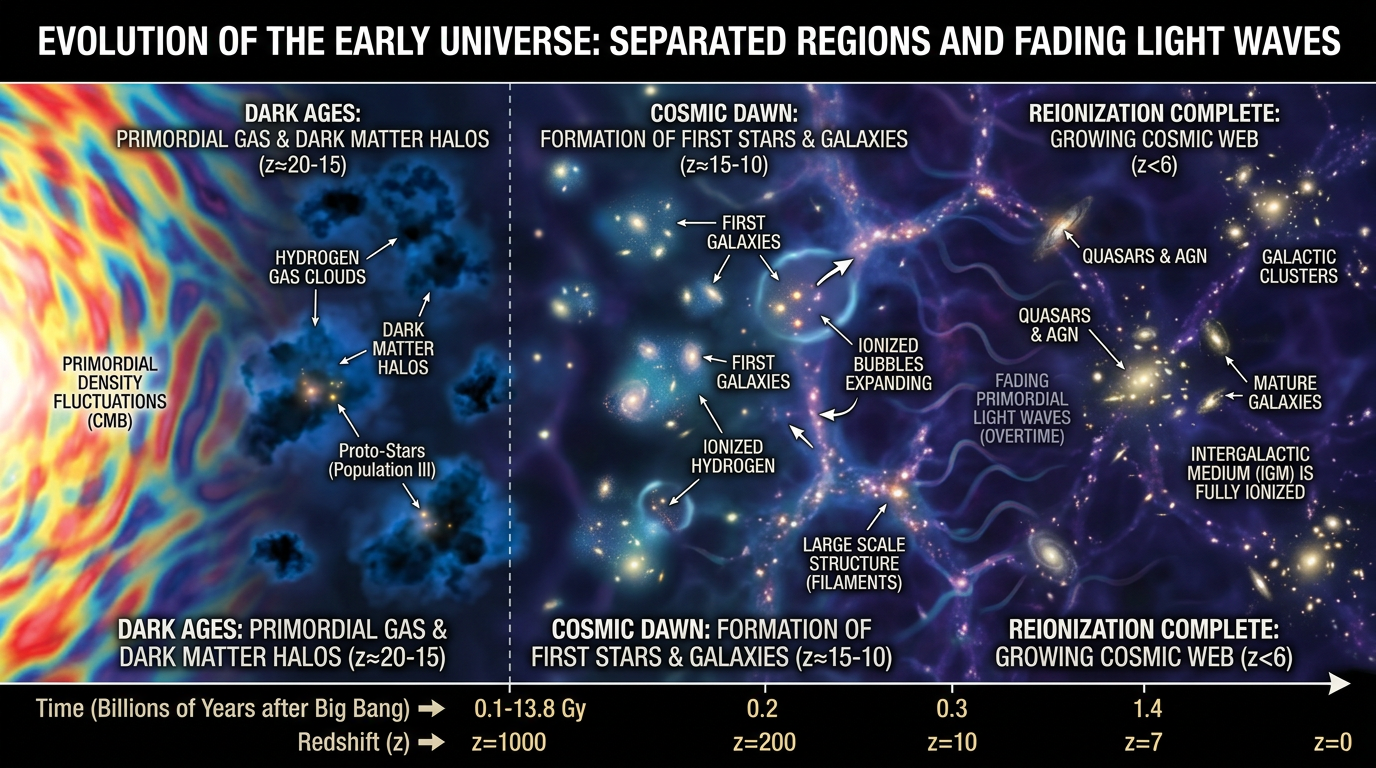
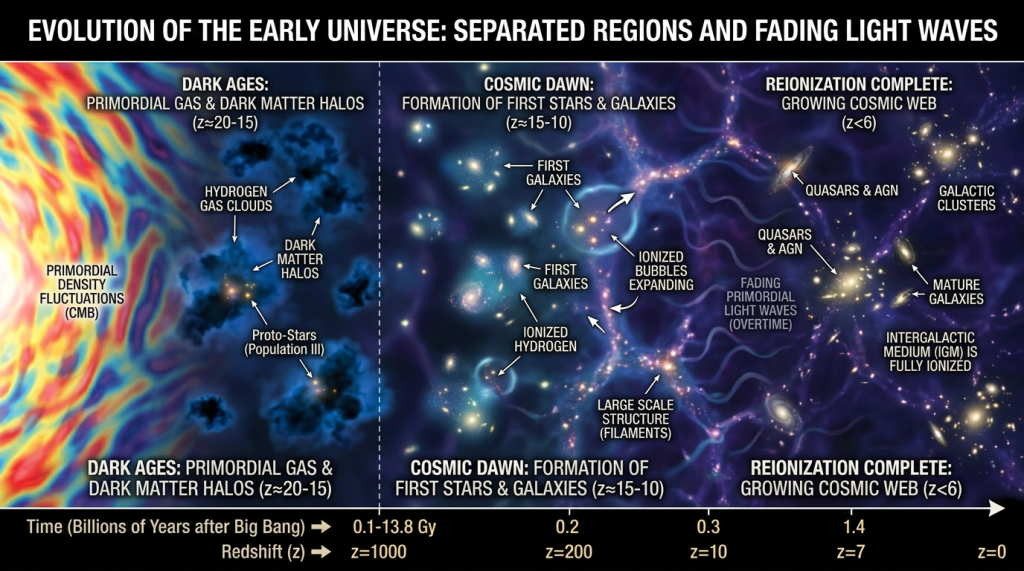
The big bang has causality issues, particularly the "horizon problem." I critique suggested solutions like cosmic inflation and negentropy, arguing that they require unproven concepts. The Creator, as described in the Bible, provides a coherent explanation without causality violations, in contrast with those scientific storytelling fairy tales for adults.
When we look out into space, even with the most powerful telescopes, are we seeing the universe in real time? Are we observing events as they happen, that is, at the time measured on our local clocks?
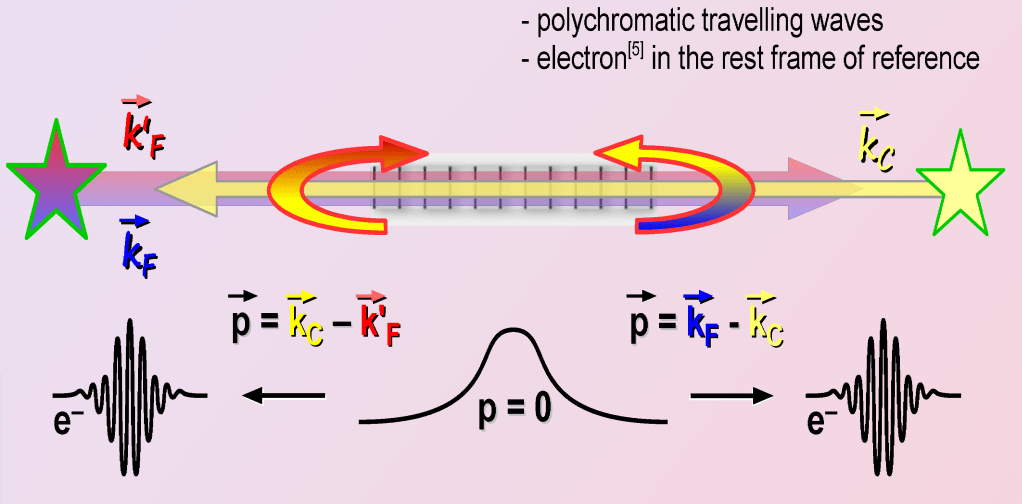
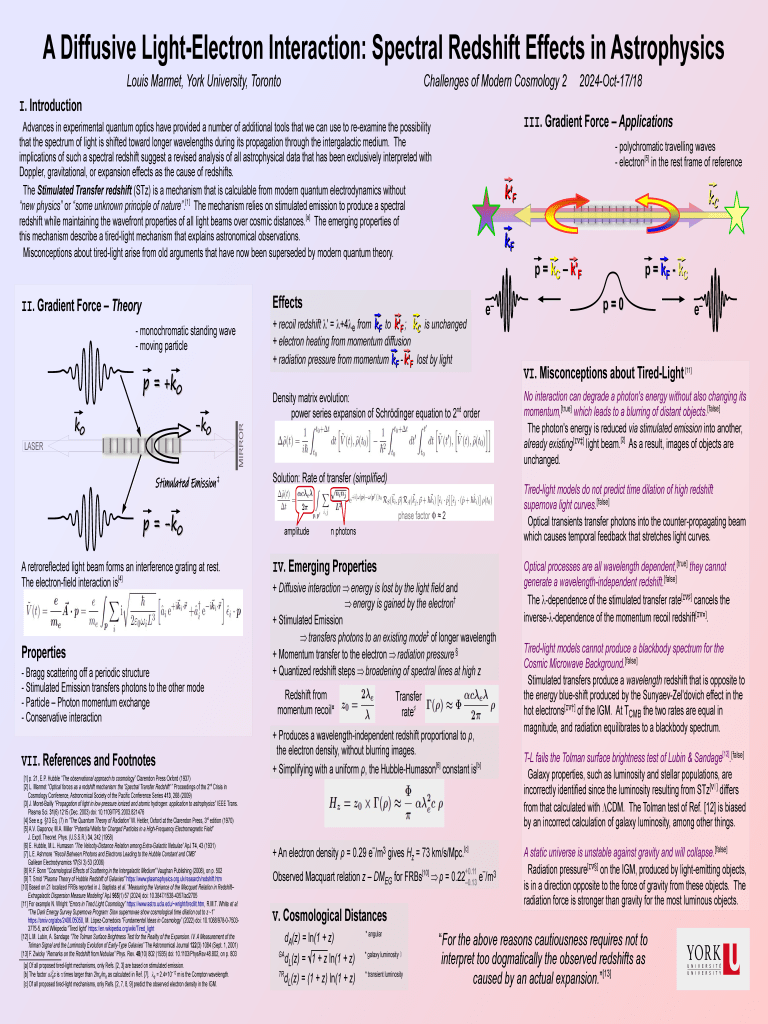
Stimulated Transfer redshift, a newly discovered phenomenon predicted by quantum electrodynamics, results in electron heating and a redshift of light from distant galaxies. The mechanism not only explains the extreme heating of the solar corona, but also provides an alternative explanation for astronomical redshifts without invoking an expanding universe.
The video clip of orbs circling a passenger plane prompts speculation about its origins, including faked footage, extraterrestrial craft, or military technology. After analysis, I dismiss the latter two due to physical impossibilities, instead propose that these are interdimensional craft linked to the spiritual realm.
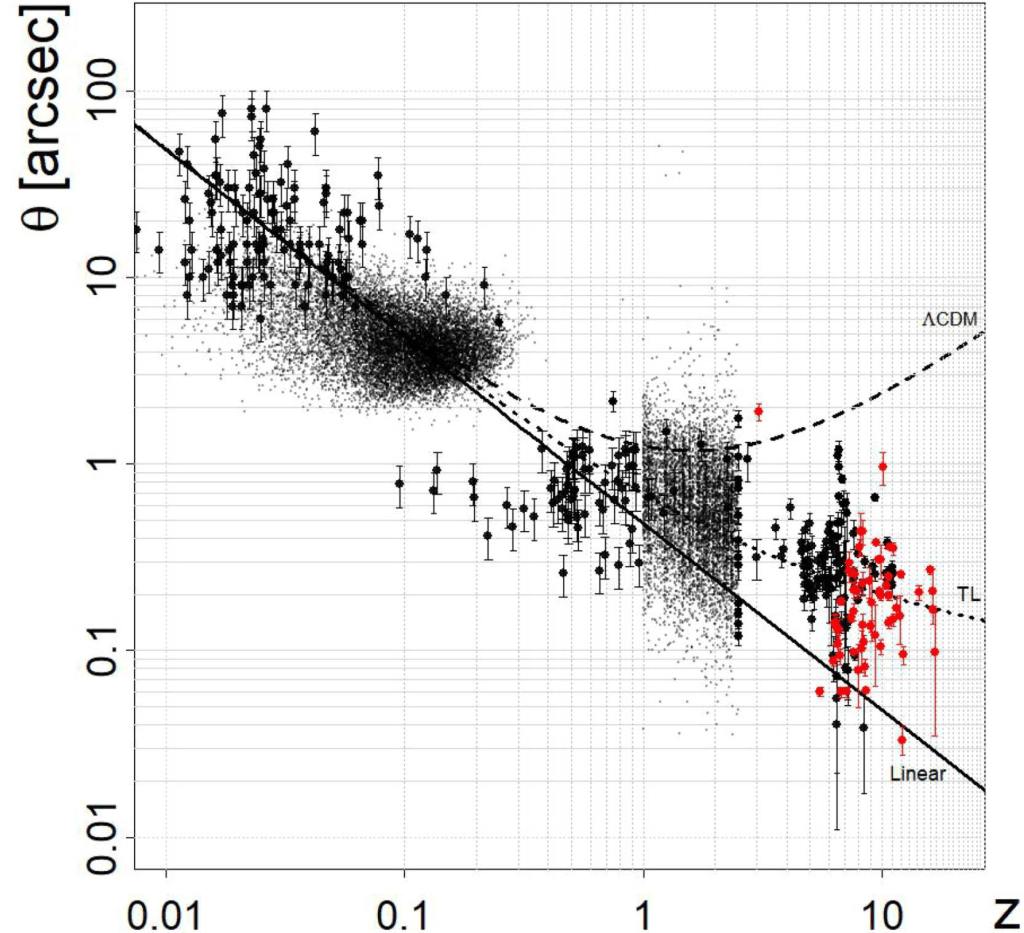
The presentation presented here explores how light from distant galaxies could reach Earth in a universe less than 8,000 years old. This is from a biblical creationist perspective based on the scriptures and science.
There are many sightings of multiple UFOs around important military sites. Also that the US government has covered up the truth of visiting aliens / UFOs for decades. It all adds to the mystique which might be used to get the masses to comply with authoritarian diktats.
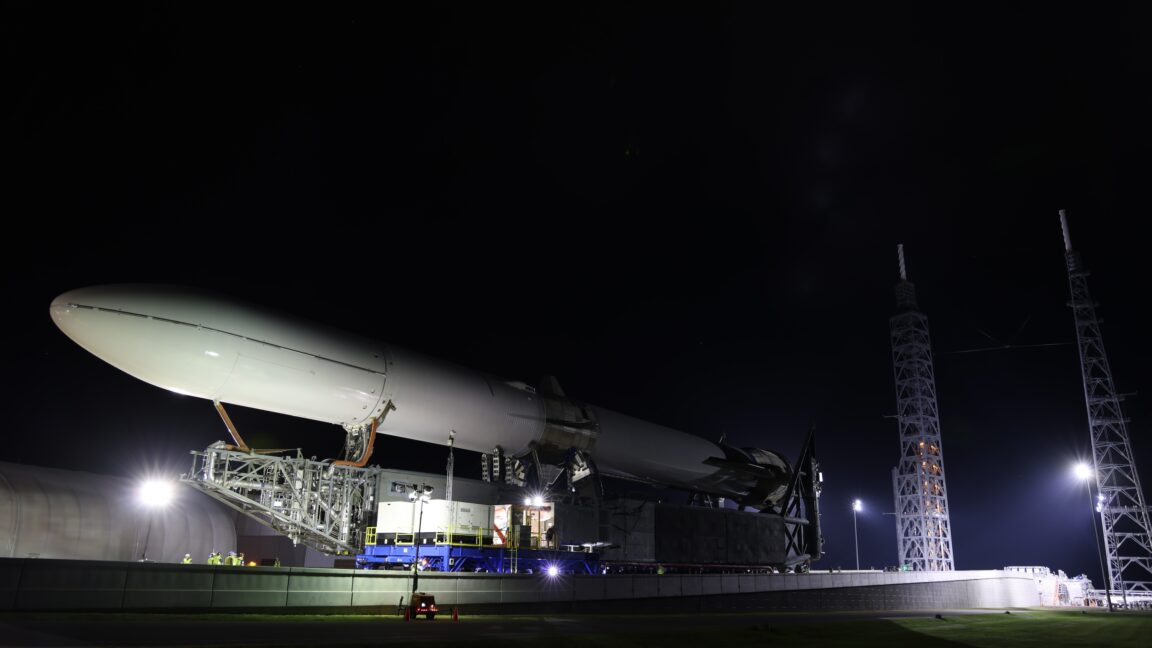
The chief executive of Blue Origin, whose large New Glenn rocket exploded spectacularly less than a week ago at the company's launch site in Florida, vowed Monday night that the company would launch again before the end of 2026.
Writing on the social media site X, Blue Origin's Dave Limp said the company had been able to complete a preliminary survey of the LC-36A launch site.
"Now that we’ve had access to the pad and integration facility, we can share a bit of good news," Limp said. "The propellant farm, oxygen, liquid hydrogen and LNG tanks are all in good shape. This is good luck because these are very long lead items. The water tower is also good."
The chief executive of Blue Origin, whose large New Glenn rocket exploded spectacularly less than a week ago at the company's launch site in Florida, vowed Monday night that the company would launch again before the end of 2026.
Writing on the social media site X, Blue Origin's Dave Limp said the company had been able to complete a preliminary survey of the LC-36A launch site.
"Now that we’ve had access to the pad and integration facility, we can share a bit of good news," Limp said. "The propellant farm, oxygen, liquid hydrogen and LNG tanks are all in good shape. This is good luck because these are very long lead items. The water tower is also good."
The chief executive of Blue Origin, whose large New Glenn rocket exploded spectacularly less than a week ago at the company's launch site in Florida, vowed Monday night that the company would launch again before the end of 2026.
Writing on the social media site X, Blue Origin's Dave Limp said the company had been able to complete a preliminary survey of the LC-36A launch site.
"Now that we’ve had access to the pad and integration facility, we can share a bit of good news," Limp said. "The propellant farm, oxygen, liquid hydrogen and LNG tanks are all in good shape. This is good luck because these are very long lead items. The water tower is also good."
NASA’s Parker Solar Probe captured the first visible light images of Venus from space. The images, taken during two recent flybys, show a faint glow from the surface, revealing features like continents, plains, and plateaus. The images could help scientists learn about Venus’s geology and mineral make-up and understand why it became inhospitable while Earth […]
For just an hour in late 2019, a cosmic mystery revealed itself to astronomers in an unprecedented way: by bending the light of a star as it passed between Earth and a distant galaxy.
The odd event unfolded on the evening of December 18, 2019, as a star in the Large Magellanic Cloud suddenly—and only for a short time—appeared to become brighter. But what could cause an ordinary star to randomly illuminate in this way, becoming a cosmic beacon for only an hour?
Astronomers considered a few possibilities, the most likely being that some kind of object—and one possessing a significant amount of mass—passed in front of the star, warping its light toward Earth through gravitational microlensing.
Now, the curious object that captured the star’s light for an hour in 2019 has been given a name: Phoebe. Unraveling the mystery as to what it actually was constitutes an intriguing question for astronomers, one which has now been tackled in a recent paper.
Gravitational Microlensing
One of the most fascinating phenomena in modern astrophysics is an effect predicted by Einstein, where gravity itself can act like a lens. The result can often produce beautiful and mysterious cosmic features, which include what astronomers call “Einstein rings” as light from a distant object is warped around a nearer, extremely massive object, taking on a circular or ring-like shape.
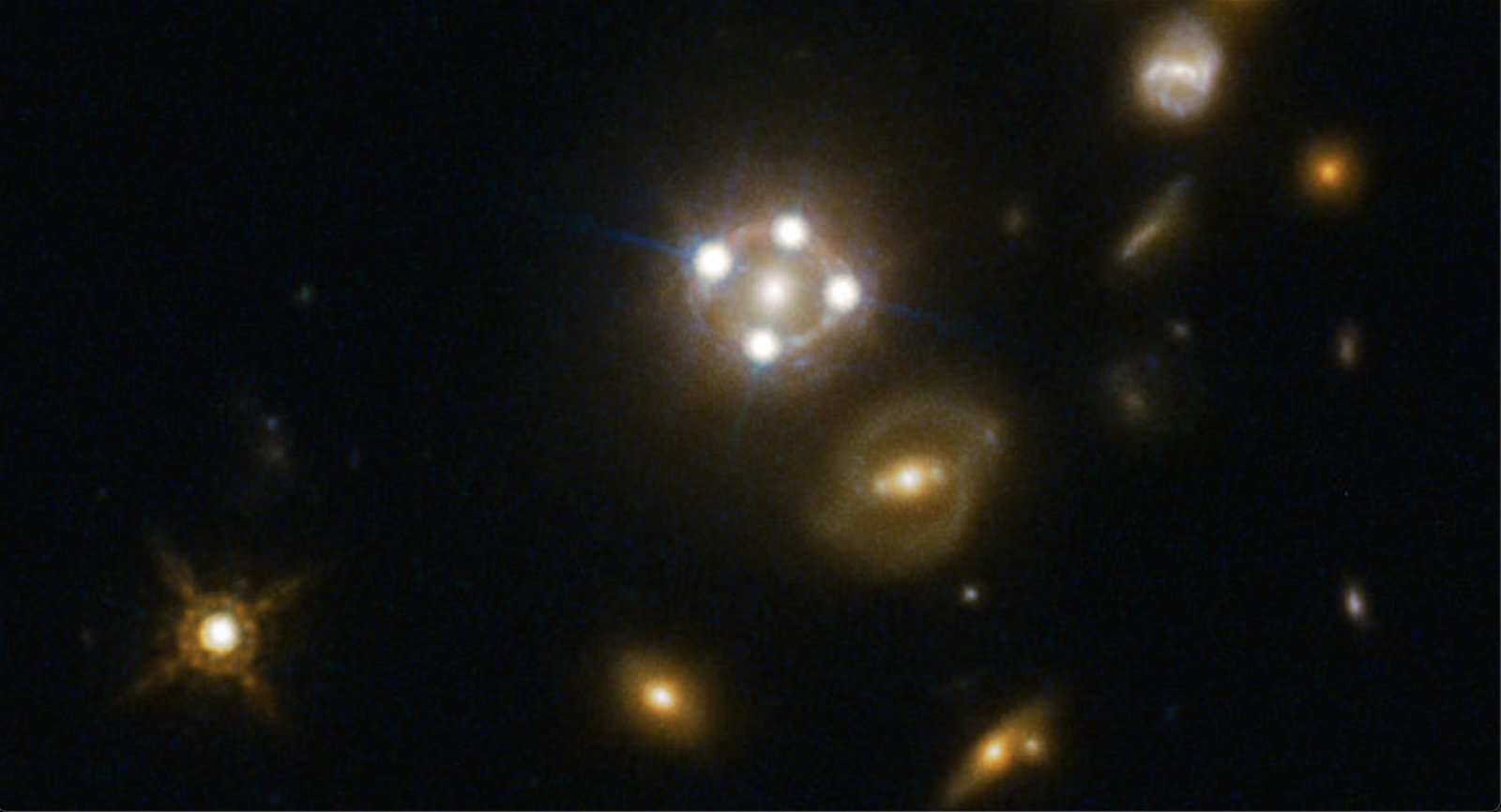
A similar effect, known as an “Einstein cross,” produced the even more unusual appearance of multiple objects surrounding a nearer, massive source of lensing.
An example of an Einstein cross produced by gravitational lensing (Image Credit: ESA/Hubble, NASA, Suyu et al.)
Under most conditions, these objects remain static and can be observed indefinitely. However, in 2019, something very different happened. The light from the star observed in the Large Magellanic Cloud was apparently only subjected to lensing for a short amount of time, meaning that whatever the massive “Phoebe” object was that caused the effect had been in transit.
Possible Explanations
The discovery was revealed as astronomers from Swinburne University in Melbourne spotted Phoebe in the data for a high cadence survey being conducted of the satellite galaxy in question. Now, in a new paper, they propose three possibilities for the mystery object.
One involves a free-floating planet somewhere within the Milky Way, something astronomers also occasionally call “rogue planets.” These cosmic loners come to exist when a planet is ejected from its host system, leaving them to drift through space as lonely planetary wanderers.
Another possibility the team proposes is that the same thing could be going on within the Large Magellanic Cloud itself: a rogue planet originating from that galaxy might have passed in front of the star. If this were ever confirmed, it would mark a notable first, as it would confirm the only extragalactic microlensing planet ever observed by astronomers.
However, a third possibility involves something more unusual: the presence of a primordial black hole, whose origins could go all the way back to the moments immediately after the Big Bang.
Searching for Clues
A major clue to solving the mystery involves the fact that the event took place over just one hour. Given the short duration, it seems most likely that the object was relatively small and therefore able to complete its transit in a short amount of time.
Such a short duration presents challenges for astronomers, since it rests at the threshold of detectability, although the team was able to extract enough information that they could calculate the rough mass of the object, which they believe to have been roughly four times the mass of the moon.
So whatever the object was, it was probably also too small to have been a planet, and also far too small for a normal black hole—the kind produced as a result of stellar collapse—to qualify.
The same couldn’t be said for a primordial black hole, however. Based on additional calculations, the team was also able to demonstrate that Phoebe most likely represents a dark matter object, by around five orders of magnitude greater than other possibilities they looked at.
Overall, this reveals that Phoebe could potentially be one of the oldest objects astronomers have ever spotted, since if its identity as a primordial black hole holds, that would mean its origins go all the way back to the genesis of our universe as we know it.
So based on the team’s work, a star’s mysterious brightening for just one hour in late 2019 might have been even more than an unusual astronomical one-off event: it may have offered us a glimpse at one of the oldest objects in the universe.
Micah Hanks is the Editor-in-Chief and Co-Founder of The Debrief. A longtime reporter on science, defense, and technology with a focus on space and astronomy, he can be reached atmicah@thedebrief.org. Follow him on X @MicahHanks, and at micahhanks.com.
Scientists report the development of a new experimental system that could lead to a breakthrough resource in quantum optics by successfully generating correlated photon pairs using sunlight.
The new system relies on nature’s most abundant light source as the main driver of a nonlinear optical process known as spontaneous parametric down-conversion (SPDC), which normally requires a laser to “pump” a nonlinear crystal.
The breakthrough achievement was reported in Advanced Photonics.
Entangled Photons in Correlated Pairs
In the world of quantum optics, the phenomenon of pairs of correlated or entangled photons is an important asset, despite being a seemingly obscure concept for most of us.
Under normal circumstances, optical scientists rely on spontaneous parametric down-conversion (SPDC), a nonlinear optical process in which devices such as coherent lasers are the primary means of “pumping” a nonlinear crystal. Given that they require the kinds of lasers typically found only in top laboratories, the practical use of SPDC is nonviable under normal conditions.
Finding a practical, real-world substitute has long been an intriguing idea, which prompted researchers at Xiamen University in China to determine whether similar processes could be achieved using the most abundant source of light on Earth: sunlight.
A Challenging Process
This is easier said than done, since sunlight, unlike lasers, is generally unstable due to changes in intensity caused by environmental or atmospheric factors (think clouds, for instance) as well as changes in angle and position that occur naturally throughout the day.
All these factors compromise the precision required for SPDC. Still, the practicality of sunlight, as well as the energy it provides, has continued to make it a potentially feasible alternative that scientists hope might liberate SPDC from its reliance on lab-grade coherent lasers.
If it could be harnessed for such purposes, using sunlight to fuel SPDC would also mean that photon-pair generation could be achieved in remote areas where researchers had never previously considered it possible.
A Solution to SPDC Beyond the Lab?
According to the Xiamen University research team, a new experimental system has been developed that uses sunlight as the only pump source for this process, employing a device that tracks the sun, similar to how equatorial mounts allow astronomers to follow the movement of celestial objects as the Earth spins.
The device, according to researchers, harnesses sunlight at the proper angles throughout the day, which is then fed through a length of optical fiber to an indoor lab. From there, the light is used to pump a potassium titanyl phosphate (KTP) nonlinear crystal.
Periodically Poled Potassium Titanyl Phosphate (PPKTP) crystals are a variety of engineered nonlinear optical crystals that researchers use for high-efficiency frequency conversion and other quantum optics applications, especially for creating entangled photon pairs. They work by altering qualities of light that include its color, phase, or frequency by forcing it to pass through a specially engineered component or structure.
While using sunlight as the sole source of illumination for such processes is complex, the team found that its system successfully produced photon pairs that exhibited strong correlations.
Ghost Imaging for Photon Pair Production
Next came the demonstration phase, where the team used the photon pairs generated by their new system to perform “ghost imaging,” a process that uses correlated photons to produce imagery rather than spatial detection.
Above: In this diagram, the team’s experimental apparatus for use in generating sunlight-based ghost imaging is shown (Image Credit: W. Zhang (Xiamen University)
While conventional laser-based systems can achieve better than 95 percent visibility at comparable pumping power levels, the team’s sunlight-powered technology achieved ghost imaging visibility of 89.7 percent, well within the range of lab-based systems. To further illustrate the system’s use with more detailed spatial structures, the team also used it to produce, appropriately enough, a two-dimensional image of a ghostly face.
Overall, the team says quasi-phase matching in the PPKTP crystal was achievable with the broad spectrum of sunlight, enabling them to generate an abundance of position-correlated photon pairs. Additionally, the team reports that their system yields better signal-to-noise and contrast-to-noise ratios, even given the challenges posed by sunlight variability when used as a primary energy source.
Practical Use Beyond the Lab
“Our research holds substantial significance as it expands the range of viable illumination sources,” the team writes in their recent study, “including scattered light and nontraditional artificial incoherent light—for imaging applications.”
They add that among the potentially promising uses for their technology, space-based quantum information systems may be particularly beneficial, since the team’s new method “enables operation independent of laser sources.”
The team’s new paper, “Sunlight-excited spontaneous parametric down-conversion for ghost imaging,” appeared in Advanced Photonics on April 24, 2026.
Micah Hanks is the Editor-in-Chief and Co-Founder of The Debrief. A longtime reporter on science, defense, and technology with a focus on space and astronomy, he can be reached atmicah@thedebrief.org. Follow him on X @MicahHanks, and at micahhanks.com.
Subtle changes are occurring in the nighttime hours on planet Earth, according to NASA scientists who say an unexpected pattern has surfaced in new maps of the world’s artificial light.
The highly detailed new maps offer a revealing look at how humans are reshaping the nighttime world around our planet, as seen in patterns of variation in artificial light. The findings were detailed in a recent study by an international team of researchers, including scientists from the American space agency.
Drawing from NASA’s Black Marble Data, the maps indicate that, in addition to gradual shifts in the luminous displays that brighten the portions of Earth furthest from the Sun at any given time, there are also some surprises. These include what were recently characterized as “a world flickering with industrial booms and busts, construction, and blackouts,” driven by a range of factors, including industrial efforts.
Black Marble: Peering into the Visible Infrared
Black Marble is a product suite specifically designed to track changes in human infrastructure driven by artificial light. The system is calibrated each day to ensure accurate, up-to-date scientific observations.
“Black Marble is playing a vital role in research on light pollution, illegal fishing, fires, disaster impacts and recovery, and human settlements and associated energy infrastructures,” according to a NASA FAQ page detailing its capabilities.
(Image Credit: NASA Earth Observatory/Michala Garrison/Li, T., et al. 2026.)
At the core of Black Marble is the Visible Infrared Imaging Radiometry Suite (VIIRS), a system that is hosted on a trio of satellite platforms that include the National Oceanic and Atmospheric Administration’s NOAA-20 and NOAA-21, as well as the Suomi NPP.
Equipped with a unique sensor that features gain settings calibrated to capture high-quality low-light imagery of Earth by night, Black Marble offers a wealth of scientific data and stunning imagery of how humans are reshaping the planet through artificial light, capturing light across multiple wavelengths. Specifically, these include green and near-infrared light, as well as specialized filtering techniques for a variety of important applications.
What Maps of Earth’s Artificial Light Reveal
One thing the new maps reveal is how brightness from artificial light varies across densely populated regions, as seen in areas that lie between about 60 degrees south and 70 degrees north.
The new imagery, featured on NASA’s Earth Observatory page, shows areas of yellow and gold, indicating regions that saw significantly more illumination during the period the data were collected, between 2014 and 2022.
Additionally, the maps show purple areas indicating the opposite: greater dimming over the study period.
“Our findings challenge the prevailing perspective that changes in light radiance are largely gradual and unidirectional,” wrote the authors of a recent study published in Nature detailing what the maps reveal. “Instead, the nightlights of Earth are surprisingly dynamic, characterized by frequent and coexisting brightening and dimming.”
The research team found that, on average, every location where changes in artificial light were taking place “underwent 6.6 distinct shifts over the 9 years.”
Global radiance appears to have increased by an estimated 34 percent, the researchers say, although they note that this apparent surge in artificial lighting also effectively masked areas where significant dimming was taking place.
One area where this was particularly evident was on the U.S. West Coast, where cities appear to have increased in brightness proportionally with population increase, whereas along the East Coast, dimming was observed, which the researchers linked to more widespread use of energy-efficient alternatives like LED lighting, along with subtle economic changes and other factors.
Surges in the Eastern World
The areas with the greatest increase in artificial light at night were China and northern India, both of which coincided with areas of ongoing urban development.
Similar to patterns across the Eastern U.S., countries like the United Kingdom and France—especially in major cities like Paris—saw reduced artificial light pollution as LED lighting and other energy-saving conservation efforts were adopted. The sharpest overall drop in lighting occurred near the end of the study, when an energy crisis began impacting many European countries following the Russian invasion of Ukraine.
Micah Hanks is the Editor-in-Chief and Co-Founder of The Debrief. A longtime reporter on science, defense, and technology with a focus on space and astronomy, he can be reached atmicah@thedebrief.org. Follow him on X @MicahHanks, and at micahhanks.com.

 Login
Login