Reading view

There is a planet 63 light-years from Earth where the rain is made of molten glass, the winds blow at 7,000 kilometres per hour, the daytime temperature is over 1,000 degrees Celsius, and the planet itself, viewed from space, is the same deep blue as Earth.
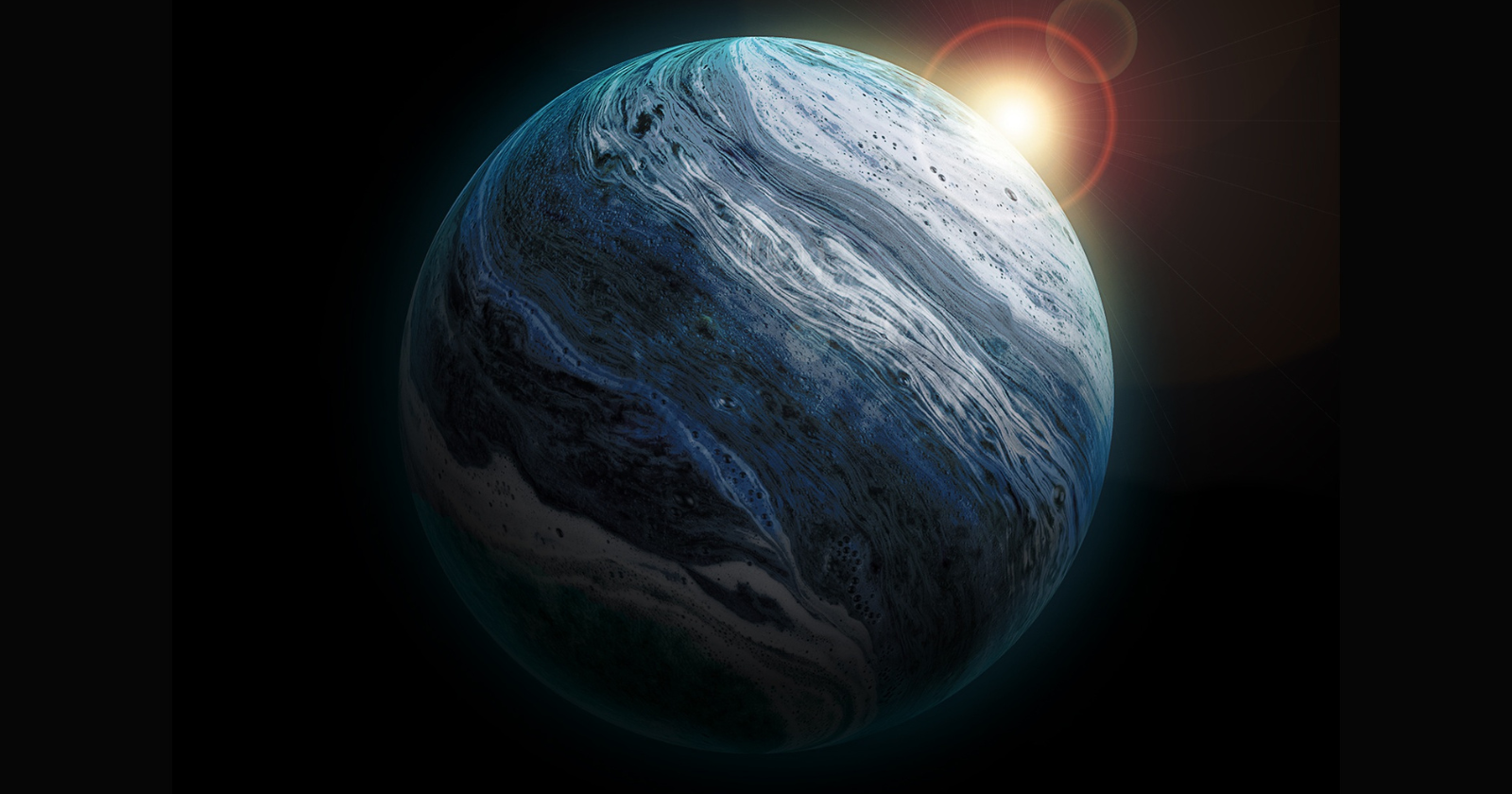
The planet’s name is HD 189733b. It is one of the closest extrasolar planets to Earth that can be studied in detail, and one of the most thoroughly characterised exoplanets in the astronomical literature. Its star, HD 189733, sits in the constellation Vulpecula, the Little Fox, north of the celestial equator. The star itself is faintly visible to a small telescope from any dark backyard in the northern hemisphere on a clear summer night. The planet is not. The planet has never been directly photographed and probably never will be by any current generation of telescope.

Everything that is known about it has been deduced from the way its star’s light changes as the planet passes in front of, alongside, and behind it. The deductions, after twenty years of accumulated work, describe one of the most hostile environments in the catalogued universe.

It was discovered on 5 October 2005 by François Bouchy and colleagues at the Haute-Provence Observatory in southern France, using the Doppler-spectroscopy method to detect the small gravitational tug of the planet on its host star. The planet is approximately the mass and size of Jupiter. It sits roughly 4.6 million kilometres from its star, which is about one-thirtieth of the distance between the Sun and Mercury. It completes one orbit every 2.2 Earth days. At that distance, it is tidally locked. The same hemisphere faces the star at all times.

On the side facing the star, it is approximately 1,000 degrees Celsius.

What it would be like to be there

The astronomers who have studied HD 189733b in detail describe an atmosphere that has no analogue in the solar system. The temperature differential between the planet’s permanently lit day side and its permanently dark night side, measured by NASA’s Spitzer Space Telescope in 2007, is approximately 260 degrees Celsius. That differential drives atmospheric winds at speeds that, in the upper atmosphere on the day side, reach approximately 7,000 kilometres per hour. As the European Space Agency set out in its 2013 announcement of the planet’s confirmed colour, the wind speeds are roughly seven times the speed of sound. On Earth, by comparison, the strongest sustained surface winds ever recorded reached approximately 410 kilometres per hour during a tropical cyclone. HD 189733b’s winds are approximately seventeen times faster.

The atmosphere is composed primarily of hydrogen and helium, like Jupiter’s, but it also contains a high concentration of silicate particles. Silicates are the family of minerals that make up most of the Earth’s crust, including sand, quartz, and the basaltic rocks that form ocean floors. On HD 189733b, at atmospheric temperatures exceeding 1,000 degrees Celsius, silicate particles condense in the atmosphere from gaseous form into small molten droplets of glass.

The droplets do not fall straight down. They are driven sideways by the 7,000 km/h winds, at velocities at which a single droplet impacting a surface would carry the energy of a small artillery shell. The planet, on the side facing its star, is therefore experiencing continuous horizontal precipitation of molten glass at hurricane speeds, at temperatures that would melt aluminium.

The rain is the weather. There is no break in it.

How they figured out it was blue

The visual colour of an exoplanet 63 light-years away cannot be observed in the conventional sense. The planet is far too faint and far too close to its star to be photographed directly. The team that established HD 189733b’s true colour, led by Tom Evans at the University of Oxford, used a technique called secondary eclipse spectroscopy. Their paper, published in Astrophysical Journal Letters on 1 August 2013, describes the method in detail.

The Hubble Space Telescope’s Space Telescope Imaging Spectrograph observed the HD 189733 system continuously through several full orbital cycles of the planet. During each orbit, the planet passes behind the star from the telescope’s perspective. In the moments before and after the planet disappears behind the star, the telescope is receiving light from both the star and the planet. In the moments when the planet is hidden, the telescope is receiving light from the star alone. By subtracting the second measurement from the first, the team could isolate the light reflected by the planet alone.

The drop in brightness as the planet vanished behind its star was measurable specifically in the blue part of the spectrum, between 290 and 450 nanometres. The drop in the red and near-infrared was much smaller. The published interpretation is that the planet reflects blue light at approximately three to four times the rate it reflects red light, which makes it, in the visual range, a deep cobalt blue.

If a human observer could be positioned in space within the HD 189733 system, at a safe distance, the planet would appear to them as a small, deep blue point of light, almost indistinguishable in colour from the way the Earth appears to astronauts looking back from the International Space Station.

The mechanism that produces the blue colour, however, is completely different.

What the blue actually is

Earth appears blue from space for two reasons. The most obvious is the reflection of light from the oceans, which cover approximately 71 per cent of the planet’s surface. The second, less commonly understood, is Rayleigh scattering in the atmosphere. Short-wavelength light, including blue, scatters more efficiently off the molecules of nitrogen and oxygen in the air than long-wavelength light does. This is why the sky is blue. The same effect contributes to the planet’s blue appearance from orbit.

HD 189733b has no oceans and probably no liquid water of any kind. The temperatures are too high for water to exist as a liquid anywhere in the atmosphere. The blue colour comes entirely from the silicate particles. The droplets of molten glass suspended and condensing in the atmosphere scatter blue light preferentially, in much the same way that nitrogen and oxygen molecules in Earth’s atmosphere scatter blue light. The mechanism is a different kind of Rayleigh-like scattering, off particles that are themselves molten and being driven sideways by hurricane-speed winds, but the optical outcome is similar.

HD 189733b is, by the resemblance of one colour to another, a kind of cosmic mimicry. A planet that looks, from sixty-three light-years away, like Earth. A planet that, on inspection, has nothing in common with Earth except the wavelength of the light it reflects.

Why it matters

HD 189733b belongs to a class of exoplanets called hot Jupiters: gas giants similar in mass and composition to Jupiter, orbiting their stars at distances much closer than Mercury orbits the Sun. The first hot Jupiter was discovered in 1995. Since then, several hundred have been confirmed in the published exoplanet catalogue maintained by NASA’s Exoplanet Exploration Program. They are, on the data so far, surprisingly common in the galaxy. They are also, on the same data, completely absent from our own solar system.

The reasons hot Jupiters form, and the processes that drive them inward to such close orbits around their stars, are still subjects of active investigation. HD 189733b, because of its relative closeness to Earth and its bright host star, has become one of the most-studied hot Jupiters in the astronomical literature. The 2013 confirmation of its blue colour was the first time the visible-light colour of any exoplanet had been measured directly. The same observational programme, and follow-ups using the James Webb Space Telescope, have detected water vapour, carbon dioxide, methane, and atmospheric haze in the planet’s upper layers, building up a picture of an atmosphere chemically rich and physically violent at scales no observation of a solar-system planet has matched.

The exoplanet has, in the years since its discovery, been informally referred to in the astronomical literature as the planet where it rains glass. The wind speeds, the temperatures, and the silicate atmospheric chemistry are now well established. The geological details — whether the molten glass droplets reach the planet’s deeper layers as glass or evaporate back into vapour, whether the planet has a coherent solid core or whether its interior is a continuous fluid down to whatever pressure ultimately produces metallic hydrogen — remain open questions.

What 63 light-years actually means

The light that the Hubble Space Telescope captured in 2013 had been travelling toward Earth since approximately 1950. The light Hubble might capture from HD 189733b today began its journey toward us during the early 1960s. The planet itself, in real time, is doing whatever it has continued to do for the four billion years it has existed. The astronomers who study it are studying its past.

If a human civilisation around HD 189733 were, at this moment, observing Earth through the same kind of telescope Hubble represents, they would be looking at images of Earth as it was in 1962. They would be receiving the light Earth was reflecting during the Cuban Missile Crisis, the early Mercury space programme, and the year before the death of John F. Kennedy.

Earth, from sixty-three light-years away, also looks like a deep blue dot.

The difference is that ours, on closer inspection, has oceans.

The post There is a planet 63 light-years from Earth where the rain is made of molten glass, the winds blow at 7,000 kilometres per hour, the daytime temperature is over 1,000 degrees Celsius, and the planet itself, viewed from space, is the same deep blue as Earth. appeared first on Space Daily.
  •  

Astronomers solve mystery of strange cosmic signals with rare two-star system

Astronomers have solved one of the biggest mysteries in radio astronomy by identifying the source of a strange type of cosmic signal that has puzzled scientists for years. An international team led by researchers from the University of Sydney discovered that these unusual signals come from a rare pair of stars locked in a tight […]

The post Astronomers solve mystery of strange cosmic signals with rare two-star system appeared first on Knowridge Science Report.

  •  

Supermassive black holes are pointing jets of plasma directly at Earth — and a population of them may have produced the highest-energy neutrino ever recorded

At the centre of most large galaxies sits a supermassive black hole. When that black hole is actively consuming surrounding material, it becomes what astronomers call an active galactic nucleus. The infalling matter forms a disc, heats to extreme temperatures, and generates powerful jets of plasma that fire outward from the poles at close to the speed of light. When those jets happen to point toward Earth, the object is classified as a blazar. The orientation changes nothing about the physics; it changes what we see. A jet aimed at us delivers an intensity of radiation and particle flux that a sideways-on jet does not, making blazars among the most energetically extreme objects observable in the sky.

This matters for the story of KM3-230213A, the neutrino detected at 01:16 UTC on 13 February 2023 by the KM3NeT/ARCA detector at the bottom of the Mediterranean, roughly 3,450 metres below the surface off the coast of Sicily. With an estimated energy of approximately 220 petaelectronvolts, it remains the most energetic neutrino ever recorded. The previous record, from IceCube’s dataset, sat near 10 PeV. The gap between them is roughly a factor of twenty.

Where that neutrino came from has not been settled. Several candidate explanations have been put forward over the past year. A paper published in the Physical Review Letters in February 2026 argues that a population of blazars is a plausible origin. It is, as the authors are explicit in stating, one hypothesis among several. It has not been confirmed.

How neutrinos are produced in blazars

Inside a blazar jet, protons can be accelerated to extreme energies. When those protons interact with photons or other matter inside the jet, they produce pions, and those pions decay into neutrinos and gamma rays. This mechanism, broadly called hadronic production, is why high-energy neutrino detections and high-energy gamma-ray observations are connected: both are products of the same underlying process.

The connection also gives the hypothesis a testable constraint. Any model that invokes blazars as neutrino sources must not produce more gamma rays than have actually been observed. The extragalactic gamma-ray background has been measured carefully by the Fermi Gamma-ray Space Telescope, and a proposed blazar population cannot exceed it. This is one of the key tests the Bendahman paper applies.

The team used an open-source modelling tool called AM3 to simulate a realistic population of blazars, fixing parameters like magnetic field strength and emission region size to values established by independent observations. They then varied two quantities: the baryonic loading, which governs how much energy is carried by protons relative to electrons and therefore how many neutrinos can be produced; and the proton spectral index, which determines how the energy is distributed across the proton population. For each combination of these parameters, they calculated the expected diffuse neutrino flux and the corresponding gamma-ray output, then compared both against actual measurements from KM3NeT, IceCube, and Fermi.

They found a region of parameter space in which the blazar population could account for an event like KM3-230213A while remaining consistent with the gamma-ray constraints. The result positions blazars as physically viable. It does not identify a specific blazar source for this specific neutrino. The paper’s conclusion is that the scenario is plausible and merits further investigation, not that the question has been answered.

Why the absence of a counterpart complicates things

When a high-energy neutrino is detected, the standard follow-up procedure involves searching for an electromagnetic counterpart, a signal in radio, optical, X-ray, or gamma-ray light arriving from the same direction at approximately the same time. For KM3-230213A, no such counterpart was found. The KM3NeT collaboration conducted searches for correlations with known Galactic and extragalactic sources in the direction of the event (right ascension 94.3 degrees, declination minus 7.8 degrees) and found nothing significant.

The absence of a counterpart rules out some source scenarios more cleanly than others. A single dramatic event, a flare or an outburst from one identified object, would generally be expected to produce an accompanying electromagnetic signal. Its absence is one reason Bendahman and colleagues lean toward a diffuse origin: if the neutrino comes not from one spectacular burst but from the accumulated flux of many blazars integrated across large distances, there may be no single object to point to and no associated flare to find.

As Bendahman noted in the EurekAlert press release accompanying the paper, this reasoning does not completely exclude a point-like source. It does shift the prior toward a diffuse population explanation, which the blazar model provides.

The IceCube constraint and what it requires of any model

The IceCube Neutrino Observatory at the South Pole has been collecting data since 2010 with a larger effective detection volume than KM3NeT had at the time of the event. It has not observed any neutrino comparable to KM3-230213A. This non-detection is not a minor footnote: it imposes a real constraint on the expected rate of ultra-high-energy neutrino events, and any proposed source population must be consistent with it.

The tension between KM3NeT’s detection and IceCube’s non-detection has been estimated at between two and three-and-a-half sigma across several analyses, depending on assumptions about the source spectrum and angular region. That sits below the conventional threshold for claiming a significant discrepancy, but it is not easily waved away either.

The Bendahman paper addresses this directly. Their blazar population model is tested not just against the KM3NeT observation but against IceCube’s upper limits as well. They find a scenario in which blazars can produce a neutrino flux consistent with the KM3NeT detection while the IceCube non-detection remains statistically unremarkable. The model threads the needle, but only within a specific parameter range, and only as a statistical argument about expected rates, not as a demonstrated resolution of the IceCube tension.

What other explanations are on the table

The blazar population hypothesis is the most recent well-developed proposal from the KM3NeT collaboration itself, but it is not the only one circulating in the literature.

The cosmogenic neutrino scenario holds that KM3-230213A was produced not at an astrophysical source but in transit, when an ultra-high-energy cosmic ray collided with a photon from the cosmic microwave background. This process, expected to produce neutrinos in a broadly similar energy range, was analysed in a companion paper to the original Nature publication. The cosmogenic explanation has the advantage of not requiring a specific identified source, but the IceCube non-detection makes any steady, isotropic source harder to sustain without careful tuning.

Separate analyses have examined whether specific known objects could be the source. One paper by researchers at Peking University and Chongqing University investigated associations with gamma-ray bursts, searching a broader region around the event’s coordinates while allowing for possible Lorentz invariance violations that might have delayed the neutrino relative to any accompanying photons. No definitive association was found. Another paper pointed to a specific blazar, PKS 0605-085, as a candidate point source, based on its proximity to the reconstructed direction. The angular uncertainty of KM3-230213A is currently around 1.5 degrees, which leaves a sizeable search cone, and PKS 0605-085 has not been confirmed as the source.

A paper published in Physical Review Letters in March 2026, by Vedran Brdar and Dibya S. Chattopadhyay, takes a different approach entirely, focusing not on where the neutrino came from but on what may have happened during its journey. Their proposal involves sterile neutrinos, hypothetical particles that do not interact via the standard weak force, oscillating into active neutrinos over the 147-kilometre path through rock and seawater to the KM3NeT detector. The same transformation would be far less likely over the 14-kilometre path to IceCube from the same sky position, potentially explaining the discrepancy between detectors. This scenario requires physics beyond the Standard Model and remains speculative. The authors describe it as a possible resolution, not a demonstrated one.

A more exotic proposal, published separately in Physical Review Letters, suggested the event could have originated in the final evaporation of a primordial black hole. This hypothesis is not supported by independent evidence and has not been taken up broadly in the follow-up literature.

What the next data should resolve

KM3NeT/ARCA was operating with 21 detection strings at the time of the event, roughly ten per cent of its planned final configuration. Construction has continued since. The completed detector will cover approximately one cubic kilometre of deep water with around 200,000 photomultiplier tubes, and an online alert system is being developed to notify other observatories within seconds of a candidate high-energy event, enabling the kind of rapid multi-wavelength follow-up that might finally attach a counterpart to the next event of this kind.

The collaboration also expects a positioning system upgrade to tighten the directional reconstruction from the current 1.5 degrees to a target of around 0.1 degrees. That improvement, applied retroactively to KM3-230213A as well as to future detections, would substantially shrink the search cone and either implicate or exclude several of the current candidate sources.

The post Supermassive black holes are pointing jets of plasma directly at Earth — and a population of them may have produced the highest-energy neutrino ever recorded appeared first on Space Daily.

  •  

How heavy can a neutron star get

The physics of neutron stars are almost too fantastic to believe. Something the weight of two Suns compacted to a sphere the size of a city. Each teaspoon of its material would weigh billions of tons. If you’ve done any reading on the topic, you’ve heard these facts before. But despite the intense interest these […]

The post How heavy can a neutron star get appeared first on Knowridge Science Report.

  •  
❌