Linux Developers Consider Retiring The x32 ABI
Read more of this story at Slashdot.
NVIDIA's CEO Jensen Huang is set to take the stage for his GTC Taipei keynote at 8PM PT / 11PM ET. You can watch all the announcements here and embedded below. Rumors have been flying about what to expect from today's presentation, but the big one is the possibility of a partnership with Microsoft and a renewed Windows on ARM push. Microsoft has been teasing a "new era of PC" for its Surface lineup, and expectations are that new ARM processors from NVIDIA, dubbed the N1 and N1X, will be powering these yet-to-be-announced computers.
Microsoft actually tapped NVIDIA's Tegra ARM CPUs for the Surface RT way back in 2012. But that machine was la …
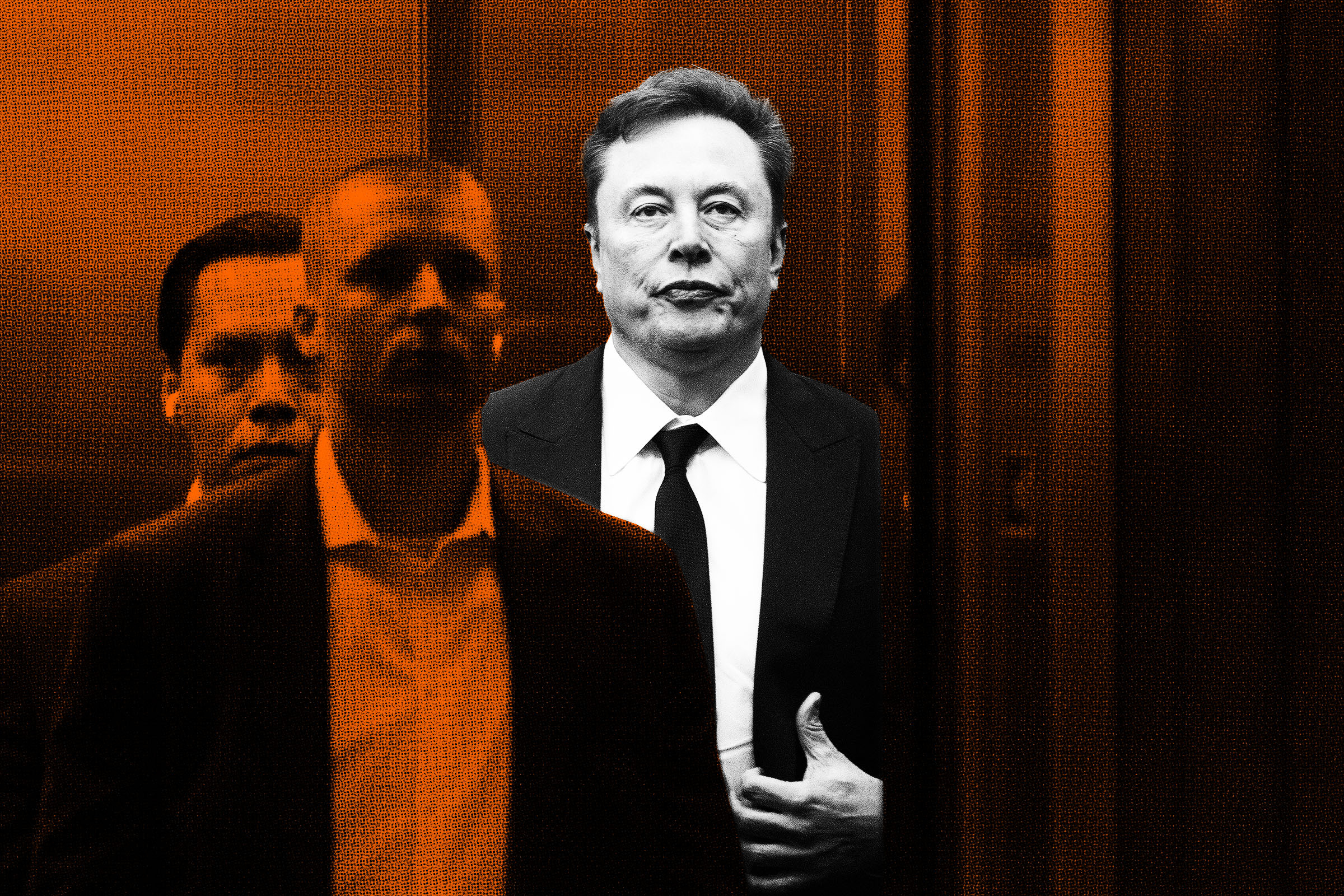
SpaceX has established itself as an influential contractor for the US military, allowing the Pentagon access a proprietary intelligence-based satellite network dubbed Starshield.
The related network of Starlink broadband satellite services has also played a major role in ongoing military conflict, with Ukrainian soldiers making use of thousands of Starlink terminals to bypass internet blackouts amid the country’s war with Russia.
But who gets to use which network, and what SpaceX is getting out of the agreement, remains a hotly contested subject. As Reuters reports, SpaceX officials hiked up the price for Starshield connectivity of the US military’s LUCAS (Low-cost Uncrewed Combat Attack System) suicide drones, which are uncrewed kamikaze aircraft that can identify targets and detonate on impact.
According to the news agency’s sources, SpaceX successfully convinced the military to pay closer to $25,000 per connection, instead of just $5,000, a fivefold increase in the cost per drone.
Since then, SpaceX CEO Elon Musk both angrily accused Reuters of making “false” claims — while simultaneously confirming the agency’s reporting in the very same tweet.
“Reuters article is false,” he wrote. “They made improper use of the Starlink civilian system for military purposes. Direct violation of terms of service.”
In other words, it’s Musk versus Musk: he’s broadly denying Reuters‘ claims while confirming its central thesis that the military and his space company have been butting heads over how its suicide drones were connected.
In a follow-up tweet, Musk clarified that “there is a US government arm of SpaceX called Starshield, which has a different set of satellites than Starlink, which is for civilian use.”
“The company that makes the suicide drones incorrectly used the civilian system, instead of the Starshield,” Musk added.
The billionaire also called attention to what he called a “correction” by Pentagon spokesperson Sean Parnell, who had tweeted that the “Fake News media has the story wrong, again.”
“SpaceX remains a strong and valued partner to the Department of War,” Parnell had tweeted earlier. “The claims in this article are simply not based in reality and do not reflect the close, effective collaboration between our teams.”
The controversy highlights just how much leverage SpaceX has gained over the military. The reporting also couldn’t have come at a worse time, with the company gearing up to go public later this year at an absurd valuation of $2 trillion. SpaceX’s lucrative government contracts, as well as its consumer Starlink service, continue to represent a major chunk of its revenue. Strong-arming the Pentagon into jacked-up prices for Starshield connectivity could send a mixed signal to investors.
The US military started deploying the first LUCAS drones earlier this year during the kidnapping of Venezuelan president Nicolás Maduro, with leadership praising them as “indispensable” in the US-Israel war on Iran.
More on Starshield: SpaceX Has Wildly Screwed Up Its Military Satellites, Researcher Finds
The post Elon Musk Furious at Starlink Being Used for American Suicide Drones appeared first on Futurism.

NASA remains committed to developing a permanent presence on the Moon — space science budgets be damned.
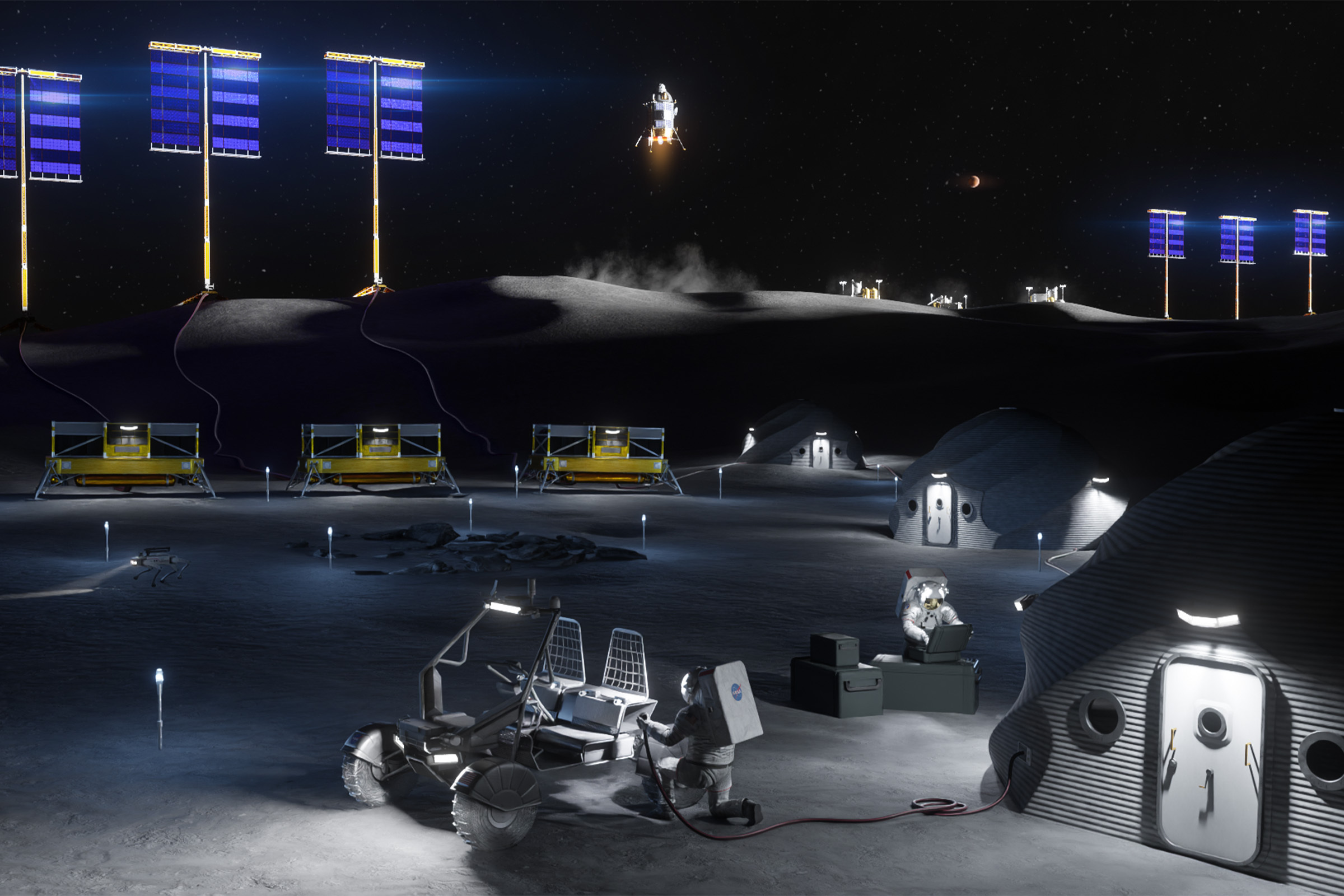
During a Tuesday event, the space agency announced a slew of new contracts worth hundreds of millions of dollars for Moon base infrastructure including lunar rovers, as well as timeframes for upcoming development and exploration missions.
Before the end of this year, NASA wants to send two of Blue Origin’s Blue Moon lunar landers to the Moon’s surface to deliver two lunar terrain vehicles being developed by commercial partners Astrolab and Lunar Outpost.
Meanwhile, Firefly Aerospace, whose Blue Ghost lander successfully touched down on the Moon in March 2025, will develop drones to explore the rugged surface.
And that’s just the buildup to NASA’s Artemis 4 mission, the first planned crewed landing in over half a century, which is tentatively slated for 2028. Artemis 3, which was originally envisioned as a landing attempt, will now involve the testing of either or both Blue Origin’s lander and SpaceX’s Starship in low-Earth orbit sometime next year.
To call NASA’s plans for its Moon base ambitious would be a staggering understatement. For one, Blue Origin’s Blue Moon lander has yet to successfully deliver a payload into Earth’s orbit following a failed attempt last month. Getting to the Moon, softly landing, and releasing a robotic lander will likely prove far more difficult.
The agency laid out plans for three “Moon Base missions,” starting with a Blue Moon delivery of scientific instruments in “fall 2026,” followed by a delivery of “more than 1,100 pounds of cargo on Astrobotic’s Griffin lander,” including a rover.
The third mission, which is “also targeted for this year,” will deliver even more scientific payloads, including ones being developed by the European Space Agency and the Korea Astronomy and Space Science Institute.
“These missions are the first of more than a dozen missions that will be announced this year, each designed to generate operational data and reduce risk ahead of crewed Artemis surface activities,” the agency wrote in its writeup of Tuesday’s event.
The base itself will span hundreds of square miles, according to Moon base program executive Carlos Garcia-Galan. Drones, called MoonFall, will mark the perimeter of said base in what could inevitably be a highly contentious marking of territory.
MoonFall, an initiative led by NASA’s Jet Propulsion Lab, aims to land near the lunar South Pole by 2028. High-definition optical cameras attached to drones measuring roughly seven feet across and four feet tall will take detailed imagery of the base’s envisioned terrain far ahead of any crewed landings.
In a note, NASA administrator Jared Isaacman vowed that the US would “never give up on the Moon again” by building out its Artemis program.
“We are going back to the Moon, building the base, and doing the other things,” he wrote, referencing John F. Kennedy’s iconic 1962 speech about going to the Moon. “This is no longer something to read in the history books, you are making history.”
However, given the vast degree of complexity involved, successfully launching not just one but a whole slew of missions on the surface of the Moon before the end of 2026 could soon get a massive reality check. In other words, we wouldn’t be shocked to hear from even more delays as Isaacman’s NASA dials up the pressure to build out a permanent presence on the Moon.
If deadlines were to slip — which, given historical precedent, is far from out of the question — the US could be beaten to the punch by the end of this decade after all, as experts continue to warn.
“It would not surprise me at all if China gets there first,” Open University lunar scientist Simeon Barber told the BBC.
More on the Moon base: NASA Announces Gigantic Armada of Moon Launches to “Build President Trump’s Moon Base,” Starting Next Year
The post NASA Releases Sweeping Plans for Moon Base appeared first on Futurism.

The idea of manually tampering with our atmosphere to combat climate change, such as by seeding clouds with reflective particles to dim the Sun, remains extremely controversial. These acts of geoengineering could deliver us from climate doom, the thinking goes, or backfire spectacularly in ways we never anticipated — which is why scientists are proceeding with caution.
But to an extent, something like this is already happening on a global scale. In a new study published in the journal Earth’s Future, researchers warn that the air pollution caused by satellites burning up in the Earth’s atmosphere is already decreasing the amount of sunlight reaching the Earth’s surface. And if the space industry continues growing at its current pace, the impact could eventually become significant enough to alter the entire climate.
Project lead and coauthor Eloise Marais, a professor of atmospheric chemistry and air quality at University College London, laid out the stakes in a striking comparison: “The space industry pollution is like a small-scale, unregulated geoengineering experiment that could have many unintended and serious environmental consequences,” she warned in a statement about the work.
Space launches have accelerated in the past decade and have tripled in the past five years, spearheaded by companies like Elon Musk’s SpaceX. A good chunk of the launches are to bring satellites into the Earth’s orbit. SpaceX’s Starlink internet service boasts nearly 12,000 of them (and Musk wants to launch a million more). These huge networks are referred to as megaconstellations, signaling a new paradigm in how satellites are used and deployed. Competitors are racing to build their own megaconstellations, including Jeff Bezos’ Blue Origin, which plans to deploy over 5,000 satellites.
These satellites are expendable. They’re designed to deorbit after a few years and then burn up — harmlessly, we’re told — in the Earth’s atmosphere, and constantly need to be replenished. But scientists have begun paying closer attention to the environmental impact of treating the atmosphere like a crematorium for satellites, with early studies finding that they release metals like lead and aluminum. Other research has raised the ominous possibility that some of these metal pollutants could trigger a chain reaction that lays waste to the ozone.
In this latest work, the researchers modeled the major pollutants from de-orbited megaconstellation satellites between 2020 and 2022. In 2020, the satellites accounted for 25 percent of the total climate impact from the space industry and will climb to 42 percent by 2029. By that same year, they project that the accumulated pollutants released by burning satellites will produce similar effects to solar geoengineering strategies, like aerosol injection.
The researchers also mapped the impact of rocket launches, which release soot particles. Once released in the upper atmosphere, the soot stays there for years, unlike soot released from the ground, which gets washed away by rainfall. By 2029, rocket launches will emit about 870 metric tons into the atmosphere annually, which is roughly equal to the total soot emissions from passenger cars in the UK, a release notes.
“Currently the impact on the atmosphere is small, so we still have the chance to act early before it becomes a more serious issue that is harder to reverse or repair,” Marais said in the statement. “So far there has been limited effort to effectively regulate this type of pollution.”
“The cooling effect from the reduction in sunlight that we calculate with our models may sound like a welcome change against the backdrop of global warming,” she added, “but we need to be extremely cautious.”
More on climate: Earth Screams in Agony as Microplastics Found to Increase Global Warming
The post Research Paper Warns That There’s a Massive Experiment at Work to Geoengineer the Earth’s Climate appeared first on Futurism.

The future of space travel is pay to play, but that might not be a bad thing.
During the final 15 minutes counting down to SpaceX’s aborted Starship V3 mission on Thursday, Elon Musk’s space company revealed a fascinating tidbit: the man who’s going to lead SpaceX’s first crewed mission to Mars.
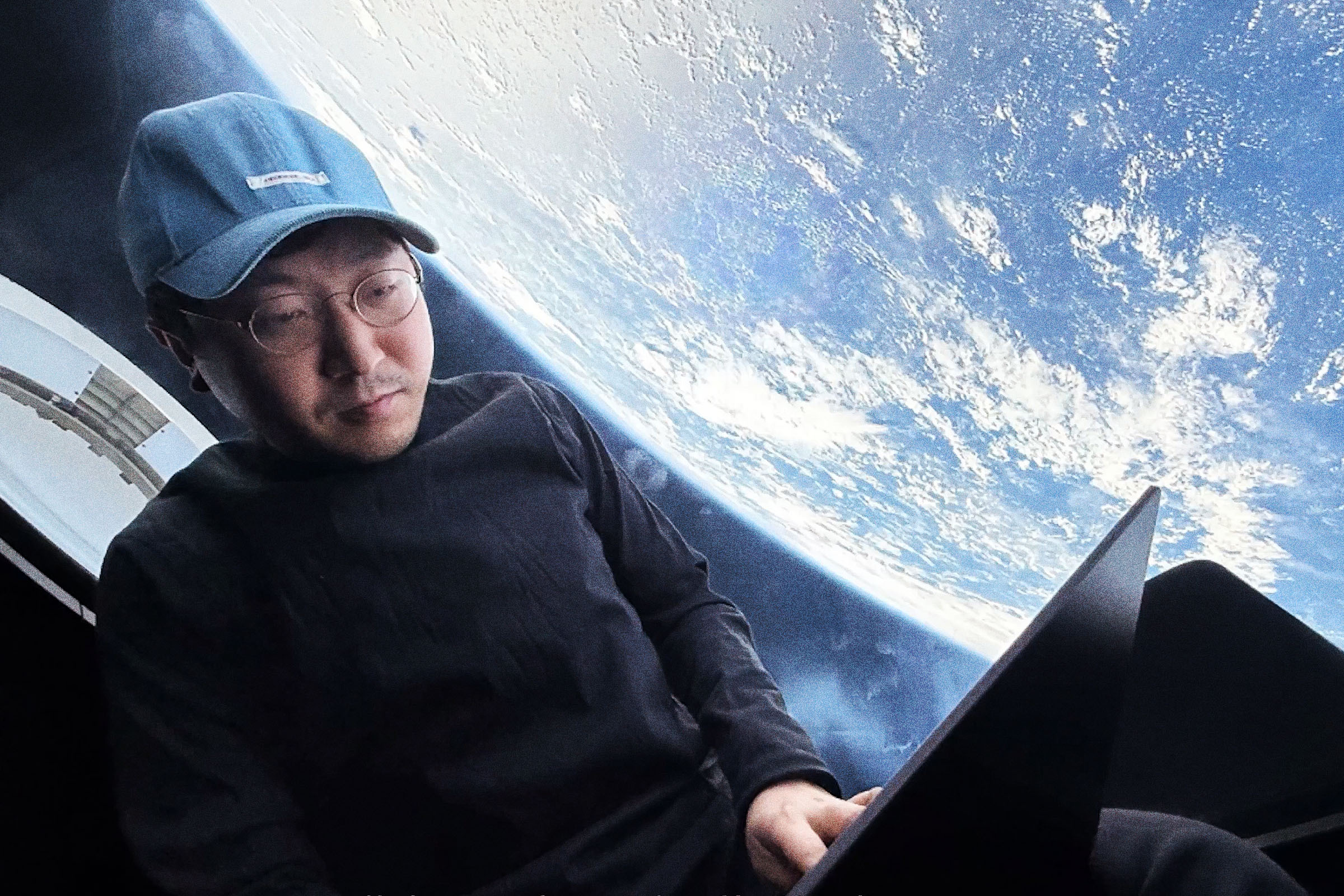
Spotted by Gizmodo, broadcasters on the company’s live feed announced that crypto billionaire Chun Wang has been tapped to lead humanity’s first interplanetary human flight.
At first glance, Wang might seem like an unlikely candidate for such a monumental task. A software developer who dropped out of college, Wang made his fortune by developing one of China’s first and most successful Bitcoin mining pools — striking it rich just before the Chinese government shut all of that crypto stuff down in 2021.
However, his resume includes another space flight, SpaceX’s April 2025 Fram2 mission, which he personally funded in order to secure a spot as mission leader. Though the media made a spectacle of that brief trip, Christopher Combs, associate dean of research at the University of Texas’ Klesse College of Engineering and Integrated Design described it as a “notch above a gimmick, but not exactly a groundbreaking milestone.”
The Mars trip, which would take up to two years, would be a vastly greater challenge on the billionaire’s mind and body — though Wang seems pretty gung-ho about it.
“I can stare at the map view on airplanes all the way from takeoff through landing, so I think I’m going to enjoy the trip,” Wang told viewers on Thursday.
It’s unknown who else will be making the Mars trip alongside Wang, and whether or not he’s funding it. Either way, the prospect that a billionaire could be willfully catapulting himself around 140 million miles from Earth left some critics buzzing on social media.
“This is the first time I have been 100 percent behind a SpaceX decision,” journalist David Perry wrote on Bluesky. “I hope they launch really soon.”
Writer Dara Moskowitz Grumdahl joked that it’s a “great start.”
“But,” she concluded, “I think all the crypto billionaires should go, it’s important and will bring America hope.”
More on SpaceX: SpaceX Stock May Actually Be a Horrendous Investment
The post SpaceX Announces Plans to Put Billionaire on First Rocket to Mars appeared first on Futurism.

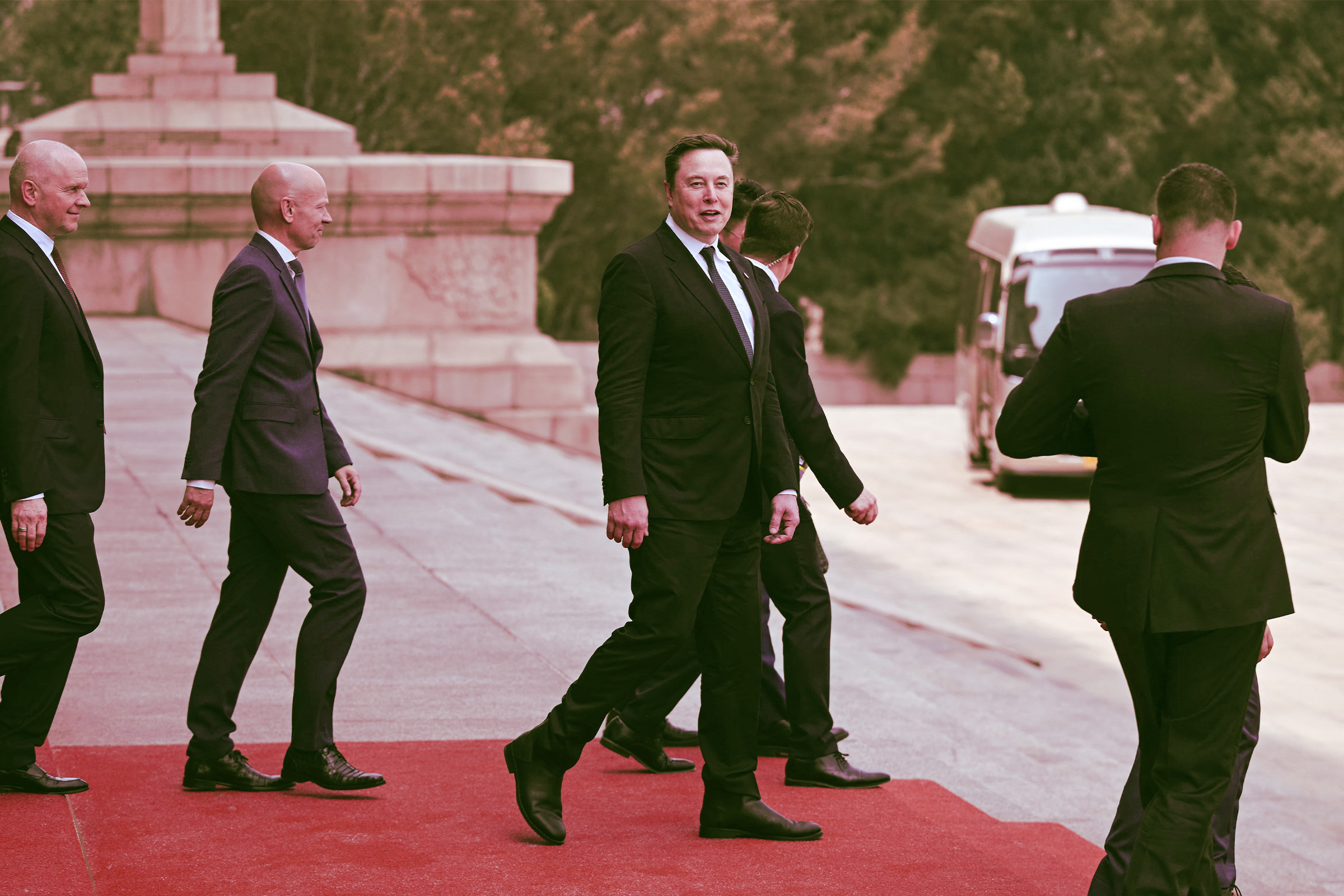
Elon Musk has just pulled back the curtain on the biggest public stock offering in history, and the numbers are ghastly.
SpaceX, which is expected to go public on Nasdaq in June, just released the first round of financial summaries all companies are required to share when they’re about to sell stock to the public for the first time. The documents reveal Musk is targeting a raise of at least $80 billion — for a proposed valuation of $1.75 trillion — which would immediately make the rocket company one of the top 10 most valuable conglomerates in the US, Axios calculated.
With that kind of valuation in mind, one might expect SpaceX to be massively profitable going into its debut — but that’d be dead wrong.
According to the financial statement, the company lost $4.9 billion in 2025, even though it brought in around $18.7 billion in revenue. It’s not like that situation is about to turn around in time for the IPO, either: over the first three months of 2026, SpaceX posted further net losses of $4.3 billion.
As analyst Scott Melker pointed out, SpaceX wants investors to believe the company will someday make 93 times what it currently makes in a year. To understand why that’s absolutely nuts, just peep the numbers from the previous IPO record holder, Saudi Aramco, the state oil company of Saudi Arabia.
Commonly understood to be the most profitable corporation on Earth, Aramco went public in 2019. When it did, investors accepted a valuation about 6 times more than what Aramco made in yearly sales, raising $26 billion for a valuation of $1.7 trillion, as one analyst noted. SpaceX is asking for about 15 times more than that.
“Bro, have you seen inflation lately? Ketamine is expensive!” one stock analyst razzed on X-formerly-Twitter (that platform, by the way, has all but imploded under Musk’s leadership, with revenue down around 59 percent compared to 2021, the year before he took over).
To justify its wild revenue ambitions, SpaceX estimates its total addressable market — the maximum money it could make if everything goes perfectly — at $28.5 trillion. Of that, nearly 80 percent is attributed to the imaginary landscape of “enterprise applications,” which the document describes as a buffet of various Earth-shattering AI tools that have yet to be built, including one agentic AI platform called “Macrohard.”
Put it all together, and the numbers only work if you put your faith in unprecedented earnings from technology that doesn’t even exist, in a market as infinite and uncharted as outer space itself.
More on investments: It Seems a Lot Like Trump Accidentally Invested $1 Million in a Conveyor Belt Sushi Restaurant Thinking It Was an AI Hardware Company
The post SpaceX Stock May Actually Be a Horrendous Investment appeared first on Futurism.


The rise of generative AI (genAI) technology has prompted a growing debate about the future of software-as-a-service (SaaS) business models.
Some of the fears are overblown: enterprises are unlikely to vibe-code their own applications to replace their SaaS suppliers anytime soon, while software vendors have yet to see per-seat sales fall off due to mass automation of white-collar jobs. (In fact, some now predict the opposite will happen.)
At the same time, AI has the potential to change the way work is carried out, with AI agents empowered to interact with software applications on behalf of users. For software vendors, that could mean a future where applications are accessed less through traditional user interfaces as AI agents connect via APIs.
It’s an inevitable shift, says Box CEO Aaron Levie, and one that requires software vendors to adapt their existing products and business models to prepare for agent workflows.
Computerworld recently spoke with Levie about how Box — and other SaaS vendors — can adapt as agentic AI threatens to upend existing business models. (This interview has been edited for clarity.)
Discussion about a “SaaS-pocalypse” has died down recently, and software stocks have rebounded. At the same time, it seems clear the adoption of AI agents could change how workers interact with software. How can companies like Box adapt to this new environment? If AI increasingly becomes the interface users interact with, where does the long-term value lie? “People are realizing that you’re not going to rebuild a lot of the systems that people were kind of claiming you would [with vibe-coding]; it just doesn’t make sense. So, that part is sort of dissipating. However, headless software and the ability to use your systems via AI is obviously going to happen, there’s no question.
“So, I think the conversation is shifting from ‘AI disrupts software’ to ‘AI is going to be the biggest consumer and user of software going forward.’ And for that, the main thing is: can you have a business model that allows you to actually monetize the consumption of those agents using your underlying tools? We’re fortunately built for that; we’ve had an API business model basically forever, so we’re well prepared.
“There’ll be some companies that have to pivot a little bit more significantly over time — there’s no question that will happen in a bunch of organizations. We’re big believers that AI will be the biggest user and interface for the future of software.”
How important is it for Box to retain that interaction with human workers, rather than becoming more of the underlying layer AI agents interact with? “I would say that we’re totally comfortable with that shift. When you have AI agents, you still need a place to be able to secure the data — you need to protect it, you need to govern it, you need to make sure you know who’s accessing it. None of that changes in the world of AI. In fact, if anything, it actually increases.
“We don’t really care if it’s an agent using the data, an application using the data, a person using the data — we want to be the best content management system that connects your information to all of those applications.”
How does that perspective feed into your product development and roadmap “It basically means that we need to be a headless platform. That means customers need to be able to access their data via MCP inside of ChatGPT, inside of Claude, inside of all these systems. It means that we care as much about our APIs and access to those APIs as we now do our user experience. We have to make sure that both of those environments are as simple and clean as possible, and as usable as possible.
“It’s basically as if there’s another constituent now in our ecosystem that we have to go and pay attention to.
“We need to be the best place to manage your content, and then wherever you want to work with it from, we’re totally fine. So, if you want to work with your files from your desktop, from Claude Cowork, from ChatGPT Codex — we just want to make sure we are universally accessible across every single place that people want to work with their data.”
Could that mean changes around how you price access to your software? Do you expect a shift to usage-based pricing? “Not as much as is probably being talked about online, because seats still make sense for the employee and the end user. Even when an agent is doing work on your data, it’s still you invoking that agent. It sort of makes sense that the seat is still attached to the underlying end user employee, even though an agent is going to be doing work on your data.
“We think the seat model will be quite durable over time. What this does is just add another business model, where you have agent-only interactions; those will be primarily coming through the API, and then that will be a consumption model.”
What are your thoughts on outcome-based pricing? Is that something you look at? “We do one thing that’s close to that — we have the Box Agent that does things like data extraction. It extracts your data and we charge based on the number of pages that you want to extract data from. So there are some things that approximate outcomes, but not at the level of resolving a customer service ticket or something like that, that maybe has been talked about. We’re probably going to be more aligned to…the amount of compute that that is used.”
What are your conversations with customers around moving to a usage-based model? A lot of organizations are used to fixed monthly subscriptions — can metered AI agents become problematic? “I think it definitely can be. This is sort of a common tension in general.… We saw this with cloud computing, for instance. The difference with cloud computing is that cloud was relatively centralized, versus the use of AI and tokens are much more diffuse. That’s a big difference that companies have to think about.
“There’s always this tension: you can pre-buy and have a subscription, but then you might be overpaying for periods where you’re not using it as much. Or you can only pay for what you use, in which case you might have some volatility in the pricing of what happens.”
How are customers progressing in adopting AI agents — particularly, the move from pilot projects to production. What are some of the biggest barriers to wider deployment of agents? “We’re very much moving from coding agents to the rest of knowledge work: this is the jump that’s starting to occur. In that, one of the big questions and challenges is how companies get agents the right context and information to work with — how do they enable agents with the right level of constraints in their organization from a security and compliance standpoint? This is our kind of reason to exist, and what we’re helping our customers on.
“Overall, it’s just a transformational moment in the enterprise. Every customer that I talk to, every dinner that we have with customers, every CIO meeting I’m in, every CEO meeting I’m in, it’s all about agents.
“Agents have thrown the whole world into this kind of dynamic period of, ‘What does the shape of your organization look like? What’s the future of a manager versus an individual contributor? What are the workflows that you can go and execute on?’ There are so many different ways that this is starting to change.”
You were part of another major industry transition with the adoption of cloud computing. Are there similarities you see or major differences that customers can learn from? “The big difference between [them] is that, with cloud, you could centralize the deployment of and management of.Cloud really only affected 3% of your organization that was moving from the data center to the cloud, and then every employee got better products and experience as a result of that. The change was really kind of fairly concentrated. AI affects every single employee in the company. It’s a radically different type of transformation of what work looks like.
“There are only so many analogies you can make to cloud before quickly you realize, no, this is actually a different transformation. Maybe it’s even closer to the PC, in the sense of every single worker has to change what they’re doing to be productive. It’s not a technology delivery shift, it’s a fundamental reworking of every workflow in the enterprise. And so that’s I think what most companies are going through right now.”

After completing what it said was a “thorough assessment,” the FAA on Wednesday ordered SpaceX to investigate anomalies that its Super Heavy booster experienced during the 12th test flight of its behemoth Starship rocket. The aviation regulator on Tuesday was ambiguous about whether an investigation would be required into Starship Flight 12, which launched Friday evening fromContinue reading "FAA grounds SpaceX Starship after V3 debut"
The post FAA grounds SpaceX Starship after V3 debut appeared first on Astronomy Magazine.
Ahead of what observers anticipate will be the largest initial public offering (IPO) in history, SpaceX debuted its largest rocket yet on a mostly successful mission. Though Starship and the Super Heavy booster — which combined stand more than 400 feet (122 meters) tall, nearly the length of a Boeing 777 — suffered multiple engineContinue reading "What Starship Flight 12 means for SpaceX’s IPO"
The post What Starship Flight 12 means for SpaceX’s IPO appeared first on Astronomy Magazine.
Most of the Steam Deck imitators on the market right now use AMD silicon, specifically the Ryzen Z-series chips. These are the same chips AMD makes for regular laptops, but with different power settings better suited to a compact handheld system. There are handhelds based on Intel silicon (MSI’s Claw is the main one), but Intel hasn’t yet tried making silicon marketed specifically for that purpose.
Today, the company is throwing its hat in the ring with two Intel Arc G-series processors, which will allow gaming handhelds to leverage the company's genuinely quite good Arc B-series integrated GPUs. Intel says that several Arc G-series handhelds will arrive "starting in June 2026, with broader availability throughout the year." These systems will include a new MSI Claw model, a Predator Atlas 8 from Acer, and a device from OneXPlayer.
Intel normally uses its "Arc" branding for integrated and dedicated GPUs, but in this case, the "Arc" brand encompasses the entire chip, including the CPU, GPU, NPU, and other components.


© Intel
For years, owners of Vizio smart TVs have had little control over the software running on their sets—software that can track viewing habits, push ads, and generally shape the experience of using the device.
The Software Freedom Conservancy (SFC), a US nonprofit that promotes and provides legal support for free and open source software projects, isn't happy about that—so much so that it has spent eight years trying to force the release of the complete source code for Vizio's Linux-based smart TV operating system.
Now, after numerous delays since the SFC filed suit in 2021, a California jury will decide in August whether Vizio must provide that code in executable form to SFC and any Vizio TV owner who wants it.


© Aurich Lawson | Getty Images
As of July 1, at 12:01 am UTC—or June 30 at 8:01 pm ET—people seeking access to Plex's media server features through a one-time purchase will have to pay $750. That’s three times the current price of $250.
The new price will not affect current Lifetime Plex Pass holders.
A Lifetime Plex Pass allows you to stream from your own Plex Media Server to a device connected to your own network, to stream from the server remotely, and to allow others to stream remotely from your server.


© Plex
Welcome to Edition 8.43 of the Rocket Report! A disclaimer: No one yet fully appreciates the ramifications of Blue Origin's New Glenn rocket explosion Thursday night on its launch pad at Cape Canaveral, Florida. What we know as of this writing is that much of Blue's sole orbital-class launch pad has been destroyed, and the New Glenn rocket will be grounded for an extended period of time. It is too soon for any hot takes, at least until the Sun rises at the Cape on Friday morning. One thing I am sure of is that we will be writing about this event for weeks, months, and years to come.
As always, we welcome reader submissions. If you don't want to miss an issue, please subscribe using the box below (the form will not appear on AMP-enabled versions of the site). Each report will include information on small-, medium-, and heavy-lift rockets, as well as a quick look ahead at the next three launches on the calendar.
Charting China's contribution to space junk. There's a problem with the drastic uptick in Chinese space launches over the last decade. China appears to be ignoring long-established norms about disposing of the upper stages of rockets, Ars reports. These are the parts of the vehicle that separate from the first stage of a rocket and push a satellite or spacecraft into orbit. In the early decades of spaceflight, launch operators routinely left upper stages in orbit after they released their payloads. But most launch companies today reserve enough propellant in their rockets to remove them from orbit to avoid the risk of spent upper stages becoming a source of space debris. But China is not following this trend. There has been striking growth in China’s rocket body mass. In the past five years, the mass of Chinese rocket bodies in long-lived orbits has risen from less than 100 metric tons to 252, according to a new analysis by Space Domain Awareness expert Jim Shell.


© VCG/VCG via Getty Images
SpaceX has won a lucrative contract to provide the US military with a means of distributing space-based sensing and targeting data, forming the "backbone" of a rearchitected network after separate Pentagon initiatives stalled, officials announced Tuesday.
Space Systems Command, the Space Force's primary procurement and acquisition center, announced the $2.29 billion firm-fixed-price agreement, confirming long-simmering reports that the Pentagon was likely to tap SpaceX for a new communications network in low-Earth orbit. SpaceX's selection for the Space Data Network (SDN) Backbone contract "accelerates the delivery of a resilient, high-speed communications network in space," Space Systems Command said in a statement.
The network will be based on technology originally developed for SpaceX's Starlink global Internet constellation. SpaceX already builds and launches specially designed satellites, called Starshield, for military applications. The SDN Backbone network in low-Earth orbit (LEO) will presumably use the Starshield platform.


© US Space Force/Gwendolyn Kurzen
SpaceX launched the first test flight of its upgraded Starship rocket and Super Heavy booster Friday, with mostly positive results.
The powerful rocket, propelled by 33 methane-fueled main engines, climbed away from SpaceX's Starbase launch facility in South Texas at 5:30 pm CDT (6:30 pm EDT; 22:30 UTC) Friday. Within a few seconds, the 408-foot-tall (124-meter) rocket, the largest ever built, cleared the launch tower and turned onto an eastward heading over the Gulf of Mexico.
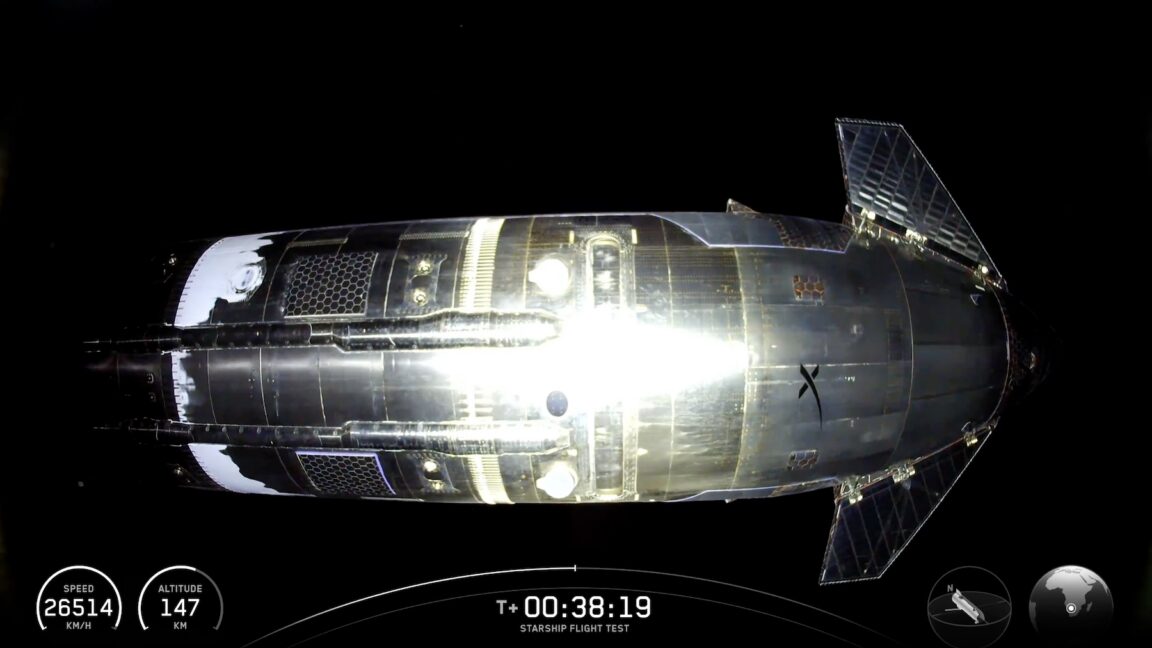
Starship splashed down on target in the Indian Ocean a little more than an hour later to conclude the first flight of the latest version of SpaceX's stainless-steel mega-rocket. Starship V3 fared better on its debut than the first flights of Starship V1 and V2 in 2023 and 2025. Both past versions of Starship broke apart during launch on their inaugural flights.


© SpaceX
Tom Akers and Joe Tanner are finally in the same class.
The two veteran space shuttle crew members were inducted into the US Astronaut Hall of Fame together on May 16. They could also have been in the same NASA astronaut selection group, too, had history played out a little differently.
In 1984, Tanner reported to the Johnson Space Center (JSC) to fly as an instructor pilot and then applied for the next class of astronaut candidates.


© Kennedy Space Center Visitor Complex
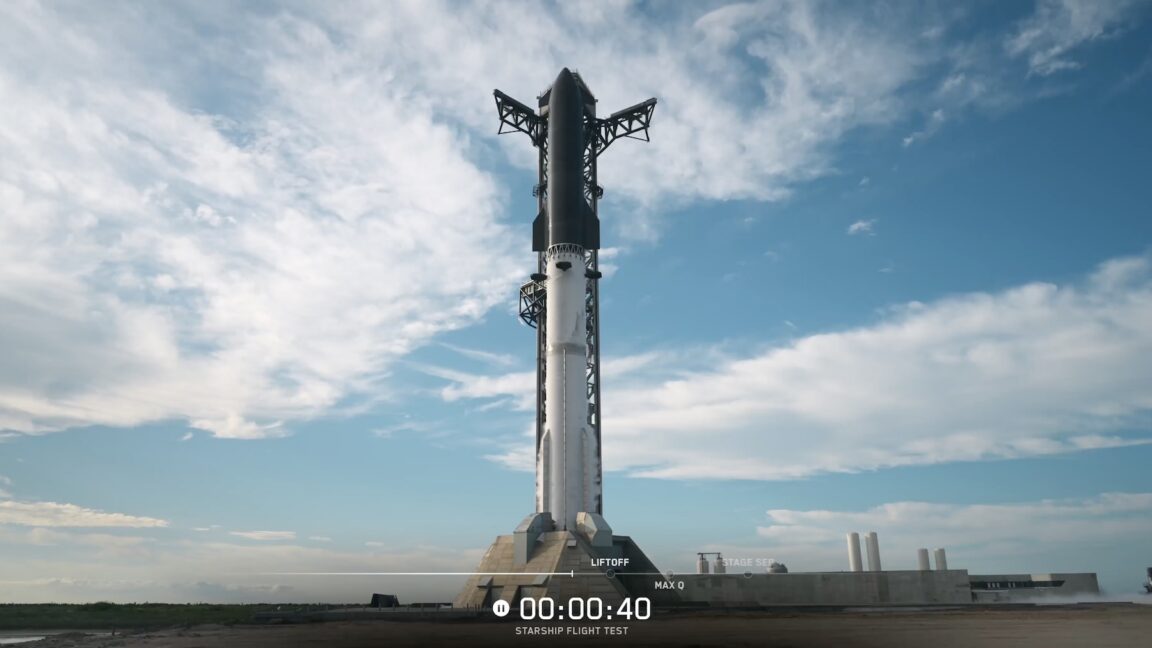
SpaceX got within 40 seconds of launching the first flight of a taller, more powerful version of its Starship rocket Thursday, but a pesky problem with the launch tower kept the vehicle bound to Earth for at least one more day.
Clouds and rain showers cleared the area around SpaceX's launch site in South Texas, leaving mostly sunny skies over the Starship launch pad Thursday afternoon. SpaceX pushed back the launch time by one hour, but the countdown appeared to proceed smoothly once propellants began loading into the rocket.
That was true, at least, until the countdown clock paused 40 seconds before liftoff. The launch team repeatedly attempted to resume the countdown, only for the computer controlling the launch sequence to stop the clock again. There were five holds in all before SpaceX called off the launch attempt.


© SpaceX
After nearly a quarter of a century operating as a private company, with its financial accounts a closely guarded secret, SpaceX on Wednesday afternoon released a detailed accounting of its business in a nearly 400-page S-1 filing with the US Securities and Exchange Commission.
SpaceX, founded in 2002 and still led by Elon Musk, submitted the filing in anticipation of an initial public offering of its stock as soon as June 12.
The document revealed no major surprises about the company's space operations, but there was a trove of details about its sprawling operations, which now encompass launch, spaceflight, space-based Internet, and, thanks to its recent acquisition of Musk's xAI, social media and AI.


© SpaceX