Reading view

Tech billionaires are spending unprecedented sums in California races. Experts say it’s the tip of the iceberg

From Google co-founder Brin spending $82m to fight a billionaire tax to Google and Meta funding a joint Super Pac, Silicon Valley is engaged in an existential fight for its political power at home

Tech billionaires have shelled out hundreds of millions of dollars ahead of the 2 June primary election in California, in an unrivaled attempt to influence who gets to run the state that Silicon Valley calls home.

The industry has used a cover-all-bases approach, funding candidates and ballot measures big and small, contributing to what looks to be the most expensive primary season in California history. The goal, experts say, is to gain both political and regulatory leverage that will perpetuate dominance in business.

Google co-founder Sergey Brin has spent $82m since January, more than any other donor, to fight a billionaire tax that’s up for a vote on the November ballot.

Democratic gubernatorial candidate Matt Mahan has received more donations than any other candidate, including from top executives at Google, Amazon, Snap, LinkedIn, Reddit and Palantir.

Crypto mogul Chris Larsen has funded three Super Pacs with $26m to sway campaigns across California, including giving $1m to back a primary candidate for state insurance commissioner.

Google and Meta have collectively funded a Super Pac with $10m to back assembly and senate candidates in local district races across the state.

Silicon Valley money is flowing toward city primaries as well as state-level ones, with tech-backed Pacs sponsoring voter guides suggesting how to vote on local tax measures.

Continue reading...

© Illustration: Guardian Design / Getty Images

© Illustration: Guardian Design / Getty Images

© Illustration: Guardian Design / Getty Images

  •  

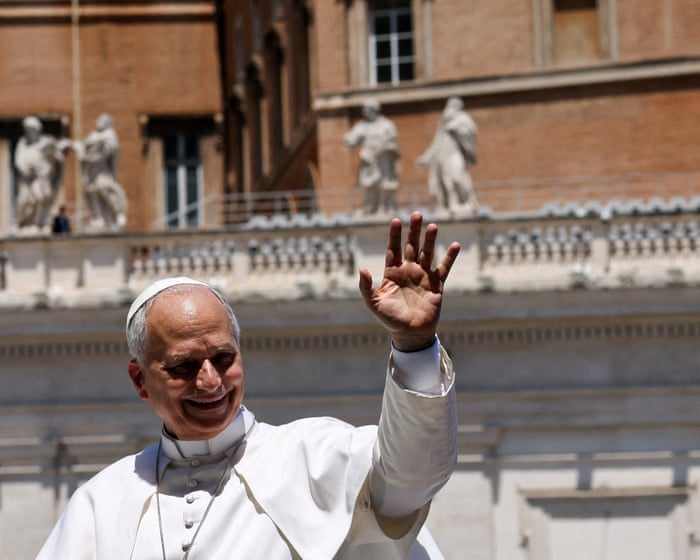
Why I’m grateful to the Pope for his encyclical on AI | Francine Prose

The intelligent and thoughtful encyclical is an important warning of the uses and misuses of a rapidly developing technology. Silicon Valley is wrong to dismiss it

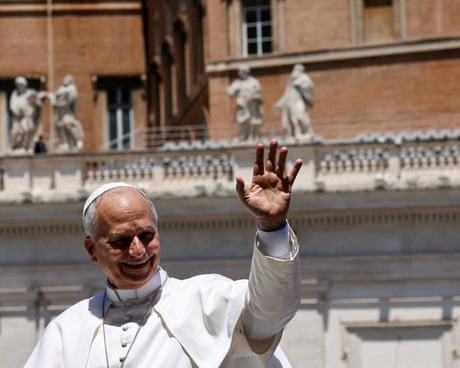
Often I’m asked if I think that the novels of the future will all be written by AI. It’s not so much a question as a provocation. Do I worry that a machine can do what I do, only better? I usually say something like: “No algorithm is going to write Anna Karenina!” which is also not a real answer.

So I’m grateful to Pope Leo XIV, the American pope, for his recently issued letter to the world, Magnifica Humanitas: On Safeguarding the Human Person in the Time of Artificial Intelligence. It’s a long (more than 40,00 words), intelligent and thoughtful encyclical in which the pope addresses the uses and misuses of a rapidly developing technology. Now when someone asks my opinion of AI, I can refer them to the pope’s letter, or at least chapter three.

Continue reading...

© Photograph: Yara Nardi/Reuters

© Photograph: Yara Nardi/Reuters

© Photograph: Yara Nardi/Reuters

  •  

I avoid AI tools because thinking is supposed to be hard. It’s what makes us human | Wendy Liu

As intelligence itself becomes privatised by big tech, allowing your intellectual faculties to wither in service of inane bots seems a dangerous move

Long before the age of multi-billion-dollar AI companies promising to disrupt the field of software development, I was learning to code the hard way.

It was the mid-2000s, and I was a child with unmonitored access to the family computer. With the help of a basic text editor program, I learned how to make websites – first basic, then increasingly complex – from scratch. The results were never as beautiful or polished as in my imagination, but I could live with that, because I was learning a craft. The painstaking hours of debugging and poring over arcane documentation for projects that I eventually abandoned never felt wasted.

Continue reading...

© Photograph: Ink Drop/Alamy

© Photograph: Ink Drop/Alamy

© Photograph: Ink Drop/Alamy

  •  

Google announces glasses are back and search is getting an AI makeover

At annual I/O conference, company debuts a product for everyday consumers to create autonomous AI agents

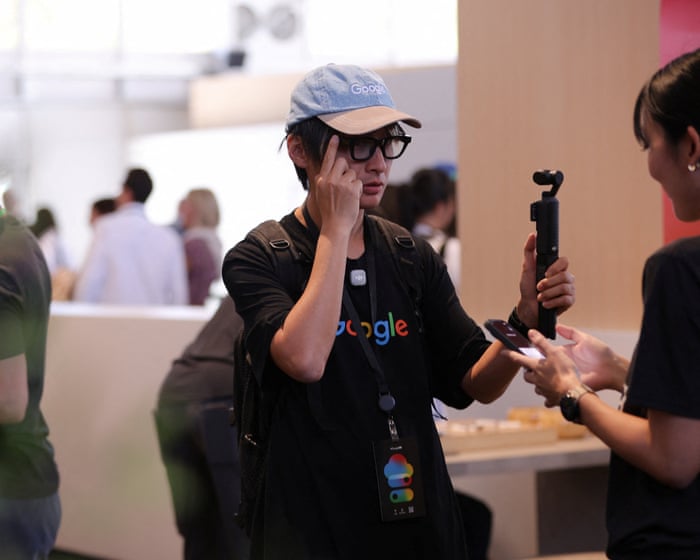
Google announced on Tuesday that it would expand its search bar, the centerpiece of the most-visited website in the world, with a heavy dose of artificial intelligence. The tech giant is also trying its hand at hi-tech glasses again, more than a decade after wearers of its first eyewear were dubbed “glassholes” and laughed out of San Francisco.

Google executives announced at the company’s annual conference for software developers, Google I/O, that its search box would accommodate longer and more specific queries than before – questions more like those people would ask one another than Search’s idiosyncratic syntax. The changes will direct users to engage directly with Google’s chatbot. The change to search is underpinned by the company’s new artificial intelligence model, Gemini 3.5, announced the same day.

Continue reading...

© Photograph: Manuel Orbegozo/Reuters

© Photograph: Manuel Orbegozo/Reuters

© Photograph: Manuel Orbegozo/Reuters

  •  

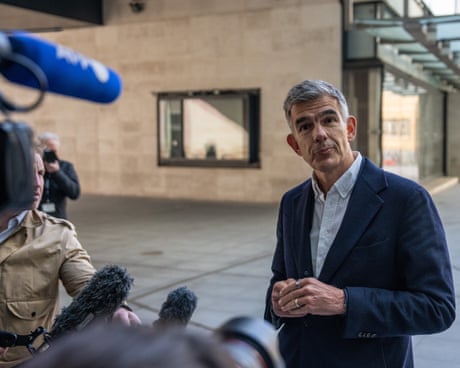
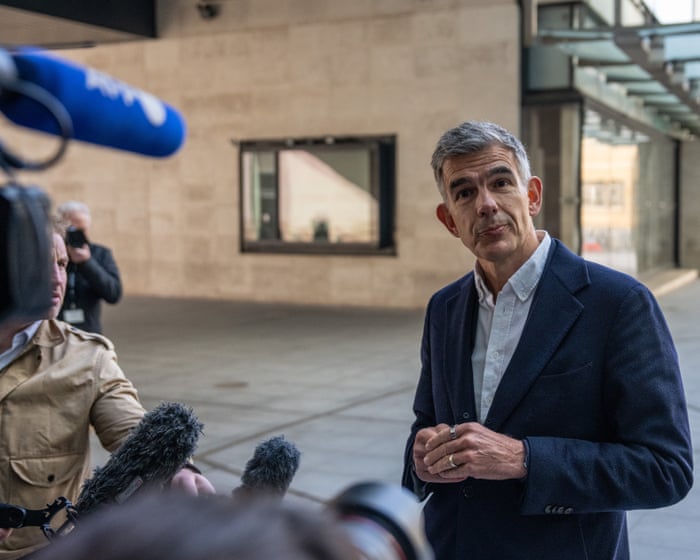
Matt Brittin has taken the helm of the supertanker BBC, but there are plenty of icebergs in his way | Jane Martinson

The new DG started by stressing the need for ‘velocity’. First, he’ll have to navigate staff cuts, culture wars and a sea of fake news

Matt Brittin’s message was pretty clear on his first day as director general of the BBC. It was echoed in a schedule that included an introductory LinkedIn video as well as meetings with the newsroom, podcast, radio, current affairs and research and development teams. It was there in his first all-staff email, which used the word “velocity” twice and invoked the second world war to call for a “sense of urgency”.

Alongside Brittin’s affection for the BBC and public service broadcasting, his message can best be summed up as “move fast but break nothing”.

Jane Martinson is an academic and Guardian columnist. She is a board member of the Scott Trust, which owns the Guardian Media Group, and writes in a personal capacity

Continue reading...

© Photograph: Carl Court/Getty Images

© Photograph: Carl Court/Getty Images

© Photograph: Carl Court/Getty Images

  •  

High-stakes courtroom drama of Musk v OpenAI hears closing arguments

Nine-person jury to consider whether AI firm bilked world’s richest person and unjustly enriched themselves

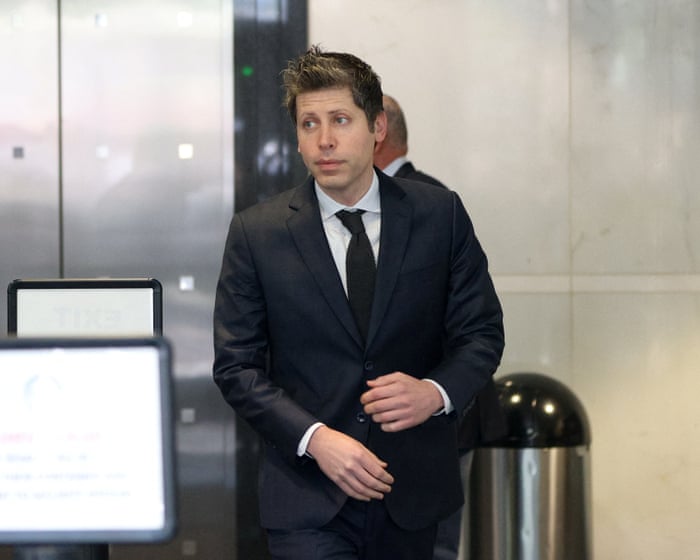
Closing arguments began on Thursday in Elon Musk’s lawsuit against Sam Altman and OpenAI, bringing the weeks-long courtroom battle between the two tech moguls nearer to a decision. A nine-person jury is set to deliberate and return a verdict on whether they believe the AI firm and Altman are liable in the case.

The trial, which began last month in an Oakland, California, federal courthouse, has gripped Silicon Valley and featured some of the tech industry’s biggest names as witnesses. Attorneys for both sides have presented testimony and documents that have exposed Musk and Altman’s private dealings, as well as provided a window into the contentious history of OpenAI.

Continue reading...

© Photograph: Manuel Orbegozo/Reuters

© Photograph: Manuel Orbegozo/Reuters

© Photograph: Manuel Orbegozo/Reuters

  •  
❌