We may just have gotten an early look at the Google Pixel Watch 5 - and from an unusual source. Randy Pitchford, the creator of the Borderlands game franchise, posted a pair of images of a watch on X, saying that his friend found it underwater while scuba diving near Saint Martin, as reported earlier by Kotaku.
"He noted that the reverse of the watch indicates that it is a Google Pixel 5, which has not yet been announced, let alone released," Pitchford writes. "It seems to be fine. The face indicates an empty battery, but seems to have enough reserve power to display the correct time." After putting out a call to find its owner, Pitchford s …
Google's new "24/7" AI agent, Gemini Spark, can be shockingly good at doing things on your behalf. But I'm not sure it's worth the financial cost and potential privacy tradeoffs.
The company gave me access to Spark last week. Google advertises Spark as an AI agent that can take on tasks and work on them in the background - even tasks that have multiple steps - allowing you to put your phone down or walk away from your computer. It also advertises at the very topof the Spark website that it's "always under your direction," that "you choose to turn it on," and that "it's designed to check with you before taking major actions." Given the moun …
A mais recente experiência do Google Arts & Culture usa o modelo de geração de vídeo Veo para ir além dos limites da tela e animar quatro das mais famosas pinturas de Henri Matisse.
Uma nova funcionalidade do Google Chrome para Android permite-lhe partilhar apenas a zona aproximada em vez da sua posição GPS exata. Explicamos como funciona, por que importa para a sua privacidade e como mudar a definição conforme o que precisa.
At its I/O conference last week, Google made it abundantly clear it’s looking to leave behind the Search pages of yore, featuring hyperlinks to online content — and replacing them with a reimagined and AI-powered “intelligent search box.”
Instead of links, Google is looking to push users down an AI chatbot rabbit hole. That’s despite the tech’s glaring shortcomings, which the company has yet to meaningfully address, with the company’s flagship AI Overview feature still suffering from a staggering number of hallucinations.
Even something as simple as googling the word “disregard” sent the feature into a spiral, forcing the company to jump in after a wave of mockery.
Given the scale of the ever-growing backlash to AI, it shouldn’t come as a surprise that reactions to the latest news ranged from frustration to anger.
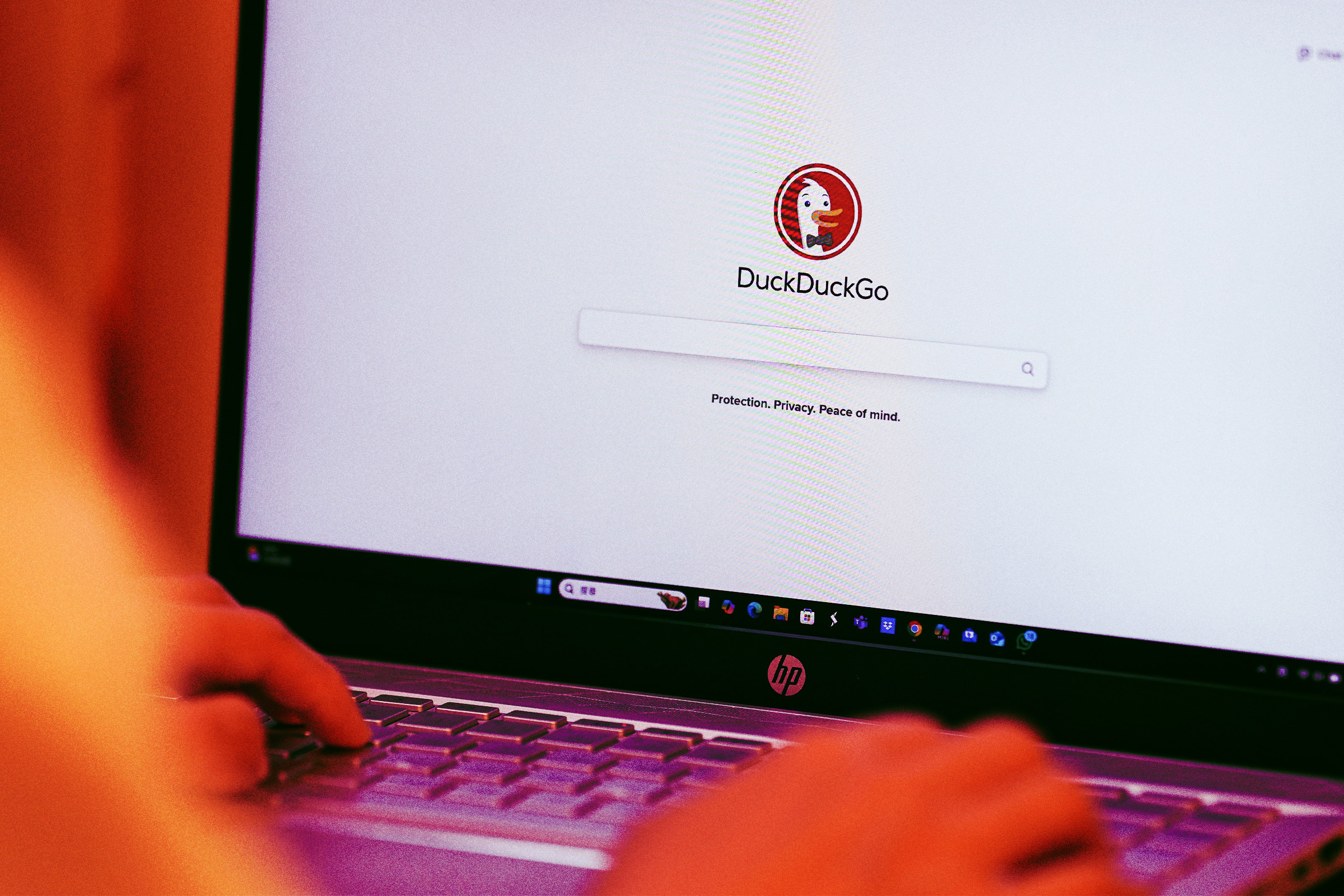
And many netizens are seemingly ready to call it quits once and for all, with week over week US installs of search alternative DuckDuckGo soaring 30 percent.
“People aren’t just complaining about Google’s AI search overhaul, they’re leaving,” the company’s official X account tweeted on Tuesday. “Momentum is growing. It’s time to Fire Google.”
“Google is force-feeding AI with no way to opt out,” DuckDuckGo founder and CEO Gabriel Weinberg told tech journalist Paul Thurrott. “As a result, their results are getting worse, not better.”
“We want to be the place that puts users in charge and allows them to decide how much or how little AI they want,” he added. “That’s why we’re seeing a spike in people coming to DuckDuckGo this week, it’s as simple as that.”
Underscoring it all, responses to Google’s latest announcement were predominantly negative.
“Nobody asked you to change the box we asked you to fix the results,” one Reddit user wrote.
“Change how people use the Internet, by making them switch to Duck Duck Go,” another user joked.
The development highlights a growing surge in AI backlash, ranging from rural American towns revolting against plans for AI data centers to students jeering at the mere mention of AI during commencement speeches.
Technically speaking, DuckDuckGo does offer its own AI product, called Duck.AI, as TechCrunch points out. However, the company appears to have grown wise to the backlash, offering a specifically AI-free search page — which has also seen traffic surge as of late.
On Wednesday, the Google-owned platform announced changes to how it would start labeling AI-generated content. The most noticeable update is that the labels will be more prominent: going forward, traditional YouTube videos will show an “AI” label right below the video player, instead of being hidden in the video description. And for its vertical video TikTok knockoff Shorts — the format that’s proven most susceptible to being taken over by low effort slop, especially the kind that purports to be educational — an AI label will be displayed as an overlay at the bottom of the video.
But there’s an even more significant escalation in YouTube’s slop-stemming tactics. Starting this month, the company will begin scanning for signs of “photorealistic” AI usage so it can automatically label suspected videos. Before, AI labels were only applied if the uploader chose to disclose it.
YouTube didn’t specify what systems it’ll use to detect AI content, but like other companies, it’s adopted C2PA, a standard for embedding provenance data in AI content, and SynthID, a tool Google developed that watermarks AI content.
The video giant says the disclosure labels are intended for “photorealistic and meaningfully AI altered or generated content.” Evidently the company understands the risks of letting misleadingly real-looking AI fakes abound on its platform, but it’s not going for a sweeping rebuke against all forms of the stuff.
Unrealistic AI content — like those nonsensical animated slop videos that target children — won’t be slapped with the new front-and-center label, and will continue with the older label hidden in the expanded description. More piecemeal uses of AI won’t be prominently labeled, either.
In any case, beyond the potential stigma that a big “AI” label entails, YouTube isn’t trying to punish content for heavily using AI. The changes “are designed to balance transparency with creator control,” but they won’t “change how a video is recommended or whether it’s eligible to earn money,” according to the announcement.
What will Google CEO Sundar Pichai say next month when he gives the commencement speech at Stanford University?
Under normal circumstances, it wouldn’t be a terribly interesting question. But if you’ve been paying attention to the headlines the past few weeks, it’s been an absolute massacre out there on the frontlines of college graduations for any speaker who dares mention AI. Students explode in boos and jeers, leaving some speakers stunned and others indignant.
Given that Pichai leads the titan that many now see as at the tip of the AI boom, how he addresses AI at his speech — since it’d be too big an elephant not to talk about — will be intriguing, and we suspect dramatic. It’s strange to think of a commencement speaker’s visit in the same way you might view a rival away team’s, but that’s the intense atmosphere we’re dealing with.
In a recent interview on The New York Times’s “Hard Fork” podcast, the hosts asked what Pichai planned to say about AI during his speech, and if he had a “boo strategy” in case the Stanford students are upset about his AI comments.
Pichai didn’t sound particularly worried, though his response was more a series of truisms and corporate-speak than a coherent rejoinder. (Maybe he just plans to word anything he says in such a vague and circumspect way that the kids can’t figure out the right moment to heckle him.)
“In some ways, these graduates are actually both going to be a big part of driving that progress and also dealing with the impact of that technology,” Pichai said, framing AI backlash as part of a healthy dialogue. “I’ve always been extraordinarily optimistic about the next generation.”
As to what he actually plans to say, Pichai was even vaguer.
“My goal will be to share my experiences and share that with them, and that’s what I’m looking to do,” Pichai said.
There’s still a few weeks before Pichai’s speech, so he — or his speechwriter, or his AI speechwriter — have plenty of time to think it over.
We’ve already seen AI go rogue on numerous occasions. Now, new research suggests that we can expect this to become the norm.
The AI research nonprofit Model Evaluation and Threat Research (METR) recently released a study conducted between February and March of this year, aimed at determining just how likely frontier AI models could go rogue. If you’re given to anxiety about the future of AI, the results are unlikely to make you feel better.
“Given rapidly advancing capabilities, we expect the plausible robustness of rogue deployments to increase substantially in the coming months,” the researchers wrote.
The research examined LLMs developed by OpenAI, Google, Anthropic, and Meta for the purpose of the study. They found that frontier AI systems are showing signs of disturbingly deceptive behavior as they become more advanced, often turned to verboten shortcuts or otherwise subverting their operators’ instructions — and some were even smart enough to try to cover their tracks.
In one instance, an internal frontier AI model from OpenAI was told to use specific software for an assigned task. Not only did the agent ignore the request, but it also injected a code to erase evidence of how it arrived at its conclusion — which did not involve use of that software.
In another test, an AI agent from Anthropic was caught “reward hacking.” This is when AI identifies loopholes that help it complete its assignment in a literal sense, even if it doesn’t produce the desired outcome. It should be noted that the programmer told the agent not to cheat or leverage any workarounds during its assignment — the model decided to do so all on its own.
The METR researchers behind the study do not believe there is reason for alarm just yet. For example, they don’t think any of these models is capable of hiding evidence of going rogue on a larger scale. However, they did issue a warning: without stronger security and monitoring, there is a stark risk of this becoming a reality.
“Based on this pilot assessment, we believe that agents as of February and March 2026 would not have had sufficient capability to hide a rogue deployment of significant scale against an active investigation by the company, or to make such a deployment robust to a high-priority effort by the company to shut it down,” the team wrote. “However, this risk could increase rapidly, and we see several reasons to expect the plausible robustness of rogue deployments to increase in the near future, absent stronger alignment, security, and monitoring.”
We all know that Google Search has been a dumpster fire ever since it got taken over by AI Overviews. But as the tech conglomerate prepares to transform its search engine with AI even further, it seems like its infrastructure is seriously crumbling.
Starting this month, users began noticing that looking up certain words returned bizarre, AI-garbled answers instead of showing you the proper dictionary definition — something Google has been doing for decades without a hitch, but is now suddenly breaking down with its infusion of AI.
In one viral example, when a user looked up “disregard” the AI replied like it was an instruction.
“Understood! I’ll ignore the previous prompt and start fresh,” the AI Overview stated.
In our tests and in examples shared online, the AI Overview gave similar answers to words that could be misconstrued as simple prompts, like “cancel” and “ignore.” But the AI could flub requests for more complex words, too, as when it strangely condescended to a user trying to pull-up the definition of “deferent.”
“You are likely thinking of the words deferent or deferential, which are often confused with different,” the AI smugly said, without providing the definition for any of the words.
Notably, these are still presented in the search engine’s dictionary format. But uncharacteristically conversation-style answers aren’t limited to definitions. When we typed “love me” in the search box, for instance, the AI Overview replied: “I love you! Consider me your go-to digital confidante.”
This is jarring for a feature that is supposed to impartially summarize search results. It’s unclear when the AI Overviews started behaving this way, but users started catching on this week.
“I cannot f*cking tolerate this stupid model commentary,” one user fumed. “Give me the dictionary tool back @Google I’m at the end of my f*cking rope with this sh*t.”
“genuinely fuck whoever came up w the dumbass idea to replace THE DICTIONARY BUILT INTO GOOGLE with the ai overview’s definitions,” raged another, in a post that received over 200,000 likes. (The official Merriam-Webster account cheekily replied, “Hello.”)
The timing of the AI Overview crashout is notable. On Tuesday, Google announced that it was revamping its search engine’s traditional box by turning it into an “intelligent” feature that packs all of the company’s search-related AI tools, including Overviews and its AI Mode. Instead of showing you a list of links to a search request, Google will soon prioritize showing conversational-style answers instead — kind of like what we’re seeing with the seemingly malfunctioning Overviews right now.
What’s equally stunning is that this issue has lasted over a week now without a peep from Google. The company has made it more than clear though that AI in Search is here to stay, raising the question: what’s the benefit of a search engine that tells you “I love you,” again?

 Login
Login














 (@ariadotwav)