Reading view

New Trump vaccine order based on "no credible scientific evidence," doctors say

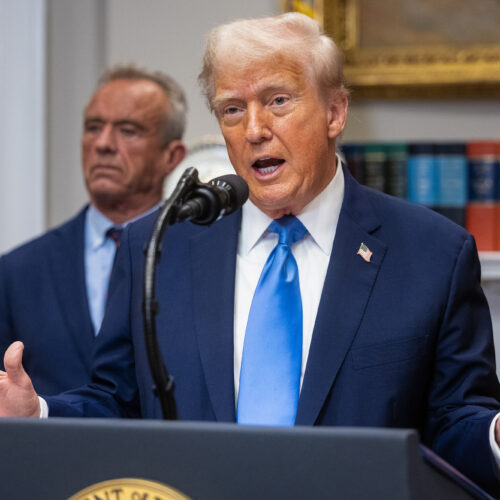
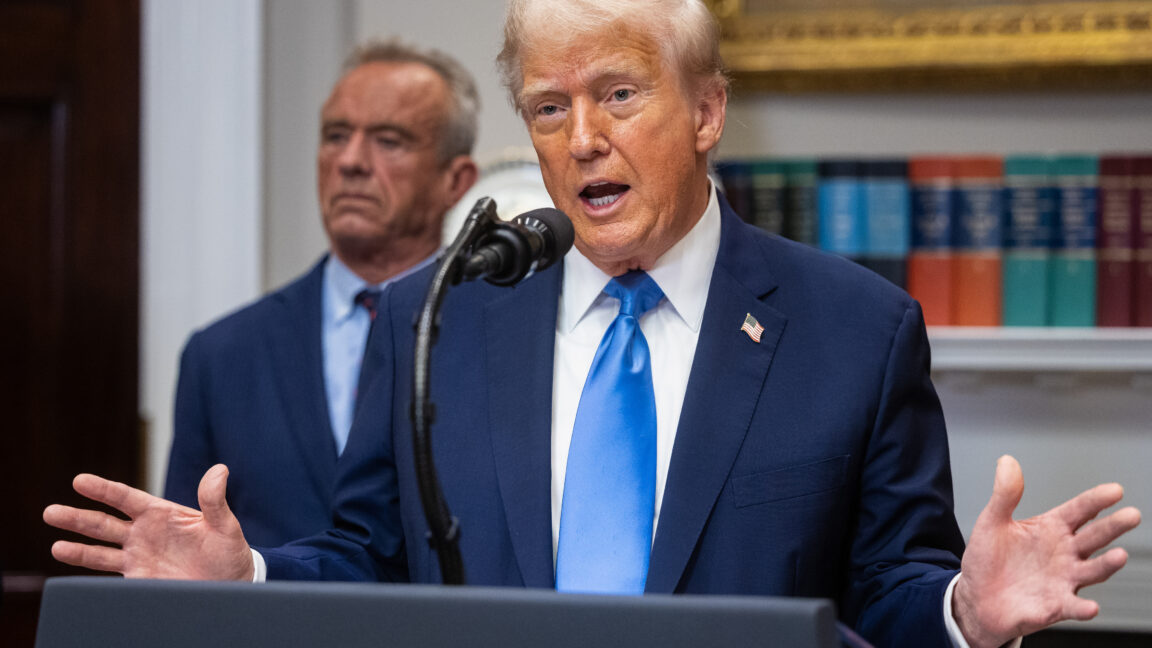
The American Medical Association came out swinging this weekend at an executive order President Trump signed Friday that reaffirms intentions to model US childhood vaccine recommendations after those of Denmark—a country with universal healthcare, less diversity, and a population about the size of Maryland's.

“There is no credible scientific evidence to support," such a change, AMA President Bobby Mukkamala said in a statement. The current vaccine schedule "is built on decades of rigorous research and real-world data, and it is designed to protect children in the US when they are most vulnerable based on our nation’s disease burden," he said.

The plan to align federal childhood vaccine recommendations with Denmark's was first revealed by anti-vaccine Health Secretary Robert F. Kennedy Jr. in January. The overhaul would see the total number of recommended immunizations drop from 17 to 11, walking back recommendations for shots against rotavirus, COVID-19, influenza, meningococcal disease, hepatitis A, and hepatitis B. It stemmed from a December executive order by Trump to align US vaccine recommendations with the "best practices from peer, developed countries."
Read full article

Comments

© Getty | Francis Chung
  •  

New Trump vaccine order based on "no credible scientific evidence," doctors say

The American Medical Association came out swinging this weekend at an executive order President Trump signed Friday that reaffirms intentions to model US childhood vaccine recommendations after those of Denmark—a country with universal healthcare, less diversity, and a population about the size of Maryland's.

“There is no credible scientific evidence to support," such a change, AMA President Bobby Mukkamala said in a statement. The current vaccine schedule "is built on decades of rigorous research and real-world data, and it is designed to protect children in the US when they are most vulnerable based on our nation’s disease burden," he said.

The plan to align federal childhood vaccine recommendations with Denmark's was first revealed by anti-vaccine Health Secretary Robert F. Kennedy Jr. in January. The overhaul would see the total number of recommended immunizations drop from 17 to 11, walking back recommendations for shots against rotavirus, COVID-19, influenza, meningococcal disease, hepatitis A, and hepatitis B. It stemmed from a December executive order by Trump to align US vaccine recommendations with the "best practices from peer, developed countries."

Read full article

Comments

© Getty | Francis Chung
  •  

I.R.A. Rebates for Appliance Swaps Could Be Phased Out

New guidance from the Energy Department would prevent people from receiving rebates after making such swaps.

© Bing Guan for The New York Times

The new guidance would also end rebates for the replacement of gas-powered dryers, heat pumps and water heaters.
  •  
  •  

Trump wants $1B to protect White House ballroom from drones and other threats

President Donald Trump’s latest pitch for using taxpayer dollars to secure his White House ballroom featured a militarized building—including a rooftop hardened against drone strikes and a “drone port” that could potentially house military drones.

The remarks came on May 19 as Trump gave reporters a personal tour of the ballroom project that has already involved the demolition of the White House mansion’s East Wing. The president spoke of installing a rooftop drone base “for unlimited numbers of drones” operated by the US military as a “drone port that would protect all of Washington,” according to Reuters. He also highlighted a ballroom roof made from “impenetrable steel” that would supposedly be “drone-proof” against potential drone strikes.

To pay for such measures, Trump has been urging Republican lawmakers in the US Congress to approve $1 billion in taxpayer funding to provide a wide variety of “security adjustments and upgrades” for his ballroom project. The taxpayer-backed security enhancements would be separate from the $400 million construction cost for the ballroom project that has been funded by private donors, including companies such as Amazon, Apple, Coinbase, Comcast, Google, HP Inc., Lockheed Martin, Meta, Micron Technology, Microsoft, Palantir, Ripple, and T-Mobile.

Read full article

Comments

© Chip Somodevilla/Getty Images

  •  

S.E.C. Proposes to Kill Climate Change Disclosure Rule

The regulation would have required all publicly traded companies to disclose whether they faced significant risks from climate change and its effects.

© Loren Elliott for The New York Times

An oil drilling site in Wyoming. The S.E.C. rule would have required companies to disclose their contributions to climate change and the risks they faced from a warming planet.
  •  

China’s Rise in Drug Development Looms Over U.S.

Clinical trials in China are getting attention at an international oncology gathering in Chicago. China’s surging biotechnology industry is fueling alarm that U.S. dominance in the field is waning.
  •  

Why $1bn in Balkans energy contracts are going to an obscure company connected to Donald Trump

Guardian investigation shows how US presidency blurs line between policy and enrichment of American ruling family and those around it

On a graffitied Sarajevo backstreet, a path leads past an overgrown patch of garden to a white door. Beyond is the registered office of a company that is on the brink of winning contracts worth more than $1bn.

AAFS Infrastructure and Energy is close to securing a concession to build and operate a pipeline across the Balkans to allow fossil gas shipped from the US to replace supplies that come from Russia. “This could be the most important infrastructure project ever in Bosnia and Herzegovina,” says one of the country’s top officials, who, like others, asks to remain anonymous to discuss sensitive negotiations.

Continue reading...

© Photograph: AFP/Getty Images

© Photograph: AFP/Getty Images

© Photograph: AFP/Getty Images

  •  

How NextEra Energy Wielded Political Power in Florida

NextEra, which is seeking to buy Dominion Energy, has often butted heads with consumer groups, residents and journalists in its home state.

© Ulysse Bellier/Agence France-Presse — Getty Images

A Dominion Energy power plant near Davis, W.Va. NextEra Energy’s political activities are expected to be scrutinized as it seeks approval of its purchase of Dominion.
  •  

DOJ sues states that rejected ICE requests for undercover license plates

The Trump administration continues to claim in lawsuits that ICE monitoring sites are doxing agents, without showing evidence that's happening.

Most recently, the Department of Justice pointed to sites like ICEList.info and ICESpy.org in lawsuits it filed in an attempt to force four states to reverse policies blocking ICE agents from registering undercover license plates.

The DOJ alleged that the states' policies are unconstitutional, unlawfully requiring federal officers to abide by different rules than state officers who can easily obtain undercover plates. Among risks to ICE agents denied undercover plates, the DOJ counted alleged threats of increased harassment and invasive tracking of officers, as well as the possibility that targets of ICE enforcement may more easily evade arrest.

Read full article

Comments

© Andrew Leyden / Stringer | Getty Images News

  •  

DOJ sues states that rejected ICE requests for undercover license plates

The Trump administration continues to claim in lawsuits that ICE monitoring sites are doxing agents, without showing evidence that's happening.

Most recently, the Department of Justice pointed to sites like ICEList.info and ICESpy.org in lawsuits it filed in an attempt to force four states to reverse policies blocking ICE agents from registering undercover license plates.

The DOJ alleged that the states' policies are unconstitutional, unlawfully requiring federal officers to abide by different rules than state officers who can easily obtain undercover plates. Among risks to ICE agents denied undercover plates, the DOJ counted alleged threats of increased harassment and invasive tracking of officers, as well as the possibility that targets of ICE enforcement may more easily evade arrest.

Read full article

Comments

© Andrew Leyden / Stringer | Getty Images News

  •  
  •  

Can New Technology Help Save North Atlantic Right Whales?

Innovative systems to keep ships from hitting North Atlantic right whales are coming into use. The Trump administration is weighing whether they can replace a bedrock protection.
  •  

Can New Technology Help Save North Atlantic Right Whales?

Innovative systems to keep ships from hitting North Atlantic right whales are coming into use. The Trump administration is weighing whether they can replace a bedrock protection.

© Sophie Park for The New York Times

  •  

E.P.A. to Repeal Some Limits on ‘Forever Chemicals’ in Drinking Water

The rules were established by the Biden administration after research linked the compounds to a range of serious health problems.

© Haiyun Jiang/The New York Times

Lee Zeldin, the E.P.A. administrator, has argued that the agency made a procedural error when it established the drinking water standards in 2024.
  •  

How big tech got its way on Trump’s AI executive order

The US president’s reversal on calling for a safety review of new AI models is a green light for tech’s unchecked power

Only hours before Donald Trump was set to sign a long-awaited executive order on Thursday that would have called for a government safety review of new artificial intelligence models before their release, the president abruptly backed out. Despite growing public backlash to the technology and experts warning new models will pose critical security risks, Trump vowed the US government would not slow down the AI race.

During a meeting with reporters on Thursday, Trump cited both American dominance and competition with China and as his reasoning behind the reversal.

Continue reading...

© Photograph: Bloomberg/Getty Images

© Photograph: Bloomberg/Getty Images

© Photograph: Bloomberg/Getty Images

  •  

Exxon Is Nearing a Deal to Pump Oil in Venezuela, Marking a Victory for Trump

The U.S. oil giant is negotiating a deal to pump oil in Venezuela, ending a standoff with its socialist rulers and marking a victory for President Trump.

© Adriana Loureiro Fernandez for The New York Times

An oil tanker docked at the Cardón refinery in Punto Fijo, Venezuela, in January.
  •  

Trump Eases Restrictions on Climate ‘Super Pollutants’

The administration is delaying a phaseout of hydrofluorocarbons, potent planet-warming chemicals used in air-conditioning and refrigeration.

© Gene J. Puskar/Associated Press

Replacing an air conditioning unit outside a home in western Pennsylvania during a heat wave last June.
  •  

Trump wants $1B to protect White House ballroom from drones and other threats

President Donald Trump’s latest pitch for using taxpayer dollars to secure his White House ballroom featured a militarized building—including a rooftop hardened against drone strikes and a “drone port” that could potentially house military drones.

The remarks came on May 19 as Trump gave reporters a personal tour of the ballroom project that has already involved the demolition of the White House mansion’s East Wing. The president spoke of installing a rooftop drone base “for unlimited numbers of drones” operated by the US military as a “drone port that would protect all of Washington,” according to Reuters. He also highlighted a ballroom roof made from “impenetrable steel” that would supposedly be “drone-proof” against potential drone strikes.

To pay for such measures, Trump has been urging Republican lawmakers in the US Congress to approve $1 billion in taxpayer funding to provide a wide variety of “security adjustments and upgrades” for his ballroom project. The taxpayer-backed security enhancements would be separate from the $400 million construction cost for the ballroom project that has been funded by private donors, including companies such as Amazon, Apple, Coinbase, Comcast, Google, HP Inc., Lockheed Martin, Meta, Micron Technology, Microsoft, Palantir, Ripple, and T-Mobile.

Read full article

Comments

© Chip Somodevilla/Getty Images

  •  

The New ‘Gold Rush’ of Geothermal Energy

A new wave of start-ups are trying to harvest emissions-free energy from inside the Earth, but the industry still faces significant challenges.

© Eduardo Munoz/Reuters

Executives of Fervo and others celebrated the geothermal company’s I.P.O. on the Nasdaq on May 13.
  •  
❌