Reading view

Hackers duped Meta AI support chatbot to steal celebrity Instagram accounts

Meta’s AI support chatbot proved unusually helpful to hackers looking to steal and resell notable Instagram accounts—the hackers simply asking the bot to change the accounts’ associated email addresses while using VPN to mask their true locations.

Videos featuring the “shockingly easy” exploit have been circulating among Telegram groups for hackers and security researchers, according to 404 Media. The exploit allowed hackers to take over and flip valuable Instagram accounts worth hundreds of thousands of dollars on the gray market before Meta implemented an emergency patch on May 29. The Barack Obama White House account and the Chief Master Sergeant of Space Force’s account also posted pro-Iranian images and messages while they were temporarily compromised.

Attackers simply had to use a VPN to approximately match their location to the target Instagram account’s region, begin a password reset process, and then ask Meta’s AI support chatbot to change the email address associated with the account, according to 404 Media. It’s a very straightforward prompt injection attack.

Read full article

Comments

© Marcin Golba/NurPhoto via Getty Images

  •  

Hackers duped Meta AI support chatbot to steal celebrity Instagram accounts

Meta’s AI support chatbot proved unusually helpful to hackers looking to steal and resell notable Instagram accounts—the hackers simply asking the bot to change the accounts’ associated email addresses while using VPN to mask their true locations.

Videos featuring the “shockingly easy” exploit have been circulating among Telegram groups for hackers and security researchers, according to 404 Media. The exploit allowed hackers to take over and flip valuable Instagram accounts worth hundreds of thousands of dollars on the gray market before Meta implemented an emergency patch on May 29. The Barack Obama White House account and the Chief Master Sergeant of Space Force’s account also posted pro-Iranian images and messages while they were temporarily compromised.

Attackers simply had to use a VPN to approximately match their location to the target Instagram account’s region, begin a password reset process, and then ask Meta’s AI support chatbot to change the email address associated with the account, according to 404 Media. It’s a very straightforward prompt injection attack.

Read full article

Comments

© Marcin Golba/NurPhoto via Getty Images

  •  

This could be Windows’ M1 moment — but expect it to cost a ton

Nvidia CEO Jensen Huang holds up two RTX Spark laptops at Computex 2026

Nvidia's announcement that it's getting into the consumer laptop chip space with RTX Spark is huge. Apple has proved for years that Arm-based chips can perform incredibly well while also delivering great battery life - at least on the Mac. In the Windows world, performance hasn't fully matched up under Qualcomm chips, mostly in the graphics department. There's clearly still untapped potential, and Nvidia seems to be promising to deliver it.

This could be Windows' moment to blow us away with a new generation of supremely capable chips, much like Apple's back in 2020, with the introduction of the M1. But why does this launch feel simultaneous …

Read the full story at The Verge.

  •  

Gemini’s new AI agent is about as good as Google’s demo

Google's new "24/7" AI agent, Gemini Spark, can be shockingly good at doing things on your behalf. But I'm not sure it's worth the financial cost and potential privacy tradeoffs.

The company gave me access to Spark last week. Google advertises Spark as an AI agent that can take on tasks and work on them in the background - even tasks that have multiple steps - allowing you to put your phone down or walk away from your computer. It also advertises at the very top of the Spark website that it's "always under your direction," that "you choose to turn it on," and that "it's designed to check with you before taking major actions." Given the moun …

Read the full story at The Verge.

  •  

Meta’s own AI was exploited to hijack Instagram accounts

An image of Meta’s support AI

Meta's AI support chatbot helped hackers hijack Instagram accounts, as reported earlier by 404 Media. In a video shared on Telegram, a hacker shows how they could take over an account by asking Meta's chatbot to switch the email associated with someone else's profile and then reset the password.

The issue, which Meta says has since been patched, cropped up around the same time Barack Obama's White House account on Instagram was hacked. On Sunday, users noticed that the @obamawhitehouse account began posting images containing Iranian propaganda. Hackers appeared to have hijacked the Instagram accounts belonging to the US Space Force Chief Ma …

Read the full story at The Verge.

  •  

Anthropic Invites EU To Access Mythos

An anonymous reader quotes a report from Politico: Anthropic has extended an invitation to the European Commission granting the EU's cyber agency access to its powerful AI hacking tool Mythos, according to a Commission official familiar with the process. The AI firm made the formal invitation after a meeting with the Commission in San Francisco last Thursday, the official said, adding the EU now has to put in place a mechanism to access the model with proper security safeguards. European Commission spokesperson Thomas Regnier said in a statement the Commission has had "several productive meetings with Anthropic" and "welcome[d] the latest developments on potential future access." [...] "This latest development is of utmost importance to get a clear picture on the potential risks," Regnier said, adding: "Let's not forget that Mythos is not one off, a new wave of powerful models are coming to the market." An ENISA official said the agency does not have active access now but is working to implement it. The Commission is working on a formal action plan to respond to powerful AI hacking tools. It has indicated it wants to release it before the summer break, according to an industry official. Anthropic's Mythos was unveiled in early April and triggered fears that it could enable large-scale attacks with its ability to find and exploit vulnerabilities. "European authorities for weeks were shut off from accessing the cutting-edge cybersecurity AI tech, leading to urgent calls by European politicians and government officials to gain access," notes Politico. "Cyber officials also called for Europe to build its own version."

Read more of this story at Slashdot.

  •  

Florida sues OpenAI, Sam Altman after multiple ChatGPT-linked murders

On Monday, Florida became the first state to sue OpenAI over ChatGPT's allegedly dangerous design.

In a complaint filed in state court, Florida Attorney General James Uthmeier accused OpenAI and its CEO, Sam Altman, of prioritizing profits over the safety of Floridians.

The civil lawsuit comes after Florida opened an unrelated criminal probe into OpenAI, following a ChatGPT-linked mass shooting where two people were killed at Florida State University. In statements, OpenAI has insisted that ChatGPT isn't responsible for the FSU shooting, merely providing factual information, but Uthmeier does not seem to agree. In his complaint, Uthmeier noted that Florida has now been blindsided by two violent events where suspects used ChatGPT to assist in planning.

Read full article

Comments

© Anna Moneymaker / Staff | Getty Images News

  •  

Florida sues OpenAI, Sam Altman after multiple ChatGPT-linked murders

On Monday, Florida became the first state to sue OpenAI over ChatGPT's allegedly dangerous design.

In a complaint filed in state court, Florida Attorney General James Uthmeier accused OpenAI and its CEO, Sam Altman, of prioritizing profits over the safety of Floridians.

The civil lawsuit comes after Florida opened an unrelated criminal probe into OpenAI, following a ChatGPT-linked mass shooting where two people were killed at Florida State University. In statements, OpenAI has insisted that ChatGPT isn't responsible for the FSU shooting, merely providing factual information, but Uthmeier does not seem to agree. In his complaint, Uthmeier noted that Florida has now been blindsided by two violent events where suspects used ChatGPT to assist in planning.

Read full article

Comments

© Anna Moneymaker / Staff | Getty Images News

  •  

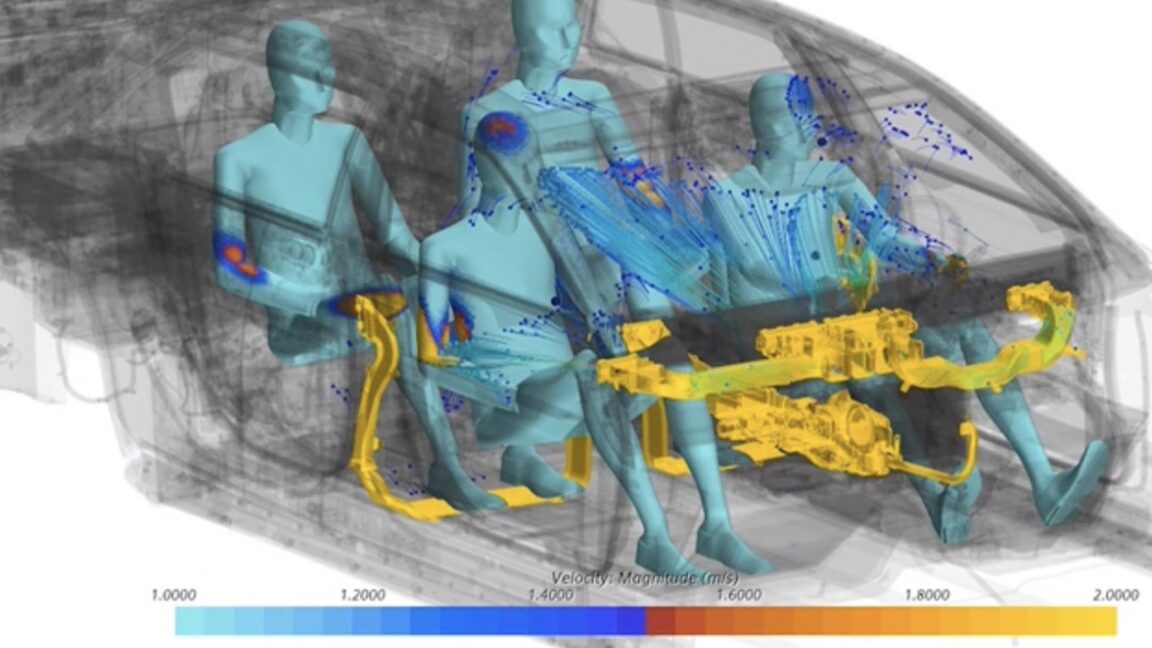
From 15 hours to one minute: How AI/ML is speeding up GM's development

When we met Sterling Anderson in 2024, he was the chief product officer of Aurora, the self-driving startup he cofounded in 2016 after several years at Tesla. Just over a year ago, though, Anderson decamped from the startup world for something a little more established, taking over as chief product officer at General Motors, the nation's largest automaker. Since then, he's had a good view of how GM is entering what he calls the third epoch of engineering and design.

"There was a time when humans looked at birds and were like, 'OK, those wings seem to work pretty well. Let's go and design something that looks like them.'" Anderson said, describing the first age of engineering. "And they just kind of iterated their way to something that was marginally feasible."

The first few hundred years of inventing "was this era of highly empirical iterative design development and engineering," he said. "And by that I mean humans largely started with what we know or had seen, built prototypes of something that kind of looked like it and maybe tweaked some things, hoping to make it perform better, tested it, iterated, and kind of went through this slow guess-and-check process until we got to something that marginally worked."

Read full article

Comments

© General Motors

  •  

From 15 hours to one minute: How AI/ML is speeding up GM's development

When we met Sterling Anderson in 2024, he was the chief product officer of Aurora, the self-driving startup he cofounded in 2016 after several years at Tesla. Just over a year ago, though, Anderson decamped from the startup world for something a little more established, taking over as chief product officer at General Motors, the nation's largest automaker. Since then, he's had a good view of how GM is entering what he calls the third epoch of engineering and design.

"There was a time when humans looked at birds and were like, 'OK, those wings seem to work pretty well. Let's go and design something that looks like them.'" Anderson said, describing the first age of engineering. "And they just kind of iterated their way to something that was marginally feasible."

The first few hundred years of inventing "was this era of highly empirical iterative design development and engineering," he said. "And by that I mean humans largely started with what we know or had seen, built prototypes of something that kind of looked like it and maybe tweaked some things, hoping to make it perform better, tested it, iterated, and kind of went through this slow guess-and-check process until we got to something that marginally worked."

Read full article

Comments

© General Motors

  •  

Allegedly trashing Airbnbs to test robots puts startup in legal trouble

A San Francisco robotics startup is being taken to court by an Airbnb host who claims the company’s “robotic prototype testing” caused extensive damage to his home.

In the lawsuit filed on May 26, 2026, Sean Donovan is seeking more than $12,000 in damages from the Bay Area startup The Bot Company. The court case was first reported by SFGate, which also interviewed Donovan about the unprecedented mess he encountered after the startup’s employees supposedly rented his former childhood home through Airbnb.

The first clue that the guests were not typical tech startup employees needing a temporary crash pad came when Donovan was taking care of the trash during the guests’ stay. He told SFGate about seeing “bundles of wires” throughout the house and a robot he described as a 6-foot-tall “Roomba with treads” that also resembled the cybernetic Borg from the Star Trek universe.

Read full article

Comments

© Malte Mueller | Getty Images

  •  

Allegedly trashing Airbnbs to test robots puts startup in legal trouble

A San Francisco robotics startup is being taken to court by an Airbnb host who claims the company’s “robotic prototype testing” caused extensive damage to his home.

In the lawsuit filed on May 26, 2026, Sean Donovan is seeking more than $12,000 in damages from the Bay Area startup The Bot Company. The court case was first reported by SFGate, which also interviewed Donovan about the unprecedented mess he encountered after the startup’s employees supposedly rented his former childhood home through Airbnb.

The first clue that the guests were not typical tech startup employees needing a temporary crash pad came when Donovan was taking care of the trash during the guests’ stay. He told SFGate about seeing “bundles of wires” throughout the house and a robot he described as a 6-foot-tall “Roomba with treads” that also resembled the cybernetic Borg from the Star Trek universe.

Read full article

Comments

© Malte Mueller | Getty Images

  •  

Alarming: Wi-Fi Routers Can Scan Your Body to Identify Exactly Who You Are

These aren’t welcome findings, because almost every home in America has a Wi-Fi router. Theoretically, once you have been ID’d by your personal router (if it has built-in beam forming technology), other similar Wi-Fi signals anywhere in the world could “see” you passing by. This is the type of tech that could be added to your biometric profile as a fail-safe ID that can’t be spoofed. Cameras might see your face to ID you, but you cannot hide from Wi-Fi. ⁃ Patrick Wood, Editor.

If you were paranoid about digital tracking before, you might want to think twice about reading any further.

New research out of Germany’s Karlsruhe Institute of Technology found that the types of Wi-Fi routers we all have in our homes come with a major privacy vulnerability that can be used to identify any human body that comes within their range.

The study, flagged by Gizmodo, used machine learning systems to identify individuals with an accuracy rate of 99.5 percent. To do so, the researchers exploited a vulnerability in a process known as beamforming feedback information (BFI), which was introduced to allow routers to focus Wi-Fi signals on connected devices, as opposed to the older approach, which is to blanket an entire area in coverage.

While BFI is great for network connectivity, it has a major downsides for privacy. For starters, devices connected to a router using beamforming need to send constant feedback in order to be found. As routers send out and receive network feedback, the signal is inevitably impacted by real world factors like pets, walls, and people.

That gap, between the signals routers expect to receive and the distorted feedback they actually get, allowed researchers to extrapolate the identities of 161 individual participants based on BFI data which inadvertently mapped their physical characteristics. Even when individuals changed their gait or carried objects like backpacks and crates, the system registered an accuracy rate between 50 to 60 percent, the KIT team wrote.

“This works similar to a normal camera, the difference being that in our case, radio waves instead of light waves are used for the recognition,” study coauthors Thorsten Strufe said in a press release.

Making matters worse is the fact that this data is basically wide open for anyone to grab — not only is that feedback data unencrypted, it can also be accessed without ever connecting directly to the router.

“We have shown robust identity inference with common-of-the-shelf hardware which is already in widespread adoption in many homes and public areas,” the team wrote in their paper. “With this hardware making its way into millions of homes, the privacy concerns are severe.”

The KIT findings contrast to other Wi-Fi tracking systems, like one developed by researchers at the Sapienza University of Rome. That method, called “WhoFi,” uses channel state information, which is much harder to access on consumer hardware, but can still identify people through walls with an alarmingly high accuracy rate.

That WhoFi study made a point to highlight the anonymity factor: the idea that the sensing system can detect people’s presence, but not identify them. The KIT team refutes that framing outright, arguing that Wi-Fi-sensing technology poses major privacy risks regardless.

“While there maybe legitimate use-cases, we explicitly consider identity inference via Wi-Fi sensing a privacy attack,” they write. “This view reflects the serious risks associated with the ubiquity of Wi-Fi networks, their ability to sense through walls and in non-line-of-sight scenarios, and the fact that this would likely happen without explicit consent.”

While more research will be needed, the researchers don’t mince words about the implications of their initial findings. In their conclusion, the KIT team writes that regulators and companies moving to standardize Wi-Fi sensing should “strongly consider adding effective privacy protection,” or else “abandon beamforming entirely.”

Read full story here…

  •  
❌