Reading view

'Virtual OS Museum' Lets You Try 570 Extinct Operating Systems

You can try 570 extinct operating systems at a new "virtual museum," according to a new article by ZDNet. Their reporter downloaded the ancient OS NeXTSTEP, and was "shocked" by how easy it was to run it, "and by the sheer number of operating systems to choose from." Essentially, what you do is download a zipped file, unzip it, change into the newly created directory, and run the executable. VirtualBox then opens to a Debian Linux instance, where you can select from a very long list of operating systems to run... You can run operating systems like Amiga, Apple I/II/III, Atari, Avigo, Commodore 64, Cray, DEC Alpha, Einstein, Game Boy Advance, GE 200, HP 3000, IBM 1130, iPod touch, Jupiter Ace, Lisa, Macintosh, MIPS-based SBCs, Neo, Newton, NeXT, NORC, Palm, and so many more. You can test the earliest mainframes, later mainframes and minicomputers, workstations and Unix variants, home computers, personal computer operating systems, mobile and embedded adOSes, and research-based and obscure systems. As far as Linux is concerned, you can run early Debian and its derivatives, Red Hat and its derivatives, early Slackware, and more... There are two editions of the Virtual OS Museum: full and lite. The full edition is currently 174GB and includes everything you need to run these old-school operating systems. The full version does not require a network connection to run. The Lite version is only 14GB and requires an internet connection because it downloads the full OS image you want to use. Gizmodo notes "this project is all the more remarkable for being the work of one man: Andrew Wartenkin, who has been collecting OS images for over two decades." Of course, Wartenkin didn't write all the emulation software himself, and he maintains a list of credits to give credit where it's due... The Museum itself runs in a virtual machine, which seems kinda fitting — it opens in a virtualized Linux installation and presents you with the full list of available operating systems. Did you know someone has written a GUI for the Commodore 64? Neither did I! There are simulations of ancient mainframes, like the IBM 1130 (yours for the low, low price of $32,280 — or $41,230 with a disk drive — back in 1965). There's also a YouTube channel. Thanks to long-time Slashdot reader Z00L00Kfor sharing the news.

Read more of this story at Slashdot.

  •  

Intel makes a bid for handheld gaming PCs with new Arc G3 processors

Most of the Steam Deck imitators on the market right now use AMD silicon, specifically the Ryzen Z-series chips. These are the same chips AMD makes for regular laptops, but with different power settings better suited to a compact handheld system. There are handhelds based on Intel silicon (MSI’s Claw is the main one), but Intel hasn’t yet tried making silicon marketed specifically for that purpose.

Today, the company is throwing its hat in the ring with two Intel Arc G-series processors, which will allow gaming handhelds to leverage the company's genuinely quite good Arc B-series integrated GPUs. Intel says that several Arc G-series handhelds will arrive "starting in June 2026, with broader availability throughout the year." These systems will include a new MSI Claw model, a Predator Atlas 8 from Acer, and a device from OneXPlayer.

Intel normally uses its "Arc" branding for integrated and dedicated GPUs, but in this case, the "Arc" brand encompasses the entire chip, including the CPU, GPU, NPU, and other components.

Read full article

Comments

© Intel

  •  

Uh-oh, the International Space Station is leaking again

NASA confirmed Thursday that the Russian segment of the International Space Station has begun leaking atmosphere into space again. It's an old problem that NASA recently hoped was resolved.

For more than half a decade, engineers from Roscosmos and NASA have been tracking the leak rate from a small Russian module attached to the space station that leads to a docking port. The source of these leaks, microscopic structural cracks, have been difficult to find and address.

In January, NASA said that after multiple inspections and sealant applications, the pressure inside this segment, known as the PrK module, had reached a "stable configuration." The PrK module is essentially a transfer tunnel attached to the Zvezda Service Module on the Russian segment of the space station.

Read full article

Comments

© NASA

  •  

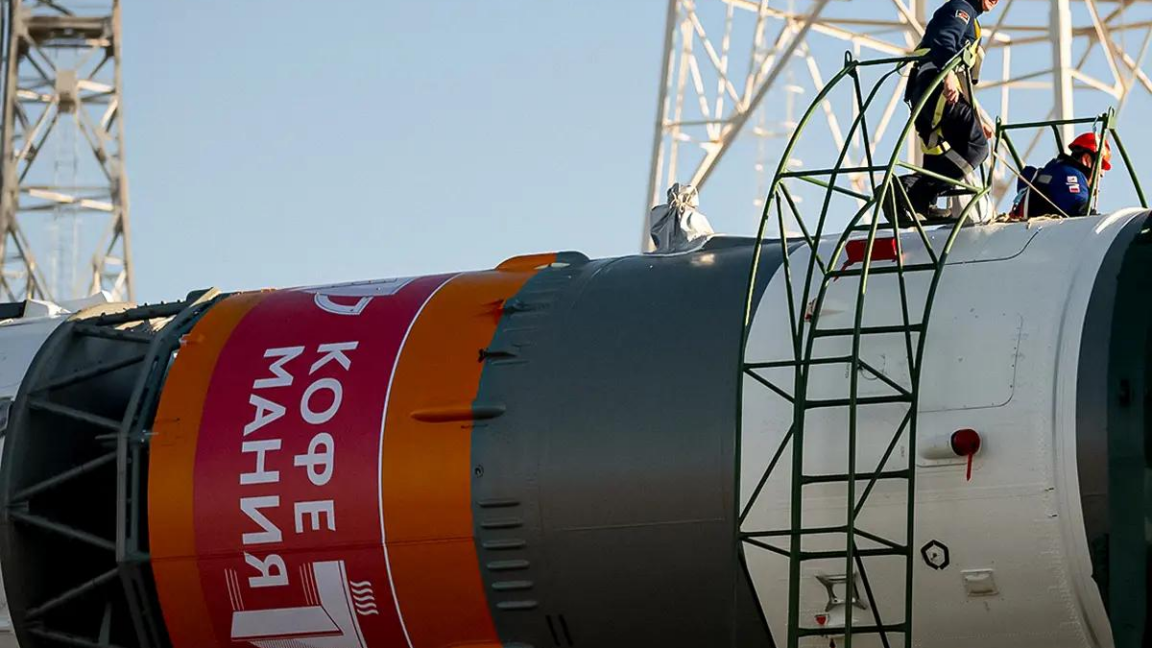
Russia's plan to advertise on rockets and spacecraft takes off

It's difficult to know the true state of the Russian economy, both because the country's financial reporting is sparse and because official figures are unreliable. But things probably aren't great.

This week, Sweden's minister of foreign affairs, Maria Malmer Stenergard, shared her country's assessment that the Russian economy has likely contracted over the last five years amid the war in Ukraine. Inflation is also high, and international sanctions have cost Russia $450 billion since the onset of the war in February 2022. Russia's economy is currently smaller than that of Texas, Stenergard said.

By most measures, then, the economy is not in tip-top shape. Moreover, the war is draining a large amount of the country's financial resources, with defense spending reaching a post-Soviet record of about 7 percent of government spending.

Read full article

Comments

© Roscosmos

  •  

Paleontologists Identify New Hyaenodont Species in Pakistan

Metapterodon anari. Image credit: Steven Jasinski / SergeyAtrox1.

Paleontologists have recovered the fossilized remains of three hyaenodont species, including one previously unknown to science, from Miocene sediments in Pakistan.

The post Paleontologists Identify New Hyaenodont Species in Pakistan appeared first on Sci.News: Breaking Science News.

  •  

Blue Origin Rocket Blows Up on Florida Launchpad During Test

The rocket, built by the Jeff Bezos-owned space company, was to carry 48 satellites into space. Blue Origin reported on social media that “all personnel have been accounted for.”
  •  

Intel makes a bid for handheld gaming PCs with new Arc G3 processors

Most of the Steam Deck imitators on the market right now use AMD silicon, specifically the Ryzen Z-series chips. These are the same chips AMD makes for regular laptops, but with different power settings better suited to a compact handheld system. There are handhelds based on Intel silicon (MSI’s Claw is the main one), but Intel hasn’t yet tried making silicon marketed specifically for that purpose.

Today, the company is throwing its hat in the ring with two Intel Arc G-series processors, which will allow gaming handhelds to leverage the company's genuinely quite good Arc B-series integrated GPUs. Intel says that several Arc G-series handhelds will arrive "starting in June 2026, with broader availability throughout the year." These systems will include a new MSI Claw model, a Predator Atlas 8 from Acer, and a device from OneXPlayer.

Intel normally uses its "Arc" branding for integrated and dedicated GPUs, but in this case, the "Arc" brand encompasses the entire chip, including the CPU, GPU, NPU, and other components.

Read full article

Comments

© Intel

  •  

Cows Can Recognize Familiar Human Faces, New Study Finds

Amichaud et al. found that cows not only recognize human faces, but can connect them with familiar voices. Image credit: NeiFo.

New research led by scientists from the French National Institute for Agriculture, Food, and Environment (INRAE) suggests cows (Bos taurus taurus) can distinguish between known and unknown people, and even match a familiar voice to the correct face.

The post Cows Can Recognize Familiar Human Faces, New Study Finds appeared first on Sci.News: Breaking Science News.

  •  
❌