
Reading view

New Dinosaur Species from Argentina May Have Specialized in Catching Fish
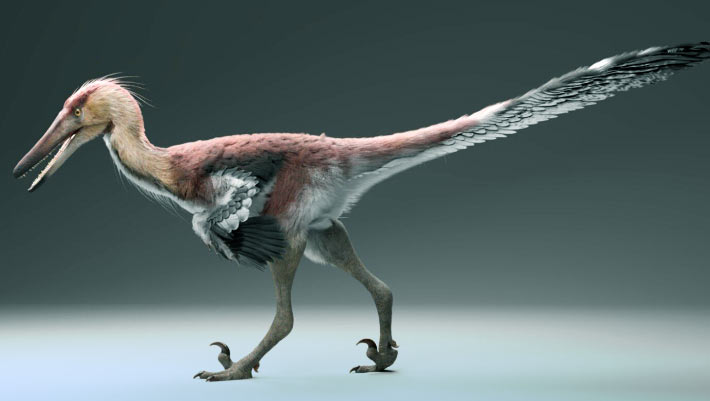
Life reconstruction of Kank australis. Image credit: Gabriel Díaz Yantén.

Paleontologists in Argentina have identified a previously unknown species of unenlagiid dinosaur that stalked freshwater wetlands during the Late Cretaceous epoch, adding to evidence that some dinosaurs specialized in catching fish.

The post New Dinosaur Species from Argentina May Have Specialized in Catching Fish appeared first on Sci.News: Breaking Science News.
  •  

Cretaceous Bird from China Had Pair of Tail Feathers Twice as Long as Its Body

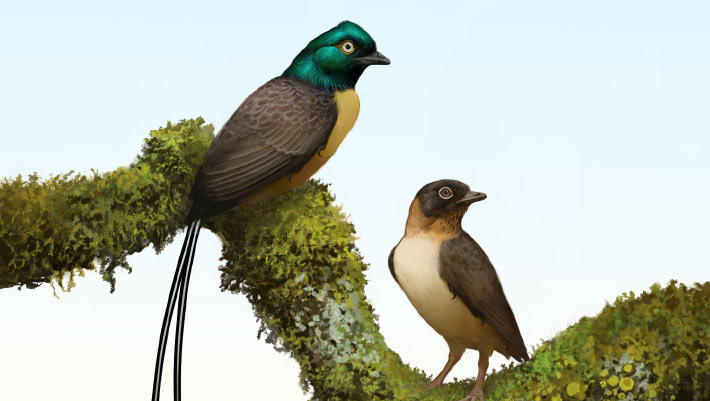
Plumadraco bankoorum is a new bohaiornithid enantiornithine bird with a pair of exceptionally long rectrices. Image credit: Ville Sinkkonen.

Named Plumadraco bankoorum, the newly-described species of enantiornithine bird lived in what is now northeastern China during the Cretaceous period, roughly 121 million years ago.

The post Cretaceous Bird from China Had Pair of Tail Feathers Twice as Long as Its Body appeared first on Sci.News: Breaking Science News.

  •  

Toothless, Bipedal Crocodile Relative Lived in New Mexico 212 Million Years Ago

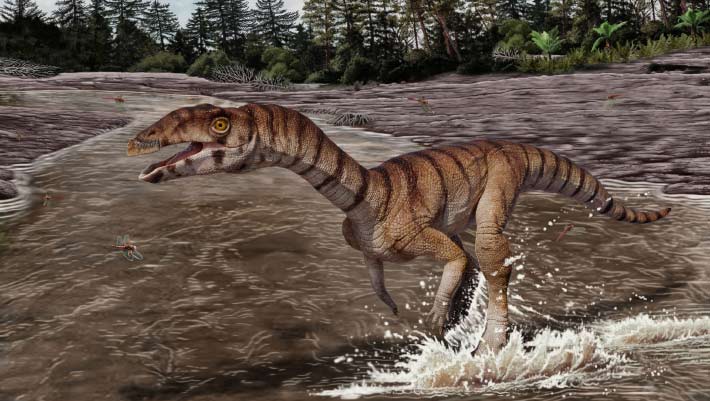
Labrujasuchus expectatus navigated the world on two legs with tiny arms and a toothless mouth tipped in a beak. Image credit: Jorge Gonzalez / NHMLAC Dinosaur Institute.

Paleontologists have described a new species of bipedal shuvosaurid archosaur from New Mexico, shedding light on a group of creatures that roamed North America during the Triassic period, more than 200 million years ago.

The post Toothless, Bipedal Crocodile Relative Lived in New Mexico 212 Million Years Ago appeared first on Sci.News: Breaking Science News.
  •  

Rare Ostrich-Like Dinosaur Fossil Found on Canadian Island

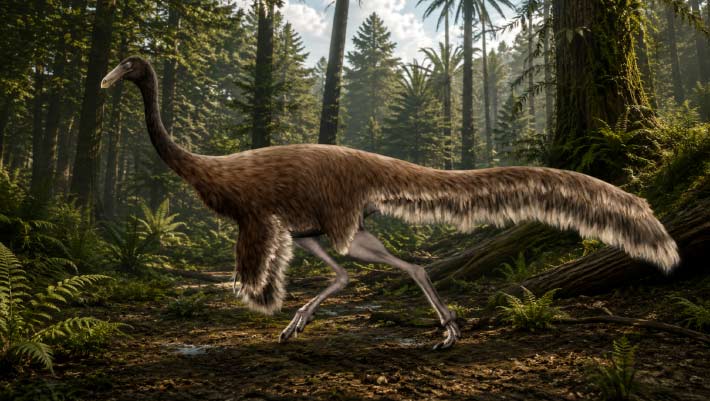
Life restoration of Quipalong henanesnsis, an ornithomimosaurian dinosaur that lived in what is now China during the Maastrichtian age of the Late Cretaceous, between 72 and 67 million years ago. Image credit: PaleoNeolitic / Sci.News.

Paleontologists in Canada say they have recovered a dinosaur tail vertebra from 75- to 80-million-year-old marine rocks on a small island off the coast of British Columbia, providing the clearest evidence yet that bird-like ornithomimosaurs once roamed the ancient Pacific coastline of North America.

The post Rare Ostrich-Like Dinosaur Fossil Found on Canadian Island appeared first on Sci.News: Breaking Science News.
  •  

CERN Physicists Observe New Exotic Particle

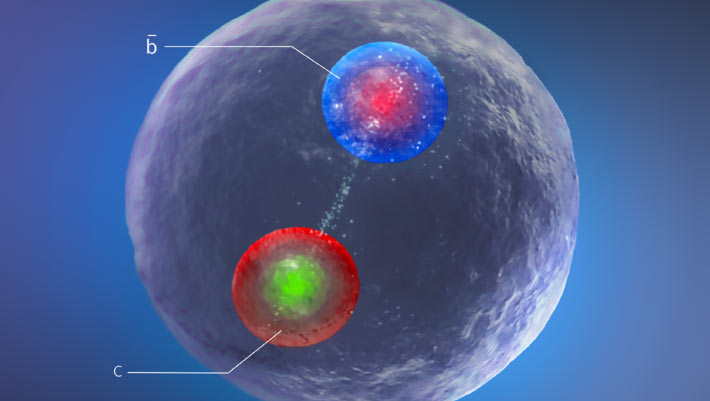
An artist’s impression of the Bc*+ meson. Image credit: Daniel Dominguez / CERN.

Physicists with the ATLAS Collaboration at CERN’s Large Hadron Collider (LHC) have observed the Bc*+ meson, an excited version of the Bc+ meson -- both consist of a charm quark and a bottom antiquark.

The post CERN Physicists Observe New Exotic Particle appeared first on Sci.News: Breaking Science News.
  •  

New Species of Octopus Discovered in Deep Waters near Galapagos Islands

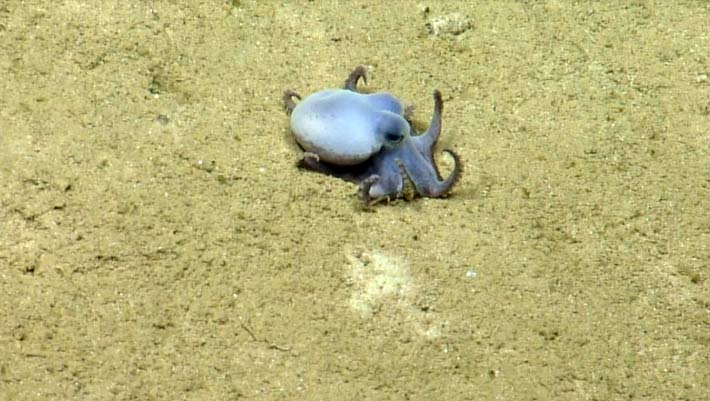
Microeledone galapagensis. Image credit: Voight et al., doi: 10.11646/zootaxa.5814.4.5.

A single female specimen, collected 1,773 m below the surface near Darwin Island, has been described as a new species of deep-sea octopus, and it doesn’t fit neatly into the Megaleledonidae family it belongs to, forcing a revision of the textbook definition.

The post New Species of Octopus Discovered in Deep Waters near Galapagos Islands appeared first on Sci.News: Breaking Science News.

  •  

Cows Can Recognize Familiar Human Faces, New Study Finds

Amichaud et al. found that cows not only recognize human faces, but can connect them with familiar voices. Image credit: NeiFo.

New research led by scientists from the French National Institute for Agriculture, Food, and Environment (INRAE) suggests cows (Bos taurus taurus) can distinguish between known and unknown people, and even match a familiar voice to the correct face.

The post Cows Can Recognize Familiar Human Faces, New Study Finds appeared first on Sci.News: Breaking Science News.

  •  
❌