Reading view

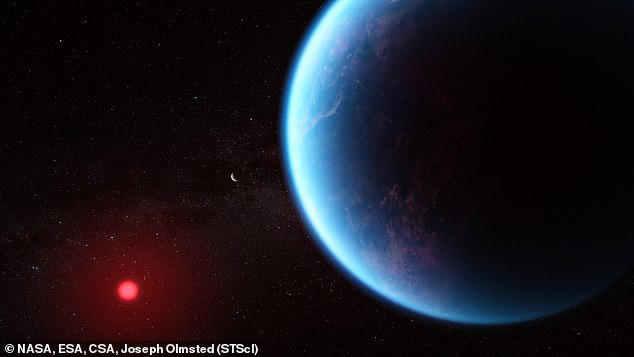
Signature of Alien Life ‘Found’ on a Planet 124 Light-Years from Earth

An article claims scientists found evidence of biological activity on exoplanet K2-18b, citing detected molecules linked to microbial life. However, this overstates findings, because some other chemical processes may explain the results. The inordinate desire to find extraterrestrial life reflects a rejection of the Creator.

  •  

Have Aliens Terraformed Other Planets? New Insights

Extraterrestrial life has been searched for without success, and now a new method is suggested. I participated in an interview on the David Rives Genesis Science Report about this new search method, which examines similarities among clustered planets, suggesting terraforming has occurred.

  •  

“There are Shortcomings in Recognizing the Existence of Life”: Astrobiologists Warn of Gaps in the Search for Extraterrestrial Life


Signs of extraterrestrial life may have been ignored by researchers for decades, say a team of astrobiologists, warning of the potential pitfalls of false negatives in the search for ET.

In a recent paper in Nature Astronomy, researchers at Utrecht University argue that poorly designed tests for life elsewhere in the cosmos are a great waste of science funding.

Astrobiology is a specialized field dedicated to discovering the origins of life and detecting life on other planets, yet it remains ambiguous in its conclusions.

False Extraterrestrial Signals

“We should be aware of these false-negative results,” says lead author Inge Loes ten Kate, professor in astrobiology at Utrecht University and the University of Amsterdam. “It means there are shortcomings in recognizing the existence of life. These shortcomings are not yet high on the research agenda.”

The researchers argue that while false positives are well considered in the astrobiology field, potential false negatives, in which existing extraterrestrial life may not appear present, are largely overlooked, to the detriment of the field.

The researchers identified three primary reasons why the search for extraterrestrial life may lead to false negatives. The first is that ancient life on distant worlds may not have been preserved, leaving no remnants left to uncover, even if something once lived. The second two are related; the signals of life on some world may be extremely faint, and our current level of technology may not be advanced enough to detect them. 

“There are several life-detection instrument concepts in development for Mars and even for icy moons that so far have not yet been selected for a mission that I would love to see fly,” Professor ten Kate told The Debrief. “Even though we will always run the risk that those instruments will not find life, whether it is there or not.”

Targeting the Extraterrestrial

“We therefore advocate for the development of a targeted research strategy that systematically addresses these risks, in which we must combine laboratory experiments with modeling research and fieldwork,” ten Kate explained. “Space missions and instruments are designed to detect potential signs of life, but the risk of overlooking something is not taken into account.” 

“The search for signs of life should go hand in hand with better-defined questions and testable hypotheses to justify specific measurement or observation targets,” ten Kate continued.

The researchers favor using artificial intelligence tools to recognize patterns in extraterritorial data, which might identify elements missed by the human eye, and then apply them to future observations. They also note that failing to identify evidence of life may lead to long-term mistakes, such as dismissing objectives and instruments too hastily. They compare this to a person looking at a rock from above, unaware that bugs live beneath it, and, down the line, resource extraction could destroy the rock and the bugs with it.

Possibilities for Life Elsewhere

The Utrecht researchers say that much work remains to be done theorizing what sort of life may exist in the cosmos, what types of environments that life could persist in, and what external signals it should produce. A recent example the team is interested in is an unusual oxidation noted in a Martian rock last year, which bore intriguing similarities to finds on Earth, the only planet known to harbor life.

“On Earth, we only see such differing oxidation as a result of the presence of life,” ten Kate said. “But does that necessarily mean that we are dealing with life in an extraterrestrial context?”

The team says that to better understand this promising Martian discovery, astrobiologists will have to refine their understanding of geochemistry in an extraterrestrial environment before sending a crewed mission to investigate the Red Planet.

If there were life, and it were hidden, ten Kate argues, “there would be a high likelihood of the crew unknowingly killing that Martian life.”

“Although this hypothetical Martian life might ‘only’ be unicellular, like bacteria, in my opinion, we do not have the right to kill it, not even accidentally,” ten Kate concluded. “This is, of course, an ethical dilemma, and I know not everybody would agree.”

The paper, “False Negatives in the Search for Extraterrestrial Life,” appeared in Nature Astronomy on May 21, 2026.

Ryan Whalen covers science and technology for The Debrief. He holds an MA in History and a Master of Library and Information Science with a certificate in Data Science. He can be contacted at ryan@thedebrief.org, and follow him on Twitter @mdntwvlf.

  •  

A Statistical ‘Fingerprint’ Could Reveal Alien Life Detectable by Current Spacecraft


One of the many frustrating factors that complicate the search for extraterrestrial life is the time and resources spent analyzing false signals. Molecules such as amino acids and fatty acids, which are commonly associated with signs of biological life, can also form in places where life has never existed.

Amino acids have turned up in meteorites, and fatty acids can develop in deep space without any biological input. This overlap between biological and nonbiological chemistry is a recurring challenge for astrobiologists.

Now, a new study in Nature Astronomy suggests that, instead of searching for new types of molecules, scientists should adopt a different approach. Researchers from the Weizmann Institute of Science and the University of California, Riverside, say that biological life leaves a statistical signature that can be found in the molecular data spacecraft are already collecting.

“We’re showing that life does not only produce molecules,” said Fabian Klenner, a UC Riverside assistant professor of planetary sciences and co-author of the study. “Life also produces an organizational principle that we can see by applying statistics.”

Limitations of Current Methods

While amino acids and fatty acids are essential for life on Earth, their presence does not always indicate the presence of life. Scientists have found these molecules naturally occurring in meteorites and have also reproduced them in lab simulations of space conditions. Their existence alone is not enough to confirm the existence of life in areas where they are found.

This makes things difficult for planetary scientists. As missions to Mars, Europa, Enceladus, and other intriguing worlds return more detailed chemical data, the real challenge is determining whether those signals indicate signs of life or of chemistry occurring in the absence of biology.

“Astrobiology is fundamentally a forensic science,” said author of the study Gideon Yoffe, a postdoctoral researcher at the Weizmann Institute. “We’re trying to infer processes from incomplete clues, often with very limited data collected by missions that are extraordinarily expensive and infrequent.”

Tracing the Pattern

The researchers adapted a concept from ecology to measure biodiversity. Ecologists often look at two main properties: the richness or number of different species present, and the evenness of their distribution. Healthy ecosystems usually have both high diversity and even distribution, while degraded environments do not.

Yoffe first came across these diversity metrics during his doctoral studies in statistics and data science, where they were used to analyze complex datasets unrelated to biology. He later wondered if the same approach could help distinguish living chemistry from nonliving chemistry.

To test this idea, the team analyzed about 100 datasets of amino acids and fatty acids from sources including microbes, soils, fossils, meteorites, asteroids, and lab-made samples. They found that biological samples had a clear statistical pattern: their amino acid mixtures were more diverse and more evenly spread than those in nonliving material. For fatty acids, the trend was the opposite. Living organisms distribute fatty acids less evenly than nonliving processes do. The researchers believe this difference is a basic sign of biosynthesis.

One surprising result was that the method even worked on old, degraded samples. Fossilized dinosaur eggshells buried for tens of millions of years still showed traces of this statistical pattern.

“That was genuinely surprising,” Klenner said. “The method captured not only the distinction between life and nonlife, but also degrees of preservation and alteration.”

Implications for Upcoming Space Missions

The timing is key. NASA’s Europa Clipper is already on its way to Jupiter’s moon Europa. Scientists are currently planning missions to Saturn’s moon Enceladus. The Mars Perseverance rover is still collecting samples that could one day be brought back to Earth. Each of these missions will produce the molecular data needed for this new approach.

Notably, this method does not require any special instruments. It uses the relative amounts of different molecules, which current and planned mission equipment can already measure. This means the technique could be used on data from past and future missions. The researchers caution that a positive statistical signal does not prove life existed in a sample. Instead, it would be one piece of evidence that suggests life may have been present.

“Any future claim of having found life would require multiple independent lines of evidence, interpreted within the geological and chemical context of a planetary environment,” Klenner said.

The team sees their method as one more tool in the growing set of techniques used to search for life beyond Earth. If several different methods all point to the same sample, such as statistical diversity, chemical makeup, isotopic ratios, and geological context, it becomes much more difficult to dismiss the result.

“Our approach is one more way to assess whether life may have been there,” Klenner said. “And if different techniques all point in the same direction, then that becomes very powerful.”

Austin Burgess is a writer and researcher with a background in sales, marketing, and data analytics. He holds an MBA, a Bachelor of Science in Business Administration, and a data analytics certification. His work focuses on breaking scientific developments, with an emphasis on emerging biology, cognitive neuroscience, and archaeological discoveries.

  •  
❌