Reading view
When Food Runs Short, This Single-Celled Organism Turns into Giant Cannibal to Survive

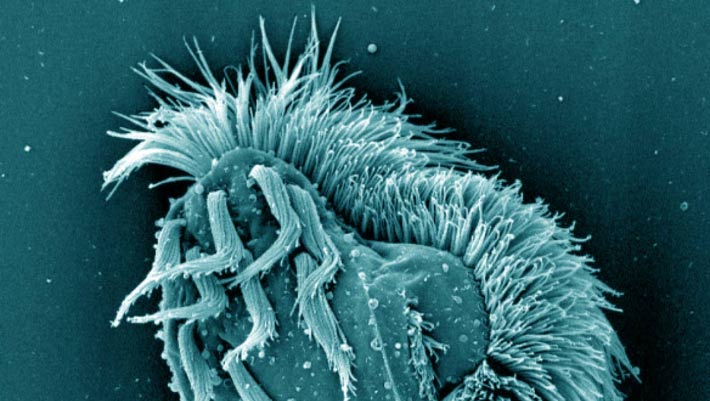
Euplotes gigatrox, a new species of ciliate collected from a seawater filtration system on the Caribbean Island of Curaçao, can transform into a cannibalistic ‘supergiant,’ raising new questions about the complexity of life at the microscopic scale.
The post When Food Runs Short, This Single-Celled Organism Turns into Giant Cannibal to Survive appeared first on Sci.News: Breaking Science News.
Intuitive Software Suite Revolutionizes DNA Structure Generation and Analysis
In a groundbreaking advancement for molecular biology and computational chemistry, researchers at the University of Amsterdam’s Van ’t Hoff Institute for Molecular Sciences have unveiled an innovative software suite designed to accurately model DNA structures within biomolecular assemblies. Dubbed MDNA, this state-of-the-art toolkit empowers scientists across multiple disciplines—including biochemistry, molecular biology, bioinformatics, and biophysics—to visualize, analyze, and simulate DNA with unprecedented atomic precision. This development promises to significantly deepen our understanding of DNA behavior in complex biological environments, advancing both fundamental research and applied sciences.
At the heart of MDNA’s innovation is its ability to generate three-dimensional atomic coordinates for double-stranded DNA molecules, regardless of their shape or complexity. Unlike traditional tools that might rely heavily on generalized models or limited structural libraries, MDNA adopts the rigid base formalism originally embodied in the Curves+ code, a well-regarded computational framework for nucleic acid conformation analysis. This approach treats each base pair within the DNA as an individual rigid unit, allowing for a finely tuned representation of the molecule’s structural intricacies.
What sets MDNA apart from many existing molecular modeling tools is its flexibility and adaptability. Users can effortlessly design DNA molecules following virtually any arbitrary spatial curve, making the creation of highly customized and intricate DNA architectures more accessible than ever before. Moreover, the software supports the modification and extension of pre-existing DNA structures, facilitating iterative design and refinement processes crucial for research that explores DNA-protein interactions and biomolecular mechanics.
The software’s user-friendly nature further democratizes molecular modeling. It has been extensively tested by students and researchers from diverse scientific backgrounds—many with minimal prior programming experience—and has proven accessible for both novices and experts. Accompanying the software are comprehensive tutorials and demonstrations, positioning MDNA as not only a research tool but also as an invaluable educational resource suitable for workshops and classroom environments.
A vital component of MDNA’s structural modeling capabilities comes from the collaborative implementation of an advanced energy function, developed in partnership with the group led by Helmut Schiessel at TU Dresden. This energy function facilitates rapid equilibration of DNA structures while accurately modeling essential physical properties such as stiffness, flexibility, and intrinsic mobility. By incorporating physical constraints, it enables the simulation of biologically relevant phenomena like DNA supercoiling without the computational overhead typically associated with all-atom simulations.
In addition to its robust structural generation features, MDNA excels as an analytical tool. It can process DNA configurations derived from molecular dynamics simulations, facilitating a seamless integration between modeling and analysis within a unified workflow. This integration is crucial for researchers investigating the dynamic nature of DNA and its interactions with proteins and other cellular components, as it reduces the barriers between data generation, exploration, and hypothesis testing.
The scope of MDNA extends beyond just double-stranded DNA; the software includes a growing library of sixteen nucleobase types with plans for future expansion, offering an expanding toolkit to model various DNA modifications and analogs. Such versatility is especially pertinent as synthetic biology and epigenetics increasingly demand precise modeling tools capable of representing non-canonical DNA structures and chemical modifications.
MDNA’s efficient computational framework leverages simplifications that avoid simulating every atom explicitly, allowing structures to reach equilibrium within seconds. This significant reduction in computational time without sacrificing accuracy presents substantial advantages for high-throughput DNA modeling tasks, enabling rapid prototyping of DNA-based nanodevices or exploring a vast landscape of theoretical DNA conformations.
The open-source nature of the MDNA suite invites broad usage and collaborative development within the scientific community. Available publicly via repositories like Figshare and Github, it encourages transparency, reproducibility, and community-driven enhancements. This openness not only fosters innovation but also helps establish MDNA as a standard platform for DNA modeling in both academic and industrial research contexts.
By bridging detailed atomic-level resolution with high computational efficiency and an intuitive interface, MDNA fills a critical gap in the current toolbox for molecular simulation. It offers molecular scientists an indispensable means to unravel DNA’s structural complexities, enhancing our grasp on biological mechanisms ranging from gene regulation to chromosome packaging.
As research increasingly focuses on the interplay between DNA and proteins within the crowded cellular environment, tools like MDNA pave the way for more accurate models that can directly inform experimental design and therapeutic development. These models may, in turn, accelerate progress in fields such as drug discovery, gene editing, and synthetic biology, where precise structural understanding is paramount.
The collaboration between experimental insight and computational ingenuity as demonstrated in MDNA exemplifies the future of molecular sciences—where software not only supports but actively shapes research frontiers. With the support of comprehensive documentation and educational outreach, MDNA is poised to become a cornerstone technology for any scientist captivated by the elegance and complexity of DNA.
Subject of Research: Molecular modeling and simulation of DNA in biomolecular assemblies
Article Title: MDNA: A comprehensive molecular modeling toolkit for DNA in biomolecular assemblies
Web References:
DOI link to the published paper
Image Credits: HIMS / University of Amsterdam
Keywords: Computational chemistry, Biochemistry, Molecular biology, Bioinformatics, Biophysics, DNA modeling, Molecular simulation, DNA-protein interactions, Molecular dynamics
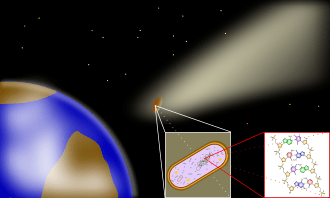
Origin of Life | Coded Information from Space?


DNA sequencing method lifts ‘veil’ from genome black box
Researchers from the University of Cambridge have created a new DNA sequencing method called Chem-map, which can detect where and how small molecule drugs interact with the targeted genome. The method enables researchers to conduct in situ mapping of small molecule-genome interactions with unprecedented precision. Chem-map was used in the study to determine the direct […]
The post DNA sequencing method lifts ‘veil’ from genome black box appeared first on Science Bulletin.
5,000 Years Ago, Two Ancient Megalithic Societies Shared an Unknown Connection—Now Genetic Science Reveals Their Long-Hidden Secrets
New genetic analysis of remains recovered from two 5,000-year-old Neolithic stone monument sites in present-day Germany has revealed a previously unknown biological connection between distant megalithic societies.
The new findings include the discovery that two individuals buried at separate sites over 250 kilometers apart were father and son.
In an email to The Debrief, study co-author Ben Krause-Kyora from Kiel University said their findings reveal surprisingly long-distance familial ties between the people from the Western Funnel Beaker (TRB-West) and the neighboring Wartberg (WBC) communities despite their distinct archaeological differences, suggesting that these Stone Age megalithic communities “were much more interconnected than previously assumed.”
Although the study found little evidence for a genetic connection between the Sorsum and WBC megalithic communities and those found in more distant parts of northern Europe, Britain, and Scandinavia, the research team behind the new study said there may be cultural or social connections between these ancient societies that would account for the archaeological and cultural similarities.
Previously ‘Unrelated’ Megalithic Communities Share Cultural and Architectural Features
Although archaeologists have documented large ancient stone monuments around the world, some of the oldest and most complex megalithic structures began to appear across Europe between 4,500 and 2,800 BCE. The TRB-West community was responsible for some of the most elaborate stone burial chambers of the time, and also stood out for other distinct traditions.

Barbara Fritsch, Kiel.
Unfortunately, very little is known about these ancient stone monument builders or any possible relationship with other nearby megalithic cultures due to a lack of genetic data. To date, the TRB-West site studied by Krause-Kyora and colleagues, called Sorsum, is the only one where human remains have been recovered.
Still, the researcher told The Debrief that previous studies had noted general similarities in burial chamber features between Sorsum and the nearby Wartberg culture, suggesting a potentially deeper connection.
“Most notably, Sorsum contains an underground rock-cut burial chamber with an elongated form, which is unusual for the Western Funnel Beaker (TRB-West) tradition and instead resembles the subterranean gallery graves characteristic of WBC communities,” the study co-author explained.
When asked if any of these architectural features were also observed in other, more distant megalithic cultures beyond Wartburg, Krause-Kyora said that some of the site’s broader features, including collective burial practices and monumental stone architecture, “are shared across many European megalithic cultures.” However, the researcher also cautioned that their findings suggest that even when similarly aged communities shared monument styles, “the social meaning and burial organization behind these structures could differ substantially from region to region.”
Genetic Tests Show Hunter-Gatherer Heritage & Father/Son Duo Buried over 250 Kilometers Apart
To explore any possible genetic connection between the people buried at the TRB-west Sorsum site and remains collected from the Wartburg site of Niedertiefenbach, study leader Nicolas Antonio da Silva from Kiel University’s Institute of Clinical Molecular Biology (IKMB) and colleagues analyzed the genomes of 203 separate individuals collected from Sorsum and five local WBC sites.

When the researchers compared the results, they found that the people buried at Sorsum were more closely related to the WBC groups than other groups classified within the TRB-west culture. This deep genetic connection was unexpected since previous studies have identified the two groups with different archaeological labels.
The two groups also shared what the research team termed “high levels of ancestry” with Western hunter-gatherer cultures. The study authors said the hunter-gatherer ancestry was higher in male lineages, suggesting that the seemingly disparate groups shared “deep-sustained biological connections.”

Perhaps the most shocking discovery involved the genetic connection between two individuals buried separately at the Sorsum and WBC sites. Krause-Kyora told The Debrief that the biological father was buried at the WBC site of Niedertiefenbach, whereas his “subadult son” was buried far away at Sorsum.
“This was one of the most surprising findings of the study because the two sites are separated by more than 250 km,” the researcher told The Debrief.
Site Differences: “Primarily Archaeological & Stylistic” Rather Than Genetic
Although the father-son pair buried over 250km apart was the most unexpected familial relationship identified between the two cultures, the genetic analysis did reveal other, first and second-degree genetic connections between individuals. The researchers suggest that these signs of interbreeding across stylistically independent cultures living at substantial distances from one another indicate occasional movement between the sites, potential intermarriage, and social or cultural exchanges that defy the distance.
“The major differences between Sorsum/TRB-West and WBC are primarily archaeological and stylistic rather than genetic,” Krause-Kyora told The Debrief.

Barbara Fritsch, Kiel.
For example, TRB-West communities like Sorsum are usually associated with decorated funeral beaker pottery and the manufacture of transverse arrowheads, which are razor-sharp, arrow-shaped stones wider than they are long. Conversely, the researcher explained, WBC assemblages like the ones examined in this study “are characterized by mostly undecorated barrel-shaped pottery and gallery graves.”
“Despite these cultural distinctions, genetically the groups were remarkably closely related,” Krause-Koyra told The Debrief.
Taken as a whole, the team said the evidence suggests that Sorsum and the WBC communities represented a “genetically continuous population,” including the possibility that Sorsum was a northern branch of the WBC collective that integrated various TRB-West traditions and methods distinct from those of typical TRB-West groups.
Exploring Potential Connections with Other Ancient European Megalithic Societies
While the genetic analysis revealed unexpected connections between these seemingly disparate megalithic groups, the research team found no genetic connections between the tested groups and more distant megalithic populations in the British Isles or Scandinavia to the north. When asked if these unrelated groups may have shared knowledge or displayed stylistic or cultural similarities that may indicate a similar cultural cross-contamination with the groups they studied, Krause-Koyra told The Debrief that there are “definitely broader stylistic and cultural similarities across European megalithic societies.”
“Monumental stone constructions, communal burials, and certain ritual traditions appear widely shared,” the researcher explained.
Still, he cautioned, their genetic results suggest these similarities were not indicative of a large-scale migration or long-distance biological networks spanning thousands of kilometers. Instead, the study co-author said that previously observed similarities in ideas and cultural practices “likely spread through cultural exchange and interaction between neighboring regions over time.”
When asked about the broader significance of their findings, the researcher told The Debrief that their genetic analysis successfully identified close biological relatives buried over 250 km apart, “showing substantial long-distance mobility and interaction during the Late Neolithic.”
“At the same time, the collective graves were not simply family tombs,” Krause-Koyra added. “Many unrelated individuals were buried together, indicating that social kinship and community identity were just as important as biological relationships.”
Researcher Pleas for Enhancing Research Integrity “Across the Field”
In a separate statement to journalists covering their discovery, Krause-Kyora said those working in ancient DNA research have increasingly emphasized authentication standards, reproducibility, open data sharing, and contamination control. The researcher also noted that a community-wide adoption of transparent bioinformatic pipelines and independent replication of test data has “substantially strengthened confidence in results.”
“Moving forward, stronger support for long-term data accessibility, standardized metadata reporting, and interdisciplinary validation approaches would further enhance research integrity across the field,” Krause-Kyora added.
The study “Long-distance genetic relatedness in megalithic central Europe” was published in Science.
Christopher Plain is a Science Fiction and Fantasy novelist and Head Science Writer at The Debrief. Follow and connect with him on X, learn about his books at plainfiction.com, or email him directly at christopher@thedebrief.org.
DNA From a Decades-Old Museum Specimen Reveals the Hidden Lineage of a Tiny Underwater Predator
While most fruit flies are known for their attraction to fermenting fruit, one species has evolved to hunt in fast-moving streams in Africa, taking on the role of a predator.
A team of researchers from Lund University has mapped the genome of Drosophila enhydrobia, a fruit fly with a unique life cycle. Its larvae develop underwater in fast-flowing streams, where they prey on black fly and midge larvae. The study, published in Current Biology, reveals how a lineage that was once considered a household nuisance transitioned into a new ecological world and identifies the genetic changes that supported this shift.
“We’re talking about a fruit fly that has completely turned its lifestyle upside down,” said Marcus Stensmyr, biology researcher at Lund University and lead author of the study. “From feeding on yeast and rotting fruit, it has become a specialized predator in running water.”
Museomics Provides an Answer
D. enhydrobia has not been observed in the wild since 1981. To obtain genetic material, the research team located a single pinned specimen in a natural history museum in Zurich and used modern DNA techniques to extract an almost complete genome without damaging the specimen.
This method, called museomics, is part of a wider effort to recover genetic information from museum collections that wasn’t accessible when the specimens were first collected. The Zurich specimen, preserved for about 40 years, still contained enough intact DNA for the researchers to conduct both phylogenetic and comparative genomic studies. Earlier technology could not have achieved this result.
Not an Evolutionary Loner
One of the main findings is that D. enhydrobia is not as biologically isolated as once believed. Genomic analysis shows it belongs to a group of flies linked to water-adjacent habitats, mostly in South Asia. Its relatives already possess traits that have evolved into an extreme aquatic lifestyle in this species.
“What at first looked like an evolutionary mystery turned out to be an extreme elaboration of something that already existed,” Stensmyr said. “That makes the story both more understandable and, in a way, even more fascinating.”
A Genome Trimmed for a Different Life
Genomic analysis reveals evidence of genetic trade-offs associated with adaptation to an aquatic environment. The analysis shows that the species has lost several gene families involved in smell, taste, and metabolism, which fruit flies that feed on fermenting food typically rely on. For a species whose relatives rely on chemosensory detection to find food and mates, these losses are significant. The remaining sensory genes display signs of intensified selection, suggesting adaptation to new ecological pressures.
“It’s as if it has fewer tools in the toolbox, but the tools that remain are all the more finely tuned for this particular environment,” said Hamid Ghanavi, a biology researcher at Lund University and co-author of the study.
The findings suggest that major evolutionary shifts can involve losing functions that no longer serve a species, while refining those that do.
The Potential of Museum Collections
In addition to its evolutionary findings, the study is a prime example of the value of natural history collections worldwide. Specimens collected many years ago can now provide new genetic insights thanks to modern sequencing technology.
For species that have disappeared from the wild or gone unobserved for years, museum archives may offer the only source of available biological material. The D. enhydrobia specimen examined in this study serves as an example of this; without it, the genetic history of this unusual fruit fly would have remained unknown.
Stensmyr said his team has only scratched the surface of what those collections might contain. Continued advances in ancient DNA recovery could make museum archives a significant resource for tracking how species have evolved over time and how they might respond to future environmental shifts.
Austin Burgess is a writer and researcher with a background in sales, marketing, and data analytics. He holds an MBA, a Bachelor of Science in Business Administration, and a data analytics certification. His work focuses on breaking scientific developments, with an emphasis on emerging biology, cognitive neuroscience, and archaeological discoveries.
Twin Study Suggests Genetics May Strongly Influence IQ and Future Success
Today’s societies often operate under the assumption that education, hard work, and opportunity are the main drivers of upward mobility. Intelligence has traditionally been viewed as part of that formula as well, with decades of research showing that people who score highly on cognitive tests frequently go on to attain higher levels of education and more prestigious careers.
But a new study suggests the relationship between genetics and success may be more complex and more politically sensitive than many social scientists and decision-makers are comfortable acknowledging.
In research published in Scientific Reports, Dr. Petri J. Kajonius, a research psychologist at Lund University in Sweden, found that genetic factors explained most of the long-term relationship between IQ and later educational and occupational outcomes among young adults.
Using data from the large-scale German TwinLife project, Dr. Kajonius examined how cognitive ability measured at around age 23 related to socioeconomic outcomes four years later, including educational attainment, occupational prestige, and occupational socioeconomic status.
By comparing identical twins, who share nearly all of their DNA, with fraternal twins, who share roughly half, Dr. Kajonius was able to estimate how much of the relationship between intelligence and socioeconomic outcomes could be tied to genetics rather than environmental aspects.
According to the findings, genetic influences explained between 69% and 98% of the observed relationship between IQ and later socioeconomic status.
“Genetic factors further explained most of the IQ–SES association (69–98%), and genetic correlations between IQ and SES exceeded environmental correlations,” Kajonius wrote in the paper. “These findings seem to underscore the importance of researchers and policymakers to also consider genetic factors when examining the life outcomes of young adults.”
The findings step directly into one of the most controversial debates in modern science: how much of a person’s life trajectory is controlled by environment versus inherited biology.
Dr. Kajonius is careful not to frame genetics as destiny. Rather, the research argues that inherited traits may play a substantially larger role in educational and occupational outcomes than many public discussions typically acknowledge.
The study relied on data from TwinLife, a long-running German research initiative examining social inequality across the lifespan. The project tracks more than 4,000 families through repeated surveys and assessments.
For the analysis, Dr. Kajonius focused on adults aged 23 to 27. Participants completed standardized IQ testing and reported educational and occupational milestones.
The results showed a strong relationship between IQ scores at age 23 and socioeconomic outcomes several years later. Participants with higher cognitive scores generally achieved higher educational attainment and occupational status by age 27.
However, the most intriguing findings emerged when those correlations were separated into genetic and environmental components.
The study estimated the heritability of IQ at roughly 75%, while educational and occupational outcomes also demonstrated substantial heritable influences. Depending on the metric being analyzed, genetics accounted for the overwhelming majority of the observed connection between intelligence and socioeconomic success.
Environmental aspects still mattered, specifically in education, but their contribution to the IQ-to-SES relationship was significantly smaller than the genetic overlap identified in the analysis.
Dr. Kajonius provided several possible explanations for this overlap. One possibility is what he describes as “direct or biological pleiotropy,” in which the same genes affect both brain development and traits associated with success, such as motivation or behavioral tendencies.
Another possibility is a more indirect pathway: inherited traits that lead to higher cognitive ability, which in turn provide access to better educational and occupational opportunities.
The findings dispute simplified explanations of inequality that focus exclusively on social structures or environmental disadvantage.
Over the last decade, advances in behavioral genetics and large-scale genetic analysis have increasingly suggested that traits such as educational attainment, personality characteristics, and intelligence are all influenced, at least in part, by heredity.
At the same time, the field remains deeply controversial.
Critics have long warned that research on heredity can be misinterpreted, politicized, or used to support deterministic worldviews. Researchers frequently emphasize that heritability estimates apply to populations, not to individuals, and that this does not mean environmental interventions are irrelevant.
Even highly heritable traits can still be affected by culture, institutions, economics, and personal experience.
Because of that history, studies linking genetics, intelligence, and socioeconomic outcomes often draw accusations of promoting hereditarian thinking or echoing past eugenic arguments. Those concerns have also contributed to caution within the field itself, leaving some areas of the wider “nature versus nurture” debate comparatively underexplored.
“[An] individual’s future socioeconomic status (SES) has been reported to be robustly predicted by cognitive ability (IQ),” Dr. Kajonius notes. “However, research on the genetic and environmental underpinnings of this association in emerging adults remains limited.”
Importantly, the study does not argue that genes determine a person’s value, worth, or inevitable future. Dr. Kajonius also stresses that no single “success gene” exists.
Human outcomes remain extraordinarily complex, formed by countless interactions between biology, environment, institutions, and personal backgrounds. In fact, the study itself notes that IQ explains only a modest portion of overall socioeconomic variation.
The findings similarly complicate the assumption that children from wealthier families succeed solely because of privilege or inherited social advantage.
“The so-called ‘silver spoon’ isn’t as big as you might think,” Dr. Kajonius said in a press release. “Your home life also depends on your genes.”
Rather than portraying affluent children as inherently superior, the study points toward a far more layered reality in which inherited traits, family dynamics, academic access, and broader social conditions all interact over time.
Dr. Kajonius also acknowledged several limitations to the research. The analysis covered only a four-year period during early adulthood, leaving unanswered questions about how these relationships may evolve later in life. Parental socioeconomic status was also not directly controlled for in the primary analysis.
Twin studies themselves remain the subject of longstanding methodological debates, notably regarding shared environments and gene-environment interactions. Dr. Kajonius notes that reducing such complex biological and social processes into broad categories of “genes” and “environment” inevitably oversimplifies reality.
Still, the findings add to a growing body of evidence suggesting that differences in cognitive ability and life outcomes cannot be explained entirely by environmental factors alone.
Dr. Kajonius ultimately argues that broad institutional interventions, such as expanding educational availability, may not completely eliminate socioeconomic disparities because individuals are not psychologically identical.
“People are different – Genetic predispositions (i.e., individual differences) seem to play a role in individuals’ socioeconomic outcomes,” Kajonius concludes. “Failure to account for these well-replicated genetic influences in research may present the wrong conclusions for both the public and academia.”
“As a researcher, my job is to describe reality as accurately as possible. If we want to change society, we must, of course, understand the underlying assumptions.”
Tim McMillan is a retired law enforcement executive, investigative reporter and co-founder of The Debrief. His writing typically focuses on defense, national security, the Intelligence Community and topics related to psychology. You can follow Tim on Twitter: @LtTimMcMillan. Tim can be reached by email: tim@thedebrief.org or through encrypted email: LtTimMcMillan@protonmail.com