Reading view

Southern Ocean Eddies Drive High-Latitude Warming Spotlight

In a groundbreaking study published in Nature Climate Change, scientists have uncovered a critical driver behind a high-latitude warming hotspot in the Southern Ocean—a phenomenon attributed to the complex interactions of ocean mesoscale eddies. The Southern Ocean is a vital component of the global climate system, playing a fundamental role in heat and carbon uptake, yet understanding its warming patterns remains a grand challenge due to the intricate interplay of oceanic and atmospheric processes.

Over the past four decades, from 1982 to 2023, observations have revealed a notable surface warming signal concentrated in certain regions of the Southern Ocean. To robustly characterize this warming, researchers employed a suite of state-of-the-art sea surface temperature (SST) datasets derived from multiple sources including NOAA’s Optimum Interpolated SST, ECMWF’s ORAS5 ocean reanalysis, NOAA’s Extended Reconstructed SST, the Institute of Atmospheric Physics surface temperature records, and the high-resolution Met Office OSTIA product. These datasets, varying in spatial resolution from 0.05° to 2°, collectively ensure a detailed and reliable representation of temperature trends despite the Southern Ocean’s formidable observational challenges.

Beneath the surface, the temperature structure and mixed layer depth have been meticulously analyzed using the extensive Argo float network, which provides high-resolution data from 2004 to 2023. By calculating the mixed layer depth through the vertical buoyancy frequency maximum method, the team achieved a consistent and physically meaningful depiction of how the upper ocean stratification evolves in the warming hotspot region. This approach also aligns well with other established methods, lending further confidence to the interpretation of subsurface heat dynamics.

One of the study’s fundamental breakthroughs involved the incorporation of satellite-observed daily surface geostrophic currents to calculate eddy kinetic energy (EKE)—a critical measure of the ocean’s mesoscale variability. Geostrophic currents at a fine spatial resolution of 0.125° were segmented into mean flows (3-month averages) and perturbations representing eddies. Through careful analysis of these perturbations, the researchers quantified how mesoscale eddies contribute to the Southern Ocean’s thermal state, elucidating their pivotal role not just as passive features but as active agents in heat redistribution.

Additionally, satellite-based chlorophyll-a concentration data spanning 1998 to 2023 was leveraged to assess biological responses to warming. Chlorophyll serves as a proxy for phytoplankton biomass, which is highly sensitive to changes in upper ocean temperature and mixing. This integrated biophysical perspective enables the researchers to frame the warming process within broader ecological implications, an essential step toward comprehensive climate impact assessments.

To understand the mechanisms driving the observed warming hotspot, the scientists turned to high-resolution climate simulations using the Community Earth System Model-High Resolution (CESM-HR). This model components include coupled representations of the atmosphere, ocean, sea ice, and land, simulated at nominally eddy-resolving horizontal resolutions of 0.1° for the ocean and sea ice and 0.25° for atmosphere and land. Following the Coupled Model Intercomparison Project Phase 5 protocol, CESM-HR runs enable the dissection of key physical processes at unprecedented scales previously unreachable in global climate models.

The CESM-HR simulation strategy included two experimental setups: the pre-industrial control (PI-CTRL), representing a stable climate baseline, and a historical-forcing simulation incorporating time-varying anthropogenic influences up to 2100 under RCP8.5, known as HF-TNST. By calibrating trends to exclude model drifts through comparisons with the PI-CTRL, the authors ensured that derived long-term warming signals authentically represent climate change impacts, thereby enhancing the robustness of the mechanistic findings pertinent to the upper Southern Ocean’s response.

A pivotal analytical tool was the partitioning of mean flows and mesoscale eddies, defined by deviations from 3-month averaged states. This allowed precise quantification of the roles played by mean circulation and eddy-induced heat transport. Such decomposition revealed that mesoscale eddies significantly modulate the convergence of heat transport within the warming hotspot, fundamentally altering thermal stratification and surface temperature trends.

The heart of the study’s analysis lies within the vertically averaged ocean heat budget framework. This diagnostic equation encapsulates the change in temperature within the water column as a balance between heat convergence by mean flows, heat convergence by eddies, surface heat fluxes, and turbulent mixing processes. In meticulous detail, the researchers computed these terms directly from model outputs, with turbulent mixing inferred as a residual term. Their quantitative assessment pinpoints mesoscale eddies as not mere bystanders but as key contributors to heat redistribution, exerting a critical influence on regional warming patterns.

Further mechanistic insight was achieved through the computation of the conversion from mean available potential energy (MAPE) to eddy available potential energy (EAPE), a dynamical energy exchange indicative of baroclinic instability—the process through which energy stored in mean density gradients transfers to eddy fields. Utilizing daily velocity, temperature, and salinity from selected periods when fine-scale model outputs are available, the study convincingly demonstrates enhanced energy conversions under warming scenarios. This intensification of baroclinic instability facilitates stronger eddy generation and thus more vigorous vertical eddy heat transport.

The cascade of energy from MAPE to EAPE and subsequently to eddy kinetic energy (EKE) underscores the vital role of mesoscale eddies in modulating Southern Ocean warming. The amplified vertical eddy heat transport identified by the research signifies a dynamic ocean adjustment process that not only shapes temperature evolution but also likely impacts nutrient fluxes, carbon cycling, and sea ice distribution in polar regions.

This study represents a significant advancement in oceanographic climate science by unequivocally linking mesoscale eddy dynamics to observed high-latitude Southern Ocean warming hotspots. Beyond enriching our conceptual understanding, these findings underscore the necessity of resolving ocean mesoscale processes in global climate models. Such resolution is essential for credible projections of polar climate change, which carry profound implications for global sea level rise, weather patterns, and carbon sequestration.

In conclusion, by integrating cutting-edge observational datasets, state-of-the-art Earth system modeling, and sophisticated dynamical analyses, this research unravels the intricate mesoscale mechanisms underpinning Southern Ocean warming. It highlights the synergistic coupling of ocean physics, climate forcing, and energy conversions that together sculpt the spatial patterns of warming at high latitudes. This paradigm shift fosters optimism in our capacity to predict and, ultimately, mitigate the impacts of climate change on Earth’s most sensitive ocean frontiers.

Subject of Research: High-latitude warming hotspot in the Southern Ocean driven by ocean mesoscale eddies and their role in heat transport and energy conversion.

Article Title: High-latitude Southern Ocean warming hotspot induced by ocean mesoscale eddies.

Article References:
Li, D., Jing, Z., Cai, W. et al. High-latitude Southern Ocean warming hotspot induced by ocean mesoscale eddies. Nat. Clim. Chang. (2026). https://doi.org/10.1038/s41558-026-02652-7

DOI: https://doi.org/10.1038/s41558-026-02652-7

Image Credits: AI Generated

  •  

New Study Reveals Wetland Loss Drives $10 Billion Surge in Residential Flood Insurance Claims

In an era marked by escalating climate risks and intensifying hydrological extremes, a groundbreaking study recently published in Nature Water uncovers a startling economic consequence of wetland degradation across the United States. Environmental Defense Fund (EDF) researchers, including Jesse Gourevitch, Adam Gold, and Helena Garcia, present compelling evidence that the loss of wetlands upstream profoundly magnifies downstream riverine flood damages, leading to a staggering increase exceeding $10 billion in residential flood insurance claims since 1985. This study elucidates the crucial, yet often undervalued, role that wetlands play as natural infrastructures modulating flood risk.

Utilizing a spatially explicit, sub-watershed-level analysis, this research integrates hydrological modeling with socio-economic data, particularly insurance claim records from the National Flood Insurance Program (NFIP). By correlating changes in upstream wetland extent with the magnitude of downstream flood insurance payouts, the study isolates the impact of wetland loss on flood severity while controlling for confounding variables such as antecedent local precipitation and intrinsic flood exposure of affected properties. This methodological rigor allows for robust attribution of increased flood damages to wetland area reductions, advancing beyond prior assessments that predominantly offered qualitative or aggregate insights.

The quantification reveals that every hectare of wetland lost upstream corresponds to a 0.01% to 0.03% increase in residential flood claim payments downstream. While seemingly marginal per unit area, these increments aggregate to an unparalleled nationwide surge of $10.1 billion in NFIP claims, reflecting a 9% rise in flood-related payouts attributable to wetland decline over nearly four decades. Spatial variability is pronounced, with metropolitan Houston, southeastern Louisiana, and coastal Florida emerging as epicenters where wetland depletion translates into disproportionately amplified insurance costs, underscoring regional vulnerabilities rooted in both ecological and socio-economic factors.
A salient revelation of the study is the identification of wetland ecosystem services in measurable economic terms. In the top decile of sub-watersheds, each hectare of wetland conserves approximately $24,783 in residential flood damage annually. Astonishingly, the top one percentile of watersheds showcases values exceeding $301,268 per hectare, underscoring the immense protective benefits wetlands confer in critical hydrological contexts. This granular valuation equips policymakers and urban planners with concrete metrics to incorporate ecosystem services into infrastructural cost-benefit analyses and land-use decisions.

Beyond economic metrics, the research emphasizes equity dimensions of wetland loss impacts. Lower-income and predominantly non-white communities have disproportionately borne the brunt of amplified flood damages stemming from upstream wetland depletion. This intersectional insight highlights the urgency of integrating environmental justice considerations in conservation strategies and flood risk mitigation policies, ensuring vulnerable populations do not shoulder inequitable burdens of ecological degradation.
The scope of the study acknowledges limitations inherent in relying solely on NFIP data, which insures approximately 30% of total flood damages nationwide. By extrapolating to encompass uninsured losses and private insurance claims, the researchers estimate that the aggregate cost of flood damage attributable to historical wetland loss could exceed $33 billion since 1985. These figures starkly illustrate the expansive financial stakes tied to wetland conservation and restoration efforts, amplifying the imperative for proactive natural infrastructure management.

From a hydrological perspective, wetlands function analogously to sponges, absorbing substantial volumes of precipitation and surface runoff during storm events. This attenuation delays and diminishes flood peaks downstream, thereby mitigating property damage. Yet, persistent wetland conversion for development and agriculture continues apace, eroding these ecosystem services. The study’s findings make explicit the hidden costs of such land-use changes, reframing wetlands as critical assets whose depletion generates tangible, quantifiable economic consequences.

The authors also explore the policy implications of recent regulatory proposals, particularly the Trump Administration’s proposed revision to the federal “Waters of the United States” (WOTUS) definition. This redefinition threatens to exclude up to 91% of non-tidal wetlands from federal protection if they lack long-term surface water presence, potentially stripping vast tracts of wetlands from regulatory safeguards. The study estimates that these non-WOTUS wetlands, absent additional protection, provide flood mitigation services valued at approximately $177 billion for residential properties alone, signaling a profound risk of future unchecked losses in flood resilience.

Notably, the research underscores that the measured benefits of wetlands extend well beyond riverine flood mitigation for residences. Additional ecosystem services—such as biodiversity habitat, water quality enhancement, carbon sequestration, and recreational value—compound the societal benefits of wetland ecosystems. Including these factors would only magnify the economic imperative to preserve and restore wetlands as multifunctional landscapes vital to climate adaptation and environmental sustainability.

Consequently, this study delivers a clarion call to integrate wetland valuation comprehensively into federal and state decision-making frameworks. Whether informing benefit-cost analyses for infrastructure investments, refining flood insurance models to reflect natural flood defenses, or guiding targeted conservation financing through easements and acquisitions, the evidence-based quantification of wetlands’ flood risk reduction services is poised to reshape environmental governance paradigms.

As climate-induced flooding intensifies, and development strains hydrological systems, this pivotal research accentuates that restoring and protecting wetlands is neither a mere environmental ideal nor a marginal policy convenience. Instead, it constitutes a foundational strategy to curb economic losses, foster community resilience, and achieve equitable climate adaptation outcomes. The $10 billion increase in flood claims linked to wetland loss is an unequivocal economic signal—preserving nature’s infrastructure is essential for sustainable water resource management and disaster risk mitigation in the twenty-first century.

Subject of Research:
Article Title:
News Publication Date: June 1, 2026
Web References: https://www.nature.com/articles/s44221-026-00656-3
References: Environmental Defense Fund study published in Nature Water, June 2026
Image Credits:

  •  

The WEF’s Endgame | Total Control of Your Life

The World Economic Forum is accused of promoting a totalitarian agenda disguised as sustainability, controlling lifestyles through carbon tracking and resource regulation. A senior Archbishop, Viganò, condemns global elites for seeking dominance via Agenda 2030, labeling it a 'global coup.' He urges resistance against these oppressive measures and defends truth-tellers like Rainer Füllmich.

  •  

Climate Alarmist Bill Gates Slams “Doomsday” View of the Climate Change Cult

This may be stunning news! The infamous climate alarmist Bill Gates now slams the “Doomsday” view of the Climate Change Cult, adopting a surprising change of tone on so-called ‘global warming’ in a setback to the green socialist movement.

  •  

What’s Your Carbon Footprint?

Your Carbon Footprint is just one small feature of the tyranny. It is a tool to track you, a scam driven by powerful elites to control human activity and promote their interests under the guise of environmentalism. Climate change narratives serve their hidden agendas rather than genuine ecological concerns.

  •  

When AI Perfectly Mirrors the Values of Its Satanic Creators

WEF advisor Yuval Harari exposes the globalist elite’s fatal hypocrisy. The existential risk is an AI that perfectly mirrors the values of its creators—a system built on centralized control, unaccountable power, and justified deception. And without Christ all humans are subject to evil satanic forces.

  •  

Massive Iron Ore Discovery and Global Warming

A recent high-grade iron ore discovery in Western Australia, valued at $6 trillion, raises questions about environmental policies. The processing of iron ore to make steel requires coal, leading to significant CO2 emissions, highlighting the stark contradiction with the Climate Cult agenda.

  •  

Before the Industrial Revolution the Atmospheric CO2 was Higher than the Claimed 280 ppm

Recent measurements indicate a rise in atmospheric CO2, attributed to human activities by various "experts", despite claims that human contribution is minimal. Research by Dai Ato challenges the established pre-industrial CO2 level of 280 ppm, suggesting it’s underestimated and highlighting flaws in related climate studies, thus questioning current climate change assumptions.

  •  

Can Earth’s Magnetic Field Survive for Billions of Years?

I discuss evidence supporting the Earth's magnetic field as a divine shield for life, highlighting its decay since Gauss's measurements. I link this decay to a young Earth, highlighting that Carbon-14 presence in minerals aligns with a creation timeline under 8,000 years.

  •  

Earth’s Albedo: The Mechanism Behind Global Warming

Earth's albedo, which measures how much sunlight is reflected by the surface, has decreased by 1% since the 1980s, significantly affecting global temperatures. Dr. Ned Nikolov argues that this decline drives global warming, challenging the notion of human-induced causes. Climate control initiatives are money laundering schemes only benefiting the mega-rich.

  •  

The Physics of Creation | Day 3

Day 3 of creation, God formed dry land and initiated life with green plants, establishing essential conditions for future sentient life forms. This day also included the formation of Earth's physical structures. All creations were designed perfectly, paving the way for environmental balance and the development of biodiversity.

  •  

Thermodynamics and Creation: A Scientific Perspective

The four universal laws of thermodynamics are a part of God’s creation, and testify to His continuing work of creation. These fundamental physical laws argue against the big bang origin of the universe and spontaneous complexity arising in nature, attributing creation solely to a divine intelligence.

  •  

Cow Farts, Methane and Meat

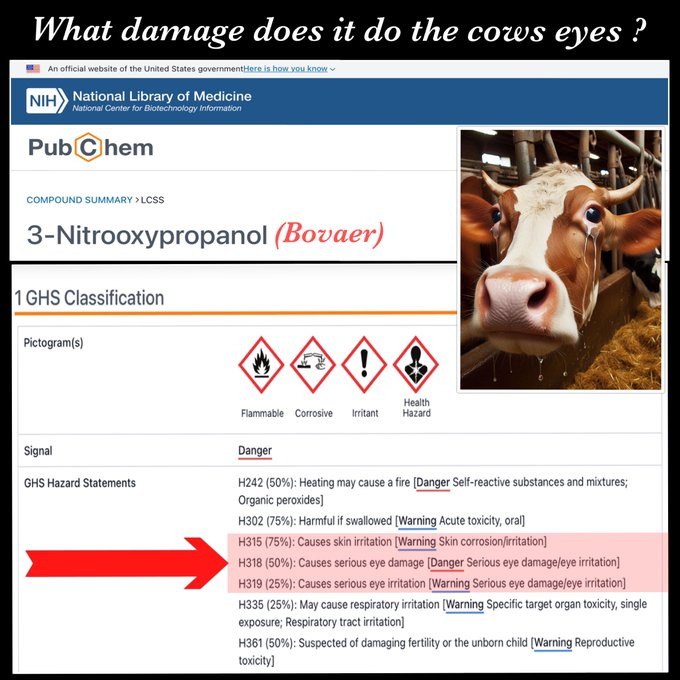
Public concern has surged over the food additive 3-nitrooxypropanol (3-NOP), used in cattle feed to reduce methane emissions. Critics claim this approach could lead to widespread cattle culling and a shift towards synthetic food production. Allegations link it to health risks, corporate interests, and a broader agenda against traditional agriculture.

  •  

The Essential Role of Carbon in Life’s Chemistry

The fundamental differences between Carbon and Silicon as bases for life are presented. All known life relies on Carbon for energy through processes like photosynthesis, whereas Silicon-based life is impossible. The belief in creating sustainable fuels while eliminating Carbon is contrary to all logic. No Carbon means no life!

  •  

Lies, Lies, Lies: There Was No Pandemic, There is No Man-Made Global Warming

Dr. Mike Yeadon claims that global elites have misled the public about COVID-19 and climate change, asserting these issues are fabricated to promote global depopulation.

  •  
❌