Reading view

Scientists Discover an Astronomical ‘Rosetta Stone’ for Decoding Mysterious Cosmic Signals


An international team of astronomers has uncovered what they are calling the clearest evidence yet for dying white dwarf stars as the origin of a class of mysterious cosmic signals called long-period radio transients.

The research, led by University of Sydney PhD student Kovi Rose, potentially offers researchers a ‘Rosetta Stone’ capable of deciphering and categorizing other such signals.

“For the first time, we have pinpointed the origin of these signals, confirming the source to be a ‘cataclysmic variable’, or an accreting white dwarf star,” Rose explained in an email to The Debrief.

The team behind the discovery, including the astronomers at CSIRO’s ASKAP radio telescope, said that identifying the origin of these transient cosmic signals that come from a few remote regions of the Milky Way galaxy could also offer researchers a “natural laboratory” to study the extreme physics that occur in such environments.

Mysterious Cosmic Signals “Have Puzzled Astronomers for Years”

According to the same email, long-period radio transients were initially thought to be slow-spinning neutron stars, known as pulsars, emitting periodic energy bursts. However, the team notes that mathematical models suggest that slow-rotating neutron stars cannot generate enough energy to produce the mysterious cosmic signals.

“Long-period radio transients have puzzled astronomers for years,” Mr. Rose explained. “We’ve only found about a dozen, and their origins have been unclear.”

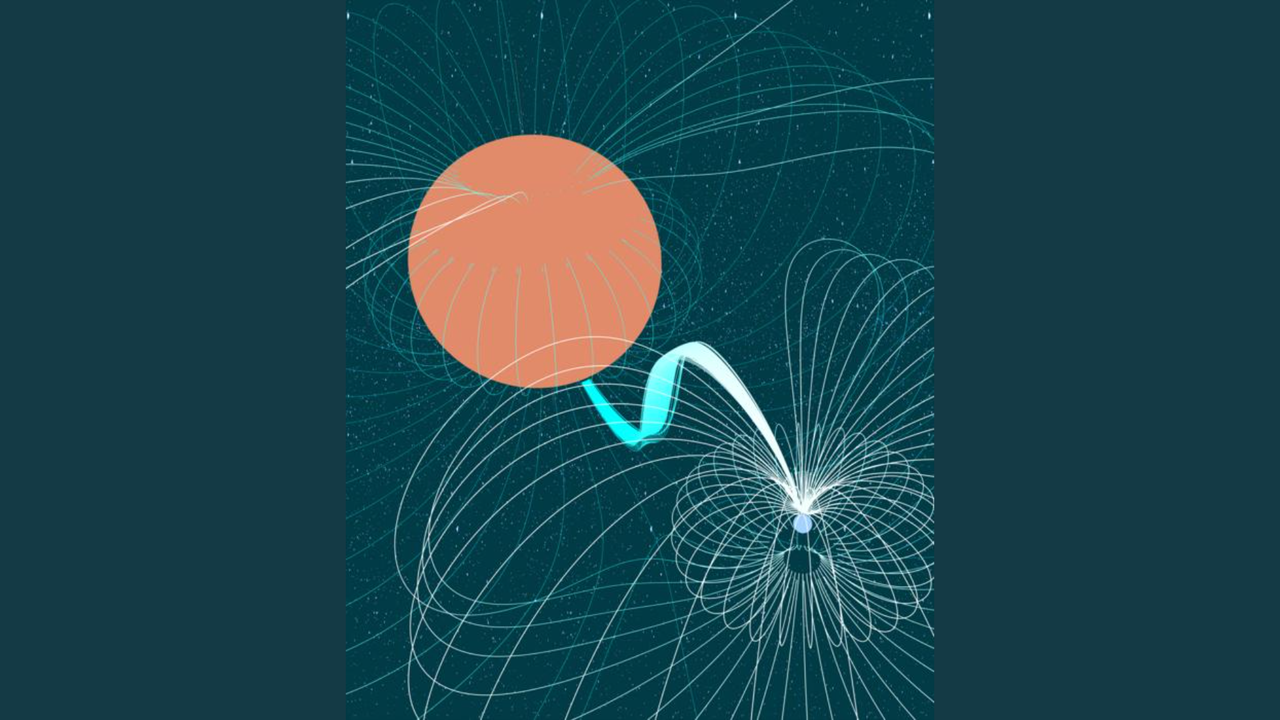
Hoping to solve the mystery, the University of Sydney-led team aimed their instruments at a region of space and discovered a small, dense star called a white dwarf. However, unlike our solitary Sun, this white dwarf is part of a binary star system, named ASKAP J1745−5051, with a much larger but less dense red dwarf as its companion.

mysterious cosmic signals
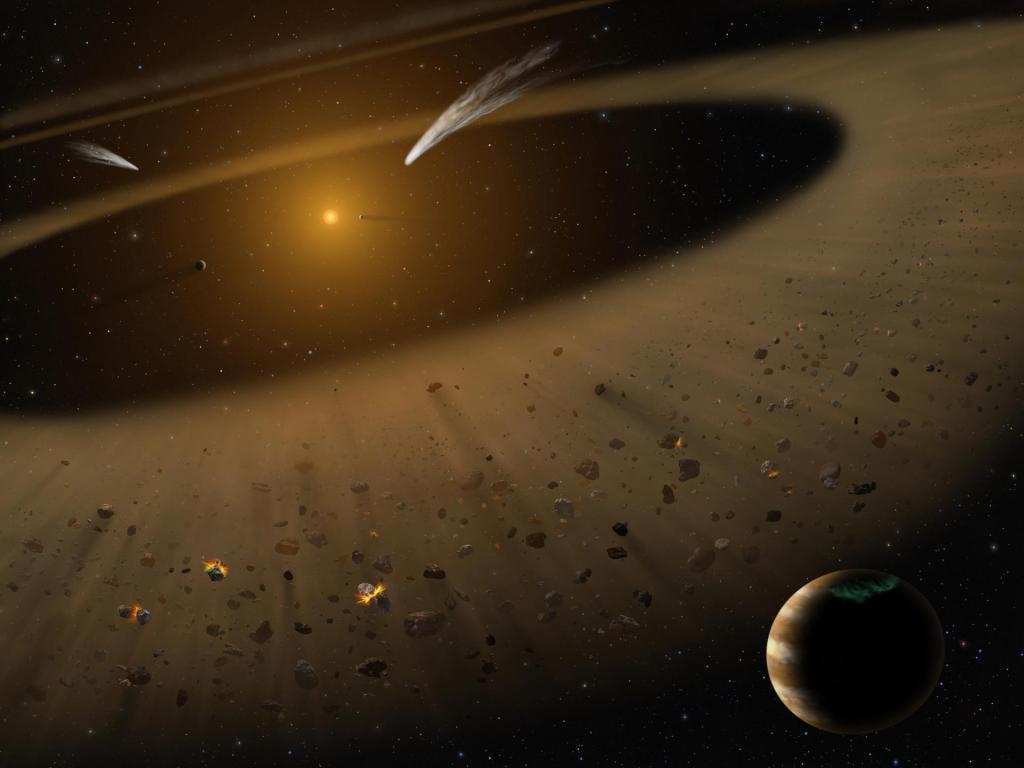
Artists’ impression of a white dwarf binary system, ASKAP J1745-5051, that could serve as a cosmic ‘Rosetta Stone’ for studying long-period radio transients. Image Credit: Carl Knox/OzGrav/Swinburne & Joshua Preston Pritchard (CSIRO).

After several scans with ASKAP, the team discovered that the smaller white dwarf, about the size of Earth but with a mass closer to the Sun’s, was shedding or accreting material onto the larger but less dense red dwarf star. As the material heats up, it releases X-rays.

The team also detected periodic bursts of radio signals from the binary system. Although these regular emissions are tied to the system’s orbital motion, the researchers found that the bursts of X-rays and radio signals didn’t peak at the same time. According to Mr. Rose, this lack of synchronicity “tells us they’re being produced in different regions of the system.”

Analysis Reveals Long-Period Radio Transient Match

A closer analysis suggested that, due to the proximity of the two stars, which orbit each other in just one hour, their interacting magnetic fields were producing regular radio-wave bursts, which the team clocked at 1.4-hour intervals.

Professor Murphy, Head of School at the University of Sydney School of Physics and Chief Investigator at the ARC Centre of Excellence for Gravitational Wave Discovery (OzGrav), said that similar objects have previously been linked to binary star systems, “but this is the first one where we can clearly see both stars and the accretion process in action.”

When the team compared the emissions from the binary system with those of previously detected long-period radio transients, the data were a clear match. According to Rose, this comparison proved definitively that this elusive category of mysterious cosmic signals “comes from a white dwarf actively pulling material from a companion star.”

Natural Laboratories for Exploring Extreme Plasma Physics

Although the team’s findings do not rule out other causes of these mysterious cosmic signals, they said their discovery “strengthens an alternative explanation” that at least some are caused by binary star systems involving white dwarfs.

“The system is also only the second known long-period radio transient to emit regular X-rays – and the first where the cause of the regularity has been confirmed,” they explained.

When discussing the potential impact of their findings on future research, the team noted that ASKAP J1745-5051 could provide astronomers “a reference point” for understanding other long-period radio transients that have remained uncharacterized.

Mr. Rose said that the system could help researchers determine whether other long-period transients are more like pulsars or like white dwarf systems, “acting like a stellar Rosetta stone,” referencing the famous stone tablet that helped modern researchers decipher Egyptian hieroglyphs. He also noted that the system offers researchers a unique opportunity to study extreme plasma physics and magnetic-field interactions “under conditions that cannot be replicated on Earth.”

“These systems are natural laboratories,” Mr Rose said. “They allow us to test our understanding of how matter behaves in strong magnetic fields and under intense gravitational forces.”

In the future, the University of Sydney-led team said they are planning future observations of the system with a combination of optical, radio, and X-ray telescopes “to better understand how these emissions are generated” and to determine whether similar mechanisms found in this system can explain the full population of long-period radio transients spotted to date.

“Each new discovery is helping us piece together the bigger picture,” Mr Rose explained. “We’re only just beginning to understand this new class of cosmic events.”

The findings are published in the journal Nature Astronomy.

 Christopher Plain is a Science Fiction and Fantasy novelist and Head Science Writer at The Debrief. Follow and connect with him on X, learn about his books at plainfiction.com, or email him directly at christopher@thedebrief.org.
  •  

James Webb Space Telescope | Extremely High Redshift Failure

The James Webb Space Telescope (JWST) has observed what appear to be very distant red galaxies challenging the standard big bang theory. Misidentifying some Brown Dwarf stars within our Milky Way as these red distant galaxies brings into question the existing cosmological models.

  •  

Why are Astronomers Stunned by Abundant Oxygen in Earliest Known Galaxy?

Astronomers have discovered a galaxy, allegedly dating from just 300 million years after the big bang, with unexpectedly high oxygen levels. This is in contradiction to existing cosmological models with galaxy formation taking much longer. The findings refute the validity of the big bang story itself.

  •  

The Physics of Creation | Day 4

Day 4 of creation, God made the Sun, Moon, planets, and stars, establishing them as luminaries in the heavens. The language of the Bible uses an Earth-observer perspective, meaning that light from celestial bodies was instantly visible. Additionally, I confront naturalistic explanations for celestial origins, proposing a creationist model.

  •  

Searching for planets in a galaxy far away

The Star Wars series depicted alien heroes fighting against evildoers and their planet-destroying superweapons “a long time ago in a galaxy far, far away.” But what do scientists really know about alien planets in distant galaxies beyond our own? These worlds, known as extragalactic exoplanets, are expected to exist, assuming the Milky Way is no different from other galaxies. However, we have yet to find them since other galaxies are still too far, far away for modern exoplanet-observing techniques.

Recently, a team of astronomers analyzed a stream of over 700,000 stars that the Milky Way likely absorbed from the dissolving Sagittarius dwarf galaxy. These stars are very distant, so the team investigated whether any of them host large, close-orbiting exoplanets called hot Jupiters, which are relatively easy to find.  

They established a set of 3 criteria to narrow down their list of stars. First, each star should appear bright enough when observed by the Transiting Exoplanet Survey Satellite, or TESS, to ensure high-precision results from the team’s data processing software. Second, each star must have more than a 50% likelihood that it originated from the Sagittarius dwarf galaxy, based on motion and position measurements from the Gaia mission. Finally, each star should have a radius of less than twice the Sun’s, as it’s easier to find planets around smaller stars. They used these criteria to limit their candidate list to around 20,000 stars.

After selecting their candidate stars, the team analyzed publicly available TESS catalog data using the software packages eleanor and TESS-Gaia Light Curve, or TGLC. These tools allowed them to plot each star’s brightness over time, in graphs called light curves. Then, the astronomers looked for periodic brightness dips in these light curves as evidence that an exoplanet passed in front of the star. From this, they excluded several thousand additional stars with too much light interference from their surroundings, reducing their final sample size to just over 15,000 stars.

To find hot Jupiters, the team looked for brightness dips at intervals of 14 hours to 10 days, which is the typical orbital period range for hot Jupiters. Then, they used geometry to derive each exoplanet’s radius from the fraction of the starlight it blocked. They excluded candidates with dips corresponding to objects with radii at least twice that of Jupiter’s, as these are likely caused by orbiting companion stars rather than exoplanets.

Among all the stars they surveyed, the team’s strongest candidate to host a hot Jupiter was a star labeled TIC 92223525. They calculated that this star could host an exoplanet with a radius 1.76 times the size of Jupiter’s and an orbital period of 7.2 days. However, when they reviewed this star’s light curve, they found that it was likely contaminated by its neighbor, TIC 92223526. The regular brightness dips from this system of orbiting stars mimicked that of an exoplanet, creating a false positive for TIC 92223525 that was difficult to detect during initial screening. As a result, the team ultimately excluded this candidate, leaving them with no confirmed exoplanets.

The researchers drew several conclusions from their inability to find hot Jupiters in their sample of stars from the Sagittarius dwarf stream. They estimated that if more than 1% of these stars hosted hot Jupiters, it would have been highly unlikely not to detect one in a sample of over 15,000 stars. This places an upper limit of about 1% on the occurrence rate of hot Jupiters. If this estimate is accurate, then even an ideal exoplanet search team would need to examine over 11,000 stars to find an extragalactic hot Jupiter. Accounting for more realistic levels of scientific uncertainty, a future team would likely need to study at least 80,000 stars to find one. 

Although this survey of the Sagittarius dwarf stream yielded null results, the team suggested that future researchers continue searching it and other star streams from different galaxies. Scientists have identified over 20 such streams in the Milky Way. Researchers studying these streams could find the first extragalactic exoplanet or provide evidence that other galaxies produce fewer hot Jupiters than our own. But let’s hope none of them find the first extragalactic Death Star!

The post Searching for planets in a galaxy far away appeared first on Sciworthy.

  •  

What makes ‘chemically peculiar stars’ peculiar?

Stars are mostly made of 2 elements: hydrogen and helium. While this has always been the case, those 2 elements and lithium were the only elements in existence when the Big Bang occurred around 14 billion years ago. When the first stars exploded, they released those primordial elements, as well as heavier elements produced by nuclear fusion inside them. 

Astronomers call all elements heavier than hydrogen and helium metals, a term chemists use quite differently. Subsequent generations of stars, including the Sun, formed in clouds of gas and dust enriched with these metals, such as carbon, oxygen, magnesium, and silicon. Scientists estimate that modern stars are 1% to 5% metal by mass.

Astronomers claim there is no solid evidence that stars contain exceptionally high amounts of metals, but some, called chemically peculiar stars, appear to. Astronomers study stars by looking at the patterns of light they emit, called spectra. Each element produces a unique light pattern, so astronomers can compare the light patterns in a star’s spectra to determine how much of each element is present, especially in the outer layers of the star. Researchers theorize that chemically peculiar stars don’t actually have more metals than average stars. Instead, they think that metals from their interiors diffuse to their outer layers more than in most stars.

A team of researchers from the American Association of Variable Star Observers and Masaryk University in Czechia recently observed 85 chemically peculiar stars to understand their behavior and better classify them. For their study, they first used the General Catalog of CP Stars, published in 2009 in Astronomy & Astrophysics, to identify targets across the 4 classes of these stars, labeled CP1 through CP4. CP1 stars have strong spectral patterns for iron and other heavy elements, CP2 stars have strong patterns for silicon, chromium, strontium, and europium, CP3 stars have strong patterns for mercury and manganese, and CP4 stars have either unusually weak or usually strong helium patterns. 

The team compiled a list of 85 stars to observe, then used the BRIght Target Explorer (BRITE) Constellation to monitor changes in their brightness. The BRITE Constellation is a set of 5 satellites equipped with telescopes and cameras for either red or blue light. Using the BRITE Constellation, the team monitored each star for several days. 

They found that 74 of these 85 chemically peculiar stars varied in brightness during their survey. They attributed this to the varied abundance of metals on their surfaces, which would form dark patches that go in and out of view from Earth’s perspective as the stars rotate. The team observed that 6 of these 74 stars appeared to change in brightness over multiple periods. They were surprised by this result because a star’s brightness wouldn’t vary over multiple periods if the changes were due to rotation. They compared their findings to data other scientists had collected from these stars with the Transiting Exoplanet Survey Satellite, or TESS, and found that all 6 stars had been misclassified as chemically peculiar stars.

The other 11 chemically peculiar stars appeared to show no periodic changes in their brightness, suggesting that they’re stationary. The team claimed that some CP1 and CP3 stars don’t rotate, but they identified cases in which CP2 and CP4 stars that ought to rotate appeared to be stationary. They suggested 2 potential reasons for this. One is that these CP2 and CP4 stars are misclassified, requiring more thorough analysis of their spectra to confirm their classifications. The other is that the stars rotate slowly, with rotational periods of 50 days or longer, which would be difficult to distinguish from those of totally stationary stars.

The team concluded that more astronomers should revisit the historical classifications of stars, especially as technology advances and more space-based telescopes become available. This strategy would allow future researchers to draw better data from research archives and catalogs. Additionally, they claimed that their method of pairing long-term monitoring via small satellites with TESS data is well-suited for refining classifications, identifying misclassified objects, and further exploring the structure and mechanics of chemically peculiar stars.

The post What makes ‘chemically peculiar stars’ peculiar? appeared first on Sciworthy.

  •  
❌