Reading view

Meteorite Found in Africa Preserves Evidence of Long-Lost Massive Protoplanet

This is an artist impression of the protoplanetary disk around HD 107146. Image credit: A. Angelich / NRAO / AUI / NSF.

The Northwest Africa (NWA) 12774, an angrite meteorite discovered in the Sahara Desert, likely in Mauritania, appears to be a fragment of a vanished protoplanet, offering the strongest evidence yet that a large planetary body formed and was later destroyed during the Solar System’s chaotic infancy.

The post Meteorite Found in Africa Preserves Evidence of Long-Lost Massive Protoplanet appeared first on Sci.News: Breaking Science News.

  •  

Identifying Martian Lower Crust, Mantle in Isidis Impact

In the endless quest to unravel the mysteries of Mars, a landmark study has emerged proposing groundbreaking criteria to identify the elusive lower crust and mantle materials of the Red Planet. This pioneering research, spearheaded by Trowbridge, Horgan, Weiss, and colleagues, focuses on the geological aftermath of the colossal Isidis impact basin, a feature that has long intrigued planetary scientists due to its immense scale and unique compositional context. Published in Communications Earth & Environment, their work sets a new standard for interpreting Martian geology by delineating precise identification markers for the Martian subsurface layers that have been thrust upward by ancient impact processes.

The Isidis Planitia, a vast impact basin approximately 1500 kilometers in diameter, represents one of the youngest and most prominent geological structures on Mars. Formed around 3.9 billion years ago during the Late Heavy Bombardment, this crater provides a natural window into the planet’s interior through the excavation and exposure of its lower crust and potentially mantle materials. The research team capitalized on this unique feature, utilizing high-resolution spectral data, geophysical modeling, and comparative analysis to develop robust criteria for differentiating deep crustal and mantle rocks from more common surface deposits.

Central to the study is the integration of multispectral imaging from orbiters such as Mars Reconnaissance Orbiter’s CRISM instrument and detailed geochemical simulations. These tools enable the extraction of compositional signatures associated with varying mineral assemblages. For instance, the presence of olivine-dominated ultramafic rocks, distinct pyroxene compositions, and specific alteration minerals serve as key indicators for mantle-derived materials. By correlating these spectral indicators with geophysical anomalies detected in the region, the team crafted a comprehensive framework to pinpoint probable lower crust and mantle exposures.

One of the study’s remarkable achievements is the identification of an unexpected diversity in the mineralogical assemblage within the Isidis excavated materials. Contrary to previous models that predicted a relatively uniform lower crustal layer, the researchers found evidence suggesting significant heterogeneity. This includes variations in Mg/Fe ratios within olivine crystals and compositional differences in pyroxenes, which hint at complex magmatic differentiation and mantle metasomatism events that predate the impact. These findings challenge conventional wisdom and suggest that Mars’s deep interior retains a more dynamic and chemically intricate history than once thought.

The implications of correctly identifying lower crust and mantle materials extend far beyond academic interest. These rocks act as a geological archive, preserving records of early planetary differentiation, mantle convection patterns, and volcanic activity. Unlocking these secrets helps refine models of Mars’s thermal evolution and provides insights into its tectonic and volcanic history. Moreover, such knowledge is vital for astrobiological considerations; the geochemical environment of the lower crust and mantle potentially harbors clues about past habitability and subsurface water reservoirs.

The methodology outlined in this paper is also a leap forward in planetary remote sensing. Previous approaches often relied solely on surface morphologies or broad compositional classifications that were insufficiently discriminating to distinguish deep crustal from upper crustal materials. By employing an interdisciplinary strategy that includes spectral characterization, petrological modeling, and impact excavation dynamics, the authors have set a new benchmark for planetary geoscience research. This approach has wide applicability, opening pathways to reassess other Martian regions and potentially the crust-mantle interface of other terrestrial bodies like the Moon or Mercury.

Crucially, the authors address the complexity of impact processes themselves and their influence on exposing and altering the crust-mantle interface. The Isidis impact, due to its scale and the kinetic energy involved, likely caused widespread fracturing and melting, modifying the original signatures of deep-seated rocks. Disentangling these effects required sophisticated modeling of shock metamorphism and ejecta redistribution, ensuring that identified materials can be confidently traced back to their sources within the planetary interior rather than being artifacts of impact mixing.

This research also propels forward the discourse on Mars sample return missions. Identifying locations where lower crust and mantle materials are exposed at the surface highlights prime sampling sites for future missions. These samples could revolutionize our understanding of the Red Planet’s formation and development. The criteria provided by Trowbridge et al. serve as a guide to prioritize landing sites that maximize the scientific return by targeting the most geologically informative materials.

Furthermore, the study confronts challenges associated with remote geochemical analysis on Mars. Variability in dust cover, surface weathering, and the presence of secondary minerals have historically confounded interpretations. The authors mitigate these issues through a multi-layered approach combining spectral deconvolution, thermal inertia data, and comparative terrestrial analog studies. This layered methodology enhances confidence in the identification of primary crustal and mantle signatures amid surface contaminants, elevating the precision of remote geological investigations.

The impact on planetary geology education and public engagement cannot be overstated. The clarity and innovation demonstrated in this research provide a compelling narrative about Mars’s inner workings and cataclysmic past. Communicating such advances in an accessible yet scientifically rigorous manner enriches both academic discourse and public understanding, inspiring the next generation of planetary scientists and enthusiasts worldwide.

Looking ahead, the authors emphasize the need for corroborative in-situ investigations to validate their proposed identification framework. Landers and rovers equipped with advanced geochemical and mineralogical tools can directly test these hypotheses by sampling targeted outcrops within and around Isidis Planitia. Collaborative efforts between orbital reconnaissance and landed operations will be essential to fully unravel the formation processes and compositional diversity of Mars’s lower crust and mantle.

Another noteworthy dimension of the study is the potential influence of these deep Martian materials on surface volcanism and tectonics. By better characterizing the elemental and mineralogical makeup of the lower crust and mantle, scientists can improve models of mantle melting and magmatic ascent, which shape volcanic constructs observed across Mars. This understanding bridges the gap between subsurface processes and planetary surface evolution, providing a holistic view of Martian geodynamics.

In the broader context of comparative planetology, this work echoes studies of Earth’s lower crust and mantle, drawing parallels and contrasts that elucidate planetary formation mechanisms and divergence. Differences observed in Martian deep crustal rocks versus Earth’s geology underscore the unique pathways planetary interiors can take under varying thermal and compositional regimes. Such insights refine theoretical frameworks applicable across our Solar System’s terrestrial planets.

The study also invites re-examination of the isotopic and age data from Martian meteorites believed to originate from deep crustal or mantle sources. Integrating these data with the newly established identification criteria enhances confidence in meteorite provenance assignments and contributes to more nuanced timelines of Martian geological history.

In summation, the comprehensive criteria proposed for identifying the Martian lower crust and mantle excavated by the Isidis impact constitute a transformative leap in understanding the Red Planet’s subsurface architecture. This research lays the groundwork for future exploration, sample return, and comparative geological studies, propelling Mars science into a new era of detail and discovery. As humanity continues its exploration of Mars, such foundational work illuminates the path toward deciphering the planet’s complex past and its potential for harboring life.


Subject of Research: Identification criteria for Martian lower crust and mantle materials excavated by the Isidis impact.

Article Title: Proposed identification criteria of the Martian lower crust and mantle excavated by the Isidis impact.

Article References:
Trowbridge, A.J., Horgan, B., Weiss, B.P. et al. Proposed identification criteria of the Martian lower crust and mantle excavated by the Isidis impact. Commun Earth Environ (2026). https://doi.org/10.1038/s43247-026-03617-6

Image Credits: AI Generated

  •  

JWST Is Tracking Down the Cosmic Origins of Earth's Water

New observations from the James Webb Space Telescope are exposing the pathways that water takes to reach terrestrial planets

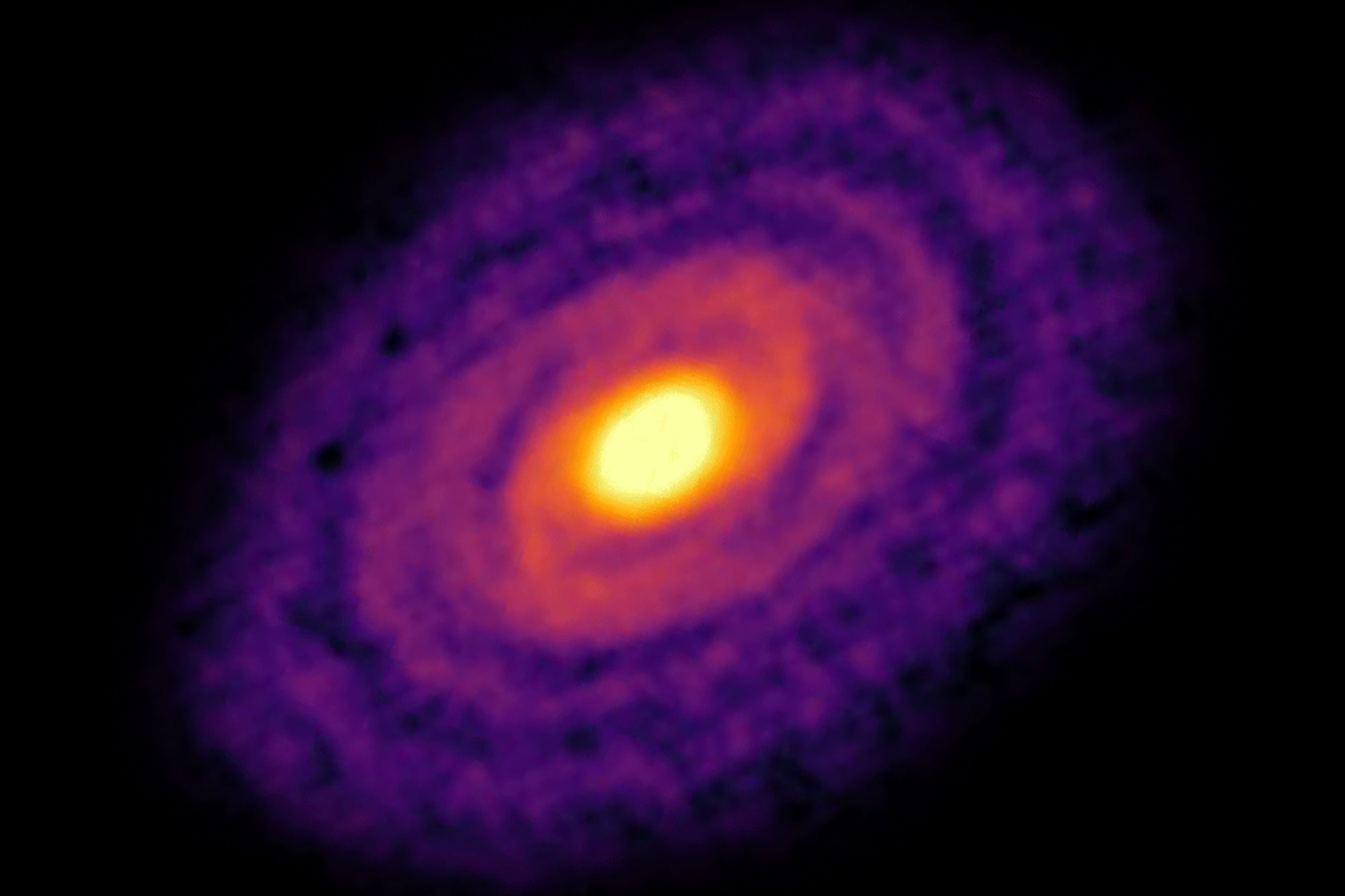
© ALMA (ESO/NAOJ/NRAO), Andrews et al.; N. Lira. ( CC BY 4.0 )

An image of a protoplanetary disk captured by the Atacama Large Millimeter/submillimeter Array (ALMA). Similar observations of such planetary nurseries by the James Webb Space Telescope (JWST) are revealing new details about how water finds its way into rocky worlds.
  •  

Earth May Be Seeding Venus With Life, According to New Research

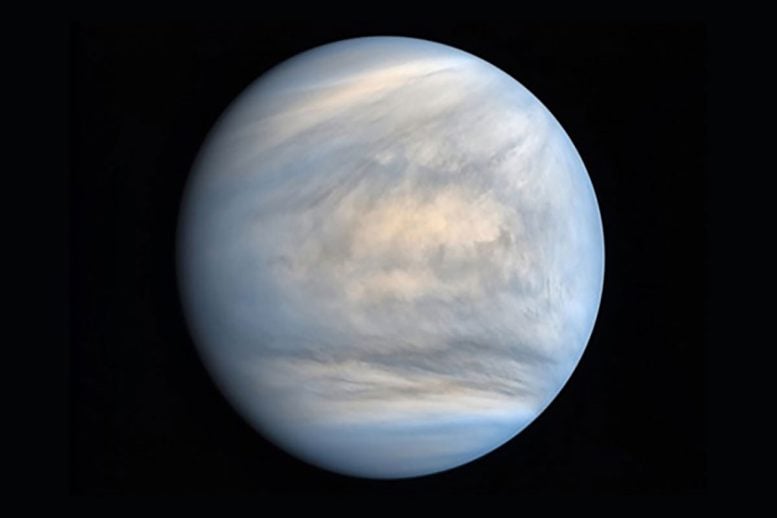
Venus Cloud Layers in UltravioletModels suggest that impact-ejected material from Earth could reach Venus’ clouds and potentially survive there briefly. Panspermia is the idea that life, or the ingredients needed for life, can move through space on asteroids, comets, and other objects. If life’s building blocks appear on one planet, a powerful impact could blast material from its surface [...]
  •  

JWST maps the weather on a hot gas giant 700 light-years away

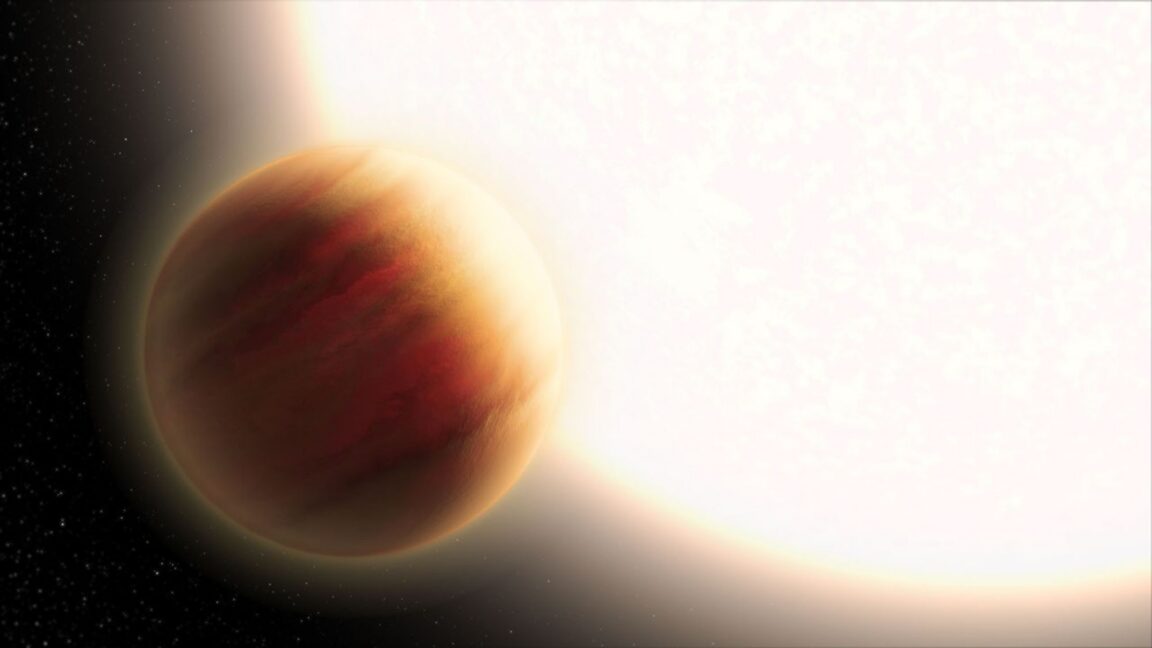
WASP-94A b is a hot, tidally locked gas giant orbiting close to one of the stars in a binary system roughly 690 light-years away from Earth. In a new Science study, scientists led by Sagnick Mukherjee, an astrophysicist at Johns Hopkins University, used the James Webb Space Telescope to learn what the weather looks like out there.

Tidal locking means that you no longer have day- and night-side temperature differences sweeping across the planet. “We wanted to understand the atmospheres of such planets,” Mukherjee says. “Are they static or dynamic? Do they have winds? Do they have clouds?” His team found that, on WASP-94A b, it’s cloudy in the morning, but the skies are clear in the evening. The fact that we didn’t know this already means we might have gotten the chemistry of this and many other exoplanets surprisingly wrong.

Averaged atmospheres

WASP-94A b has a mass slightly below half of Jupiter but has a diameter that’s over 70 percent wider. “This means the planet has low density, and its atmosphere extends further out into space, which makes it easier to observe,” Mukherjee explains. When astronomers study atmospheres like this, they usually rely on transmission spectroscopy. By analyzing the spectrum of light filtering through the planet’s atmosphere as it crosses in front of its star, they can figure out its chemical composition.

Read full article

Comments

© NASA, ESA, and L. Hustak (STScI)

  •  

"I'll buy 10 of those"—NASA science chief yearns for mass-produced satellites

There are more opportunities to access space than ever, thanks to a bevy of commercial rockets, some with reusable boosters, led by SpaceX's workhorse Falcon 9. So why is NASA launching fewer telescopes and planetary science missions than it did a quarter-century ago?

The answer is complex. It is not necessarily the money. The space agency's science budget this year is $7.25 billion, roughly the same as it was in 2000, adjusted for inflation. This is despite attempts by the Trump administration to drastically reduce NASA science funding.

In the early months of his tenure, NASA Administrator Jared Isaacman's focus has been on human spaceflight and the Moon. This isn't terribly surprising given NASA's wildly successful Artemis II mission carrying four astronauts around the Moon last month. Since taking office in December, Isaacman has announced an overhaul of the Artemis program, canceling a space station to be built in orbit around the Moon in favor of construction of a base on the lunar surface.

Read full article

Comments

© NASA/JPL-Caltech/Space Science Institute

  •  

JWST maps the weather on a hot gas giant 700 light-years away

WASP-94A b is a hot, tidally locked gas giant orbiting close to one of the stars in a binary system roughly 690 light-years away from Earth. In a new Science study, scientists led by Sagnick Mukherjee, an astrophysicist at Johns Hopkins University, used the James Webb Space Telescope to learn what the weather looks like out there.

Tidal locking means that you no longer have day- and night-side temperature differences sweeping across the planet. “We wanted to understand the atmospheres of such planets,” Mukherjee says. “Are they static or dynamic? Do they have winds? Do they have clouds?” His team found that, on WASP-94A b, it’s cloudy in the morning, but the skies are clear in the evening. The fact that we didn’t know this already means we might have gotten the chemistry of this and many other exoplanets surprisingly wrong.

Averaged atmospheres

WASP-94A b has a mass slightly below half of Jupiter but has a diameter that’s over 70 percent wider. “This means the planet has low density, and its atmosphere extends further out into space, which makes it easier to observe,” Mukherjee explains. When astronomers study atmospheres like this, they usually rely on transmission spectroscopy. By analyzing the spectrum of light filtering through the planet’s atmosphere as it crosses in front of its star, they can figure out its chemical composition.

Read full article

Comments

© NASA, ESA, and L. Hustak (STScI)

  •  

"I'll buy 10 of those"—NASA science chief yearns for mass-produced satellites

There are more opportunities to access space than ever, thanks to a bevy of commercial rockets, some with reusable boosters, led by SpaceX's workhorse Falcon 9. So why is NASA launching fewer telescopes and planetary science missions than it did a quarter-century ago?

The answer is complex. It is not necessarily the money. The space agency's science budget this year is $7.25 billion, roughly the same as it was in 2000, adjusted for inflation. This is despite attempts by the Trump administration to drastically reduce NASA science funding.

In the early months of his tenure, NASA Administrator Jared Isaacman's focus has been on human spaceflight and the Moon. This isn't terribly surprising given NASA's wildly successful Artemis II mission carrying four astronauts around the Moon last month. Since taking office in December, Isaacman has announced an overhaul of the Artemis program, canceling a space station to be built in orbit around the Moon in favor of construction of a base on the lunar surface.

Read full article

Comments

© NASA/JPL-Caltech/Space Science Institute

  •  

Perseverance finds evidence for an ancient river delta on Mars

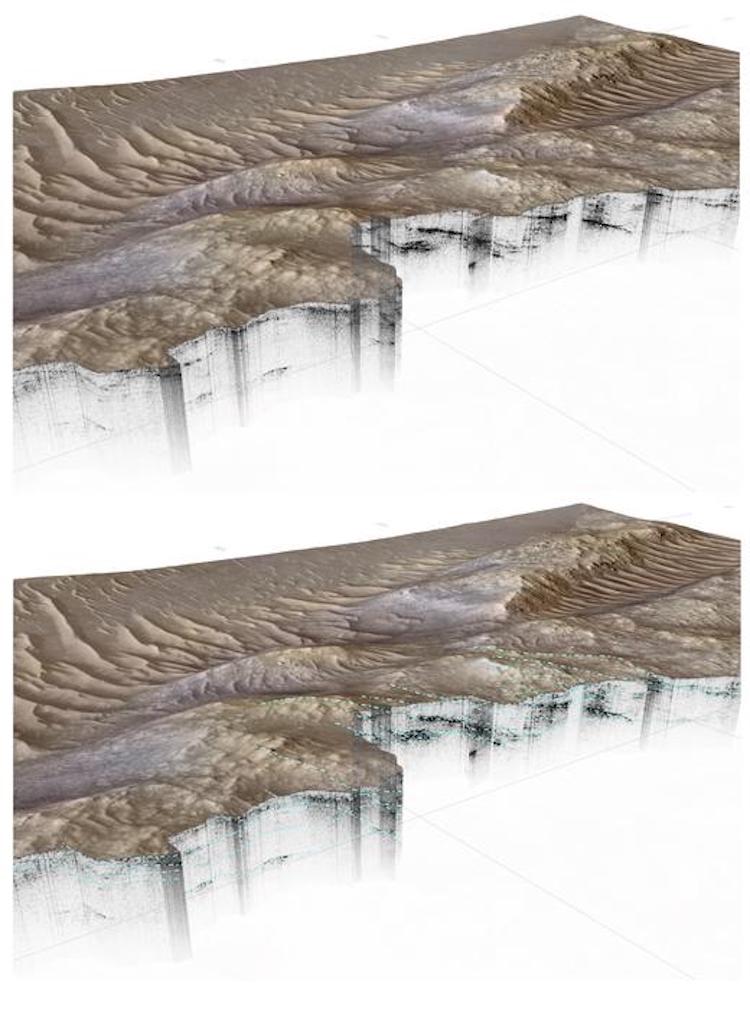
Traces of an ancient river system In the Margin unit, strongly reflecting layers are dark in appearance and weakly reflecting lithologies appear as light. The projected radargram is shown with the HiRISE digital elevation model data and layers are traced (cyan dotted lines) from the subsurface to corresponding surficial topographic features. (Courtesy: NASA/JPL/UCLA/UiO/ETH Zurich)

A river delta may have been present on Mars as early as 4.2 billion years ago, which is much earlier than previously thought. This is the conclusion from a new study by researchers at the University of California, Los Angeles, who have analysed ground-penetrating radar (GPR) data collected by the Mars 2020 Perseverance rover from the Jezero impact crater.

“The finding may also extend the period of flowing water and potential habitability for Jezero back further in time, says astrobiologist Emily Cardarelli, who led this research effort.

The surface of Mars carries many traces of a past watery climate, including ancient river channels, deltas, and paleolakes. Indeed, observations from space provide evidence for the existence of minerals possibly left behind as Mars’ atmosphere was gradually lost to space and its surface dried up.

Researchers are particularly interested in carbonate minerals because these preserve a record of the Red Planet’s ancient water thanks to its interactions with carbon dioxide in the Martian atmosphere at this time. How these minerals formed over the large scale in the Margin unit is unclear though.

Data collected from more than 35 metres underground

In the new work, Cardarelli and her colleagues in the Department of Earth, Planetary and Space Sciences at UCLA analysed data collected by Perseverance’s Radar Imager for Mars Subsurface Experiment (RIMFAX) instrument. They focused on a sedimentary deposit known as the Margin unit, which is rich in magnesium carbonates and lies near a fluvial inlet to the Jezero impact crater in the Nili Fossae region near Syrtis Major. The researchers already knew that this region hosts features typical of a paleolake basin and river delta deposits.

RIMFAX acquired a continuous 6.1-km ground-penetrating radar (GPR) image along the Margin unit campaign path with soundings every 10 cm and the researchers analysed 78 traverses made between September 2023 and February 2024 over 250 sols (Martian days, which are about 40 min longer than Earth days). The instrument collected data from more than 35 m underground, which is 1.75 times deeper than previous measurements at the Jezero crater.

The researchers found that the Margin unit contains a well-preserved paleolandscape with distinct river and deltaic features. These, they say, could be the remnants of a meandering river, an alluvial fan or braided river. This environment could have developed before the Jezero Western Delta viewable from orbit as early as the Noachian epoch (around 4.2 to 3.7 billion years ago).

Jezero might have hosted a habitable ancient environment

From the stratigraphic features mapped by RIMFAX, Cardarelli and colleagues conclude that the Jezero crater might have hosted an aqueous, possibly habitable environment capable of preserving biosignatures. “RIMFAX confirms that the Margin unit is distinct from a geological region known as the Upper Fan, which was deposited earlier and different in composition as well as in physical area,” says Cardarelli. “Our work suggests that there is some continuity of formation between the Margin unit and the Upper Fan, with a repeated process in Jezero crater, but at completely separate formation and deposition times.”

Indeed, a body of water might once have fed Jezero crater, she tells Physics World, and deposited sedimentary layers of varying scales, similar in size and morphology to those observed in an area known as the Western Fan. “We suggest that this was once an extensive system that included the Margin unit, although it is now a buried remnant.”

This study, which is detailed in Science Advances, highlighted only some of the specific features found since the mission began. To date, Perseverance has traversed around 40 km and has moved out of Jezero and onto the crater’s rim and the researchers say they will continue publishing their analyses from both these areas.

“I am also excited about one day returning to the Neretva Vallis region where we have detected the most compelling potential biosignatures. These may have a biological origin, but require additional study before determining if they may be evidence of past microbial life,” says Cardarelli.

The post Perseverance finds evidence for an ancient river delta on Mars appeared first on Physics World.

  •  

JWST Is Tracking Down the Cosmic Origins of Earth's Water

New observations from the James Webb Space Telescope are exposing the pathways that water takes to reach terrestrial planets

© ALMA (ESO/NAOJ/NRAO), Andrews et al.; N. Lira. ( CC BY 4.0 )

An image of a protoplanetary disk captured by the Atacama Large Millimeter/submillimeter Array (ALMA). Similar observations of such planetary nurseries by the James Webb Space Telescope (JWST) are revealing new details about how water finds its way into rocky worlds.
  •  
❌