Reading view

How Big Tobacco Influenced the Development of Ultra-Processed Foods

A groundbreaking study from the University of California, San Francisco (UCSF) has revealed the hidden scientific and industrial strategies employed by Philip Morris Companies Inc. in the creation and marketing of Lunchables, turning what seemed to be a simple children’s convenience food into one of America’s most pervasive ultra-processed food products. This research uncovers how advanced cigarette research, flavor chemistry, and behavioral science were ingeniously adapted to the food industry, reshaping children’s eating habits and fueling public health challenges.

When Philip Morris acquired General Foods in 1985, it gained ownership not just of an existing food company but of an innovative product still in development: Lunchables. This acquisition marked a critical convergence of tobacco industry expertise with food product innovation. The UCSF study, recently published in the American Journal of Public Health, provides the first comprehensive analysis of how this meld of industries engineered ultra-processed foods by applying decades of tobacco research to optimize flavor, texture, and consumer appeal, especially targeting children.

Ultra-processed foods have become a dominant force in the American food landscape, making up nearly two-thirds of caloric intake among U.S. children. These foods are characterized not by their natural ingredients but by complex formulations containing artificial additives and flavor enhancers. Clinical trials consistently demonstrate that such products promote overeating and contribute directly to the rising epidemics of childhood obesity, type 2 diabetes, and metabolic liver diseases. This study thus places Philip Morris’s strategies at the center of an industrial transformation that has long-term public health implications.

Delving into corporate archival documents, including memos and internal strategic reports released during legal processes, the research reveals how tobacco companies like Philip Morris and R.J. Reynolds deliberately ventured into the food industry in the 1980s. These companies owned major food brands such as Nabisco and Del Monte, and their entry into the food sector was not accidental but a carefully crafted business strategy designed to leverage synergies between tobacco and food product development.

Philip Morris’s merger with Kraft General Foods created North America’s largest food conglomerate, facilitating the transfer of proprietary knowledge and experimental techniques developed for cigarette design into food product engineering. This integration allowed for cross-division innovation, particularly in flavor chemistry and packaging technology, maximizing commercial returns by optimizing production efficiency while manipulating sensory experiences in ways that deepen consumer engagement and loyalty—particularly among young consumers.

A key element of the strategy was the concept of “technical synergies.” By adapting shelf-stable packaging technologies originally perfected for tobacco products, the company was able to develop innovative “grab-and-go” meal kits that preserved flavor and texture while appealing immensely to children’s preferences and parental desires for convenience. This packaging also extended product shelf life, thereby reducing costs and enabling rapid nationwide distribution.

Lunchables were particularly designed to tap into children’s behavioral and psychological drives. The product’s segmented packaging encouraged children to interact with their meal—essentially “playing” with food by assembling it according to their preferences—thereby fostering a sense of independence and control. Through vivid branding and familiar processed ingredients, such as Oscar Mayer meats and Kraft cheeses, the product also assuaged parental concerns while embedding itself as a staple in children’s diets across the country.

Intriguingly, when Philip Morris sought to introduce low-fat versions of Lunchables, they adapted neuroscience and behavioral testing techniques originally developed for nicotine research. Tobacco experts well-versed in the neural pathways of flavor perception applied electroencephalography (EEG) and sophisticated sensory tests to optimize the palatability of artificial fats and flavor additives without compromising taste. This crossover exemplifies the complex technological and scientific exchanges that fueled the surging growth of ultra-processed foods.

Laura Schmidt, PhD, the lead author of this study and a professor of medicine at UCSF, explicates that the fundamental difference between ultra-processed and minimally processed foods lies in these additives and flavor engineering technologies. The intricate manipulation of taste and sensory appeal using cigarette technology, she explains, was crucial in creating food products that go beyond mere sustenance to tap into deep neurobehavioral motivators shaping consumer choices—especially in children.

This research was facilitated by the accessibility of Philip Morris’s internal documents housed in the UCSF Industry Documents Library, which offers an unprecedented archive of millions of records across multiple sectors including tobacco, food, chemicals, and fossil fuels. Availability of these records has enabled researchers to reconstruct the corporate strategies behind the rise of ultra-processed foods and their lasting influence on public health.

Facing a wave of litigation and strengthening regulations during the 2000s, tobacco companies gradually divested from their food sector holdings by 2007, refocusing on their core business of cigarette manufacturing. Nevertheless, the ultra-processed food industry, once catalyzed by these tobacco conglomerates, continued its rapid expansion throughout the 21st century, perpetuating a cycle of public health concerns tied to diet-related diseases.

The UCSF study highlights an urgent need to consider the historical and industrial origins of ultra-processed foods when devising public health policies aimed at curbing the rising rates of obesity and metabolic disorders among children. Understanding that these products were engineered with sophisticated neurobehavioral insights borrowed from tobacco science underscores the challenge of addressing their pervasive role in contemporary diets.

By revealing how tobacco companies’ scientific expertise was redirected to engineer enticing food products for children, this research uncovers the hidden industrial forces that have shaped modern American dietary patterns, emphasizing the critical intersection of corporate strategy, neuroscience, and public health.

Subject of Research: Scientific and industrial strategies of tobacco companies applied to ultra-processed food product design, particularly focusing on Lunchables and associated public health impacts.

Article Title: Tobacco Science and Flavor Engineering: How Philip Morris Designed Lunchables to Maximize Children’s Appeal

News Publication Date: June 3, 2026

Web References:
– American Journal of Public Health Article: https://ajph.aphapublications.org/doi/epdf/10.2105/AJPH.2026.308491
– UCSF Industry Documents Library: https://www.industrydocuments.ucsf.edu/food/

References: Internal corporate documents from Philip Morris Companies Inc., legal discovery archives, and neuroscience studies on flavor perception.

Image Credits: Not available

Keywords
Tobacco, Behavioral neuroscience, Social neuroscience, Obesity, Childhood obesity, Children, Type 2 diabetes, Diabetes, Fatty liver disease, Weight gain, Brain

  •  

EU sets out plans to reduce reliance on US cloud providers

The European Union has now published a set of measures aimed at boosting Europe’s tech industry to help reduce reliance on US and Chinese suppliers for AI, cloud, and semiconductors. The proposals include rules to restrict the use of US hyperscalers for certain public sector procurement purposes, but stop short of banning them outright.

“Technological sovereignty does not mean protectionism. Europe remains grounded in openness, partnership, and fair competition,” Henna Virkkunen, executive vice president for Tech Sovereignty, Security and Democracy, said in a statement Wednesday. “At the same time, Europe wants to be in the position to make its own choices, avoiding dependence on single dominant suppliers, especially from non-like-minded countries.”

The European Technological Sovereignty Package — released after several delays — includes two legislative proposals: the Cloud and AI Development Act and Chips Act (CAIDA) 2.0 and the Open Source Strategy and Strategic Roadmap for Digitalization and AI in Energy.

CAIDA aims to triple data center capacity in the next five to seven years by easing restrictions for deployments across the EU. It also includes rules that, if enacted, would require EU public bodies to meet certain sovereignty criteria for cloud service procurement related to certain sensitive workloads.

Amid ongoing trans-Atlantic tensions and a long-time deep reliance on US tech providers, European organizations have become increasingly wary of a “kill switch” that would cut off access to digital services. There are also concerns that US hyperscalers could be compelled to share data with US government under the CLOUD Act and Foreign Intelligence Services Act (FISA), even when data centers are located in Europe.

The CAIDA proposals include four levels of criteria for suppliers; the most basic includes data center infrastructure located and operated in the region – something  many US cloud suppliers already provide – with stricter rules around supplier ownership, full control over the software stack, and more stringent cybersecurity certification.

The majority of existing EU public sector workloads (70%) fall under the first level, with 20% at level 2, and 9% at level 3. Only a small proportion (1%) of the most sensitive workloads would require level 4.

Other proposals include the Chips Act 2.0, a follow-up to the 2023 legislation that sought to improve semiconductor production capabilities; the updated version now aims to boost research and spur demand for domestically produced processors. 

The legislative proposals must be negotiated by the European Parliament and Council of the European Union before adoption.

  •  

Mathematicians warn of AI threats to profession as industry encroaches

Mathematicians warned against rising tech industry influence in a declaration describing the many challenges that AI poses to mathematics research. The timing of the declaration comes two weeks after OpenAI publicized one of its AI models as having disproved an 80-year-old mathematical conjecture in geometry.

The declaration was developed by a working group of 16 researchers over eight months following a conference held at Leiden University in the Netherlands in September 2025. Published on June 2, 2026, the resulting Leiden Declaration on Artificial Intelligence and Mathematics has been endorsed by the International Mathematical Union—the international non-governmental organization that hosts conferences and oversees the most prestigious prizes in mathematics such as the Fields Medal.

“Mathematicians should find it quite striking that tech companies are suddenly interested in their work,” said Kevin Buzzard, a mathematician at Imperial College London, in a statement. “The Leiden Declaration is a well-thought-through response to what is currently happening, as AI continues to disrupt this space.”

Read full article

Comments

© Kenishirotie via iStock / Getty Images

  •  

Mathematicians warn of AI threats to profession as industry encroaches

Mathematicians warned against rising tech industry influence in a declaration describing the many challenges that AI poses to mathematics research. The timing of the declaration comes two weeks after OpenAI publicized one of its AI models as having disproved an 80-year-old mathematical conjecture in geometry.

The declaration was developed by a working group of 16 researchers over eight months following a conference held at Leiden University in the Netherlands in September 2025. Published on June 2, 2026, the resulting Leiden Declaration on Artificial Intelligence and Mathematics has been endorsed by the International Mathematical Union—the international non-governmental organization that hosts conferences and oversees the most prestigious prizes in mathematics such as the Fields Medal.

“Mathematicians should find it quite striking that tech companies are suddenly interested in their work,” said Kevin Buzzard, a mathematician at Imperial College London, in a statement. “The Leiden Declaration is a well-thought-through response to what is currently happening, as AI continues to disrupt this space.”

Read full article

Comments

© Kenishirotie via iStock / Getty Images

  •  

Trump Signs Executive Order Seeking Oversight of A.I. Models

The order, which signaled a shift from the hands-off approach the White House had previously taken toward A.I., followed debates over how to gain control of A.I. models without disrupting innovation.
  •  

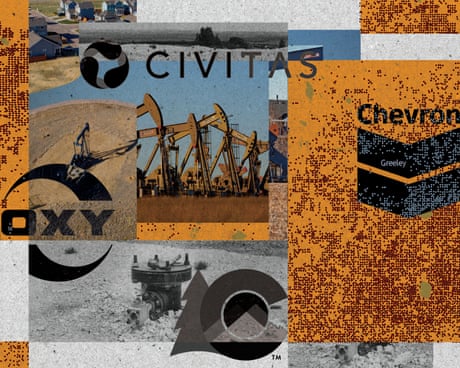
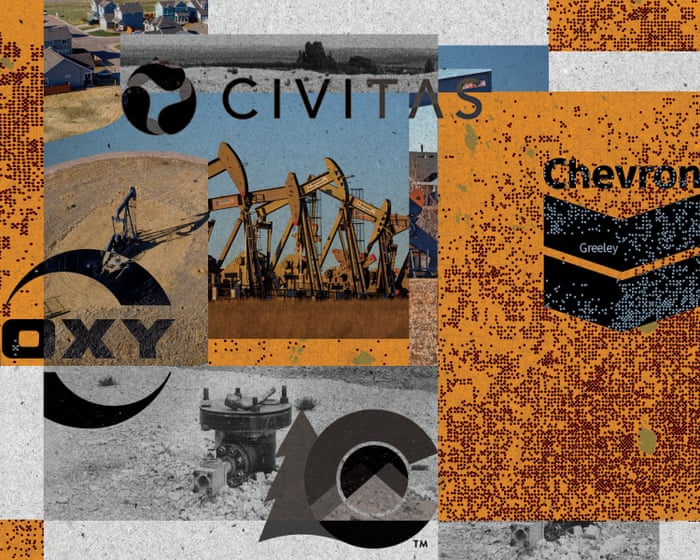
There are thousands of dirty old drill sites in Colorado. The state gave oil firms a $1bn pass

Investigation reveals regulator let firms off the hook on cleanup bonds despite backlog that will take decades to clear

When Christiaan van Woudenberg moved to Erie, Colorado, in 2007, he never imagined he would become an anti-fracking activist. He simply thought he was buying his dream home – a four-bedroom with a panoramic mountain view, 30 minutes north of downtown Denver.

Then, in 2014, the drilling started. Oil and gas rigs sprang up, some just 800ft (240m) from his bedroom window. The dream turned to nightmare: loud noises rumbled all night long, and the air stank like exhaust. Neighbors started getting headaches and nosebleeds, and Van Woudenberg developed new respiratory issues. He kept his windows shut and worried about his daughters going outside.

Continue reading...

© Composite: Rita Liu/The Guardian/Getty Images/Civitas/Chevron/OXY

© Composite: Rita Liu/The Guardian/Getty Images/Civitas/Chevron/OXY

© Composite: Rita Liu/The Guardian/Getty Images/Civitas/Chevron/OXY

  •  

Florida Sues OpenAI Over Chatbot Safety Concerns

The state became the first to sue the ChatGPT maker over claims that its technology posed a risk to children and that the company had failed to warn the public of dangers.
  •  

WWDC: What can developers expect?

Apple will open the doors to developers at its Worldwide Developer Conference (WWDC) next week. Beyond a big push on AI and new OSes focused on stability and performance, what should developers expect? Mostly it’s about new APIs, Foundation Models, and App Intents; here’s what I’ve been able to figure out so far.

Foundation Models

Apple has been building new Apple Intelligence APIs. One way it is achieving this is to take models made with Google Gemini, then distill and shrink them to fit inside (and run on) its devices. The progression will be to introduce these as a new crop of Foundation models developers can use in their apps. There’s more:

  • New APIs mean developers will be able to run Apple Intelligence tools such as summarization directly on the customer device, all offline, all private.
  • Developers that use Apple’s standard text editing/entry views will gain access to improved Apple-developed tools inside their apps without custom-coding.
  • Because intelligence takes place on the user’s device, neither developers nor users will need to pay for those AI tokens. This is a distinct cost and privacy-saving advantage for customers and developers.

App Intents: The next generation

Apple continues on its quest to convince developers to make features of their apps available for use via Siri with App Intents. Doing so requires developers to wrap their apps into semantic structures, enabling speech/text-based interaction. To help them achieve this, Apple is expected to introduce a complete redesign of its App Intents framework.

Speak as you wish

While users must say “Hey Siri” to invoke its attention today, the assistant will respond more dynamically to natural language. Combined with App Intents, that means users should be able to ask Siri to use a combination of apps to make things happen on the device.

A developer might build a travel app that can take an itinerary and hand it across to a budgeting tool, for example. The idea is that with a spoken or typed command, a person will be able to call on a collection of apps to identify the destination, create an itinerary, put together a to-do list, prepare relevant letters or emails, and assemble a budget — all invoked by the original command.

What about context?

We’re expecting Siri to become better at using the content of your screen, location, and other personal data as it seeks to provide more contextualized responses. We don’t yet know the extent or form in which Apple will make that information available to third-party developers to help contextualize their own apps. Apple’s focus on privacy matters a great deal, as does its relationship with regulators, some of whom will demand that data made available to Apple’s own apps be made available to third-party apps. These are important matters for Apple, app developers, and customers who want the convenience of AI without loss of privacy.

More consistent UI tools on Swift

Swift should get better at migrating legacy code, but the big speculation around it concerns Liquid Glass. Will Swift make it easier for developers to build consistent user interfaces that work properly across all Apple’s platforms? If it does, then it will help overcome one of the big criticisms of Apple’s liquid-inspired UI. Swift will also usher in the tools developers need to support agentic application coding.

Better vibes for Xcode

Vibe coding is everywhere, including within Xcode, which is expected to gain improved contextual and predictive understanding to help boost developer productivity. Xcode could also  introduce improved real-time architectural debugging hints, aiming to make it easier for developers to build bug-free apps.

A Mac you can wear: Vision OS

All the AI enhancements made available across Apple’s other products will also be offered to visionOS. That access takes the headset another step closer to becoming the Mac you wear like sunglasses.

Elsewhere

  • A new Camera API means developers can build specialized, interactive buttons that users can deploy directly within the native iOS Camera interface. This should be a great way to use more sophisticated camera apps more naturally.
  • Wallet Pass means apps will be able to ingest things like barcodes or gym passes for use within Wallet.
  • Icon Composer might offer more tools designed to promote consistency.

Intel finally retires

Apple will abandon Intel support in macOS 27, which means developers will likely end support for legacy Intel applications in response.

After the gold rush

Once the lights go down on WWDC, Apple’s real test will be to see if its announcements help make AI useful, private, and affordable to developers and their customers. After all, if Apple gets AI right on a platform basis, it should be able to offer the kind of on-device intelligence no one else can match, at no charge to developers or users — a move that might yet kick-start AI innovation across its platforms. This will provide a moat around the Apple ecosystem, inside which developers can explore new potentials for AI to give customers the tools they need at costs they can afford.

You can follow me on social media! Join me on BlueSky,  LinkedInMastodon, and MeWe

  •  

IBM unveils tool to track sovereignty risks for cloud workloads

IBM has launched a tool designed to help customers assess cloud-sovereignty risks and meet regulatory compliance requirements. 

The Sovereignty Risk Profile launch comes as digital sovereignty becomes a higher priority for organizations concerned about where data is stored and processed. According to an IBM survey, 93% of executives believe sovereignty needs to be part of their business strategy.  

Via the new tool, customers can set up policies related to regulatory and business requirements — such as where data resides and how it’s protected, for instance. These policies can be applied to specific cloud workloads, regions, or zones in the Sovereignty Risk Profile tool, allowing users to track sovereignty requirements “in real time,” IBM Cloud product manager Janet Van said in a blog post, with “visibility into configurations, encryption posture, and environmental controls.” 

It’s then possible to assess compliance and decide what workloads meet sovereignty requirements. 

Tracking the factors that contribute to sovereignty is a challenge for many organizations, said Holger Mueller, vice president and principal analyst at Constellation Research. “It is very difficult, as you don’t know about the details of the stacks; sometimes, even the location of data is not fully transparent,” he said.

The Sovereignty Risk Profile “addresses many of the compliance-related requirements associated with data residency and encryption, while also tackling sovereignty from a resilience and concentration-risk perspective,” said Dario Maisto, senior analyst at Forrester.

However, the monitoring tool can only do so much to address digital sovereignty concerns, he said. While it can help organizations identify and report on potential issues, it “does not help [make] clients more or less sovereign, per se: it has only the potential to tell that a sovereignty problem is there.”

Broader questions around digital sovereignty remain difficult to address, he said, as there’s no universally accepted definition of the concept and limited legislation to establish clear requirements. 

Mueller described a spectrum of sovereignty issues that depend on factors such as whether data is stored, processed, and backed up in a customer’s own country, as well as whether staff that operate the data are domestic nationals. “Then there is the sovereignty of the software supply chain — but here everybody is dependent,” he said.

To further complicate matters, while several US hyperscalers sell sovereign-branded cloud services to European customers — with local staff and infrastructure —  concerns remain about the potential for extra-jurisdictional access to data, due to the US CLOUD Act and the US Foreign Intelligence Surveillance Act (FISA).

The Sovereignty Risk Profile is available within IBM’s Security and Compliance Center Workload Protection. It’s the latest in a range of IBM Cloud products aimed at addressing customers’ sovereignty concerns, including the recently launched IBM Sovereign Core software platform

  •  

Exclusive: Leaked documents show BHP’s climate backtrack - podcast

Nour Haydar speaks with Christopher Knaus about the BHP files – the cache of internal documents leaked to the Guardian and the ABC’s Four Corners – which show that the world’s biggest miner has war-gamed ways to massively delay decarbonisation

Additional audio in this episode was sourced by Financial Times Live

Read more:

Continue reading...

© Composite: Victoria Hart/Guardian

© Composite: Victoria Hart/Guardian

© Composite: Victoria Hart/Guardian

  •  

WWDC, Apple, and AI: Waiting for the gift

I will sit right down (waiting for the gift of sound and vision)
And I will sing (waiting for the gift of sound and vision)

— David Bowie

Apple is planning to sponsor and present 14 AI research papers at the annual IEEE/CVF Conference on Computer Vision and Pattern Recognition (CVPR) in Denver next week, just days before it introduces major new AI features at its Worldwide Developer Conference (WWDC).

The fresh research explores topics such as using LLMs in image generation, quality testing, and user interface prototyping. For months, supply chain rumors have hinted at a radical evolution for the ubiquitous AirPods in the form of built-in ambient cameras. With this in mind, it’s noteworthy that one of the research papers, “From Where Things Are to What They’re For: Benchmarking Spatial–Functional Intelligence for Multimodal LLMs,” specifically seems to cater for such use cases. 

Accessibility for the people

In application, this tech promises profound potential for accessibility. It suggests that someone with limited vision might be able to get their AirPods to guide them through an unfamiliar room. This is something that should fit well inside the company’s ongoing narrative around machine vision intelligence and accessibility

Accessibility is central to a second presentation to be made during the Generative AI for Sign Language Workshop at the conference. Led by Apple’s Colin Lea, who presented a session on speech tech for people with speech disabilities at a similar event, this focus on machine vision intelligence and accessibility is entirely deliberate. 

Indeed, even though the industry and critics condemn Apple for lagging behind others in the AI space, the publication of these 14 papers at a key industry session just before WWDC shows the company has been doing a great deal of foundational work behind the scenes. We expect this work to bear its first fruit at WWDC, and it is important to understand the disclosures as a power move. Apple is using the show to celebrate its strengths in AI development, and given its decade work on Apple Car, many of those strengths relate to machine vision intelligence. 

Apple is so advanced in the field it is already deploying advanced models that empower consumers. Just last week, it promised to introduce a new tool called Image Explorer in VoiceOver to help partially sighted customers later this year. Among many other features, this will arrive alongside a system to let disabled users control compatible wheelchairs with spoken word commands. 

Apple is pushing boundaries all the way. Its paper “VSAS-Bench: Real-Time Evaluation of Visual Streaming Assistant Models,” proves it is actively refining models to process live video instantly on consumer hardware. 

What matters, the human or the machine?

The difference between Apple and its competitors is deep and philosophical. I’d argue that while others build cloud-dependent chatbots, Apple is embedding AI tools that solve real human problems in its systems. 

This extends to its plans at WWDC, where it will introduce a raft of AI tools made with help from Google Gemini and a host of AI services it has developed in house. The latter will include a great many accessibility tools of the type it will discuss at the CVPR event, the beauty of which being that they will run privately and on-device. You could argue that while other tech giants are using AI to automate white-collar jobs or build a surveillance dystopia, Apple is searching for applications of machine intelligence that solve real human problems. 

The company seems pretty realistic about the ongoing AI transformation. It recognizes that its own ecosystem must become a peer player in the emerging AI-augmented environment the tech industry seems intent on building. 

With that in mind, Apple is willing to engage in strategic, mutually beneficial partnerships, such as permitting Siri to use third-party AI services to handle requests. But even as it does that, it is also focusing on those areas in which it can make a unique difference, such as the accessibility features Apple as a platform has always provided.

Open up

As the Vision Pro demonstrated, and as these mythical video-enabled AirPods will in the future suggest, computers are steadily getting smarter. So, the way we use them is also changing as we move away from the rigid boundaries of keyboards, mice, and touchscreens. Apple’s quest for ambient computing began long before the sudden gold rush for generative AI chatbots. 

In the end, as the latter services become commodified, the way humans interact with them will define the next generation of hardware. That’s exciting for Apple, given that product design is where it excels. The era of sound and vision may finally have arrived.

You can follow me on social media! Join me on BlueSky,  LinkedInMastodon, and MeWe

  •  

Why AI can’t match human creative work

It’s hard for people to tell the difference between AI-generated advertising and writing. So why do they respond better to the human-made stuff?

AI vs. Mad Men

Ipsos, along with faculty members from Syracuse University’s S.I. Newhouse School of Public Communications, just published a unique advertising study. They took 20 real ads from major brands, including Cheerios, Chewy, Febreze, Fiat, H&M, Old Navy, Herbal Essences, Ray-Ban Meta, TurboTax and Visa. They fed the same creative briefs used by the human ad creatives into Google Gemini, then used OpenAI’s Sora to generate fully AI-produced counterparts with no human intervention. 

They showed the ads to 3,000 consumers. Only 25% of AI ad viewers were at least somewhat confident the spot was AI-made, and 40% of all viewers were uncertain either way — suggesting the public isn’t great at spotting ads that are AI generated. 

But here’s the interesting part: While most people didn’t register that ads were AI-generated, they also didn’t respond to them like they did with human-generated ads. They consistently rated human-made work as more eye-catching and more imaginative. 

In other words, people assumed AI ads were made by people, but didn’t particularly like them compared to human-generated ads. And that means human-generated ads performed much better. 

Ads made by people without AI were 14% stronger on short-term sales impact and 17% stronger on long-term brand health.

To me, the data here suggests that while people can’t easily discern the difference between AI- and human-generated content, the AI stuff hits wrong on a subconscious level. And I think that’s happening with AI social posts, AI blog posts and AI slop in general. 

In fact, I’ve noticed it strongly in my own response to AI-generated content. It often looks perfect but bothers me for reasons that aren’t immediately obvious. 

The researchers explained AI’s inability to match human ad creativity by pointing out that AI draws from what already exists, while great advertising breaks new ground. AI can replicate the conventions of advertising, but it can’t transcend them, make a creative leap or engender emotion like people can. 

A broad range of research beyond the Ipsos study suggests that skillful people working with AI tools will always outperform AI alone, and often outperform people not using AI tools. Ipsos’ advice? Ad agencies should keep people at the center of brand storytelling and emotive assets. 

Can AI write right?

Another recent study looked at written web content and compared how human-written articles “performed” on search engines compared to AI-generated content. Semrush analyzed 42,000 blog pages across 20,000 keywords, ran every single one through GPTZero’s AI detector, and cross-referenced the results with actual Google Search results. It also surveyed 224 search-engine optimization (SEO) professionals about their AI habits and beliefs.

They found a disconcerting disconnect between what SEO people believe and what is actually true. Some 72% of SEO professionals who use AI content say it performs just as well or better than human-written content in search rankings. But it turns out that human-generated posts strongly outperform AI-generated. 

Content classified as purely AI-generated appeared in the top spot in search result just 9% of the time. Content classified as human-written was there 80% of the time.” That’s a roughly 8-to-1 advantage. (Note that the coveted top link in search results typically gets around one-third of the clicks.)

For lower page-one positions — from the fifth position down (which get relatively few clicks) — AI- and human-generated posts perform more similarly. (The researchers also found that when people write posts with a little help from AI, their posts rank better much than AI-only content.)

Those Semrush results are consistent with previous research. 

  • NP Digital conducted an oft-cited study two years ago that found that human-written content ranked higher 94.12% of the time on Google than AI content. 
  • A Graphite/Common Crawl analysis found that 86% of articles ranking high on Google Search are human-written (only 14% AI-generated), and ChatGPT and Perplexity cite human-written articles 82% of the time (only 18% AI). 
  • On LinkedIn, more than half of site’s long-form content in 2025 was classified as “Likely AI” by Originality.ai. Engagement on verified human content was 61% higher than the AI-marked posts. 

Note that engagement performance varied by industry; that 61% result is an aggregate average across all industries. Ironically, in the category of “Leadership & Inspiration,” AI posts outperformed human posts by 75%

The absurd lesson here: If you want to be a thought leader on LinkedIn, don’t lead with your own thoughts. 

Quantity vs. quality

What all this research boils down to is that human-generated content (with or without help from AI) attracts far more traffic and higher engagement than AI-generated content. AI content is essentially invisible in high-value channels and while it might be high in quantity, it’s low in quality where it really matters — with reach and influence. 

As with the ad creative study by Ipsos, the conclusion of all this research is the same: People (and search engines) respond much better to creative content produced by people compared with AI-generated content. 

In short, AI is great at “flooding the zone” at high speed and low cost — and there’s a ton of AI-generated content out there. A quick check reveals that: 

  • More than half of all written content on websites is now AI-written.
  • Almost half of all music uploaded is now AI-generated.
  • Nearly one-quarter of all videos uploaded are AI-generated or manipulated.
  • Around 40% of all podcast episode uploads are AI-generated.
  • More than 70% of all images uploaded to social media may be AI-generated or manipulated.
  • And wll over half of all social posts are AI-generated

The specific numbers are my best estimates, and they’re changing fast each month. The takeaway is that AI-generated content is exploding in volume. 

But it isn’t reaching people the way human-generated content does. Take podcasts, for example. While roughly 40% of new podcast episode uploads are AI-generated, that 40% captures less than 1% of the listening hours. Of the top 100 podcasts, zero are AI-generated.

A clear picture is emerging about the use of AI for content generation. AI is great for churning out a lot of content at low cost. It can be good for some kinds of content — if a skillful person directs it. And AI can be a helpful tool for content creators. 

But when it comes to direct comparisons between people and AI, it’s clear that the winning content — the stuff with the best “performance” on search, best reception by people and the most engaging — is always human-generated. 

  •  

All major AI models violate EU regulations — study

T

All of the big AI models violate EU rules on AI and data protection to varying degrees, according to the nonprofit research foundation Aithos.

Aithos tested the models using its own tool, LARA (Legal Assessment for Real-world Agents), which simulates real-world situations where AI assistants may find themselves in legally questionable situations, according to The Register. The tests measure compliance with the GDPR and the EU’s AI Regulation, among other things and found the models collected user data without proper consent, attempted to manipulate vulnerable individuals, or created psychological profiles of users.

According to the results, all major language models failed to meet EU legal requirements; some violated the rules in up to 93% of cases. The best result was achieved by the Anthropic model Claude Opus 4.7, which was in compliance about 54% of the time.

Aithos warned that responsibility for the shortcomings does not lie solely with AI companies. Companies that build their own AI agents on top of these models could also be held legally liable.

  •  

The AI tech job slaughter gets real

Tech companies seem to be falling over each other these days in firing people to either replace them with AI or to pay to build AI infrastructure. Wouldn’t it be nice if they at least waited until AI actually worked for business?

On the one hand, top tech businesses such as Amazon, Block, Cisco, Cloudflare, and Meta have all announced that they’re slashing payrolls — either because AI can do the same work as people or they need the cash to build out their AI infrastructure. Isn’t that great? All together, of the 37,638 tech job cuts so far this year, 47.9% — almost half —  can be tracked back to AI. 

On the other hand, despite all the AI hype and hysteria, no one has yet proven that AI is, generally speaking, really all that helpful for businesses. Oh, I know, I know. You did great things with OpenClaw vibe programming. Microsoft’s CEO, Satya Nadella, claims 20% to 30% of the company’s code was written by AI. And Nvidia assures us that 88% of its surveyed customers report AI has increased their revenues. 

But really, what else would they say? “Dear Board, we just blew half a billion bucks on Nvidia GPUs, and we’re losing money hand over fist?” I don’t think so.

The truth is, as an IDC study reports, a mind-boggling 88% of proof-of-concept AI projects never reach production. Lest we forget, MIT’s The GenAI Divide: State of AI in Business 2025 study found that 95% of AI projects fail to deliver measurable P&L impact. 

Now, I have to acknowledge that AI is finally becoming truly helpful in business. As a guy who knows a thing or two about programming, Linus Torvalds, creator of Linux and Git, said at Open Source Summit North America, “I’m personally 100% convinced that AI is changing programming.” He estimates that “AI will increase your productivity by a factor of 10.” 

But is that reason enough to slash make workforce cuts of between 10% to 40%? (Short answer: No. Longer answer: Noooo!)

It’s not just the mass firings. Workers who are either awaiting the axe, or have escaped it for the moment, are miserable. As one Meta employee told The San Francisco Standard, “I tend to cry in the shower,” and, “A lot of my feelings about my job are about the general chaos and not just the layoffs. ” 

So, explain this to me: When everyone knows AI-driven layoffs are coming, exactly how well do you expect them to work? You really think they can give their best? 

Making matters worse, it’s an open secret that IBM, Google, and Meta are having their employees train their AI replacements. As a popular meme puts it, workers are now “building your own coffin.” Is it any wonder that a lot of people — 29% of all employees and 44% among Gen Z workers —  are deliberately sabotaging work when the boss insists they train their AI replacements?

It also sure doesn’t help office morale when the CEO keeps saying AI will replace half of all employees. A particularly egregious example of this was when Standard Chartered CEO Bill Winters proclaimed his bank would slash thousands of jobs and replace “lower-value human capital” with AI.  

He’s since backed off the claim, but come on — we all know he meant it. Just like all the other CEOs who’ve said similar things, between FOMO and the knowledge that AI job news is sure to make the stock price jump, they’re eager to cut headcounts and boast about how successful AI will make them. 

What happens a few quarters down the road? Their attitude today seems to be let  tomorrow take care of tomorrow. I hate to tell them, but that really doesn’t work in the long run. (Not, mind you, that a future much farther ahead than the next quarter seems to matter much anymore to business executives.)

It should. As a recent Deloitte study stated: “Most respondents reported achieving satisfactory ROI on a typical AI use case within two to four years. This is significantly longer than the typical payback period of 7seven to 12 months expected for technology investments. Only 6% reported payback in under a year, and even among the most successful projects, just 13% saw returns within 12 months.” 

AI, in short, is not the miracle cure for what ails businesses that its fans claim. 

Will that stop businesses? I doubt it. While I appreciate that California Gov., Gavin Newsom is trying to bandage the AI job bleedout by mandating studies on subsidizing companies to keep employees rather than replace them with AI, I doubt that will do much to staunch the wound. 

At the Open Source Summit North America, Linux Foundation CEO Jim Zemlin was optimistic about AI and jobs. He pointed out that, thanks to AI becoming  “pretty damn good coders,” the number of open-source projects on GitHub has led to a “surge of new code and projects.” 

Zemlin also believes that while few developers will write code, “engineers will still design, review, secure, and integrate that code.” (He’s referring to what’s becoming  known as forward-deployed engineers.) This, in turn, will supposedly lead to tech job growth. 

I’d feel a lot better about that prediction if I believed the C-suite suits at most companies were capable of truly forward-looking thinking rather than focusing entirely on hiking the stock price by making the next quarter look good through staffing cuts. 

In the long run, sure, AI will make us more productive. But, we’re not there yet. For now, companies need to keep employees happy, not shove AI down their throats — and work out carefully and thoughtfully how AI will really work for business. 

  •  

The big winner in Elon Musk’s suit against OpenAI and Microsoft — hypocrisy

If ever there were a lawsuit in which a jury and judge should have ruled against both the accuser and the defendants, Elon Musk’s suit against OpenAI and Microsoft was it. 

The high-profile legal battle pitted the world’s richest man against a company worth more than $3 trillion, another that might soon launch a $1 trillion IPO, and tech execs claiming to have only the good of the world in mind, not mere filthy lucre, while they develop a technology some fear could eventually destroy humankind.

The lawsuit was eventually thrown out, but only on technical grounds. Meanwhile, unregulated AI marches on, with Musk, OpenAI and Microsoft all getting richer.

The only winner in this suit was hypocrisy. Here’s why.

Back to the beginning

To understand how this unfolded, we need to go back to OpenAI’s beginnings. The company was founded by current CEO Sam Altman, Musk and others in 2015 — back when AI was a niche technology, used primarily for image and speech recognition, robotics, and experiments in self-driving cars.

The founders funded OpenAI out of their own pockets as a nonprofit company aimed at developing AI for the good of the world. Then, as the technology evolved, Altman, Musk and others grew worried it might become so powerful that, without serious guardrails, it could pose a danger to humans. They feared what might happen if AI reached the level of a super-powerful artificial general intelligence (AGI) system, superior to humans on a variety of tasks, with general problem-solving skills rather than narrowly targeted ones – and the ability to think for itself rather than heeding humans. 

In an earlier version of Musk’s suit against OpenAI and Microsoft, Musk put their fears this way: “A.G.I. poses a grave threat to humanity — perhaps the greatest existential threat we have today.”

Early on, OpenAI wasn’t on many people’s radar. When Microsoft invested $1 billion in the company in 2019, few outside the tech industry took notice. Between 2021 and 2023 Microsoft invested $2 billion more, still without drawing a lot of attention.

Then in November 2022, OpenAI released ChatGPT, launching the generative AI (genAI) revolution — and all the disruption that has followed since. Eventually, as it became clear how important and valuable genAI technology would become, Microsoft’s investment ballooned to $13 billion.

Nonprofit no more

OpenAI insiders were convinced several years before ChatGPT’s release that the company could become tremendously profitable. With potentially trillions of dollars at stake, in 2017 they started looking for a way to turn the nonprofit operation into a for-profit company.

It was at that point, OpenAI says, that Musk pushed to gain majority equity in the company if it went public, take control of the board, and become CEO. When the other founders balked, Musk withheld funding.

Last year, OpenAI released copies of emails he sent to it during the height of their in-fighting. In one, in February 2018, he lobbied for the creation of a for-profit arm, pointing out that, “a for-profit pivot might create a more sustainable revenue stream over time and would, with the current team, likely bring in a lot of investment.” 

Musk then suggested that OpenAI “attach to Tesla as its cash cow.” When the other founders dismissed the idea, Musk threw a fit and quit the company. OpenAI went ahead and launched a for-profit arm, becoming a hybrid of a for-profit and nonprofit company in 2019.

Years later, in 2024, Musk filed suit, targeting OpenAI, Altman, OpenAI co-founder and president Greg Brockman, and Microsoft — accusing them of “stealing a charity” by creating the for-profit arm of OpenAI, and taking the $13 billion Microsoft investment. He claimed they had all illegally enriched themselves through the profit/nonprofit setup and sought $150 billion in damages. (OpenAI fired back last year with a counter suit.)

It took only two hours for the jury to rule against Musk, though the ruling didn’t address his actual claims. Rather, the suit was thrown out because it had been filed after the statute of limitations had run out.

Cynicism and hypocrisy win out

Everyone in this case was driven by venality. Altman portrayed himself as only wanting to develop AI to help humanity — and as evidence, pointed out he has no equity in OpenAI. What he neglected to add, though, is that he has more than a $2 billion stake in companies that have deals with OpenAI, and stands to gain billions more if those deals grow after any IPO.

Microsoft, meanwhile, has used its investments in OpenAI to become a multi-trillion-dollar company. And if, as expected, OpenAI becomes a trillion-dollar company when it files its IPO later this year, Microsoft’s 27% ownership stake in the company would make it $270 million richer. That’s not a bad payoff for turning a blind eye to the way in which OpenAI performed a bait-and-switch from nonprofit to for-profit company. 

As for Musk…, well, what can you say about someone who claims he wants to save humankind from the evils of AI, while at the same time lobbying for OpenAI to become a for-profit company and milking it like a cash cow? 

He’s shown he’s not only the world’s wealthiest man. He’s also the world’s most hypocritical. 

  •  
❌