Reading view

Scientists Reveal a Bizarre Space-Time Structural Phenomenon That Could Be Creating Baby Black Holes

The space-time oddities of modern physics may have just been taken to a new level of odd, as researchers have revealed that space and time can be used to form a variety of structures that may then be able to become tiny black holes.

The unusual discovery, reported by researchers from Vienna and Frankfurt, presents a new formula for this unusual effect, which they claim can be used to create a crystal-like structure resulting from spacetime self-organization due to a process physicists call critical collapse.

The findings, now reported in Physical Review Letters, reveal the first successful description of this bizarre phenomenon using a novel mathematical trick, which allowed researchers to derive a precise formula for the phenomenon.

Baby Black Holes

Although black holes are often envisaged as large physical structures that result from the powerful conditions involving stellar deaths, not all of them are so monstrous.

In theory, tiny black holes can also exist, emerging from very minuscule critical states where only the smallest amount of energy is introduced. These states, according to physicists, are believed to have once existed immediately after the genesis of our universe, known as the Big Bang, at which time a disorderly blend of particles persisted in the newborn cosmos—conditions that would have been ripe for the creation of what are known as primordial black holes.

These structures are already theoretically verified through computer simulations, although in their recent research, the Goethe University Frankfurt and TU Wien collaboration has now taken the study of these tiny cosmic monsters to a new level by deriving a mathematical formula to confirm longstanding theories about these tiny black holes.

Curving Spacetime at Smaller Scale

According to Professor Daniel Grumiller, a researcher at TU Wien, even the smallest events can sometimes trigger major changes.

“Take liquid water at zero degrees Celsius, for example,” Grumiller recently said in a statement. “A very small change is enough to make the water freeze. The water molecules then spontaneously arrange themselves into a regular pattern and form an ice crystal,” he says.

Why is this significant? A primary reason involves Einstein’s revolutionary ideas about gravity, in which a similar effect occurs, albeit involving space and time. Specifically, Einstein’s theory holds that particles that change locations can cause changes to the surrounding spacetime.

Christian Ecker of the Institute for Theoretical Physics at Goethe University Frankfurt observes that spacetime is warped more strongly in proportion to the size of objects (in other words, those possessing greater mass).

“Large objects such as stars curve spacetime strongly,” Ecker notes. “For example, we can observe this when light rays are deflected by massive stars.” However, massive celestial objects aren’t the only ones that can curve spacetime.

“Smaller masses also produce spacetime curvature, just to a lesser extent,” Ecker explains.

space time crystals
In the image above, a spacetime-crystal structure is shown on the left, while to the right, a cubic crystal structure is displayed (Image Credit: Vienna University of Technology).

Patterns in Space and Time

According to the researchers, repeating patterns emerge in space and time because of spacetime curvature, in which spacetime can self-organize into a regular, repetitive structure.

This structural form, which they liken to being a sort of “spacetime crystal,” results from a process known as critical collapse.

Grumiller calls the resulting spacetime “crystal,” a “very peculiar and fascinating object,” which he says can be thought of as “a kind of intermediate state, an unstable point that can evolve in two different directions.” Following its formation, Grumiller says that the crystal may then simply dissipate, “leaving behind ordinary spacetime filled with freely moving particles.”

That is, unless an energy input is introduced.

“If a tiny amount of energy is added, the evolution takes a completely different path,” Grumiller says, whereby “the inconspicuous spacetime crystal turns into a black hole.”

Simulating Primordial Black Holes

According to Grumiller and his colleague, Christian Ecker, deriving accurate formulas for such phenomena has proven especially difficult over the years. However, Ecker says they were able to overcome this challenge by instituting a novel trick of mathematics.

“Our universe has four dimensions—three dimensions of space and one dimension of time,” Ecker recently said. “But in principle, nothing prevents us from writing down physical equations for a larger number of dimensions—five dimensions, forty-two dimensions, or even infinitely many.”

Despite the expectation that such conditions might cause theoretical interpretations to become very complicated, the team was able to show that the opposite can be the case, with some questions physicists would normally deem to be extremely complex actually being reduced to relatively simple outcomes.

The team says they hope to explore the possibility that their mathematical formula might be reinterpreted for contexts involving fewer dimensions, which would allow the current models, which relate to the possibility of an infinite number of dimensions, to be scaled back to four-dimensional applications.

So far, doing so has allowed the team to explore four-dimensional universal qualities by taking what one might liken to being a shortcut through a sort of theoretical universe consisting of many dimensions. However, for now, the team’s findings are already proving very promising.

“Our technique turns out to be remarkably stable,” according to Florian Ecker, also with TU Wien.

“Depending on the desired precision, we can systematically improve our formulas using additional approximation methods,” Ecker added. “This gives us a new method for studying black-hole-related phenomena that could previously not be analyzed analytically.”

The team’s recent paper, “Analytic Discrete Self-Similar Solutions of Einstein-Klein-Gordon at Large 𝐷,” appeared in Physical Review Letters on May 12, 2026.

Micah Hanks is the Editor-in-Chief and Co-Founder of The Debrief. A longtime reporter on science, defense, and technology with a focus on space and astronomy, he can be reached at micah@thedebrief.org. Follow him on X @MicahHanks, and at micahhanks.com.

  •  

Researchers Use “Ghost Imaging” with Sunlight to Generate Correlated Photon Pairs Without Lasers or Electricity

Scientists report the development of a new experimental system that could lead to a breakthrough resource in quantum optics by successfully generating correlated photon pairs using sunlight.

The new system relies on nature’s most abundant light source as the main driver of a nonlinear optical process known as spontaneous parametric down-conversion (SPDC), which normally requires a laser to “pump” a nonlinear crystal.

The breakthrough achievement was reported in Advanced Photonics.

Entangled Photons in Correlated Pairs

In the world of quantum optics, the phenomenon of pairs of correlated or entangled photons is an important asset, despite being a seemingly obscure concept for most of us.

Under normal circumstances, optical scientists rely on spontaneous parametric down-conversion (SPDC), a nonlinear optical process in which devices such as coherent lasers are the primary means of “pumping” a nonlinear crystal. Given that they require the kinds of lasers typically found only in top laboratories, the practical use of SPDC is nonviable under normal conditions.

Finding a practical, real-world substitute has long been an intriguing idea, which prompted researchers at Xiamen University in China to determine whether similar processes could be achieved using the most abundant source of light on Earth: sunlight.

A Challenging Process

This is easier said than done, since sunlight, unlike lasers, is generally unstable due to changes in intensity caused by environmental or atmospheric factors (think clouds, for instance) as well as changes in angle and position that occur naturally throughout the day.

All these factors compromise the precision required for SPDC. Still, the practicality of sunlight, as well as the energy it provides, has continued to make it a potentially feasible alternative that scientists hope might liberate SPDC from its reliance on lab-grade coherent lasers.

If it could be harnessed for such purposes, using sunlight to fuel SPDC would also mean that photon-pair generation could be achieved in remote areas where researchers had never previously considered it possible.

A Solution to SPDC Beyond the Lab?

According to the Xiamen University research team, a new experimental system has been developed that uses sunlight as the only pump source for this process, employing a device that tracks the sun, similar to how equatorial mounts allow astronomers to follow the movement of celestial objects as the Earth spins.

The device, according to researchers, harnesses sunlight at the proper angles throughout the day, which is then fed through a length of optical fiber to an indoor lab. From there, the light is used to pump a potassium titanyl phosphate (KTP) nonlinear crystal.

Periodically Poled Potassium Titanyl Phosphate (PPKTP) crystals are a variety of engineered nonlinear optical crystals that researchers use for high-efficiency frequency conversion and other quantum optics applications, especially for creating entangled photon pairs. They work by altering qualities of light that include its color, phase, or frequency by forcing it to pass through a specially engineered component or structure.

While using sunlight as the sole source of illumination for such processes is complex, the team found that its system successfully produced photon pairs that exhibited strong correlations.

Ghost Imaging for Photon Pair Production

Next came the demonstration phase, where the team used the photon pairs generated by their new system to perform “ghost imaging,” a process that uses correlated photons to produce imagery rather than spatial detection.

Correlated photon pairs
Above: In this diagram, the team’s experimental apparatus for use in generating sunlight-based ghost imaging is shown (Image Credit: W. Zhang (Xiamen University)

While conventional laser-based systems can achieve better than 95 percent visibility at comparable pumping power levels, the team’s sunlight-powered technology achieved ghost imaging visibility of 89.7 percent, well within the range of lab-based systems. To further illustrate the system’s use with more detailed spatial structures, the team also used it to produce, appropriately enough, a two-dimensional image of a ghostly face.

Overall, the team says quasi-phase matching in the PPKTP crystal was achievable with the broad spectrum of sunlight, enabling them to generate an abundance of position-correlated photon pairs. Additionally, the team reports that their system yields better signal-to-noise and contrast-to-noise ratios, even given the challenges posed by sunlight variability when used as a primary energy source.

Practical Use Beyond the Lab

“Our research holds substantial significance as it expands the range of viable illumination sources,” the team writes in their recent study, “including scattered light and nontraditional artificial incoherent light—for imaging applications.”

They add that among the potentially promising uses for their technology, space-based quantum information systems may be particularly beneficial, since the team’s new method “enables operation independent of laser sources.”

The team’s new paper, “Sunlight-excited spontaneous parametric down-conversion for ghost imaging,” appeared in Advanced Photonics on April 24, 2026.

Micah Hanks is the Editor-in-Chief and Co-Founder of The Debrief. A longtime reporter on science, defense, and technology with a focus on space and astronomy, he can be reached at micah@thedebrief.org. Follow him on X @MicahHanks, and at micahhanks.com.

  •  

Scientists Looked Inside an ‘Impossible’ Crystal Formed in the Heart of a Nuclear Blast—And Found Something No One Had Ever Seen


Scientists from the Università di Firenze studying a crystal formed during the 1945 Trinity nuclear test detonation in the New Mexico desert have identified a form of trinitite-encased clathrate structure that had not been observed before.

The research team behind the discovery said that the extreme heat and pressure conditions released during the early atomic weapons test created the unique glass, including rare “mineral and metallic” specimens trapped within its crystalline structure, which are not commonly seen outside the laboratory.

“The Trinity nuclear test of July 16, 1945, generated extreme transient conditions that produced trinitite, a silicate glass containing rare metallic phases,” the researchers explained in a recent study.

A Peek Inside a ‘Mystery’ Crystal from a Nuclear Explosion

According to a statement announcing the study and its findings, the first author and team leader, Luca Bindi, and colleagues began by examining and structurally classifying a “previously unknown chemical structure within a copper-rich metal droplet” encased in the trinitite sample.

Initial analysis revealed that the structure was rich in silicon. Tests showed that it contained calcium and copper, but in lesser amounts. The team ultimately determined that the mystery specimen was in the clathrate class of chemical structures.

Credit: Trinitite formed during a nuclear explosion in 1945 at the New Mexico Trinity testing grounds (Image credit: Proceedings of the National Academy of Sciences, 2026. DOI: 10.1073/pnas.2604165123).

“We report the discovery of a previously unknown Ca–Cu–Si type-I clathrate formed during the 1945 Trinity nuclear test,” the study authors explained.

To take a deeper look at the mystery specimen’s chemical structure, the team performed an X-ray diffraction analysis. According to their statement, that analysis revealed that the cubic clathrate hidden within a sample of trinitite “is the first identified clathrate formed by a nuclear explosion.”

Although the team was not involved in the original collection of the trinitite sample, the authors note that it formed near a “previously described” area composed of a silicon-rich quasicrystal. Because scientists know that quasicrystal forms from the same conditions as clathrate and shares a similar elemental composition, the team investigated the possibility that the nearby quasicrystal was formed from the clathrate.

nuclear explosion
IMAGE CREDIT: Incident light images of the red trinitite sample used in this study (front and back of the sample). Credit: Proceedings of the National Academy of Sciences (2026). DOI: 10.1073/pnas.2604165123

Due to the complexities of recreating the quasicrystal and clathrate formations in the laboratory, the team used mathematical models to explore potential connections. According to the researchers, those models showed that “quasicrystal formation from clathrates is possible but unlikely at the high copper concentrations found in the trinitite quasicrystal.”

Nuclear Explosions & Lightning Strikes Can Produce ‘Unexpected Crystalline Configurations’

When discussing the implications of their findings, the researchers noted that the extreme conditions produced by high-energy events such as lightning strikes or nuclear explosions, “can produce unexpected crystalline configurations.”

They also note that the unexpected structures produced during some of these events revealed constraints on mineral formation “beyond those found in conventional geological or laboratory processes.”

“Extreme, transient conditions produced by nuclear detonations can generate solid-state phases inaccessible to conventional synthesis,” they write.

The researchers also highlighted the “contextual association” with previously reported silicon-rich quasicrystals formed during the same nuclear explosion in 1945.

“Both phases formed under identical extreme conditions, occur within similar Cu-rich droplets, and share an unusually Si-rich Ca–Cu–Si–(Fe) chemistry, motivating an evaluation of whether the quasicrystal could be structurally derived from a clathrate framework,” they explained.

From an overall scientific value perspective, the researchers point out that this newly identified crystalline phase expands the known family of clathrate crystals, and “provides a reference for interpreting other rare Si-rich phases formed in the same event, including an icosahedral quasicrystal.”

“By combining crystallographic characterization with first-principles calculations, this work informs materials science, condensed-matter physics, and nuclear forensics, illustrating how extreme environments can shape crystalline matter far from equilibrium,” they conclude.

The study “Extreme nonequilibrium synthesis of a Ca–Cu–Si clathrate during the Trinity nuclear test” was published in the Proceedings of the National Academy of Sciences (PNAS).

 Christopher Plain is a Science Fiction and Fantasy novelist and Head Science Writer at The Debrief. Follow and connect with him on X, learn about his books at plainfiction.com, or email him directly at christopher@thedebrief.org.

  •  

“Perpetual Motion is Possible in the Quantum Realm”: Researchers Link a ‘Time Crystal’ to an External Device in a Breakthrough First

In a new physics milestone, scientists report that a time crystal and an external system have been successfully linked for the first time.

The achievement, made by researchers at Aalto University’s Department of Applied Physics, marks the first demonstration of converting a time crystal—an unusual quantum system in which particles are in constant, repetitive motion in its ground state—into an optomechanical system.

A range of potential technological applications, including new high-precision sensors, quantum storage systems, and other innovative capabilities, could result from the research, led by Jere Mäkinen and detailed in a new paper appearing in Nature Communications.

A New First for Time Crystals

Conceptually similar to physical crystalline forms that occur in nature, time crystals were first proposed by Nobel Prize-winning physicist Frank Wilczek in 2012, who argued that comparable systems might also exist in time as well as in space.

Wilczek’s theory preceded the official experimental discovery of time crystals by just four years, which can be thought of as an unusual manifestation of matter whose motion repeats indefinitely.

In a recent study, Mäkinen, an Aalto University Academy Research Fellow, and his colleagues demonstrated that the properties of a time crystal could be altered, a feat never achieved before.

“Perpetual motion is possible in the quantum realm so long as it is not disturbed by external energy input, such as by observing it,” Mäkinen recently said. “That is why a time crystal had never before been connected to any external system.”

That is, until now.

“We did just that,” Mäkinen added, “and showed, also for the first time, that you can adjust the crystal’s properties using this method.”

Approaching Absolute Zero

Mäkinen and his team developed a system that used radio waves to propel magons—a variety of quasiparticles—into a superfluid made from a light, very stable isotope of helium known as Helium-3, which was chilled to temperatures approaching absolute zero.

Remarkably, the team found that after the radio-wave magnon “injector” was disabled, the magnons self-organized into a time crystal, which remained in motion for several minutes—an unusually long time for such systems—then eventually faded to a level the team said was no longer measurable.

During its weakening phase, the team also observed the time crystal interacting with a mechanical oscillator, in which changes in the device’s amplitude and frequency appeared to influence the time crystal’s interactions with it.

Into the Odd World of Opto-Mechanics

For Mäkinen and the team, the behavior they observed in the time crystal under such conditions was significant, in part because it aligned with phenomena in the field of optomechanics.

“We showed that changes in the time crystal’s frequency are completely analogous to optomechanical phenomena widely known in physics,” Mäkinen said. Such phenomena, Mäkinen says, are the same that scientists rely on for the detection of gravitational waves, for instance.

“By reducing the energy loss and increasing the frequency of that mechanical oscillator, our setup could be optimized to reach down near the border of the quantum realm,” Mäkinen added.

Fundamentally, Mäkinen says that the time crystal’s behavior with relation to optomechanical phenomena offers a promising pathway toward the control of time crystal behavior, which had previously been thought impossible. Such practical control systems for these odd states of matter could lead to applications that include quantum technologies and a range of other uses.

“Time crystals last for orders of magnitude longer than the quantum systems currently used in quantum computing,” Mäkinen said, adding that he and his colleagues hope their research may lead to ways they can be used to improve quantum computers by powering their memory systems.

“They could also be used as frequency combs, which are employed in extremely high-sensitivity measurement devices as frequency references,” Mäkinen added.

The team’s research was detailed in a new paper, “Continuous time crystal coupled to a mechanical mode as a cavity-optomechanics-like platform,” which appeared in Nature Communications.

Micah Hanks is the Editor-in-Chief and Co-Founder of The Debrief. A longtime reporter on science, defense, and technology with a focus on space and astronomy, he can be reached at micah@thedebrief.org. Follow him on X @MicahHanks, and at micahhanks.com.

  •  

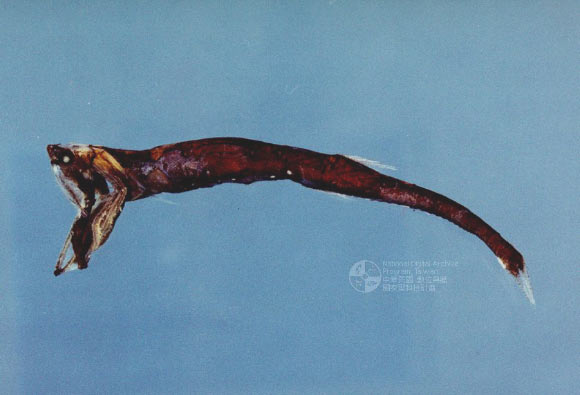
Bioluminescent Deep-Sea Fish Use Crystal ‘Prisms’ to Recycle Their Own Glow

Sigmops gracilis. Image credit: Wu Quancheng / Fisheries Research Institute, Council of Agriculture, Taiwan.

A marine biologist studying the photophores of a bioluminescent fish species found needle-shaped guanine crystals that scatter and redirect light instead of merely reflecting it, a discovery that could inspire more efficient biomedical and optical devices.

The post Bioluminescent Deep-Sea Fish Use Crystal ‘Prisms’ to Recycle Their Own Glow appeared first on Sci.News: Breaking Science News.

  •  
❌