Giving news websites the power to block their content from being used in AI summaries will have global ramifications
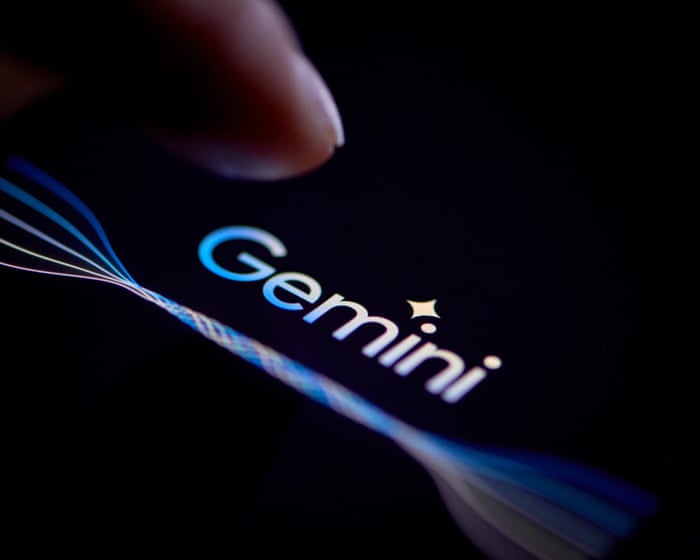
The UK’s competition watchdog has ordered Google to change how it uses publishers’ content in its AI-powered search results, in a move that will have global ramifications.
The Competition and Markets Authority (CMA) is using powers that allow it to set bespoke rules for major tech firms that it deems to have “strategic market status”. Google, the world’s largest search engine, is one of those companies.
Christi Hill and male officer misidentified in Vickrum Digwa murder case on AI platforms including Grok
A former police officer has been forced to flee to a safe space after she was falsely accused online of being involved in the arrest of Henry Nowak.
Christi Hill, who served as a police constable for 12 years, has criticised social media and AI platforms, including Elon Musk’s Grok, for spreading the false claim that she was one of the officers who arrested Nowak as he lay dying after being stabbed by Vickrum Digwa.
Microsoft says its new Majorana 2 quantum chip is 1,000 times more reliable than its predecessor, with qubits lasting about 20 seconds instead of milliseconds, and claims it could have a commercially useful quantum machine by 2029. The BBC reports: "We will have a quantum machine in 2029 that can solve commercially viable, reasonable problems," said Zulfi Alam, corporate vice president of Microsoft Quantum. That would still require huge further advances as such a device would require millions of qubits - the current chip, Alam said, has 12. Assessing the firm's claims are difficult because it does not release the full details of what it has discovered publicly, citing commercial confidentiality.
Microsoft has spent 20 years pursuing an approach to quantum computing known as "topological." The firm's approach to this is based on exploiting the properties of a so-called quasi-particle, which had existed only in theory, since it was first predicted in the 1930s by Italian physicist Ettore Majorana. To do this it had to exploit a novel state of matter - different from the three familiar states of liquid, solid or gas.
Paul Stevenson, a physics professor at the University of Surrey, said the tech giant's timeline sounded plausible - if its research lived up to its claims. "Microsoft appears to have made a leap in their attempt to produce viable topological qubits," he said. "If they succeed, they will leap from being a player with no production quantum computer, to being a serious player in the race to make the next generation of fault-tolerant machines."
The European Union has now published a set of measures aimed at boosting Europe’s tech industry to help reduce reliance on US and Chinese suppliers for AI, cloud, and semiconductors. The proposals include rules to restrict the use of US hyperscalers for certain public sector procurement purposes, but stop short of banning them outright.
“Technological sovereignty does not mean protectionism. Europe remains grounded in openness, partnership, and fair competition,” Henna Virkkunen, executive vice president for Tech Sovereignty, Security and Democracy, said in a statement Wednesday. “At the same time, Europe wants to be in the position to make its own choices, avoiding dependence on single dominant suppliers, especially from non-like-minded countries.”
The European Technological Sovereignty Package — released after several delays — includes two legislative proposals: the Cloud and AI Development Act and Chips Act (CAIDA) 2.0 and the Open Source Strategy and Strategic Roadmap for Digitalization and AI in Energy.
CAIDA aims to triple data center capacity in the next five to seven years by easing restrictions for deployments across the EU. It also includes rules that, if enacted, would require EU public bodies to meet certain sovereignty criteria for cloud service procurement related to certain sensitive workloads.
Amid ongoing trans-Atlantic tensions and a long-time deep reliance on US tech providers, European organizations have become increasingly wary of a “kill switch” that would cut off access to digital services. There are also concerns that US hyperscalers could be compelled to share data with US government under the CLOUD Act and Foreign Intelligence Services Act (FISA), even when data centers are located in Europe.
The CAIDA proposals include four levels of criteria for suppliers; the most basic includes data center infrastructure located and operated in the region – something many US cloud suppliers already provide – with stricter rules around supplier ownership, full control over the software stack, and more stringent cybersecurity certification.
The majority of existing EU public sector workloads (70%) fall under the first level, with 20% at level 2, and 9% at level 3. Only a small proportion (1%) of the most sensitive workloads would require level 4.
Other proposals include the Chips Act 2.0, a follow-up to the 2023 legislation that sought to improve semiconductor production capabilities; the updated version now aims to boost research and spur demand for domestically produced processors.
The legislative proposals must be negotiated by the European Parliament and Council of the European Union before adoption.
O investimento de cinco anos vai financiar investigação, fabrico, aquisições e parcerias, com o objetivo de entregar o IBM Quantum Starling em 2029 e, mais tarde, o Blue Jay, que será capaz de realizar mil milhões de operações quânticas em 2.000 qubits.
In the relentless quest to harness the extraordinary power of quantum computing, one of the most daunting obstacles has been the fragile and elusive nature of quantum information. This information is so delicate that the very act of measuring or observing it can disrupt or erase the data entirely, undermining the computational process. A groundbreaking study led by engineers at UNSW Sydney has introduced an innovative approach to quantum measurement that significantly reduces error rates while preserving the integrity of the quantum states involved. This advancement, echoing the metaphor of Schrödinger’s cat, marks an important milestone towards feasible, large-scale quantum computation.
Imagine a scenario where a cat is hiding inside one of eight identical boxes within a dark, noisy room. The challenge: to determine the exact location of the cat without entering the room or disturbing the creature, as opening the door risks harm. This metaphor, long used to illustrate the paradoxical nature of quantum mechanics, serves as an analogy for the challenge in quantum computing: detecting errors—akin to finding the cat’s position—without collapsing the delicate superpositions that encode quantum information. UNSW researchers ingeniously applied this analogy to real quantum systems, providing a novel solution to error correction without destructive measurements.
Their quantum ‘cat’ is an antimony atom’s nucleus embedded within a silicon chip, possessing eight distinct quantum states. This multiplicity of states allows the encoding of more complex quantum information and provides an avenue for error detection and correction. However, conventional error correction strategies typically rely on repeated measurements, which, although intended to improve reliability, paradoxically increase the risk of state disturbance, akin to repeatedly spraying water on boxes and possibly frightening the cat into a different hiding place.
The heart of the UNSW team’s strategy lies in a refined adaptive measurement protocol that fundamentally shifts how quantum states are interrogated. Instead of sequentially checking each possible quantum state with repeated measurements, their method judiciously stops at the first significant indicator—analogous to the first ‘meow’ heard from a box—then turns its focus to verifying the absence of signals from other states. This subtle inversion relies on deriving confidence not only from the presence of responses but crucially from the consistent silence of alternative states, a form of negative confirmation that meaningfully refines measurement fidelity while drastically limiting quantum disruptions.
In practical terms, the ‘sprinkler’ in this setup is represented by the controlled loading and unloading of an electron onto the antimony nucleus. This electron’s presence is conditional on the quantum state of the nuclear spin, with the critical caveat that such transitions are not benign; they risk ‘jostling’ the nuclear spin into an erroneous state. The adaptive protocol cleverly designs the experiment such that electron removal from the atom happens only once, minimizing disturbance. Subsequent validation steps require interrogating only empty states, which significantly reduces cumulative noise and error propagation.
The results speak volumes: this method cuts measurement error probabilities substantially—more than halving error rates—while also reducing total measurement time to about a third of prior methods. This leap is not merely incremental but transformative, pushing the system’s measurement fidelity to an impressive 99.61%. Such a degree of precision is imperative to achieving practical quantum error correction, which underpins the resilience of quantum computations against decoherence and other quantum noise factors.
This quantum advance isn’t just an abstract enhancement; it directly addresses the decisive hurdle in scaling quantum technologies for real-world applications. Whether simulating complex molecular reactions for drug discovery, optimizing elusive financial models, or enhancing machine learning architectures, quantum computing fundamentally depends on maintaining high-fidelity qubit operations and error management. This breakthrough measurement technique makes strides in that direction by enabling ‘mid-circuit’ measurements—observations performed while computations proceed—without compromising fragile quantum data.
The elegance of the UNSW approach further lies in its potential universality. Given that many quantum computing platforms, spanning semiconductor qubits, atomic array architectures, and photonic systems, grapple with similar measurement-induced errors, this adaptive readout protocol offers a broadly applicable solution. The capacity to transpose this method onto diverse systems maximizes its impact, suggesting a near-term upgrade pathway for improving quantum measurement fidelity across the field.
Furthermore, while the academic rigor behind this study is remarkable, the conceptual clarity gained from the Schrödinger’s cat metaphor provides a compelling framework for communicating complex quantum ideas to broader audiences. By translating abstractions into relatable narratives, the UNSW team not only clarifies their own work but also bridges the gap between esoteric quantum physics and accessible scientific discourse—essential for garnering public support and interdisciplinary collaboration.
This discovery underscores the symbiotic relationship between theory, experiment, and innovative engineering in the realm of quantum computing. It highlights how abstract quantum laws, when paired with cutting-edge hardware control and adaptive algorithms, can transcend previous technological limitations. As Principal Investigator Andrea Morello articulates, the fundamental challenge involves detecting errors without ‘scaring the cat’, preserving quantum superpositions long enough to leverage their computational promises.
Behind the scenes, the effective implementation relied on high-speed hardware such as field-programmable gate arrays (FPGAs) to perform real-time adaptive sampling and data inference. By rapidly adjusting measurement strategies based on immediate feedback, the system dynamically tailors its observations to maximize information extraction while minimizing invasiveness. This hardware-software synergy exemplifies the next generation of quantum control methodologies poised to accelerate the field further.
In summary, the UNSW team’s adaptive measurement protocol significantly advances the capability to perform nondestructive quantum state readouts. By creatively embracing the nature of quantum measurement’s paradoxical challenges rather than fighting against them, this method paves the way toward more reliable, scalable, and practical quantum computing systems. It underscores a hopeful trajectory where quantum information can be harnessed robustly, fueling advancements across science and technology that were once thought out of reach.
Subject of Research: Quantum measurement and error correction in silicon-based qubits Article Title: Maximizing the Nondemolition Nature of a Quantum Measurement Via an Adaptive Readout Protocol Web References: DOI: 10.1103/jtn1-wzyl Image Credits: UNSW Sydney Keywords: Quantum measurement, Quantum error correction, Quantum computing, Schrödinger’s cat, Silicon qubits, Adaptive measurement, Quantum fidelity, Quantum state readout
Computex 2026 has seen a wealth of hardware manufacturers pushing the envelope when it comes to new mice and keyboards. Here are some of our favorites we've spotted throughout the event so far.
A shocking new report shows that 8 out of 15 popular mobile browsers harvest your location data, with Microsoft Edge and Aloha sharing precise tracking details with third parties. Here is how to keep your daily routine private.
The director defends investment in and use of AI-generated storyboards, saying the immediacy of communicating his vision to cast and crew is ‘creatively freeing’
Martin Scorsese’s announcement that he has invested in an AI company and uses the technology to create storyboards has triggered a backlash from fellow members of the film industry.
'We know the pressures that are there in building systems aren't going away anytime soon': AMD exec hints at possible relief with new budget Ryzen CPU.
With rivals racing to market to raise ‘eye-popping sums’, the spotlight is now on the AI sector’s one-time ‘poster child’
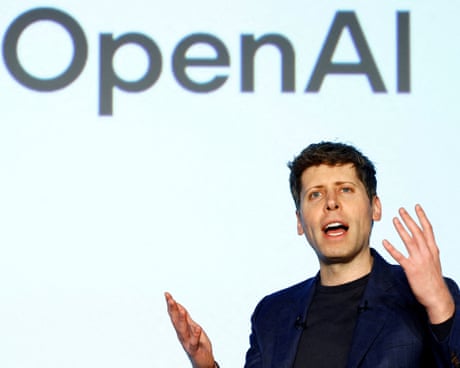
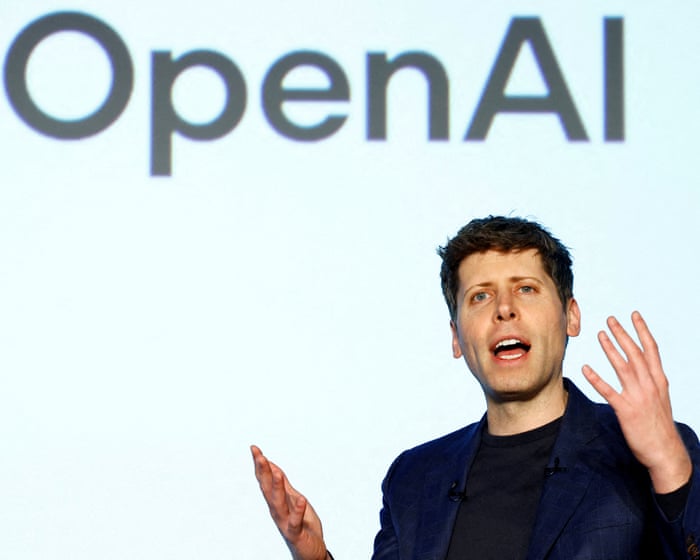
A year is a long time in AI. Just 12 months ago, Sam Altman was predicting his company OpenAI would build a super intelligence and fundamentally remake society. Now the boss of the ChatGPT developer is walking back those ideas after failing to make money from ads and erotic chatbots.
Meanwhile, rivals are storming ahead with plans to expand and go public on the stock market, in what is widely expected to be a season of record-setting initial public offerings (IPOs).
 Login
Login