Reading view

Anthropic confidentially files for initial public offering on US stock market

Financial stakes of AI race rise as Elon Musk’s SpaceX, OpenAI and Anthropic are slated to go public this year

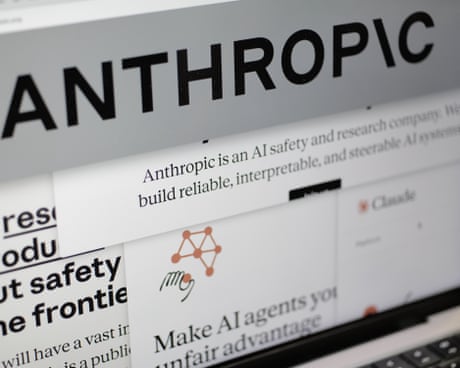
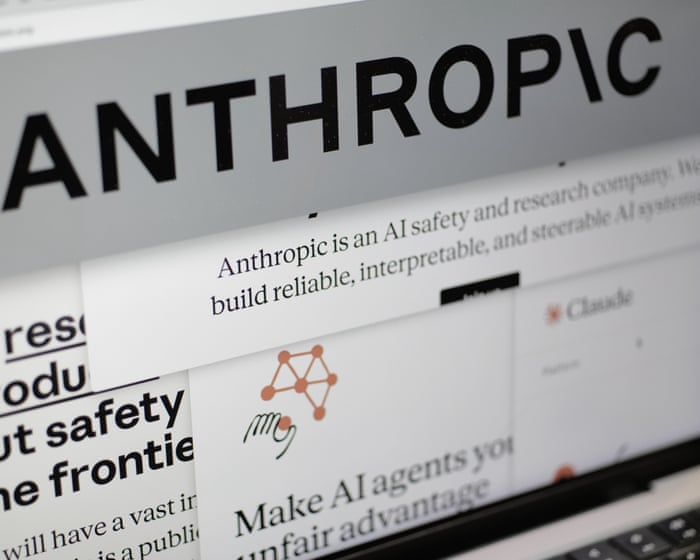
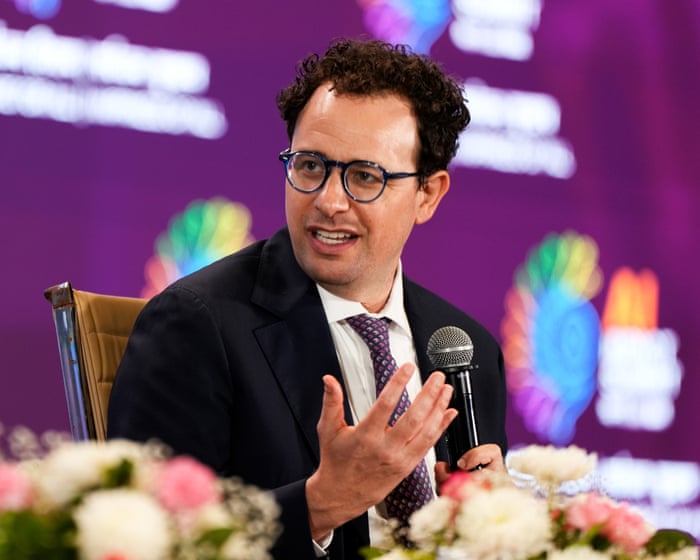
Anthropic has filed confidentially for an initial public offering on the US stock market, the company announced on Monday. The AI firm makes the Claude chatbot, popular with software engineers and other business clients, and has seen a meteoric rise this year.

The company did not disclose the valuation it will target on the stock market, nor did it make public other terms of the offering. The startup announced on Thursday that it had raised $65bn in funding to value the company at $965bn post-money. Anthropic was valued at $380bn in February.

Continue reading...

© Photograph: Ruhani Kaur/Bloomberg via Getty Images

© Photograph: Ruhani Kaur/Bloomberg via Getty Images
© Photograph: Ruhani Kaur/Bloomberg via Getty Images

  •  

To YouTube and beyond: how online gen Z directors stormed Hollywood

Record-breaking box office for Backrooms and Obsession has opened the door for twentysomething YouTube creators as the industry rethinks what audiences want

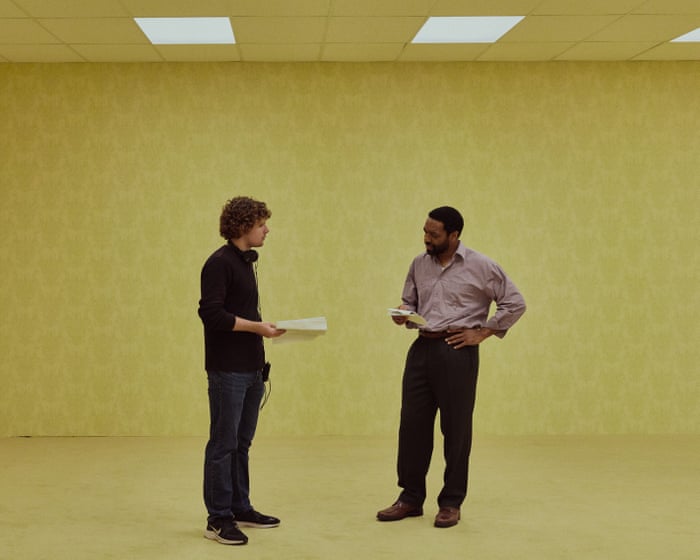
At this time last year, the idea of a wide-release feature film-maker cutting their teeth on YouTube was, if not unheard of, certainly still a niche origin story. Siblings Michael and Danny Philippou had just released Bring Her Back, the follow-up to their surprise horror hit Talk to Me, to pretty-good reviews and OK box office; clearly they would continue to work, but the slightly diminished returns didn’t predict a YouTube explosion. Nor did the outright lousiness of Shelby Oaks, from longtime YouTube film critic Chris Stuckmann, when it premiered in theaters later in 2025. Generous horror-festival buzz died down as more people actually laid eyes on the movie; Stuckmann was an obvious enthusiast, and some saw promise in his first effort, but a clumsy found-footage pastiche without much emotional sense didn’t seem like the next big thing, either.

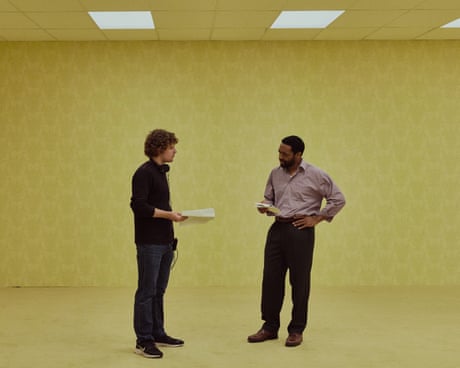
But in 2026, something has shifted. In January, YouTuber Markiplier self-released his adaptation of the video game Iron Lung to theaters, and it outgrossed any number of big-studio titles. Then Curry Barker, whose comedy sketches have been a YouTube fixture, unveiled his feature debut Obsession. The film, made for under a million dollars, has become the box office phenomenon of the summer so far, managing a virtually unheard-of feat when its second and third weekends actually outgrossed its first. Obsession is sharing multiplex space with Backrooms, directed by 20-year-old Kane Parsons, who previously brought the spooky internet meme to life in a series of YouTube shorts. Despite being set in a series of purgatorial, sparsely furnished, fluorescent-lit “liminal spaces”, it was the top movie at the North American box office this weekend, poised to become the biggest-grossing movie from distributor A24 in a matter of days. Backrooms also opened to bigger numbers than any number of starrier or bigger-brand 2026 titles like Wuthering Heights, Scream 7, The Devil Wears Prada 2 or the last Pixar movie. That makes three YouTube-trained film-makers who have presided over some of this year’s biggest and/or most surprising hits. With them have come countless social media posts about how YouTube, not film school, provides the real training tomorrow’s directors need.

Continue reading...

© Photograph: Asterios Moutsokapas/A24/AP

© Photograph: Asterios Moutsokapas/A24/AP

© Photograph: Asterios Moutsokapas/A24/AP

  •  

Tech billionaires are spending unprecedented sums in California races. Experts say it’s the tip of the iceberg

From Google co-founder Brin spending $82m to fight a billionaire tax to Google and Meta funding a joint Super Pac, Silicon Valley is engaged in an existential fight for its political power at home

Tech billionaires have shelled out hundreds of millions of dollars ahead of the 2 June primary election in California, in an unrivaled attempt to influence who gets to run the state that Silicon Valley calls home.

The industry has used a cover-all-bases approach, funding candidates and ballot measures big and small, contributing to what looks to be the most expensive primary season in California history. The goal, experts say, is to gain both political and regulatory leverage that will perpetuate dominance in business.

Google co-founder Sergey Brin has spent $82m since January, more than any other donor, to fight a billionaire tax that’s up for a vote on the November ballot.

Democratic gubernatorial candidate Matt Mahan has received more donations than any other candidate, including from top executives at Google, Amazon, Snap, LinkedIn, Reddit and Palantir.

Crypto mogul Chris Larsen has funded three Super Pacs with $26m to sway campaigns across California, including giving $1m to back a primary candidate for state insurance commissioner.

Google and Meta have collectively funded a Super Pac with $10m to back assembly and senate candidates in local district races across the state.

Silicon Valley money is flowing toward city primaries as well as state-level ones, with tech-backed Pacs sponsoring voter guides suggesting how to vote on local tax measures.

Continue reading...

© Illustration: Guardian Design / Getty Images

© Illustration: Guardian Design / Getty Images

© Illustration: Guardian Design / Getty Images

  •  

The best fans to keep you cool in 2026 – tried and tested

As temperatures soar across the UK, chill your space – and avoid energy-guzzling aircon – with our pick of the best fans, from tower to desk to bladeless

The best portable neck and handheld fans

Our world is getting hotter. Summer heatwaves are so frequent, they’re stretching the bounds of what we think of as summer. Hot-and-bothered home working and sweaty, sleepless nights are now alarmingly common.

Get a good fan and you can dodge the temptation of air conditioning. Aircon is incredibly effective, but it uses a lot of electricity … and burning fossil fuels is how we got into this mess in the first place. Save money and carbon by opting for a great fan instead.

Best quiet fan for the bedroom and best overall:
AirCraft Lume

Best fan for cooling:
Dreo TurboCool misting fan 765S

Continue reading...

© Composite: PR Image

© Composite: PR Image

© Composite: PR Image

  •  

Nex Playground: the family game-night gadget that revives the spirit of the Wii

Launching in the UK this month, this new pint-sized console revives the motion-controlled video game boom of the 00s – with better, safer tech

For a wonderful moment in the noughties, video games became a truly universal pursuit. As I witnessed my controller-phobic aunt swing a Wii remote and nail a tennis serve, while my great-grandmother furrowed her brow over sudoku puzzles on her Nintendo DS, it seemed my long-derided hobby had finally gone mainstream. The Nintendo Wii flew off the shelves, inspiring a wave of competitors such as the Xbox Kinect camera that encouraged people to play games by moving their bodies. But the tide turned: outside of still-niche VR gaming and the odd controller-waggler on the Switch, motion-controlled gaming has barely been seen for more than a decade.

Now, 20 years later, a new console is aiming to get the whole family flailing in front of the TV once again: the Nex Playground. Launching in the UK later this month, the first thing that struck me about this family-friendly device is just how tiny it is. The size of two and a half Rubik’s Cubes taped together, this impressively unintrusive device swaps cumbersome controllers for camera-controlled minigames, putting you and your family directly in the game. Using a wide-angle lens and AI-powered tracking tech, the Nex Playground offers over 50 games that track players’ bodies as they leap, flail and dance about the living room. It’s not hard to see the appeal.

Continue reading...

© Photograph: Nex

© Photograph: Nex

© Photograph: Nex

  •  

Ghost in the Machine review – entertaining AI polemic dives into its dark history in race politics and eugenics

The roots of AI in rightwing ideology is examined in Valerie Veatch’s enjoyable doc, including an array of colourful, often crazed, figures

Director Valerie Veatch made her name with documentaries such as Love Child (about an online gaming-addicted couple whose child died of malnutrition) and Me at the Zoo (about American vlogger Cara Cunningham), films that explore the intersection of real-world subcultures and internet communities. Her latest continues in this vein, although its self-set remit is a bit broader, more urgent and germane to everyone right now: the pursuit of artificial intelligence, its dark history in eugenics and highly debatable utility today (despite the stock-market bubble pushing the value of a half-dozen companies towards the stratosphere).

The thrust of the film is largely polemic, guiding the viewer towards AI-sceptical conclusions one persuasive soundbite at a time. Nevertheless, it also serves as a very useful, straightforward primer on AI history, touching on a dazzling array of colourful, often crazed figures, including Victorian British eugenicist Francis Galton, Silicon Valley founding father and overt racist William Shockley and current-day jillionaire jerk Elon Musk. Sadly, the film is not so up-to-date that it covers Musk and former friend-turned-foe Sam Altman’s recent courtroom brawl, but that doesn’t detract from the thrust of Veatch and her interviewees’ arguments.

Continue reading...

© Photograph: Ghost in the Machine

© Photograph: Ghost in the Machine

© Photograph: Ghost in the Machine

  •  

Nvidia launches ‘superchip’ putting AI power into laptops and PCs

Firm says its RTX Spark PC chip for Microsoft Windows will let AI agents replace the mouse and keyboard

A new front has opened up in the battle for dominance in AI chips, as Nvidia said its latest development could replace the mouse and keyboard in how people use computers.

The $5tn (£3.7tn) US semiconductor company has launched a “superchip” that puts AI capabilities into laptops and desktop computers, a move that will pit it against Intel, Apple, Qualcomm and AMD.

Continue reading...

© Photograph: I-Hwa Cheng/AFP/Getty Images

© Photograph: I-Hwa Cheng/AFP/Getty Images

© Photograph: I-Hwa Cheng/AFP/Getty Images
  •  

Charities decry UK plan to use AI to assess age of young asylum seekers

Coalition of more than 100 organisations says move could lead to more children ending up in adult detention facilities

A coalition of more than a hundred refugee children’s organisations has said controversial plans to use AI to assess the age of young asylum seekers could lead to more children wrongly ending up in adult prisons or detention centres.

The warning follows a Home Office announcement on Friday of a contract to roll out AI facial age estimation technology on young asylum seekers whose age is disputed.

Continue reading...

© Photograph: Peter Macdiarmid/Getty Images
© Photograph: Peter Macdiarmid/Getty Images

© Photograph: Peter Macdiarmid/Getty Images

  •  

Meta legal action forces Facebook whistleblower to sit in silence at Hay festival

Sarah Wynn-Williams did not speak during event after lawyers warned of possible sanctions from tech firm

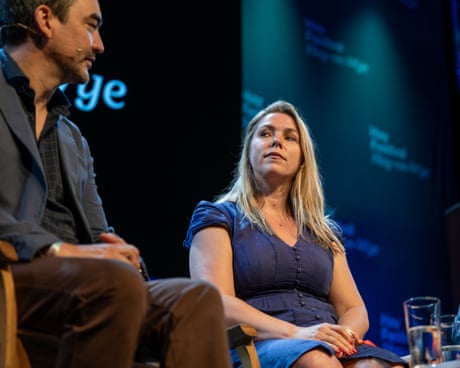
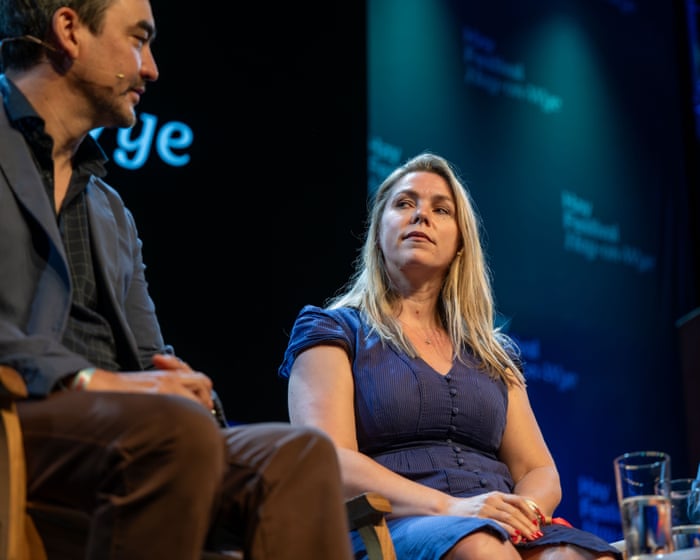
Facebook whistleblower Sarah Wynn-Williams was forced to sit in silence on stage at an event at Hay festival, after lawyers advised her not to speak because of ongoing legal action brought by Meta.

Wynn-Williams, whose bestselling memoir, Careless People, details her years working at Facebook, was due to appear in conversation with the investigative journalist Carole Cadwalladr and academic Tim Wu.

Continue reading...

© Photograph: Sam Hardwick

© Photograph: Sam Hardwick

© Photograph: Sam Hardwick

  •  

Our tech overlords are planning for conscious AI to conquer the cosmos. What could go wrong? | Eduardo Porter

A new belief set is uniting some of the wealthiest men in the world around a ‘transhuman’ future – actual humanity be damned

Sam Altman, the chief executive of OpenAI, took to the Internet a few years ago to propose that homo sapiens would be the first species “to design our own descendants”. In his best case scenario, the “merge” between humans and artificial intelligence occurs at some point over the next 50 years. The alternative, where we remain simply human and the machines follow their own path, is more ominous. “If two different species both want the same thing and only one can have it – in this case, to be the dominant species on the planet and beyond – they are going to have conflict,” he wrote.

More recently, Elon Musk, the world’s richest man, who at one point last year was granted the power to reconfigure the US federal government, argued on his social media platform, X, that “it increasingly appears that humanity is a biological bootloader for digital superintelligence” – our role in the history of the cosmos reduced to that of the low level code that boots up a computer before you can run sophisticated programs on it.

Continue reading...

© Illustration: James Kerr/Scorpion Dagger/The Guardian

© Illustration: James Kerr/Scorpion Dagger/The Guardian

© Illustration: James Kerr/Scorpion Dagger/The Guardian

  •  

This model is not a real person: how AI is changing online shopping – video

From digital twins to models ‘sculpted’ by programmers, generative AI has been popping up all over the fashion industry. When an Australian e-commerce retailer started using AI-generated models to sell products, lifestyle editor Alyx Gorman had to see if the garments were more than mere pixels.

The Iconic, which sells the dress worn in this video, said in a statement: ‘Where AI-generated imagery is used to advertise products for sale on our platform, our expectation is that it is clearly labelled and that the product itself is represented as accurately as possible for customers.’

Meanwhile, Atoir, the designer, said: ‘The Australian fashion industry is highly competitive, particularly for independent brands. We believe that when used responsibly, tools like this can help smaller businesses to operate with greater agility while still maintaining the creative standards and product integrity that matter to both the brand and the customer’

Continue reading...

© Photograph: Guardian Design

© Photograph: Guardian Design

© Photograph: Guardian Design

  •  

An industry targeting Australia’s ageing population is growing, but can AI deliver more humanity in aged care?

While companion robots are being introduced and virtual experiences hope to ‘take loneliness away’, one expert agrees tech should never replace the human element

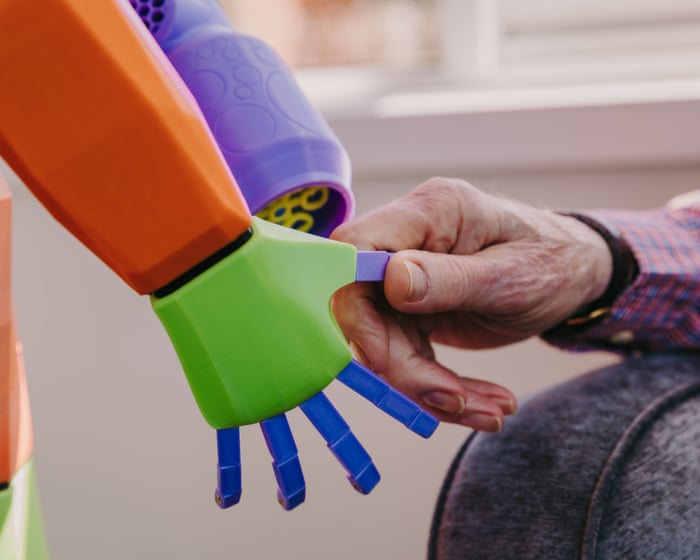
“You’ll never get rid of humans,” Prof Wendy Moyle says, during a discussion about robots and other technology in aged care and residential homes.

Then, a beat later, she adds: “Well, I don’t think we’ll get rid of humans.”

Continue reading...

© Photograph: Matto Lucas

© Photograph: Matto Lucas

© Photograph: Matto Lucas

  •  

Anthropic’s alliance with pope on AI harms: all in good faith or ‘Vatican-washing?’

Experts say AI firm’s engagement with Vatican risks creating ‘feelgood’ discourse that lacks critical examination

Why did Anthropic’s founder sit beside the pope during a warning about AI?

In the first major written teaching of his papacy, Pope Leo XIV took artificial intelligence to task. The pontiff delineated the technology’s most concerning threats to humanity: replacing workers, accelerating war and exploiting the environment. At a ceremony honoring the holy teaching the day of its release at the Vatican, the pope was flanked by an unusual guest speaker: Anthropic co-founder Chris Olah, one of the people behind the AI boom so worrying Leo.

Continue reading...

© Photograph: Alberto Pizzoli/AFP/Getty Images

© Photograph: Alberto Pizzoli/AFP/Getty Images

© Photograph: Alberto Pizzoli/AFP/Getty Images

  •  

Americans echo Pope Leo’s concerns about AI: ‘It threatens workers, privacy and human life’

Guardian readers in the US spoke of fears about unregulated AI in response to the pope’s encyclical warning about the risks of the technology

In his first major papal text since assuming leadership of the Catholic church last year, Pope Leo issued a stark warning about the rise of artificial intelligence this week, denouncing the “culture of power” driving the AI age.

Calling for the “most rigorous” ethical constraints on AI – which he described as one of the greatest threats facing humanity today – the first US-born pope also warned of “new forms of slavery” emerging through the digital economy.

Continue reading...

© Photograph: Ciro De Luca/Reuters

© Photograph: Ciro De Luca/Reuters

© Photograph: Ciro De Luca/Reuters

  •  

‘It was too easy’: families ask how Kenneth Law enabled so many suicides

Bereaved relatives say they were ignored by authorities as they searched for answers over suicide forums and kits

Monday would have been Aimee Walton’s 25th birthday. But in 2022, the lover of music and art from Southampton took her own life after being groomed by another user on an online forum that glorified and enabled suicide. On Friday, 3,500 miles away, the man who sold her a toxic substance pleaded guilty in a Canadian courtroom to his part in 14 other fatal poisonings.

Kenneth Law, 60, is linked to at least 131 deaths worldwide, after using a collection of digital storefronts to target vulnerable youth. Investigators in the province of Ontario say Law shipped more than 1,200 packages – many containing a toxic substance – from his local post office to people in more than 40 countries; the vast majority went to the United Kingdom and the United States.

Continue reading...

© Photograph: Peter Flude/The Guardian

© Photograph: Peter Flude/The Guardian

© Photograph: Peter Flude/The Guardian

  •  

‘Like a billionaire on acid’: Star Wars director Gareth Edwards comes out in favour of AI

Speaking at Amazon’s AI on the Lot event, the Rogue One film-maker Gareth Edwards said ‘it’ll do anything you ask’ and ‘it’s going to be better than CGI’

Jurassic World Rebirth and Rogue One director Gareth Edwards has enthusiastically endorsed the use of generative AI in film-making, saying “it is a fucking genius at helping you” and “it’s going to be better than CGI”.

Edwards was speaking at AI on the Lot, an event in Culver City, California, organised by Amazon, and in remarks reported by the Hollywood Reporter said: “I can’t see a reason why you wouldn’t become interested in this stuff as a film-maker. It’s so clearly a tool that might be up there with the camera. It’s going to be better than CGI.”

Continue reading...

© Photograph: Jasin Boland/Universal Pictures and Amblin Entertainment

© Photograph: Jasin Boland/Universal Pictures and Amblin Entertainment

© Photograph: Jasin Boland/Universal Pictures and Amblin Entertainment

  •  

Workers need greater say over AI rollout, says TUC-backed report

Exclusive: IPPR thinktank calls for new measures to boost employees’ influence at ‘pivotal moment’ in history

Workers urgently need more bargaining power over the way AI is adopted in the workplace to ensure the benefits are fairly shared, according to a TUC-backed report from a leading thinktank.

The Institute for Public Policy Research (IPPR) is calling for a package of measures to boost employees’ influence at what it calls a “pivotal moment in the history of work”.

Continue reading...

© Photograph: Bloomberg/Getty Images

© Photograph: Bloomberg/Getty Images

© Photograph: Bloomberg/Getty Images

  •  

Why I’m grateful to the Pope for his encyclical on AI | Francine Prose

The intelligent and thoughtful encyclical is an important warning of the uses and misuses of a rapidly developing technology. Silicon Valley is wrong to dismiss it

Often I’m asked if I think that the novels of the future will all be written by AI. It’s not so much a question as a provocation. Do I worry that a machine can do what I do, only better? I usually say something like: “No algorithm is going to write Anna Karenina!” which is also not a real answer.

So I’m grateful to Pope Leo XIV, the American pope, for his recently issued letter to the world, Magnifica Humanitas: On Safeguarding the Human Person in the Time of Artificial Intelligence. It’s a long (more than 40,00 words), intelligent and thoughtful encyclical in which the pope addresses the uses and misuses of a rapidly developing technology. Now when someone asks my opinion of AI, I can refer them to the pope’s letter, or at least chapter three.

Continue reading...

© Photograph: Yara Nardi/Reuters

© Photograph: Yara Nardi/Reuters

© Photograph: Yara Nardi/Reuters

  •  

If you want to run your first marathon in your 50s, it helps to be chased by zombies

When Ben Elton didn’t distract from the pain of moving my body, I found the perfect solution – the interactive smartphone game Zombies, Run!

At 56, I am running my first marathon, an old, fat, bald dad surrounded by millennials in body-hugging Lycra and smiles that look AI-generated. But I am ahead of them. For they are only competing for positions and personal bests, and I am being chased by zombies.

The black dog of depression hit me around the time of my last birthday. I didn’t feel I had achieved anything of note for an eternity. I used to work out but, for years, work kept getting in the way. I decided to kill two circling, carcass-sniffing vultures with one stone and run my first marathon.

Continue reading...

© Photograph: Courtesy Dominik Diamond

© Photograph: Courtesy Dominik Diamond

© Photograph: Courtesy Dominik Diamond

  •  

Anthropic reaches valuation of $965bn, beating OpenAI to become world’s most valuable AI firm

Claude’s parent company’s $65bn in latest funding round underscores vast sums of money still flowing into industry

Anthropic, the AI firm behind the Claude chatbot, announced on Thursday it had raised $65bn in funding to value the company at $965bn post-money. The move makes Anthropic the world’s most valuable AI startup, eclipsing its competitor OpenAI.

The deal marks an exceedingly successful period of growth for Anthropic, which was once considered to be a smaller player in the global AI arms race. The widespread adoption of its products by large enterprise businesses, especially following its release of powerful coding assistants late last year, has turned it into a dominant player in the industry.

Continue reading...

© Photograph: Patrick Sison/AP

© Photograph: Patrick Sison/AP

© Photograph: Patrick Sison/AP

  •  
❌