Reading view

Google's new Gemma 4 12B model is designed to run on any laptop with 16GB of RAM

The generative AI boom has driven the cost of memory into the stratosphere, and Google is a key part of that trend. So it's only fitting that Google should offer some less RAM-hungry local AI models. The company has announced the release of a new Gemma 4 model that fills a gap in the lineup that launched earlier this year. The new model is efficient enough that you may be able to run it on a pretty average consumer laptop.

In April, Google released four models in the Gemma 4 family, which also marked the shift to a more open Apache 2.0 license. The initial models included two mobile-optimized options (E2B and E4B) along with a pair of models for more serious work (26B Mixture of Experts and 31B Dense). That left a rather large unserved space in the middle, which is right where the new model falls.

Gemma 4 12B is considerably more capable than the mobile versions, but it won't require a $20,000 AI accelerator to run locally. Google says Gemma 4 12B is unique in that it can run on many consumer laptops without sacrificing quality. As long as you've got a computer with 16GB of system RAM or VRAM, the 12-billion-parameter model will work. That's about half the total memory footprint of Gemma 4 26B MoE, and Google claims the new model is almost as capable, at least as far as benchmarks go.

Read full article

Comments

© Google

  •  

Microsoft's Project Solara is an Android OS designed for agents instead of apps

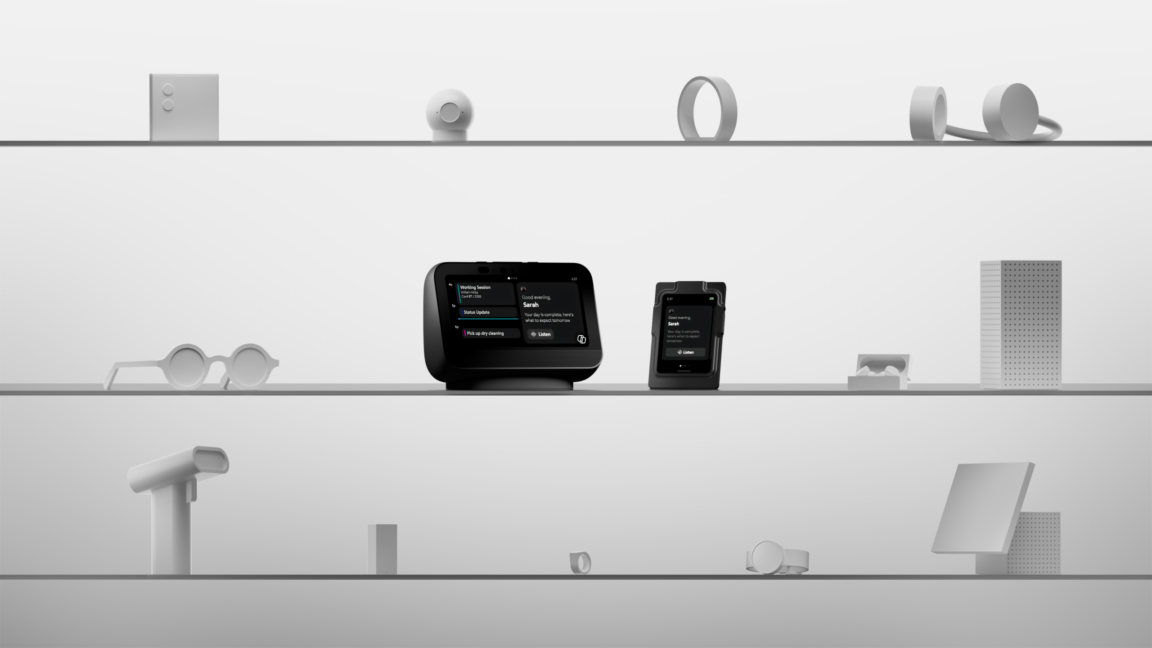
Microsoft has been deeply committed to the growth of generative AI technology in recent years through its now-fragmented partnership with OpenAI. At Build 2026, the company remains all-in on AI, and it's looking toward the future with a new software platform. The new Android-based OS is called Project Solara, and Microsoft says Solara is designed to run agents instead of apps.

Project Solara is not something you'll have to worry about killing your apps anytime soon. It's limited to a few pieces of concept hardware and software that are awaiting the magical agents of the future. The vision is for Solara to run on myriad specialized devices with interfaces generated on the spot, and it's all powered by the explosive intelligence of models that Microsoft and others insist will soon exist.

According to Microsoft, Solara is a chip-to-cloud platform intended to free agents from reliance on single interfaces. Much of Microsoft's messaging around AI is speculative and self-serving, but the company rightly points out that new computing form factors have always required specialization, and that process is complex and expensive. The shift to mobile computing, for example, tripped Microsoft up multiple times as it fell behind on app availability, security, and long-term support.

Read full article

Comments

© Microsoft

  •  

Android phones will soon be able to detect spoofed calls and impersonation scams

We're expecting Android 17 to begin rolling out later this month, but first, Google has a batch of updates for the wider Android device ecosystem. As usual, some of the new features are limited to specific devices, and others require using Google's apps. But if you don't mind the latter, you can get automated protection from the growing threat of deepfake phone scams.

According to Google, "impersonation fraud" is one of the most common types of financial scams. The FTC tracked almost $3 billion in losses from such scams during 2024, and the improvements in AI voice cloning tools more recently are making the schemes easier to pull off. The voice models are becoming so capable that it can be difficult to identify a fake caller even when an AI is imitating someone you talk to every day.

Google's solution is an expansion of the system it debuted last month for verified financial calls. Now, a similar feature will work with anyone in your contacts. Many of the most effective deepfake scams involve spoofing a contact's number, which makes the call look more legitimate when your phone lights up. Victims of these scams are then greeted by an accurate re-creation of the person's voice spinning a yarn that involves an urgent need for cash.

Read full article

Comments

© Ryan Whitwam

  •  
❌