Normal view

Georgia is battling invasive, 4-foot-long lizards

3 June 2026 at 18:31

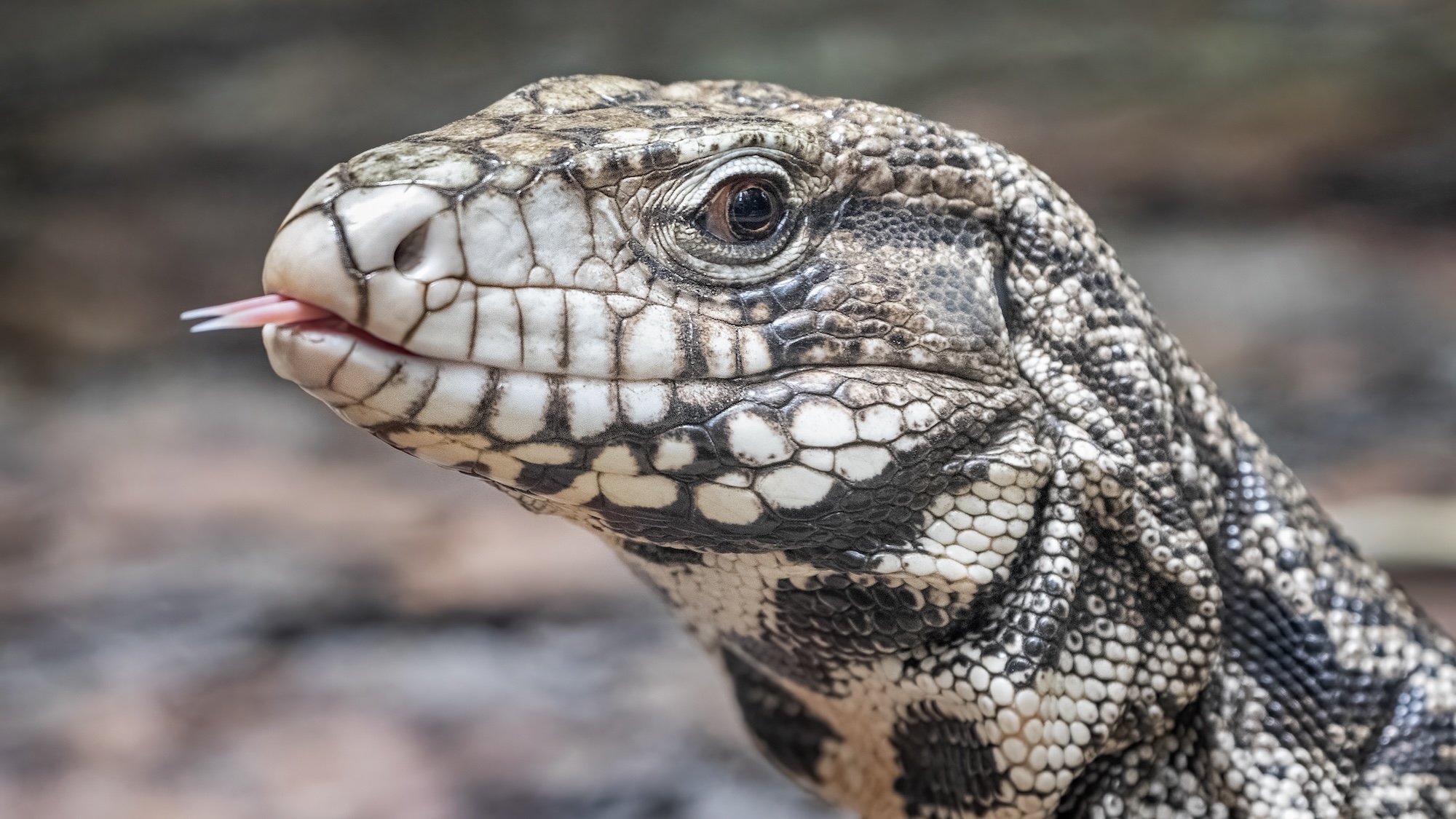
Wildlife experts in Georgia are urging locals to keep on the lookout for any four-foot-long lizards wandering around the Peach State. As its name implies, the Argentine black and white tegu (Salvator merianae) isn’t native to the United States, and it’s quickly becoming a nuisance.

Although the black and white tegu resembles many monitor lizard species, they are actually only distantly related to the reptiles. The speckled omnivores can weigh upwards of 10 pounds, largely thanks to a diet that regularly includes eggs, small animals, fruits, and vegetables. They are also extremely prolific animals, with a single female capable of producing around 35 eggs every year. These typically hatch during the summer between June and July, meaning many in Georgia have a decent chance of spotting a tegu in the near future.

It’s still unclear how the tegus were first introduced into the state, although illegal releases by exotic pet owners are the most likely explanation. Georgia’s Department of Natural Resources (DNR) first responded to reports of the rogue reptiles in 2018, with sightings spreading ever since. Tegus are currently particularly concentrated in southeastern Georgia’s Toombs and Tattnall counties, but experts fear a lack of predators means the lizard population could soon explode without concerted conservation efforts. As non-native “wild” species, trapping and hunting tegus is legal in Georgia throughout the year.

That said, the DNR still cautions hunters against coming into direct contact with the reptiles. Although not particularly aggressive or dangerous, tegus may carry exotic parasites as well as harmful bacteria including salmonella. Experts encourage people to instead contact the DNR if they see one of the lizards, either by emailing gainvasives@dnr.ga.gov or calling (478) 994-1438.

Unfortunately, Georgia isn’t the only state contending with an unwanted tegu problem. According to an ongoing mapping project from the U.S. Geological Survey and Georgia Southern University, residents across Florida, Alabama, South Carolina, and Texas have also reported sightings in recent years.

The post Georgia is battling invasive, 4-foot-long lizards appeared first on Popular Science.

Researchers Reveal Concealed Drug-Binding Site in Cancer Protein, Showcasing Both Strengths and Challenges of AI in Drug Discovery

3 June 2026 at 15:55

In a landmark study conducted at the Icahn School of Medicine at Mount Sinai, researchers have revealed a previously undetected drug-binding pocket within PKMYT1, a kinase intimately involved in cell cycle regulation and cancer progression. This groundbreaking discovery not only challenges current understanding of the protein’s structural dynamics but also underscores both the promise and inherent limitations of contemporary artificial intelligence (AI) methods in the field of drug discovery.

Kinases like PKMYT1 orchestrate critical cellular processes such as growth and division, rendering them prime candidates for therapeutic targeting in oncology. Traditionally, drug development strategies against kinases have centered on the ATP-binding site, which is essential for their catalytic function. However, the ATP-binding motifs among kinases exhibit high degrees of conservation, complicating efforts to engineer drugs with high specificity. This often results in off-target effects that can diminish clinical effectiveness and elevate toxicity risks.

By leveraging a synergistic approach that combined AI-based protein modeling with experimental validation, the researchers uncovered a novel allosteric pocket on PKMYT1. Notably, this binding site escaped detection by leading AI platforms, including the widely acclaimed AlphaFold2. This hidden pocket presents a unique avenue for more selective drug design, diverging from the conventional ATP-competitive strategies and heralding a new paradigm in kinase inhibition.

The research unveiled that PKMYT1 exhibits pronounced conformational flexibility, oscillating between distinct shapes rather than maintaining a static structure. Such dynamic behavior implicates the existence of transient binding pockets that evade prediction by current computational models. These transient pockets might serve as ‘Achilles’ heels’ for selective inhibitor binding, a concept with profound implications for drug discovery beyond this single protein.

Experimentally, the team employed X-ray crystallography and biochemical assays to corroborate binding interactions and validate the biological implications of their findings. Complementing these traditional methods, molecular dynamics simulations and advanced AI models like AlphaFold3 and Boltz-2 were utilized to explore whether computational tools could retrospectively predict the discovered binding modes, exposing gaps in present-day AI predictive capability.

A particularly striking revelation was the sensitivity of the protein-ligand interaction to minuscule chemical modifications. Slight changes in the molecular structure of candidate compounds dramatically altered their binding site preference, toggling between the newfound hidden pocket and more canonical sites. This sensitivity reflects the intricate nature of protein-ligand recognition and underscores the necessity for meticulous experimental validation alongside in silico predictions.

The dual leadership of the study, Professors Avner Schlessinger and Michael Lazarus, highlights a balanced perspective on AI’s role. While AI tools excel at confirming known structural patterns, they may falter in uncovering novel or cryptic sites, especially in proteins that are inherently flexible. This work emphasizes that experimental inquiry remains indispensable, even as AI transforms biomedical research.

From a translational perspective, the discovery of this new druggable site opens exciting therapeutic possibilities. By designing inhibitors that selectively target this unique allosteric pocket, drug developers may circumvent the specificity and toxicity challenges endemic to existing kinase inhibitors. This could potentially accelerate the development of next-generation cancer therapies with improved efficacy and safety profiles.

Moreover, these findings serve as a wake-up call for the AI drug discovery community. The inability of cutting-edge AI platforms to predict the full spectrum of protein conformations spotlights areas for computational innovation, particularly in modeling protein plasticity and allostery. Enhanced algorithms, informed by experimental data like this study’s insights, may soon enable more comprehensive structural predictions with direct impacts on drug development strategies.

Looking ahead, the research team plans to advance the chemical optimization of lead compounds that engage the hidden PKMYT1 pocket with greater potency and selectivity. Concurrently, they aim to survey a broader array of cancer-associated kinases for similar cryptic sites, potentially revealing a wider landscape of novel therapeutic targets across the kinome.

This study represents a significant stride in precision oncology, where the nuanced understanding of protein structure and dynamics can lead to highly selective molecular interventions. It epitomizes the evolving interplay between AI and experiment—where computational hypotheses must be rigorously tested in the laboratory to unlock biomedical breakthroughs.

The work, published recently in the Journal of the American Chemical Society, titled “Allosteric Inhibition of PKMYT1 Induces a Unique, Inactive ATP Binding Site Conformation,” showcases the power of integrating modern AI tools with classical experimental techniques. It exemplifies a model for future drug discovery endeavors aiming to outpace cancer’s complexity through technological and scientific synergy.

As the scientific community digests these revelations, the broader implications are clear: protein targets once deemed structurally intractable may hide exploitable vulnerabilities, awaiting discovery through combined AI and experimental approaches. This challenges researchers to rethink strategies in drug design, moving toward a more dynamic and flexible framework to combat diseases with precision.

In summary, the Icahn School of Medicine’s team has not only unearthed a novel therapeutic target on a cancer-relevant kinase but also illuminated the frontiers and limitations of AI-driven drug discovery. Their pioneering work reinforces that while algorithms can guide drug development, the enduring rigor of experimental science remains critical to truly transformative medical advances.


Subject of Research: Cells

Article Title: Allosteric Inhibition of PKMYT1 Induces a Unique, Inactive ATP Binding Site Conformation

News Publication Date: June 3, 2026

Web References: http://dx.doi.org/10.1021/jacs.6c05178

References: Herrington, N. B., Khamrui, S., Zhao, Y., Lansiquot, C., Wu, R., Pandey, G., Lazarus, M. B., & Schlessinger, A. (2026). Allosteric Inhibition of PKMYT1 Induces a Unique, Inactive ATP Binding Site Conformation. Journal of the American Chemical Society. DOI: 10.1021/jacs.6c05178

Image Credits: Herrington, et al., Journal of the American Chemical Society

Keywords: Drug development, kinase inhibition, cancer therapy, AI drug discovery, protein dynamics, allosteric pocket, PKMYT1, molecular dynamics, AlphaFold, X-ray crystallography

Ice Age Enigma: Taimering Mammoth Probably Processed by Early Hunters and Gatherers

3 June 2026 at 15:53

In a remarkable archaeological breakthrough near Regensburg in Bavaria, Germany, a nearly 2.5-meter-long spirally twisted tusk belonging to a woolly mammoth (Mammuthus primigenius) was unearthed during routine construction work in Taimering. This discovery, made six years ago by the Bavarian State Office for the Preservation of Historical Monuments (BLfD), reverberates profoundly through the scientific community, offering an unparalleled window into the Ice Age fauna of Central Europe. Alongside the tusk, researchers uncovered over seventy additional bones and bone fragments predominantly from the mammoth’s ribcage, as well as hand and foot bones, though the long bones remain conspicuously absent. Experts attribute the exceptional preservation of these remains to millennia of conservation within the wet sedimentary environment, which staved off the deleterious effects typically inflicted by exposure and predation.

Subsequent paleontological analyses meticulously confirmed that all the bones and the tusk belong to a single, remarkably large but juvenile individual. The mammoth is estimated to have stood approximately three meters tall at the shoulder—indicative of the species’ impressive stature even before reaching full maturity. The spatial arrangement and pristine condition of the bones strongly imply that the animal perished in close proximity to the excavation site. Detailed surface examinations revealed the absence of evidence for transport by water or predation-induced disarticulation, suggesting rapid burial in the sediments of an ancient pond or a slow-moving tributary of the Danube River during the Last Glacial Maximum. Radiocarbon dating places this event between 27,000 and 25,000 years ago, embedding the specimen firmly within a critical temporal context.

One of the most striking revelations from the site involved the identification of anthropogenic modifications on the bones. Researchers discerned clear cut marks—most notably on the ribs—attesting to human butchering activities. Intriguingly, one of the broad rib bones appears to have served as a makeshift cutting board, further underscoring the direct interaction between Palaeolithic humans and this megafaunal giant. However, it remains unresolved whether humans hunted the mammoth or scavenged its carcass after natural death. The osteoarchaeological analyses led by Kerstin Pasda from the Friedrich-Alexander-University Erlangen-Nürnberg provide compelling evidence of deliberate exploitation but stop short of clarifying the exact nature of the encounter.

Pollen analysis by Dr. Philipp Stojakowits from the University of Augsburg provided vital environmental context, revealing a tundra-like steppe populated by herbaceous plants and scattered dwarf shrubs. This biome, commonly known as the Mammoth Steppe, was a complex and nutrient-rich ecosystem that stretched expansively across Eurasia during the peak of the last glaciation from 30,000 to 20,000 years ago. It represented a vast treeless habitat nestled between the retreating Scandinavian ice sheet and the southern Alpine glaciers, capable of sustaining diverse megafauna including woolly mammoths. The palaeoecological insights gleaned from these studies place the Taimering mammoth within an ecosystem marked by climatic extremes yet surprisingly rich biodiversity.

This discovery is of exceptional significance not only because mammoth remains are exceedingly rare in this part of Europe but also due to the scarce evidence of human presence in the region during this notoriously harsh glacial period. PD Dr. Gertrud Rößner, a leading paleontologist at the Bavarian State Collections of Natural History, highlighted the rarity of such finds in Central Europe, contrasting with more common discoveries in eastern Eurasia. Additionally, archaeologists Andreas Maier of the University of Cologne and Thorsten Uthmeier of the Friedrich-Alexander-University Erlangen-Nürnberg emphasized that prevailing climatic conditions likely forced Palaeolithic hunter-gatherers to seek refuge in more hospitable southern and eastern zones, rendering direct evidence of their activities exceedingly rare in Bavaria.

The collaborative scientific endeavor involved 14 specialists from a panoply of institutions including the Bavarian State Collections of Natural History, Friedrich-Alexander University Erlangen-Nürnberg, the Bavarian State Office for the Preservation of Historical Monuments, the Reiss-Engelhorn Museums, the Curt Engelhorn Center for Archaeometry in Mannheim, and several major universities across Germany. This interdisciplinary approach ensured comprehensive analyses employing advanced archaeological, palaeontological, and geological techniques, culminating in a robust reconstruction of the mammoth’s life and death against the backdrop of Ice Age Europe.

Such integrated research has immense implications. Beyond expanding the paleobiogeographical distribution of woolly mammoths, the site furnishes rare evidence of human predation or scavenging behavior in an environmental context generally considered hostile to sustained human occupation during the Last Glacial Maximum. The cut marks on the bones, coupled with contextual geological data, provide a rare snapshot into hominin subsistence strategies and adaptability under extreme climatic stress, critical for understanding human evolution and migration patterns during this epoch.

Moreover, the preservation of the mammoth’s tusk alongside the skeletal remains offers valuable material for ongoing studies related to the species’ growth patterns, physiology, and ecological niche. The tusk’s spiral curvature—a characteristic feature in Mammuthus primigenius—provides insights into the age and health status of the individual, while microscopic analyses of growth increments may yield data on environmental fluctuations and dietary intake. The care taken in meticulously extracting and preparing these finds at the Bavarian State Collections of Natural History underscores the scientific potential locked within these ancient relics.

Attention to the depositional environment has also yielded critical stratigraphic information. The wet-soil conditions responsible for the near-perfect conservation of the bones also hint at palaeo-hydrological dynamics of the region during the Ice Age. These insights are invaluable for reconstructing the geomorphology of prehistoric landscapes and understanding how megafaunal species interacted with their habitats, maneuvered across glacial terrains, and responded to rapidly changing environmental parameters.

In summary, the Taimering mammoth discovery challenges and enriches prevailing narratives about Ice Age Europeans and their megafauna. It bridges gaps between palaeontology, archaeology, and palaeoecology, providing a multidimensional view of an ancient world teetering on the edge of monumental climatic upheaval. This research not only celebrates a spectacular scientific find but also sets a new standard for interdisciplinary collaboration in Quaternary science, offering promising avenues for further revelations about the complex interplay between humans and their environment tens of millennia ago.


Subject of Research: Animals

Article Title: A cold case from the last Glacial Maximum: A partial mammoth skeleton from southern Germany (Danube Valley, Germany) – Part 1: Traces of human activity and archaeological context

News Publication Date: 3-Jun-2026

Web References:
http://dx.doi.org/10.1016/j.jasrep.2026.105839

Image Credits: Credit: BLfD

Keywords: Woolly mammoth, Mammuthus primigenius, Ice Age, Last Glacial Maximum, archaeology, palaeontology, human activity, butchering marks, Mammoth Steppe, palaeoecology, radiocarbon dating, Bavaria, Central Europe.

❌