Normal view
Semaglutide’s Appetite Effects May Depend on Brain Cell Signals That Fade Over Time
Why Writing by Hand Is Better for Memory and Learning
Engaging the fine motor system to produce letters by hand has positive effects on learning and memory

© FG Trade/Getty Images
- Scientific American News

- People with Myalgic Encephalomyelitis/Chronic Fatigue Syndrome May Have an "Exhausted" Immune System
People with Myalgic Encephalomyelitis/Chronic Fatigue Syndrome May Have an "Exhausted" Immune System
A long-awaited study of people with ME/CFS revealed differences in their immune and nervous system. The findings may offer clues about long COVID

© Jorm Sangsorn/Getty Images
- Scientific American News

- Virtual Bar Scenes Are a New Tool to Study Why People Commit Crimes in the Heat of the Moment
Virtual Bar Scenes Are a New Tool to Study Why People Commit Crimes in the Heat of the Moment
Virtual-reality could assist researchers in decoding how emotions spur a decision to commit a crime

© Maskot/Getty Images
- The Debrief
- This Startup is Reviving Human Brains to Explore New Treatments for Neurodegenerative Disease
This Startup is Reviving Human Brains to Explore New Treatments for Neurodegenerative Disease
A medical startup says it is using disembodied human brains in new drug development research targeting neurodegenerative diseases, a practice that may draw unsettling comparisons to the science fiction trope of a living brain in a jar.
The brains of deceased donors are reportedly being used in the work by Bexorg, a Connecticut-based medical startup, building on successful attempts to restore limited function in pig brains.
A system dubbed BrainEx, a targeted life-support system for brains, is at the core of Bexorg’s work, restoring metabolic functions in donated organs and enabling extremely invasive research, albeit in a manner that has raised some ethical concerns.
Investigating the Human Brain
In their new process, Bexorg supplies recently deceased human brains with a blood substitute and other fluids that fuel metabolic processes, while anesthesia deadens their electrical activity. The artificially life-sustaining liquids, data, and drugs flow through four ports sutured into each brain, while apparatus mimicking the lungs and kidneys inject oxygen and remove waste.
Bexborg says that the lack of neural firing in the brain, induced by the anesthetic drug propofol, means they do not experience consciousness. In a strange twilight state, the brain operates as though it were alive, allowing researchers to observe how it metabolizes experimental drugs, yet without the electrical activity that forms consciousness.
The shelf life of these brains is rather short; after only 24 hours, the researchers cut them into hundreds of pieces for a more detailed study. These investigations are targeting how ailments such as Parkinson’s, Alzheimer’s, or amyotrophic lateral sclerosis may respond to new treatments, allowing detailed information on duration, targeting, and potential side effects.
According to Bexborg, the greatest advantage of their work is in the deep complexities of how the human brain develops over decades. The real-world effects of genetics, environmental exposures, and drug histories are difficult to capture in simulated computer models, petri dish cells, or whole-animal brains.
Bexborg Grows
While their work has only recently come to public attention, Bexborg has been working in this space for five years now. They say early results show a close match between the responses displayed by preserved examples and those of living brains.
So far, only the company’s work with pig brains has been published, with their first human brain paper forthcoming. However, according to Bexborg, recent efforts to curb animal testing may potentially be a boon to the company, offering what they see as an ethical alternative.
As part of Bexborg’s upscaling, the company says it is developing new laboratory space where a robotic arm will automatically dissect more than 1,600 preserved brains per year.
Their public relations arm was working at full steam on a public presentation this week, aimed at assuaging those who feared that the brains might still possess some form of consciousness. Bexborg did not respond to inquiries from The Debrief about exactly where the brains used in the company’s research originate. However, the company has claimed that family members are informed about how the brains will be used.
Bringing Bexborg Results to Market
The first real-world application of Bexborg’s work is coming to fruition as their collaborator, Biohaven, begins clinical trials of a drug developed using Bexborg data. Bexborg claims that their work will enable safer clinical trials, as the results will be much closer to a treatment’s effect on actual human brains than those from animal testing or simulated models.
Biohaven praised the results from testing on 130 preserved brains, noting that a dose of their drugs 20 times lower than expected yielded optimal results in human brains, thereby minimizing the time required for clinical trials and potentially alleviating major side effects that could have occurred at the higher dose.
While the company is now focused on drug testing, they say expansion into more robust disease research could be on the horizon. They also note that, since electrical activity is not a major component of neurodegenerative diseases, the BrainEx could be the ideal platform for studying these maladies.
Still, some issues exist with BrainEx, limiting it from being a perfect representation of the human body. These artificial fluids, lungs, and kidneys are not exactly he same as the human originals, and the lack of electrical activity means that potential seizure risks would go unrecognized.
In the future, Bexorg is looking to expand in two directions. The first is exploring ways to extend the longevity of their preserved brains from 24 hours to two weeks, enabling more in-depth research. The second—and perhaps at odds with the company’s focus on the human brain—is NeuroLens, a machine-learning model for simulated drug testing.
Ryan Whalen covers science and technology for The Debrief. He holds an MA in History and a Master of Library and Information Science with a certificate in Data Science. He can be contacted at ryan@thedebrief.org, and follow him on Twitter @mdntwvlf.

- The Debrief
- Convicted Harvard Scientist Rebuilds Career in China Through Controversial Brain-Computer Interface Lab
Convicted Harvard Scientist Rebuilds Career in China Through Controversial Brain-Computer Interface Lab
A former Harvard chemistry professor convicted in the United States for concealing ties to a Chinese talent program is now leading a state-backed brain-computer interface laboratory in Shenzhen, raising fresh concerns about the geopolitical race for emerging technologies.
Former Harvard scientist Charles Lieber, 67, has rebuilt his research career in China, where he currently directs the Institute for Brain Research, Advanced Interfaces and Neurotechnologies (i-BRAIN). In 2021, he was convicted in the United States for lying to federal investigators about his financial ties to a Chinese talent recruitment program, as well as for tax-related offenses. He was sentenced to prison and later placed under home confinement before relocating to Shenzhen in 2025.
Considered a leading authority in BCI research and development, Lieber now serves as director of i-BRAIN, a laboratory operating under the Shenzhen Medical Academy of Research and Translation (SMART), a government-backed institution. The laboratory’s primary focus includes primate research and BCI chip development.
Lieber said during a Shenzhen government news conference in December, “I arrived on April 28, 2025, with a dream and not much more, maybe a couple bags of clothes.” He added, “Personally, my own goals are to make Shenzhen a world leader.”
According to Reuters, the lab provides Lieber with resources beyond what he had access to in the United States, including dedicated nanofabrication equipment and extensive primate research facilities.
Experts have previously warned U.S. officials and Congress about the privacy implications of BCI technologies, as well as potential military applications that enhance cognitive performance on and off the battlefield. Lieber’s return to cutting-edge research has renewed debate in the United States over technology security and scientific cooperation with China.
“China has weaponized against us our own openness and our own efforts for innovation,” Glenn Gerstell, an advisor at the Center for Strategic and International Studies and former general counsel for the U.S. National Security Agency (NSA), told Reuters on May 1. “They’ve flipped that and turned it around against us, and they’re taking advantage of it.”
China’s policy of “military-civil fusion,” which encourages collaboration between civilian research institutions and the military, has increased those concerns in the United States. In July 2025, the Chinese government announced its goal of becoming the “gold standard” for BCI competitors worldwide.
At i-BRAIN, Lieber’s team is reportedly currently hiring international researchers to conduct experiments involving rhesus monkeys, which have been used for BCI testing at many other companies, such as Elon Musk’s Neuralink.
In recent years, Neuralink employees have reported ongoing mistreatment and deaths of rhesus monkeys, where death certificates are openly available to see. But Musk took to the popular social media outlet X, stating that “No monkey has died as a result of a Neuralink implant. First, our early implants, to minimize risk to healthy monkeys, we chose terminal monkeys (close to death already).”
The i-BRAIN lab also offers chip-manufacturing tools, including ultraviolet lithography systems used to create tiny electronic circuits.
Washington and Wall Street Brace for the BCI Era
In October of last year, Morgan Stanley released a private report titled, “Neuralink: AI in your brAIn” addressing that Elon Musk and Neuralink are at the forefront of a larger technological shift that society may not be ready for: one with staggering implications that could ultimately impact everything from healthcare to gaming, defense, investing, and society at large. The report also addressed the challenges of a potential “neuro-elite” evolving over time.
“As AI moves into the physical world through expressions ranging from robotaxis to humanoids and autonomous weapons systems, we recommend paying closer attention to developments in brain-computer interface,” a portion of the paper states, under a section titled “Prometheus Shrugged.”
A month before this report was released, on September 24, Senate Majority Leader Chuck Schumer, along with Senators John Cornyn and Ron Wyden, proposed legislation to regulate BCIs, requesting that the FTC review the policy for long-term use.
Named the MIND Act, guidelines should be created alongside a framework to address ethical concerns and safeguard American interests.
Altogether, as the race to merge minds and machines intensifies, the broader consequences of who controls these technologies—and how they are used—remain in question.
Chrissy Newton is a PR professional and the founder of VOCAB Communications. She currently appears on The Discovery Channel and Max and hosts the Rebelliously Curious podcast, which can be found on YouTube and on all audio podcast streaming platforms. Follow her on X: @ChrissyNewton, Instagram: @BeingChrissyNewton, and chrissynewton.com. To contact Chrissy with a story, please email chrissy @ thedebrief.org.
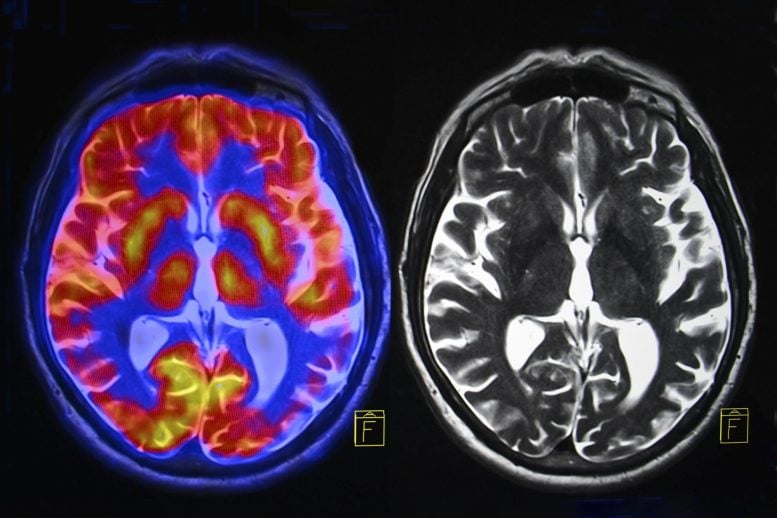
A Single Dose of Psilocybin May Produce Lasting Brain Changes, Study Finds
A new study shows that one psychedelic experience doesn’t just alter how a person feels; it may also change the brain itself. Researchers at UC San Francisco and Imperial College London found that a single 25 mg dose of psilocybin produces signs of likely anatomical changes in the brain that persist for at least a month after the experience.
Published in Nature Communications, the study was conducted in healthy adults with no prior psychedelic use. These results may help explain why psilocybin-assisted therapy is being explored as a treatment for depression, anxiety, and addiction.
The researchers identified a key mechanism behind these changes. Instead of focusing on a single brain region, they identified brain entropy as a key factor linking the experience to later outcomes.
What the Brain Looks Like on Psilocybin
Brain entropy refers to the diversity of neural activity happening at any given moment. A low-entropy brain tends to fall into predictable, repetitive patterns. A high-entropy brain is processing a richer, more varied stream of information. Within 60 minutes of taking the 25 mg dose, EEG recordings showed a sharp spike in entropy.
This increase in entropy persisted longer than the drug’s immediate effects. People who experienced the biggest jumps in entropy also reported more psychological insight the next day, saying they felt a deeper sense of emotional self-awareness. These insights coincided with improvements in well-being that lasted for at least two to four weeks.
“Psychedelic means ‘psyche-revealing,’ or making the psyche visible,” said senior author Robin Carhart-Harris, PhD, the Ralph Metzner Distinguished Professor of Neurology at UCSF. “Our data shows that such experiences of psychological insight relate to an entropic quality of brain activity and how both are involved in causing subsequent improvements in mental health.”
How the Study Was Designed
The study included 28 healthy adults with no mental health diagnoses. The experiment had two phases. First, each person received a very low 1 mg dose of psilocybin, which acted as a placebo. Researchers then tracked their brain activity and structure using EEG, MRI, and diffusion tensor imaging over the next few weeks.
One month later, those same participants received the 25 mg dose. The researchers then repeated the same series of brain scans and assessments.
Diffusion tensor imaging (DTI), a technique that measures water movement along neural pathways, showed that participants’ brain connections were more structurally intact a month after the high dose. This finding is the opposite of what typically happens with aging, which tends to weaken these connections. The most noticeable changes were in pathways linking the front and middle parts of the brain, areas involved in self-reflection, emotional regulation, and decision-making.
The researchers called these “likely anatomical changes” and emphasized that scientists still need more work to understand exactly what the structural shifts mean over longer time frames.
The Trip Is the Treatment
All but one participant described the 25 mg experience as the most unusual state of consciousness they had ever experienced. The other person ranked it among their top five. A month later, the group also performed better on a test of cognitive flexibility, which measures how well a person can adapt their thinking to new information.
Author Taylor Lyons, PhD, a research associate at Imperial College London, pointed to this chain of effects as the study’s most significant takeaway.
“Psilocybin seems to loosen up stereotyped patterns of brain activity and give people the ability to revise entrenched patterns of thought,” Lyons said. “The fact that these changes track with insight and improved well-being is especially exciting.”
These results could guide future research. If brain entropy during the experience predicts how well the treatment works, scientists might be able to use it to calibrate dosage in real time. This could help ensure patients get enough to support insight and recovery, without so much that it causes excessive stimulation.
What Comes Next
The researchers conducted the study in healthy volunteers and now plan to test whether these patterns also appear in people with depression, anxiety, or addiction. These are the groups where psilocybin therapy is being studied most actively. The sample size of 28 was small, and the researchers emphasized the need for larger, more diverse trials before drawing firm conclusions about clinical use.
Carhart-Harris noted that the therapeutic promise of psilocybin has been recognized for years. This study now provides new details about the biological mechanisms that may underlie its effects.
“We already knew psilocybin could be helpful for treating mental illness,” Carhart-Harris said. “But now we have a much better understanding of how.”
- The Debrief
- Return of the Boltzmann Brains: Why a Bizarre Hypothesis Suggests the Past May Be Harder to Prove Than We Think
Return of the Boltzmann Brains: Why a Bizarre Hypothesis Suggests the Past May Be Harder to Prove Than We Think
The idea that memories might not correspond to real events but could actually be illusions created by chance from cosmic static has been discussed in physics for more than a century. Recently, three physicists examined the logic behind this idea and found that arguments on both sides may be fundamentally circular.
A recent study published in the journal Entropy by Santa Fe Institute Professor David Wolpert, physicist Carlo Rovelli, and Jordan Scharnhorst revisits the Boltzmann brain hypothesis. This thought experiment, based on statistical mechanics, suggests that random fluctuations in entropy could, in theory, create a fully formed brain with false memories and a sense of a coherent past.
Rather than trying to prove or disprove the Boltzmann brain hypothesis, the researchers focused on identifying a structural flaw in the way scientists have debated the issue.
Where the Logic Breaks Down
The Boltzmann brain paradox comes from the H theorem, developed by Austrian mathematician and physicist Ludwig Boltzmann. This idea is key to statistical mechanics and supports the second law of thermodynamics, which explains why disorder (or entropy) increases over time and why we perceive time as moving forward. However, the H theorem itself treats the past and the future identically in its equations.
This symmetry creates a problem. If entropy can decrease in the future just as easily as it increased in the past, then the patterns that form our memories could just as likely come from random fluctuations as from real events. In other words, our memories might not necessarily correspond to actual past events.
The usual response is that this scenario is extremely unlikely. The chance of a functioning brain forming from random thermal noise is so small that it would take much longer than the current age of the universe for it to happen. However, the new study shows that this argument depends on assumptions that may not even be justified.
A Never-Ending Circle
To clarify the debate, the researchers created a mathematical framework that models the universe’s entropy as a time-symmetric Markov process, which they call the “entropy conjecture.” In this framework, they identified a key issue: physics alone cannot determine which moment in time to use as a reference point. That choice must be assumed.
This assumption leads to circular reasoning. Arguments against the Boltzmann brain hypothesis, including those that appeal to the second law of thermodynamics, usually assume that our memories accurately record real events. Yet the main reason to trust our memories is that the second law suggests they should be reliable. In other words, the conclusion relies on the premise, and the premise relies on the conclusion.
Arguments in favor of the hypothesis show the same circularity. The study finds that the Boltzmann brain hypothesis and the standard “past hypothesis,” which assumes the universe began in a low-entropy state at the Big Bang, have the same structure. Each approach analyzes the problem from a different moment in time, changing only which moment it treats as fixed.
Reframing the Question
The researchers stress that their findings are meant to diagnose the problem, not to give a final answer. Their study does not decide whether the Boltzmann brain hypothesis is true or whether our memories are real, but it does show that current arguments do not properly answer the question.
The team formalized the entropy conjecture as a mathematical process and revealed a problem earlier studies overlooked: every argument in this debate depends on assumptions about which facts to treat as fixed, and physics alone cannot resolve the issue.
Fundamentally, any real resolution has to come from outside the math—whether from prior beliefs, or from Bayesian reasoning. That, the authors suggest, underscores why the debate has continued to go in circles for so long.
The recent study, “Disentangling Boltzmann Brains, the Time-Asymmetry of Memory, and the Second Law,” appeared in the journal Entropy.
Austin Burgess is a writer and researcher with a background in sales, marketing, and data analytics. He holds an MBA, a Bachelor of Science in Business Administration, and a data analytics certification. His work focuses on breaking scientific developments, with an emphasis on emerging biology, cognitive neuroscience, and archaeological discoveries.