One way archaeologists learn how ancient people, including Neanderthals, did things is to attempt to do those things themselves, a process called experimental archaeology. Normally, that involves making stone tools, butchering deer, or distilling birch tar. But in a new study, it meant doing very destructive things to teeth from one of the world’s most carefully protected animals.
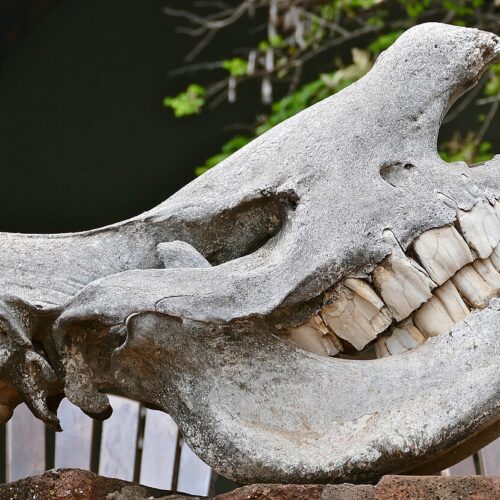
That's because the archeologists suspected that Neanderthals once used rhino teeth as tools. By using the teeth to make stone tools, the researchers demonstrated that Neanderthals probably did the same thing, adding to what we know about the wide range of items in their toolkits.
We need to hit some rhino teeth with rocks for science
Some Neanderthal archaeological sites in Europe and Asia seem to have many more rhinoceros teeth lying around than you’d expect. We know Neanderthals hunted a now-extinct species of rhinoceros in Europe and eastern Asia, but the people who had inhabited these sites looked like they had been collecting rhino teeth for some reason.
One way archaeologists learn how ancient people, including Neanderthals, did things is to attempt to do those things themselves, a process called experimental archaeology. Normally, that involves making stone tools, butchering deer, or distilling birch tar. But in a new study, it meant doing very destructive things to teeth from one of the world’s most carefully protected animals.
That's because the archeologists suspected that Neanderthals once used rhino teeth as tools. By using the teeth to make stone tools, the researchers demonstrated that Neanderthals probably did the same thing, adding to what we know about the wide range of items in their toolkits.
We need to hit some rhino teeth with rocks for science
Some Neanderthal archaeological sites in Europe and Asia seem to have many more rhinoceros teeth lying around than you’d expect. We know Neanderthals hunted a now-extinct species of rhinoceros in Europe and eastern Asia, but the people who had inhabited these sites looked like they had been collecting rhino teeth for some reason.
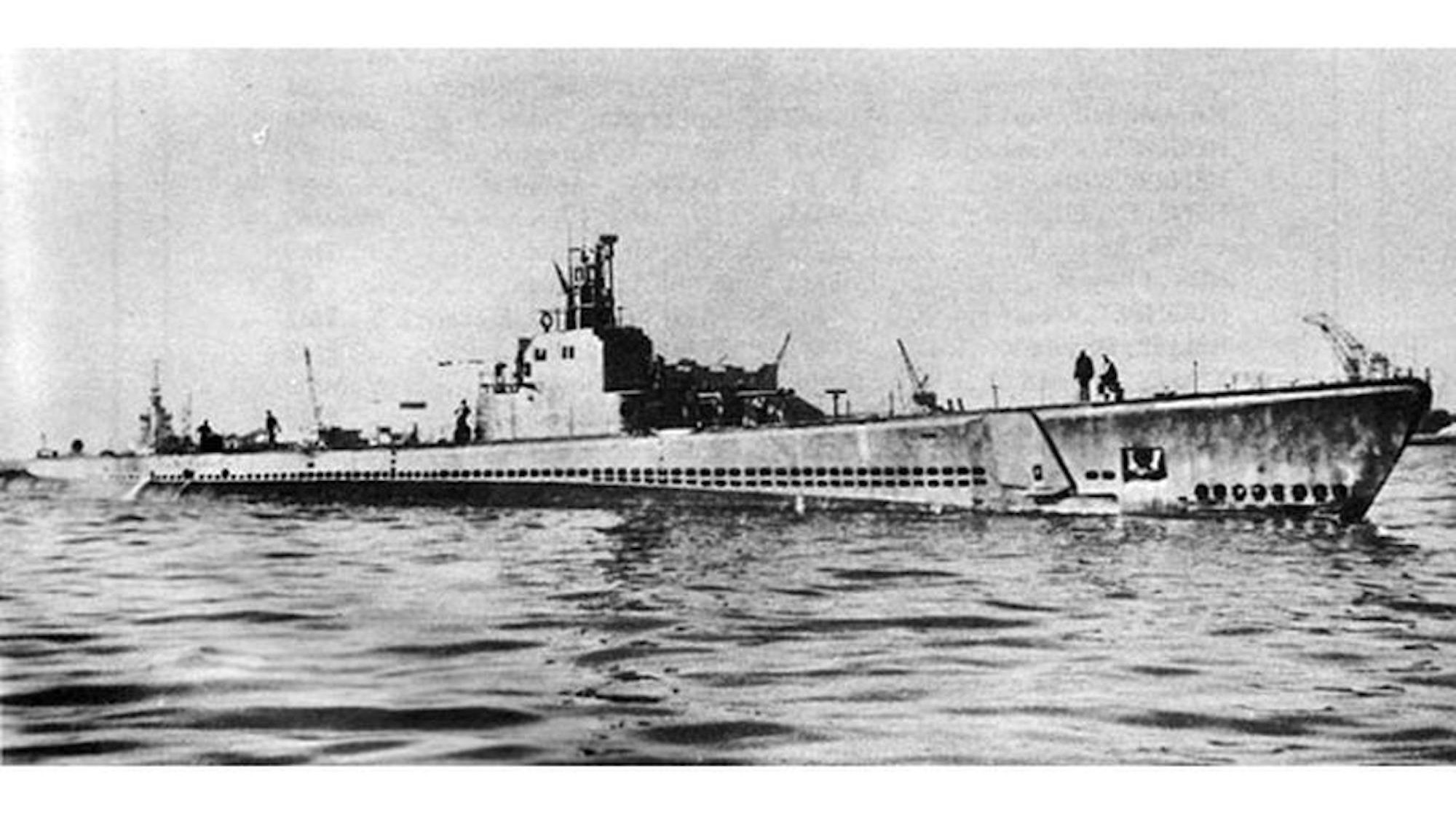
The wreck of an American submarine from World War II has been found off the coast of Matsua Island, Japan. The USSHerring (SS-233) currently rests over 300 feet down in the Pacific Ocean, where it is sitting upright and “maintains a high degree of integrity,” according to United States Naval History and Heritage Command (NHHC). The discovery was announced exactly 82 years after the vessel sank, based on evidence collected from an international team of researchers.
Herring’s final mission
The Herring was first launched from Portsmouth Naval Shipyard in Maine on January 15, 1942, and officially commissioned on May 4, 1942. The vessel completed eight war patrols in both the Atlantic and Pacific Oceans during the war. Herring sank seven enemy ships, including four Japanese cargo ships during what would be the submarine’s final patrol.
Herring was last seen by the crew of the USS Barb during the evening of May 31, 1944. The submarines met to determine who would patrol areas off the Kurile Islands, an archipelago east of Japan. Early on June 1, 1944, Barb’s crew recorded hearing the sound of weapons designed to attack a submarine from a ship or aircraft called depth charges exploding in the distance.
Japanese historical records also confirm that Herring was struck in two direct hits during a counterattack by a shore battery. The strikes ultimately sank Herring and the vessel was presumed lost when Herring failed to report to Midway on July 13, 1944. The sinking killed all 83 crewmembers.
USS Herring Memorial statue at the Battleship Memorial Park in Mobile, Alabama. Image: Ron Buskirk/UCG/Universal Images Group via Getty Images Ron Buskirk
A protected final resting place
In 2017, a joint expedition between Russian Geographic Society (RGS) and the Russian Military reported a submarine wreck in the area. Based on its location and appearance, the RGS reported that the wreckage was Herring. A subsequent joint expedition returned to the wreck in 2022 to document its status and honor the lost crew. The expedition team also placed a plaque on site. The data collected and shared by the RGS was analyzed by two U.S. volunteer researchers and one researcher in Japan. NHCC confirmed the wreckage on June 1, 2026–82 years to the day after Herring is believed to have sunk.
Importantly, the wreckage shows battle damage around the submarine’s conning tower. This tower is a raised platform from which an officer can conn (conduct or control) a vessel. This damage, along with evidence of grounding at the submarine’s bow, correlates with the historical record of the Herring’s sinking.
The wreckage is currently protected by U.S. law and under the jurisdiction of the Department of the Navy. The Navy allows some non-intrusive activities on sunken military craft, but any activity that may disturb the sunken vessel must be coordinated with NHHC.
“Most importantly, the wreck represents the final resting place of Sailors who gave their lives in defense of the nation and should be respected by all parties as a war grave,” the NHHC wrote in a press release.”
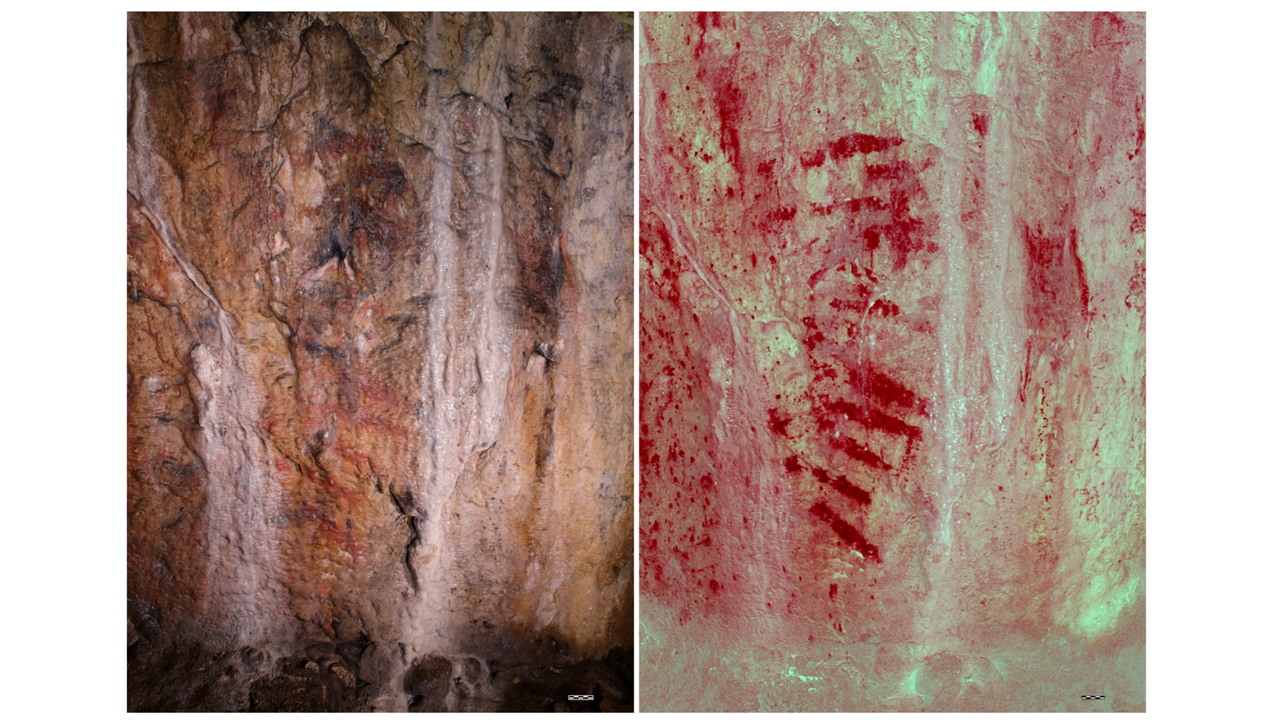
The oldest cave art in Britain may have been discovered, or more likely rediscovered, in a cave on the Gower Peninsula in South Wales, possibly dating back around 17,000 years.
The oldest cave art in Britain may have been discovered, or more likely rediscovered, in a cave on the Gower Peninsula in South Wales, possibly dating back around 17,000 years.
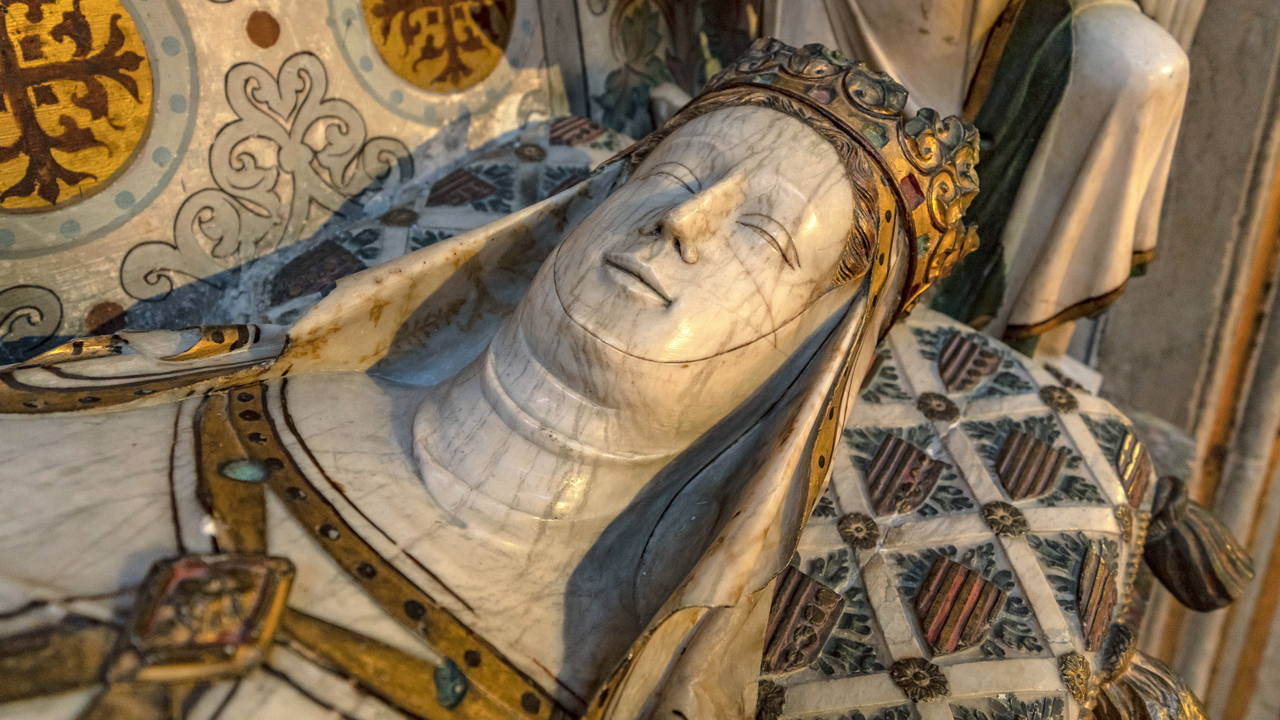
In honor of the 700th-anniversary founding of the Royal Monastery of Santa Maria Pedralbes in Barcelona, scientists opened eight 14th-century graves and studied the 25 people found inside, including a queen.
Despite their occupations of Britain, the Romans and Vikings didn't leave much of a genetic mark on Britons. The Anglo-Saxons, though, were a different story.
Archaeologists in Croatia have made an unusual discovery at an ancient ritual site along the country’s southern coast.
Within Crno Jezero cave, an 80-foot-long cavern that extends 300 feet beneath the Pelješac peninsula in southern Dalmatia, just north of Dubrovnik, archaeologists have located an unusual relic dated to the 4th century.
The discovery, according to Croatia Week, is a terracotta head featuring a Greek theater mask, which it is believed would have likely been featured as an ornament once mounted on a wall.
In ancient Greece, theater masks were items that actors wore while performing a range of stage productions that included tragedies, comedies, and other kinds of plays.
The terracotta Greek theater mask discovered in Crno Jezero Cave (Image Credit: Archaeological Museum of Dubrovnik Museums).
These masks were normally crafted from very lightweight materials like wood, cork, or leather. Some of the masks were designed as full-face helmets worn by actors, which helped to amplify their voices and project their exaggerated emotions in ancient open-air amphitheaters.
The discovery of the artifact follows a similar discovery associated with ancient Greece previously made at the cave, involving a possible Greek deity that was unearthed last year.
The discoveries may point to the cave’s use as a ritual site over the centuries, during periods where the cave likely served as a sanctuary from the Bronze Age up through the Middle Ages, according to Domagoj Perkić of the Dubrovnik Museums.
“Whether Dionysus, or his Illyrian counterpart, can be connected with the wine vessels and the mask found in the cave remains open to interpretation,” Perkić said in a statement.
Perkić says that there have been other discoveries that may link the site to the periods during which it served as a sanctuary, which include high-quality Greek pottery.
Items that include Greek amphoras and bowls, as well as drinking vessels such as kantharoi, have been uncovered close to the opening of the cave.
“Most of the sanctuary-related finds were discovered in the entrance and side sections of the cave, which had remained hidden and buried until excavations,” Perkić says.
Additional archaeological evidence uncovered at the cave suggests some pottery was crafted on-site using local materials, possibly as votive offerings.
Micah Hanks is the Editor-in-Chief and Co-Founder of The Debrief. A longtime reporter on science, defense, and technology with a focus on space and astronomy, he can be reached atmicah@thedebrief.org. Follow him on X @MicahHanks, and at micahhanks.com.
At the height of China’s ancient Ming dynasty, ancient surgeons appear to have possessed early knowledge of a surprisingly advanced medical application, according to new findings.
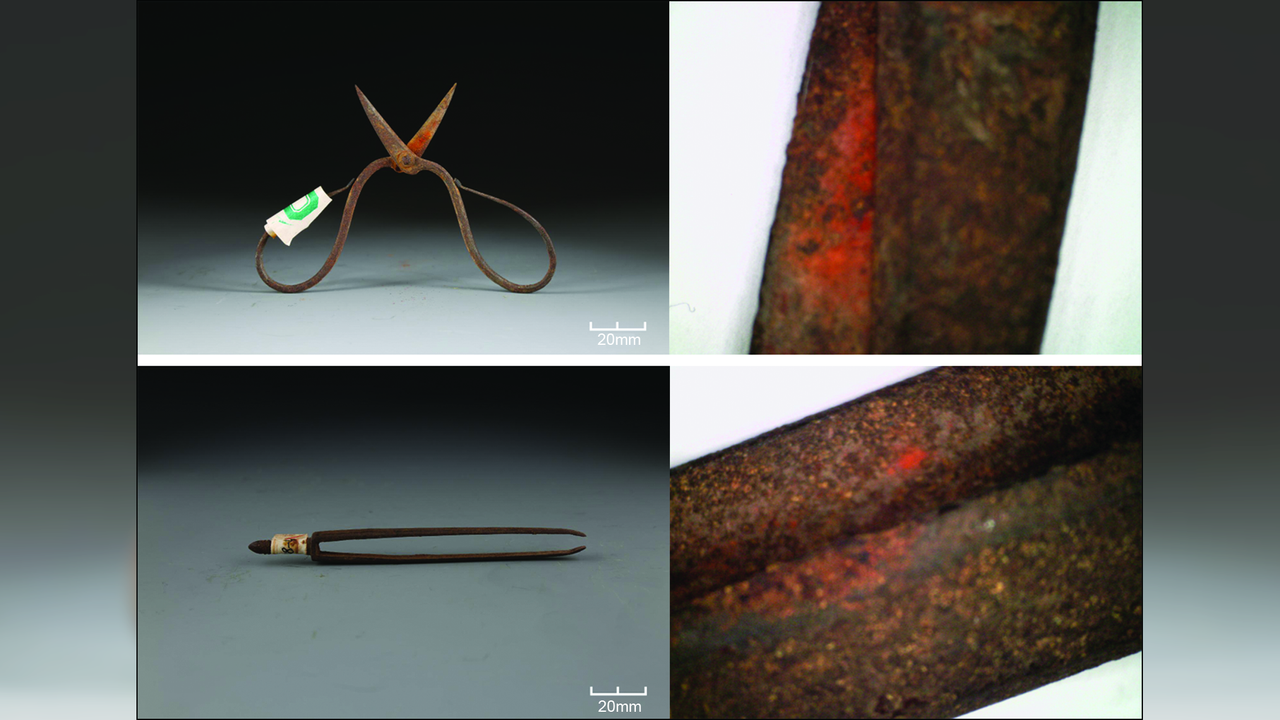
Researchers at Northwestern University have revealed that surgeons in ancient China were using aconitine, a poison derived from monkshood and similar toxic plants, for medical applications. The research offers the first evidence of its controlled use, revealed through analysis that discovered residue of the poisonous substance on surgical tools dating to between 1348 and 1411 CE.
Discovered on tweezers and surgical scissors recovered from an ancient tomb in Jiangyin, China, the researchers used microscopic analysis to reveal this highly sophisticated knowledge displayed by Ming dynasty surgeons. The findings were reported in the journal Antiquity.
Clues from Residues
Archaeologists can discern a remarkable amount of information about the ancient world from faint residues left behind on ancient objects.
From blood-protein analysis that reveals the kinds of megafauna hunted by America’s Paleoindian hunters, to environmental DNA that is revealing new genetic information about the world of our ancient archaic cousins, the Neanderthals, microscopic traces from long ago can reveal a surprising amount of information about life in ancient times.
Now, the microscopic study of 700-year-old residues left on surgical tools from China’s Ming dynasty is revealing something equally remarkable: the advanced medical knowledge of ancient Chinese surgeons.
Advanced Ancient Surgical Practices
Applying conventional microscopic analysis can be difficult in some cases, and that was a primary challenge for Northwestern researchers studying the Ming dynasty artifacts retrieved from a tomb near Jiangyin, located along the Yangtze River in China’s Jiangsu province.
To obtain the minimum amounts required for positive residue analysis and identification, the Northwestern team employed an innovative nondestructive technique called stimulated Raman scattering (SRS), a variety of microscopic imaging that is used in modern applications to help identify certain materials and their components.
Significantly, SRS microscopic imaging can also be used to overcome the problem of obtaining minimal sample requirements, according to Northwest University Professor Congcang Zhao, who says the process overcomes “the key challenges in residue research of minimal sample availability and the need to preserve archaeological material.
Zhao, a co-author of the recent research, and his colleagues were able to rely on this process to detect trace amounts of the toxic substance derived from the poisonous flowering plant Aconitum, which is also known as monkshood, wolfsbane, and by other names.
Known for its extreme toxicity, ancient Chinese medical practitioners had somehow managed to discover that when detoxified using processes that included boiling the plant in vinegar or using mung beans, aconitine could be used to produce a powder that possesses anesthetic properties.
The detoxified aconitine powder, in turn, could be used to reduce pain during surgeries, and evidence for the production of such anesthetic powders are known from ancient Chinese medical literature.
However, evidence for its direct use in surgery had never been observed until now.
“Six centuries ago, a Ming Dynasty surgeon performed an operation with a pair of iron scissors and tweezers, and today we have read the traces of anaesthetic medicine left on those instruments using a beam of laser light,” Zhao explained in a statement.
Discovery of an Ancient Anesthetic
According to the new research, which complements information found in ancient texts, aconitine powder was likely applied topically to an area before incisions were made. This process would have required very careful administration, since some of the substance’s toxic qualities would have remained in the powder ancient Chinese medicinal practitioners produced.
Zhao says that when viewed alongside ancient medical texts from the Ming Dynasty, the study he and his colleagues have produced “confirms that Aconitum was employed as a topical anaesthetic, safely and precisely applied during surgical procedures.”
“Ming physicians used iron surgical instruments and controlled the toxicity of aconitine
through topical application, compound prescriptions and strict procedural controls,” Zhao adds, “demonstrating a practical ability to balance drug potency with patient safety.”
The new research reveals not only that such surprisingly advanced medical applications existed in ancient China, but also that the surgeons who used them understood the necessity for employing them safely, in order to mitigate unwanted side effects.
The result, Zhao says, is a new window towards understanding the precocious surgical practices of 14th century Ming Dynasty medical practitioners.
“This is the first time humanity has found direct chemical evidence of anaesthetics on ancient surgical tools, proving that our ancestors already knew how to safely alleviate patients’ pain with highly toxic herbs,” Zhao says.
The recent study, “Surgical anaesthesia in Ming China: scientific analysis of aconitine residues on medical instruments,” was published in the journal Antiquity.
Micah Hanks is the Editor-in-Chief and Co-Founder of The Debrief. A longtime reporter on science, defense, and technology with a focus on space and astronomy, he can be reached atmicah@thedebrief.org. Follow him on X @MicahHanks, and at micahhanks.com.
The Great Pyramid of Khufu, the largest and most impressive surviving monument from the ancient world, has long remained an enigma to scholars. One reason is its remarkable resistance to damage from events such as earthquakes, which has helped it endure for thousands of years without significant structural issues.
Now, researchers say they finally understand the ancient technological factors behind the pyramid’s resilience throughout time.
According to new research, the unique frequency at which the pyramid vibrates during earthquakes contrasts significantly with the sands of the Giza plateau on which it rests. This, a new study in Scientific Reports argues, along with the massive structure’s shape and internal design, has all played a part in helping ensure its longevity.
A Marvel of the Ancient World
Khufu’s Pyramid, often simply called the Great Pyramid, is the oldest of the Seven Wonders of the Ancient World and the sole surviving example. Scholars have maintained a fascination with Giza’s monumental megastructures since antiquity, and debate over the mystery of its construction continues into the present day.
Completed during Egypt’s Old Kingdom (2600–2450 BCE), the Great Pyramid raises a significant question about the structural qualities that have contributed to its longevity. Addressing this aspect of one of the greatest engineering feats of the ancient world, researchers Mohamed ELGabry and colleagues Ayman Hamed, Sakuji Yoshimura, Hesham M. Hussein, Mohamed Maklad, and Asem Salama now say a combination of factors, which include the internal features within the pyramid, all contribute to its success at surviving events that have damaged smaller, more structurally sophisticated monuments in Egypt.
Using Sound to Solve an Ancient Mystery
To help them determine the factors that contribute the most significantly to the longevity of Khufu’s Pyramid, the research team began with an ambient noise survey, which involved horizontal-to-vertical spectral ratio analysis at more than three dozen locations throughout the ancient structure, which included chambers within the pyramid, construction blocks, and adjacent soil.
Their approach was not only successful but also revealed surprising insights into the pyramid’s construction, the team says.
Among the most significant discoveries, the team says they found that the pyramid “exhibits uniform fundamental frequencies (2.0–2.6 Hz) with an average of ~ 2.3 Hz across all structural elements,” revealing an extraordinary consistency in terms of the structure’s dynamic characteristics.
Also important, they say, is that the frequency band the pyramid’s structural components exhibit contrasts sharply with the surrounding soil. This is important because it limits the amplification of resonance through interactions between the stone assembly of the structure and its surrounding soil, which the team identifies as “a key mechanism protecting the monument during seismic activity.
Finally, although the team identifies an increase in seismic amplification with respect to the structure’s height, they also found that it “diminishes substantially within the pressure-relieving chambers,” which they interpret as an indication of “how their geometry actively reduces seismic response.”
Ancient Earthquake Impact Reduction
As a final consideration, the team also examined the pyramid’s subsurface foundation, where they calculated the structure’s vulnerability to seismic events.
After determining a very low value, the team concludes that the pyramid’s foundation has an “excellent bearing capacity and minimal earthquake-induced risk,” noting that, in addition to the monument’s resilience over time, its unique structural properties will likely protect it from future damage.
“The low seismic vulnerability index estimated for the foundation soils suggests that any future earthquakes are likely to produce only limited damage to the main pyramid body,” the team reports in their study.
Arguably, the team’s most significant finding is that the pyramid’s ancient builders possessed an exceptionally advanced understanding of the engineering properties behind the stone used in its construction.
“These findings present compelling quantitative evidence that ancient Egyptian architects possessed profound geotechnical understanding, optimizing structure design and site characterization to assure millennial-scale stability against seismic hazards,” the team reports.
Micah Hanks is the Editor-in-Chief and Co-Founder of The Debrief. A longtime reporter on science, defense, and technology with a focus on space and astronomy, he can be reached atmicah@thedebrief.org. Follow him on X @MicahHanks, and at micahhanks.com.
New genetic analysis of remains recovered from two 5,000-year-old Neolithic stone monument sites in present-day Germany has revealed a previously unknown biological connection between distant megalithic societies.
The new findings include the discovery that two individuals buried at separate sites over 250 kilometers apart were father and son.
In an email to The Debrief, study co-author Ben Krause-Kyora from Kiel University said their findings reveal surprisingly long-distance familial ties between the people from the Western Funnel Beaker (TRB-West) and the neighboring Wartberg (WBC) communities despite their distinct archaeological differences, suggesting that these Stone Age megalithic communities “were much more interconnected than previously assumed.”
Although the study found little evidence for a genetic connection between the Sorsum and WBC megalithic communities and those found in more distant parts of northern Europe, Britain, and Scandinavia, the research team behind the new study said there may be cultural or social connections between these ancient societies that would account for the archaeological and cultural similarities.
Previously ‘Unrelated’ Megalithic Communities Share Cultural and Architectural Features
Although archaeologists have documented large ancient stone monuments around the world, some of the oldest and most complex megalithic structures began to appear across Europe between 4,500 and 2,800 BCE. The TRB-West community was responsible for some of the most elaborate stone burial chambers of the time, and also stood out for other distinct traditions.
The Gallery Tomb at Züschen. Image Credit: Barbara Fritsch, Kiel.
Unfortunately, very little is known about these ancient stone monument builders or any possible relationship with other nearby megalithic cultures due to a lack of genetic data. To date, the TRB-West site studied by Krause-Kyora and colleagues, called Sorsum, is the only one where human remains have been recovered.
Still, the researcher told The Debrief that previous studies had noted general similarities in burial chamber features between Sorsum and the nearby Wartberg culture, suggesting a potentially deeper connection.
“Most notably, Sorsum contains an underground rock-cut burial chamber with an elongated form, which is unusual for the Western Funnel Beaker (TRB-West) tradition and instead resembles the subterranean gallery graves characteristic of WBC communities,” the study co-author explained.
When asked if any of these architectural features were also observed in other, more distant megalithic cultures beyond Wartburg, Krause-Kyora said that some of the site’s broader features, including collective burial practices and monumental stone architecture, “are shared across many European megalithic cultures.” However, the researcher also cautioned that their findings suggest that even when similarly aged communities shared monument styles, “the social meaning and burial organization behind these structures could differ substantially from region to region.”
Genetic Tests Show Hunter-Gatherer Heritage & Father/Son Duo Buried over 250 Kilometers Apart
To explore any possible genetic connection between the people buried at the TRB-west Sorsum site and remains collected from the Wartburg site of Niedertiefenbach, study leader Nicolas Antonio da Silva from Kiel University’s Institute of Clinical Molecular Biology (IKMB) and colleagues analyzed the genomes of 203 separate individuals collected from Sorsum and five local WBC sites.
Sampling of the inner ear (petrous bone) in a dedicated cleanroom facility, enabling the extraction of ancient DNA for high-resolution population genetic analysis. Image Credit: Jan Steffens, ROOTS Cluster of Excellence, Kiel University.
When the researchers compared the results, they found that the people buried at Sorsum were more closely related to the WBC groups than other groups classified within the TRB-west culture. This deep genetic connection was unexpected since previous studies have identified the two groups with different archaeological labels.
The two groups also shared what the research team termed “high levels of ancestry” with Western hunter-gatherer cultures. The study authors said the hunter-gatherer ancestry was higher in male lineages, suggesting that the seemingly disparate groups shared “deep-sustained biological connections.”
Network of first- and second-degree relatives revealing far-reaching biological connections across geographically distant burial communities, highlighting extensive mobility and social interaction. Image Credit: Ralf Opitz, Institute of Prehistoric and Protohistoric Archeology, Kiel University.
Perhaps the most shocking discovery involved the genetic connection between two individuals buried separately at the Sorsum and WBC sites. Krause-Kyora told The Debrief that the biological father was buried at the WBC site of Niedertiefenbach, whereas his “subadult son” was buried far away at Sorsum.
“This was one of the most surprising findings of the study because the two sites are separated by more than 250 km,” the researcher told The Debrief.
Site Differences: “Primarily Archaeological & Stylistic” Rather Than Genetic
Although the father-son pair buried over 250km apart was the most unexpected familial relationship identified between the two cultures, the genetic analysis did reveal other, first and second-degree genetic connections between individuals. The researchers suggest that these signs of interbreeding across stylistically independent cultures living at substantial distances from one another indicate occasional movement between the sites, potential intermarriage, and social or cultural exchanges that defy the distance.
“The major differences between Sorsum/TRB-West and WBC are primarily archaeological and stylistic rather than genetic,” Krause-Kyora told The Debrief.
The Gallery Tomb at Züschen. Image Credit: Barbara Fritsch, Kiel.
For example, TRB-West communities like Sorsum are usually associated with decorated funeral beaker pottery and the manufacture of transverse arrowheads, which are razor-sharp, arrow-shaped stones wider than they are long. Conversely, the researcher explained, WBC assemblages like the ones examined in this study “are characterized by mostly undecorated barrel-shaped pottery and gallery graves.”
“Despite these cultural distinctions, genetically the groups were remarkably closely related,” Krause-Koyra told The Debrief.
Taken as a whole, the team said the evidence suggests that Sorsum and the WBC communities represented a “genetically continuous population,” including the possibility that Sorsum was a northern branch of the WBC collective that integrated various TRB-West traditions and methods distinct from those of typical TRB-West groups.
Exploring Potential Connections with Other Ancient European Megalithic Societies
While the genetic analysis revealed unexpected connections between these seemingly disparate megalithic groups, the research team found no genetic connections between the tested groups and more distant megalithic populations in the British Isles or Scandinavia to the north. When asked if these unrelated groups may have shared knowledge or displayed stylistic or cultural similarities that may indicate a similar cultural cross-contamination with the groups they studied, Krause-Koyra told The Debrief that there are “definitely broader stylistic and cultural similarities across European megalithic societies.”
“Monumental stone constructions, communal burials, and certain ritual traditions appear widely shared,” the researcher explained.
Still, he cautioned, their genetic results suggest these similarities were not indicative of a large-scale migration or long-distance biological networks spanning thousands of kilometers. Instead, the study co-author said that previously observed similarities in ideas and cultural practices “likely spread through cultural exchange and interaction between neighboring regions over time.”
When asked about the broader significance of their findings, the researcher told The Debrief that their genetic analysis successfully identified close biological relatives buried over 250 km apart, “showing substantial long-distance mobility and interaction during the Late Neolithic.”
“At the same time, the collective graves were not simply family tombs,” Krause-Koyra added. “Many unrelated individuals were buried together, indicating that social kinship and community identity were just as important as biological relationships.”
Researcher Pleas for Enhancing Research Integrity “Across the Field”
In a separate statement to journalists covering their discovery, Krause-Kyora said those working in ancient DNA research have increasingly emphasized authentication standards, reproducibility, open data sharing, and contamination control. The researcher also noted that a community-wide adoption of transparent bioinformatic pipelines and independent replication of test data has “substantially strengthened confidence in results.”
“Moving forward, stronger support for long-term data accessibility, standardized metadata reporting, and interdisciplinary validation approaches would further enhance research integrity across the field,” Krause-Kyora added.
Christopher Plain is a Science Fiction and Fantasy novelist and Head Science Writer at The Debrief. Follow and connect with him on X, learn about his books at plainfiction.com, or email him directly at christopher@thedebrief.org.

 Login
Login