Normal view

NASA Releases Sweeping Plans for Moon Base

27 May 2026 at 16:13

NASA remains committed to developing a permanent presence on the Moon — space science budgets be damned.

During a Tuesday event, the space agency announced a slew of new contracts worth hundreds of millions of dollars for Moon base infrastructure including lunar rovers, as well as timeframes for upcoming development and exploration missions.

Before the end of this year, NASA wants to send two of Blue Origin’s Blue Moon lunar landers to the Moon’s surface to deliver two lunar terrain vehicles being developed by commercial partners Astrolab and Lunar Outpost.

Meanwhile, Firefly Aerospace, whose Blue Ghost lander successfully touched down on the Moon in March 2025, will develop drones to explore the rugged surface.

And that’s just the buildup to NASA’s Artemis 4 mission, the first planned crewed landing in over half a century, which is tentatively slated for 2028. Artemis 3, which was originally envisioned as a landing attempt, will now involve the testing of either or both Blue Origin’s lander and SpaceX’s Starship in low-Earth orbit sometime next year.

To call NASA’s plans for its Moon base ambitious would be a staggering understatement. For one, Blue Origin’s Blue Moon lander has yet to successfully deliver a payload into Earth’s orbit following a failed attempt last month. Getting to the Moon, softly landing, and releasing a robotic lander will likely prove far more difficult.

The agency laid out plans for three “Moon Base missions,” starting with a Blue Moon delivery of scientific instruments in “fall 2026,” followed by a delivery of “more than 1,100 pounds of cargo on Astrobotic’s Griffin lander,” including a rover.

The third mission, which is “also targeted for this year,” will deliver even more scientific payloads, including ones being developed by the European Space Agency and the Korea Astronomy and Space Science Institute.

“These missions are the first of more than a dozen missions that will be announced this year, each designed to generate operational data and reduce risk ahead of crewed Artemis surface activities,” the agency wrote in its writeup of Tuesday’s event.

The base itself will span hundreds of square miles, according to Moon base program executive Carlos Garcia-Galan. Drones, called MoonFall, will mark the perimeter of said base in what could inevitably be a highly contentious marking of territory.

MoonFall, an initiative led by NASA’s Jet Propulsion Lab, aims to land near the lunar South Pole by 2028. High-definition optical cameras attached to drones measuring roughly seven feet across and four feet tall will take detailed imagery of the base’s envisioned terrain far ahead of any crewed landings.

In a note, NASA administrator Jared Isaacman vowed that the US would “never give up on the Moon again” by building out its Artemis program.

“We are going back to the Moon, building the base, and doing the other things,” he wrote, referencing John F. Kennedy’s iconic 1962 speech about going to the Moon. “This is no longer something to read in the history books, you are making history.”

However, given the vast degree of complexity involved, successfully launching not just one but a whole slew of missions on the surface of the Moon before the end of 2026 could soon get a massive reality check. In other words, we wouldn’t be shocked to hear from even more delays as Isaacman’s NASA dials up the pressure to build out a permanent presence on the Moon.

If deadlines were to slip — which, given historical precedent, is far from out of the question — the US could be beaten to the punch by the end of this decade after all, as experts continue to warn.

“It would not surprise me at all if China gets there first,” Open University lunar scientist Simeon Barber told the BBC.

More on the Moon base: NASA Announces Gigantic Armada of Moon Launches to “Build President Trump’s Moon Base,” Starting Next Year

The post NASA Releases Sweeping Plans for Moon Base appeared first on Futurism.

Rocket Report: A dark day for Blue Origin; Pentagon eyes new launch site

29 May 2026 at 14:03

Welcome to Edition 8.43 of the Rocket Report! A disclaimer: No one yet fully appreciates the ramifications of Blue Origin's New Glenn rocket explosion Thursday night on its launch pad at Cape Canaveral, Florida. What we know as of this writing is that much of Blue's sole orbital-class launch pad has been destroyed, and the New Glenn rocket will be grounded for an extended period of time. It is too soon for any hot takes, at least until the Sun rises at the Cape on Friday morning. One thing I am sure of is that we will be writing about this event for weeks, months, and years to come.

As always, we welcome reader submissions. If you don't want to miss an issue, please subscribe using the box below (the form will not appear on AMP-enabled versions of the site). Each report will include information on small-, medium-, and heavy-lift rockets, as well as a quick look ahead at the next three launches on the calendar.

Charting China's contribution to space junk. There's a problem with the drastic uptick in Chinese space launches over the last decade. China appears to be ignoring long-established norms about disposing of the upper stages of rockets, Ars reports. These are the parts of the vehicle that separate from the first stage of a rocket and push a satellite or spacecraft into orbit. In the early decades of spaceflight, launch operators routinely left upper stages in orbit after they released their payloads. But most launch companies today reserve enough propellant in their rockets to remove them from orbit to avoid the risk of spent upper stages becoming a source of space debris. But China is not following this trend. There has been striking growth in China’s rocket body mass. In the past five years, the mass of Chinese rocket bodies in long-lived orbits has risen from less than 100 metric tons to 252, according to a new analysis by Space Domain Awareness expert Jim Shell.

Read full article

Comments

© VCG/VCG via Getty Images

SpaceX's Starship V3—still a work in progress—mostly successful on first flight

23 May 2026 at 18:54

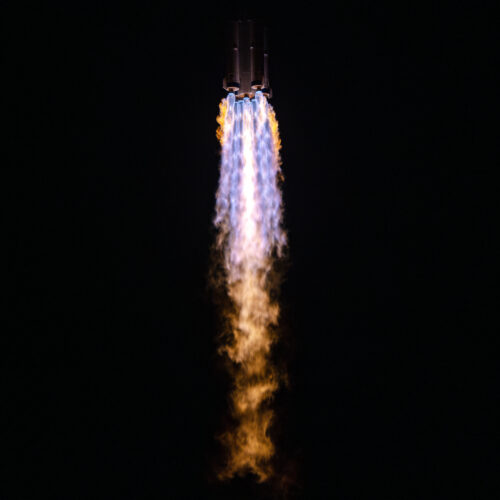
SpaceX launched the first test flight of its upgraded Starship rocket and Super Heavy booster Friday, with mostly positive results.

The powerful rocket, propelled by 33 methane-fueled main engines, climbed away from SpaceX's Starbase launch facility in South Texas at 5:30 pm CDT (6:30 pm EDT; 22:30 UTC) Friday. Within a few seconds, the 408-foot-tall (124-meter) rocket, the largest ever built, cleared the launch tower and turned onto an eastward heading over the Gulf of Mexico.

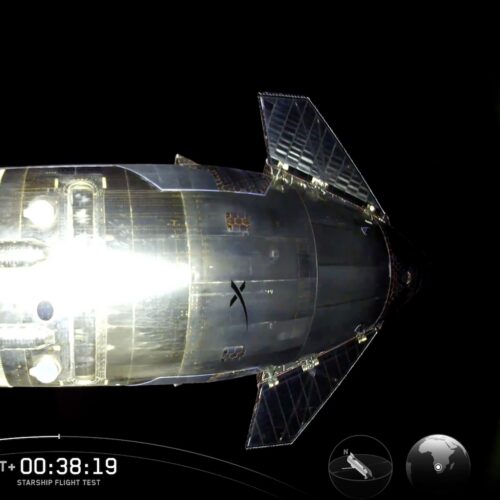
Starship splashed down on target in the Indian Ocean a little more than an hour later to conclude the first flight of the latest version of SpaceX's stainless-steel mega-rocket. Starship V3 fared better on its debut than the first flights of Starship V1 and V2 in 2023 and 2025. Both past versions of Starship broke apart during launch on their inaugural flights.

Read full article

Comments

© SpaceX

Ground system issue scrubs first launch of SpaceX's Starship V3 rocket

22 May 2026 at 03:05

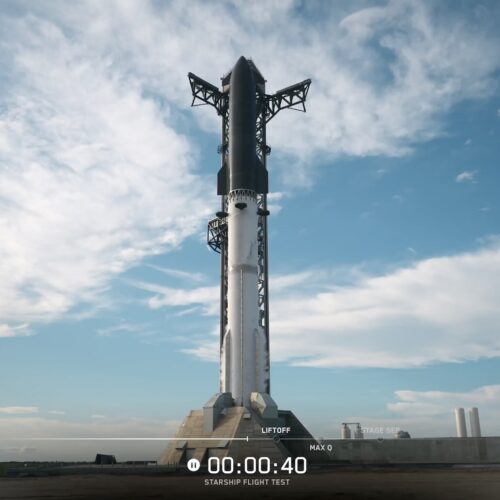
SpaceX got within 40 seconds of launching the first flight of a taller, more powerful version of its Starship rocket Thursday, but a pesky problem with the launch tower kept the vehicle bound to Earth for at least one more day.

Clouds and rain showers cleared the area around SpaceX's launch site in South Texas, leaving mostly sunny skies over the Starship launch pad Thursday afternoon. SpaceX pushed back the launch time by one hour, but the countdown appeared to proceed smoothly once propellants began loading into the rocket.

That was true, at least, until the countdown clock paused 40 seconds before liftoff. The launch team repeatedly attempted to resume the countdown, only for the computer controlling the launch sequence to stop the clock again. There were five holds in all before SpaceX called off the launch attempt.

Read full article

Comments

© SpaceX

SpaceX's Starship V3—still a work in progress—mostly successful on first flight

23 May 2026 at 18:54

SpaceX launched the first test flight of its upgraded Starship rocket and Super Heavy booster Friday, with mostly positive results.

The powerful rocket, propelled by 33 methane-fueled main engines, climbed away from SpaceX's Starbase launch facility in South Texas at 5:30 pm CDT (6:30 pm EDT; 22:30 UTC) Friday. Within a few seconds, the 408-foot-tall (124-meter) rocket, the largest ever built, cleared the launch tower and turned onto an eastward heading over the Gulf of Mexico.

Starship splashed down on target in the Indian Ocean a little more than an hour later to conclude the first flight of the latest version of SpaceX's stainless-steel mega-rocket. Starship V3 fared better on its debut than the first flights of Starship V1 and V2 in 2023 and 2025. Both past versions of Starship broke apart during launch on their inaugural flights.

Read full article

Comments

© SpaceX

Ground system issue scrubs first launch of SpaceX's Starship V3 rocket

22 May 2026 at 03:05

SpaceX got within 40 seconds of launching the first flight of a taller, more powerful version of its Starship rocket Thursday, but a pesky problem with the launch tower kept the vehicle bound to Earth for at least one more day.

Clouds and rain showers cleared the area around SpaceX's launch site in South Texas, leaving mostly sunny skies over the Starship launch pad Thursday afternoon. SpaceX pushed back the launch time by one hour, but the countdown appeared to proceed smoothly once propellants began loading into the rocket.

That was true, at least, until the countdown clock paused 40 seconds before liftoff. The launch team repeatedly attempted to resume the countdown, only for the computer controlling the launch sequence to stop the clock again. There were five holds in all before SpaceX called off the launch attempt.

Read full article

Comments

© SpaceX

Rocket Report: A dark day for Blue Origin; Pentagon eyes new launch site

29 May 2026 at 14:03

Welcome to Edition 8.43 of the Rocket Report! A disclaimer: No one yet fully appreciates the ramifications of Blue Origin's New Glenn rocket explosion Thursday night on its launch pad at Cape Canaveral, Florida. What we know as of this writing is that much of Blue's sole orbital-class launch pad has been destroyed, and the New Glenn rocket will be grounded for an extended period of time. It is too soon for any hot takes, at least until the Sun rises at the Cape on Friday morning. One thing I am sure of is that we will be writing about this event for weeks, months, and years to come.

As always, we welcome reader submissions. If you don't want to miss an issue, please subscribe using the box below (the form will not appear on AMP-enabled versions of the site). Each report will include information on small-, medium-, and heavy-lift rockets, as well as a quick look ahead at the next three launches on the calendar.

Charting China's contribution to space junk. There's a problem with the drastic uptick in Chinese space launches over the last decade. China appears to be ignoring long-established norms about disposing of the upper stages of rockets, Ars reports. These are the parts of the vehicle that separate from the first stage of a rocket and push a satellite or spacecraft into orbit. In the early decades of spaceflight, launch operators routinely left upper stages in orbit after they released their payloads. But most launch companies today reserve enough propellant in their rockets to remove them from orbit to avoid the risk of spent upper stages becoming a source of space debris. But China is not following this trend. There has been striking growth in China’s rocket body mass. In the past five years, the mass of Chinese rocket bodies in long-lived orbits has risen from less than 100 metric tons to 252, according to a new analysis by Space Domain Awareness expert Jim Shell.

Read full article

Comments

© VCG/VCG via Getty Images

Rocket Report: A dark day for Blue Origin; Pentagon eyes new launch site

29 May 2026 at 14:03

Welcome to Edition 8.43 of the Rocket Report! A disclaimer: No one yet fully appreciates the ramifications of Blue Origin's New Glenn rocket explosion Thursday night on its launch pad at Cape Canaveral, Florida. What we know as of this writing is that much of Blue's sole orbital-class launch pad has been destroyed, and the New Glenn rocket will be grounded for an extended period of time. It is too soon for any hot takes, at least until the Sun rises at the Cape on Friday morning. One thing I am sure of is that we will be writing about this event for weeks, months, and years to come.

As always, we welcome reader submissions. If you don't want to miss an issue, please subscribe using the box below (the form will not appear on AMP-enabled versions of the site). Each report will include information on small-, medium-, and heavy-lift rockets, as well as a quick look ahead at the next three launches on the calendar.

Charting China's contribution to space junk. There's a problem with the drastic uptick in Chinese space launches over the last decade. China appears to be ignoring long-established norms about disposing of the upper stages of rockets, Ars reports. These are the parts of the vehicle that separate from the first stage of a rocket and push a satellite or spacecraft into orbit. In the early decades of spaceflight, launch operators routinely left upper stages in orbit after they released their payloads. But most launch companies today reserve enough propellant in their rockets to remove them from orbit to avoid the risk of spent upper stages becoming a source of space debris. But China is not following this trend. There has been striking growth in China’s rocket body mass. In the past five years, the mass of Chinese rocket bodies in long-lived orbits has risen from less than 100 metric tons to 252, according to a new analysis by Space Domain Awareness expert Jim Shell.

Read full article

Comments

© VCG/VCG via Getty Images

FAA requires mishap investigation into latest Starship launch

28 May 2026 at 05:06
Starship Flight 12 liftoff

The Federal Aviation Administration will require SpaceX to complete an investigation into its latest Starship test flight before allowing the vehicle to fly again.

The post FAA requires mishap investigation into latest Starship launch appeared first on SpaceNews.

SpaceX's Starship V3—still a work in progress—mostly successful on first flight

23 May 2026 at 18:54

SpaceX launched the first test flight of its upgraded Starship rocket and Super Heavy booster Friday, with mostly positive results.

The powerful rocket, propelled by 33 methane-fueled main engines, climbed away from SpaceX's Starbase launch facility in South Texas at 5:30 pm CDT (6:30 pm EDT; 22:30 UTC) Friday. Within a few seconds, the 408-foot-tall (124-meter) rocket, the largest ever built, cleared the launch tower and turned onto an eastward heading over the Gulf of Mexico.

Starship splashed down on target in the Indian Ocean a little more than an hour later to conclude the first flight of the latest version of SpaceX's stainless-steel mega-rocket. Starship V3 fared better on its debut than the first flights of Starship V1 and V2 in 2023 and 2025. Both past versions of Starship broke apart during launch on their inaugural flights.

Read full article

Comments

© SpaceX

Ground system issue scrubs first launch of SpaceX's Starship V3 rocket

22 May 2026 at 03:05

SpaceX got within 40 seconds of launching the first flight of a taller, more powerful version of its Starship rocket Thursday, but a pesky problem with the launch tower kept the vehicle bound to Earth for at least one more day.

Clouds and rain showers cleared the area around SpaceX's launch site in South Texas, leaving mostly sunny skies over the Starship launch pad Thursday afternoon. SpaceX pushed back the launch time by one hour, but the countdown appeared to proceed smoothly once propellants began loading into the rocket.

That was true, at least, until the countdown clock paused 40 seconds before liftoff. The launch team repeatedly attempted to resume the countdown, only for the computer controlling the launch sequence to stop the clock again. There were five holds in all before SpaceX called off the launch attempt.

Read full article

Comments

© SpaceX

❌