Scientists have developed “living plastics” that can be programmed to break themselves down when triggered. Many plastic items are made for one-time use, but the materials can remain in the environment for years. Researchers are exploring a different approach: living plastics, materials built with microbes that can be activated to break down the polymer when [...]
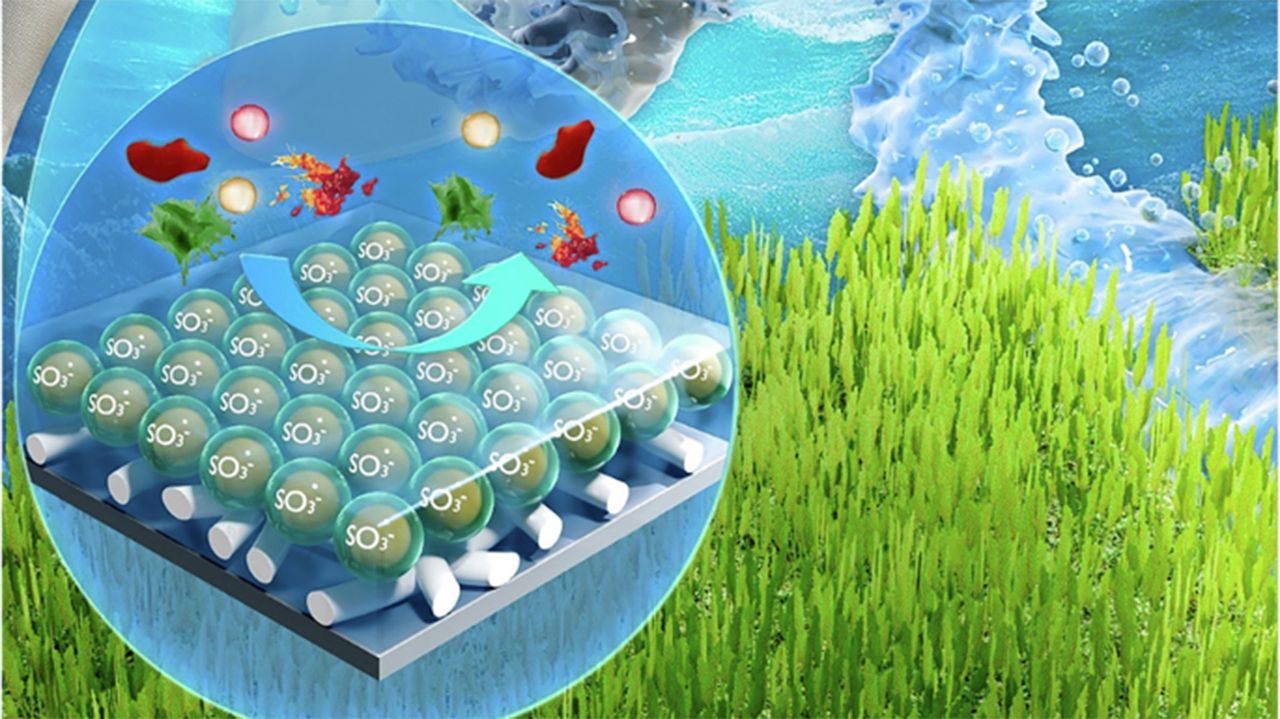
Material scientists in China have created a new kind of coating that keeps clothes clean without the need for wasteful detergents. It could reduce the water and electricity costs of doing laundry by 80%.
While we make batteries based on many different chemistries, nothing has approached the massive scale at which we can produce lithium batteries. That scale makes the economics of lithium-ion batteries hard to compete with. Even if we develop a superior battery technology, it's unclear whether we can get manufacturing costs down quickly enough to compete with the efficiency of the lithium supply chain and manufacturing.
The one thing that could change the dynamics is a supply crunch. While lithium is extremely widespread, lithium that can be extracted economically is a different matter. It's cheapest to extract it from brines, and lithium-rich brines are largely limited to South America. We do obtain some lithium from other sources, but it's considerably more expensive.
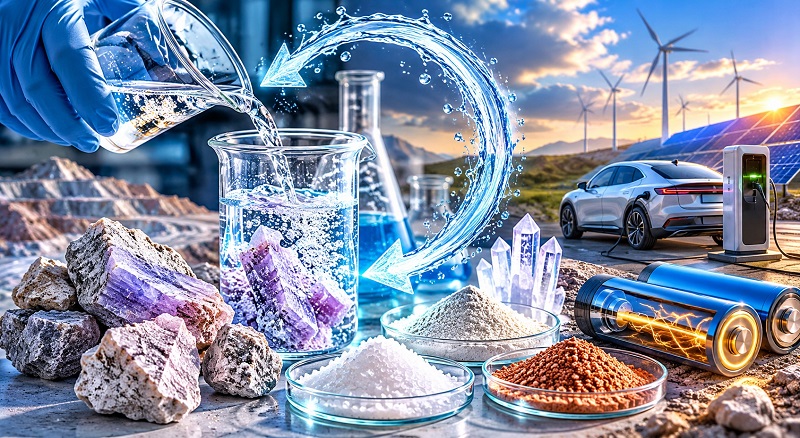
In today's issue of Science, however, a research team has identified an energy-efficient means of extracting lithium from rocks. The process they've designed uses far less energy than existing ones, regenerates all its starting chemicals, and produces byproducts that could also be sold.
Lithium is one of the world’s most important minerals because it is used in rechargeable batteries that power electric vehicles, smartphones, laptops, and energy storage systems. As demand for batteries continues to grow, so does the need for lithium. Although countries such as the United States and Australia have large lithium reserves, much of the […]
While we make batteries based on many different chemistries, nothing has approached the massive scale at which we can produce lithium batteries. That scale makes the economics of lithium-ion batteries hard to compete with. Even if we develop a superior battery technology, it's unclear whether we can get manufacturing costs down quickly enough to compete with the efficiency of the lithium supply chain and manufacturing.
The one thing that could change the dynamics is a supply crunch. While lithium is extremely widespread, lithium that can be extracted economically is a different matter. It's cheapest to extract it from brines, and lithium-rich brines are largely limited to South America. We do obtain some lithium from other sources, but it's considerably more expensive.
In today's issue of Science, however, a research team has identified an energy-efficient means of extracting lithium from rocks. The process they've designed uses far less energy than existing ones, regenerates all its starting chemicals, and produces byproducts that could also be sold.
Material scientists in China have created a new kind of coating that keeps clothes clean without the need for wasteful detergents. It could reduce the water and electricity costs of doing laundry by 80%.
You may not know methanol by name, but this alcohol plays a big role in making a lot of the things in our lives. It’s an ingredient in plastics and paints, for instance. And being highly flammable, it can be used as a liquid fuel. But making it has typically required multiple steps and high heat. It also produced lots of wastes. Now scientists have found an easy way to make methanol that avoids many of those drawbacks.
Their trick: Add lightning.
Lightning is a form of plasma — what many scientists call the fourth state of matter. It forms from a high-voltage electrical pulse.
“Lightning” in a bottle makes methanol in a simple, one-step process, notes Dayne Swearer. A physical chemist and chemical engineer, he led the team at Northwestern University in Evanston, Ill., that developed the technique.
Each year, companies around the world make up to 110 million metric tons (36.6 billion gallons) of methanol. “If we can offset a small fraction of that using … a simple process like this one,” Swearer says, “I think there’s a lot of cool opportunities.”
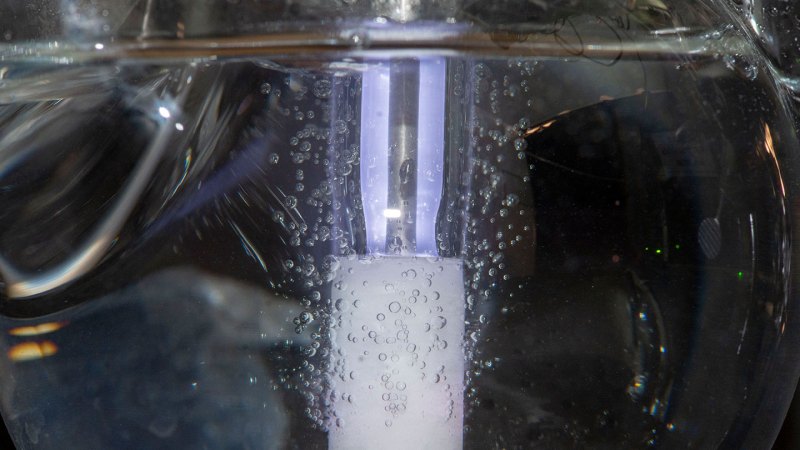
As methane is pumped into this device, plasma — seen as flashes of light — converts it into methanol.
Lightning’s role
Chemists have been looking into using plasma in chemical reactions for more than a century. For Swearer, it’s a recent interest. He studies electromagnetic energy. “That’s the type of energy found in light or in electric fields, or that runs through wires,” he explains.
Working with that type of energy means understanding electrons — negatively charged subatomic particles. His team is studying ways to use electrons to transfer power.
“The electron really gives chemistry its flare,” he says. “It’s a really, really important part of chemical reactions.” He likens electrons to hooks that hold atoms together to make molecules. If you can unhook those electrons, he says, it’s possible to rearrange a molecule’s atoms.
This is an model of methanol’s molecular structure. Each sphere is an atom. The black sphere represents carbon, white is hydrogen and red is oxygen.Science Photo Library/Getty Images Plus
The team used bottled lightning to remodel methane molecules. The change happens quickly. First, they pump methane gas into a cylinder immersed in water. The cylinder has tiny holes, or pores, on its sides. Then the device is electrified using a much higher voltage than comes from the outlets found in a home. “Our system compresses the electricity into pulses that turn off and on really fast,” Swearer says. “These short bursts help control the chemistry.”
As the gas moves through the cylinder and out the tiny holes, an electrical pulse rips through it. That pulse lights up like tiny bolts of lightning.
This process tears electrons from the methane molecules. These glowing, high-energy electrons form a plasma that smashes into other nearby molecules. Methane molecules have one carbon atom and four hydrogens. Water molecules have one oxygen and two hydrogens. The plasma breaks one hydrogen off of each molecule.
Those broken water and methane molecules find each other and snap together like puzzle pieces, says Swearer. “We click them together.” And when they do, they become methanol. The orphaned hydrogen atoms snap together to form hydrogen molecules.
Along with the methane gas, the porous cylinder contains a type of material called a catalyst. It helps the chemicals react correctly.
Toward greener chemistry
Chemists knew electricity could be used to remodel the molecules in a gas. But figuring out how to harness that knowledge in a useful way proved hard, Swearer says. One challenge was “really understanding what’s going on inside the plasma,” he says. He credits a graduate student, James Ho, with figuring out how the plasma was behaving.
Another challenge: Not all the methane will turn into methanol. Swearer’s team is currently investigating how to improve that conversion rate.
Using lightning in a bottle to make methanol is exciting, he says. But he cautions that his team’s process is experimental. It’s not ready to replace conventional ways of making methanol. Doing that will take years, Swearer says. One obstacle, he notes, is “just the cost of electricity” needed.
Still, the new findings suggest using plasma to make fuels could have a smaller climate impact than today’s standard methods, says P.J. Cullen. He’s a chemical engineer at the University of Sydney in Australia. Why? “No need for high temperature” to make them, he says. The high heat normally needed to make methanol comes from burning fossil fuels. The electricity used for the plasma could instead come from solar, wind or nuclear sources — sources that don’t add greenhouse gases to the atmosphere.
Cullen’s group in Australia developed the plasma-making device that Swearer’s group uses. In the same journal as Swearer’s work, Cullen’s team describes a second way to convert methane to methanol with a plasma. (It, too, uses a catalyst, but one separated from the plasma.)
“Both papers point to the same main advantage,” Cullen says. Both make methanol without high heat.
These approaches both show the power of plasma, he says. They also point to how researchers could use this technology for cleaner, greener chemistry.
Most people think of Mars as a big red dustball, but researchers recently found Martian mineral deposits suggesting it was once warm and humid. The team used the Compact Reconnaissance Imaging Spectrometer aboard NASA’s Mars Reconnaissance Orbiter to analyze specific wavelengths of visible and near-infrared light from minerals on Mars’s surface to determine their chemical composition from afar.
Past researchers identified layered silicate minerals, called clays, across the Martian surface. Clays form when water interacts with rock, and record the amounts and chemical compositions of the waters that formed them. As water interacted with Martian surface rocks, it picked up more mobile elements like magnesium and iron and carried them to lower depths in the Martian soils, while less mobile elements like aluminum stayed in place. This process, called leaching, created 2 distinct layers of clays in the Martian rocks.
Scientists have proposed 2 main hypotheses for how these layered clays formed on Mars. The first is that they formed through underwater leaching in pools or lakes sometime in Mars’ past. The second is that they formed across the Martian surface, where a widespread humid environment provided the moisture needed to leach them.
To evaluate these hypotheses, a team led by researchers at Purdue University recently estimated the “true” thicknesses of Martian clay layers with a method scientists had previously only used on Earth. Rock layers containing clays can become tilted, making them appear thicker or thinner than they actually are. To address this discrepancy, the team used the High Resolution Imaging Science Experiment (HiRISE) tool on the Mars Reconnaissance Orbiter to create high-resolution elevation maps of the Martian surface. Then they combined these maps with surface composition data from the Compact Reconnaissance Imaging Spectrometer to create 3D composition maps.
Using the 3D composition maps, the researchers found where each clay layer was exposed at the surface and traced it underground to estimate an angle of tilt. They then used trigonometry to calculate the true thicknesses of each clay layer. They analysed 46 regions across the Martian surface, and found that the combined thickness of both clay layers was around 20 to 680 feet (6 to 200 meters), with an average of about 190 feet (60 meters). That’s a maximum thickness as high as a 60-story building!
Next, the researchers tested the extent of the clay deposits in a large ancient Martian valley known as the Mawrth Vallis Region. They focused on this region because it had large elevation changes, and scientists in the past had already collected high-resolution chemical composition and elevation data there.
They explained that if the clay layers were restricted to the lowest parts of the valley where water once existed, and had changing thicknesses and boundaries between layers, this would provide strong evidence in favor of the “underwater leaching” hypothesis. In contrast, if the clay layers were more widespread, with consistent layer boundaries and thicknesses, this would provide strong evidence of a humid surface environment, in favor of the “surface leaching” hypothesis.
The researchers found that the clay layers extended beyond the lowest parts of the valley and had consistent layer boundaries across more than half a mile (about a kilometer) of elevation change. Thus, they concluded that the clay layers formed by surface leaching in a humid environment.
These findings conflict with climate models of early Mars, which generally suggest that the Martian surface rarely got above freezing temperatures. To address this discrepancy, the team proposed that these deposits could have formed over a long period of time rather than in a consistently warm and wet environment. If the surface was frozen most of the time, but got above freezing in short bursts, these clay deposits could still have formed, just over a much longer time period. In this case, the Mars climate models and the researchers’ findings would agree.
The researchers acknowledged that their study has some limitations, particularly regarding the sparse sample locations. Though they found strong evidence for a widespread humid environment on early Mars, more in-depth studies of locations like Mawrth Vallis could better constrain the specific surface environmental conditions under which these clays formed and potentially reconcile their data with Martian climate models.
Life on Earth has a peculiar property – many biological molecules have a handedness, or a “chirality.” DNA twists one way and not the other, and all the rest of life must fit to this reality. In a new paper, researchers say they know why: It all comes down to physics! The answer could change our understanding of life across the universe. Let’s take a look.
Over 20 million tons of polystyrene plastic are produced annually, yet only a small fraction is recycled worldwide. Current recycling methods consume large amounts of energy and often rely on harsh and toxic chemicals to break the strong molecular chains that make up polystyrene. One possible solution is the use of sulfur, which is an inexpensive byproduct formed when refining crude oil. Its unique chemical structure allows it to break up strong chemical chains in long plastic molecules. Despite its abundance, sulfur has very limited applications, and converting it into more usable forms tends to require a lot of heat, rendering it unused for long periods of time.
Researchers at the Dalian Institute of Chemical Physics hypothesized that sulfur could help break down polystyrene waste to form more valuable chemicals. To power this reaction, they converted sunlight into heat energy through a process called photothermalconversion. They used this heat to transform polystyrene and sulfur into valuable chemicals like 2,4-diphenylthiophene, or chemical D, and 1,3,5-triphenylbenzene, or chemical T, which are used to make semiconductors and chemical sensors.
To test this, the team mixed ground polystyrene and sulfur at a molar ratio of 1:0.5 in a glass test tube. They sealed the tube with a balloon and secured it onto an iron stand. Then, they focused sunlight onto the bottom of the tube using a curved mirror. As the mixture heated up, the yellow-white solids gradually melted and transformed into a reddish-black liquid after 2 minutes. After heating, the researchers removed the mirror and allowed the system to cool before collecting the gaseous products from the balloon and dissolving the remaining solids for further purification and analysis.
The researchers then adjusted the reaction conditions to understand what factors influenced their results. They tested the reaction without sulfur, varied the sulfur ratios from 0.2 to 0.8, and replaced elemental sulfur with other sulfur-containing compounds. They also explored adding known photothermal agents, specifically metal oxide additives, to the mixture.
To compare the difference between sunlight and artificial light, the researchers repeated the experiment indoors using a 100 Watt LED bulb and monitored temperature changes with a thermal camera. They also ran a control experiment using only polystyrene to check how sulfur affected the yield under LED light. They also tested exposure times from 1 to 6 minutes in 1-minute increments to determine how long it took to achieve the highest yields under LED. The researchers used these tests to identify which conditions were necessary for the reaction to occur and how different factors influenced its outcome.
They found that without sulfur or with alternative sulfur-containing compounds, the reaction did not produce chemical D or T under sunlight. In contrast, reactions that included sulfur successfully produced these target products, with the highest yields of 34% for D and 16% for T at a sulfur ratio of 0.5. When they added metal oxides, the chemical yields decreased to 22% and 12%, respectively, suggesting that these additives interfered with the desired reactions. In addition, when the researchers switched from sunlight to LED, the reaction yields dropped to 26% for D and 13% for T.
Next, they examined how reaction time influenced product formation. They found that yields increased gradually before reaching the maximum at 4 minutes and leveling off. They also noted that mixtures containing sulfur heated up from room temperature to 320°C (608°F), while the control setup only showed a slight temperature increase. The researchers interpreted these results as confirmation of sulfur’s dual role as a reactant and a light-to-heat converter that enables the conversion of polystyrene to useful chemicals.
Taking it a step further, the researchers tested their method on real-world polystyrene wastes, including food packaging, cup lids, and foamed plastics. They successfully produced chemicals D and T from these materials, demonstrating that their process works beyond laboratory samples.
The team concluded that their study presents a simple, fast, and solvent-free approach to converting 2 abundant waste materials into valuable chemicals using sunlight. By combining polystyrene waste and excess sulfur, the researchers offer a new pathway for sustainable polymer upcycling that uses clean energy and is broadly applicable to everyday plastics.
Stars are mostly made of 2 elements: hydrogen and helium. While this has always been the case, those 2 elements and lithium were the only elements in existence when the Big Bang occurred around 14 billion years ago. When the first stars exploded, they released those primordial elements, as well as heavier elements produced by nuclear fusion inside them.
Astronomers call all elements heavier than hydrogen and helium metals, a term chemists use quite differently. Subsequent generations of stars, including the Sun, formed in clouds of gas and dust enriched with these metals, such as carbon, oxygen, magnesium, and silicon. Scientists estimate that modern stars are 1% to 5% metal by mass.
Astronomers claim there is no solid evidence that stars contain exceptionally high amounts of metals, but some, called chemically peculiar stars, appear to. Astronomers study stars by looking at the patterns of light they emit, called spectra. Each element produces a unique light pattern, so astronomers can compare the light patterns in a star’s spectra to determine how much of each element is present, especially in the outer layers of the star. Researchers theorize that chemically peculiar stars don’t actually have more metals than average stars. Instead, they think that metals from their interiors diffuse to their outer layers more than in most stars.
A team of researchers from the American Association of Variable Star Observers and Masaryk University in Czechia recently observed 85 chemically peculiar stars to understand their behavior and better classify them. For their study, they first used the General Catalog of CP Stars, published in 2009 in Astronomy & Astrophysics, to identify targets across the 4 classes of these stars, labeled CP1 through CP4. CP1 stars have strong spectral patterns for iron and other heavy elements, CP2 stars have strong patterns for silicon, chromium, strontium, and europium, CP3 stars have strong patterns for mercury and manganese, and CP4 stars have either unusually weak or usually strong helium patterns.
The team compiled a list of 85 stars to observe, then used the BRIght Target Explorer (BRITE) Constellation to monitor changes in their brightness. The BRITE Constellation is a set of 5 satellites equipped with telescopes and cameras for either red or blue light. Using the BRITE Constellation, the team monitored each star for several days.
They found that 74 of these 85 chemically peculiar stars varied in brightness during their survey. They attributed this to the varied abundance of metals on their surfaces, which would form dark patches that go in and out of view from Earth’s perspective as the stars rotate. The team observed that 6 of these 74 stars appeared to change in brightness over multiple periods. They were surprised by this result because a star’s brightness wouldn’t vary over multiple periods if the changes were due to rotation. They compared their findings to data other scientists had collected from these stars with the Transiting Exoplanet Survey Satellite, or TESS, and found that all 6 stars had been misclassified as chemically peculiar stars.
The other 11 chemically peculiar stars appeared to show no periodic changes in their brightness, suggesting that they’re stationary. The team claimed that some CP1 and CP3 stars don’t rotate, but they identified cases in which CP2 and CP4 stars that ought to rotate appeared to be stationary. They suggested 2 potential reasons for this. One is that these CP2 and CP4 stars are misclassified, requiring more thorough analysis of their spectra to confirm their classifications. The other is that the stars rotate slowly, with rotational periods of 50 days or longer, which would be difficult to distinguish from those of totally stationary stars.
The team concluded that more astronomers should revisit the historical classifications of stars, especially as technology advances and more space-based telescopes become available. This strategy would allow future researchers to draw better data from research archives and catalogs. Additionally, they claimed that their method of pairing long-term monitoring via small satellites with TESS data is well-suited for refining classifications, identifying misclassified objects, and further exploring the structure and mechanics of chemically peculiar stars.

 Login
Login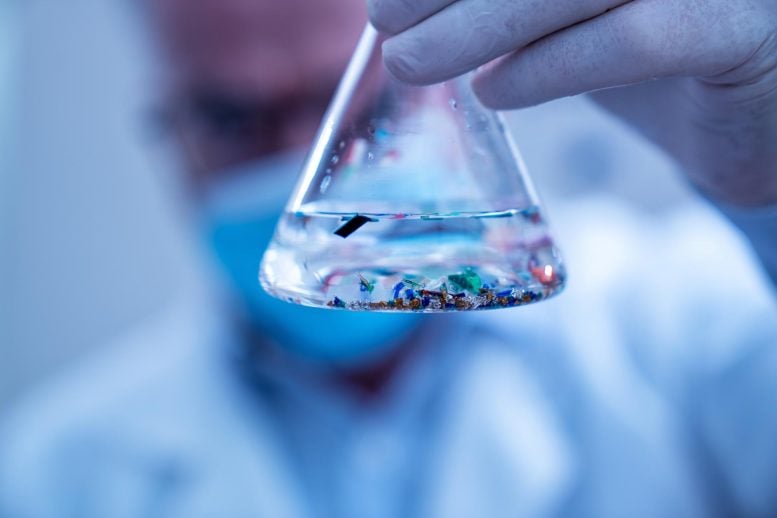

 Scientists have developed “living plastics” that can be programmed to break themselves down when triggered. Many plastic items are made for one-time use, but the materials can remain in the environment for years. Researchers are exploring a different approach: living plastics, materials built with microbes that can be activated to break down the polymer when [...]