Models suggest that impact-ejected material from Earth could reach Venus’ clouds and potentially survive there briefly. Panspermia is the idea that life, or the ingredients needed for life, can move through space on asteroids, comets, and other objects. If life’s building blocks appear on one planet, a powerful impact could blast material from its surface [...]
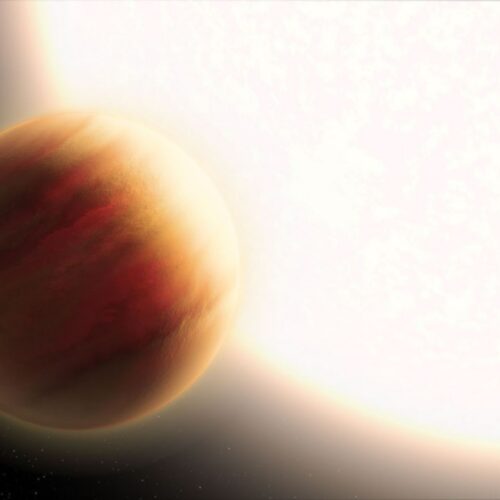
WASP-94A b is a hot, tidally locked gas giant orbiting close to one of the stars in a binary system roughly 690 light-years away from Earth. In a new Science study, scientists led by Sagnick Mukherjee, an astrophysicist at Johns Hopkins University, used the James Webb Space Telescope to learn what the weather looks like out there.
Tidal locking means that you no longer have day- and night-side temperature differences sweeping across the planet. “We wanted to understand the atmospheres of such planets,” Mukherjee says. “Are they static or dynamic? Do they have winds? Do they have clouds?” His team found that, on WASP-94A b, it’s cloudy in the morning, but the skies are clear in the evening. The fact that we didn’t know this already means we might have gotten the chemistry of this and many other exoplanets surprisingly wrong.
Averaged atmospheres
WASP-94A b has a mass slightly below half of Jupiter but has a diameter that’s over 70 percent wider. “This means the planet has low density, and its atmosphere extends further out into space, which makes it easier to observe,” Mukherjee explains. When astronomers study atmospheres like this, they usually rely on transmission spectroscopy. By analyzing the spectrum of light filtering through the planet’s atmosphere as it crosses in front of its star, they can figure out its chemical composition.
There are more opportunities to access space than ever, thanks to a bevy of commercial rockets, some with reusable boosters, led by SpaceX's workhorse Falcon 9. So why is NASA launching fewer telescopes and planetary science missions than it did a quarter-century ago?
The answer is complex. It is not necessarily the money. The space agency's science budget this year is $7.25 billion, roughly the same as it was in 2000, adjusted for inflation. This is despite attempts by the Trump administration to drastically reduce NASA science funding.
In the early months of his tenure, NASA Administrator Jared Isaacman's focus has been on human spaceflight and the Moon. This isn't terribly surprising given NASA's wildly successful Artemis II mission carrying four astronauts around the Moon last month. Since taking office in December, Isaacman has announced an overhaul of the Artemis program, canceling a space station to be built in orbit around the Moon in favor of construction of a base on the lunar surface.
WASP-94A b is a hot, tidally locked gas giant orbiting close to one of the stars in a binary system roughly 690 light-years away from Earth. In a new Science study, scientists led by Sagnick Mukherjee, an astrophysicist at Johns Hopkins University, used the James Webb Space Telescope to learn what the weather looks like out there.
Tidal locking means that you no longer have day- and night-side temperature differences sweeping across the planet. “We wanted to understand the atmospheres of such planets,” Mukherjee says. “Are they static or dynamic? Do they have winds? Do they have clouds?” His team found that, on WASP-94A b, it’s cloudy in the morning, but the skies are clear in the evening. The fact that we didn’t know this already means we might have gotten the chemistry of this and many other exoplanets surprisingly wrong.
Averaged atmospheres
WASP-94A b has a mass slightly below half of Jupiter but has a diameter that’s over 70 percent wider. “This means the planet has low density, and its atmosphere extends further out into space, which makes it easier to observe,” Mukherjee explains. When astronomers study atmospheres like this, they usually rely on transmission spectroscopy. By analyzing the spectrum of light filtering through the planet’s atmosphere as it crosses in front of its star, they can figure out its chemical composition.
There are more opportunities to access space than ever, thanks to a bevy of commercial rockets, some with reusable boosters, led by SpaceX's workhorse Falcon 9. So why is NASA launching fewer telescopes and planetary science missions than it did a quarter-century ago?
The answer is complex. It is not necessarily the money. The space agency's science budget this year is $7.25 billion, roughly the same as it was in 2000, adjusted for inflation. This is despite attempts by the Trump administration to drastically reduce NASA science funding.
In the early months of his tenure, NASA Administrator Jared Isaacman's focus has been on human spaceflight and the Moon. This isn't terribly surprising given NASA's wildly successful Artemis II mission carrying four astronauts around the Moon last month. Since taking office in December, Isaacman has announced an overhaul of the Artemis program, canceling a space station to be built in orbit around the Moon in favor of construction of a base on the lunar surface.
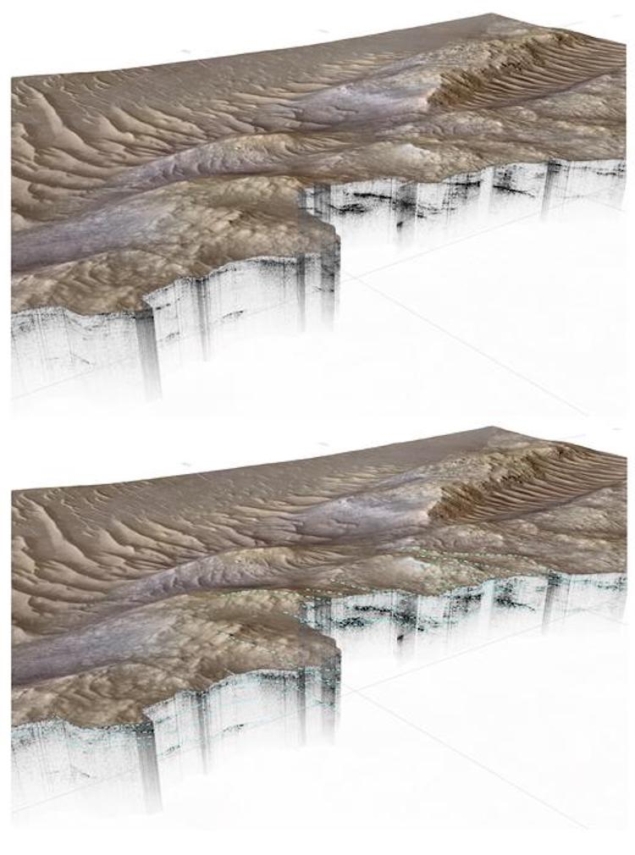
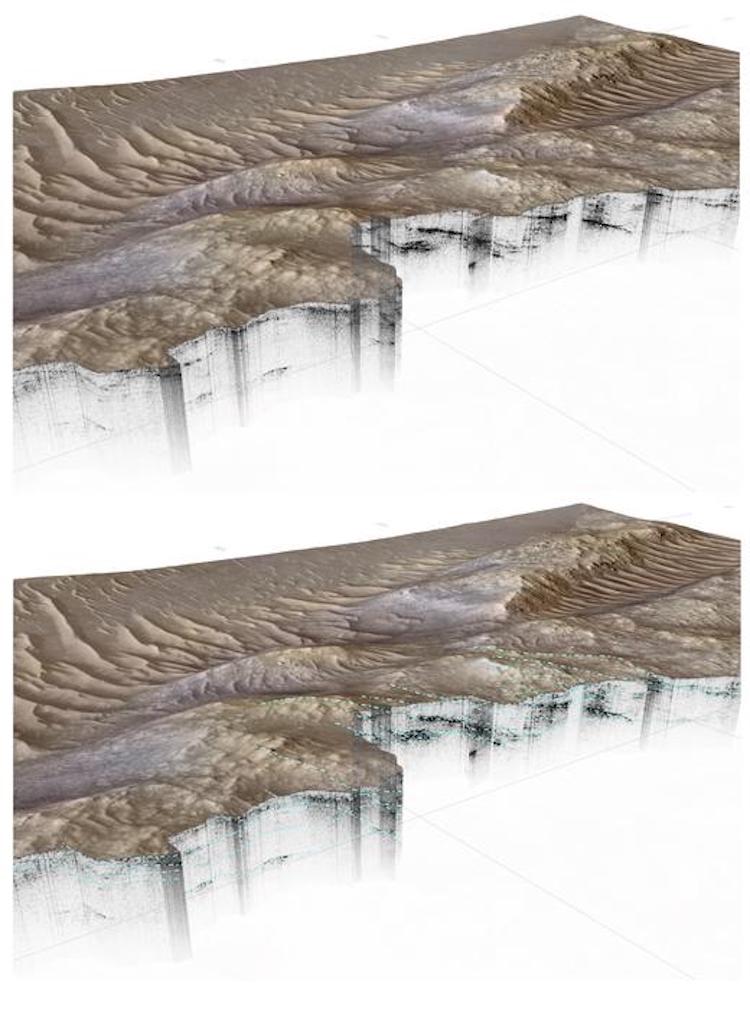
Traces of an ancient river system In the Margin unit, strongly reflecting layers are dark in appearance and weakly reflecting lithologies appear as light. The projected radargram is shown with the HiRISE digital elevation model data and layers are traced (cyan dotted lines) from the subsurface to corresponding surficial topographic features. (Courtesy: NASA/JPL/UCLA/UiO/ETH Zurich)
A river delta may have been present on Mars as early as 4.2 billion years ago, which is much earlier than previously thought. This is the conclusion from a new study by researchers at the University of California, Los Angeles, who have analysed ground-penetrating radar (GPR) data collected by the Mars 2020 Perseverance rover from the Jezero impact crater.
“The finding may also extend the period of flowing water and potential habitability for Jezero back further in time, says astrobiologist Emily Cardarelli, who led this research effort.
The surface of Mars carries many traces of a past watery climate, including ancient river channels, deltas, and paleolakes. Indeed, observations from space provide evidence for the existence of minerals possibly left behind as Mars’ atmosphere was gradually lost to space and its surface dried up.
Researchers are particularly interested in carbonate minerals because these preserve a record of the Red Planet’s ancient water thanks to its interactions with carbon dioxide in the Martian atmosphere at this time. How these minerals formed over the large scale in the Margin unit is unclear though.
Data collected from more than 35 metres underground
In the new work, Cardarelli and her colleagues in the Department of Earth, Planetary and Space Sciences at UCLA analysed data collected by Perseverance’s Radar Imager for Mars Subsurface Experiment (RIMFAX) instrument. They focused on a sedimentary deposit known as the Margin unit, which is rich in magnesium carbonates and lies near a fluvial inlet to the Jezero impact crater in the Nili Fossae region near Syrtis Major. The researchers already knew that this region hosts features typical of a paleolake basin and river delta deposits.
RIMFAX acquired a continuous 6.1-km ground-penetrating radar (GPR) image along the Margin unit campaign path with soundings every 10 cm and the researchers analysed 78 traverses made between September 2023 and February 2024 over 250 sols (Martian days, which are about 40 min longer than Earth days). The instrument collected data from more than 35 m underground, which is 1.75 times deeper than previous measurements at the Jezero crater.
The researchers found that the Margin unit contains a well-preserved paleolandscape with distinct river and deltaic features. These, they say, could be the remnants of a meandering river, an alluvial fan or braided river. This environment could have developed before the Jezero Western Delta viewable from orbit as early as the Noachian epoch (around 4.2 to 3.7 billion years ago).
Jezero might have hosted a habitable ancient environment
From the stratigraphic features mapped by RIMFAX, Cardarelli and colleagues conclude that the Jezero crater might have hosted an aqueous, possibly habitable environment capable of preserving biosignatures. “RIMFAX confirms that the Margin unit is distinct from a geological region known as the Upper Fan, which was deposited earlier and different in composition as well as in physical area,” says Cardarelli. “Our work suggests that there is some continuity of formation between the Margin unit and the Upper Fan, with a repeated process in Jezero crater, but at completely separate formation and deposition times.”
Indeed, a body of water might once have fed Jezero crater, she tells Physics World, and deposited sedimentary layers of varying scales, similar in size and morphology to those observed in an area known as the Western Fan. “We suggest that this was once an extensive system that included the Margin unit, although it is now a buried remnant.”
This study, which is detailed in Science Advances, highlighted only some of the specific features found since the mission began. To date, Perseverance has traversed around 40 km and has moved out of Jezero and onto the crater’s rim and the researchers say they will continue publishing their analyses from both these areas.
“I am also excited about one day returning to the Neretva Vallis region where we have detected the most compelling potential biosignatures. These may have a biological origin, but require additional study before determining if they may be evidence of past microbial life,” says Cardarelli.
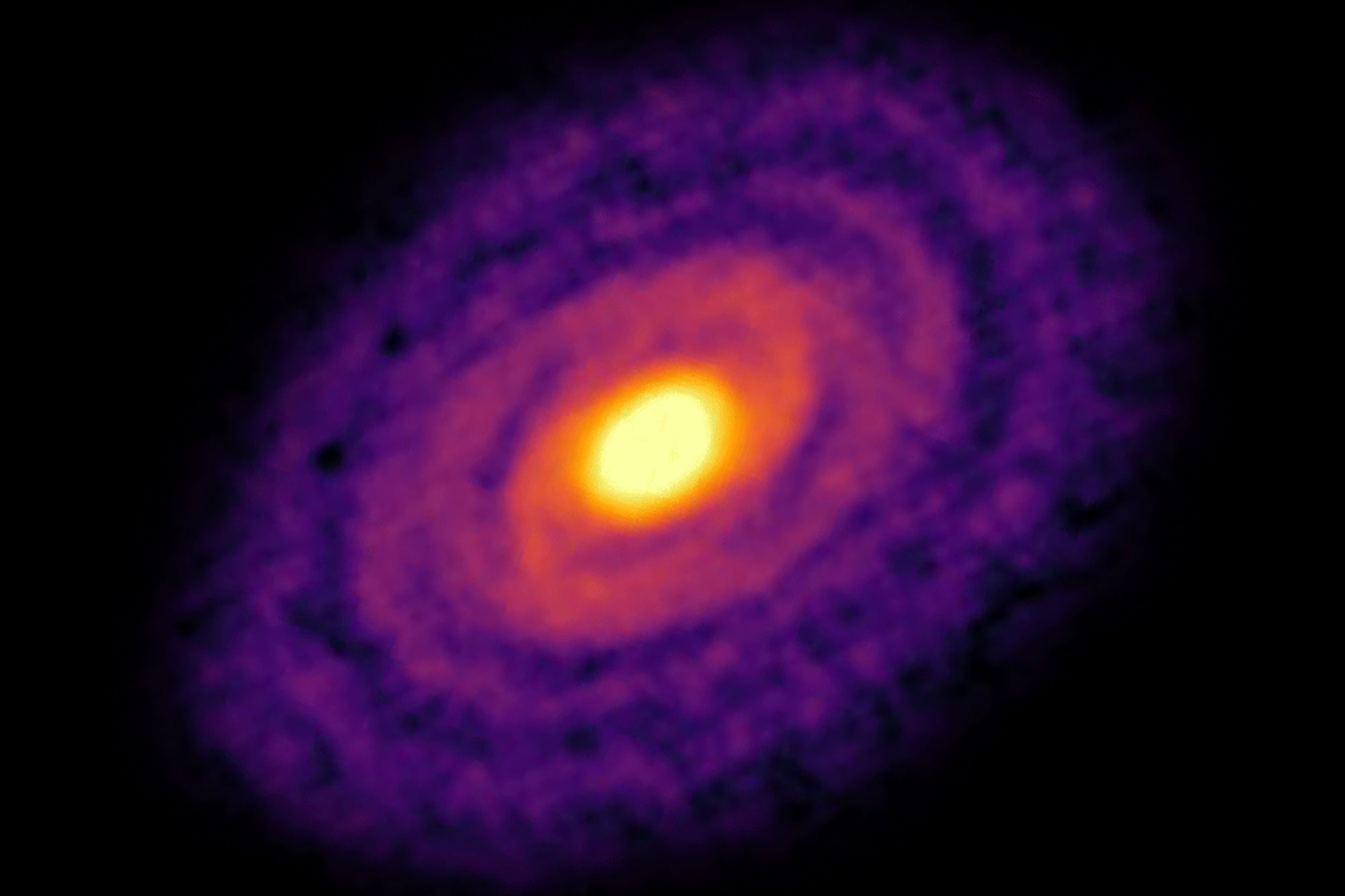
An image of a protoplanetary disk captured by the Atacama Large Millimeter/submillimeter Array (ALMA). Similar observations of such planetary nurseries by the James Webb Space Telescope (JWST) are revealing new details about how water finds its way into rocky worlds.

 Login
Login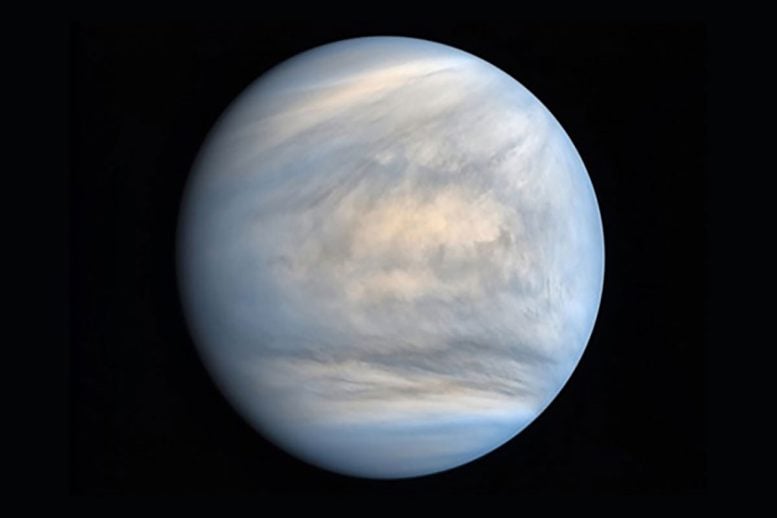

 Models suggest that impact-ejected material from Earth could reach Venus’ clouds and potentially survive there briefly. Panspermia is the idea that life, or the ingredients needed for life, can move through space on asteroids, comets, and other objects. If life’s building blocks appear on one planet, a powerful impact could blast material from its surface [...]