Normal view

Scientists Investigate ‘Quantum Consciousness’—But the Brain May Still Defy Physics

13 May 2026 at 13:11


The idea that human consciousness might arise from odd quantum phenomena has intrigued scientists, philosophers, and science fiction writers, inspiring debate about whether the “hard problem” of consciousness could be explained by quantum effects.

A sweeping new review published in Frontiers in Psychology takes a hard look at the field and concludes that though quantum theories of consciousness are becoming more experimentally grounded, none have cleared the enormous scientific obstacles required to explain subjective experience.

The paper, authored by Xun Ma and Aoping Wang of Xiamen University in China, evaluates some of the most prominent quantum consciousness theories using three key lenses: whether the proposed quantum effects can physically exist in the brain, whether they actually explain conscious experience philosophically, and whether they can be experimentally tested against conventional neuroscience models.

The researchers argue that many discussions related to “quantum consciousness” rely more on emotional rhetoric than on measurable science.

“Quantum-theoretical terms are often invoked in a largely narrative or analogical manner without specifying their precise physical meaning or empirical applicability,” researchers write. “This practice often lacks rigorous argumentation, remains insufficiently constrained by clear mechanisms or empirical support, and therefore does not yet provide a substantive solution to the problem of consciousness.”

In the past few years, interest in the idea of quantum biology has steadily increased. Scientists have already demonstrated that quantum effects can play functional roles in biological systems such as photosynthesis and bird navigation. But the leap from quantum chemistry to human awareness remains enormous.

Central to the debate is consciousness itself, which remains one of science’s most enduring and elusive mysteries.

Neuroscience has become increasingly successful at explaining how the brain processes information, stores memories, and controls behavior — what philosopher David Chalmers famously labeled the “easy problems” of consciousness.

The harder question is why physical processes in the brain produce subjective experience at all. Why does seeing red feel like something? Why is there an inner experience accompanying thought?

Quantum theories try to bridge that explanatory gap by proposing that classical neuroscience alone may be insufficient.

In their review, Ma and Wang focus on three major “families” of theories currently attracting scientific attention.

The first and most famous is the Orch OR theory, developed by physicist Roger Penrose and anesthesiologist Stuart Hameroff. This model proposes that quantum computations occur within microscopic structures within neurons called microtubules. According to the theory, coordinated quantum collapses inside these structures generate moments of conscious awareness.

The idea has long been controversial because the brain is warm, wet, and noisy, conditions generally considered hostile to fragile quantum states. Physicist Max Tegmark famously argued in 2000 that quantum coherence inside neurons would collapse far too quickly to matter for cognition.

However, researchers note that more recent laboratory experiments have produced intriguing results. Some studies have identified unusual quantum-optical behaviors in microtubules, including coherent oscillations and energy-transfer effects that persist longer than previously expected. Other experiments suggest anesthetic drugs may interfere with these microtubule dynamics, possibly supporting Orch OR’s claim that consciousness depends on quantum processes.

Still, researchers emphasize that nearly all of this evidence comes from simplified laboratory systems rather than living human brains.

“Current expositions of Orch OR tend to remain at the level of an intuition: if there are quantum processes, novel conscious states may arise, without stating a clear rule of derivation from quantum-state dynamics to the what-it-is-likeness of experience,” researchers write.

In other words, even if quantum effects exist inside neurons, scientists still have no explanation for why those effects should generate subjective awareness.

The second major theory examined in the review concerns nuclear spins and hypothetical structures known as Posner molecules. Proposed by physicist Matthew Fisher, the theory suggests that phosphorus atoms inside the brain may preserve quantum phase coherence long enough to influence neural processing.

Unlike electron-based quantum systems, nuclear spins are relatively immune to environmental noise, making them potentially more stable in biological tissue. The theory predicts that subtle differences between isotopes, atoms with different nuclear characteristics, could shape brain function or even consciousness itself.

Some experiments involving lithium and xenon isotopes have hinted at unusual spin-related biological effects. However, researchers stress that evidence remains sparse and heavily disputed.

Scientists have yet to directly observe long-lived quantum entanglement in Posner molecules inside living brains. Therefore, competing explanations rooted in conventional chemistry also remain plausible.

Ma and Wang describe the nuclear-spin hypothesis as scientifically intriguing but philosophically incomplete. Even if quantum spins influence neural activity, that alone would not explain why consciousness exists.

The third family of theories involves reports of large-scale “non-classical” signals detected using MRI scans. In 2022, research led by physicist Dirk Kerskens reported heartbeat-linked quantum-like signals in the brains of conscious participants. The findings generated immediate attention because they indicated the presence of macroscopic quantum effects across the entire brain.

However, critics quickly challenged the work, arguing that the observed signals could simply reflect conventional physiological artifacts associated with heartbeat and blood flow.

The new review notes that the controversy remains unresolved. Independent replications have not yet confirmed the findings, and the debate has become a case study in the difficulty of separating genuine quantum signals from ordinary biological noise.

Nevertheless, Ma and Wang maintain that these theories of quantum consciousness deserve serious scientific testing rather than outright dismissal.

Importantly, researchers praise the growing shift toward experimentally verifiable predictions. Unlike earlier eras of quantum consciousness speculation, modern researchers are increasingly proposing measurable hypotheses involving anesthesia, isotope substitutions, fluorescence signals, and cutting-edge imaging techniques.

That transition from abstract philosophy to laboratory science may represent the field’s biggest advance.

Researchers call for stricter scientific standards moving forward, including pre-registered studies, open data sharing, multi-center collaborations, and publication of null results. Because quantum consciousness claims are so extraordinary, they argue, the burden of proof must remain exceptionally high.

In their paper, Ma and Wang also repeatedly return to one key distinction: discovering quantum influences in the brain would not automatically solve the problem of consciousness itself.

Even if future experiments verify that neurons create quantum consciousness in some capacity, the central mystery of subjective experience could remain untouched.

“Quantum mechanisms, therefore, look, at the current stage, more like potential realizers of consciousness than like complete theories of consciousness,” researchers conclude.

That finding may frustrate anyone hoping for a definitive answer to the question of quantum consciousness. Yet, researchers propose that while no definitive answer exists, the field is slowly maturing from speculative theory into a more stringent scientific enterprise.

For now, the authors argue that caution and curiosity must coexist.

“In the explorations ahead, progress should be guided by the scientific method, advancing with a balance of curiosity and skepticism,” researchers write. “The riddle of consciousness remains profoundly complex: Quantum mechanics may be one piece of the puzzle, but a solution will likely require sustained multidisciplinary collaboration.”

Tim McMillan is a retired law enforcement executive, investigative reporter and co-founder of The Debrief. His writing typically focuses on defense, national security, the Intelligence Community and topics related to psychology. You can follow Tim on Twitter: @LtTimMcMillan.  Tim can be reached by email: tim@thedebrief.org or through encrypted email: LtTimMcMillan@protonmail.com 
“Perpetual Motion is Possible in the Quantum Realm”: Researchers Link a ‘Time Crystal’ to an External Device in a Breakthrough First

7 May 2026 at 17:54

In a new physics milestone, scientists report that a time crystal and an external system have been successfully linked for the first time.

The achievement, made by researchers at Aalto University’s Department of Applied Physics, marks the first demonstration of converting a time crystal—an unusual quantum system in which particles are in constant, repetitive motion in its ground state—into an optomechanical system.

A range of potential technological applications, including new high-precision sensors, quantum storage systems, and other innovative capabilities, could result from the research, led by Jere Mäkinen and detailed in a new paper appearing in Nature Communications.

A New First for Time Crystals

Conceptually similar to physical crystalline forms that occur in nature, time crystals were first proposed by Nobel Prize-winning physicist Frank Wilczek in 2012, who argued that comparable systems might also exist in time as well as in space.

Wilczek’s theory preceded the official experimental discovery of time crystals by just four years, which can be thought of as an unusual manifestation of matter whose motion repeats indefinitely.

In a recent study, Mäkinen, an Aalto University Academy Research Fellow, and his colleagues demonstrated that the properties of a time crystal could be altered, a feat never achieved before.

“Perpetual motion is possible in the quantum realm so long as it is not disturbed by external energy input, such as by observing it,” Mäkinen recently said. “That is why a time crystal had never before been connected to any external system.”

That is, until now.

“We did just that,” Mäkinen added, “and showed, also for the first time, that you can adjust the crystal’s properties using this method.”

Approaching Absolute Zero

Mäkinen and his team developed a system that used radio waves to propel magons—a variety of quasiparticles—into a superfluid made from a light, very stable isotope of helium known as Helium-3, which was chilled to temperatures approaching absolute zero.

Remarkably, the team found that after the radio-wave magnon “injector” was disabled, the magnons self-organized into a time crystal, which remained in motion for several minutes—an unusually long time for such systems—then eventually faded to a level the team said was no longer measurable.

During its weakening phase, the team also observed the time crystal interacting with a mechanical oscillator, in which changes in the device’s amplitude and frequency appeared to influence the time crystal’s interactions with it.

Into the Odd World of Opto-Mechanics

For Mäkinen and the team, the behavior they observed in the time crystal under such conditions was significant, in part because it aligned with phenomena in the field of optomechanics.

“We showed that changes in the time crystal’s frequency are completely analogous to optomechanical phenomena widely known in physics,” Mäkinen said. Such phenomena, Mäkinen says, are the same that scientists rely on for the detection of gravitational waves, for instance.

“By reducing the energy loss and increasing the frequency of that mechanical oscillator, our setup could be optimized to reach down near the border of the quantum realm,” Mäkinen added.

Fundamentally, Mäkinen says that the time crystal’s behavior with relation to optomechanical phenomena offers a promising pathway toward the control of time crystal behavior, which had previously been thought impossible. Such practical control systems for these odd states of matter could lead to applications that include quantum technologies and a range of other uses.

“Time crystals last for orders of magnitude longer than the quantum systems currently used in quantum computing,” Mäkinen said, adding that he and his colleagues hope their research may lead to ways they can be used to improve quantum computers by powering their memory systems.

“They could also be used as frequency combs, which are employed in extremely high-sensitivity measurement devices as frequency references,” Mäkinen added.

The team’s research was detailed in a new paper, “Continuous time crystal coupled to a mechanical mode as a cavity-optomechanics-like platform,” which appeared in Nature Communications.

Micah Hanks is the Editor-in-Chief and Co-Founder of The Debrief. A longtime reporter on science, defense, and technology with a focus on space and astronomy, he can be reached at micah@thedebrief.org. Follow him on X @MicahHanks, and at micahhanks.com.

Building up the quantum workforce: an undergraduate route into industry

11 May 2026 at 11:00

Quantum technologies are undoubtedly going to have a large impact on our world, potentially revolutionizing everything from healthcare and the environment, boosting the economy and helping with large-scale optimization challenges. But for them to deliver on these many promises, it will be vital for many countries to train and build a quantum-ready workforce.

There are four pillars to the quantum sector – quantum computing; quantum simulation; quantum communication; and quantum sensing and metrology. But in each case there is a lack of trained individuals who can take on jobs across the board. Indeed, statistics in both the UK and the US suggest there is only one qualified worker for every three quantum jobs. With governments continuing to invest lots of money into national quantum programmes; a growing number of new quantum start-ups being launched; and ever more multi-national firms zoning in on quantum, the shortage of those with the right skills to work across the sector is expanding.

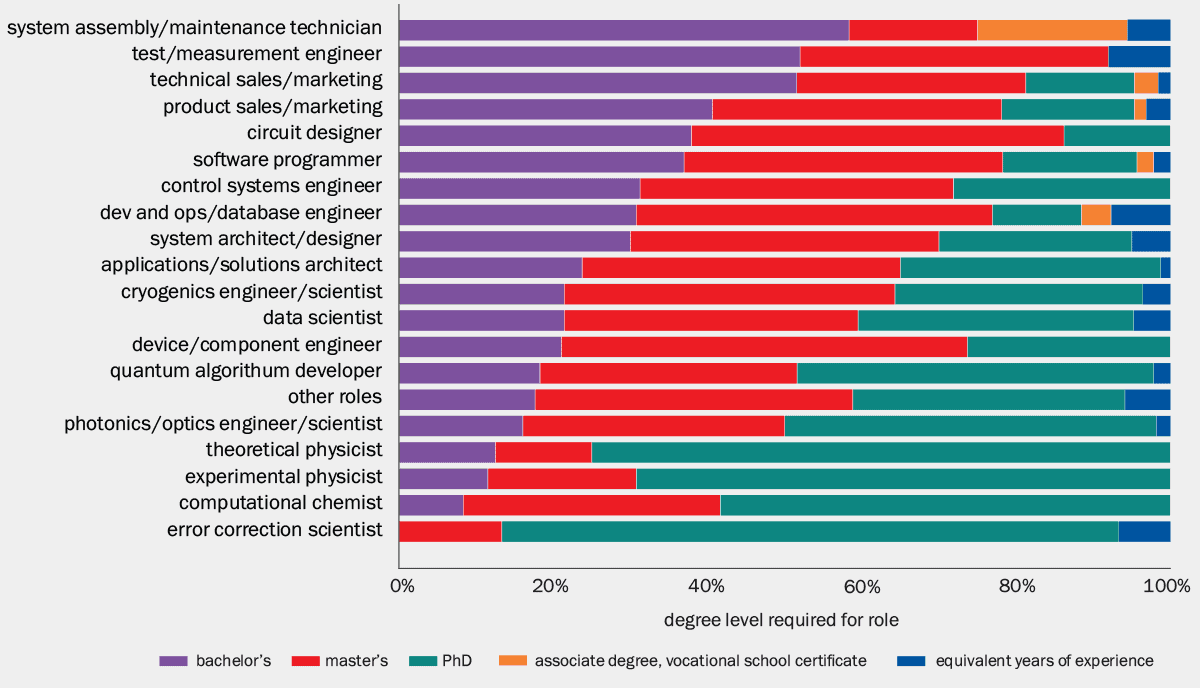
The Colorado School of Mines in the US is now trying to remedy this situation by launching the country’s first bachelor-level quantum systems engineering degree programme, due to start this autumn. An undergraduate degree specializing in quantum and systems engineering might, at first glance, seem odd. But 2021–2023 data from the Chicago Quantum Exchange show that 55% of quantum tech jobs only require a BSc or two-year associate degree. For instance, roles that ask for just a BSc include systems assembly and maintenance, measurement engineers, technical sales and marketing.

“Industry demand especially values engineers with a systems-level understanding of quantum devices, and there is also a need for quantum technicians who can build and maintain quantum hardware,” says Frédéric Sarazin, director of the quantum programme at Colorado School of Mines. As the first standalone bachelor’s degree in quantum systems engineering in the US, the programme is designed specifically to supply industry-ready graduates.

Bar chart of different job roles in the quantum sector
True requirements Distribution of degrees needed for different job roles in the quantum industry. (CC BY 4.0 IEEE Transactions on Education 65 592)

The main focus for Sarazin and colleagues was to bring into the programme key aspects of systems engineering – which involves understanding and overseeing all aspects of a complex system, from its inception through to practical production, and even managing the final product. The goal: to help companies get their products and technologies out of the lab and into the marketplace. Rather than focusing on isolated components, systems engineers are trained to understand how complex technologies behave as integrated entities.

“A quantum computer, for example, is more than just its qubits,” says Sarazin. “It’s cryogenics, optics, electronics, control software, signal processing and the user interface, all interacting with each other.” Companies are keen to hire people who can understand and help develop their quantum product as an end-to-end system, bridging the gap between the physics and engineering aspects, as well as making sure the end product is robust, scalable and manufacturable.

The physics may be what Sarazin calls the “secret sauce” – but turning it into a device that is reliable, manufacturable and maintainable is an engineering problem “with a quantum flavour to it”. “What companies want is people who understand the product as a system, from beginning to end,” Sarazin explains.

Quantum hotspot

Colorado, in America’s mid-west, is a quantum innovation hotspot, with quantum companies employing more than 3000 people across the state. To develop the new programme, Sarazin and colleagues carried out an extensive consultation process with companies, institutions and organizations that all look to hire quantum engineers, to get a clear idea of the skills that students should have at the end of their course. They also collaborated with Elevate Quantum – a consortium of 120 organizations advancing quantum workforce development and commercialization in Colorado, New Mexico and Wyoming – to design an interdisciplinary course that will integrate physics, electrical and mechanical engineering, computer science and engineering design.

While the students will learn plenty of foundational quantum physics, they won’t cover the full curriculum of a traditional physics degree. “You’d be talking about a six-year degree if we covered everything,” says Sarazin. Certain advanced topics, such as quantum error correction, remain overwhelmingly in the domain of PhD-level jobs and so are deliberately excluded.

The lab is meant to be a signature experience. It’s where students start interacting with industry in a meaningful way

A key feature of this degree will be hands-on practical engineering experience in the lab. Plans are under way to build a dedicated quantum device laboratory for the students, allowing companies to bring in their tech and partner with the on-campus facilities. “The lab is meant to be a signature experience,” says Sarazin. “It’s where students start interacting with industry in a meaningful way.”

That connection is reinforced through internships and a year-long design project in the final year, with project topics supplied directly by quantum companies. “The junior-to-senior year is when internships really matter,” explains Sarazin. “That’s often what leads directly to a job.”

Future prospects

Although the programme is firmly industry-focused and aims to get graduates straight into the job market, students can progress to the Colorado School of Mines’ existing master’s programme in quantum engineering, launched in 2020. “At the bachelor’s level, you’re building breadth,” says Sarazin. “If students want to specialize further, they absolutely can.”

Many of the skills that the students will develop – from electronics and embedded systems to control software and algorithms – are highly transferable too. “Looking beyond the quantum sector, our systems engineering students will have acquired a set of skills that is highly applicable in other industries,” says Sarazin.

The first cohort will likely be around 15–20 students this year. Looking ahead, Sarazin has a clear benchmark for success: “a near-100% placement in industry at the end of the degree – that’s what we’re aiming for”.

Beyond that, success will mean continuously refining the programme in response to industry feedback. “This isn’t static,” Sarazin says. “If companies tell us something needs adjusting, we want to respond.” For students still hesitant to take the leap into a specialized BSc or the quantum sector, Sarazin’s message is clear: quantum careers are here to stay and the direct path into the industry is starting earlier than ever before.

The post Building up the quantum workforce: an undergraduate route into industry appeared first on Physics World.

The strange metaphor of Euglena’s tail

4 May 2026 at 11:00

Quantum mechanics is so full of strange phenomena that it’s not surprising that physicists have had to dream up some vivid metaphors to explain them. Who can’t help but think of cats in boxes when contemplating superposition or balls of jumbled yarn when musing over entanglement? Like all metaphors, these use familiar experiences to help understand the unfamiliar.

Metaphors come in many different types. “Love is a rose”, for instance, is a “filtrative” metaphor, in which a secondary subject (a rose) guides us how to perceive another, primary subject (love) by drawing our attention to key features.

In a “creative” metaphor, however, the secondary subject eventually becomes the technically correct term for the primary subject. This has happened over and over again in quantum mechanics: entanglement, superposition and spin are all examples.

A third kind is a “perceptual” metaphor, which seeks to recast our overall view of something. A good example is physician Lewis Thomas’s remark that the Earth is “most like a single cell.”

But one extraordinary metaphor proposed 10 years ago by Christopher Fuchs, a physicist at the University of Massachusetts Boston, involves a type of algae known as Euglena. Fuchs decided to invoke this single-celled, biological organism to help understand not just one quantum-mechanical phenomenon but possibly the deepest mystery of all: the relationship between quantum formalism and the world around us.

Subjective matters

Ever since Werner Heisenberg and others developed quantum mechanics more than a century ago, physicists have been debating what it means and what it says about the world. Over the years, there have been many different points of view, or “interpretations”, of quantum mechanics, but they all fall into two main camps.

One set claims that the formalism of quantum mechanics quantifies some actual, objective structure that existed even before humans and is independent of what we do. Another set of interpretations treats the formalism like a tool that lets humans make predictions about the world. In philosophical terms, the former interpretations are “ontological” and the latter “epistemological”.

Fuchs and a loose conglomerate of physicists and philosophers, however, have been advocating an entirely different approach, known as QBism. It says that any measurement we make – whether determining the spin of an electron or stamping our feet on the ground – is a new creation; it’s an experience that never existed in the world before. Quantum states aren’t therefore real states of affairs in nature but subjective probabilities we assign to our interactions with the world.

Subjective probabilities aren’t as strange as they sound, simply describing a user’s degree of belief about an individual event. Objective interpretations, in contrast, see probability distributions as physical. QBism’s conclusion that many pieces of the formalism are subjective simultaneously distances our subjective control over nature. For a one-horse race, I can predict the winner with certainty, but nevertheless, the race can still get washed out by rain. Even if I make a prediction with certainty about an event, nature can throw us a curveball and do otherwise.

For Fuchs and his supporters, quantum theory is therefore an appendix to Bayesian probability theory. Originally developed by the British philosopher and statistician Thomas Bayes in the 18th century, it evaluates a user’s judgment about how likely an outcome is (such as whether a horse will win a race) rather than being about pre-existing states of affairs (such as passively recording the speed of particles in a gas).

Fuchs calls his interpretation of quantum mechanics QBism as it derives from the term “Quantum Bayesianism”. Quantum mechanics, according to Fuchs, is a “user’s manual” that “anyone can pick up”, devised by experienced players to guide individual experimentalists to make wise bets on measurement outcomes.

Subjective interpretations of quantum mechanics treat the formalism as something for individuals to use and apply for all kinds of physical phenomena

The key point is that while quantum state assignments are subjective, the rules underlying them aren’t. They have been analysed, evaluated and corrected over time by communities of physicists. Subjective interpretations of quantum mechanics treat the formalism as something for individuals to use and apply for all kinds of physical phenomena.

Enter Euglena

If you’re struggling to get your head around all of this, that’s where Euglena comes in. It’s a single-celled freshwater algae, roughly 50 microns long, that has a long whip or “flagellum” that can sense nutrients and propel the organism towards the food. The tail, which is the product of many years of evolution, helps only the organism to which it is attached. However, by studying it, we can learn not just about an individual Euglena but also the wider environment in which it moves.

The metaphor of Euglena’s tail therefore does two things. First, it expresses the idea that quantum formalism is a manual – a means to get around in the world. Second, it says something about how we interact with the world.

Each organism uses its inherited tail, constantly tested and improved by a community of others, to “guess” how to get around in its environment. But each time the organism does, it encounters something in the environment it never did before.

Euglena’s tail can, in other words, help us to explain why quantum mechanics can be both a single-user theory and the product of extensive study. “By dissecting it,” Fuchs wrote in a 2016 arxiv preprint (1601.04360), “you can learn something about the world that all of us are immersed in.”

Like all metaphors, however, Euglena has its shortcomings.

Imagine standing above the Euglena and observing it through a microscope. It would be perfectly reasonable to say that “there is” an environment that the organism senses “thanks to” the whip. We might also conclude that what a Euglena encounters is objective, independent of its presence, and could be predicted by the organism, provided it had enough data and processing ability.

But all this assumes we are looking down from above to adopt a point of view completely detached from Euglena and its environment; we, as researchers, are outsiders. The Euglena organism itself is different. It has no such outside standpoint and each move is creative, encountering a fresh environment.

Physicists have no external standpoint from which to look down on the world

Now here’s the key point of the metaphor. Quantum physicists, too, cannot become “outsiders”. They have no external standpoint from which to look down on the world. They have the quantum formalism, but it’s a guide to what we find in our fresh encounters with the world.

The critical point

Fuchs’s Euglena metaphor has a much broader scope than the other scientific metaphors mentioned above. It is not so much about comparing a piece of the organism to quantum mechanics, but a way of comparing an organism’s adaptation to its world to the experimentalist’s user-manual; in turn, it becomes a story about what the world is.

The Euglena’s tiny whip is a way to grapple with the ontological lesson of quantum mechanics. You might, in fact, call it an “ontologizing” metaphor.

Robert P Crease  (click link below for full bio) is a professor in the Department of Philosophy, Stony Brook University, US, and Gino Elia is a philosopher of physics who is spending 2026–27 at the Ludwig Maximilian University of Munich, Germany, e-mail gino.elia@stonybrook.edu

The post The strange metaphor of Euglena’s tail appeared first on Physics World.

Why patents are so vital for the quantum economy

22 April 2026 at 09:30

The quantum revolution is no longer a distant dream. It is unfolding right now, promising to shake up computing, communication and security on a global scale. The race to harness these transformative technologies will not, however, be determined by who succeeds in manipulating qubits – but by who can secure the ideas that make this technology possible.

Intellectual property (IP) is the currency of innovation, and in the quantum era, it will determine whether breakthroughs become valuable assets or lost opportunities. Quantum physics has already made a huge contribution to global economic growth: just think of the billions of transistors in the smartphones that we carry around in our pockets.

But the “quantum 2.0” revolution, which will exploit phenomena such as superposition and entanglement, is set to bring us entirely new kinds of devices. In fact, quantum computers are already developing so fast that they will soon complement (even if they probably won’t entirely replace) the classical computers we all take for granted.

Given the huge potential, it’s hardly surprising that many countries around the world have national quantum research programmes. The UK, for example, recently announced unprecedented levels of grant funding in this area as it enters a second – and hugely ambitious – 10-year quantum initiative. Bringing together entrepreneurs and inventors from diverse fields to develop scalable qubit architectures and quantum-secure networks, the programme is well placed to deliver a strong return on the initial investment.

Another sign of the UK government’s commitment to quantum technology, despite well-publicized cuts to other areas of physics research funding, is the SpeQtre satellite. Launched late last year as a collaboration between the Science and Technology Facilities Council, RAL Space and Singapore’s SpeQtral, it will test how “encryption keys”, based on entangled particles, could lead to ultra-secure space-based communication.

IP assets are important, being essentially government-awarded prizes that encourage innovation

For too long, though, the UK has pioneered groundbreaking achievements, but failed to turn those accomplishments into economic benefits. That’s why IP assets are so important, being essentially government-awarded prizes that encourage innovation.

When it comes to patenting quantum technologies, however, companies in the UK and the rest of Europe are falling behind competitors in the US and China. There is still time to catch up. But we risk losing out – even in our own markets – if UK businesses fail to protect their quantum innovations.

Patent protection

Despite being so counter-intuitive, quantum technologies need to satisfy the same patentability requirements as any other type of invention. They must, in other words, be new, inventive, industrially applicable, not excluded from patent protection, clearly defined and sufficiently explained.

Patent laws around the world are these days largely harmonized, although there is some divergence in how different countries assess whether an invention should be excluded from patentability. In the UK and Europe, for example, there are ways to get around patent exclusions for innovation that relates to discoveries, scientific theories, mathematical methods, business methods and computer programs.

Patent law is continually developing as it catches up with emerging science, especially in areas such as quantum computing, artificial intelligence (AI) and smart technology. The UK Supreme Court, for example, recently handed down a judgement that brought UK law up-to-date regarding how the patentability of inventions is assessed, especially those related to AI software.

Quantum algorithms can be patented by demonstrating technical effects that have been achieved

When it comes to assessing patentability, quantum computing is held to the very same standards as classical computing. Quantum algorithms, for example, can be patented by demonstrating technical effects that have been achieved. What’s more, guidance provided by the UK Intellectual Property Office explains that aspects of superconducting and/or photonic circuits for controlling processing and measuring qubits would likely escape exclusion.

Developments in quantum theory can be protected too, although to obtain patent protection, the patent application will need to explain how those quantum effects could be implemented by bringing together hardware that is already available today. It is worthwhile as well for patent applications that cover quantum innovation to set out the commercial opportunities that are envisaged.

Audit your assets

But it’s not all about patents. If you are looking to launch a business in the quantum sector, there are some other IP rights that are worth bearing in mind too. Registered designs, for example, can protect the appearance of products that you have created. Semiconductor topography rights can protect the design of integrated circuits, while trade marks can protect your brand, so that your business stands out from the rest of the market.

Building a robust IP portfolio is paramount for persuading investors that they should take the opportunity to support the deployment of quantum solutions

An IP audit by a patent attorney will help to identify the variety of ways to commercialize your quantum innovation, while also highlighting the risks as well as the potential opportunities too. Building a robust IP portfolio is paramount for persuading investors that they should take the opportunity to support the deployment of quantum solutions.

Remember though, that if you intend to pursue patent protection, you’ll need to file your patent application before your innovation is revealed to anyone who is not obliged to keep it confidential. Before you publish quantum physics research, you should therefore seek advice from a patent attorney, to ensure that your IP strategy aligns with your commercial objectives.

As theoretical and experimental quantum science matures into commercial applications and government industrial strategies, physicists will continue to make a vital contribution in shaping how their discoveries are to benefit our society. Together we will build a successful quantum economy.

The post Why patents are so vital for the quantum economy appeared first on Physics World.

Collisional quantum gates created using fermionic atoms

16 April 2026 at 14:58

Collisional quantum gates based on fermionic atoms have been realized independently by researchers in Germany and Switzerland. The gates are a long-proposed building block for quantum processors, but had been very challenging to create.

Both teams’ gates achieve entangling operations with a fidelity above the theoretical threshold for quantum error correction – and could potentially be particularly useful for simulations of quantum chemistry.

The potential of collisional quantum gates was proposed in the late 1990s by researchers such as Peter Zoller of the University of Innsbruck in Austria and Ivan Deutsch of the University of New Mexico in the US. The underlying principle is that the states of qubits are encoded into the spin states of atoms in an optical lattice. Then, gate operations between qubits are performed by manipulating interactions between the atoms’ wavefunctions. Experimental attempts followed shortly after, but the technology of the time was insufficient to create practical gates.

Early schemes

“Schemes were developed to move the atoms using state dependent potentials, but the laser light was too near resonant, so it worked in principle, but in practice there was too much heating involved,” explains Konrad Viebahn of ETH Zurich and a member of the Swiss team.

German-team member Petar Bojović of the Max Planck Institute for Quantum Optics in Garching adds that imaging the resulting gates was another problem: “They got some first collisional gates showing proof of principle that this could possibly be done at around the same time as they did [trapped] ions, but they couldn’t move further and scale this up or do many more things with it because there was no way to really see the individual qubits and individual gates”.

Since those early days, much progress has been made in quantum-computing schemes that use neutral atoms held in optical tweezer arrays. During a gate operation, one atom is laser excited to a high-energy, large-size Rydberg state in which its wavefunction easily overlaps with the other atoms – allowing atomic qubits to interact.

There are, however, challenges associated with this architecture. Rydberg states are loosely bound, so the qubits are prone to disruption by classical noise. Furthermore, ensembles of Rydberg atoms tend to be large and this is a barrier to scaling-up the architecture.

Robust collisional quantum gates

Bojović and colleagues at the Max Planck Institute led by Titus Franz and Viebahn’s group at ETH Zurich now unveil independent work on new, more robust collisional quantum gates using fermionic lithium-6 atoms. Lithium has the advantage of being lighter, which allows for faster gates.

Most prior work on collisional quantum gates has used bosonic atoms, explains Viebahn, but using fermions makes the gates more robust because the exclusion principle guards against gate errors: “For our [collisional] implementation, the wavefunctions are allowed to overlap completely, and this amplifies the effects of quantum statistics,” he says.

Both groups produced two-qubit gates, including those able to perform entangling operations, with fidelities of over 99%. The Max Planck researchers controlled the interactions between the qubits by manipulating the potential barriers between them. They utilized an optical lattice among the most stable in the world, together with a quantum gas microscope that allowed single-site resolution.

“There’s been some criticism from other communities,” says Bojović; “Once you get to a regime of ‘ninety-nine point something’ fidelity, you really need to be able to see it precisely in order to characterize it.” The researchers would like to go on to demonstrate all the other gates in a universal quantum gate set, but Bojović says that researchers in quantum chemistry are already intrigued by the potential of the platform to simulate molecular behaviour.

Different protocol

The ETH Zurich researchers used a different protocol involving control of the bias voltage to couple the quantum states of their fermionic atoms rather than manipulation of the barrier height. The researchers have not achieved single site resolution – they are currently working to do so – but Viebahn believes his group’s protocol should prove more robust to noise.

“I would say the key novelty here is that we came up with this more robust way of doing this interaction, which was not part of the original proposals from the 90s,” says Viebahn. “We’re the first to implement this gate where these qubits form this fully overlapped quantum state.”

Both groups’ two-qubit gate fidelities are well above the theoretical minimum required for quantum error correction (QEC) to be possible. However, implementing QEC will be difficult  because creating the required universal gate set involves a complete set of single qubit gates as well as at least one two-qubit gate that can generate entanglement in the system. Nevertheless, Viebahn concludes, “The two-qubit gate is limiting many other quantum computing platforms, and that’s the thing that we’re very good at.”

The collisional quantum gates are described in two papers in Nature: links to the Max Planck paper and the ETH Zurich paper.

Quantum-computing expert Barry Sanders of University of Calgary in Canada says the papers “have two different purposes and both purposes are significant”. The Max Planck paper, he says, is especially impressive because it opens up the potential to simulate the Fermi–Hubbard dynamics of strongly-correlated electronic systems directly in a quantum simulator. The ETH Zurich paper, meanwhile, uses Fermi dynamics to offer gate operation protection against time-dependent sources of error. “There’s a lot of rich physics available with two fermions at a site,” he says.

The post Collisional quantum gates created using fermionic atoms appeared first on Physics World.

Atomic-scale devices and quantum platforms

16 April 2026 at 14:12
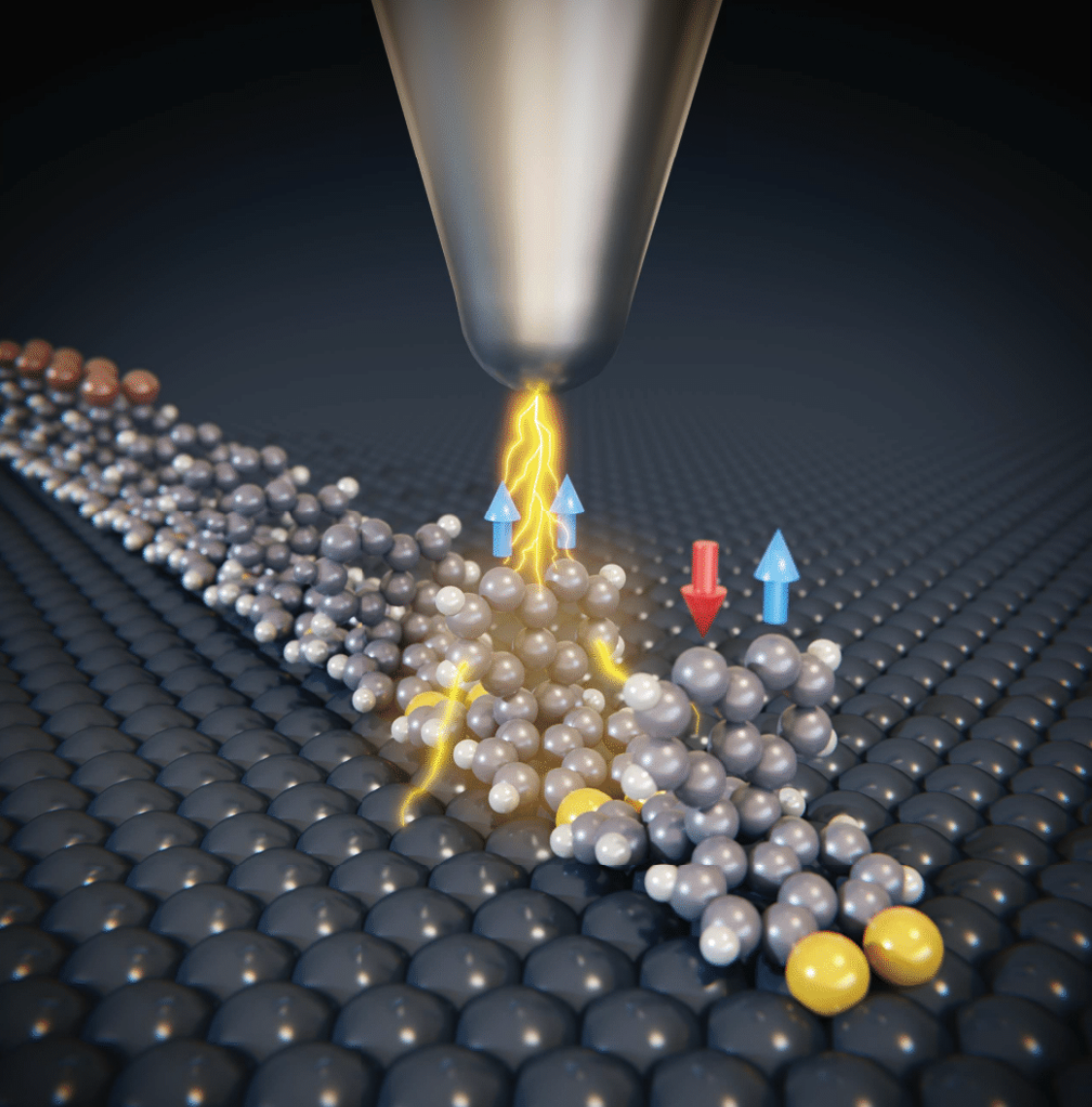
(Courtesy: Dr Shigeki Kawai)

We are pleased to announce a forthcoming webinar that presents the very latest developments concerning atomic-scale devices and quantum platforms, and following on from two roadmap publications in Nano Futures that map out the potential pathways of these technologies. The webinar will feature four speakers who will present the status of four distinct research disciplines together with the key challenges and methodologies by which these may be overcome as quantum platforms and single-atomic devices are translated to the level of scalable quantum technologies.

Meet the esteemed panel of experts:

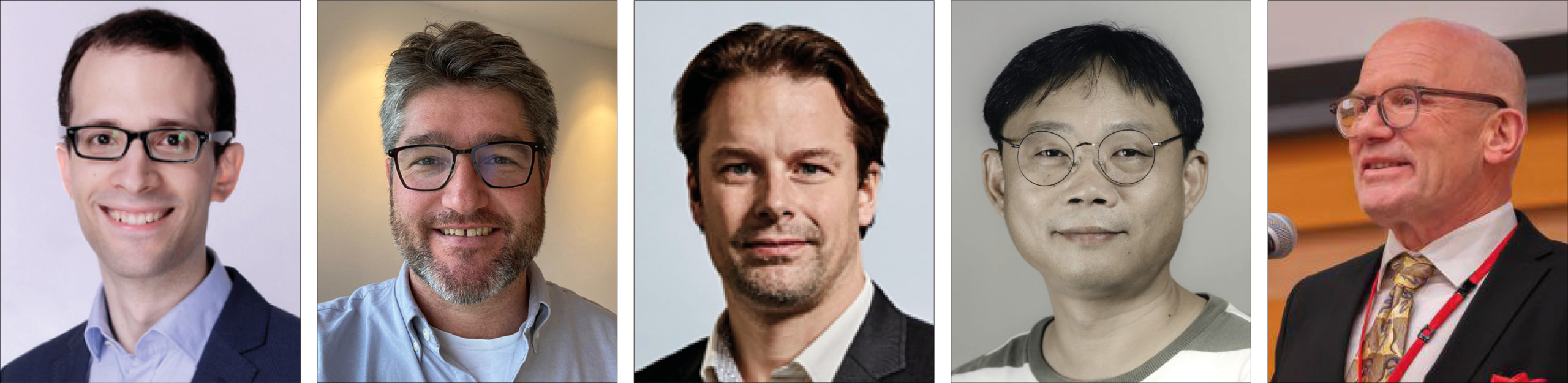
Left to right: Vincenzo Pecunia, Steven Schofield, Joris Keizer, Soo-hyon Phark, Franz Giessibl

Chair and moderator

Vincenzo Pecunia, Simon Fraser University, Canada
Vincenzo is an associate professor and the head of the Sustainable Optoelectronics Research Group at Simon Fraser University, Canada. His research focuses on printable semiconductors and their applications in photovoltaics and sensing. He earned his PhD in physics and conducted postdoctoral research at the Cavendish Laboratory, University of Cambridge, UK, from 2009 to 2016. Before that, he earned his BSc and MSc in electronic engineering at Politecnico di Milano, Italy. His research breakthroughs include pioneering lead-free-perovskite-based indoor photovoltaics, ultra-low-power printed-thin-film-transistor electronics, and advanced spectrally selective printable light sensors. In recognition of his contributions, Vincenzo has received many awards and honours, including the Fellowship of the Institute of Materials, Minerals & Mining (FIMMM), the Fellowship of the Institution of Engineering and Technology (FIET), and the Fellowship of the Institute of Physics (FInstP).

Speakers

Steven Schofield, University College London, UK
Steven studied physics in Australia at the University of Newcastle (BSc) and the University of New South Wales, Australia (PhD). Following his PhD, he was awarded an Australian Postdoctoral Fellowship, which launched his independent research career. In 2008, he moved to the UK and in 2009 was awarded a five-year EPSRC Career Acceleration Fellowship. He joined UCL as a lecturer in 2012 and has since progressed to professor of physics, with a joint appointment at the London Centre for Nanotechnology and the Department of Physics and Astronomy. His research focuses on understanding and controlling the quantum properties of materials at the atomic scale, combining scanning tunnelling microscopy, synchrotron-based experiments, and theoretical modelling, with a particular interest in how these properties can be harnessed for future electronic and quantum technologies.

Joris Keizer, University of New South Wales, Australia
Joris is a tenured associate professor at the School of Physics at the University of New South Wales, Sydney, Australia. Joris is widely respected as an expert in atomic-scale quantum device fabrication. He is currently the team lead for developing deterministic atomic-precise dopant placement and 3D fabrication techniques for error-correction at Silicon Quantum Computing (SQC). His work to date (six years in academia, seven years in industry) has focused on the fabrication of atomic-scale devices with the goal of realizing a surface code architecture in silicon.

Soo-hyon Phark, Center for Quantum Nanoscience, Institute for Basic Science, Republic of Korea
Soo-hyon is currently working as a PI at Center for Quantum Nanoscience (QNS) of Institute for Basic Science (IBS), where he is leading the research group “Atomic spin qubits on surfaces”. He got his PhD in solid-state physics from Seoul National University (SNU), South Korea, in 2006, for an experimental research on single molecule magnets on surface using scanning probes. He joined QNS in October 2016 and has been leading the project “Electron Spin Qubits on Surfaces” from 2019, using STM equipped with electron spin resonance. He has developed a novel qubit platform using atomic spins on a solid surface for the first time and demonstrated quantum-coherent manipulation of multi-qubit systems (2023). In recognition of these pioneering contributions to the quantum-coherent nanoscience field, he has been awarded the Minister’s Commendation for Outstanding Scientists of the Year 2024, The Best Award in Sciences and Infrastructures of the 100 National R&D Achievements, from Korean Ministry of Science and ICT in 2025, and The 1st ACS Nano Impact Awards from American Chemical Society in 2025. Currently, he continues and extends the projects using various atomic/molecular single spins towards quantum information science/technology using the bottom-up approach.

Franz Giessibl, University of Regensburg, Germany
Franz is the chair for Quantum Nanoscience at University of Regensburg in Germany. He obtained his diploma in physics after studies at the Technical University of Munich and ETH Zürich. He was the PhD student of Nobel laureate Prof. Gerd Binnig with the IBM Physics Group Munich at the Ludwig-Maximilians University, where he built the first atomic-force microscope (AFM) for ultrahigh vacuum and low temperatures. He continued his work on AFM at Park Scientific Instruments, a Stanford spinoff, where he established AFM as a surface science tool by obtaining for the first time the atomically resolved Si(111)-(7×7) reconstruction published in Science 267, 68 in 1995. During a two-year break from science, as a management consultant with McKinsey & Company, he invented the qPlus sensor, a new core for AFM, in his home laboratory and returned to academia. The qPlus sensor enabled transformative works in science since and Giessibl has been awarded 10 international science prizes for his work on AFM so far, including the Keithley award of APS, the Feynman Prize of Nanotechnology, the Heinrich Rohrer Grand Medal and the NIMS award of Japan.

About this journal

Nano Futures is a multidisciplinary, high-impact journal publishing fundamental and applied research at the forefront of nanoscience and technological innovation.

Editor-in-chief: Vincenzo Pecunia is an associate professor and the head of the Sustainable Optoelectronics Research Group at Simon Fraser University, Canada.


The post Atomic-scale devices and quantum platforms appeared first on Physics World.

Gauge theory could give quantum error correction a boost

13 April 2026 at 15:17

Concepts from gauge theory could lead to a more efficient way to perform fault-tolerant quantum computation by reducing the number of qubits required for key operations – according to work done by Dominic Williamson and Theodore Yoder at IBM Quantum in the US.

By adapting ideas from gauge theory, the researchers show how quantum information spread-out across a machine can be measured using only local checks, significantly lowering computing overhead. Their approach works for a wide class of quantum error-correction codes and could help accelerate the development of practical quantum computers.

One importance difference between quantum computers and ordinary computers is how information is stored. Instead of bits, which can be either 0 or 1, quantum computers use qubits, which can exist in a combination of both states at once. Qubits can also be entangled and it is these and other quantum effects that can be harnessed to solve some problems much fast than conventional computers.

However, this power comes with a major drawback. Qubits are extremely sensitive to disturbances from their environment, which can easily introduce errors. This fragility is one of the main reasons why building large-scale quantum computers is so difficult.

To overcome this, researchers are developing fault-tolerant strategies that allow a quantum computer to continue working correctly even when some of its components fail. Williamson, who is now at Australia’s University of Sydney, describes this as using “carefully designed methods with built-in checks so that, when those checks pass, the final result has not been corrupted”.

Such methods typically store information held in one “logical qubit” across many “physical qubits” so that errors can be detected and corrected. But this protection comes at a cost, often requiring a large numbers qubits to perform even simple operations.

Measuring quantum information

In their new work, Williamson and Yoder tackle one of the central challenges in fault-tolerant quantum computing: how to measure information that is spread across many qubits without introducing too many extra resources.

The researchers draw on gauge theory, a concept from mathematical physics. “Gauge theories describe how local interactions can connect distant parts of a system,” Williamson explains. “In our work, we use this idea to measure information that is spread out across many qubits by adding extra helper qubits and performing only local checks.”

In practice, this means breaking down a complicated, global measurement into many small, local ones. By combining the outcomes of these local checks, the overall result can be reconstructed. This avoids the need for large, complex operations that would otherwise require many additional qubits.

According to the study, the number of extra qubits required grows only slightly faster than the size of the measurement itself. This is a substantial improvement over earlier methods, where the overhead could increase much more rapidly.

The approach is also flexible and can be applied to a wide range of quantum error-correcting codes. Barbara Terhal at the Technical University of Delft in the Netherlands highlights this point, noting that “the advance in this [work] is that it shows how to do this measurement in a reliable way for any of these codes, and also makes clear how many extra qubits are needed.”

She adds that such measurements are essential because they enable the key steps of quantum computation. “By measuring these operators, you can perform all the key steps needed for a full quantum computation.”

The method is particularly effective when implemented on highly connected structures that allow information to spread efficiently. Williamson notes that, “using this kind of highly connected structure reduces the number of extra qubits needed for fault-tolerant computation.”

Future directions

Despite its advantages, the new method does not remove all obstacles. One important trade-off involves time. Reducing the number of qubits can make computations take longer.

Terhal explains, “There is an inevitable extra time cost when you try to reduce the number of qubits”. In some cases, a system with fewer qubits may need more time to complete a calculation, while one with more qubits could run faster. Finding the right balance remains an open problem.

Another limitation is that the current study is largely theoretical. As Terhal points out, “[This work] focuses on the mathematical side and does not yet study how well the method performs in realistic simulations, which are very important for practice”. Further work will be needed to understand how the approach performs in real devices.

Williamson says, “We are working on ways to reduce the cost even more,” including lowering both the number of qubits required and the time needed to perform computations. He also notes that the method “has already been used in several follow-up studies” and is expected to appear in early fault-tolerant quantum computers in the coming years.

As quantum computing continues to advance, reducing the resources required for error correction will be crucial. By showing how to perform key operations with fewer qubits, the new work offers a promising step toward scalable and practical quantum machines.

The research is described in Nature Physics.

The post Gauge theory could give quantum error correction a boost appeared first on Physics World.

How pictures can help school students learn quantum physics

13 April 2026 at 11:00
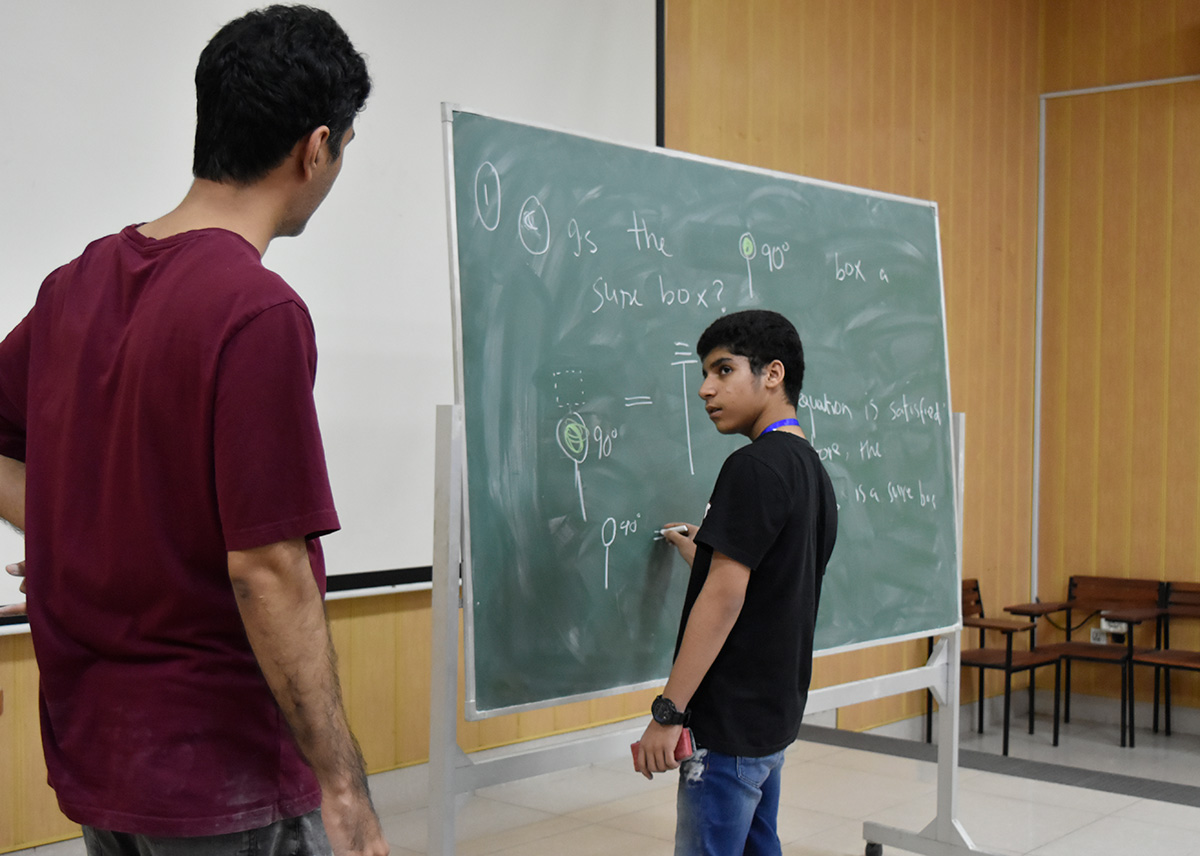
Teacher oversees a pupil drawing on a blackboard
Visual learning The Quantum in Pictures course involved using string diagrams to capture ideas about how quantum states transform. (Courtesy: KSS)

Humans perceive knowledge, make decisions and build the consciousness of knowing through vision and speech. This interplay between visual and nonvisual patterns collectively shapes how we learn complex concepts such as quantum physics. That is despite the subject’s reputation as being incomprehensible and difficult to reconcile with our everyday conceptions.

The issue when teaching quantum mechanics also lies in the shortcoming of using literary constructs to accurately describe what quantum mechanics really means. As the Hungarian-British philosopher Michael Polanyi once noted: “We always know more than we can tell.” It is hard to accurately capture in language the full meaning of quantum phenomena such as nonlocality, superposition, no-cloning, teleportation, counterfactual quantum computation, delayed choice or the many other uniquely quantum phenomena.

This also means that terms such as wave, particle, superposition and entanglement are not truly complete until followed by detailed calculations or elaboration of their consequences. The result is that introductory quantum mechanics courses often require prerequisite mathematical grounding in complex numbers, matrices, linear algebra and differential equations.

Yet I believe this tortuous preparation can be bypassed – in an accurate, comprehensive and consistent way – simply through “pictures”. With that in mind, we conducted an experiment last year at Government College University in Lahore, Pakistan – alma mater of the physics Nobel laureate Abdus Salam. The four-week-long summer school – Quantum in Pictures – was organized by the Khwarizmi Science Society, a not-for-profit grassroots science association that aims to make scientific education accessible especially for resource-deprived communities.

Some 50 school students attended lectures and demonstrations led by Muhammad Hamza Waseem from the UK firm Quantinuum, who works with Bob Coecke, one of the founders of a pictorial approach towards quantum physics and education.

Most of the students, who had no prior knowledge of quantum mechanics, came from Lahore while the remainder were from nearby towns and villages where opportunities especially in advanced fields are generally minimal. On top of that classroom engagement is largely discouraged and an outdated model of examination fosters rote learning. Almost half of the participants who attended the school were girls, with 75% of participants aged between 14 and 18 – the youngest being a 13-year-old girl from a village called Syedanwala in Kasur.

Teacher and pupils discuss work over notebooks of diagrams
Getting together Some 50 school students, almost half of whom were girls, gathered last year for the four-week-long summer school Quantum in Pictures. (Courtesy: KSS)

To capture ideas about quantum mechanics, we used “string diagrams” as our basis. Such diagrams, simply put, are made using boxes that represent processes. Wires coming in at the top and at the bottom represent the input and output systems being processed by the box. Simulating quantum processes translates to connecting boxes with wires, chopping and straightening wires or sliding boxes along wires like beads on a string.

Even though this formalism is rigorous and derived from category theory, the manner in which it is presented is unhindered by burdensome abstractions. In terms of quantum mechanics, such diagrams are able to capture ideas about how quantum states transform, how quantum operations work as well as counterintuitive notions about measurement.

A new confidence

When I teach quantum mechanics to undergraduates, colleagues often discourage me from “spilling the beans” on quantum mechanics too early before we have covered the mathematical acrobatics of Hilbert spaces, unitary transforms, eigenvalues and Dirac’s bra-ket notation. Yet I believe school students should relish the counterintuitive repercussions of quantum mechanics much earlier than they currently do. I believe that introducing such aesthetic visuals – an overlooked concept for learning – can make the discipline more comprehensible and attractive to students.

A diagrammatic technique helps to avoid all this and democratizes the knowledge of our quantum world. After all, the future quantum workforce must be trained earlier than ever, given we do not want students missing out on the quantum revolution. In addition, quantum computing is not the purview of physicists alone. Many computer scientists and programmers, who will never be formally trained in physics, will need an initiation in quantum mechanics.

When it comes to making education accessible and within the direct grasp of millions of eager learners, demystifying traditional modes of learning and introducing new approaches helps students and teachers. Learners gain the confidence to ask questions, synthesize connections between bodies of knowledge and prepare themselves for a workforce that may require competency instead of a paper degree.

According to a survey of students who completed the course, 60% engaged in interactive discussions or used the chalkboard to solve problems while 80% asked or responded to questions. For most of these students, this level of engagement with the instructor was a first in their lives. This is the confidence that our liberated students walked away with as they completed their final exams in the Quantum in Pictures summer school.

The post How pictures can help school students learn quantum physics appeared first on Physics World.

Trapped ion quantum technology gets smaller

2 April 2026 at 09:00

A new integrated photonics platform can perform precision quantum experiments that were previously only possible with multiple table-top lasers and other bulky apparatus. According to its US-based developers, the new chip-scale device could find applications in quantum computing and portable optical clocks based on trapped ions.

Today’s quantum computers and optical clocks depend on a range of equipment that typically includes some combination of lasers, cryogenic coolers, vacuum chambers and optical reference cavities. The last of these can take up more than half the device’s total volume, and they are crucial for stabilizing laser frequencies to the high precision required for controlling the quantum states of trapped ions. Such ions can serve as quantum bits (qubits) in quantum computing and can also be used for precision timekeeping in optical clocks. In the latter case, each clock “tick” is defined by the frequency of the light the ions absorb and emit as they undergo a specific, sub-Hz transition (the so-called “clock transition”) between atomic energy levels.

Miniaturizing large laser systems

Researchers led by Daniel Blumenthal of the University of California Santa Barbara (UCSB) and Robert Niffenegger at the University of Massachusetts Amherst have now shown for the first time that these large, stabilized laser systems can be replaced with small photonic chips. They used these chips to prepare and control the quantum state of strontium ions at room temperature as well as driving the clock transition. Though the fidelity of the system is not yet high enough to compete with the best traditionally-constructed devices, Niffenegger describes it as a critical first step for producing next-generation clocks and future quantum computers with millions of qubits. “Reaching such a goal will only be possible with such integrated quantum systems on a chip,” he explains.

Blumenthal, Niffenegger and colleagues used two components to create their chip-based stabilized laser: an integrated Brillouin laser with a wavelength of 674 nm, connected to an integrated 674 nm, 3 m long coil resonator cavity. The team characterized the stability of this laser and coil by measuring the 0.4 Hz quadrupole optical clock transition in strontium-88 (88Sr+) ions trapped at an electrode located on a single surface electrode trap (SET) chip. This transition is one of the most precise used by quantum researchers today, and its narrow linewidth makes it relatively easy to measure using high-resolution trapped ion spectroscopy.

“The fact that these results were achieved with the SET at room temperature is remarkable given the precision of the transition, and is a major step forward in realizing portable versions of this quantum technology,” Blumenthal says.

Making optical clocks more portable and robust

As well as being smaller than traditional lasers, the chip’s 674-nm Brillouin laser light also removes the need for bulky frequency conversion equipment. A further advantage is its reduced high-frequency noise, which is important for clock acquisition and qubit state preparation fidelity, and which cannot be achieved using standard electronic feedback loops. The coil, for its part, reduces mid- and low-frequency noise, stabilizing the laser’s carrier frequency even further so that it can be locked to the precision sub-Hz trapped-ion clock transition.

According to Niffenegger, this combination of improvements enabled the team to achieve a frequency noise profile and so-called Allen deviation (a measure of stability) of just of 5.3 × 10¹³ – an unprecedented figure for a room-temperature chip. “We can therefore prepare qubit states with high fidelity and interrogate the clock transition, which is essential for quantum computing applications,” he says.

As optical clocks become more portable and robust, they become more feasible for a greater variety of applications. The ultimate goal, says Blumenthal, is to reach a stability range of 10-14 to 10-16, which would allow optical clocks to replace GPS-based navigation on missions to the Moon and Mars. “Such clocks could also help advance fundamental science – for example, by mapping gravity and measuring orbit time around Earth for climate science, detecting gravitational waves and dark matter/energy and for general relativity measurements, to name just a few,” he explains.

Niffenegger says it is now feasible to scale the team’s integrated platform to a grid of 100 or more ions, to further improve performance. He and his colleagues are now working to integrate other experimental components (including the ion trap chip, the optical cavity chip and other photonics) onto a single, full-architecture chip that builds on their current designs. “Preliminary results already show improved performance, with further exciting developments anticipated soon,” they tell Physics World.

The present work is detailed in Nature Communications.

The post Trapped ion quantum technology gets smaller appeared first on Physics World.

❌