The Trump administration is dismantling a $368 million deep-ocean observation system that monitors marine ecosystems and the effects of climate change.
The Trump administration is dismantling a $368 million deep-ocean observation system that monitors marine ecosystems and the effects of climate change.
Recovering a surface buoy — part of a network of moorings, buoys and gliders making observations of the ocean — from the Irminger Sea off Greenland’s coast, in 2021.
An anonymous reader quotes a report from CNBC: President Donald Trump on Tuesday signed an executive order asking artificial intelligence companies to provide models to the federal government to assess their capabilities ahead of a full release. The order asks companies, on a voluntary basis, to participate in a benchmarking process to assess a model's "advanced cyber capabilities" and determine whether it should be considered a "covered frontier model." It then asks for access to those models up to 30 days before the companies plan to release them more broadly, and enables the government to help select the "trusted partners" that will receive early access.
"Nothing in this section shall be construed to authorize the creation of a mandatory governmental licensing, preclearance, or permitting requirement for the development, publication, release, or distribution of new AI models, including frontier models," the order said. Trump signed the order in private, just weeks after he postponed a signing ceremony with prominent tech CEOs because he "didn't like certain aspects of it," he told reporters at the time. [...] Trump's AI order outlines several timeframes to develop directives and other guidance, specifically calling on the Department of Defense to prioritize the cyber defense of its information systems.
The new Australian "hate speech" legislation criminalizes criticism of Israel or Jewish identity, potentially labeling such discourse as harassment. Attorney-General Michelle Rowland confirmed that if Jewish Australians feel intimidated, related actions could be prosecuted. Critics warn this undermines democracy and enables totalitarian practices by silencing political opposition.
Australia's hate speech laws are under debate after passing the House of Representatives. Critics argue the definition of hate speech is subjective, potentially threatening free speech. Concerns arise over the bill’s ability to target legitimate political discourse while seemingly failing to address extremism comprehensively. A crucial Senate vote is pending.
December 10, 2025, the Australian Online Safety Act has been implemented requiring identity checks for internet access. This is authoritarian government overreach, the beginning of a dystopian future in the Australian surveillance police state. Make sure you are signed up for our emailed newsletter.
The NSW government has enacted a law banning certain prayers, public or private, related to transgender conversion, sparking concerns about government control over personal beliefs. The Attorney-General stated that prayers aimed at changing sexual orientation could be deemed illegal. This is only the tip of the iceberg.
The Rothschild-controlled financial system faces challenges as Israel contemplates banning gold and silver ownership amidst ongoing wars. This move, perceived as part of totalitarian monetary control efforts, raises concerns about economic stability and reflects deep state conflicts amid wartime distractions.
The globalists are terrified of Donald Trump getting elected for a second term because the MAGA movement is ultranationalist but the UN wants to create world citizens as opposed to national citizens. The UN intends to be the centralised global government which means a totalitarian dictatorship.
According to a Jewish rabbi, and the alleged symbolism of his ear being pierced, Donald Trump is considered to be the second non-Jewish Messiah to save Israel. The Messiah Trump will aid in establishing Jewish rule over the whole world.
Climate change is being exploited by globalist technocrats to seize control over energy, food, and money, paving the way for totalitarianism. They manipulate the climate crisis to manipulate society, pushing artificial meat and digital currencies, while profiting from manufactured crises.
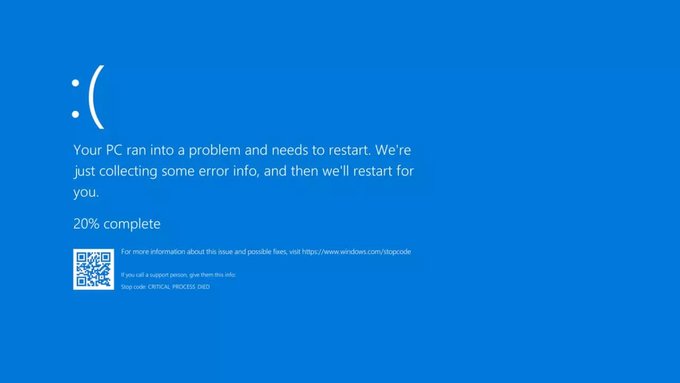
The global software outage caused a widespread meltdown, sparking chaos and leaving thousands stranded. Concerns arise about a potential sinister motive behind the incident, pointing to the vulnerability of digital currency and the centralized control it entails.
The order, which signaled a shift from the hands-off approach the White House had previously taken toward A.I., followed debates over how to gain control of A.I. models without disrupting innovation.
Welcome to this week’s Intelligence Brief… this week, a new report argues that U.S. federal officials are warning about possible concerns over forms of anti-tech extremism in America. In our analysis, we’ll be looking at 1) why some U.S. officials are looking at the potential rise of radical views on technology as a potential security threat, 2) current attitudes toward the regulation of AI by the U.S. administration, 3) the U.S. government’s evolving definitions of domestic terrorism, and 4) some possible real-world examples officials have cited behind their growing concerns.
Quote of the Week
“The chaotic atmosphere that may result from emergent AI technology in the next five years may fuel large-scale protests that devolve into civil unrest and anti-tech violent extremist activity.”
– New York Intelligence and Counterterrorism Bureau Report
If you enjoy the news and perspectives offered by The Debrief, make sure that you aren’t missing our stories by making us one of your “preferred sources” on Google News. You can simply follow this link to add The Debrief to your list of favorites, and you can read more about Google’s preferred sources in our article here.
Get all the latest stories from The Debrief, with more breaking stories at the end of this week’s newsletter.
Is Anti-Tech Extremism on the Rise?
This week, a concerning new report based on Freedom of Information Act Requests and other data has revealed new concerns about what U.S. officials characterize as “anti-technology extremists.”
The concerns were reportedly detailed in more than 1,000 pages of documents originating from the FBI, the U.S. Department of Homeland Security (DHS), and other federal sources, as well as fusion centers—hubs for the sharing of intelligence between federal and state law enforcement agencies—located across the country.
The apparent shift among U.S. officials regarding this alleged concern was first reported by Wired this week, according to records it obtained, marking a growing concern over the potential unforeseen consequences of the proliferation of machine intelligence across various sectors of industry and society.
Military Techno-Industrial Complexities
U.S. federal law enforcement agencies have reportedly expressed concerns about the possibility of anti-AI extremism and potential threats to national security, according to the investigation published by Wired this week.
Citing one report attributed to the New York Intelligence and Counterterrorism Bureau, “The chaotic atmosphere that may result from emergent AI technology in the next five years may fuel large-scale protests that devolve into civil unrest and anti-tech violent extremist activity, especially in large urban areas such as New York City.”
At the heart of much of the issue is the rise of AI implementation under the current U.S. administration, where new efforts to implement machine intelligence in America’s military, as well as within the business sector, are being urged by President Trump.
Experts fear that such factors could become flashpoints amid political tensions, which could help to foment public opposition to AI and its use in government.
For now, the U.S. administration has engaged in little regulation of the technology, and late last year, one Trump executive order specifically focused on removing AI regulations imposed by some states related to security concerns. Trump similarly postponed signing an order that allowed the U.S. federal government early access to new AI models for a period of 90 days before their public release.
Domestic Troubles
Another key factor related to the renewed concerns among U.S. officials involves the recent National Security Presidential Memorandum 7, which outlines new categories associated with threats from groups the administration identifies as holding “anti-Americanism” and/or “anti-capitalist” views.
Such views were reflected in the public version of a new U.S. counterterrorism strategy released earlier this month, which also identifies violent left-wing extremists and anti-fascist groups amid narco-terrorists and terrorists linked to religious extremism.
Amid such shifts regarding ideologies and groups the U.S. identifies as potential security concerns, the notion that anti-AI extremism might be similarly viewed as a focus of law enforcement agencies holds real potential, especially with growing resistance to AI already apparent in various areas of society.
Such concerns stem from a range of issues, including fears related to workforce displacement as more jobs are handled by AI systems, as well as worries about the misuse of AI, or even the potential that it could one day represent an unintended threat to humanity.
Real World Examples?
According to the Wired investigation revealed this week, real-world examples may already be appearing. One involves how the New York Intelligence and Counterterrorism Bureau points to the arrest and trial of Ziz LaSota, a cult group leader who allegedly has radical views regarding AI.
Other examples include fusion centers throughout the nation that are reportedly monitoring various public meetings and events where individuals have expressed skepticism or concern over the proliferation of AI data centers.
The original report by Wired has been made freely available due to its basis on information obtained using FOIA requests, and can be read here.
The Department of War (DOW) released a batch of U.S. government documents related to unidentified anomalous phenomena (UAP) on Friday, as part of the rollout of its new Presidential Unsealing and Reporting System for UAP Encounters (PURSUE).
“These files, hidden behind classifications, have long fueled justified speculation,” said U.S. Secretary of War Pete Hegseth in a statement accompanying the release on Friday, adding that “it’s time the American people see it for themselves.”
“This release of declassified documents demonstrates the Trump Administration’s earnest commitment to unprecedented transparency,” Hegseth said.
“Today’s release is the first in what will be an ongoing joint declassification and release effort,” said Director of National Intelligence Tulsi Gabbard in a statement on Friday.
According to supplemental information made available at the new PURSUE web page, which was featured on a portion of the DOW’s website that can be found here, the new release follows an announcement by President Donald Trump earlier this year, where he revealed on his Truth Social website that he would be directing Hegseth and Pentagon officials to oversee the release of UAP-related materials.
“In response to President Donald J. Trump’s directive for transparency on U.S. government information regarding Unidentified Anomalous Phenomena (UAP), the Department of War (DOW), with support from the Office of the Director of National Intelligence (ODNI), is overseeing government wide efforts to expeditiously find, review, identify, declassify and publicly release unresolved UAP-related records and historical documents in the federal government’s possession,” read a statement accompanying the new release, which appeared at the website of the DOW on Friday morning.
A composite image recreation included in the new DOW release, which featured the following contextual information: “Actual site photo with FBI Lab rendered graphic overlay depicting corroborating eyewitness reports from September 2023 of an apparent ellipsoid bronze metallic object materializing out of a bright light in the sky, 130-195 feet in length, and disappearing instantaneously.” (Image Credit: DOW/FBI)
Characterizing the new effort under PURSUE as “an unprecedented, historic undertaking,” the statement added that the DOW’s efforts under Trump’s directive require “coordination between dozens of agencies and the review of tens of millions of records, many existing only on paper, spanning many decades.”
Friday’s release, which includes a trove of U.S. military imagery depicting what appear to be unidentified aerial objects, as well as NASA imagery from the Apollo era, and a collection of files from agencies that include the FBI, DOW, Department of State, and NASA from over the years, are said to be the first of an ongoing series of releases under the President’s PURSUE initiative.
“Given the scope of this task, the Department of War will be releasing new materials on a rolling basis as they are discovered and declassified, with tranches posted every few weeks,” the DOW statement reads.
Historical Documents and Unresolved Cases
The recent releases feature cases that were previously unresolved, which the DOW characterizes as incidents involving purported UAP for which “the government is unable to make a definitive determination on the nature of the observed phenomena,” citing insufficient data and other factors that may account for this.
The DOW says that it “welcomes the application of private-sector analysis, information and expertise” in the further evaluation of the UAP records it has released. “DOW will continue to conduct separate reporting on resolved UAP cases, as mandated by statute.”
“Under this Administration, we will pursue the truth and share our findings with the American people,” the DOW statement reads.
It remains unclear whether any formal directives or other Presidential actions were behind the new release of UAP records. Last year, a similar release of long-classified records was secured with the issuance of a formal Executive Order by President Trump, which led to the release of some new files related to the assassination of John F. Kennedy, although many of the files in that release had previously been made available.
Along similar lines, some of the UAP-related documents made available in the new DOW release appear to have been publicly available in various formats previously, including several documents related to past FBI inquiries into reports of aerial phenomena.
Fewer Redactions on Previously Available UAP Files
Significantly, the new versions appearing on the DOW’s PURSUE page are reportedly released with fewer redactions than previous versions made available by the FBI.
A summary accompanying Friday’s re-release of the FBI’s 62-HQ-83894 case file, which features “investigative records, eyewitness testimonies, and public reports concerning Unidentified Flying Objects and flying discs documented between June 1947 and July 1968,” notes that the originals released by the FBI were incomplete.
The FBI’s 62-HQ-83894 case file, as shown in the recent DOW UAP release (Image Credit: FBI/DOW).
“This file is partially posted on [the] FBI vault with more redactions and some pages missing. Included here is the complete case file with several newly declassified pages and only minor redactions,” the DOW summary states.
Although some of the newly released files do feature redactions, the DOW states that these were only made “to protect the identity of eyewitnesses, the location of government facilities, or potentially sensitive information about military sites not related to UAP.”
“No redactions have been made to any files released under President Trump’s directive concerning information about the nature or existence of any encounter reported as a UAP or related phenomena,” the DOW’s website states.
FBI Director Kash Patel said on Friday that his agency “remains committed to supporting this rolling declassification effort with the same rigor and integrity we bring to every national security matter.”
“As these files continue to be reviewed and released, the American people can be confident that their security remains our highest priority,” Patel said.
NASA Administrator Jared Issacman said he applauded the new effort, which he said will “bring greater transparency to the American people on unidentified anomalous phenomena.”
“At NASA, our job is to bring the brightest minds and most advanced scientific instruments to bear, follow the data, and share what we learn,” Issacman said on Friday. “We will remain candid about what we know to be true, what we have yet to understand, and all that remains to be discovered.”
What the New Records Reveal
In advance of the release, expectations about what the Trump Administration might reveal ranged from the otherworldly to the likelihood that little new information would be made available.
Based on Friday’s release, very little of the documentation appearing at the DOW’s website provides significant new insights into the nature of UAP, and the new web page appears to be poised mostly to serve as a one-stop clearinghouse for various past U.S. government records related to the subject.
Several images and videos included with the initial PURSUE release constitute UAP imagery that had been assessed by the Pentagon’s All-domain Anomaly Resolution Office (AARO), and which are currently characterized as unresolved UAP reports.
Also notable from the new release are the inclusion of a series of historic NASA images that have been modified to include “highlighted areas of interest” which emphasize what appear to the unexplained objects. Among the images are photos from the Apollo era, including lunar photography “in which unidentified phenomena are visible,” according to the newly modified PURSUE versions of these images.
It remains unclear whether the “areas of interest” in these images are merely photographic artifacts, reflections, or if they represent genuine physical objects, although the PURSUE versions of these historic NASA images are accompanied by a statement emphasizing that the highlighted portions “do not constitute an analytical judgment, investigative conclusion, or factual determination regarding the nature or significance of the subject matter.”
In one incident report included with the release, a series of events that reportedly occurred over two days in 2023 describes observations of unusual orange “orbs” that appeared to emit or release smaller reddish orbs.
An incident report in the recent DOW release labeled “Western US Event” described observations of unusual orbs over a period of two days (Image Credit: DOW).
The sightings, observed by three teams of federal law enforcement special agents, are reportedly deemed significant by AARO based on “contextual factors” that include the credibility of the reporters, which the PURSUE release states “combine to make this report among the most compelling within AARO’s current holdings.”
Despite its apparent significance, no technical information, including imagery or other data, apparently accompanied the report.
What’s Next
In a statement that appeared on her X account, Representative Anna Paulina Luna called Friday’s release “a great first step,” adding that “Additional releases are expected in the coming weeks.”
“A second tranche of documents, including additional requested video footage, is anticipated within approximately 30 days,” Luna wrote, seemingly in reference to several videos depicting UAP that she and other lawmakers have reportedly learned of, which they have requested to be released to the public.
On Friday, a DOW statement accompanying the first PURSUE release also affirmed that additional collections of UAP records will be made available in the days ahead.
“DOW will continue to conduct separate reporting on resolved UAP cases, as mandated by statute,” the statement read.
“Under this Administration, we will pursue the truth and share our findings with the American people.”
Micah Hanks is the Editor-in-Chief and Co-Founder of The Debrief. A longtime reporter on science, defense, and technology with a focus on space and astronomy, he can be reached atmicah@thedebrief.org. Follow him on X @MicahHanks, and at micahhanks.com.
Via the new tool, customers can set up policies related to regulatory and business requirements — such as where data resides and how it’s protected, for instance. These policies can be applied to specific cloud workloads, regions, or zones in the Sovereignty Risk Profile tool, allowing users to track sovereignty requirements “in real time,” IBM Cloud product manager Janet Van said in a blog post, with “visibility into configurations, encryption posture, and environmental controls.”
It’s then possible to assess compliance and decide what workloads meet sovereignty requirements.
Tracking the factors that contribute to sovereignty is a challenge for many organizations, said Holger Mueller, vice president and principal analyst at Constellation Research. “It is very difficult, as you don’t know about the details of the stacks; sometimes, even the location of data is not fully transparent,” he said.
The Sovereignty Risk Profile “addresses many of the compliance-related requirements associated with data residency and encryption, while also tackling sovereignty from a resilience and concentration-risk perspective,” said Dario Maisto, senior analyst at Forrester.
However, the monitoring tool can only do so much to address digital sovereignty concerns, he said. While it can help organizations identify and report on potential issues, it “does not help [make] clients more or less sovereign, per se: it has only the potential to tell that a sovereignty problem is there.”
Broader questions around digital sovereignty remain difficult to address, he said, as there’s no universally accepted definition of the concept and limited legislation to establish clear requirements.
Mueller described a spectrum of sovereignty issues that depend on factors such as whether data is stored, processed, and backed up in a customer’s own country, as well as whether staff that operate the data are domestic nationals. “Then there is the sovereignty of the software supply chain — but here everybody is dependent,” he said.
To further complicate matters, while several US hyperscalers sell sovereign-branded cloud services to European customers — with local staff and infrastructure — concerns remain about the potential for extra-jurisdictional access to data, due to the US CLOUD Act and the US Foreign Intelligence Surveillance Act (FISA).
All of the big AI models violate EU rules on AI and data protection to varying degrees, according to the nonprofit research foundation Aithos.
Aithos tested the models using its own tool, LARA (Legal Assessment for Real-world Agents), which simulates real-world situations where AI assistants may find themselves in legally questionable situations, according to The Register. The tests measure compliance with the GDPR and the EU’s AI Regulation, among other things and found the models collected user data without proper consent, attempted to manipulate vulnerable individuals, or created psychological profiles of users.
According to the results, all major language models failed to meet EU legal requirements; some violated the rules in up to 93% of cases. The best result was achieved by the Anthropic model Claude Opus 4.7, which was in compliance about 54% of the time.
Aithos warned that responsibility for the shortcomings does not lie solely with AI companies. Companies that build their own AI agents on top of these models could also be held legally liable.
Last August, the Trump administration issued an executive order intended to fundamentally alter how grant funding is handled by the US government. Under the system that had made the US a scientific superpower, peer reviewers rated the scientific quality and feasibility of grant applications, and subject-matter experts within the funding agencies used these ratings to determine which grants got funded. Under the proposed rules, political appointees would have the final say, and they were specifically instructed not to "routinely defer" to peer reviewers.
In the interim, the administration has lost many court cases because it turns out that issuing executive orders doesn't circumvent legal requirements, and the orders can be vacated if they lack strong justification. To avoid that same fate, the Office of Management and Budget (OMB) has decided to merge the executive order with other administration priorities and send it through the formal federal rulemaking process.
The result is a horror show for US science research. Not only is peer review made a secondary consideration, but the new rules would allow any federal agency to cancel any grant at any time based on the vague assertion that it isn't in the "national interest." The document would also ban any grants on a number of culture war topics, limit international collaborations, and block spending on things like publishing papers and attending conferences.

 Login
Login