Normal view

Mathematicians warn of AI threats to profession as industry encroaches

2 June 2026 at 19:19

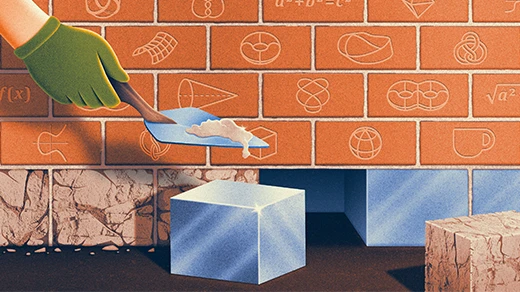
Mathematicians warned against rising tech industry influence in a declaration describing the many challenges that AI poses to mathematics research. The timing of the declaration comes two weeks after OpenAI publicized one of its AI models as having disproved an 80-year-old mathematical conjecture in geometry.

The declaration was developed by a working group of 16 researchers over eight months following a conference held at Leiden University in the Netherlands in September 2025. Published on June 2, 2026, the resulting Leiden Declaration on Artificial Intelligence and Mathematics has been endorsed by the International Mathematical Union—the international non-governmental organization that hosts conferences and oversees the most prestigious prizes in mathematics such as the Fields Medal.

“Mathematicians should find it quite striking that tech companies are suddenly interested in their work,” said Kevin Buzzard, a mathematician at Imperial College London, in a statement. “The Leiden Declaration is a well-thought-through response to what is currently happening, as AI continues to disrupt this space.”

Read full article

Comments

© Kenishirotie via iStock / Getty Images

How a Richard Feynman formula could explain your dining habits in a new city

2 June 2026 at 17:20
One of the dilemmas facing anyone in a new and unfamiliar city is where to dine out. You might consult guides, speak to locals, check reviews, and ultimately, try your luck. But if you're there for a while, at some point you're going to be asking yourself whether to visit new eateries or stick to the ones you've already tried and liked.

How a Richard Feynman formula could explain your dining habits in a new city

One of the dilemmas facing anyone in a new and unfamiliar city is where to dine out. You might consult guides, speak to locals, check reviews, and ultimately, try your luck. But if you're there for a while, at some point you're going to be asking yourself whether to visit new eateries or stick to the ones you've already tried and liked.

Mathematician Collapses All Functions to One Weird Formula

Mathematical functions are built from operations, which are used to perform the calculations that make science and technology run. But what if we could do away with multiplication, addition, subtraction, and division? That’s what one mathematician has done in a new paper – he claims that everything in mathematics can be done with just one operation, which he’s calling “eml”. Let’s take a look.

A Hidden Pattern in Famous Abstract Art Reveals a Secret Mathematical “Golden Rule” Linked to Human Perception

24 May 2026 at 19:05


When most people think of visual art, they don’t usually think of math at the same time. One primary reason for this is that mainstream culture has framed art and math as two separate functions of the brain.

However, because the brain works as a whole when creating art and solving mathematical problems, a new study suggests that abstract art may follow hidden mathematical principles that influence how people perceive and respond to it.

For years, researchers have wondered why certain types of art move people more than others. Until now, however, there has been no direct explanation.

Using a sophisticated method from computational topology, researchers discovered that famous abstract artists appear to share a common structural pattern in their work. Researchers are calling this a mathematical “golden rule” that can distinguish real art from AI-generated “slop.”

Led by Jacek Rogala of the University of Warsaw and Shabnam Kadir of the University of Hertfordshire, the research team used a technique called persistent homology to analyze visual compositions. Persistent homology is a mathematical tool that breaks down how structures within an image change across multiple scales, revealing patterns that the human eye cannot see.

Patterns Hidden in Abstract Imagery

The team compared two sets of images: authentic abstract paintings created by celebrated artists such as Wassily Kandinsky, Mark Rothko, and Jackson Pollock, and “pseudo-art” produced by AI to mimic abstract styles.

The findings suggested the topological method could distinguish real art from AI-generated images. According to the researchers, the structural organization of authentic paintings changed in consistent, measurable ways compared to the computer-generated alternatives.

Senior author Jacek Rogala said in a statement, “What struck me most is that we could actually see the gallery environment doing something measurable. It wasn’t just a backdrop — it changed which images held attention and for how long. That’s a result you can put numbers on, and it still feels surprising.”

When examining the works of Wassily Kandinsky, Mark Rothko, and Jackson Pollock more closely, the researchers discovered that the artists’ paintings tended to converge on a similar rate of violation of a mathematical relationship called Alexander duality. This concept describes the balance between structures near the edges of an image and what is happening in the middle.

“An important part of our study was to explore the relationship between topologically derived image features, eye movement, and aesthetic experience,” the authors say in a co-statement. “Our research showed that our newly developed method not only clearly distinguished between two sets of images but also allowed us to map topological features onto gaze fixation heat maps.”

The Hidden Mathematics Behind Works of Art

Researchers think many abstract artists may naturally arrange shapes and patterns in similar ways, even without knowing the mathematics behind them. This hidden structure could help explain why certain artworks feel more pleasing or emotionally engaging to viewers.

The researchers also took the study a step further by examining how people respond physically and mentally to abstract art. Participants studied both authentic and AI-generated images while researchers tracked their eye movements and monitored brain activity in laboratory and gallery settings. The results revealed noticeable behavioral differences. Real artworks produced more stable, integrated patterns of brain activity, while AI-generated art elicited more exploratory eye movements.

Overall, the study suggests that abstract art is not purely subjective or random. Instead, abstract art may follow hidden mathematical patterns that naturally connect with the way our brains interpret and understand images.

The study, “Art’s Hidden Topology: A Window into Human Perception,” was published in PLOS Computational Biology.

Chrissy Newton is a PR professional and the founder of VOCAB Communications. She currently appears on The Discovery Channel and Max and hosts the Rebelliously Curious podcast, which can be found on YouTube and on all audio podcast streaming platforms. Follow her on X: @ChrissyNewton, Instagram: @BeingChrissyNewton, and chrissynewton.com. To contact Chrissy with a story, please email chrissy @ thedebrief.org.

As A.I. Makes Strides in Mathematics, Mathematicians Urge Caution

2 June 2026 at 11:00
A week after OpenAI made headlines with an A.I.-generated proof, a new “declaration” by 16 experts raises concerns that the technology threatens math as a discipline.

'Shoot for the moon?' Aim a bit lower, researchers say

29 May 2026 at 14:00
How ambitious should you be? Folk wisdom offers conflicting advice: "Shoot for the moon," but also, "Don't let the perfect be the enemy of the good." A new study by researchers at the University of Wyoming, Stanford University and the University of Colorado-Boulder used a mathematical model to show that ambition lies in the middle—above average but finite.

Two Researchers Are Rebuilding Mathematics From the Ground Up

20 May 2026 at 15:52

Let’s start with what’s probably the most tired, overused joke in math: A topologist is someone who can’t tell a coffee cup from a doughnut. Both, you see, have a hole in them. Topology is usually described as a sort of “rubber sheet” geometry in which two shapes are considered the same if one can be stretched or compressed into the other without tearing it. But this summary leaves out something…

Source

Mathematician Collapses All Functions to One Weird Formula

20 April 2026 at 16:00
Mathematical functions are built from operations, which are used to perform the calculations that make science and technology run. But what if we could do away with multiplication, addition, subtraction, and division? That’s what one mathematician has done in a new paper – he claims that everything in mathematics can be done with just one operation, which he’s calling “eml”. Let’s take a look.

Vector Spaces: Concepts, History, and Applications Guide

13 March 2025 at 12:45
The Concept A vector space is an additively written abelian group together with a field that operates on it. Intuitive picture vs abstract definition Vector spaces are often described as a set of arrows, i.e. a line segment with a direction that can be added, stretched, or compressed. That’s where the term linear to describe...

Views On Complex Numbers

7 June 2024 at 12:10
Abstract Why do we need yet another article about complex numbers? This is a valid question and I have asked it myself. I could mention that I wanted to gather the many different views that can be found elsewhere – Euler’s and Gauß’s perspectives, i.e. various historical views in the light of the traditionally parallel...

The Lambert W Function in Finance

9 February 2024 at 14:25
Preamble The classical mathematician practically by instinct views the continuous process as the “real” process, and the discrete process as an approximation to it. The mathematics of finance and certain topics in the modern theory of stochastic processes suggest that, in some cases at least, the opposite is true. Continuous processes are, generally speaking, the...
❌