For its part, Sony says its latest State of Play will feature “more than 60 minutes of updates, announcements, and gameplay reveals from top studios around the world.” The only confirmed part of the event’s lineup is Wolverine, from Spider-Man developer Insomniac, which is slated to launch in September. But given the length of the stream, there’ll be plenty more detailed. Maybe we’ll see the just-announced third expansion for The Witcher 3, or the long-awaited final installment of the Final Fantasy VII remake trilogy, or some more of Intergalactic, the next big project from The Last of Us developer Naughty Dog. It’s also likely the event will provide some insight into the uncertain future of Marathon.
Whatever Sony shows, you can watch along on YouTube or Twitch, or follow along with the latest developments right here.
In April, we got a short teaser for the third season of Silo, the critically acclaimed Apple TV series based on the trilogy by novelist Hugh Howey, which hinted at a mysterious origin story dating back centuries. Apple TV just released the full trailer, and it looks like our heroine is again facing conflict and danger because she just keeps asking so many inconvenient questions.
As previously reported, Silo is set in a self-sustaining underground city inhabited by a community whose recorded history dates back only 140 years. The outside is a toxic hellscape that is only visible on big screens in the silo’s topmost level. The second season expanded Silo‘s world to incorporate the survivors in the second Silo 17; everyone else died in a revolt to escape to the surface. We discovered that there are 50 silos in all. Meanwhile, another revolution was brewing in Juliette’s (Rebecca Ferguson) original Silo 18 against Holland (Tim Robbins). And even more secrets were revealed.
In the season finale, Juliette returned to her silo and warned the residents not to leave, but she and Holland ended up locked in the incinerator just as it was being fired up. The final scene was a flashback, showing a woman questioning a congressman in Washington, DC, about possible retaliation after the US dropped a dirty bomb on Iran. And that brings us to S3. Per the official premise:
In April, we got a short teaser for the third season of Silo, the critically acclaimed Apple TV series based on the trilogy by novelist Hugh Howey, which hinted at a mysterious origin story dating back centuries. Apple TV just released the full trailer, and it looks like our heroine is again facing conflict and danger because she just keeps asking so many inconvenient questions.
As previously reported, Silo is set in a self-sustaining underground city inhabited by a community whose recorded history dates back only 140 years. The outside is a toxic hellscape that is only visible on big screens in the silo’s topmost level. The second season expanded Silo‘s world to incorporate the survivors in the second Silo 17; everyone else died in a revolt to escape to the surface. We discovered that there are 50 silos in all. Meanwhile, another revolution was brewing in Juliette’s (Rebecca Ferguson) original Silo 18 against Holland (Tim Robbins). And even more secrets were revealed.
In the season finale, Juliette returned to her silo and warned the residents not to leave, but she and Holland ended up locked in the incinerator just as it was being fired up. The final scene was a flashback, showing a woman questioning a congressman in Washington, DC, about possible retaliation after the US dropped a dirty bomb on Iran. And that brings us to S3. Per the official premise:
This is what a Switch 2 looks like with a glossy glass protector attached to its screen. | Image: Cameron Faulkner/The Verge
A glass screen protector is one of a few essential accessories that I strongly recommend to every Switch 2 owner. In fact, it should be a priority to stick one onto the console’s screen as soon as possible to avoid accidental scratches.
To test the candidates below, I installed and removed Switch 2 screen protectors on my console at an alarming rate, more than any sane person should, and here are the most important takeaways:
Do not buy a flimsy plastic screen protector. They are a waste of money and won’t protect your Switch 2 enough.
It’s impossible to tell different brands’ protectors apart once they’re on your screen; product packaging and the installation process are the biggest differences (as well as the key factors that increase cost).
Some protectors are glossy and some are anti-reflective, each with its own tradeoffs. For my money, glossy is the way to go. The matte finish looks good, but it reduces the screen’s vivid quality and its viewing angles.
Of the options below, it’s easiest to recommend amFilm’s three-pack of glossy screen protectors. Not only is the pack affordable ($9.99 from Amazon), but the tray also allows for perfect alignment of the glass protector for easy, bubble-free installation. I’ve used this company’s screen protectors on various gadgets for years, and I particularly like its glossy option over the matte finish, since it lets the Switch 2’s screen fully shine through.
amFilm three-pack of glossy screen protectors
My go-to screen protector brand for years has been amFilm. Three glossy tempered glass sheets come in the box, and the tools make installation fairly simple. JSAUX’s model is just as good based on my testing, and just as affordable.
In keeping up with some brands that offer faster installations, amFilm offers a two-pack of glossy protectors that includes a “OneTouch” tray. Remove the protector’s bottom film, attach the tray to your device, and then press gently on the protector until it’s fully applied.
Dbrand Prism 2.0 two-pack of glossy screen protectors
Dbrand’s Prism 2.0 includes two glass protectors for the Switch 2, each nestled into plastic cases that fit perfectly around the edges of the console (with the Joy-Con 2 removed). $34.99 is expensive for two protectors, but if simplicity and elegant packaging trump value, then this is a good option.
Genki Aegis Shield two-pack of glossy screen protectors
Genki offers a cheaper alternative to Dbrand with the Aegis Shield. It includes two protectors, and the installation process is nearly identical: just align the plastic frame with the console, pull the tab, and run your finger across the exposed section of the frame. Spigen makes a similar product that costs $24.99 for a two-pack.
Let’s start with one of the most affordable options if you want to go the matte-textured route. AmFilm sells a two-pack of protectors at Amazon for $8.99. The set includes a plastic frame that serves as a guide to align the protector just right. JSAUX makes a similar product that’s the same price.
amFilm OneTouch two-pack of matte screen protectors
AmFilm also sells a two-pack with a OneTouch frame for easier installation. Again, keep in mind that opting for matte over glossy will reduce glare, but at the cost of viewing angles as well as the full vivid quality of the Switch 2’s screen. That’ll be an acceptable tradeoff for some, but not all people.
Ableton already has Max for Live, which allows users to build MIDI effects, synths, and samplers for its digital audio workstation (DAW). But now with its Extensions SDK, features can be added to Ableton Live with common JavaScript. Where Max is largely limited to MIDI and audio processing, Extensions can touch almost any part of the DAW simply by right-clicking within your Live set.
The company provides a handful of example extensions that include the ability to bulk rename tracks, sketch out song arrangements, and slice up samples. The idea is that extensions can simplify tedious tasks, provide creative sparks, or even connect Live to oth …
Brown University researchers have revealed a new video processing method called PackUV, which they are describing as a “key step” towards realistic, storable, 3D volumetric video that can be viewed from all angles and is compatible with the video codecs that currently power most video on the internet, making it streamable.
The team behind the new volumetric video processing approach said their technique could enable practical 3D video streaming on everyday devices like smartphones, computers, and smart TVs without requiring new display technologies, ushering in a new era of realistic 3D video entertainment.
3D Volumetric Video Offers Unprecedented Versatility and Challenges
According to Brown computer science graduate student and study leader Aashish Rai, volumetric video involves capturing actions with multiple synchronized cameras encircling the target scene. After the scene is recorded, specialized algorithms rebuild the location in three dimensions. Notably, the newly constructed volumetric video can be viewed from any perspective within the recording space.
“With volumetric video, you can basically explore a scene from any vantage point you want,” Rai explained, adding that capturing three dimensions plus a time dimension actually makes the resulting recording “a 4D video.”
Capturing video in this manner allows directors to show scenes from perspectives unattainable by conventional filming techniques. In theory, such a video could be combined with a user interface that lets viewers navigate through a scene, including options such as viewing a sports play from on the field or a concert from the stage.
Still, the Brown researchers note, several challenges have kept volumetric 3D video from wider adoption. This includes compressing the video enough to make streaming 3D volumetric content viable with current internet infrastructure and protocols.
“Volumetric video is incredibly hard to store and stream,” Rai explained, adding that a 30-minute clip “can balloon to terabytes of data, and the formats it comes in are completely alien to the infrastructure the internet already runs on — your computer, your streaming service, your video codec.”
Rendering 3D Video Onto a 2D ‘Surface’ Creates Internet-Capable Files
To overcome the obstacles preventing the wider adoption of the technology, the Brown team started with the 3D scene rendering method currently in use, called 3D Gaussian Splatting. According to the team’s statement, this approach renders 3D images using “fuzzy blobs that encode the color, opacity, and shape of points in space,” called Gaussians.
In the new approach, the team found a way of mapping a 3D scene and its millions of Gaussians into a more manageable 2D image. According to Rai, the approach is similar to how a mapmaker projects a 3D globe onto a flat, 2D surface, resulting in “a structured, multi-scale image” that encodes all the information contained in the original dynamic 3D scene.
Image Credit: The Interactive 3D Vision and Learning Lab at Brown University.
Next, the team’s process involves stacking the 3D-encoded images together. The result is a video with a much more manageable file size than traditional 3D volumetric videos, which the team notes “is compatible with stalwart video codecs that run Netflix, YouTube and most of the rest of the internet.”
“We basically convert this entire 4D scene into a normal video that you can stream over the internet and share with friends,” Rai explained.
Renders Scenes Up to 30 Minutes Without Breaking Down
In addition to overcoming file-size and streaming limitations that have plagued current 3D volumetric video strategies, the Brown team said their work addresses the tendency of current methods to “break down” over time, thereby limiting the length of potential videos.
The primary challenge is tracking objects when they go out of camera view, such as a ball temporarily “disappearing” behind a competitor. The team said the existing technology also has trouble handling “novel movement,” such as a person entering a room midway through another sequence of events.
According to Rai, their approach solves this limitation by splitting a longer video file “into small chunks.” Once separated, their system checks the start of each video segment to determine whether something has entered or left the scene. Once PackUV makes that determination, Rai said it instructs the software to “model accordingly.”
“By restarting the tracking process more frequently, the new technique is better able to reacquire objects that have been temporarily blocked and deal appropriately with new movements,” the research team explained, adding that their approach can seamlessly render complex 3D volumetric video scenes up to 30 minutes in length without failure, “far longer than other Gaussian Splatting approaches.”
3D Volumetric Video Could Impact Entertainment, Manufacturing, and “Other Areas”
To validate their approach, the Brown team put together what they described as potentially “the largest dataset of multi-view video ever assembled” and made it publicly available to other researchers. This includes video of all kinds of activities, including cooking, woodworking, and various sports.
Critically, the assembled dataset was all captured with arrays of 50 to 90 synchronized cameras. Rai’s team said these included actions captured in laboratory settings, specially equipped with cameras, as well as mobile camera arrays capturing action “in the real world.”
Although this work is just a first step toward streamable, 3D volumetric video at the viewer’s fingertips, Rai said that their work helps advance a technology with a wealth of potential future applications, in which building a ‘digital twin’ of the real world is critical to seamless streaming.
“There are real-world applications in entertainment and sports, for example, but also other use cases — manufacturing and other areas — where you need to create digital twins of the real world,” Sridhar said. “Fundamentally, that’s what this work is about.”
Christopher Plain is a Science Fiction and Fantasy novelist and Head Science Writer at The Debrief. Follow and connect with him on X, learn about his books at plainfiction.com, or email him directly at christopher@thedebrief.org.
Masters of the Universe get the big-screen treatment for only the second time in 40 years — and it might be one of the biggest movie surprises of the year.
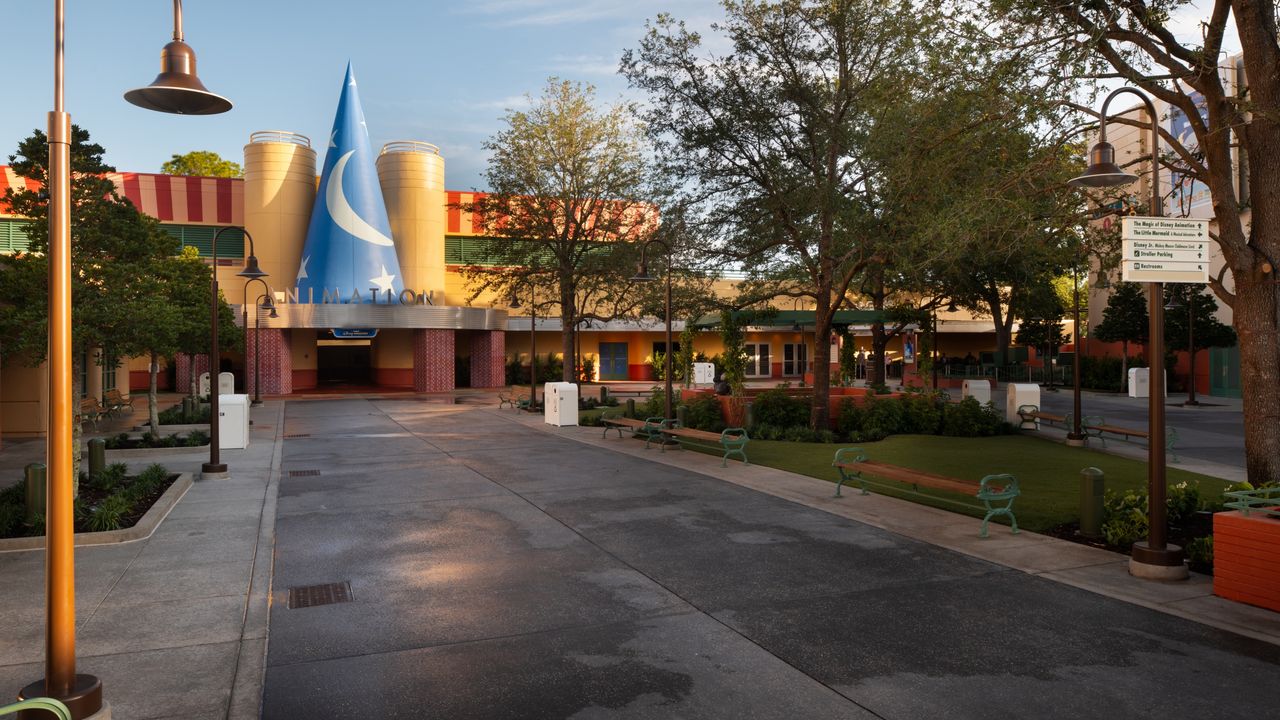
I went behind the walls of Disney World’s Magic of Disney Animation as it is being built and saw how Disney is reimagining the space as a multi-part attraction that lets guests step inside the animation pipeline.
We may just have gotten an early look at the Google Pixel Watch 5 - and from an unusual source. Randy Pitchford, the creator of the Borderlands game franchise, posted a pair of images of a watch on X, saying that his friend found it underwater while scuba diving near Saint Martin, as reported earlier by Kotaku.
"He noted that the reverse of the watch indicates that it is a Google Pixel 5, which has not yet been announced, let alone released," Pitchford writes. "It seems to be fine. The face indicates an empty battery, but seems to have enough reserve power to display the correct time." After putting out a call to find its owner, Pitchford s …

 Login
Login