The COVID-19 pandemic and “safe and effective” vaccines are lies propagated by governments and “experts”. Many widely accepted scientific beliefs are false narratives based on Satan’s lies. Spiritual deception underlies many societal misconceptions. We must return to the foundation of biblical truths from creation to what is real science.
I reflect on my educational journey, highlighting challenges such as family separation and multiple school changes. I excelled in science and mathematics yet was indoctrinated on Godless cosmology and rejected the Creator. Later Jesus Christ saved me from atheism and renewed my mind to His truth.
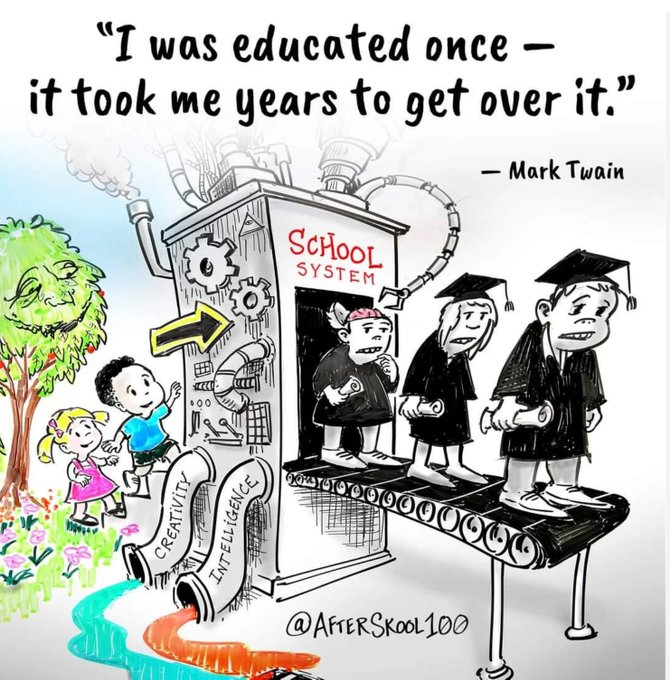
I observed the declining English language skills of graduate physics students over two decades. I correlate this trend with Gen Z's drop in average IQ, attributing it to increased screen usage and the dumbing down in society due to the satanic propaganda in the mass education system.
A Ph.D. is often treated as the point where scholars become "independent." Yet, a new study by Hiroshima University shows that achieving independence is far less simple and tidy, unfolding instead as a long, uneven, river-like journey shaped by relationships, risks and resilience.
A Ph.D. is often treated as the point where scholars become "independent." Yet, a new study by Hiroshima University shows that achieving independence is far less simple and tidy, unfolding instead as a long, uneven, river-like journey shaped by relationships, risks and resilience.
Is it a doctor's job to get the best outcomes for their patients or to tell the truth? What happens when these two things are not aligned? These are questions that University of Washington students have to wrangle with in Biol 180: Introductory Biology. The goal, says Elli Theobald, UW assistant professor of biology, is to have students experience a more nuanced side of biology. There is not always one right answer, and issues of power and relationships often come into play.
Is it a doctor's job to get the best outcomes for their patients or to tell the truth? What happens when these two things are not aligned? These are questions that University of Washington students have to wrangle with in Biol 180: Introductory Biology. The goal, says Elli Theobald, UW assistant professor of biology, is to have students experience a more nuanced side of biology. There is not always one right answer, and issues of power and relationships often come into play.
In the evolving landscape of biology education, a crucial question arises: What is the fundamental obligation of a doctor, or indeed any scientist? Is it to achieve optimal outcomes for patients and society, or is it to uphold the uncompromising pursuit of truth? This dichotomy reflects a broader challenge faced by students in introductory biology courses at the University of Washington (UW), where educators, led by Assistant Professor Elli Theobald, strive to present a more intricate and nuanced view of biological sciences. Their approach emphasizes the multifaceted reality of biology, where scientific knowledge intersects complexly with ethical, social, and political aspects, rather than simply delivering rote facts or binary answers.
Theobald’s pedagogical framework for Bio 180: Introductory Biology is designed not only to convey foundational biological concepts but also to bridge these ideas with real-world societal issues. This method intends to cultivate deeper engagement among both biology majors and non-majors, equipping all students with skills relevant to their diverse futures. Importantly, it also aims to address retention challenges within the biology major by fostering a richer, more connected learning experience that resonates with students’ lives and concerns beyond the classroom.
Despite the recognized importance of such integration, a recent extensive analysis led by Theobald and her colleagues reveals a stark underrepresentation of real-world contexts in national biology education resources. By systematically examining nearly 3,000 science learning objectives and assessment items sourced from prominent repositories—including MCAT preparatory materials, Advanced Placement biology exams, and state-level science assessments—they uncovered that a mere seven percent inherently referenced societal implications. Within this small subset, a significant portion addressed ethical considerations and public health, underscoring a disproportionate focus on certain types of societal issues.
The depth of these societal integrations was often superficial. Approximately half of the questions with any societal mentions did so only in vague or implicit terms, lacking explicit connections that challenge students to critically evaluate how biology intersects with human values and social structures. For example, an advanced immunology curriculum guideline ambiguously references the societal impact of Emil Von Behring’s diphtheria antitoxin, leaving room for interpretation but not necessarily guiding students to confront real-world consequences. In contrast, a bioinformatics competency explicitly asks students to analyze the societal implications—both positive and negative—of genome sequencing technologies, directly linking scientific literacy to current biomedical and ethical debates.
The relative scarcity of these explicit societal connections is thought to stem in part from traditional conceptions of biology education. Many educators and institutions view the curriculum as scientific and technical, overlooking the broader social dimensions as extraneous or secondary. This compartmentalized view ignores the fact that modern biology is deeply embedded in societal contexts, influencing policymaking, healthcare, environmental justice, and public understanding. As Carly Busch, a UW postdoctoral fellow and lead author of the study, notes, this oversight undermines the holistic development of science students as citizens and future professionals.
Madison Meuler, a doctoral candidate contributing to the research, highlights another dimension: the misconception that social and ethical training should be deferred to advanced levels of study. However, introductory courses often serve as the final or sole exposure to science for many students, including those outside STEM fields. Integrating societal relevance at this stage empowers all learners to become scientifically informed citizens capable of navigating and contributing to debates where science and society intersect.
Linking biology to real-world issues may also have pedagogical benefits that extend beyond intellectual engagement. It holds promise for improving student retention in STEM majors by cultivating a sense of belonging and personal investment in the subject matter. When students perceive that scientific inquiry aligns with their values and aspirations—such as a desire to help others—they are more likely to persist through challenging coursework. This aligns with growing evidence in educational research that relevance and identity are key drivers of persistence in science education.
Theobald voices a poignant concern about the current state of science education: many talented students are dissuaded from pursuing scientific careers because they sense a disconnect between science and meaningful societal impact. This disconnect risks depriving the scientific community of diverse perspectives crucial for innovation and progress. Embedding societal considerations within biology curricula can counteract this trend by validating students’ broader motivations and fostering a more inclusive scientific identity.
While the study centers on published guidelines and assessments, Theobald and her team recognize that many instructors independently incorporate societal examples into their teaching. They acknowledge the dedication of educators who endeavor to contextualize biology within students’ lived experiences despite limited institutional support. There is an urgent call for expanding and systematizing resources that scaffold these connections, enabling instructors to weave societal themes seamlessly into course objectives and daily lessons.
Looking forward, Theobald’s research group is gathering course materials from undergraduate biology classes to gain a finer-grained understanding of how real-world connections manifest in practice and how they might be amplified. They aim to transform these insights into actionable resources and frameworks to bolster biology education nationwide. The ultimate goal is a paradigm shift where biology teaching fosters not only scientific literacy but also civic engagement and ethical awareness.
This vision aligns with contemporary aspirations in science education that promote cultural relevance and inclusivity. By framing scientific questions as personally and societally meaningful inquiries, educators can nurture curious, critical thinkers equipped to confront pressing global challenges. Whether addressing pandemics, environmental crises, or genetic technologies, biology education that integrates societal context will better prepare students to contribute thoughtfully and responsibly to our collective future.
This research, funded by the National Science Foundation, underscores a crucial yet underexplored dimension of biology education: the imperative to marry disciplinary knowledge with the societal implications it inherently carries. As the scientific community continues to grapple with its role in society, transforming educational curricula to better reflect this dynamic reality represents a vital step toward cultivating the scientists and citizens of tomorrow.
Subject of Research: Examination of national biology learning objectives and assessment questions to assess the inclusion of societal connections in biology education.
Article Title: National biology learning objectives and assessment questions often overlook science’s connection to society
References:
Theobald, E., Busch, C., & Meuler, M. (2026). National biology learning objectives and assessment questions often overlook science’s connection to society. Disciplinary and Interdisciplinary Science Education Research. DOI: 10.1186/s43031-026-00159-x
Image Credits: Elli Theobald (University of Washington)
Teachers' emotions in the classroom play a critical role in how students learn, according to research published in the Journal of Educational Psychology. When teachers experience enjoyment, they deliver higher-quality instruction that boosts students' confidence in their abilities, interest and academic performance, while teacher anger is linked to poorer teaching and worse student outcomes.
Axios reports:
The American Federation of Teachers, the second-largest teachers' union in the U.S., released a 10-point plan to introduce AI and screen-time guardrails in classrooms. The plan would limit AI use and ban screens for students in prekindergarten through second grade "unless there is a compelling reason," such as supporting students with special needs.
The teacher union's president Randi Weingarten warned that young students "are drowning in tech," according to the New York Times, which reports the union president also "called on schools on Wednesday to stop giving digital devices like iPads to children in prekindergarten through second grade."
In a speech at the National Press Club in Washington, Weingarten also urged elementary schools to avoid using artificial intelligence tools like OpenAI's ChatGPT, Google's Gemini and Khan Academy's Khanmigo with children [and] called for new national privacy and safety standards for A.I. tools in all schools... "The work of teaching and learning in the earliest grades should be done without A.I."
The union's effort reflects a backlash among parents and educators against heavy use of school-issued laptops and apps. Some parents and nonprofit children's groups are also pushing back against campaigns by tech giants like Google and OpenAI to spread their A.I. products in schools... Weingarten said that the union was negotiating safety and privacy standards for A.I. use in schools with "our partners in the A.I. academy," and that Microsoft, OpenAI and Anthropic had agreed in principle to those standards.
Weingarten "laid out a plan for reorienting public schooling toward human abilities and student well-being," according to the article, calling it "a devices down, eyes up, hands-on strategy."
And meanwhile school cellphone bans are expanding into broader efforts to establish guardrails around AI in education and limit screen use, reports Axios. "At least 16 states — both red and blue — have introduced bills to limit classroom technology."
Schools Beyond Screens formed with fewer than a dozen parents in Los Angeles Unified School District last year, but the nonprofit has grown to include thousands of parents and educators nationwide, SBS policy director Kate Brody tells Axios... McPherson Middle School principal Inge Esping told Axios that the suspension rate at her Kansas school fell 70% after cellphones were banned in 2022. Students also started speaking more with one another and with teachers.
Thanks to long-time Slashdot reader theodp for sharing the article.
Parents in rural, low-income households who maintained strong family routines reported fewer behavior problems and ADHD symptoms in their children. Starting elementary school is an important step for children, but the shift can be challenging. Some children experience separation anxiety, while others have difficulty adjusting to classroom rules and daily school structure. A Penn State-led [...]
Angry parents aren’t the only ones railing against the proliferation of AI in schools. The American Federation of Teachers, the second-largest teacher’s union in the United States, has now launched a major campaign calling on schools to keep AI and hardware like iPads out of elementary classrooms.
In a buzzy speech at the National Press Club on Wednesday, AFT president Randi Weingarten unveiled ten demands centered around reaffirming human-led instruction. One of the key requests: an immediate ban on AI systems in elementary school classrooms.
The AFT’s action points also included a screen ban for students in pre-kindergarten through second grade, as well as a prohibition on companion chatbots for students under 16, which schools haveadopted at an alarming rate.
“If we don’t find a way to call this out from an education perspective, I fear that we will lose a generation of kids,” Weingarten told the New York Times in an interview. “The work of teaching and learning in the earliest grades should be done without AI.”
In her speech, Weingarten caveated that the AFT’s campaign isn’t some fanatical Butlerian Jihad. She is “not calling for a total ban on AI or a Chromebook bonfire,” but for “getting the balance right to harness the benefits of technology while mitigating the harms.”
Whether the AFT is successful at achieving its demands could make a crucial difference in millions of kids’ educational journey. As tech giants push schools to adopt all kinds of AI systems, a growing body of research is showing that the risks far outweigh any benefits.
As one year-long study conducted by the Brookings Institution’s Center for Universal Education found, AI in education comes with major risk of harm to children’s cognitive and social development — a horrifying thought as an ever-growing number of kids substitute real-life friends with AI chatbots.
When it comes to AI’s place in the classroom — and its role in education broadly — some professors are at the end of their rope. The not quite all-knowing but incredibly adept at bullsh*tting chatbots let lazy students churn out entire essays, solve math problems, and cobble together passable answers for most questions. Needless to say, none of that leaves much room for actual learning.
Such desperate times call for Draconian measures. In a roundup of instructor testimonials on the AI’s impact on their profession from The New Yorker, one pedagogue is taking no prisoners when it comes to punishing pupils who surrender their brains to the tech.
“I tell students that ChatGPT is disallowed from their writing process, that I can immediately tell when ChatGPT has been used, and that I will fail the student on this assignment if it is used — and, potentially, for the entire course, if we go through a formal appeals process,” Neal Hebert, a theatre professor at Grambling State University, wrote to the magazine.
Hebert has an even more merciless warning for theater majors.
“I tell my theatre majors, ‘I get paid the same whether I pass you or fail you,'” he wrote. “‘But what you’ve just done is told me and everyone else in our department that you are so lazy you would rather outsource your collaboration to an app than risk being an artist.'”
Tough love is not something Hebert undertakes with glee, but the overwhelming tide of AI cheating in his introductory classes has left him no choice, he feels.
“I’ve stopped being a collaborator in these intro courses and started being a plagiarism cop, and I do resent that a bit,” he lamented. “I wanted to be the kind of professor my professors were for me.”
Some professors try a different tack, allowing moderate experimentation with AI, and more forgiving forms of chastisement. Daniel Silver, a professor of sociology at the University of Toronto, Scarborough, framed it as a learning opportunity — for the instructors.
“AI has fundamentally changed how I teach, and it demands basic reflection about what we are trying to accomplish,” Silver told The New Yorker.
Silver said he spent a lot of time this academic year coming up with new types of assignments that call for more creative uses of AI, such as creating and experimenting with AI agents that represent famous thinkers like Adam Smith.
“Beyond that, students still would use AI in a thoughtless way, as a replacement for their thought and judgment,” Silver wrote in his testimonial. “So I made a point to just call them on it, and make them meet with me personally.”
After talking with the students, Silver would give them a zero on the offending assignment but also a chance to redo it. “They usually improved, but not always,” he said. To drive the point home, he would show them AI-generated assignments to demonstrate how the “they all kind of look the same.”
AI caused him a lot of “emotional upheaval,” Silver admitted, “but I do feel we all, including the students, are learning how to live with it, and we’ll come out better on the other side.”
Hebert is less optimistic. Whatever ounce of good-feeling he still possessed was shot down when he read his student’s papers on “Fences,” a Pulitzer-winning 1985 play by August Wilson.
“Out of forty students, the vast majority chose similar words, phrasing, and concepts, and most papers were written in that inimitable ChatGPT style: ‘This isn’t a simple story about injustice — it’s a clarion call for a positive understanding of justice,'” he wrote, comparing LLM’s prose to “elevator muzak, but in words.”
Rather than integrating AI, he’s fortifying his classroom against it. The assignment is now based on plays too obscure for ChatGPT and other AI models to know about.
“If ChatGPT is used on these assignments now, it hallucinates characters, plotlines — it just makes sh*t up, since it has nothing to go on,” Hebert told the magazine.
Still, this hasn’t completely discouraged AI cheating, even in Hebert’s upper level courses. And it’s causing him to have nightmares of what the tech’s long term implications for theater as an artform will be, if students “can’t be bothered to read and think about the plays they are performing in.”
“Can you imagine AI Performing Arts Slop? The theatrical equivalent of the images ChatGPT and its competitors spit out, soulless and inert, arriving on stage stillborn?” he asked. “I can.”
Professional learning and student assessment in schools is set to be transformed, thanks to a first of its kind advance in education technology led by the University of Glasgow.
A routine questionnaire completed by parents when their child turns two could play a vital role in identifying children who need extra support before they start primary school, a new study has revealed.
Teachers can address structural racism and xenophobia with students of any age and in any subject when schools provide training, materials, and professional support, say University of Michigan researchers.
In this competitive market, gen Z has started to turn to untraditional ways to land a job – including dating apps
Sibusisiwe Khupe, 26, entered the job market once again in September after a wave of unexpected layoffs at London marketing agency Wieden+Kennedy.
She knew landing her next full-time role was not going to be easy. Young workers have been hit hard by the weakening UK job market as vacancies fall and unemployment climbs to a five-year high.
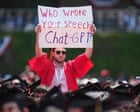
Recent college grads are not very fond of commencement speakers hyping up a technology they see as a threat to their career prospects
When Jacob Pagel graduated from Middle Tennessee State University this spring, predictions about artificial intelligence already had him questioning the value of his degree. Then a music executive started preaching about AI’s transformative power during a commencement speech.
“This industry will change on you in a heartbeat. It has already changed more in the last 10 years than in the 50 years prior … AI is rewriting production as we sit here,” said Scott Borchetta, CEO of the record label Big Machine. After a few stray boos from graduates, he doubled down: “Deal with it.”

 Login
Login