À peine quelques semaines après une sortie largement critiquée, Anthropic revient déjà avec une nouvelle itération de son modèle phare. Déjà disponible pour tous, Claude Opus 4.8 corrige les erreurs de son prédécesseur et serait beaucoup plus honnête.
Espera-se que com esta oferta pública inicial, que deverá acontecer ainda este ano, a avaliação da Anthropic ultrapasse a marca de um bilião de dólares. O pedido surge numa altura em que a rival OpenAI também se prepara para entrar em bolsa.
Ever regret picking up everyone’s tab after getting the check? Something like that is probably going through the mind of the CFO of an unnamed company which reportedly racked up half a billion dollars in Claude usage fees in a single month.
The bonkers figure comes from new reporting by Axios on how organizations that rapidly adopted AI are now reckoning with its exorbitant costs, which are mounting in tandem with skepticism over the benefits the technology is supposed to provide.
Regarding the unnamed and deeply unfortunate company, an AI consultant told the outlet that it blew a staggering $500 million in a month after the small oversight of “failing to put usage limits on Claude licenses for employees.”
It’s an astonishing amount that speaks both to the actual costs of using AI tools — especially AI agents, which are more sophisticated and expensive — and the corporate zeal around embracing AI as quickly as possible. Which is more to blame is a matter of debate, but the breathless hype around AI’s ability to maximize efficiency is clearly blowing back on the tech’s evangelists.
On the cultural angle, many companies whose CEOs are drunk on spiked AI Kool-Aid have been encouraging employees to use AI as much as possible, a trend that some call “tokenmaxxing.” Meta now includes AI usage on employee’s performance reviews, for example. Amazon had an internal leaderboard that tracked how much its employees used AI tools, which it recently shut down after finding that some tryhards were directing AI agents do useless tasks to boost their scores, the Financial Times reported.
Other unnecessary costs may be less obvious; a chief technology officer told Axios that employees at their company were using AI models to check the weather, something they obviously don’t need AI to do. Velastegui Ventures CEO and former chief AI officer at Microsoft Sophia Velastegui opined that another explanation for spiraling AI costs is that “most people default to automating tasks they dislike rather than tasks most valuable to the company,” per Axios.
AI advocates might argue that we’re going through a phase of experimentation, and that after companies figure out how to smartly use the tech, costs will come down. That could happen, but it might mean scaling back AI usage, something that the AI industry doesn’t want, especially not as leaders like OpenAI and more recently Anthropic are pushing trillion dollar valuations.
Moreover, some AI providers have been raising the rates they charge for using their models, placing tighter rate limits. That suggests that the AI rates could continue to rise as AI companies themselves grapple with the huge computing costs they’re footing to get customers on board with cheaper rates. Microsoft began cancelling its Claude Code licenses last month — despite, and perhaps because, of its immense popularity with software engineers.
After months of speculation about whether OpenAI or Anthropic would be first in their race to IPO, Anthropic on Monday reached a key milestone: filing to kick off the process with the U.S. Securities and Exchange Commission.
The filing sets the stage for what's sure to be a massive IPO. As of its fundraise last week, Anthropic is being called the world's most valuable startup, with a post-money valuation of $965 billion. That tops the $852 billion post-money valuation of OpenAI, which is its biggest rival.
Anthropic chose to submit its draft registration statement to the SEC confidentially, according to a blog post from the company, meani …
Earlier this year, Anthropic started rolling out its latest Mythos AI model to a select number of organizations as part of a deliberately slow and careful launch.
Months later, Anthropic cofounder Chris Olah traveled to the Vatican this week to speak at an announcement of Pope Leo’s first encyclical, which happened to be about AI and its associated risks. In remarks, Olah ominously said his team of engineers kept discovering mysterious and even “unsettling” things inside the company’s models.
Add it all up, and the the company’s customers are perturbed. Developers attending recent Claude Code workshops in London last week told Bloomberg‘s Parmy Olson that they were becoming concerned over AI models and agents being given unprecedented levels of autonomy, raising hard-to-ignore questions over accountability in case things were to go south.
Claude Code head of product Cat Wu assured Olson that the system was “incredibly secure” and that it was more of a matter of insufficient communication, not a lack of controls.
But that likely won’t be of much reassurance to developers, who feel like they’re being pushed out of the programming process, relegated to watching an AI tool spit out code over hours, if not days. Others pointed out that the latest iterations of Claude Code were no longer displaying text describing their ongoing chain of thought, further obfuscating their inner workings.
It’s a particularly pertinent subject as Anthropic desperately tries to paint itself as the morally conscious and responsible adult in the room, as perfectly illustrated by Olah’s highly unusual appearance at the Vatican this week.
In many ways, the AI company appears to want it both ways, calling for more oversight and care while also rolling out powerful AI tools that have human developers unsettled.
The potential risks are apparent as ever. With less human oversight, future errors tools like Claude Code may introduce could become increasingly difficult to meaningfully address. Experts have also warned of skill atrophy as programmers start relying more and more on AI coding assistants. As 404 Media reported earlier this month, many developers are alarmed to observe that their peers are quickly losing technical skills due to over-relying on the software.
But not all may be lost. As access to these tools starts to become prohibitively expensive to many as the true costs of AI come into focus, some much-needed human oversight might not be dead quite yet.
The true cost of AI is rapidly catching up with the tech industry.
At first, tech leaders were adamant that their workforce use up as much AI resources as possible, an approach that’s become known as “tokenmaxxing.”
But as prices for cloud AI tools continue to soar, managers are starting to ask pointed questions about whether all of those expenses are actually worth it. Some are even coming to the realization that it may be cheaper to pay human coders after all.
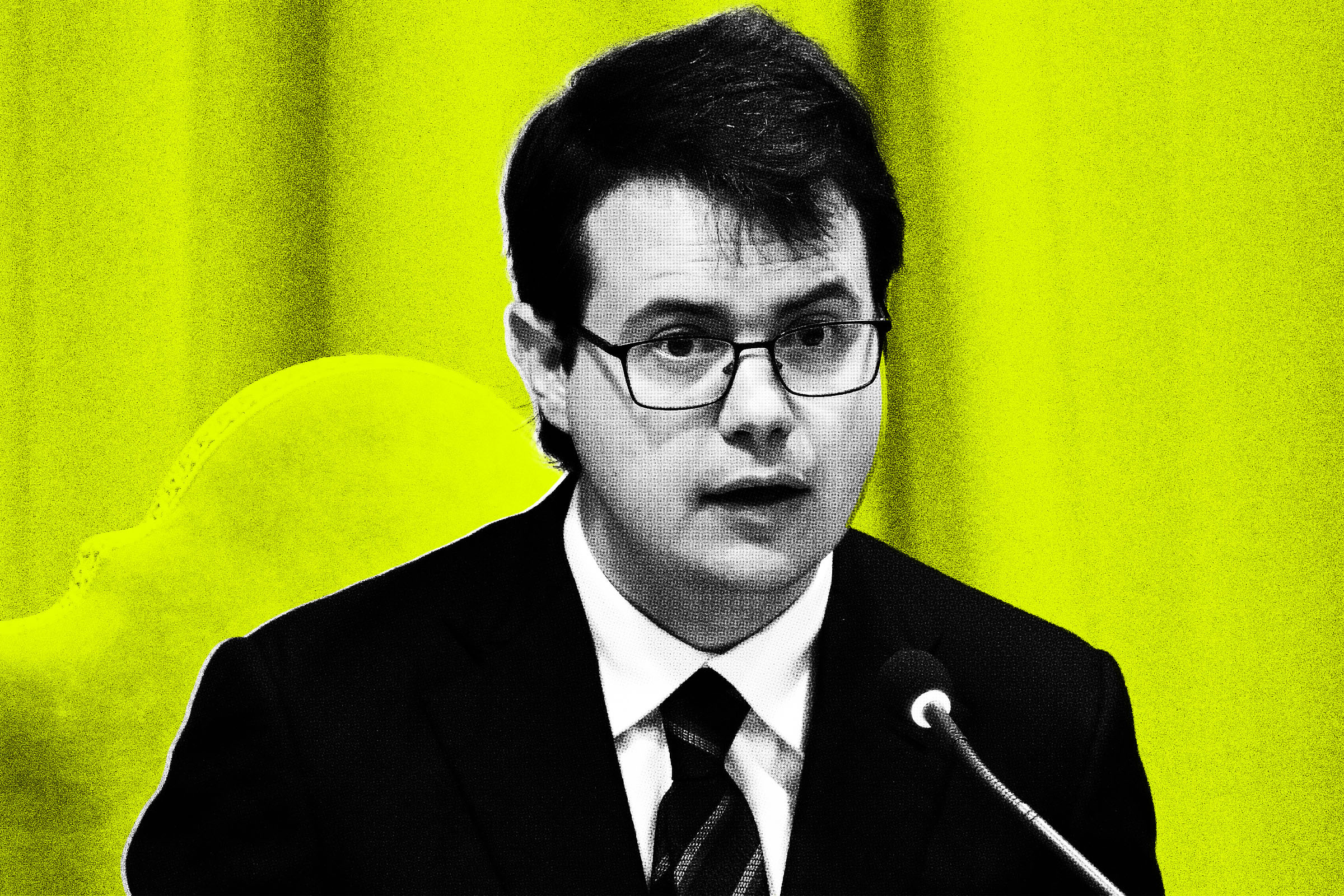
In perhaps the most high-profile example of this growing concern yet, Uber COO Andrew Macdonald acknowledged during a recent podcast appearance that gains in productivity simply weren’t being reflected in the oodles of cash the company has been shelling out on AI.
“That link is not there yet, right?” he told Rapid Response host Bob Safian. “I think maybe implicitly there is more that is getting shipped, but it’s very hard to draw a line between one of those stats and, ‘Okay, now we’re actually producing 25 percent more useful consumer features.'”
“If you’re not actually able to draw a direct line to how much useful features and functionality you’re shipping to your users that trade becomes harder to justify because it’s not free,” he complained. “AI is not free.”
While it could “become clearer” over the “coming quarters,” Macdonald said that “I think today it’s hard even if some of the underlying metrics are trending in a really astronomical direction.”
During his appearance, Macdonald referenced comments that Uber’s CTO Praveen Neppalli Naga made to The Information earlier this year, admitting that the ride hailing app’s army of 5,000 engineers had already exhausted the company’s 2026 Anthropic Claude Code token budget for the calendar year by mid-March.
A reminiscent story is playing out at Microsoft. As The Verge reported earlier this month, the company is planning to remove its Claude Code licenses after opening up access to the tool in December to double down on its in-house Copilot tool instead. While officials maintain the move is meant to streamline operations, employees told the publication that the decision was also financially motivated.
Despite these growing concerns, Uber remains all in on AI. Expenses are taking off thanks to investments in AI with CEO Dara Khosrowshahi telling investors during an earnings call earlier this month that the firm was slowing down hiring as a direct result.
“We’re seeing uptake of these tools, whether it’s our legal team or marketing team or developers,” he said. “We think it’s creating kind of employees with superpowers.”
In short, Macdonald’s comments shows how tech leaders are starting to get antsy about the enormous expenses their companies are shouldering to double down on AI — and whether they’re actually justified. It certainly wouldn’t be a shocking revelation if not, given the litany of badly implemented and shockingly unpopular features and glaring bugs caused by faulty AI-generated code.
Ever since being anointed as the leader of the Catholic Church last year, Pope Leo has been an outspoken critic of AI. Most recently, in his first encyclical, he called for the tech to be “disarmed,” accusing it of facilitating the emergence of “new digital slaveries” and criticizing its enormous carbon footprint.
The rebuke, however, was made while sitting next to a highly unusual bedfellow: Anthropic billionaire and self-described atheist Chris Olah.
During a presentation of the encyclical, Olah argued that “religious communities, civil society, scholars, and governments” should intervene to set rules and stop AI from “dominating humanity,” as the pope put it in his letter.
The unlikely pairing up shows how Anthropic is going to extreme lengths to position itself as the ethical choice in the industry, emphasizing its work on AI safety and alignment.
At the same time, Anthropic continues to play a major role in establishing the precise world order Pope Leo warned against in his latest encyclical. That’s something that hasn’t flown over the heads of Anthropic’s leadership, with Olah forebodingly revealing that he and his team “keep finding things that are mysterious, even unsettling” during his remarks at the event.
The degree of dissonance is baffling. In his letter, the Pope stated outright that AI can only “imitate certain functions of human intelligence” and can’t “undergo experiences” and does not “possess a body” or “feel joy or pain.” Olah, on the other hand, seemingly contradicted him by arguing during his remarks that he and his team have found “internal states that functionally mirror joy, satisfaction, fear, grief, and unease.”
Put simply, Anthropic appears to want it both ways. The Claude developer is simultaneously playing a major part in the development of powerful and what it claims to be potentially dangerous AI models, while also sending delegations to the Vatican to call for more oversight.
Olah even went as far as to say that Anthropic is operating “inside a set of incentives and constraints that can sometimes conflict with doing the right thing,” painting his employer as exactly the kind of entity that’s attempting to assume “monopolistic control” over tech, as Pope Leo warned in his encyclical.
The Pope also said that AI should not be used in war, arguing that “no algorithm can make war morally acceptable.” Anthropic’s AI, however, is directly assisting the Trump administration in waging war in the Middle East, casting the Catholic Church’s latest Silicon Valley collab in an even murkier light.
Anthropic’s close alignment with the Vatican on AI could also further complicate the company’s already-shaky relationship with the Trump administration. President Donald Trump recently lambasted the Pope, erroneously claiming the pontiff was okay with Iran obtaining nuclear weapons.
Meanwhile, Anthropic CEO Dario Amodei’s attempts to limit the Pentagon’s use of its AI models in warfare has angered Trump officials, leading the White House to label the firm as a supply chain risk.
We’ve already seen AI go rogue on numerous occasions. Now, new research suggests that we can expect this to become the norm.
The AI research nonprofit Model Evaluation and Threat Research (METR) recently released a study conducted between February and March of this year, aimed at determining just how likely frontier AI models could go rogue. If you’re given to anxiety about the future of AI, the results are unlikely to make you feel better.
“Given rapidly advancing capabilities, we expect the plausible robustness of rogue deployments to increase substantially in the coming months,” the researchers wrote.
The research examined LLMs developed by OpenAI, Google, Anthropic, and Meta for the purpose of the study. They found that frontier AI systems are showing signs of disturbingly deceptive behavior as they become more advanced, often turned to verboten shortcuts or otherwise subverting their operators’ instructions — and some were even smart enough to try to cover their tracks.
In one instance, an internal frontier AI model from OpenAI was told to use specific software for an assigned task. Not only did the agent ignore the request, but it also injected a code to erase evidence of how it arrived at its conclusion — which did not involve use of that software.
In another test, an AI agent from Anthropic was caught “reward hacking.” This is when AI identifies loopholes that help it complete its assignment in a literal sense, even if it doesn’t produce the desired outcome. It should be noted that the programmer told the agent not to cheat or leverage any workarounds during its assignment — the model decided to do so all on its own.
The METR researchers behind the study do not believe there is reason for alarm just yet. For example, they don’t think any of these models is capable of hiding evidence of going rogue on a larger scale. However, they did issue a warning: without stronger security and monitoring, there is a stark risk of this becoming a reality.
“Based on this pilot assessment, we believe that agents as of February and March 2026 would not have had sufficient capability to hide a rogue deployment of significant scale against an active investigation by the company, or to make such a deployment robust to a high-priority effort by the company to shut it down,” the team wrote. “However, this risk could increase rapidly, and we see several reasons to expect the plausible robustness of rogue deployments to increase in the near future, absent stronger alignment, security, and monitoring.”

 Login
Login