Login
LoginPoland Will Produce Patriot Missiles, but Ukraine Will Not
1 June 2026 at 14:16
The wars in Ukraine and in the Middle East grew the consumption of air defence missiles to unprecedented

Iran claims it will charge US tech companies fees for using undersea Internet cables that run beneath the contested Strait of Hormuz shipping lanes. The war has already halted multiple projects and led to the suspension of cable repairs in the region—and the latest Iranian threats may accelerate efforts by Big Tech and Gulf countries to find alternative routes for bypassing the Strait of Hormuz’s digital chokepoint.
The latest assertions of Iranian authority over the Strait of Hormuz were announced in a brief statement by Ebrahim Zolfaghari, a spokesperson for Iran’s military and the Islamic Revolutionary Guard Corps. “We will impose fees on internet cables” Zolfaghari wrote in a May 9 post. It was not immediately clear how Iran might implement such fees or impose its rules on cable projects, given that the majority of routes pass through Oman-controlled waters.
But Tasnim and Fars, both Iranian state-linked media channels, laid out more detailed proposals on how Iran could charge license fees to US tech giants for the use and maintenance of undersea cables carrying regional Internet traffic, according to The Guardian. For example, the Tasnim plan described charging tech companies—specifically naming Meta, Google, Amazon, and Microsoft—license fees for cable usage while also claiming that Iran alone has the right to repair and maintain the subsea cables.

© TeleGeography
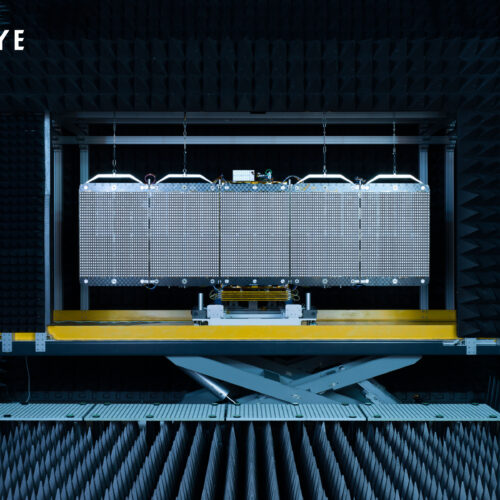
At least four Russian military satellites changed their orbits to match that of a Finnish-American radar surveillance satellite in the last week, raising questions about Russia's intentions amid an ever-expanding standoff high above Earth.
The maneuvers were identified through open source orbital tracking data. Greg Gillinger, a retired Air Force space intelligence officer, revealed the orbit changes Friday in a special edition of his Integrity Flash newsletter, published by Integrity ISR, a private business that provides "combat-proven operational support and elite training that enhances mission success across ISR (Intelligence, Surveillance, and Reconnaissance), cyber, space, and targeting domains."
The Russian satellites in question, designated Kosmos 2610 through 2613, launched together on April 16 on a Soyuz-2.1b rocket from Plesetsk Cosmodrome in northern Russia. Over the last week or so, the four satellites adjusted their inclinations—the angles of their orbits to the equator—by less than a degree.
© ICEYE
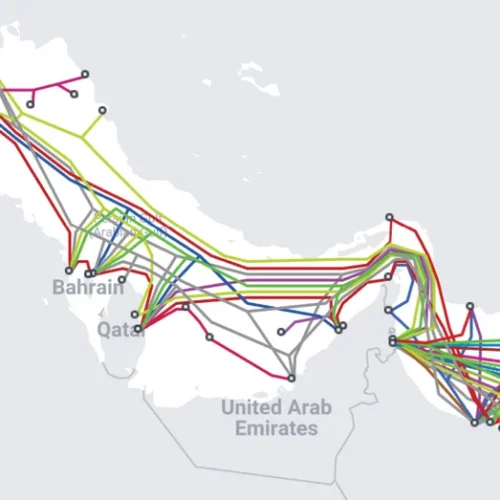

Iran claims it will charge US tech companies fees for using undersea Internet cables that run beneath the contested Strait of Hormuz shipping lanes. The war has already halted multiple projects and led to the suspension of cable repairs in the region—and the latest Iranian threats may accelerate efforts by Big Tech and Gulf countries to find alternative routes for bypassing the Strait of Hormuz’s digital chokepoint.
The latest assertions of Iranian authority over the Strait of Hormuz were announced in a brief statement by Ebrahim Zolfaghari, a spokesperson for Iran’s military and the Islamic Revolutionary Guard Corps. “We will impose fees on internet cables” Zolfaghari wrote in a May 9 post. It was not immediately clear how Iran might implement such fees or impose its rules on cable projects, given that the majority of routes pass through Oman-controlled waters.
But Tasnim and Fars, both Iranian state-linked media channels, laid out more detailed proposals on how Iran could charge license fees to US tech giants for the use and maintenance of undersea cables carrying regional Internet traffic, according to The Guardian. For example, the Tasnim plan described charging tech companies—specifically naming Meta, Google, Amazon, and Microsoft—license fees for cable usage while also claiming that Iran alone has the right to repair and maintain the subsea cables.
© TeleGeography