Normal view

Why cats prefer silver vine to catnip and other May highlights

It’s a regrettable reality that there is never enough time to cover all the interesting scientific stories we come across. So every month, we highlight a handful of the best stories that nearly slipped through the cracks. May's list includes the discovery of a possible prehistoric mining site in the Pyrenees; a new species of tiny blue octopus; why cats seem to prefer silver vine to catnip; and why political polarization might behave like a phase transition, among other noteworthy stories.

Prehistoric mining in the Pyrenees

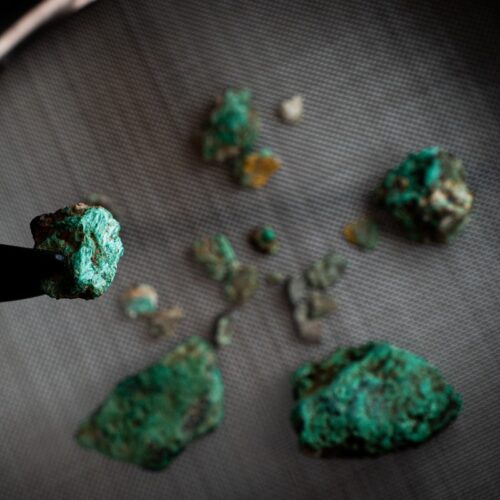
Archaeological excavation works at Cova 338 Credit: IPHES-CERCA

High in the eastern Pyrenees is a prehistoric cave, excavated between 2021 and 2023. Based on analysis of artifacts uncovered at the site, a team of Spanish archaeologists believes this may have served as an ancient copper smelting spot, with far more frequent occupation by humans than previously thought. The researchers described these preliminary findings in a paper published in the journal Frontiers in Environmental Archaeology.

Read full article

Comments

© Maria D. Guillén / IPHES-CERCA

Why cats prefer silver vine to catnip and other May highlights

It’s a regrettable reality that there is never enough time to cover all the interesting scientific stories we come across. So every month, we highlight a handful of the best stories that nearly slipped through the cracks. May's list includes the discovery of a possible prehistoric mining site in the Pyrenees; a new species of tiny blue octopus; why cats seem to prefer silver vine to catnip; and why political polarization might behave like a phase transition, among other noteworthy stories.

Prehistoric mining in the Pyrenees

Archaeological excavation works at Cova 338 Credit: IPHES-CERCA

High in the eastern Pyrenees is a prehistoric cave, excavated between 2021 and 2023. Based on analysis of artifacts uncovered at the site, a team of Spanish archaeologists believes this may have served as an ancient copper smelting spot, with far more frequent occupation by humans than previously thought. The researchers described these preliminary findings in a paper published in the journal Frontiers in Environmental Archaeology.

Read full article

Comments

© Maria D. Guillén / IPHES-CERCA

Why cats prefer silver vine to catnip and other May highlights

1 June 2026 at 22:38

It’s a regrettable reality that there is never enough time to cover all the interesting scientific stories we come across. So every month, we highlight a handful of the best stories that nearly slipped through the cracks. May's list includes the discovery of a possible prehistoric mining site in the Pyrenees; a new species of tiny blue octopus; why cats seem to prefer silver vine to catnip; and why political polarization might behave like a phase transition, among other noteworthy stories.

Prehistoric mining in the Pyrenees

Archaeological excavation works at Cova 338 Credit: IPHES-CERCA

High in the eastern Pyrenees is a prehistoric cave, excavated between 2021 and 2023. Based on analysis of artifacts uncovered at the site, a team of Spanish archaeologists believes this may have served as an ancient copper smelting spot, with far more frequent occupation by humans than previously thought. The researchers described these preliminary findings in a paper published in the journal Frontiers in Environmental Archaeology.

Read full article

Comments

© Maria D. Guillén / IPHES-CERCA

New Study Reveals: The Brain Anticipates Social Interactions Before They Begin

1 June 2026 at 22:13

In an extraordinary leap forward in our understanding of social behavior, groundbreaking research from the Hebrew University of Jerusalem has unveiled how brains prepare for social interaction at the neural level even before any physical movement begins. Led by Dr. Lilah Avitan and her doctoral student Imri Lifshitz at the Edmond and Lily Safra Center for Brain Sciences, this pioneering study uses zebrafish as a model to explore the mysterious neural orchestration that prompts social approach, shedding light on the cognitive underpinnings of sociability across species.

At the core of this research lies the question that has fascinated neuroscientists for decades: How does the brain decide to engage with others? The team discovered that social approach is not an impulsive reaction but is preceded by a distinct and coordinated shift in brain-wide neural activity. By meticulously recording brain dynamics in real-time at single-cell resolution, they observed that this neural preparation begins several seconds before the zebrafish initiate movement toward another fish, indicating that social behavior arises from an active decision-making process rooted deeply in neural circuitry.

This neural “pre-decision state” is characterized by a strikingly distributed pattern, with increased activity in the pallium— a high-order brain region analogous to the mammalian cortex—while simultaneously, activity decreases in other brain regions. The pallium, often linked to complex behaviors and decision-making processes, emerges as a critical hub orchestrating the social drive. Contrary to the previous understanding that social behavior might depend on localized “social centers,” this study reveals that brain-wide network coordination shapes social action.

The zebrafish, a transparent and genetically tractable vertebrate, proved to be the ideal organism for this investigation. Its brain’s optical accessibility allowed the use of high-resolution fluorescence microscopy to create a three-dimensional projection of neural activity without invasive methods. In a novel experimental set-up, one fish was observed continuously to monitor its brain activity as it anticipated and responded to another’s movement, enabling the researchers to link dynamic neural patterns directly with impending social actions.

Importantly, the intensity of these coordinated neural patterns predicted not only whether a social approach would occur but also reflected the individual fish’s intrinsic social drive. Zebrafish exhibiting stronger pallium activation patterns before movement were consistently more socially engaged, suggesting that variations in social motivation could be discerned at the neural level before behavior manifests. This observation may extend beyond fish, providing a framework to understand individual differences in social behavior, including in mammals and humans.

The implications of this discovery ripple far beyond basic neuroscience. Understanding how the brain organizes itself seconds before social interaction offers a new lens to study social disorders, such as autism spectrum disorders or social anxiety, where disrupted brain network coordination might underlie behavioral deficits. These findings open pathways for future research aimed at deciphering the neural signatures that could serve as biomarkers or therapeutic targets for social dysfunction.

Dr. Avitan emphasized the novelty of identifying a brain-wide neural signature that predicts both the initiation and strength of social behavior: “Our findings indicate that the brain does not wait passively but actively gears itself for social engagement. The pallium’s role in this process highlights a conserved mechanism potentially present across vertebrates, offering clues about human social cognition as well.”

The methodological advancements in this study also deserve recognition. The team’s use of dynamic whole-brain imaging with unprecedented temporal resolution allowed them to capture the fluidity of neural transitions as social decisions formed and unfolded. This technological feat advances brain research by bridging the gap between neural activity patterns and observable social behavior in a living organism under ecologically relevant conditions.

Moreover, the identification of this “pre-decision” neural state challenges the oversimplified notion of the brain as a reactive organ. Instead, it portrays the brain as proactively setting the stage for complex social actions, making swift and nuanced decisions that integrate sensory information, prior experience, motivation, and motor planning. This integrative dynamic among disparate brain areas is an elegant example of how biological systems manage sophisticated behaviors through distributed processing.

Furthermore, the distributed neural dynamics observed encompass changes in both excitatory and inhibitory circuits within the zebrafish brain. The simultaneous upregulation and downregulation in different regions may reflect a fine-tuned balancing mechanism that optimizes the organism’s readiness for social engagement while suppressing competing non-social drives. This balance is likely crucial for adaptive social function.

The study fundamentally shifts our understanding by isolating a neural marker tied directly to social drive, enabling future comparative analyses across species, including mammals. Such cross-species insights could illuminate evolutionarily conserved principles governing social motivation and the neural plasticity that accommodates environmental and developmental influences on behavior.

Finally, with the advent of this knowledge, neuroscience enters a new era where predictive neural signatures of social behavior can be quantified and studied longitudinally. This opens exciting possibilities for personalized interventions to enhance social function or remediate social impairments by modulating neural circuits before the onset of social actions.

Subject of Research: Animals
Article Title: Distinct distributed neural dynamics predict pallium-dependent social approach
News Publication Date: 1-Jun-2026
Web References: http://dx.doi.org/10.1038/s41467-026-71666-8
Image Credits: Luke A. Hammond & Jeremy Ullmann
Keywords: Neuroscience, Behavioral psychology, Zebrafish, Social behavior, Neural dynamics, Pallium, Brain-wide coordination, Social drive, Fluorescence microscopy, Decision-making, Neuroethology, Vertebrates

Stress Can Literally Make You Lose Your Direction, According to New MRI Evidence

Confused Businessman Decision ClosePeople under stress may find it harder to orient themselves in space, and researchers in Bochum have identified a possible reason why. The stress hormone cortisol appears to interfere with the brain system that helps people navigate. It weakens the activity of grid cells, which are important for spatial orientation. Researchers at Ruhr University Bochum [...]

Many more US voters support gay candidates, but only if they look and act 'straight,' study finds

1 June 2026 at 20:40
The period between 2018 and 2022, sometimes referred to as "the rainbow wave," featured an unprecedented increase in LGBTQ candidates elected to office. Pete Buttigieg's rise from mayor of South Bend, Indiana, to U.S. secretary of transportation with a 2020 bid for president in between sparked a national dialogue about whether gay candidates no longer faced an electoral penalty at the ballot box.

Many more US voters support gay candidates, but only if they look and act 'straight,' study finds

The period between 2018 and 2022, sometimes referred to as "the rainbow wave," featured an unprecedented increase in LGBTQ candidates elected to office. Pete Buttigieg's rise from mayor of South Bend, Indiana, to U.S. secretary of transportation with a 2020 bid for president in between sparked a national dialogue about whether gay candidates no longer faced an electoral penalty at the ballot box.

Scientists Uncover a Hidden Alzheimer’s Target and Create the First Tool To Control It

Neurons Damaged by Alzheimer's DiseaseTwo new tool compounds may help scientists study TAOK proteins linked to Alzheimer’s disease and other neurological disorders. Alzheimer’s disease is the leading cause of dementia and affects more than seven million people in the United States. Some treatments can slow the disease, but most address symptoms rather than the root biology, and none can [...]

Scientists Discover Surprising Similarities Between Freud’s Ideas and Modern Neuroscience

1 June 2026 at 17:27
Human Anatomy 3D Brain RenderingResearchers suggest that old psychoanalytic ideas and modern brain science may be describing the same mental processes from different angles. More than a century after Sigmund Freud developed his influential theories of the mind, some researchers believe modern neuroscience may be arriving at surprisingly similar conclusions. A new paper published in the neurocognitive journal Entropy [...]

Cats can’t taste sweetness — evolution turned off the relevant gene in their distant ancestors when they became obligate carnivores, and without working sweet receptors, a cat is as indifferent to sugar as a person is to ultraviolet light

Cats are notoriously indifferent to sweet things. Pour syrup near a dog and the dog will investigate. Pour syrup near a cat and the cat will ignore it. Veterinarians and cat-food companies have long noted that cats show no preference for sugar in feeding tests, no matter how much sugar is presented. The reason is not a behavioural quirk or a learned aversion. It is genetic, and it traces back tens of millions of years to the point at which the ancestors of modern cats became obligate carnivores, eating only meat. The gene that produces a working sweet receptor on the tongue, called Tas1r2, has been broken in cats for so long that it no longer functions at all. A cat looking at a sugar cube is in the same sensory position as a human looking at an ultraviolet light source: the signal exists, but the receptor that would detect it does not.

What the genetic evidence shows

The molecular discovery came in 2005 from a team led by Xia Li and Joseph Brand at the Monell Chemical Senses Center in Philadelphia, in collaboration with colleagues at the Waltham Centre for Pet Nutrition in the United Kingdom. Their paper in PLOS Genetics, titled “Pseudogenization of a Sweet-Receptor Gene Accounts for Cats’ Indifference toward Sugar,” established that the cat sweet receptor is not just inefficient. It is, at the genetic level, non-functional.

The mammalian sweet receptor is formed by two protein subunits, called T1R2 and T1R3, encoded by the genes Tas1r2 and Tas1r3. Both have to be present and functional for the receptor to assemble correctly on the taste cell membrane. The Monell team sequenced both genes in domestic cats, tigers, and cheetahs, comparing them with the equivalent sequences in dogs, mice, rats, and humans. Tas1r3 was intact in cats. Tas1r2 was not. The cat version of the gene carried a 247-base-pair deletion in one of its critical exons, plus additional disabling mutations, all of which prevented the gene from being translated into a working protein. The researchers further found no detectable Tas1r2 messenger RNA in cat taste tissue, no Tas1r2 protein in cat taste buds, and no evidence that the gene was being expressed at all. In every cat species tested, the gene was the same kind of broken in roughly the same place. It had become a “pseudogene”: a relic of an ancestral working gene, accumulating mutations because it no longer faced selective pressure to remain intact.

Why this happened

The evolutionary logic is straightforward. Sweet receptors exist in most mammals because their ancestors ate sugar-rich plant material at some point in their evolutionary history. Detecting sweetness was useful because sweetness in nature is a reliable proxy for accessible carbohydrate, an important food source for animals that eat plants or mixed diets. For an obligate carnivore that consumes only animal tissue, sweetness is irrelevant. Meat contains very little carbohydrate. A receptor that detected sweetness in such an animal would be metabolically expensive to maintain without conferring any survival advantage. Mutations that disabled the receptor would not be selected against, and over enough generations, random mutations would accumulate until the gene was non-functional.

This is precisely what appears to have happened in the felid lineage. The pseudogenization of Tas1r2 in cats is estimated to have occurred some tens of millions of years ago, well before the divergence of the modern cat species. Every member of the cat family Felidae, from the smallest domestic tabby to the largest Siberian tiger, shares the same broken gene.

Not unique to cats

The cat finding turned out to be the first identified case of what is now understood to be a widespread phenomenon across obligate carnivores. In 2012, the Monell-led group, working with colleagues at the University of Zurich, published a follow-up paper in PNAS titled “Major taste loss in carnivorous mammals.” The team sequenced Tas1r2 in 12 species from the order Carnivora, looking for the same kind of pseudogenization. Seven of those species, all exclusive meat eaters, had also independently lost functional Tas1r2.

The animals affected included the California sea lion, the southern fur seal, the Pacific harbor seal, the Asian small-clawed otter, the spotted hyena, the fossa (Madagascar’s largest carnivore), and the banded linsang. Crucially, the disabling mutations in each of these species occurred in different places within the Tas1r2 gene, indicating that the losses happened independently in each lineage, not via inheritance from a common ancestor. The same evolutionary pressure that turned off the gene in cats turned it off, separately, in at least seven other carnivorous lineages over the same broad timeframe. Behavioural testing of two of the genotyped species — the Asian small-clawed otter (broken Tas1r2) and the spectacled bear (intact Tas1r2, and predominantly herbivorous despite its order) — confirmed the pattern. The otter showed no preference for sweet compounds. The bear preferred sugars and even some non-caloric sweeteners.

The pattern across these species, summarised in a 2015 review in the journal Flavour co-authored by some of the same researchers, suggests that the loss of sweet taste is a general feature of mammalian carnivory rather than a quirk of cats specifically. Wherever a lineage of mammals has committed strictly to meat eating for long enough, the sweet receptor has tended to disappear.

What cats can still taste

Cats are not generally taste-impaired. They retain functional receptors for bitter, sour, salty, and umami tastes, and a 2015 PLOS One study identified at least seven functional bitter-taste receptor genes in domestic cats, with response profiles that overlap considerably with those of humans. The umami receptor, which detects the amino acids characteristic of protein-rich foods, is particularly relevant to cat behaviour: it is the receptor that allows a cat to distinguish meat from non-meat, and it is presumed to be doing a lot of the heavy lifting in a cat’s sensory evaluation of food. What cats lack is specifically the modality that would allow them to perceive sugar.

The implications for cat feeding are practical. Sweet ingredients in cat food, such as the high-fructose corn syrup or sucrose sometimes added to commercial products, are not adding palatability from the cat’s perspective. Cats select food based on protein content, fat content, amino acid profile, and texture, not on sweetness. Owners who notice their cat licking ice cream or showing interest in a bowl of cereal are usually witnessing a response to the fat or protein content, not the sugar. The sugar is, to the cat, sensory noise. The signal it carries to a human tongue is, for a feline, simply absent.

The post Cats can’t taste sweetness — evolution turned off the relevant gene in their distant ancestors when they became obligate carnivores, and without working sweet receptors, a cat is as indifferent to sugar as a person is to ultraviolet light appeared first on Space Daily.

❌