Login
LoginChinese Military Sought Nvidia Chips for Years, Report Says
1 June 2026 at 15:06
An analysis of six years of procurement records suggests that the People’s Liberation Army has openly tried to acquire restricted U.S. technology.



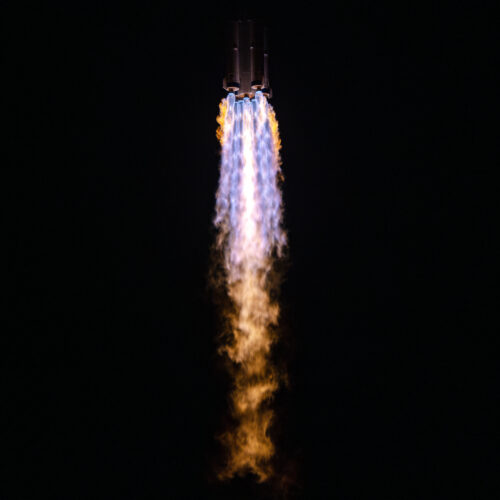
China conducted the maiden launch of its reusable Long March 12B rocket Monday, providing no advance warning and delivering operational payloads to orbit.
The post China conducts surprise launch of Long March 12B, delivers Qianfan satellites on debut flight appeared first on SpaceNews.
One day last October, sitting in the courtyard of his house in China’s Henan province, Dong Hui decided to see if he could hold a pen to write.
Dong, 39, had sustained spinal cord injuries in a car accident six years earlier that left him paralyzed from the neck down. Slowly but determinedly, he wrote his name, “Thank you,” and then the date. This was the result of an 11-month-long rehabilitation enabled by an implant in his brain. Before that process, Dong could move his arms slightly but wasn’t able to use his fingers.
“I couldn’t believe I was able to write again. I was so excited I even missed a stroke in my name,” he told MIT Technology Review on a video call.
In November 2024, Dong became one of the first people in China to be given an invasive brain-computer interface (BCI) through brain surgery. He had signed up for a clinical trial with the device’s developer one month after seeing on TV how a BCI had apparently enabled another paralyzed Chinese man to hold his granddaughter.
This March, the implant Dong uses became the first invasive BCI product in the world to be approved for use beyond clinical trials. It’s now available to some patients with paralysis in their limbs due to spinal cord injuries. We spoke to a range of experts to understand why the device was able to reach this global milestone, what makes this moment so significant, and what to expect next.
Dong’s brain implant is a coin-size device called NEO. It was developed by Neuracle Technology, a Shanghai-based startup, together with researchers at Tsinghua University in Beijing.
During a procedure that took just over an hour and a half, the device’s sensors, which collect Dong’s brain signals, were placed on his dura mater, the tough outer layer of tissue that covers and protects the brain. The signals are transmitted to a computer by an implant placed on Dong’s skull. The computer then translates the signals into commands for a soft robotic glove Dong wears during the 2.5-hour training sessions he completes each day to help him learn to grab.
Dong started his rehabilitation around a week after surgery. “On the ninth day of my training, my right hand successfully grabbed a ball without the glove,” he says. “That was a miraculous moment.”
Now he continues with his training at home. He wants to be able to control his hands better in order to put on clothes, eat, and do other daily tasks without troubling his aging parents.
A growing number of people with traumatic injuries in China are now poised to tread a similar path thanks to NEO’s recent approval. According to China’s National Medical Products Administration, the bureau responsible for drug supervision, the product is suitable for patients between 18 and 60 who have paralysis in all limbs due to spinal cord injuries but still have some residual function in their arms.
NEO beat several other BCIs to approval, including one from Neuralink, a California-based company founded by Elon Musk. Since October 2023, Neuracle has conducted 36 clinical trials using NEO, including the one on Dong. Thirty-two of them took place in the space of a few months in 2025, with the details about one of the four first in-person trials published in a preprint paper last July. Neuracle did not reply to a request for comment from MIT Technology Review.
One reason for NEO’s fast approval could be that it has a “relatively less invasive” design than counterparts such as Neuralink’s N1 brain chip, says Avinash Singh, a BCI researcher at the University of Technology Sydney. NEO’s eight sensors sit on top of the brain’s protective membrane while Neuralink’s N1 chip directly penetrates the cortex, the outermost layer of the brain itself. Neuracle’s device faces fewer regulatory constraints because it presents a lower risk of hemorrhage, glial scarring, and long-term signal degradation, Singh says.
China’s strong support for its BCI industry also means that NEO was put on an expedited regulatory pathway; in comparison, the approval process of the US Food and Drug Administration can take several years, Singh adds.
NEO’s approval is hugely important for the global BCI industry, says Wang Shouyan, a neuroscientist at Fudan University in Shanghai who was not involved in research or trialing for NEO. Even though research and development on BCIs has taken place for several decades, most of it happened in the lab. The news means that BCIs are now ready for large-scale manufacturing and clinical use in China, Wang says.
For Dong, however, it means something much more personal. “Now, it will be able to help not only me, but also thousands and thousands of other patients suffering from spinal cord injuries in China who are tortured by despair each day,” he says of NEO. “It will bring them hope and change their lives.”
Days after NEO was approved, China started incorporating it into the country’s health insurance system by assigning it a unique code. This is one of the first steps toward a future where eligible Chinese patients pay a certain percentage of the BCI’s price if they need it during their treatment.
The growth of China’s BCI industry is expected to accelerate thanks to the government’s policy support and financial backing. The country’s latest five-year plan, published on the same day Neuracle received its approval, lists BCI as one of six key industries important to China’s future tech competitiveness, alongside quantum technology, humanoid robots, and others. Several Chinese startups, including NeuroXess and StairMed, have already worked in the field for many years.
“China’s decision to double down on becoming a global leader in the field owes in part to what these companies have already accomplished,” says Meicen Sun, an information scientist at the University of Illinois Urbana-Champaign who studies information and technology policy.
But, Sun says, the biggest advantage China may have is that Chinese people, particularly patients like Dong, tend to welcome this technology and are genuinely enthusiastic about it. In comparison, in the US and Western Europe, testing technologies on human bodies elicits an “ick factor,” triggering concerns and even resistance, she says.
NEO has become the world’s first invasive BCI to go commercial, but scientists interviewed by MIT Technology Review caution against comparing Chinese and US efforts through the lens of a race.
A race implies an endpoint, but it is hard to say where that is for the development of BCIs, says Nick Ramsey, a neuroscientist at Radboud University Nijmegen in the Netherlands. Also, the US and China have fundamentally different visions, Sun says. The US is primarily concerned with being the first to do something and achieving state-of-the-art performance, while winning to China means capturing more consumers and using technology to deliver solutions on a societal scale.
“Being exceptional and being accessible are two diametrically opposed definitions of winning,” Sun says.
In fact, neurotechnology has emerged as a rare tech sector where US-China collaboration is still happening despite geopolitical tensions. The US company Axoft, based in Cambridge, Massachusetts, says it has teamed up with a Chinese company and a hospital in Shanghai to test its BCI on four patients in China and has plans to expand its trials in the country.
Looking forward, China’s BCI industry is expected to speed up its growth over the next five years thanks to strong government support. “There is no comparable national-level ambition or coordinated map elsewhere in the world at the moment,” says Singh.
More BCIs are also in the pipeline for domestic approval in the country, including Beinao-1, developed by the Chinese Institute for Brain Research in Beijing and its affiliated startup, NeuCyber NeuroTech. The device, which sits on the dura mater, is designed to help those who have movement and speech difficulties due to spinal cord injuries or amyotrophic lateral sclerosis. These candidates could get the green light as early as 2028, Singh says.
Welcome to Edition 8.43 of the Rocket Report! A disclaimer: No one yet fully appreciates the ramifications of Blue Origin's New Glenn rocket explosion Thursday night on its launch pad at Cape Canaveral, Florida. What we know as of this writing is that much of Blue's sole orbital-class launch pad has been destroyed, and the New Glenn rocket will be grounded for an extended period of time. It is too soon for any hot takes, at least until the Sun rises at the Cape on Friday morning. One thing I am sure of is that we will be writing about this event for weeks, months, and years to come.
As always, we welcome reader submissions. If you don't want to miss an issue, please subscribe using the box below (the form will not appear on AMP-enabled versions of the site). Each report will include information on small-, medium-, and heavy-lift rockets, as well as a quick look ahead at the next three launches on the calendar.
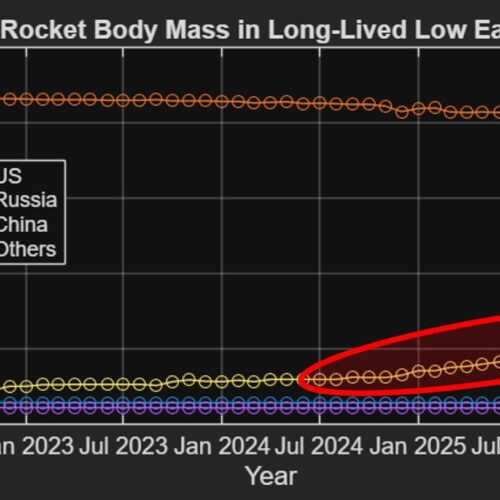
Charting China's contribution to space junk. There's a problem with the drastic uptick in Chinese space launches over the last decade. China appears to be ignoring long-established norms about disposing of the upper stages of rockets, Ars reports. These are the parts of the vehicle that separate from the first stage of a rocket and push a satellite or spacecraft into orbit. In the early decades of spaceflight, launch operators routinely left upper stages in orbit after they released their payloads. But most launch companies today reserve enough propellant in their rockets to remove them from orbit to avoid the risk of spent upper stages becoming a source of space debris. But China is not following this trend. There has been striking growth in China’s rocket body mass. In the past five years, the mass of Chinese rocket bodies in long-lived orbits has risen from less than 100 metric tons to 252, according to a new analysis by Space Domain Awareness expert Jim Shell.
© VCG/VCG via Getty Images
Up until a decade ago, China had never launched as many as 20 orbital rockets a year. But beginning in 2022, the Asian country launched 64 rockets and last year reached a record total of 93, marking it as the second-most productive space power in the world.
Further growth is anticipated from both the company's state-owned enterprises as well as a rapidly expanding number of private launch companies. There is nothing wrong with this, as China's rapid growth in launch has been mirrored by the United States and, in particular, SpaceX.
However there is an issue with these launches, as China appears to be ignoring long-established norms about disposing of the upper stages of rockets. These are the parts of the vehicle that separate from the first stage of a rocket and push a satellite or spacecraft into orbit.
© Jim Shell
Welcome to Edition 8.43 of the Rocket Report! A disclaimer: No one yet fully appreciates the ramifications of Blue Origin's New Glenn rocket explosion Thursday night on its launch pad at Cape Canaveral, Florida. What we know as of this writing is that much of Blue's sole orbital-class launch pad has been destroyed, and the New Glenn rocket will be grounded for an extended period of time. It is too soon for any hot takes, at least until the Sun rises at the Cape on Friday morning. One thing I am sure of is that we will be writing about this event for weeks, months, and years to come.
As always, we welcome reader submissions. If you don't want to miss an issue, please subscribe using the box below (the form will not appear on AMP-enabled versions of the site). Each report will include information on small-, medium-, and heavy-lift rockets, as well as a quick look ahead at the next three launches on the calendar.
Charting China's contribution to space junk. There's a problem with the drastic uptick in Chinese space launches over the last decade. China appears to be ignoring long-established norms about disposing of the upper stages of rockets, Ars reports. These are the parts of the vehicle that separate from the first stage of a rocket and push a satellite or spacecraft into orbit. In the early decades of spaceflight, launch operators routinely left upper stages in orbit after they released their payloads. But most launch companies today reserve enough propellant in their rockets to remove them from orbit to avoid the risk of spent upper stages becoming a source of space debris. But China is not following this trend. There has been striking growth in China’s rocket body mass. In the past five years, the mass of Chinese rocket bodies in long-lived orbits has risen from less than 100 metric tons to 252, according to a new analysis by Space Domain Awareness expert Jim Shell.
© VCG/VCG via Getty Images
Welcome to Edition 8.43 of the Rocket Report! A disclaimer: No one yet fully appreciates the ramifications of Blue Origin's New Glenn rocket explosion Thursday night on its launch pad at Cape Canaveral, Florida. What we know as of this writing is that much of Blue's sole orbital-class launch pad has been destroyed, and the New Glenn rocket will be grounded for an extended period of time. It is too soon for any hot takes, at least until the Sun rises at the Cape on Friday morning. One thing I am sure of is that we will be writing about this event for weeks, months, and years to come.
As always, we welcome reader submissions. If you don't want to miss an issue, please subscribe using the box below (the form will not appear on AMP-enabled versions of the site). Each report will include information on small-, medium-, and heavy-lift rockets, as well as a quick look ahead at the next three launches on the calendar.
Charting China's contribution to space junk. There's a problem with the drastic uptick in Chinese space launches over the last decade. China appears to be ignoring long-established norms about disposing of the upper stages of rockets, Ars reports. These are the parts of the vehicle that separate from the first stage of a rocket and push a satellite or spacecraft into orbit. In the early decades of spaceflight, launch operators routinely left upper stages in orbit after they released their payloads. But most launch companies today reserve enough propellant in their rockets to remove them from orbit to avoid the risk of spent upper stages becoming a source of space debris. But China is not following this trend. There has been striking growth in China’s rocket body mass. In the past five years, the mass of Chinese rocket bodies in long-lived orbits has risen from less than 100 metric tons to 252, according to a new analysis by Space Domain Awareness expert Jim Shell.
© VCG/VCG via Getty Images
A number of new Chinese state-led and commercial rockets are set for debuts and fresh first stage recovery attempts in the coming weeks and months.
The post China’s latest batch of new and reusable rockets are close to launch appeared first on SpaceNews.
Named Plumadraco bankoorum, the newly-described species of enantiornithine bird lived in what is now northeastern China during the Cretaceous period, roughly 121 million years ago.
The post Cretaceous Bird from China Had Pair of Tail Feathers Twice as Long as Its Body appeared first on Sci.News: Breaking Science News.
Last month at Beijing’s half marathon, a robot named Lightning beat the human world record by nearly seven minutes. It’s the latest in a string of AI-powered milestones that have got people wondering whether robots are about to enter our everyday lives, just as chatbots have. And the country leading the charge is China, where the government has pledged to invest more than £100bn in robotics over the next 20 years. To find out how robots are already entering the workforce, and what needs to happen to get them cleaning our homes and weeding our gardens, Ian Sample hears from the Guardian’s senior China correspondent, Amy Hawkins, and from Nathan Lepora, professor of robotics and AI at Bristol University, who researches how robots can achieve human-like dexterity
Clips: Global News, BBC, CGTN
Continue reading...
© Photograph: VCG/Getty Images
© Photograph: VCG/Getty Images
© Photograph: VCG/Getty Images

Exclusive: BHP once dubbed climate change an ‘existential’ threat. But leaked documents show it has backtracked on decarbonisation at a vast network of mines
Read more from the BHP files investigation here
In the middle of 2019, London was sweltering through a heatwave.
Temperature records tumbled. Frail, ill and elderly people died in their hundreds.
Continue reading...
© Composite: Guardian
© Composite: Guardian
© Composite: Guardian